
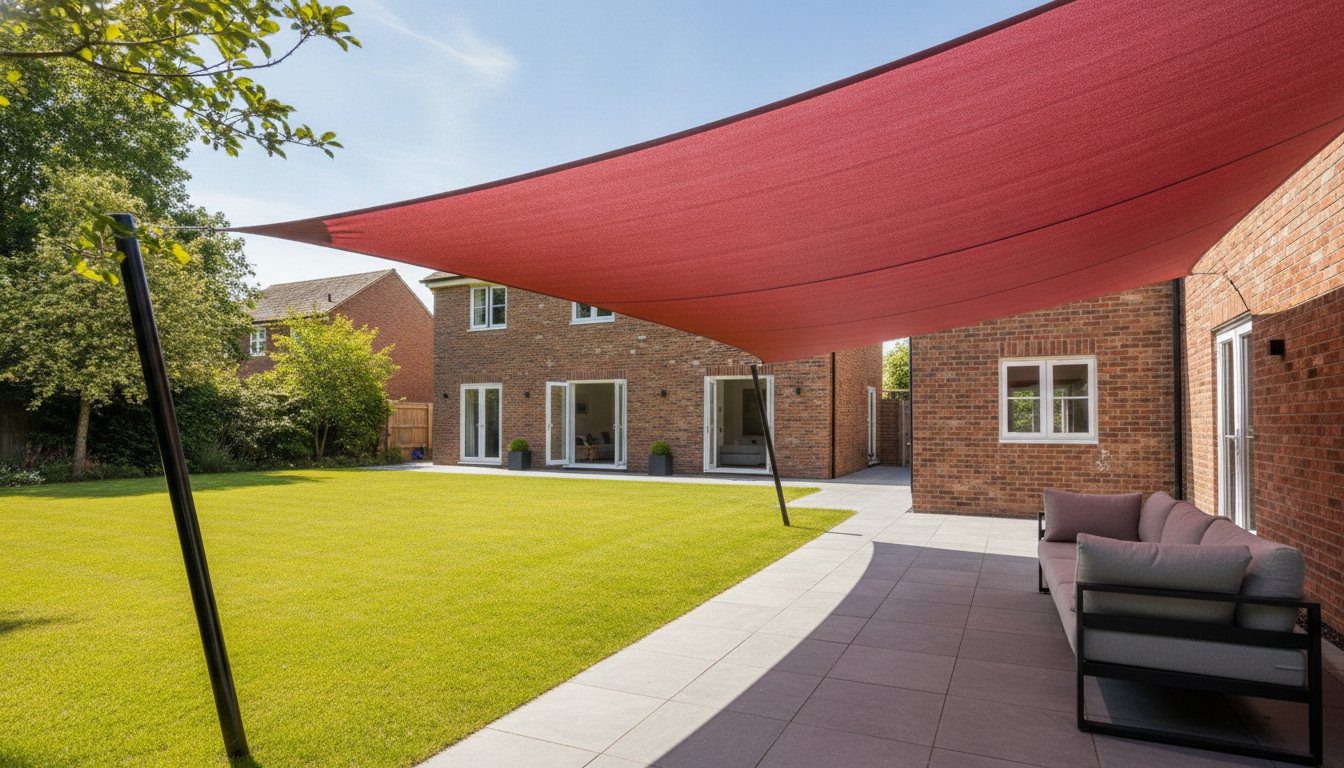
How to Shade a South-Facing Garden in the UK: A 2026 Guide
A south-facing garden shouldn’t feel like a punishment during a British summer. While we spend all winter longing for the sun, the reality of a south-facing plot in July or August often involves scorching decking, faded furniture, and indoor rooms that feel more like greenhouses. Many homeowners struggle with how to shade a south-facing garden UK style without losing that precious light, often finding themselves retreating indoors just when the weather is at its best. It’s a frustrating paradox, but one that is easily solved with the right architectural approach.
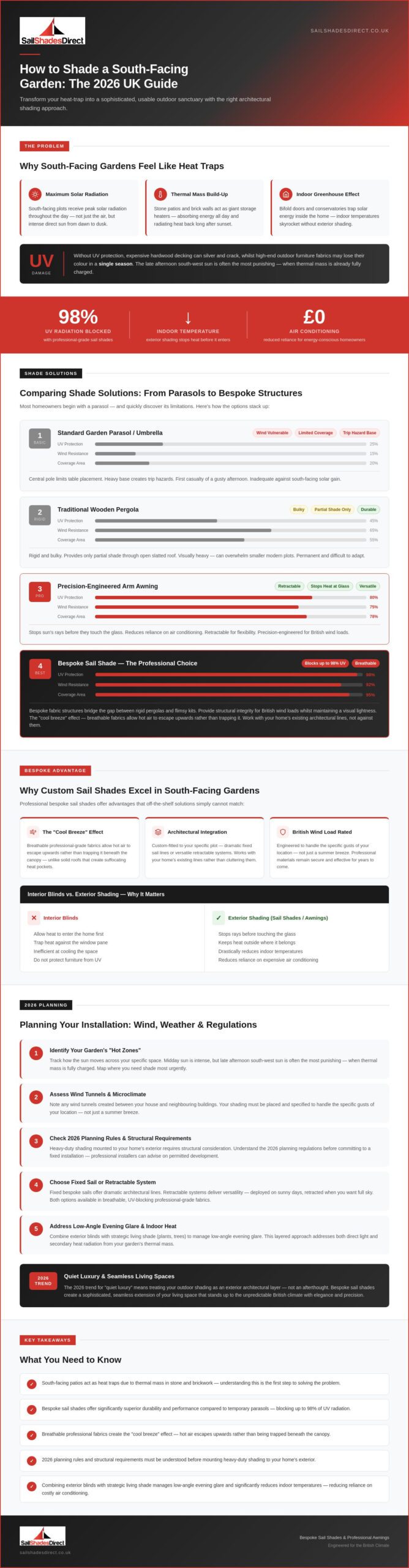
This 2026 guide will show you how to transform that heat-trap into a sophisticated, usable sanctuary. We’ll move beyond flimsy parasols to explore professional-grade solutions like bespoke sail shades and precision-engineered arm awnings. You’ll learn how to block up to 98% of UV radiation, protecting both your skin and your furniture, whilst significantly lowering the temperature of your home. We’re going to look at the latest trends in quiet luxury and the essential planning rules for 2026, giving you a clear path to a durable outdoor space that stands up to the unpredictable British climate.
Key Takeaways
- Learn why south-facing patios act as heat traps and how to break the cycle of radiating warmth from stone and brickwork.
- Discover how to shade a south-facing garden UK homeowners will actually use by comparing the durability of bespoke sail shades against temporary parasols.
- Explore the “cool breeze” effect of professional-grade, breathable fabrics that allow hot air to escape upwards rather than trapping it beneath the canopy.
- Understand the 2026 planning rules and structural considerations for mounting heavy-duty shading safely to your home’s exterior.
- See how to manage low-angle evening glare and indoor temperatures using a combination of exterior blinds and strategic living shade.
The Challenge of the South-Facing Aspect: Why Your Garden Feels Like a Heat Trap
A south-facing garden is often the most coveted feature of a British home, yet it presents a unique set of architectural challenges that can make summer days surprisingly difficult. During the peak of the day, these spaces receive the maximum possible solar radiation. It isn’t just the air temperature that makes these areas uncomfortable; it’s the way your garden’s materials interact with the sun. If your patio feels like a furnace, you aren’t just imagining it.
Patios made of natural stone and traditional brick walls possess high thermal mass. This means they act like giant storage heaters, soaking up energy throughout the day and radiating it back at you long after the sun has dipped. This constant exposure also leads to rapid UV degradation. Without protection, expensive hardwood decking can silver and crack, whilst high-end outdoor furniture fabrics may lose their vibrant colour in just a single season. Understanding how to shade a south-facing garden UK style requires a strategy that addresses both direct light and this secondary heat radiation.
The Impact on Indoor Temperatures
The connection between your outdoor space and your living room is often overlooked. Modern UK homes frequently feature large expanses of glass, such as bifold doors or conservatories, which create a significant greenhouse effect. When solar energy passes through glass, it becomes trapped, causing indoor temperatures to skyrocket. Whilst internal blinds are a common choice, they are actually quite inefficient at cooling. They allow the heat to enter the home before attempting to trap it against the window pane.
External shading solutions, such as arm awnings or bespoke sail shades, stop the sun’s rays before they ever touch the glass. This proactive approach can drastically reduce your reliance on expensive air conditioning, which is a growing priority for energy-conscious homeowners in 2026. By treating your shading as an exterior architectural layer, you keep the heat outside where it belongs.
Identifying Your Garden’s “Hot Zones”
Every plot has its own microclimate. To find the best solution, you need to track how the sun moves across your specific space. Whilst midday sun is the most intense, it’s often the late afternoon sun from the south-west that feels the most punishing because the garden’s thermal mass is already fully charged. Whilst Shade gardens rely on natural canopy and low-light plants, structural shading must be engineered to handle the high-exposure reality of a south-facing plot.
Take note of any wind tunnels created between your house and neighbouring buildings. Identifying these zones ensures your shading is placed exactly where it’s needed most. It also allows for the selection of professional-grade materials that can withstand the specific gusts of your location, ensuring your investment remains secure and effective for years to come.
Comparing Shade Solutions: From Parasols to Bespoke Structures
Choosing the right method to cool your space is often a journey of trial and error. Most homeowners begin with a simple garden centre parasol, only to find it inadequate against the specific challenges of a south-facing garden. Whilst they offer a quick fix, they rarely provide the comprehensive coverage needed to truly manage solar gain. In contrast, permanent architectural solutions like bespoke fabric structures offer a more integrated feel, working with your home’s existing lines rather than cluttering them.
When considering how to shade a south-facing garden UK homeowners often feel torn between the rigidity of a wooden pergola and the flimsiness of temporary kits. Bespoke fabric solutions bridge this gap perfectly. They provide the structural integrity required to handle British wind loads whilst maintaining a visual lightness that doesn’t overwhelm smaller modern plots. Whether you prefer the dramatic architectural lines of a fixed sail or the versatility of a retractable system, the goal is to create a seamless extension of your living space.
For homeowners who prefer a hands-on approach, the Direct-to-consumer sale of DIY outdoor shade kits and foldable car protection solutions from Shade Kits offers a robust alternative to flimsy retail options, providing the durability needed for high-exposure south-facing plots.
The Limitations of Standard Garden Umbrellas
Standard garden umbrellas are frequently the first casualty of a gusty afternoon. Beyond their vulnerability to wind, they create significant “dead space” on your patio. A central pole limits where you can place your table, while a heavy base becomes a trip hazard in high-traffic areas. For those who want a completely clear floor area, heavy duty arm awnings or wall-mounted sails provide a much more elegant solution. They provide expansive cover without the structural clutter, allowing your furniture to be arranged exactly how you like it.
Retractable vs. Permanent Shading
Choosing between a fixed or retractable system depends largely on your lifestyle and the orientation of your home. A permanent, tensioned sail shade creates a striking year-round architectural feature. These are engineered to stay up through most weather conditions, providing a reliable sanctuary whenever the sun appears. However, if your south-facing glass is your primary source of light during the darker months, rolling sun sails offer the perfect compromise. You can retract them fully during the winter to maximise natural light indoors, then deploy them in seconds when the July heat arrives. Bespoke manufacturing ensures these systems fit perfectly, even in the awkward, non-standard garden shapes so common in the UK.
If you’re ready to see how these professional solutions could work in your own space, you can explore our bespoke shade options to find your perfect match.
The Bespoke Advantage: Why Custom Sail Shades Excel in South-Facing Gardens
A south-facing plot is a canvas for architectural shading, but off-the-shelf solutions often fall short. When you’re looking at how to shade a south-facing garden UK style, the difference between a generic sail and a bespoke installation is found in the engineering. A custom sail isn’t just a piece of fabric; it’s a tensioned structure designed to handle specific wind loads and the unique geometry of your home. Unlike solid roofs or thick umbrellas, professional-grade shade sails create a “cool breeze” effect. The breathable mesh allows hot air to rise through the fabric, preventing the stagnant, stifling heat that often collects under traditional canopies.
This versatility allows for multi-sail designs that overlap, creating dynamic shading patterns that shift with the sun’s path. These bespoke sail shades UK homeowners favour are becoming a staple in high-end landscaping because they offer a sculptural element that complements modern architecture whilst providing functional relief from the sun. By tailoring the height and angle of every corner, you can direct shade exactly where it’s needed most during peak hours.
Fabric Technology and UV Protection
The material choice is what separates professional installations from garden centre alternatives. Whilst standard polyester sails are often waterproof, they trap heat and degrade quickly under intense solar radiation. Professional-grade high-density polyethylene (HDPE) is specifically knitted to block solar energy whilst remaining porous. Your choice of colour is also vital; darker shades provide higher heat absorption and better glare reduction, whereas lighter tones reflect more light into adjacent indoor rooms. To ensure genuine safety, any professional shading solution must carry a UV block rating of at least 95% to effectively shield your family from harmful rays.
Maximising Space with Tensioned Design
A primary advantage of a bespoke system is the use of marine-grade hardware and stainless steel fittings. These components allow for the high levels of tension required to create “hypar” (hyperbolic paraboloid) shapes. By setting attachment points at varying heights, you create a three-dimensional curve that isn’t just aesthetically pleasing; it’s essential for structural stability and efficient water runoff. Accurate, professional measurements are the only way to avoid the unsightly “fabric sag” that plagues DIY installations. This precision ensures your shade remains taut and quiet, even when the British weather turns gusty, providing a durable sanctuary that enhances your outdoor living area for years to come.
Planning Your Installation: Wind, Weather, and Regulations
Planning the technical details is what ensures your investment lasts through a decade of British seasons. When you’re deciding how to shade a south-facing garden UK regulations are generally on your side. Because fabric structures are considered temporary or semi-permanent, planning permission is rarely required for standard residential properties. However, if you live in a listed building or a conservation area, it’s always best to have a quick word with your local authority first. The real challenge in Britain isn’t the paperwork; it’s the wind.
A common concern for south-facing homeowners is the loss of natural light during the winter months. If you install a permanent timber pergola or a solid roof, you’re effectively blocking the low winter sun that helps warm your home in December. This is where retractable systems or seasonal sail shades excel. You can enjoy total protection during the July heatwave, then simply remove or retract the fabric in autumn to let every drop of winter sunshine into your living room. This flexibility ensures your home remains bright and inviting year-round.
Structural Integrity and Mounting
Whether you’re looking at commercial shading solutions UK businesses use for high-traffic terraces or a private patio project, the mounting method is critical. Large sails and awnings exert significant “pull” on your walls, known as uplift and tension loads. We use chemical anchors and spreader plates to distribute these loads safely across your brickwork. This is particularly important for modern UK homes, where you might be mounting to a standard solid brick wall or a more complex timber-frame construction with a brick skin. Professional assessment ensures your home’s structural integrity remains uncompromised, even during unexpected summer gusts.
Maintenance for the British Climate
Professional-grade HDPE fabrics are designed to resist the elements, but the damp British climate still requires a bit of care. To prevent the build-up of moss or algae in shaded corners, a simple annual cleaning with mild soapy water and a soft brush is usually all it takes. Unlike cheap retail alternatives that can rot or tear after one winter, high-end fabrics have a lifespan of 10 to 15 years when maintained correctly. During extreme weather events, such as named storms, we recommend retracting your awnings or removing seasonal sails to protect the hardware from excessive strain. This proactive care keeps your sanctuary looking pristine for years.
If you want to ensure your shading is safe and secure, you can book a professional installation consultation with our national team today.
Designing Your Dream South-Facing Retreat: Next Steps
Creating a truly comfortable outdoor space involves more than just a single piece of fabric. To master how to shade a south-facing garden UK style, you should think in layers. Whilst your primary bespoke sail or arm awning provides the heavy lifting during the midday heat, integrating “living” shade can soften the architectural lines. Training scented climbers like jasmine or wisteria over the periphery of your seating area adds a natural cooling effect through transpiration, perfectly complementing the precision of a tensioned fabric structure.
As the sun begins to dip in the late afternoon, the angle of the light changes, often bypassing overhead sails and hitting your windows directly. This is where exterior blinds become invaluable. Unlike internal curtains that just trap heat against the glass, these professional-grade blinds stop the glare before it enters your home. By combining these elements, you create a seamless transition between your indoor and outdoor living rooms, making the garden feel like a natural, temperate extension of your home rather than a separate, scorching island.
Layering Your Shade Solutions
A versatile garden design often benefits from a mix of fixed and mobile elements. You might choose a permanent bespoke sail for your main dining area whilst using giant umbrellas to provide flexible cover for a lounger or a children’s play zone. This allows you to follow the shade as it moves throughout the day. To extend the use of your retreat into the evening, consider integrating discreet LED lighting and infrared heaters into the structure. When choosing your palette, look for fabric colours that harmonise with the British landscape; muted slates, stone greys, and sage greens are perennial favourites that look sophisticated year-round.
The Sail Shades Direct Process
Transforming your garden starts with a professional vision. Our process is designed to take the stress out of the project, beginning with a precise site measurement to account for every unique angle of your UK plot. Because we manufacture our bespoke sail shades and rolling sun sails right here in the UK, we maintain total control over the engineering standards and craftsmanship. Our national installation team then handles the complex mounting and tensioning, giving you the peace of mind that comes with an expert-led project.
Don’t let another summer pass whilst you’re stuck behind closed curtains. If you’re ready to reclaim your outdoor space and enjoy a cool, stylish sanctuary, contact the Sail Shades Direct team today to start your bespoke design consultation.
Reclaim Your Garden Sanctuary
A south-facing plot shouldn’t feel like a summer punishment. By moving beyond temporary fixes and embracing engineered architectural solutions, you can transform your patio into a sophisticated retreat that remains cool even in the peak of August. You now have the roadmap for how to shade a south-facing garden UK style, from managing thermal mass to selecting high-tension fabrics that allow heat to escape whilst blocking a significant portion of UV rays.
Our team at Sail Shades Direct is ready to bring this vision to life through expert UK manufacturing and professional national installation. We use only marine-grade durable materials, ensuring your new shading system stands up to the unpredictable British weather year after year. It’s time to stop retreating indoors and start enjoying every corner of your property, regardless of the temperature. Your outdoor space should be a reprieve from daily pressures, not a source of heat-related stress.
Ready to get started? Enquire about a bespoke shading solution for your garden and discover the difference that professional craftsmanship makes to your outdoor lifestyle. We’re here to help you create a cool, usable sanctuary you’ll love for years to come.
Frequently Asked Questions
Does a south-facing garden need a specific type of shade?
South-facing gardens require shading solutions with a high UV block rating and excellent breathability to manage constant solar exposure. Unlike east or west-facing plots that only get intense sun for part of the day, south-facing spaces need durable materials like HDPE mesh. This fabric allows trapped heat to escape upwards, preventing the stifling atmosphere often found under solid plastic canopies or standard polyester umbrellas.
Will a sail shade or awning make the inside of my house too dark?
A professionally designed shading system won’t make your home dark if you choose the right configuration. Retractable rolling sun sails and arm awnings are ideal for maintaining indoor brightness, as they can be fully withdrawn during the winter months. By carefully calculating the sun’s angle during the design phase, we ensure your living room stays cool in July without sacrificing natural light in December.
Can I leave my bespoke sail shade up all year round in the UK?
Most bespoke sail shades are designed as seasonal structures and should be taken down during the winter months. Whilst the marine-grade hardware is built for durability, heavy snow loads and prolonged dampness can put unnecessary strain on the fabric and fixings. Removing your sail in autumn also allows more light into your home during the darker months and prevents the growth of moss or algae on the fabric.
Do I need planning permission for a garden sail shade or awning?
Planning permission is typically not required for fabric structures like awnings or sail shades in the UK. These are usually classified as temporary additions under permitted development rights. However, if your property is a listed building or located within a conservation area, you should check with your local planning department. The total area of all garden structures must also not exceed 50% of your total garden space.
What is the best colour for a south-facing garden shade?
The best colour depends on whether you are prioritising heat reduction or indoor light levels. Darker fabrics, such as charcoal or navy, are excellent at absorbing solar energy and reducing glare, making them perfect for seating areas. Lighter tones like cream or silver reflect more light, which can help keep adjacent indoor rooms brighter whilst still providing essential UV protection for your patio and furniture.
How do I stop my south-facing patio from getting too hot?
To stop a patio from overheating, you must prevent the sun from reaching the ground and walls. When researching how to shade a south-facing garden UK homeowners often overlook thermal mass; stone and brick store heat and radiate it back at you. Installing an external barrier like an arm awning or sail shade stops this energy absorption, keeping the surface temperature of your decking or patio significantly lower.
Are bespoke sail shades waterproof?
Bespoke sail shades made from HDPE mesh are water-resistant rather than fully waterproof. This porous design is intentional, as it allows hot air to escape and prevents water from pooling in the centre of the sail. If you require total rain protection, arm awnings or specific waterproof fabrics are available, though these require steeper installation angles to ensure effective water runoff during heavy British downpours.
How much wind can a professional garden awning or sail handle?
Professional-grade shading systems are engineered to withstand typical UK wind conditions, but they should be retracted or removed during extreme weather. Most high-quality arm awnings have specific wind-class ratings, whilst tensioned sails rely on chemical anchors to remain secure. When considering how to shade a south-facing garden UK weather is a major factor; we always recommend retracting your system if wind speeds are forecast to exceed the manufacturer’s safety limits.