
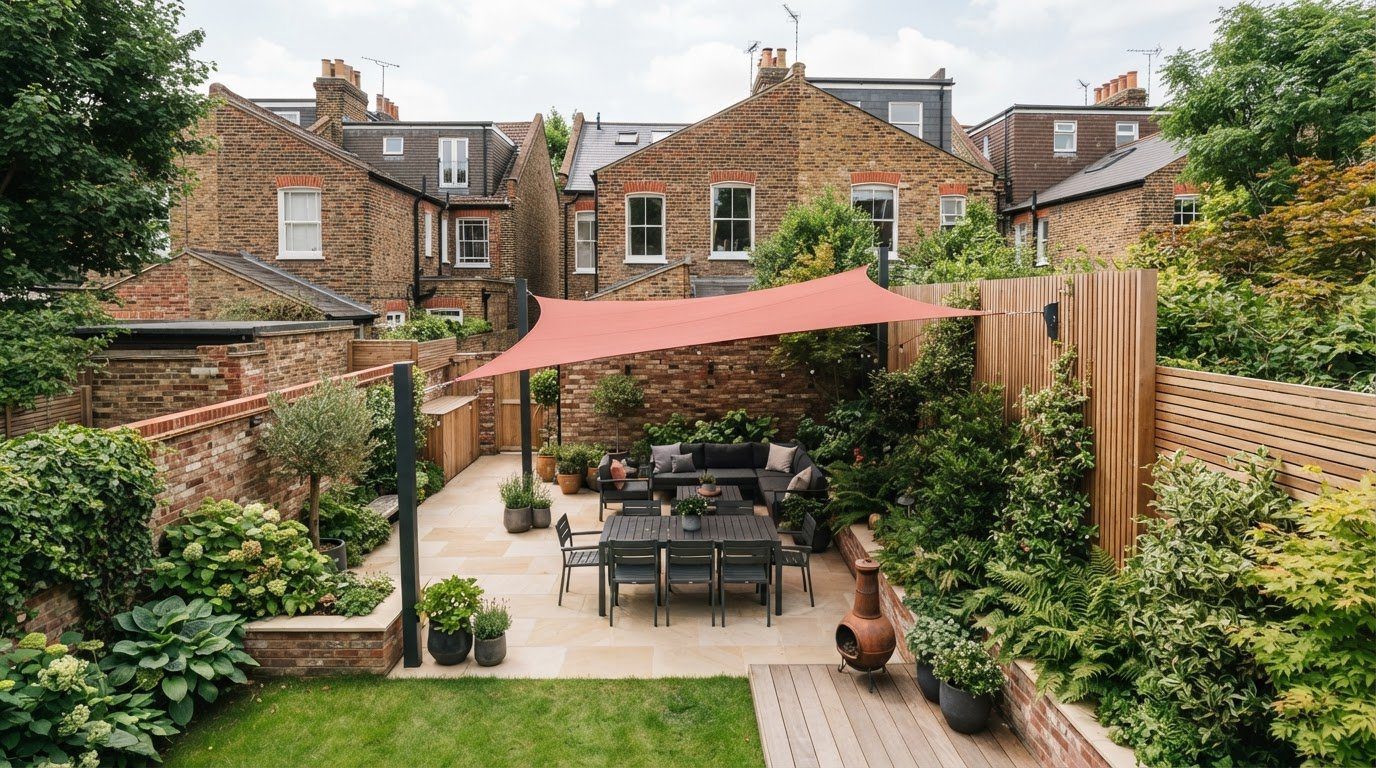
Garden Shade Ideas for Privacy: Create a More Secluded Outdoor Space
What if privacy in your garden didn’t mean putting up a taller, heavier boundary? If neighbouring homes overlook your favourite seating spot, a solid fence may seem like the obvious answer, but it can make a garden feel darker and more enclosed. Often, a more comfortable approach is to screen the particular view that bothers you and add shade overhead, keeping the rest of the garden open.
These garden shade ideas for privacy will help you identify where screening is most useful and how overhead cover can make an outdoor seating area feel more settled. From positioning a screen or planting to combining a bespoke sail shade above with exterior blinds at the sides, thoughtful choices can balance privacy, shelter and natural light. Whether your garden is compact or open, you can create a welcoming outdoor retreat without shutting it away from the sky.
Key Takeaways
- Use garden shade ideas for privacy to address the views into the places you use, rather than screening every boundary.
- Map sightlines from neighbouring windows, paths and adjoining spaces to pinpoint where privacy matters most.
- Compare planting, trellis-style screening, exterior blinds and overhead shade by the views they address and how open they leave the garden feeling.
- Follow a simple plan: identify sightlines, prioritise areas, choose screening, add shade and review the result in daylight.
- Consider how bespoke sail shades, rolling sun sails and exterior blinds can suit different garden layouts.
Garden shade ideas for privacy: start with the places that feel overlooked
Feeling visible from a neighbouring window can take the ease out of a quiet lunch, a relaxing afternoon or even routine gardening. Before choosing a screen or shade, work out exactly where the unwanted views come from. A garden may feel exposed from one upstairs window, a path along the boundary or an adjoining seating area, rather than from every direction.
Check each area from the position where you actually use it. Sit at the patio table or in your favourite chair, then look towards nearby windows, garden paths and open boundaries. Note whether the sightline reaches you at seated height, from above or across the garden. A quick sketch of the seating, boundaries and directions of view makes priorities easier to see. This helps you use garden shade ideas for privacy where they matter, instead of screening the whole garden by default.
Which parts of the garden need more privacy?
Start with the places you use most, such as a patio table, hot tub or favourite chair. Mark the views that make those spots feel exposed. A low boundary may leave a seated area overlooked from an upper-floor window, while a view from an adjoining garden may call for screening at the edge. Consider privacy at seating height, above you and around the wider boundary separately. These are different design challenges, and one feature may not address them all.
Shade overhead can make a seating area more comfortable and provide cover from above, but it won’t automatically block views from the side. A boundary screen may interrupt a direct view without providing overhead cover. Match each feature to the sightline it needs to address, rather than expecting one solution to do two different jobs.
How can you keep a private garden feeling open?
Focus screening around the areas that need it, rather than enclosing every boundary. For example, a carefully positioned screen or planting can soften a view beside a dining spot, while leaving other edges open to daylight and garden views. If a solid boundary feels imposing, visually lighter screening can create separation without making the space feel boxed in.
Consider how each feature affects movement through the garden, natural light and the view from inside your home as well as from the seating area. A shade above a table and an exterior blind at the side address different directions and can work together. This reflects wider landscape design principles, where scale, unity and enclosure shape how a space feels. The aim is a comfortable retreat, not a garden closed off from its surroundings.
How garden screening and overhead shade create different kinds of privacy
Privacy features work in different directions. Screening interrupts a particular view across a boundary or around a seating area; overhead shade creates cover above an outdoor space. Keeping that distinction in mind helps you match each feature to the sightline you want to soften, instead of expecting one addition to solve every issue.
Eye-level screening addresses views from the side; overhead shade provides cover from above. Neither automatically blocks every view into a garden. The result depends on where a feature sits, the angle people can see from and how you use the space. When planning for privacy, consider which views need attention and how screening can sit comfortably within the wider garden.
What can a sail shade do for garden privacy?
A sail shade creates a defined, shaded area above seating, helping a patio or dining spot feel like an outdoor room. Its contribution to privacy depends on its position and the viewing angle. It may interrupt a view from above, but it won’t automatically screen neighbours looking in from the side. Treat it as overhead cover first, then consider whether a separate feature is needed for side-on sightlines.
For example, a shade positioned above a table can provide cover while leaving the garden open around it. A bespoke design can be planned around the intended seating area and the views around it. This is more realistic than assuming an overhead sail will provide complete visual privacy.
When can exterior blinds add side screening?
Exterior blinds can provide side screening for suitable outdoor spaces, such as a patio where a direct view comes from an adjoining area. Used alongside overhead shade, they address a different direction: the blind screens the side, while the sail shade creates cover above. They have complementary functions, not interchangeable ones.
Think of a seating area overlooked from one side and exposed from above. A tailored combination can help define the space without screening every boundary. Consider the viewing angle and how much openness, daylight and access you want to retain. Explore bespoke sail shades and exterior blinds to bring together overhead cover and side screening.
Compare garden privacy ideas by space, sightline and feel
The right option depends on where an overlooking view comes from and how much of the garden you want to screen. Boundary planting and trellis-style screening are general garden design ideas, while exterior blinds and overhead sail shades offer ways to address side and overhead exposure. Each affects the feel of a space differently. Compare them by direction, openness and placement before deciding.
| Option | Screening direction | Sense of openness | Typical placement |
|---|---|---|---|
| Boundary planting | Along a boundary or across a particular view | Can soften the edge while keeping a natural feel | Where a planted boundary suits the garden layout |
| Trellis-style screening | Across or beside a sightline | Defines an area without necessarily forming a solid barrier | Near a seating spot or along part of a boundary |
| Exterior blinds | From the side | Can screen a specific side of an outdoor space | Beside a patio or seating area |
| Overhead sail shade | From above | Defines a shaded zone whilst leaving the sides open | Above outdoor seating or a dining area |
Use this comparison as a starting point, not a promise of complete visual privacy. The result depends on the feature’s position and the angle of the view. Combine options by sightline: side screening can address views across a patio, while overhead shade adds cover above.
Which privacy ideas suit a small garden?
In a compact garden, focus on the seating spot you use most rather than screening every boundary. A short section of trellis-style screening or a suitable side screen may interrupt one direct view, while leaving other edges open to daylight. An overhead sail shade can mark out a dining or seating zone, but it won’t replace screening for views from the side. A targeted layout helps the space feel purposeful, not boxed in.
Which solutions work for overlooked patios and seating areas?
Match the feature to the direction of exposure. For a patio overlooked from the side, exterior blinds can offer screening where suitable. If the main concern is exposure from above, a sail shade can provide overhead cover. Where both sightlines matter, combining side screening and overhead shade may suit the layout better than relying on either alone. If you are upgrading your paved terrace at the same time, landscape guides from almagardening.com illustrate how durable hardscaping can establish a practical foundation for outdoor furniture and screening. Consider how the arrangement affects access and the open feel you want to keep.
Plan a more private garden with a simple five-step process
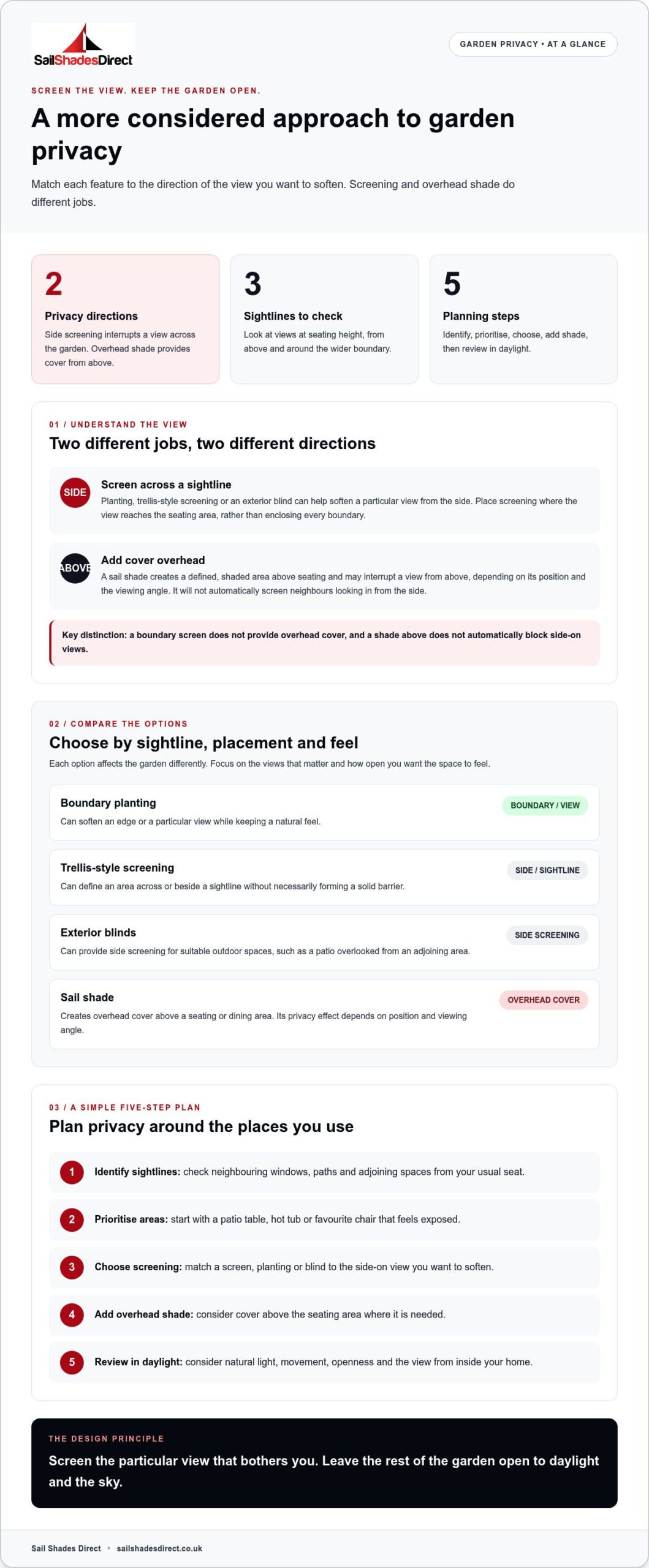
A quick sketch can turn a vague feeling of being overlooked into a practical plan. Mark the garden’s boundaries, doors, paths and seating, then use the sketch to decide where screening or shade could help. These five steps keep the focus on how you use the space, while protecting access, daylight and the open feel you want to retain.
- Identify sightlines. Mark where views enter the garden, such as from neighbouring windows, adjoining spaces or paths. Note whether each view comes from above or from the side.
- Choose priority areas. Highlight the spots where privacy matters most, whether that’s a dining area, a favourite chair or somewhere you garden regularly. Start with the areas you use, rather than assuming every boundary needs attention.
- Select screening. Match the screening to the direction of the view. A side-facing sightline may call for a suitable side screen, while views from above need a different approach. Keep the feature focused so it doesn’t obstruct routes through the garden.
- Add shade. Consider overhead shade above the places where you sit or dine. A sail shade can define a seating area and provide cover from above, while side screening addresses a separate view.
- Review the result. Look at the plan from inside the house and from the garden. Check how the features affect daylight, access, seating arrangements and the overall appearance before settling on their positions.
How do you map garden sightlines before choosing a solution?
On your sketch, mark where people sit, dine or spend time outdoors. Draw an arrow for each unwanted view and label whether it comes from above or beside the space. This makes it easier to distinguish an area that needs side screening from one that would benefit from overhead shade. A simple drawing is enough to compare possible positions before settling on an arrangement.
How do you combine privacy with light and everyday use?
Think about the garden at different times of day. Notice where natural light falls on your seating and how shade shifts across the areas you use. Targeted screening can address a particular view without enclosing the entire garden, but its position should still allow comfortable access and suit the arrangement of furniture and paths.
Revisit the sketch with those everyday details in mind. Does the plan keep the garden welcoming from indoors? Can people move easily between the house and seating? Will an overhead feature provide shade where it’s useful without standing in for screening at the sides? A tailored combination can bring together garden shade ideas for privacy according to the layout and the sightlines that matter to you.
For a considered approach to planning bespoke garden shade, explore options designed around your outdoor space.
Bespoke garden shade ideas for privacy, designed around your space
A garden’s shape, seating positions and overlooked angles all influence which shade solution will feel right. Bespoke design brings these details into the plan, making garden shade ideas for privacy part of a considered layout rather than an isolated feature. Sail Shades Direct designs, manufactures and professionally fits outdoor shading across the UK, tailoring the approach to your space and how you want to use it.
How can bespoke shading fit a garden privacy plan?
Start with the parts of the garden you want to make more comfortable. A bespoke sail shade or rolling sun sail can provide overhead shade above seating, while exterior blinds can contribute side screening where a view comes from beside the space. Each has a distinct role. The design can take account of the area’s shape and intended use, bringing the elements together without promising that every sightline will be blocked.
For example, an open patio may need shade over the table but screening along just one side. A different garden might benefit from a solution focused on another seating area. The aim is to respond to the layout, retain a welcoming feel and avoid adding features where they aren’t needed.
What is the next step towards a more comfortable garden?
Explore bespoke sail shades and related outdoor shading options with the whole space in mind. Consider where you sit, which views affect your comfort and how much daylight and openness you’d like to preserve. These priorities provide a clear starting point for planning how overhead shade and side screening could work together.
Sail Shades Direct provides professional design, fabrication and fitting for tailored outdoor shading. Sail shades, rolling sun sails and exterior blinds offer different ways to shape a more comfortable outdoor area; the right mix depends on your space and priorities.
Ready to plan a more private, inviting garden? Get in touch with Sail Shades Direct to discuss your garden shading project and explore an approach designed around your outdoor space.
Shape a more private garden around the way you live
A more secluded garden doesn’t have to feel closed in. Start by identifying the views that affect your comfort, then choose features to suit those sightlines. Side screening and overhead shade serve different purposes, and combining them thoughtfully can help balance privacy, daylight and an open feel. These garden shade ideas for privacy work best when planned around the areas you use and the character of your garden.
Sail Shades Direct designs, manufactures and professionally fits bespoke outdoor shading for domestic and commercial spaces across the UK. From sail shades and rolling sun sails above seating to exterior blinds for side screening, solutions can be tailored to your layout and priorities.
Explore bespoke outdoor shading for your garden and take the next step towards a more comfortable, welcoming outdoor space.
Frequently Asked Questions
Can a garden shade sail give you privacy from neighbours?
A garden shade sail may screen some views from above, depending on its position and the angle of the sightline, but it won’t automatically provide privacy from neighbours on every side. Think of it primarily as overhead shade above a patio or seating area. If views come from beside the space, consider a separate side-screening option, such as an exterior blind, as part of your garden privacy plan.
What is the best way to add privacy to an overlooked garden?
Identify exactly where the views come from, then address the areas that affect how you use the garden. Note whether you’re overlooked from neighbouring windows, a path or an adjoining space, and whether the view comes from above or the side. Targeted screening can protect a seating area without enclosing every boundary. Pair it with overhead shade if you also want cover above.
How can I make a small garden more private without blocking light?
Focus on the part of the garden you use most, rather than screening the whole space. A carefully positioned screen or planting can interrupt a particular view while leaving other boundaries open to light. An overhead sail shade can define a seating area, but won’t replace screening for views from the side. Before choosing features, consider where daylight falls, how you move through the garden and which sightline matters most.
Do outdoor blinds provide privacy in a garden seating area?
Exterior blinds can provide side screening in suitable outdoor spaces, including seating areas overlooked from beside them. Their usefulness depends on their position and the direction of the view, so consider the sightline you want to address and how the blind fits the space. They serve a different purpose from overhead shade: blinds can screen at the side, while a sail shade provides cover above.
Can you combine garden screening with a sail shade?
Yes, garden screening and a sail shade can be combined to address different sightlines. For example, an exterior blind may help screen a view from the side of a patio, while a sail shade creates cover above the seating area. Plan each feature around the garden’s layout, access and the open feel you want to keep. The combination can be tailored to your priorities, but won’t guarantee that every view is blocked.
What garden plants can help create a natural privacy screen?
Hedging plants, evergreen shrubs and climbing plants trained along a suitable support can all contribute to a natural screen. The best choice depends on the space available, how much light you want to retain and whether you prefer year-round cover or a lighter, seasonal screen. Consider the plants’ eventual size and how much room they’ll need, so the planting feels in proportion with the garden rather than overwhelming it. For broader landscaping advice on integrating living elements into your layout, professional guides like kertépítés Kaposvár demonstrate how structured garden construction can achieve both privacy and aesthetic balance.
Does overhead garden shade block views from neighbouring windows?
Overhead garden shade may interrupt some views from neighbouring windows, depending on its placement and the angle from above, but shouldn’t be assumed to block them all. A shade sail’s main role is to provide cover above an outdoor area. It won’t automatically screen views coming from the sides. Check the sightlines from the seating position and consider side screening as well if those views affect your comfort.