
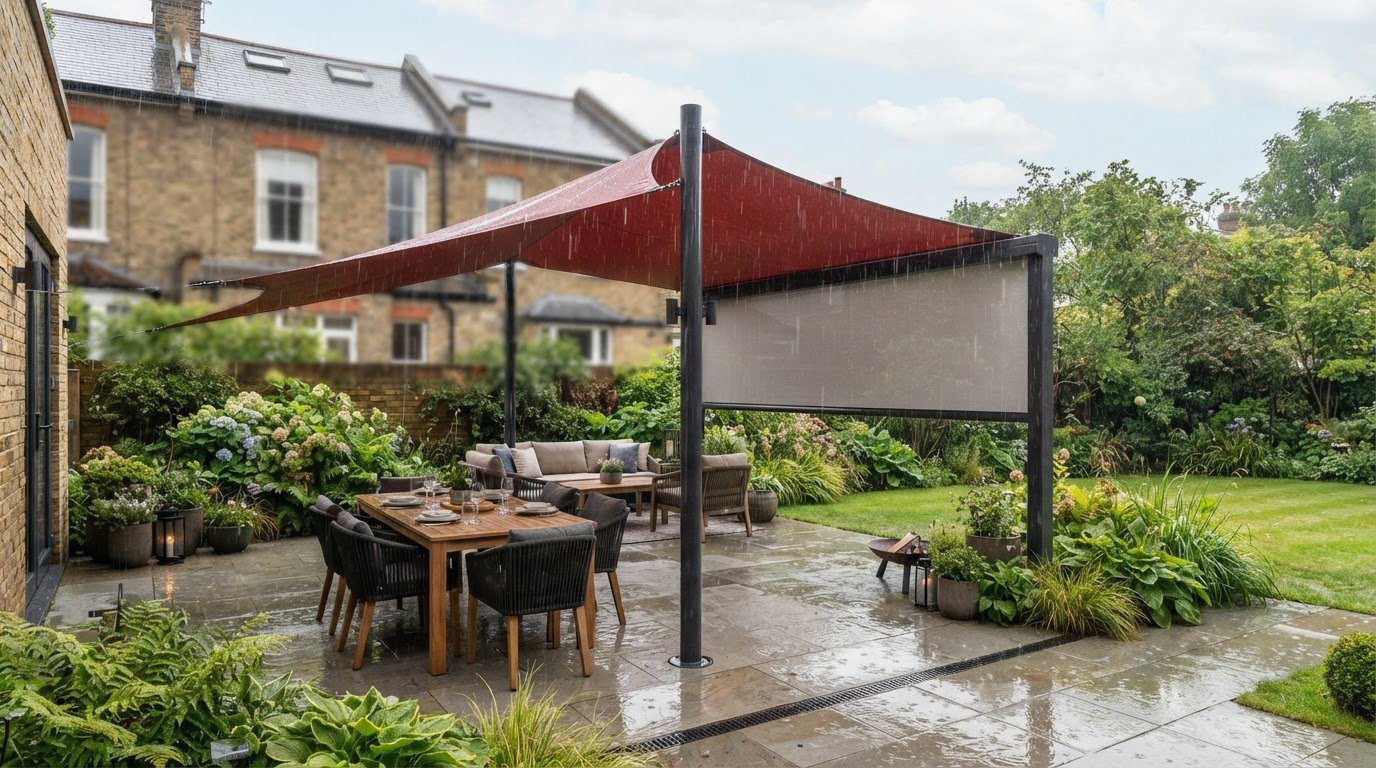
How to Make a Patio Usable in the Rain: Practical UK Ideas
What if a passing shower didn’t have to send everyone indoors? If you’re wondering how to make a patio usable in the rain, adding a cover is only part of the answer. Rain can arrive from different directions, so your patio’s exposure, shape and drainage all affect how comfortable it feels outdoors. A solution that blocks too much daylight or makes the space awkward to use can create new problems.
You can plan for shelter without losing the open feel of your garden. Start by noting where rain reaches your patio, how water runs off and how you use the space day to day. Then compare options such as bespoke sail shades, rolling sun sails, arm awnings, giant umbrellas and exterior blinds against your layout and priorities. This guide will help you decide what to plan before investing in a bespoke shading solution.
Key Takeaways
- Learn how to make a patio usable in the rain by assessing where showers reach and how you use the space.
- Plan the cover’s position alongside water runoff to help keep entrances, furniture and walking routes clear.
- Compare fixed and retractable shading options to find an approach that suits your patio layout and everyday routine.
- Use a practical site checklist to consider rain direction, drainage, daylight, access and furniture before choosing a solution.
- See how bespoke design can account for your patio’s shape, exposure and preferred level of flexibility.
How to make a patio usable in the rain: start with the real problem
A patio doesn’t need to stay dry in every condition to be useful. It needs enough protection for the activities you want to enjoy there, whether that means finishing a meal during a light shower, sitting outside with a book or making the route through a doorway less exposed. Start by identifying what rain currently interrupts. That will give you a more useful brief than assuming one cover can solve every weather problem.
A rain-usable patio is sheltered enough for its intended activities while remaining open to the weather around it. That’s different from an enclosed, all-weather room; if you realise you actually need fully weatherproof living space rather than open-air cover, renovation specialists at horns.ltd provide clear guidance on home extension budgeting and structural feasibility. Overhead cover can reduce direct exposure, but it won’t automatically prevent wind-driven rain, splashes or damp surfaces. Set a realistic aim so your design improves comfort without promising to make the patio completely weatherproof.
What does rain protection need to achieve?
Be specific about your priority. Do you want shelter for a dining table, a drier doorway or protection for the seats where you relax? Your answer affects how much of the patio needs covering and whether protection at the sides matters. A small sheltered area may be enough for two chairs. For dining, consider the table, the chairs when they’re pulled out and the space people need to move around them.
Think about how often you want to use the patio in unsettled weather, too. Occasional shelter from a passing shower is a different brief from protection for a more exposed space. The latter needs closer attention to rain direction, wind and the limits of the chosen cover. For background on awning forms and how they’re constructed, see this overview of types of awnings and their construction.
Why rain, wind and daylight need considering together
Rain doesn’t always fall straight down. Wind can carry it beneath an overhead cover, so a dry patch on a calm day may offer less shelter when showers arrive from the side. Notice which direction rain usually comes from and where it reaches first. This helps you decide whether to cover a particular activity area or reduce exposure along one edge.
More coverage isn’t automatically better. A deeper cover may shade nearby windows and reduce daylight in an adjoining room, especially when the patio is close to the house. Consider the view from indoors as well as the feel of the space outside. The aim is a balance between shelter and natural light, not simply the largest possible canopy.
Finally, check where water goes after it lands. Consider the patio’s existing drainage and the likely route of runoff, particularly near entrances, furniture and walking areas. A cover can change where rain falls, which may affect where water collects. Matching the shelter to your everyday use, exposure, daylight and drainage gives you a practical starting point for deciding how to make a patio usable in the rain.
How patio cover, rain runoff and wind exposure work together
A cover changes more than the patch of ground directly beneath it. Its size, height and position affect how much of the patio stays sheltered and where water may run afterwards. For example, a cover placed over a dining table might leave the route between the table and the back door exposed. Plan coverage around the activities and routes you want to protect, not just the furniture footprint.
Effective patio cover depends on three things working together: enough coverage for the space, a sensible route for runoff and an approach suited to the patio’s exposure. Consider all three before deciding on dimensions or assuming open sides will provide enough comfort.
Coverage and runoff: where does rainwater go?
Start by marking the parts of the patio you want to use: seating, dining and the paths between them. Allow for chairs being pulled out and for the route someone takes when carrying food from the house. This gives you a practical picture of the area that needs shelter, rather than relying on the footprint of a table or furniture set alone.
Next, consider where water could go after it runs off the cover or lands on uncovered paving. Avoid directing it towards doorways, well-used paths or neighbouring areas. Existing ground levels affect whether water moves away or gathers in a low spot, so look for puddles after rain and note where they form. Include the patio’s current drainage in your assessment. A new cover won’t resolve pooling on the ground by itself; if surface water is an ongoing concern across your adjoining outdoor spaces, permeable solutions such as the resin driveways Hampshire homeowners often choose can help improve overall site drainage.
- Map the dining and seating areas, plus the routes used to reach them.
- Notice where rain lands around the patio and where water collects.
- Consider how runoff might affect entrances, paths and nearby boundaries.
Height and position matter, too. A higher cover may leave more of the edges exposed, while a lower or differently positioned cover can change which area gets shelter. Judge the balance against the areas you’ve marked for use and the likely flow of water.
Wind-driven rain and open-sided patios
Overhead cover mainly addresses rain falling from above. If wind pushes showers sideways, water can reach seats and paving beneath an otherwise useful cover. Pay attention to the direction weather commonly approaches from and which side of the patio tends to get wet first. A wall or the house may already provide some protection, while an open edge can leave furniture more exposed.
Open sides preserve an airy feel and keep views unobstructed. Targeted side screening can provide extra shelter from a particular direction, but it changes how enclosed the patio feels and may affect light and airflow. It won’t suit every space. Weigh the exposure against your preference for an open setting, then choose an arrangement that supports how you actually use the patio.
For patios with awkward shapes or specific exposure, bespoke outdoor shading design brings coverage and layout into the same plan. The aim is to make shelter, runoff and openness work together, not simply to cover as much ground as possible.
Which patio cover options can help in rainy weather?
There isn’t one cover style that suits every patio. The shape of the space, where you want shelter and whether you’d like to adjust the cover all influence the best fit. As you explore how to make a patio usable in the rain, compare each option by its everyday use as well as its performance in wet weather. That performance depends on the specific design, fabric and installation, so don’t assume every product in a category offers the same protection.
Overhead options: sail shades, rolling sails and arm awnings
Bespoke sail shades can be designed around a patio’s layout, making them worth considering when a standard rectangular area of cover won’t suit the space. Rolling sun sails offer adjustable coverage when the design allows, which can be useful if you want flexibility as conditions change. Arm awnings provide wall-mounted overhead cover. Their position and projection need to suit the patio and its exposure.
Targeted shelter: giant umbrellas and exterior blinds
A giant umbrella can create a sheltered zone around selected seating or a table without covering the whole patio. Exterior blinds may help address an exposed side or low-angle weather, depending on the design and site. Neither option should be treated as a promise of a fully enclosed, weatherproof room. Consider how each would affect movement, views and the patio’s open feel.
Fixed and retractable formats also suit different routines. A fixed-format option keeps its coverage in place, while a retractable one can be opened or drawn back as needed, subject to its design and operating limits. Decide whether you want shelter to remain overhead or prefer to adjust the space between showers and brighter spells.
| Option | Typical application | Flexibility | Questions to resolve |
|---|---|---|---|
| Sail shade | Tailored overhead coverage for a defined patio area | Fixed-format | Does its shape suit the layout, and how will rain and runoff behave? |
| Rolling sun sail | Overhead shade where adjustable coverage is desired | Can be adjustable, depending on design | How will it be operated, and what are its rain and exposure limits? |
| Arm awning | Wall-mounted cover over a patio beside the house | Retractable format | Will its position and projection suit the space and exposure? |
| Giant umbrella | Shelter for a selected seating or dining zone | Can be repositioned, depending on the arrangement | Does it cover the intended area without obstructing access? |
| Exterior blind | Targeted shelter along an exposed side | Adjustability depends on design | Will it address the direction of rain whilst preserving openness? |
Use the table to narrow down the format, then assess the specific design rather than relying on the category name alone. The right choice matches your patio’s shape, your preferred level of flexibility and the conditions it will face.
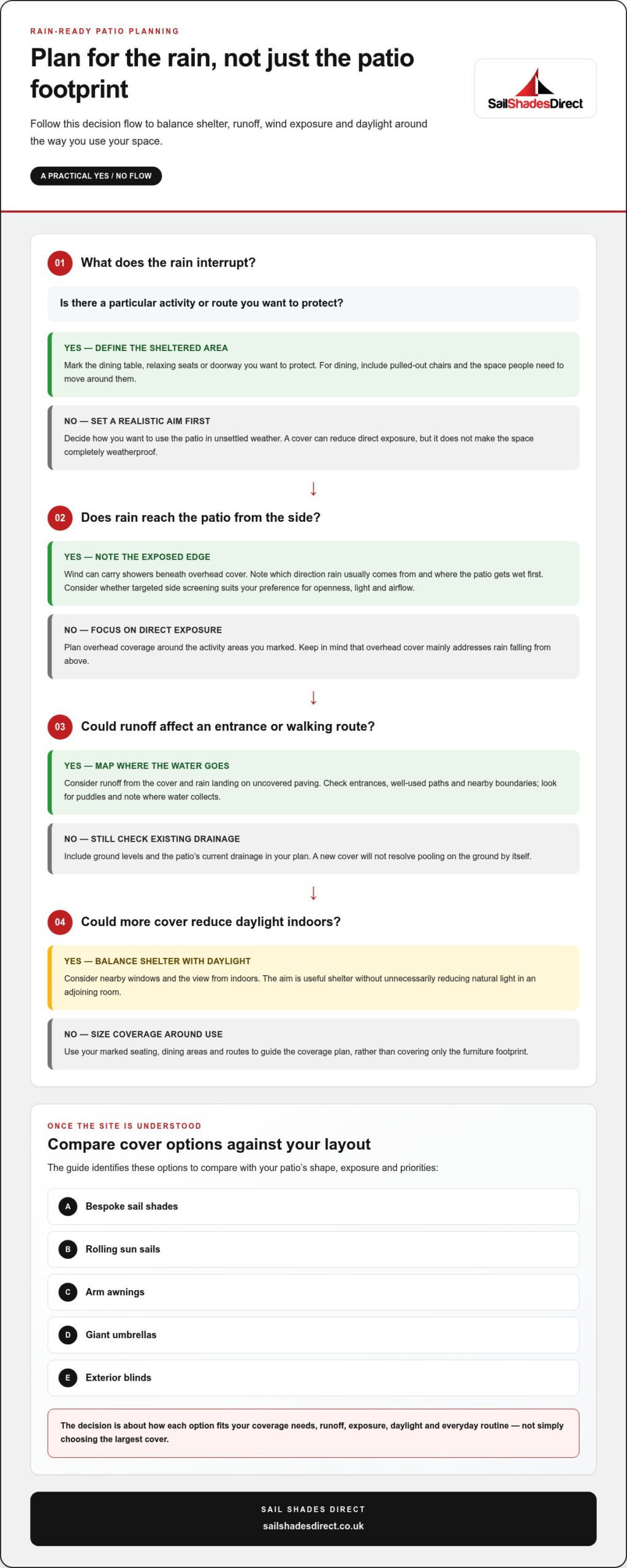
Plan a more rain-ready patio with this practical checklist
A little measuring and observation can make it easier to compare cover options. Instead of starting with a product or choosing a size by eye, record how the patio works now and what you’d like to change. These details create a useful brief for balancing shelter, access and daylight.
Assess the patio before choosing a cover
Sketch the patio from above and add its measurements, then mark doors, windows, boundaries and existing seating. Note the areas you use most, such as a dining spot or the route to the garden. Keep the drawing simple. It needs to show how the space connects, not look like a finished design.
If possible, observe the patio during and after rain. Record the direction rain arrives from, where the paving gets wet and where water pools or drains away. Mark windows where you want to preserve daylight and areas you’d prefer to leave open. A few photographs from the house and garden can show sightlines and fixed features that a sketch may miss. Together, these notes help you judge coverage against the real layout.
- Measure: note the patio’s overall dimensions and any changes in shape.
- Mark: show doors, windows, boundaries, furniture and regular walking routes.
- Observe: record rain direction, damp areas and where water collects or flows.
- Prioritise: identify where shelter matters most and what should remain bright and open.
- Photograph: capture views from different angles, including the patio’s connection to the house.
Make sheltered areas comfortable and practical
Use your sketch to check that there’s a clear route between the house, seating and garden access points. Arrange furniture with the planned cover and likely runoff in mind, rather than positioning it for appearance alone. For example, leave room around dining chairs and avoid putting a favourite seat where water commonly gathers. Consider which items can stay out and which are easier to move.
Outdoor cushions and smaller accessories may need to be brought in or stored between showers, depending on their materials. Plan a convenient place for them so getting the patio ready doesn’t become a chore. The aim is a sheltered arrangement that works in ordinary routines, not just one that looks tidy in a drawing.
Once you’ve gathered measurements, photographs and notes, you’ll have a clearer starting point for a tailored design. Sail Shades Direct designs and manufactures bespoke outdoor shading, then professionally fits it. Explore bespoke outdoor shading and consider which options could suit your patio.
Choose bespoke patio shading for the way you use your space
A tailored design starts with your patio, not a one-size-fits-all cover. Its shape, the activities you want to shelter, exposure to rain and wind, and your preference for fixed or adjustable coverage all help guide the choice. The measurements and observations from your checklist give the design a practical foundation. They show where you need cover and which routes or views should stay open.
What a tailored shading design can take into account
Coverage needs to work around how you move through the space. A dining area, for example, may need shelter without blocking the path to the garden, while a patio beside the house may call for attention to windows and daylight. A considered design brings these needs together with the patio’s shape and exposure instead of treating the covered area in isolation.
Sail Shades Direct designs and manufactures bespoke outdoor shading, then professionally fits it. Options include bespoke sail shades, rolling sun sails, awnings, umbrellas and exterior blinds. Each can suit different layouts and preferences, but rain performance depends on the particular design, fabric and installation. Let your intended use and site conditions guide the choice rather than assuming every system offers the same protection.
From initial ideas to a fitted outdoor space
Bring together the details that matter: how you use the patio, where you’d like shelter, what should remain open and what you’ve noticed about rain and drainage. This practical brief helps shape a solution around your everyday needs. Design, fabrication and professional fitting take the project from initial ideas towards a finished outdoor space.
If you’re exploring how to make a patio usable in the rain, keep the goal clear: useful shelter that suits the patio, not a promise of an entirely weatherproof room. You can also refer to a bespoke sail shades guide as you consider how a tailored shade might fit your layout. A good plan brings coverage, exposure and flexibility into one considered design.
Ready to put your measurements and ideas into action? Discuss your patio shading project and explore a bespoke approach designed around the way you use your outdoor space.
Give your patio plans a practical next step
A more usable patio doesn’t have to mean changing everything at once. Start with one clear aim, such as making outdoor meals more comfortable or creating a sheltered place to sit. Then decide how you’d like the space to feel on a brighter day. This gives your plans a purpose beyond simply keeping rain off.
If you’re considering how to make a patio usable in the rain, bring your measurements, photos and notes about how you use the space into the conversation. They can help turn general ideas into a design brief that reflects your priorities, whether you want adjustable cover, a defined sheltered area or protection along an exposed side.
Sail Shades Direct designs and fabricates bespoke outdoor shading, with professional fitting across the UK. Share your patio shading plans and take the next step towards an outdoor space that feels more inviting through changeable weather.
Frequently Asked Questions
Can I use a patio awning in the rain?
Some patio awnings can be used during rain, but suitability depends on the particular design, fabric, installation and operating guidance. Check the system’s stated limits and follow its instructions rather than assuming an awning is intended for every shower or windy spell. If rain starts while the awning is extended, follow its operating instructions. An awning can offer useful shelter, but it doesn’t turn an open patio into an indoor space.
Are sail shades waterproof?
Not all sail shades are waterproof. Their performance varies with the fabric and design, so don’t automatically treat a shade intended to provide sun protection as rain protection. Before choosing one for a patio, consider what you want to shelter and the conditions it’s designed to handle. Account for how water may move across or off the shade, too. A bespoke design can be planned around the patio layout and intended use.
How can I stop rain blowing onto my patio?
Reduce wind-driven rain by identifying the side it most often reaches first, then consider targeted shelter along that edge. An exterior blind may help limit exposure from the side, while the house or an existing boundary may already provide some protection. The result depends on the site and system, and overhead cover alone can’t reliably keep an open patio dry from every direction. Keep access and airflow in mind as you plan.
What is the best cover for a patio in rainy weather?
There’s no single best cover for every patio. To decide how to make a patio usable in the rain, match the cover to the space and its main purpose. A wall-mounted awning may suit a patio beside the house; a giant umbrella can focus shelter on a dining area. Bespoke sail shades and rolling sun sails offer other overhead approaches, while exterior blinds can address an exposed side. Compare the intended performance and flexibility of each specific design.
Can an outdoor blind protect a patio from rain?
An exterior blind may help reduce rain reaching a patio from an exposed side, particularly when showers arrive at an angle. How much protection it provides depends on the blind’s design, material, position and the conditions outside. It won’t necessarily stop rain getting in around the edges, and it shouldn’t be assumed to create an enclosed or fully weatherproof room. Think of it as one part of a wider shelter plan.
How do I stop rainwater collecting beneath a patio cover?
First identify where water is collecting: beneath the cover, at its edge or in a low area of paving. Notice whether the wet patch appears during rain or remains afterwards, and record how water travels across the patio. This can help distinguish runoff from an existing drainage issue. Keep furniture and entrances clear of places where water gathers, and include the cover’s drainage arrangements in the design.
Will a patio cover make my adjoining room darker?
It can, depending on the cover’s depth, position and proximity to the windows. Before settling on a design, look at the patio from indoors and consider which windows bring daylight into rooms you use often. A retractable option may let you open up the space when shelter isn’t needed. For fixed coverage, balance the area you want shaded with the daylight and outlook you’d like to retain.