
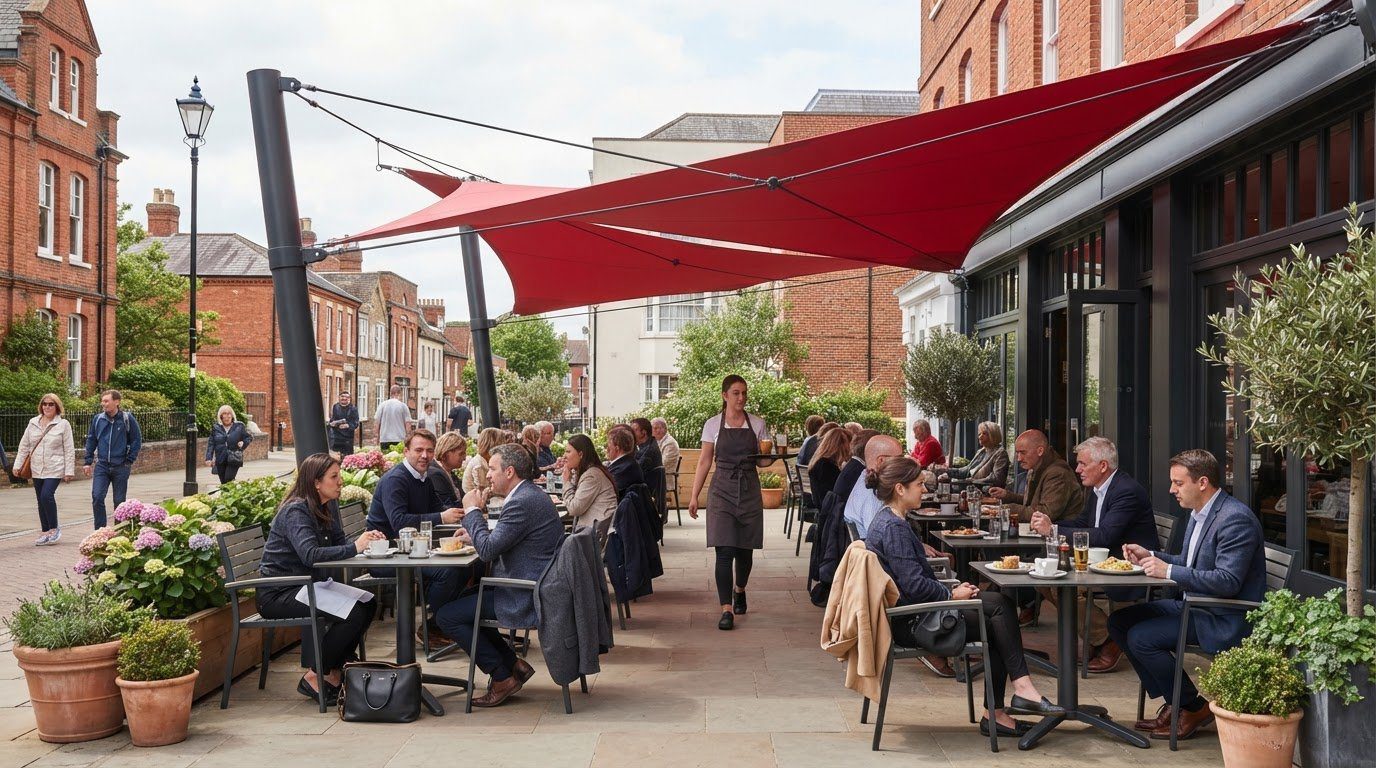
Outdoor Café Shade Solutions: A Practical Guide for UK Cafés
More shade doesn’t always mean more usable tables. A structure that blocks a busy walkway or covers seats after the sun has moved can create as many problems as it solves. The best outdoor cafe shade solutions match your café’s layout and service routine, creating comfortable seating without getting in the way of staff, access or the frontage.
Direct sun can make terrace tables uncomfortable at peak times, but choosing between fixed, retractable and freestanding shade isn’t always straightforward. The right option depends on where your tables sit, how coverage needs to change through the day and how much room your team needs to serve guests. This guide compares bespoke sail shades, rolling sun sails, arm awnings, giant umbrellas and exterior blinds. You’ll also find practical steps for planning coverage, circulation and installation around the way your café works.
Key Takeaways
- Match outdoor cafe shade solutions to your terrace footprint, table arrangement and daily service routine.
- Compare fixed, retractable and freestanding options by how they cover seating and affect staff movement.
- Assess coverage alongside guest access, circulation routes and the café’s visual character.
- Record terrace dimensions, table positions and sun exposure to give your project a clear starting point.
- Consider how bespoke design and professional installation can tailor shade to your venue.
Outdoor cafe shade solutions: what makes café seating more usable?
A café terrace has to work through changing conditions. Sunlight shifts across the frontage, guests arrive at different times, and staff move between tables with trays and orders. A table shaded at lunchtime may be fully exposed later, while a structure positioned to block the sun could narrow a serving route. The aim is to make outdoor seating more comfortable without compromising how the space operates.
An outdoor café shade solution is planned coverage that suits the venue, its seating arrangement and how the area is used. It might cover a particular row of tables, a sunny section beside the building or a wider terrace. Effective café shade matches the layout, sun exposure and daily operation. This keeps the focus on practical use, not simply adding a structure.
Comfort is one part of the picture. Reducing direct sun or glare in the right places can make an outdoor area more pleasant, while considered placement can help it feel like a purposeful extension of the café. Cafés have long served as places to meet and spend time, as outlined in this overview of the history and cultural significance of cafés. Thoughtful shade can support a welcoming atmosphere, although it cannot guarantee a particular level of trade or occupancy.
What should café shade solve first?
Start with the specific discomfort. Direct sun may fall on guests, glare can affect visibility, and warmth can make a seat less comfortable even when it isn’t in direct sun. Note when the terrace is busiest and which tables are exposed at those times. Then compare the areas that need shade with entrances, staff routes and clear paths between tables.
- Sun: note which seats are exposed during the café’s main outdoor service periods.
- Glare and heat: record where light or warmth is uncomfortable instead of assuming every exposed area needs the same treatment.
- Movement: keep serving paths, entrances and guest access in view as you plan coverage.
Why does café terrace layout change the answer?
A narrow frontage may need coverage along the building, while an open terrace may call for shade across a broader seating area. Irregular footprints bring another challenge: useful coverage may need to follow the table arrangement rather than form a neat rectangle.
Plan shade around the seating, rather than forcing awkward table positions or interrupting circulation. A compact pavement arrangement and a broad courtyard terrace, for example, present different design questions. Sketching the space and marking table positions can make those differences clear. There’s no single layout or shade arrangement that suits every venue.
Which outdoor cafe shade solutions suit different café layouts?
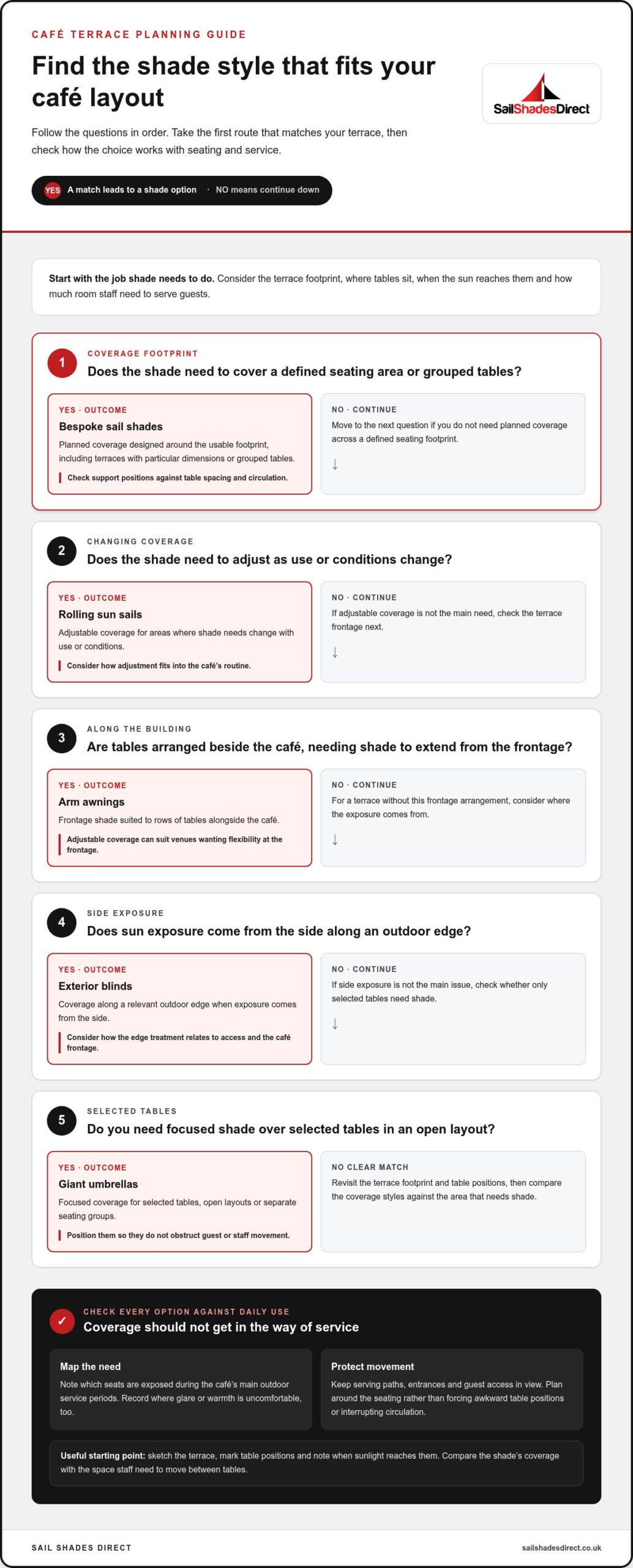
The most suitable shade depends on the terrace shape and whether you need broad planned coverage, an adjustable option or shade focused on particular seats. A narrow frontage, a run of tables beside a wall and an open terrace each call for a different approach. This comparison of outdoor cafe shade solutions helps you narrow the choices by footprint and day-to-day use.
| Shade option | Coverage style | Layout fit | Adjustability and operational considerations |
|---|---|---|---|
| Bespoke sail shades | Planned coverage across a defined seating area | Tables grouped across a terrace or a footprint with particular dimensions | Designed around the intended coverage; consider support positions and how they fit the seating plan |
| Rolling sun sails | Coverage that can be adjusted | Areas where shade needs change with use or conditions | Consider how adjustment will fit into the café’s routine |
| Arm awnings | Shade extending from the building frontage | Rows of tables alongside the café | Adjustable coverage can suit venues that want flexibility at the frontage |
| Giant umbrellas | Focused coverage over selected tables | Open layouts or separate seating groups | Plan their position so they don’t obstruct guest or staff movement |
| Exterior blinds | Coverage along a relevant outdoor edge | Terraces where exposure comes from the side | Consider how the edge treatment relates to access and the café frontage |
When might a bespoke sail shade suit a café terrace?
A bespoke sail shade can be designed around the usable footprint, rather than making the seating fit a standard-sized covering. This can suit grouped tables or larger terrace areas where shade placement needs to follow the layout. Mark the seats you want covered, then consider how the shade will sit in relation to table spacing and circulation. For broader business applications, see this commercial shading solutions guide.
How do adjustable and targeted shade options differ?
Rolling sun sails and arm awnings are options to consider when you want coverage that can be adjusted to suit changing use. Giant umbrellas provide more focused coverage for selected tables, while exterior blinds can address exposure along an outdoor edge. The practical distinction is whether the terrace needs wider planned coverage, flexible frontage shade or a targeted solution for a particular seating zone.
Review bespoke café shading options for commercial spaces once you’ve identified the footprint and coverage style that suit your venue.
How to compare café shade options beyond appearance
A shade option can complement a café’s frontage and still prove awkward in daily use. Compare each possibility against a working checklist before focusing on colour or visual style. Assess coverage, layout and daily operation before appearance. This keeps the decision grounded in how the terrace functions.
Consider the shade type separately from the fabric and supporting structure. The type determines the broad approach to coverage, while fabric and structural details shape how that approach is realised for the site. For businesses planning larger fixed installations, specialists such as GRV manufacture custom outdoor structures and verandas tailored to commercial spaces. These elements need to work together, but answer different questions. Don’t assume a particular appearance guarantees a specific level of comfort or weather performance: suitability depends on the project and its conditions.
- Coverage area: mark the tables or seating zones that need shade, rather than judging by the overall size of the terrace.
- Changing sun: note which areas are exposed at the times guests use them and whether that changes through service.
- Service flow: map staff routes, entrances, queues and points where orders are collected or delivered.
- Guest access: check that people can move between tables and enter or leave the seating area comfortably.
- Visual fit: consider how the shade relates to the building and outdoor setting once practical requirements are clear.
- Daily operation: consider how the covering will be opened, adjusted or managed as the terrace is prepared and used.
How should shade work with service flow?
Sketch the terrace and mark entrances, table service routes, queueing points and the paths guests use to reach their seats. Then plot where supports, fittings or extended coverings could sit. A fitting that looks unobtrusive on a drawing may still cause problems if it narrows a busy route or gets in the way of staff carrying trays.
Different seating zones don’t always need the same treatment. Tables by a sunny edge may need more focused coverage, while a sheltered section could have different priorities. Planning zones separately can help keep circulation clear and avoid using one arrangement across the whole terrace just for uniformity.
What should café owners consider about sun and exposure?
Observe the space during the café’s main outdoor service periods. Record which tables receive direct sun, when that exposure begins or shifts, and whether the pattern differs near the building or at the terrace edge. Notes from different service periods, added to a simple site sketch, can show whether coverage should stay in one place or respond to changing conditions.
Include wind and general weather exposure in the design brief, particularly where the terrace is open or sheltered by surrounding buildings. These are important site conditions, not grounds for assuming a structure will perform in every situation. Clear observations and circulation requirements help shape a café shading plan around how your outdoor seating is used.
How to plan an outdoor café shade project step by step
A clear project brief helps turn a general concern, such as afternoon sun on a row of tables, into a workable coverage plan. Use these steps to organise what you know about the terrace before moving into bespoke design and installation.
- Identify the problem. Describe what’s prompting the project: direct sun on particular seats, glare, or a need to make a section of the terrace more usable during service.
- Define the intended coverage. Decide which tables or seating zones you want shaded and during which service periods. Be specific about the result you want instead of assuming the whole terrace needs the same treatment.
- Record the footprint. Measure the outdoor area and sketch its shape. Include the building frontage and note changes in width or irregular edges that could affect coverage.
- Mark tables and movement. Add table positions, entrances, serving routes, guest access and fixed obstacles. This gives the design a practical reference and helps reveal where supports or coverings could interrupt circulation.
- Note exposure patterns. Record which areas receive sun during the café’s main outdoor service periods and how that changes across the terrace. Include observations about wind and general weather exposure in the site brief.
- Set visual and operational priorities. Note the appearance you want alongside practical needs, such as how the covering will be managed as the terrace opens and operates.
What information should you gather about the terrace?
A useful sketch doesn’t need to be a formal plan. Label dimensions, tables, entrances, circulation routes and fixed obstacles, then add brief notes about busy periods and the seating that needs coverage. Include preferences for the finished look, such as keeping the frontage visually open or creating a more defined dining zone. These details make a clear brief for tailored coverage.
If you’re considering a bespoke sail shade, this guide to bespoke sail shades provides further context on planning a tailored approach.
How does professional design and installation fit the plan?
Your notes give the design team a practical starting point. The footprint, intended coverage, seating arrangement and site conditions inform design and fabrication, followed by professional fitting planned around the particular site and café operations. For a frontage where an awning may suit the layout, the heavy-duty arm awnings guide explores another relevant application.
Use your notes on coverage, access and site conditions to discuss your café shade project.
Bespoke outdoor cafe shade solutions designed around your venue
No two café terraces work in quite the same way. A narrow frontage with tables close to the building has different needs from a wide, open seating area, and even terraces with similar footprints can have different service routines. The right outdoor cafe shade solutions start with the venue itself: its layout, the seats to be covered and how the space is used throughout service.
Sail Shades Direct designs, manufactures and professionally installs outdoor shading for commercial spaces across the UK. Options include bespoke sail shades, rolling sun sails, arm awnings, giant umbrellas and exterior blinds. Each addresses different coverage needs. The goal is not to fit every café with the same type, but to develop a proposal around the site and the café’s priorities.
What does a tailored café shading project consider?
Design starts with how the shade and working terrace relate to one another. The seating plan shows where coverage is wanted, while the footprint and site features help determine how it may be positioned. Day-to-day use matters too. A café that needs shade across a group of tables may have different priorities from one looking to address a particular frontage or outdoor edge.
Those details turn the brief into a practical shading proposal. A bespoke sail shade, for example, can be designed around the intended coverage area, while an adjustable or more targeted option may suit a different layout or routine. The aim is to bring the venue’s priorities together in a considered design, without assuming one category suits every terrace or promising a particular result.
Fabric and structural choices are also part of developing a solution. Consider them alongside shade position, seating arrangement and the character of the building. This joined-up approach keeps the design connected to both the café’s practical requirements and its visual setting.
What is the next step for café owners?
Start with a clear picture of the space and what you want the shading to do. Sharing a terrace sketch or dimensions, table positions, intended coverage and operating priorities gives the design discussion a useful foundation. Include relevant site features and the times when outdoor seating is most used, so the proposed approach reflects real service conditions.
Design, fabrication and professional installation form part of a connected project, with site requirements informing each stage. For more on possible applications in cafés and other commercial settings, see bespoke commercial shade solutions.
To explore tailored coverage for your venue, discuss your café’s outdoor space and shading goals.
Make your café terrace plan the next step
Before settling on a design, picture one of your busiest outdoor service periods. Look at the terrace from both a guest’s and a staff member’s perspective. Which seats would you most like to make more comfortable? Where should people be able to move easily? What should the space feel like as guests arrive and settle in? Answering these questions can turn a general wish for more shade into a clear set of priorities.
Separate must-haves from preferences. You may want to keep a particular route unobstructed, focus coverage on a specific group of tables or preserve an open feel beside the frontage. With those aims in mind, outdoor cafe shade solutions become part of a joined-up plan for how you want the terrace to work, not simply a visual addition.
When you’re ready to explore an approach shaped around your venue, discuss a bespoke shade solution for your café. Share your terrace layout, the seating you want covered and how the space operates to start planning.
Frequently Asked Questions
Which outdoor shade solution is best for a café terrace?
There isn’t one best option for every café. The right choice depends on the space and how you use it. A terrace with tables grouped across an open area, for example, may need a different approach from a narrow strip beside the building. Compare the coverage you want with the flexibility your team needs during service. Bespoke sail shades, arm awnings, rolling sun sails, giant umbrellas and exterior blinds each offer a different way to plan outdoor cafe shade solutions.
Can café shade be designed around an existing seating layout?
Yes. An existing seating plan can guide a tailored design, rather than requiring you to rearrange tables around a standard covering. Share a plan or sketch showing table positions, entrances, fixed features and the routes guests and staff use. A cluster of tables close to a wall, for instance, has different constraints from seating spread across a courtyard. These details help shape coverage around how the terrace operates now.
Are shade sails suitable for commercial café spaces?
Yes, bespoke sail shades can be designed for commercial café settings. Suitability depends on the terrace, the area you want covered and the positions available to support the design. Identify the intended seating zone and note features around it that could affect placement. Sail Shades Direct designs, fabricates and professionally installs bespoke sail shades, with each project planned around the venue rather than a standard layout.
Can café shade cover tables at different times of day?
It can be planned with changing sun in mind, although coverage at every hour depends on the site and chosen design. Note when sunlight reaches each table, not just which areas are sunny at midday. If the pattern shifts during service, an adjustable option such as a rolling sun sail or arm awning may be worth considering. Recording exposure at relevant times gives the design process a clearer basis.
Can outdoor café shades stay in place all year?
That depends on the shade type, how it’s designed for the site and the café’s operating approach. Don’t assume every covering should remain deployed through all seasons or conditions. Consider how the terrace is used in quieter months, its exposure to wind and weather, and how the shade will be managed when it isn’t needed. These factors inform an appropriate routine for the particular installation.
Do outdoor cafe shade solutions need professional installation?
Commercial shade installations need to be planned around the site and seating arrangement. Professional installation is part of Sail Shades Direct’s service, alongside design and fabrication. The process takes the project from an agreed coverage plan through to fitting, with attention to the building, terrace and operational requirements. This gives cafés a tailored route from planning to installation.
Can different shade types be used across one café terrace?
Yes, a terrace can use different shade types in separate zones if the layout and operating needs call for it. An arm awning might suit tables beside the frontage, while giant umbrellas could provide focused coverage over a separate group of seats. The design should consider how each area connects, including guest access and staff movement, so the different coverings work together as one outdoor seating plan.