
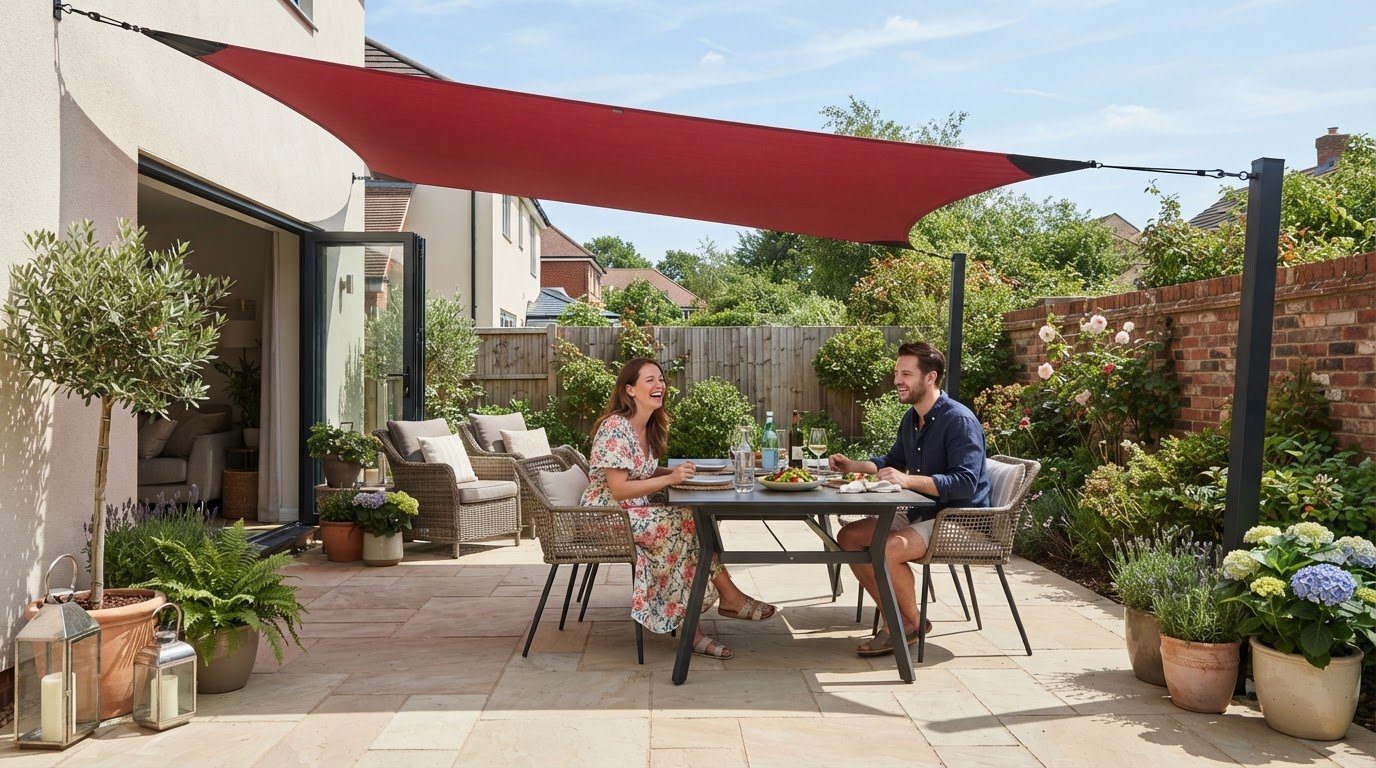
Patio Too Hot in Summer? How to Make It Comfortable
What if a patio too hot to use in summer isn’t just a paving problem? Direct sun can make a seating area uncomfortable, while paving and nearby walls may absorb heat and radiate it back after the sun has moved on. Without shade in the right place, even a lovely outdoor space can sit unused during the brightest part of the day.
If you’re struggling to enjoy your patio, start by noticing when sunlight reaches it and which areas need cover. That gives you a more practical starting point than choosing a shade option by appearance alone.
This guide explains why patios heat up and how to plan useful shade around your layout, the sun’s direction and the way you use the space. Sail Shades Direct designs, makes and professionally fits bespoke outdoor shading, including sail shades, rolling sun sails, arm awnings, giant umbrellas and exterior blinds. Comparing these options against your patio’s needs can help you make better use of it through the summer.
Key Takeaways
- Notice when and where direct sun makes your patio uncomfortable to identify the shade you need.
- If your patio is too hot to use in summer, prioritise the seating or dining area you use most.
- Compare sail shades, rolling sun sails, arm awnings, giant umbrellas and exterior blinds by placement and coverage.
- Sketch your patio, doors, paths and activities to make shade planning practical.
- Bring your use times and priority areas together in a clear brief for a bespoke outdoor shading plan.
Why does your patio get too hot to use in summer?
An inviting patio can become uncomfortable when summer sun falls directly on the table, chairs and paving. A patio too hot to use in summer isn’t always a sign that the whole day is exceptionally warm. Its orientation, how long sunlight reaches it and the lack of overhead shade can all contribute. A sun-facing patio may feel exposed for hours, even when another part of the garden is more comfortable.
In practical terms, patio overheating is when direct sunlight and warmth from exposed surfaces make it unpleasant to use the space as usual. Lunch at the table might feel uncomfortable, or a seat that’s pleasant in the morning may become difficult to use later. That pattern can point to when and where the sun reaches the patio, rather than general warm weather alone.
Shade placement matters more than simply adding cover.
How sunlight and exposed surfaces affect patio comfort
The sun’s path shifts through the day, so a patio’s orientation influences which areas receive direct light and when. A seating spot beside the house might be shaded early on, then exposed around lunchtime. Later, the shade may move across the dining area while another part of the patio stays bright. As a result, comfort can vary from one spot to another.
Paving and nearby walls can also feel warm after prolonged sun exposure, adding to discomfort even when you’ve moved out of direct sunlight. In built-up surroundings, the Urban Heat Island Effect describes how surfaces such as pavement and buildings absorb and retain heat. If your patio is too hot to use in summer, consider the surfaces around your seating as well as the overhead sun.
Why the hottest part of the day can leave seating unusable
As the sun moves, shade from the house, a fence or nearby planting shifts too. A shaded patch that covers your chairs in the morning may no longer reach them later in the day. With little overhead cover, you may find there’s nowhere comfortable to sit during the hours you most want to use the patio.
Before choosing a solution, note when discomfort starts and which areas are affected. Shade planning can improve comfort in the places you use, but it can’t control the weather or ensure identical conditions every day. A few observations can help distinguish a sunny dining spot from a patio that feels uncomfortable more broadly.
- Notice whether discomfort is strongest in the morning, around midday or later in the afternoon.
- Identify which seats or activities are exposed when the patio becomes unpleasant to use.
- Watch how the house, walls and other existing features cast shade as the sun moves.
These patterns help you decide whether the main need is cover for a particular seat at a particular time, or shade across a larger area. Covering the whole garden may not be necessary if direct sunlight mainly affects one seating zone. Keep your observations in mind as you consider where useful shade needs to fall.
How shade makes a patio more comfortable in summer
Shade limits direct sunlight over the parts of the patio where you want to sit, eat or play. It can make a seating area more inviting without covering every square metre of the garden. Broad coverage may be unnecessary if the main issue is a sunny table at lunchtime. A family using the patio throughout the afternoon, however, may need shade over a larger area.
Effective patio shade matches the coverage to how you use the space and when the sun reaches it.
Shade also changes how the space feels to use. A shaded chair gives you somewhere to sit out of direct sun, while a covered dining spot can make outdoor meals more appealing. It won’t control the weather or guarantee a particular temperature, but thoughtful positioning can reduce direct sun exposure where comfort matters most. The EPA’s guidance on heat islands and cooling strategies also discusses shade as one way to address heat in outdoor environments.
Plan shade around the hours you use the patio
Start by noting which parts of the patio are sunny or shaded at different times. Check in the morning, around lunchtime and later in the afternoon, then consider when you’re most likely to use the space. If lunch outside is the priority, the shade needs to cover the dining area at that time. For evening use, the sun’s position and the areas it reaches may call for a different coverage plan.
A quick sketch or note on your phone can help you record the pattern. Mark where existing shade falls and whether it moves away from the seats you use most. The direction and extent of coverage you need depend on both that movement and your routine. This is a practical first step if you’re looking for ways to make a patio too hot to use in summer more comfortable.
Focus coverage on people and activities
Rather than defaulting to full-site coverage, prioritise the activity zones that matter: perhaps a table for family meals, a pair of chairs for relaxing or a play area. Think about where furniture sits and whether its position changes. If you regularly move chairs to follow the shade, the coverage may not be aligned with how you use the patio.
Allow for access too. A shaded seating area is less useful if reaching it means squeezing around furniture or blocking the route between the house and garden. Sketch the table, chairs, doors and paths together, then consider where shade can cover people without getting in the way of everyday movement. This helps you assess whether a sail shade, awning or giant umbrella suits your layout. The aim is useful, well-placed coverage, not simply more shade everywhere.
Sail Shades Direct designs and fits bespoke outdoor shade for spaces across the UK, with options planned around individual layouts. Explore bespoke patio shading solutions as you consider coverage for your patio and routine.
Which patio shade solution suits your space and routine?
The right shade depends on more than the area you want to cover. Consider your patio’s shape, where shade can be positioned or attached, and whether you need cover for one seating spot or a wider area. If your patio is too hot to use in summer, compare options by placement and coverage rather than assuming one type suits every layout.
| Shade type | Typical placement | Coverage approach | Flexibility to consider |
|---|---|---|---|
| Sail shades | Over an open patio area | Overhead coverage across a planned zone | Designed around the space and its layout |
| Rolling sun sails | Above a patio or seating area | Overhead shade in a rolling arrangement | Consider if you want an adjustable shade arrangement |
| Arm awnings | Extending from a building | Coverage alongside the house | Suited to patios positioned by an external wall |
| Giant umbrellas | Within a suitable open area | Freestanding coverage around a defined spot | Consider how placement relates to furniture and access |
| Exterior blinds | At an exterior opening | Coverage against low-angle sun | Useful to consider where sun reaches from the side |
Use these as starting points, not rigid rules. Attachment positions may influence which arrangements fit your home, while doors, paths and furniture affect where coverage can sit. Decide whether you want to shade a table, a lounge area or both, and whether the main issue is overhead sun, low-angle light or changing coverage. For more design considerations, explore this guide to bespoke sail shades.
When a sail shade or rolling sun sail may fit
If overhead coverage is the priority, a sail shade can define a shaded zone above the patio. Its placement can be planned around the area you want to use, with the layout helping shape the design. Rolling sun sails may suit a brief that calls for an adjustable shade arrangement. Find more detail in the guide to motorised rolling sun sails.
When an awning, umbrella or exterior blind may fit
An arm awning is worth considering when you want shade extending from the building over a nearby patio. A giant umbrella offers a freestanding approach that may suit a layout with room to position coverage around furniture. If low-angle sun is part of the problem, exterior blinds can provide coverage at the relevant opening. The CDC’s heat stress guidance explains the importance of managing heat exposure; shade can contribute to a more comfortable place to spend time outdoors.
Sail Shades Direct designs, manufactures and professionally fits bespoke outdoor shading across the UK. Explore bespoke outdoor shading to consider a solution tailored to your patio.
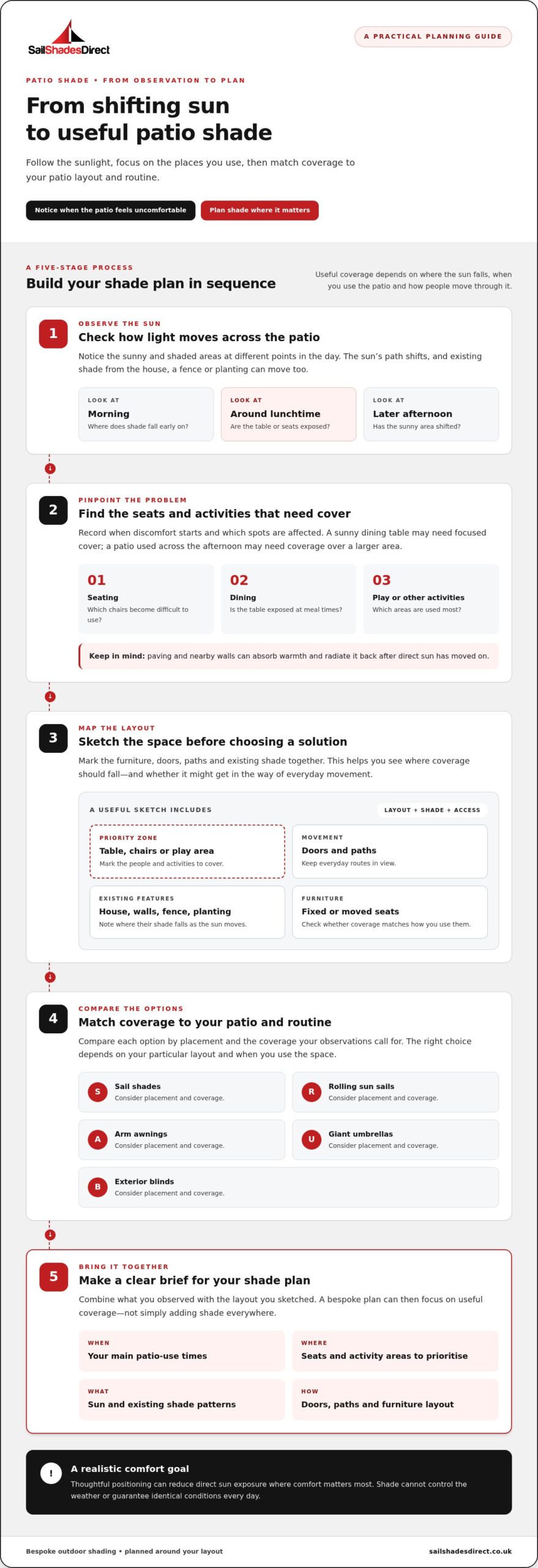
How to plan patio shade that works through summer
A useful shade plan starts with your patio as it is, not with a product in mind. Record where sunlight falls, how you use the space and what could affect shade placement. This helps focus on practical coverage for everyday life, whether you want shade over a dining spot, a favourite seat or an area used by children.
Map the sun, seating and daily activities
Observe the patio at different times of day and note when direct sun reaches the main seating or dining area. On a simple sketch, mark existing shade, where people gather and the routes they use between the house and garden. Include the hours when the patio is least comfortable. A clear pattern can show which zone needs attention first.
- Observe the sun. Note when direct sunlight reaches the patio and how existing shade changes during the day. Include the hours when the space feels least comfortable.
- Map activities. Sketch the patio and mark seating, dining or play areas, along with doors and paths. Show where people actually sit and move, not just the outline of the paving.
- Identify coverage needs. Decide which areas matter most and when you use them. Consider whether shade needs to cover one defined spot or a broader part of the patio.
- Consider suitable shade types. With the layout and use in mind, compare overhead, building-mounted or freestanding shade. Consider whether the coverage should be fixed or adjustable.
Match the shade plan to the patio layout
Next, look at how possible shade positions relate to the house and its surroundings. Building attachment points may influence where a building-mounted option can sit, while open areas may allow a freestanding arrangement. Nearby walls, fences and planting can affect both existing shade and usable space. Keep doors, windows and circulation routes clear on your sketch.
If low-angle sun reaches the patio from the side, exterior blinds may be worth considering as part of the plan. This guide to exterior blinds for patios explores that type of coverage. For any option, consider how it fits with furniture, everyday access and the areas you want to keep open. The aim is to make shade useful without disrupting the way you move through the space.
Shade brief checklist: Note when you use the patio, which areas need cover, where doors and paths run, what existing shade is available and whether you prefer fixed, adjustable or freestanding coverage.
These observations give you a clearer brief for a tailored solution. Sail Shades Direct designs, manufactures and professionally fits bespoke outdoor shading across the UK. Plan bespoke patio shade around your layout and routine.
Make your patio usable again with bespoke outdoor shading
If your patio is too hot to use in summer, your observations can form a practical starting brief. Note when you want to sit outside, which areas matter most and how the layout affects possible shade positions. A clear picture of your routine helps focus the design on useful coverage, whether the priority is a dining table, a quiet seating corner or more than one part of the patio.
What a tailored patio shade project can address
A bespoke approach starts with the space and how you want to use it, then considers the coverage that suits those needs. The patio’s shape, its relationship to the house and the areas you want shaded all inform the design. There’s no single arrangement for every home: one patio may call for overhead coverage, while another may need a different approach shaped by its layout.
Sail Shades Direct designs, manufactures and professionally fits bespoke outdoor shading for homes across the UK. Options include sail shades, rolling sun sails, arm awnings, giant umbrellas and exterior blinds. These offer different ways to plan coverage, from shade over an outdoor seating area to addressing sun that reaches from the side. The design can be tailored to the patio rather than forcing the space to fit a standard arrangement.
Turn your summer shade plan into a project
To make your brief useful, bring together the details that explain how the patio works day to day. A sketch can show the shape of the space and the position of doors, windows, furniture and paths. Add the areas you’d like covered and the times direct sun causes the most disruption. These details help guide the design towards coverage that fits both the setting and your routine.
- Note the times you’re most likely to use the patio.
- Mark priority areas, such as dining, seating or play spaces.
- Show doors, windows, paths and any features that may affect shade placement.
- Describe where direct sun falls and whether you’re considering fixed, adjustable or freestanding coverage.
With a clear brief, planning, fabrication and professional fitting can come together around your home. Sail Shades Direct creates bespoke outdoor shading for residential and commercial spaces across the UK. Whether you’re considering a sail shade, an awning, a giant umbrella or exterior blinds, your observations help shape a design around your layout and the way you use it.
Ready to take the next step? Discuss your patio shading project and share what you’d like your outdoor space to do for you this summer.
Make room for more time outdoors
A patio too hot to use in summer doesn’t have to stay a space you avoid during the brightest part of the day. Think about what you’d like to do there more often: share meals outside, unwind with a book or make room for family time. That gives your project a purpose beyond adding shade and keeps decisions centred on how you want the space to feel and function.
Before taking the next step, write down your main priority in one sentence. For example, you might want a comfortable place to eat outside in the afternoon, or a shaded corner for relaxing after work. A clear goal makes it easier to shape a plan for your home, rather than choosing a solution simply because it looks appealing elsewhere. If your plans extend beyond shading into wider outdoor construction or remodelling, builders like theblackbearbuilds.com offer practical examples of how outdoor living areas can be comprehensively upgraded.
Sail Shades Direct brings bespoke design, fabrication and professional fitting together, with outdoor shading for homes and businesses across the UK. Discuss your patio shading project with Sail Shades Direct and start planning a space you’ll look forward to using.
Frequently Asked Questions
Why is my patio so hot in summer even when the air feels cooler?
Your patio may feel hotter because paving, walls and furniture have absorbed sunlight and continue giving off warmth after the air has begun to cool. Direct sun on your skin can add to that uncomfortable feeling, even on a breezy day. Compare a spot that has been shaded with one that has been in the sun, and notice whether the heat seems to come from exposure, warm surfaces or both.
Does adding shade make a patio more comfortable to use?
Yes, shade can make the part of a patio you use more comfortable by reducing direct sun on people and furniture. Covering the table, for example, may make lunch outdoors more appealing, even if the rest of the garden stays sunny. Shade won’t make the weather cool or remove warmth already held by paving, so think of it as improving conditions in a chosen area, not controlling the whole outdoor environment—whereas indoor spaces facing similar heat gain often rely on cooling systems from specialists like Engico Air Conditioning to regulate ambient temperatures.
Can a shade sail cover a patio attached to the house?
Yes, a shade sail can be considered for a patio beside the house, with the design planned around the space and available support positions. The house’s walls, doors and windows affect where coverage can sit, as do the size and shape of the area you want to shade. A sketch or photographs of the patio can help show its layout and how the outdoor area connects to the building.
What type of shade works best for a small patio?
There isn’t one best option for every small patio. If the area sits beside the house, an arm awning may be worth considering; a giant umbrella could suit a layout with enough room for its position. A sail shade may work where overhead coverage is the priority. Check how each option relates to doors, furniture and clear floor space before deciding what fits your routine.
Can I shade a patio where the sun moves during the day?
Yes, you can plan for changing sunlight by noting which areas need shade at the times you use them. A rolling sun sail may suit a brief that calls for an adjustable shade arrangement, while other layouts may benefit from coverage designed for a particular seating zone. If morning and afternoon use matter equally, record both patterns so the plan reflects the sun’s movement rather than just one moment.
How do I work out how much of my patio needs shade?
Start with the activity you most want to protect from direct sun, then mark the furniture or area it needs to cover. Allow for how people sit, stand and move around it, rather than measuring only the table or chairs. If you use separate zones at different times, note each one and its priority. This helps you describe the coverage you need without automatically planning to shade the entire patio.