
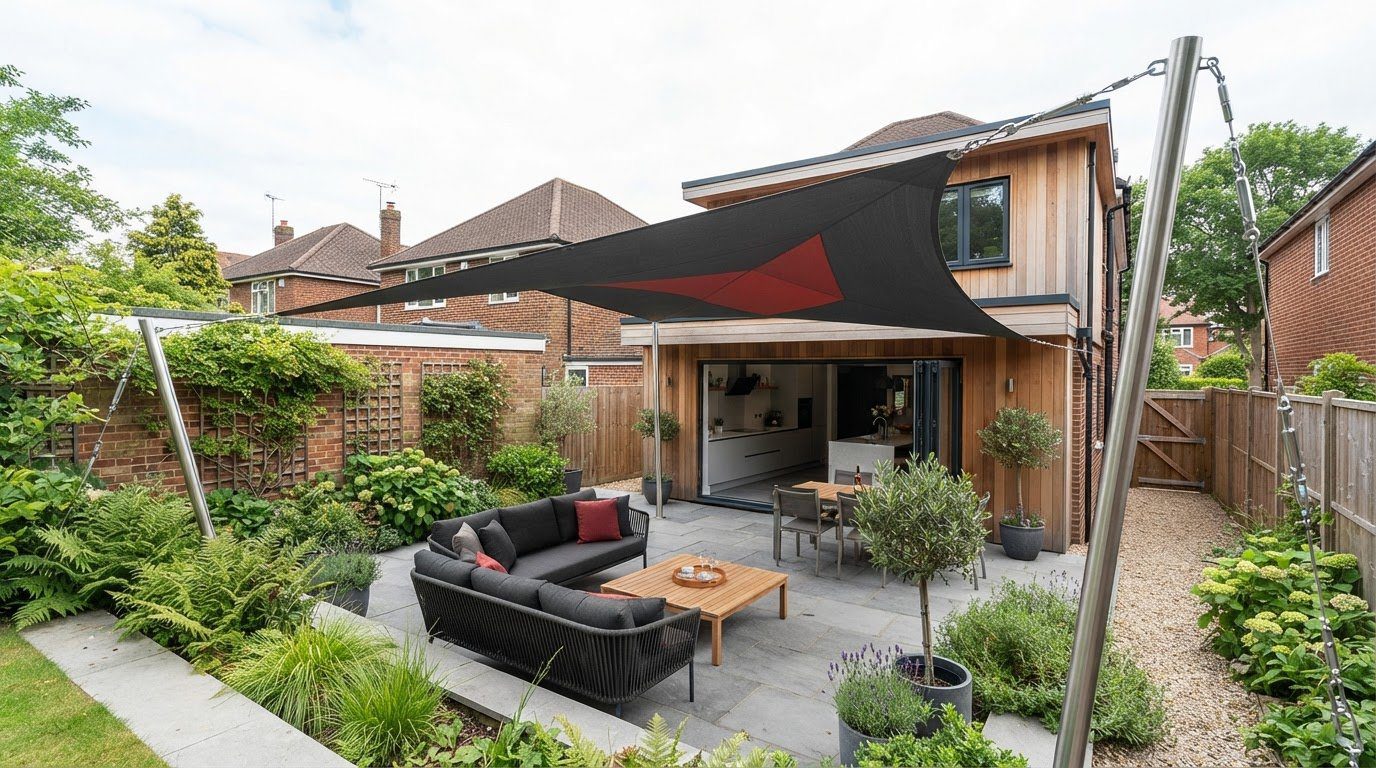
How Long Do High-Quality Sail Shades Last? A 2026 Guide
A high-quality sail shade can outlast a cheaper one by years, but fabric alone doesn’t determine its lifespan. If you’re wondering how long do high-quality sail shades last, industry estimates suggest around 10-15 years or more for a premium shade that’s properly fitted and maintained. Treat that as a guide, not a guarantee: sun exposure, wind, rain, installation and upkeep all play a part.
It’s understandable to feel unsure when lifespan claims vary, or to worry that British weather will wear a shade out quickly. The key is to consider the whole system, not just the material. A well-chosen fabric can still wear early if the design doesn’t suit the site or the shade isn’t fitted correctly. A fabric warranty, too, isn’t the same as a promise about the lifespan of the complete sail.
This guide explains what a realistic lifespan looks like, which conditions and design choices affect durability, and how simple care can help protect your shade and reveal signs of wear. It also explains how bespoke design and professional fitting can account for your space, intended use and exposure as part of a considered long-term plan.
Key Takeaways
- For how long do high-quality sail shades last, a useful industry estimate is 10-15 years or more for a premium shade that’s well fitted and maintained, but it isn’t a guaranteed service life.
- Assess the whole setup, including fabric suitability, exposure, tension and fixing points, rather than judging durability by material alone.
- Compare materials and designs against your site conditions and care needs. No single option suits every space.
- Help protect your shade with gentle cleaning and regular checks, following the fabric or manufacturer’s care instructions before using cleaning products.
- Bespoke design and professional fitting can bring your space, intended use and exposure into one considered durability plan.
How long do high-quality shade sails last in real-world use?
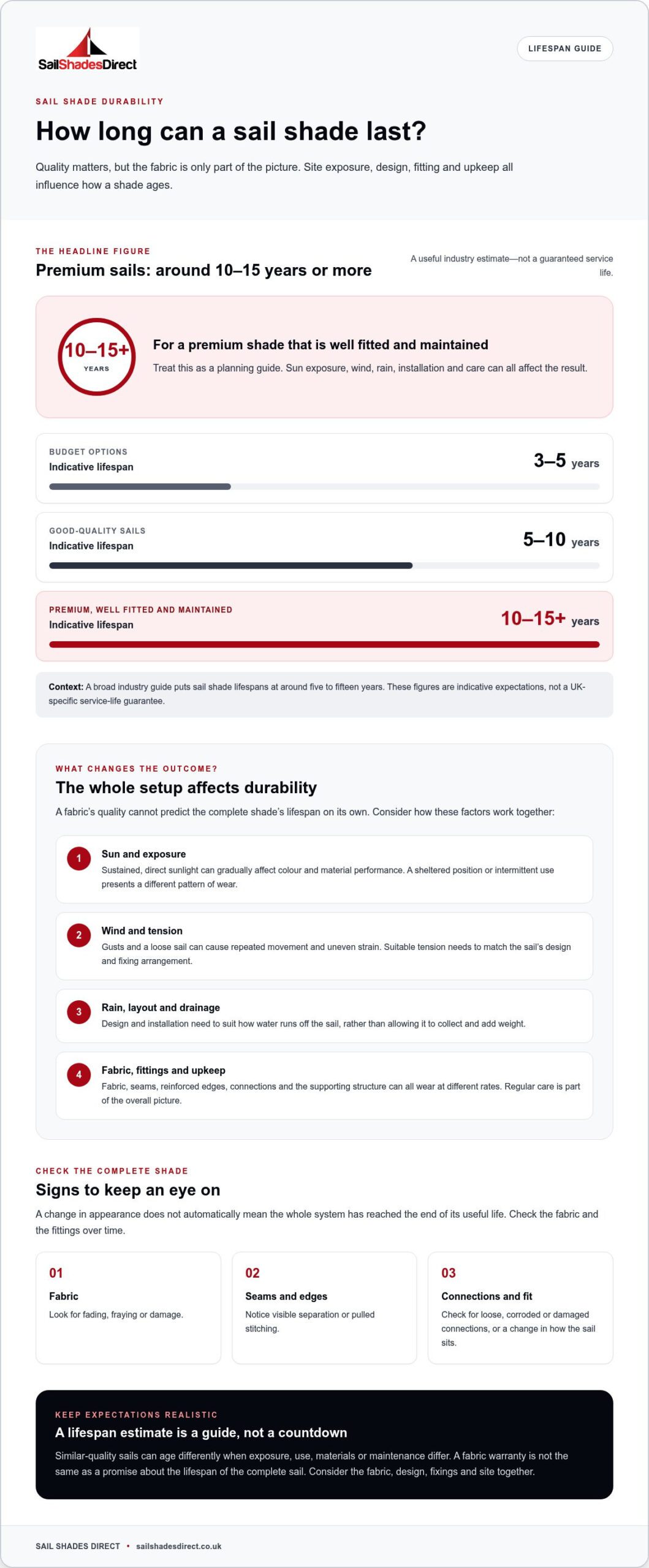
A broad industry guide puts sail shade lifespans at around five to fifteen years, but that range isn’t a promise for every product or installation. Estimates suggest good-quality sails may last around five to ten years, while premium sails that are well fitted and maintained may last ten to fifteen years or more. Budget options may have a shorter life, around three to five years. These are indicative expectations, not a UK-specific service-life guarantee.
So, how long do high-quality sail shades last in your space? It depends on the whole setup and how you use it. A shade exposed to strong sun or frequent wind may weather differently from one in a sheltered position. Fabric choice, tension, the condition of the fixings and regular care all influence how it ages. High quality can improve a shade’s potential durability, but it can’t prevent every effect of weather or everyday wear.
A lifespan estimate may refer mainly to the fabric rather than the complete shade. Seams, reinforced edges, fittings and the supporting structure can all wear at different rates. For a general introduction to how shade sails are used and constructed, see this Shade sail overview on Wikipedia.
What does a lifespan estimate actually tell you?
Think of a published estimate as a broad planning guide, not a countdown to replacement. It can help you compare expectations, but it won’t account for every site’s exposure, use, material or maintenance routine. Two sails of similar quality may age differently if one is used more often or faces harsher conditions. For a bespoke project, focus on how the design and materials suit the specific space rather than assuming an average applies exactly.
Which parts of a sail shade can wear differently?
Fabric may fade or show surface wear, while stitching, seams and edges experience strain. Connection hardware can corrode, loosen or wear, and the supporting structure needs to remain sound. A change in colour doesn’t automatically mean the whole system has reached the end of its useful life. Equally, fabric that still looks presentable doesn’t prove every fixing is in good condition. Assess the shade as a complete system over time.
- Look for changes in the fabric, such as fading, fraying or damage.
- Check seams and edges for visible separation or pulled stitching.
- Look for loose, corroded or damaged connections, and notice any change in how the sail sits.
These signs don’t all mean the same thing, but they can help you spot changes early. Understanding which conditions and design choices place the most strain on a sail will help you set a more realistic expectation for your space.
What affects how long a sail shade lasts?
Durability depends on how the fabric, design, fittings and site conditions work together. A fabric suited to one setting may not be right for another: a sunny, exposed area places different demands on a shade from a sheltered spot used occasionally. No single material label can predict how long a sail will last.
Consider the pattern of exposure, not just the weather on a typical day. Sustained sunlight can gradually affect colour and material performance. Gusty conditions can make a sail move, placing repeated strain on its edges and connections. Rain adds another consideration: the sail’s design and installation need to suit how water will run off, rather than allowing it to collect and add weight. Seasonal changes can also affect how often the shade faces these stresses.
How fabric and exposure work together
Fabric construction influences how a shade responds to sunlight and regular use, but suitability depends on the job. A breathable fabric, for example, allows air to pass through, while a more weather-resistant design may behave differently in wind or rain. Neither description alone tells you how long the complete shade will last. Consider the balance of shade, airflow and weather exposure your space needs, then assess the fabric as part of that plan.
Colour changes can be an early sign of sun exposure, but appearance is only one clue. The material’s condition and intended performance matter too. Regular, direct sunlight may make a difference over time, while a shaded position or intermittent use presents a different pattern of wear. These conditions interact, so comparing materials without considering the site can give a misleading impression of durability.
Why design and fitting matter to durability
A sail needs suitable tension to stay stable. If it’s too loose, it can flap in the wind and experience repeated, uneven movement. But tension must also suit the sail’s design and fixing arrangement. Simply pulling harder isn’t a durability strategy. The layout, connection points and supporting structure need to work together for the space and the forces the sail will face.
Imagine two similar shades. One is designed around its fixing positions and fitted to sit evenly; the other is forced to span awkwardly between unsuitable points. The second may place greater strain on particular edges or connections, even if its fabric is high quality. Professional fitting is one part of a long-term durability plan, not a guarantee of a fixed lifespan.
For a bespoke shade, considering the site, intended use and exposure together helps shape a more considered design. Explore bespoke sail shade design and bring those practical considerations into one project-specific plan.
How do sail shade materials and designs compare for durability?
Material labels can narrow your options, but they can’t tell you on their own how long a shade will last. Compare how the fabric is constructed, what it’s designed to do and how those qualities suit your space. A breathable shade and a waterproof one serve different purposes, with different considerations for airflow, rain and exposure. Neither is automatically the most durable choice for every setting.
Which fabric characteristics are worth comparing?
Look beyond fibre names. Construction, UV resistance, strength, colour retention and care requirements all matter, and product specifications can differ even within the same broad material category. Sustained sun can fade colour and affect performance over time, so consider how exposed the installation will be and what the fabric is designed to withstand. Use the table as a starting point, then compare the actual specification and care guidance for the fabric you’re considering.
| Characteristic | What it can mean in use | What to consider |
|---|---|---|
| Breathable, open-weave construction | Allows air to pass through and is commonly used for shade where airflow is useful. | Consider how much airflow and sun protection the space needs, alongside the fabric’s stated UV performance and care instructions. |
| Waterproof construction | Designed to resist rain, but its behaviour in wet or windy conditions depends on the design and installation. | Consider how water drains and whether the layout suits the site. Don’t assume a waterproof label means lower maintenance or a longer life. |
| UV-resistant specification | Indicates a focus on resistance to sun exposure, but claims and performance can vary between fabrics. | Review the specific product information, including any stated protection, colour-retention details and limitations. |
The best comparison is about suitability, not finding a universal winner. A fabric suited to a sheltered seating area may not be right for a more exposed location. If you’re weighing up how long do high-quality sail shades last, consider the fabric’s documented characteristics alongside construction, fitting and care.
Does a fixed or retractable design change upkeep?
A fixed shade stays in position, so its fabric experiences the conditions at the site whenever it’s installed. A retractable design can be opened or drawn back as use and conditions change, giving you another way to manage exposure. That flexibility doesn’t guarantee a longer lifespan: moving parts and operating habits also become part of the care routine. Follow the specific product’s operating and maintenance guidance.
Think about how you use the space. If you want shade in a regular, defined area, a fixed design may suit your routine. If you’d value being able to adjust coverage, explore the motorised rolling sun sails guide to understand that design approach. For either option, compare intended use, site exposure and care needs rather than choosing on price or a material label alone.
How can you help a high-quality sail shade last longer?
Consistent care can help you spot developing wear before it becomes harder to assess. Follow the fabric or manufacturer’s instructions, since cleaning methods and weather precautions can differ between designs. In strong winds or severe weather, follow the product guidance on whether the shade should be retracted or taken down. Don’t assume the same precaution suits every sail.
A simple sail shade care and inspection routine
Use this repeatable routine as a prompt, adapting it to the care guidance for your shade. Check it periodically and again after severe weather. A quick look may reveal changes that aren’t obvious during everyday use.
- Check the whole system. Look over the fabric, seams and edges, then inspect visible fittings and supports for looseness, corrosion or damage. Notice whether the sail sits as it usually does.
- Remove debris carefully. Clear away leaves and other loose material before it collects or stains. Read the fabric or manufacturer’s care instructions before choosing a cleaning product. Use only a method those instructions recommend, and avoid improvising with harsh products or tools.
- Respond to weather appropriately. Follow the design guidance for strong winds or severe weather. If the instructions call for retracting or removing the sail under particular conditions, act accordingly rather than leaving it exposed.
- Record changes. Note or photograph any fraying, new sagging or change in a fitting. Comparing observations over time can make gradual deterioration easier to recognise.
When should a sail shade be repaired or replaced?
Discolouration alone doesn’t necessarily mean a shade has lost its function. Fraying, torn fabric, separated seams, persistent sagging or loose fittings deserve closer attention because they may affect performance or safe use. A visual check can highlight a concern, but it can’t determine the full condition of hidden connections or establish whether a damaged sail can be repaired.
If you find significant deterioration, don’t treat it as routine cosmetic wear. Arrange a professional assessment, especially if the shade’s shape has changed, a connection appears compromised or damage has worsened after severe weather. An assessment can help establish whether the issue is limited to one part or involves the wider system. Repair or replacement will depend on its condition.
Checking the complete shade, rather than judging it by colour alone, gives you a clearer basis for decisions about its care. If you’re planning a new shade around your site and exposure, discuss a bespoke sail shade for your space with Sail Shades Direct.
Plan for long-term value with a bespoke sail shade
A durable choice starts with the space, not a lifespan claim or fabric label. Consider how you’ll use the area, how much coverage you want and what conditions the shade will face. Sun, wind and rain, along with the position of possible fixing points, all influence which design is suitable. Bringing these factors together helps you plan for a shade that works well in everyday use and is practical to care for.
Value is about more than how long the fabric lasts. The shade needs to suit its setting, be designed around the site and be fitted as a complete system. No design can remove all weathering, but project-specific planning can help avoid mismatches between the space, intended use and shade selected.
What to consider before investing in a sail shade
Start by identifying the area you want to cover and what you’ll do beneath the shade, such as seating, dining or creating a more comfortable outdoor work area. Note where sunlight falls, how exposed the space feels and which potential fixing locations are available. Think about whether you want a permanent arrangement or prefer to adjust the coverage as your needs change. These details give the design a clear purpose.
A bespoke sail shades guide can help you explore the decisions involved. Use it to clarify your priorities: shade coverage, fabric suitability, layout and how the finished sail will fit into your outdoor space. The clearer your needs, the easier it is to weigh trade-offs rather than choosing by price or a broad product description alone.
How bespoke design supports a longer-term plan
Bespoke design lets the site and intended use shape the solution. Sail Shades Direct designs and manufactures bespoke shades, then professionally fits them across the UK. This brings the project’s requirements together, including the layout and how the shade will be used. Professional fitting is one part of a durability plan, not a promise of a particular service life.
So, how long do high-quality sail shades last? A broad industry estimate offers context, but your shade’s lifespan depends on its materials, exposure, use, fitting and care. The more useful decision is whether the complete design suits your space and whether you understand how to maintain it. A considered fit can support a practical long-term choice without suggesting that any sail is immune to wear.
If you’re weighing up a shade for your garden, patio or another outdoor area, bring your plans and priorities together. Speak with Sail Shades Direct about a bespoke outdoor shading project and explore an option designed around your space, intended use and exposure.
Turn your outdoor space into a clear brief
Before choosing a shade, spend a little time noticing how you use the space. Where would shade make the greatest difference? Do you need coverage throughout the day, or mainly at particular times? A quick sketch showing the area, preferred coverage and possible fixing positions can make your priorities easier to explain, whether you’re planning for a home or a commercial setting.
This practical starting point is more useful than expecting one lifespan figure to fit every project. The question of how long do high-quality sail shades last makes most sense alongside the conditions and requirements of your space. A well-matched plan gives you a sound basis for choosing a shade you can enjoy and care for over time.
Ready to explore a tailored option? Explore bespoke sail shades for your outdoor space and take the next step towards making your plans a reality.
Frequently Asked Questions
How long should a high-quality sail shade last?
A high-quality sail shade can last for many years, but no single figure applies to every installation. If you’re asking how long do high-quality sail shades last, treat any quoted range as an estimate tied to particular materials and conditions, not a service-life promise. Check whether it refers to the fabric alone or the complete shade, and read the assumptions about use, exposure and care before relying on it to plan for replacement.
Do sail shades last longer than cheaper shade sails?
A well-made shade may use more durable materials and construction, but a higher price alone can’t establish how long it will last. Compare documented details such as fabric performance, seam and edge construction, and the fittings supplied. Also consider whether the shade is intended for the exposure at your site. A product poorly matched to its conditions may wear sooner than a less costly option used within its design limits.
Can strong wind damage a sail shade?
Yes. Gusts can place stress on the fabric, seams, connections and supporting points. Before severe weather, follow the precautions specified for your shade, such as retracting or removing it if its guidance calls for that. Afterwards, check from a safe position for new tears, a change in tension or movement at a fixing. If anything seems compromised, keep clear and arrange a professional assessment before putting it back into use.
How often should I clean and inspect a sail shade?
Inspect it periodically and after severe weather, then clean it according to the fabric’s care instructions rather than following a universal timetable. A shade beneath trees, for example, may collect leaves or bird mess that needs prompt attention; a cleaner, more sheltered setting may need less frequent cleaning. Keep a simple record of checks and changes. It can help you distinguish gradual fading from a recent tear or loosened connection.
Does a waterproof sail shade last longer than a breathable one?
No. Waterproofing describes how a fabric is intended to handle rain, not the lifespan of the complete shade. If keeping rain off a particular area is your priority, consider the fabric’s stated suitability and how the design deals with water. If airflow matters more, a breathable fabric may better suit the purpose. Compare documented specifications against the job rather than treating waterproofing as a measure of durability.
What are the signs that a sail shade needs replacing?
There isn’t one visual sign or age that automatically means a shade must be replaced. Fading may be mainly cosmetic, while a tear, frayed seam or damaged fitting could affect performance or safe use. Note where the change is, how extensive it appears and whether it’s getting worse, then have the complete shade assessed. Don’t judge its condition by appearance alone or assume every damaged sail can be repaired.
Can I leave a sail shade up all year?
That depends on the shade’s design, materials, fitting and exposure. Some products may need to be retracted or taken down in certain conditions, so don’t assume a robust-looking fabric is intended for permanent exposure. Follow the product’s seasonal and weather guidance. If removal is part of its care, consider in advance how you’ll do this safely and where you’ll store the shade in line with its instructions.
Does professional installation make a sail shade last longer?
Professional installation can help ensure the layout, tension and fixing points are considered for the site, but it can’t prevent natural wear or guarantee a particular lifespan. The supporting structure also needs attention over time. Keep the product and fitting information somewhere accessible, so you can follow the correct operating, care and weather guidance as conditions and your use of the outdoor space change.