
Alternatives to a Traditional Garden Parasol: Find the Right Shade in 2026
The best alternative to a garden parasol might not be another umbrella. If its pole or base gets in the way, or its canopy leaves part of your seating in full sun, it’s worth considering alternatives to a traditional garden parasol that better suit the way you use your outdoor space. A parasol can still be practical when you want movable shade for one spot.
Choosing between a shade sail, awning, exterior blind, pergola or giant umbrella means weighing up more than appearance. Start with the area you want covered, whether the shade needs to be adjustable and how permanent you want the installation to be.
This guide compares the main options by coverage, flexibility, floor space and installation. It also explains how bespoke sail shades, rolling sun sails, arm awnings and giant umbrellas can work in different outdoor layouts, and when a traditional parasol may still make sense.
Key Takeaways
- Explore alternatives to a traditional garden parasol by starting with the area you want shaded, rather than choosing by appearance alone.
- Compare shade options by coverage, flexibility, floor space and how they attach to your home or garden.
- Map furniture and access routes to see whether a freestanding or fitted solution will work better in your outdoor space.
- Consider when a parasol may suit your routine and when another approach could fit the space better.
- See how bespoke outdoor shading can bring design, fabrication and professional fitting together for your space.
Looking beyond a traditional garden parasol: when does another shade solution make sense?
A traditional garden parasol remains a practical choice for movable shade over a defined seating or dining spot. You can reposition it as the sun moves, which is useful if you rearrange your furniture or use different parts of the garden at different times. If you only need occasional cover, a fixed installation may be more than you need. The question is whether a parasol still suits the way you use your garden.
Pinpoint what is not working before you compare alternatives. Is the shaded area too small? Does the pole interrupt your furniture arrangement? Do you want cover across a space where the seating stays in one place? These details help you decide whether to keep a flexible, freestanding option or explore alternatives to a traditional garden parasol. Each involves different trade-offs, so consider your layout, routine and preference for a fitted solution.
What can a traditional parasol do well?
For occasional shade over a compact patio table, a parasol is straightforward and adaptable. Its mobility is useful if you rearrange furniture, use different parts of the garden or want to move the shade during the day. It may also suit a household that needs a shaded spot now and then, rather than broader coverage across a regular seating area.
Consider how often you use the area and whether the parasol shades the places where you sit. If it does, there may be little reason to replace it. If you regularly shift chairs to stay in the shade, or the parasol’s position limits how the space works, compare other options.
When might you want more than a parasol?
A central pole can restrict where a table or chairs fit. A broad base can also use valuable floor space or interrupt the route between the house and garden. This is especially noticeable in a compact seating area, where clear walkways matter. If your furniture stays in one place, repositioning the parasol may be less useful than planning shade around that layout.
Coverage is another reason to look beyond a parasol. One canopy may shade a table but leave nearby chairs, a doorway or another part of the patio exposed. If you regularly use more than one outdoor area, a single movable shade point may not match your routine. Alternatives include fitted options such as arm awnings and exterior blinds, and overhead coverage from sail shades or rolling sun sails. A Pergola is another structural garden feature to consider, although it has different space and installation requirements.
A parasol provides localised, movable shade; a designed shade solution can be planned around the area you want to use. Neither is universally better. Decide whether flexibility is your priority or whether you want coverage that works with the space as a whole.
What are the main alternatives to a traditional garden parasol?
The right alternative depends on where the sun reaches and how your outdoor space is arranged. Some options provide overhead cover across a planned area; others suit a building-side patio, a larger seating spot or sunlight coming in from the side. Treat them as different ways to solve a layout problem, not as a ranking from best to worst. The design, position and requirements of your project all affect how well a solution works.
The main options include sail shades, rolling sun sails, arm awnings, giant umbrellas and exterior blinds. Pergolas are another general category, with a more structural approach to garden shade. Resources such as the Natural Learning Initiative’s Affordable Shade Options also show how shade planning can include different structures and natural elements.
Sail shades and rolling sun sails for designed overhead shade
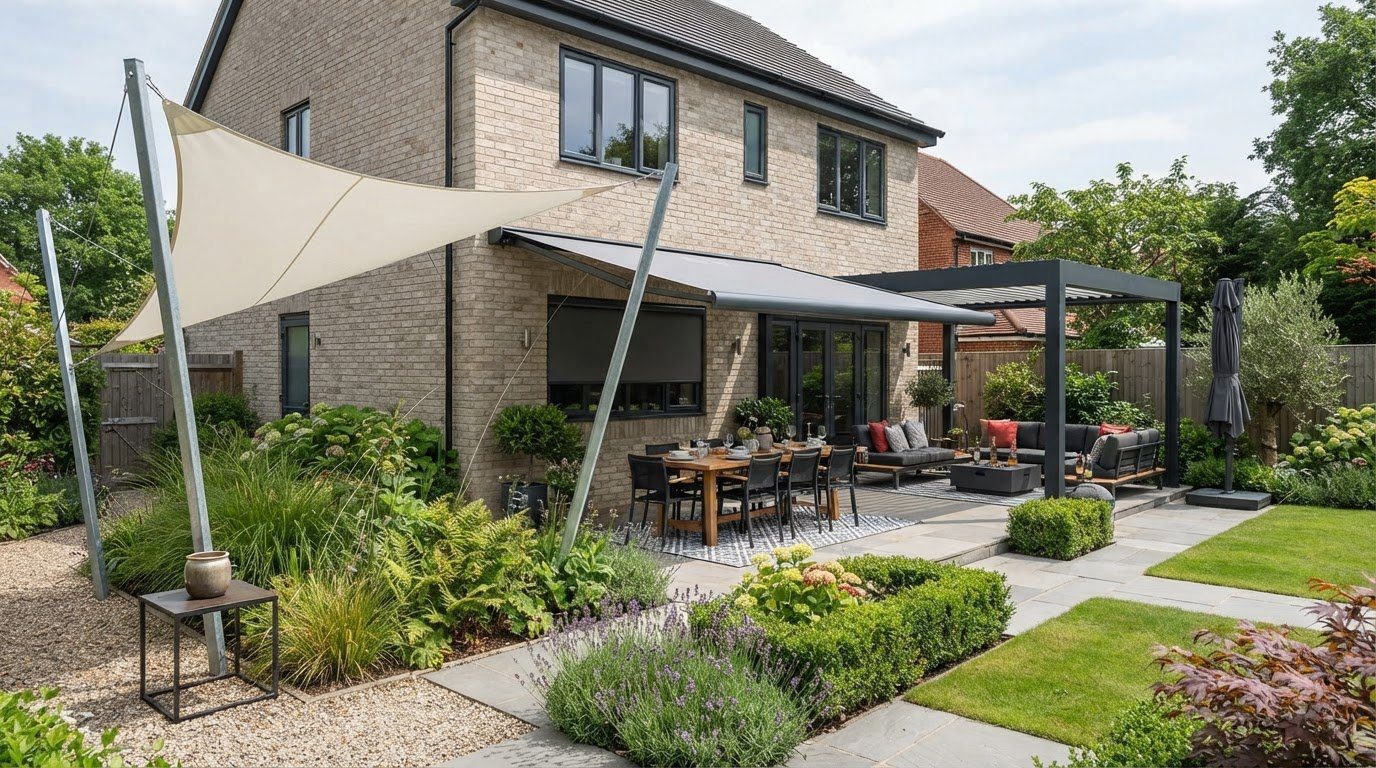
A sail shade can be designed to cover a defined outdoor area without placing a parasol pole in the middle of it. This can suit a patio where you want more freedom to arrange a table and chairs, or need to shade an area spanning more than one piece of furniture. A bespoke design considers the shade in relation to the space, rather than treating it as a movable accessory.
Rolling sun sails offer another approach when you want adjustability. To compare the options, start with the area to cover and how you use it. For more detail on tailored overhead coverage, read this guide to bespoke sail shades.
Awnings, giant umbrellas and exterior blinds for different layouts
An arm awning may suit a layout where shade attached to the building works better than a freestanding canopy. It can provide coverage beside the house, making it an option to consider for a patio or seating area close to the wall. The building and the coverage you want both matter, so consider how the outdoor space relates to the potential attachment point.
Giant umbrellas provide an umbrella-style option for a larger, defined shaded area. They may suit a space where you prefer freestanding shade but need to think beyond a compact parasol. Exterior blinds address a different angle: they can help manage sun exposure from the side, complementing overhead shade when low sunlight reaches an outdoor area.
These options address different needs. First decide whether you want broader overhead coverage, shade beside a building, a larger umbrella-style option or help with side-on sun. Sail Shades Direct designs, fabricates and professionally fits outdoor shading systems across the UK for residential and commercial spaces. To explore the available approaches, view bespoke outdoor shading.
Garden parasol alternatives compared: which trade-offs matter most?
Compare shade options by how each fits your space, rather than looking for a universal winner. The table below is a starting point. Actual coverage and flexibility depend on the design, position and project requirements. Note the area you want shaded, whether you need to adjust the cover and how much clear floor space matters.
| Option | Coverage area | Adjustability | Floor space | Attachment and planning |
|---|---|---|---|---|
| Traditional parasol | A defined spot, such as a table or seating area | Movable; reposition as needed | Pole and base occupy space | Freestanding; plan around the base and furniture |
| Sail shade | A planned overhead area | Generally designed to stay in position | No central parasol pole | Requires a layout planned around its attachment points |
| Rolling sun sail | An overhead area suited to the chosen arrangement | Designed for a more adjustable approach | Can keep the shaded area clear of a central pole | Consider the layout and how the system will be fitted |
| Arm awning | An area alongside a suitable building | Can provide an adjustable approach to shade | No freestanding base in the seating area | Attached; the building and position inform planning |
| Giant umbrella | A larger defined area, depending on design and position | Freestanding and positionable | Needs space for its support and base | Plan its position around furniture and movement |
| Exterior blinds | Side-on sun exposure at a suitable opening or outdoor area | Can be adjusted to suit the arrangement | Doesn’t require a parasol base on the ground | Fitted in relation to the building and opening |
How much coverage and flexibility do you need?
For one table used occasionally, movable shade may be enough. If you want to cover a wider patio or a fixed seating arrangement, compare each option’s footprint with your furniture plan. Mark the area you want shaded, then note where people walk, doors open and chairs need room to move. This helps you judge whether one shade point will work or whether a designed-in-place solution better suits the layout.
Adjustability matters too. A parasol can be repositioned, while a rolling system offers another way to manage shade. A sail shade is planned around a selected area. None is automatically right for every garden. Decide whether you prefer to move the shade, adjust it or have it planned around the layout.
What changes when shade is attached or professionally fitted?
Freestanding options do not need to be planned around a building, but their poles or bases still need a place. Attached and professionally fitted systems require more site planning: where the shade will sit, what it will attach to and how it relates to the outdoor layout. These details shape the installation and the area covered. For more on adaptable overhead coverage, see the rolling sun sails buying guide.
The best alternative depends on the area you want to shade and how much flexibility you’d like. Use these priorities to narrow your options, then compare how each one fits your furniture, access routes and installation needs.
How to choose a garden parasol alternative for your space
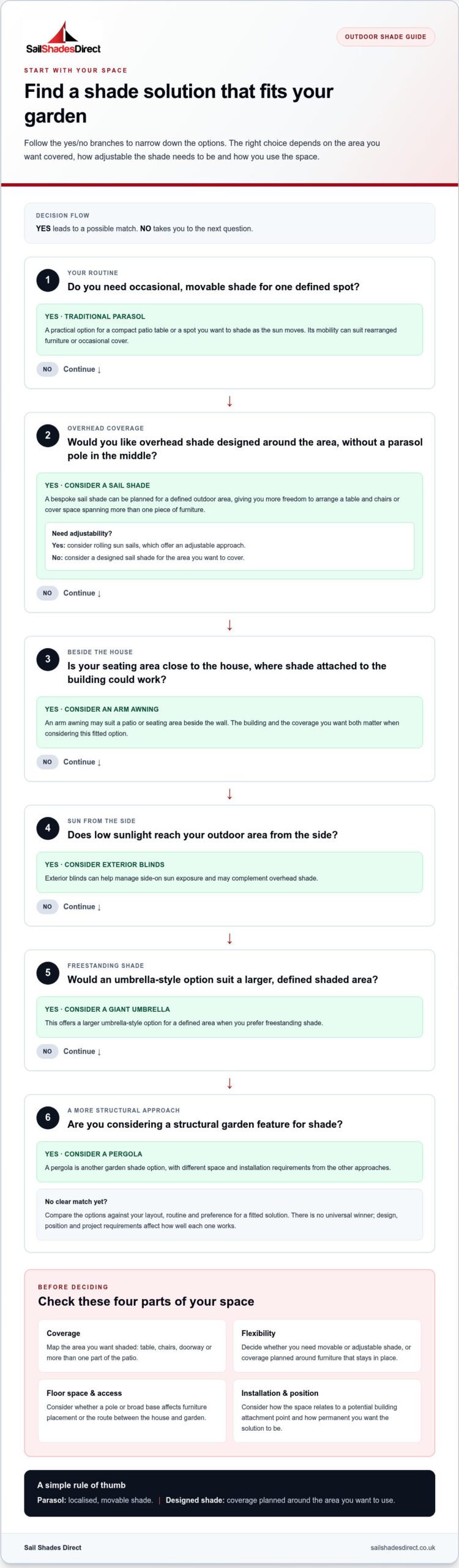
Start with your routine, not a product name. Think about what you do outdoors, where you do it and whether the shade needs to move with you. Then map the area you want to cover against the furniture, doors and routes people use. This practical check can narrow the alternatives to a traditional garden parasol without assuming one system suits every garden.
Start with the area, activity and daily routine
Identify the main activity you want shade for, such as dining, relaxing or sitting near a doorway. Note when you usually use the spot and which parts need cover. A quick sketch can show the seating, table, access routes and the area you want shaded. Then decide whether you want to reposition the shade as your routine changes or prefer coverage planned around one regular area.
- Define the use. Choose the main activity and location first. If dining is the priority, mark the table and allow room to move the chairs comfortably.
- Map the footprint. Sketch the outdoor area and shade zone, including furniture, doors and paths. This shows whether the area is compact or extends beyond one seating spot.
- Set your flexibility preference. Decide whether you value moving a freestanding option, adjusting a shade arrangement or keeping coverage focused on one area. This preference can help rule options in or out.
- Consider attachment and project needs. Note whether a building-side solution could suit the layout or whether you prefer freestanding shade. For fitted systems, the position and attachment points are part of planning, alongside the area to be covered.
Match the layout to a suitable shading approach
Compare options against your actual garden rather than relying on a general idea of how they look. A freestanding parasol or giant umbrella may suit a defined seating zone. Sail shades and rolling sun sails can provide planned overhead coverage. An arm awning may suit a layout beside a building, while exterior blinds can address side-on exposure. The best fit depends on your space and project requirements.
Check that the proposed shade will not obstruct a route or make furniture awkward to use. For an attached or professionally fitted solution, the site layout and attachment points also influence the design. A bespoke system can bring these details together when standard movable coverage does not match the area you want to use.
To explore a solution designed around your outdoor layout, view bespoke outdoor shading from Sail Shades Direct, with design, fabrication and professional fitting across the UK.
Explore bespoke garden shade beyond the traditional parasol
A parasol can be a good fit when you want movable shade for one seating spot. If you regularly rearrange furniture around its base or the coverage no longer suits how you use the garden, a bespoke solution may be worth considering. The aim is not to replace flexibility for its own sake. It is to find an approach that works with your space, routine and preferred level of adjustment.
Sail Shades Direct designs, fabricates and professionally fits outdoor shading systems for residential and commercial spaces across the UK. Options include bespoke sail shades, rolling sun sails, arm awnings, giant umbrellas and exterior blinds. Each suits a different layout. Start with the area you want to shade, how you use it and whether you want adjustable coverage or shade planned around a particular zone.
What a bespoke shading project involves
A bespoke project brings design, fabrication and professional installation together. Instead of placing a standard-size item wherever it fits, the system is tailored to the outdoor space and its requirements. The layout, intended coverage and relevant attachment points all inform the design. If an awning may suit your building and patio layout, this professional guide to arm awnings can help you understand the category.
This joined-up process can be useful when shade needs to work around a fixed table, a particular seating area or a route through the garden. A sail shade can provide planned overhead cover; rolling sun sails offer an adjustable approach; arm awnings suit building-side layouts; giant umbrellas provide a larger umbrella-style option; and exterior blinds can address side-on sun. The right direction depends on the project, not a universal rule.
Choose a next step that fits your garden
Before exploring a category, identify the area you want shaded, the activity that happens there and how much flexibility you prefer. Consider whether a freestanding option still makes sense or whether fitted coverage better suits your usual furniture arrangement. These priorities make the choice more manageable and give you a clearer basis for considering a tailored system.
If an arm awning is on your shortlist, consider how the patio sits alongside the building. For overhead shade, compare a sail shade with a rolling sun sail. If sunlight reaches from the side, exterior blinds may be relevant; if you prefer an umbrella-style solution, consider a giant umbrella. Each option has different planning needs, so keep the intended coverage and site layout in view.
In short, choose by area, activity, flexibility, attachment and project requirements. If movable coverage no longer fits your outdoor space, explore bespoke garden shading with Sail Shades Direct.
Plan a shade solution that grows with your garden
Choosing among the alternatives to a traditional garden parasol is also a chance to think beyond one sunny afternoon. How would you like the garden to work over the coming seasons? You might want to make room for a larger dining area, create a quieter place to sit or connect an outdoor space more closely with the house. Considering these plans can help your shade choice support the way you hope to use the garden.
Take a few photos of the space at different times of day and note what you would like to change. Consider where shade would make the biggest difference and which parts of the layout you want to preserve. You do not need a finished plan; a clear sense of your priorities is a useful starting point.
Ready to take the next step? Explore bespoke outdoor shading for your garden with Sail Shades Direct and choose an approach shaped around your space.
Frequently Asked Questions
Can I use a shade sail instead of a garden parasol?
Yes. A shade sail can replace a garden parasol if you want planned overhead coverage rather than shade you can move. Its position depends on the space and attachment points, which may suit a patio where furniture stays in place. If you often change seating areas, a parasol may offer more flexibility. Compare the area you need covered with how readily you want the shade to shift.
What is the best alternative to a traditional garden parasol for a small patio?
There is no single best option for every small patio. The furniture layout and shaded footprint matter most. Measure the table or seating zone, then allow room for chairs to move and doors or gates to open. If a parasol base would crowd a route, compare a fitted approach. If you often rearrange the patio, mobility may matter more. Choose according to how you use the space, not patio size alone.
Are awnings a practical alternative to garden parasols?
Yes. An awning can be practical when shade attached to the building suits the patio layout. For example, a seating area beside the house may be easier to cover with an arm awning than with a freestanding shade that needs a base. The building and the patio position influence how well this approach fits. Consider where the coverage should fall and how the outdoor area connects to the house.
Can exterior blinds provide shade when the sun is low?
Exterior blinds can help manage sun exposure from the side, which may be useful when low sunlight reaches a patio through an opening or along a building edge. They provide a different kind of shade from an overhead sail or parasol. Consider where the sun enters your space at the times you use it. If sunlight also falls from above, you may want to consider overhead coverage alongside side protection.
Do garden parasol alternatives need professional installation?
Not all of them. A freestanding parasol can simply be positioned, while a system attached to a building or planned around a particular area involves installation considerations. Attachment points, site layout and intended coverage can all shape the project. Professional fitting can be part of a joined-up design and installation process for bespoke outdoor shading. The right approach depends on the type of shade and how it relates to your property.
Can I combine a shade sail with another type of garden shade?
Yes. You can combine shade types if different parts of the garden have different needs. For example, overhead cover could serve a seating area while an exterior blind helps manage sunlight from the side. Consider how each shaded zone will be used and whether the solutions work together within the layout. Combining systems is not necessary for every garden, but it may help when one type of cover leaves another area exposed.
Are parasols still a good choice for occasional garden shade?
Yes. A parasol can still be useful when you want movable, localised shade for occasional use. It may suit a small table or a seating spot that changes position, without planning coverage around a fixed area. Consider other options if its base obstructs movement, the canopy does not cover the space you use or you want shade planned around a regular furniture layout. Your routine is a better guide than trends.