
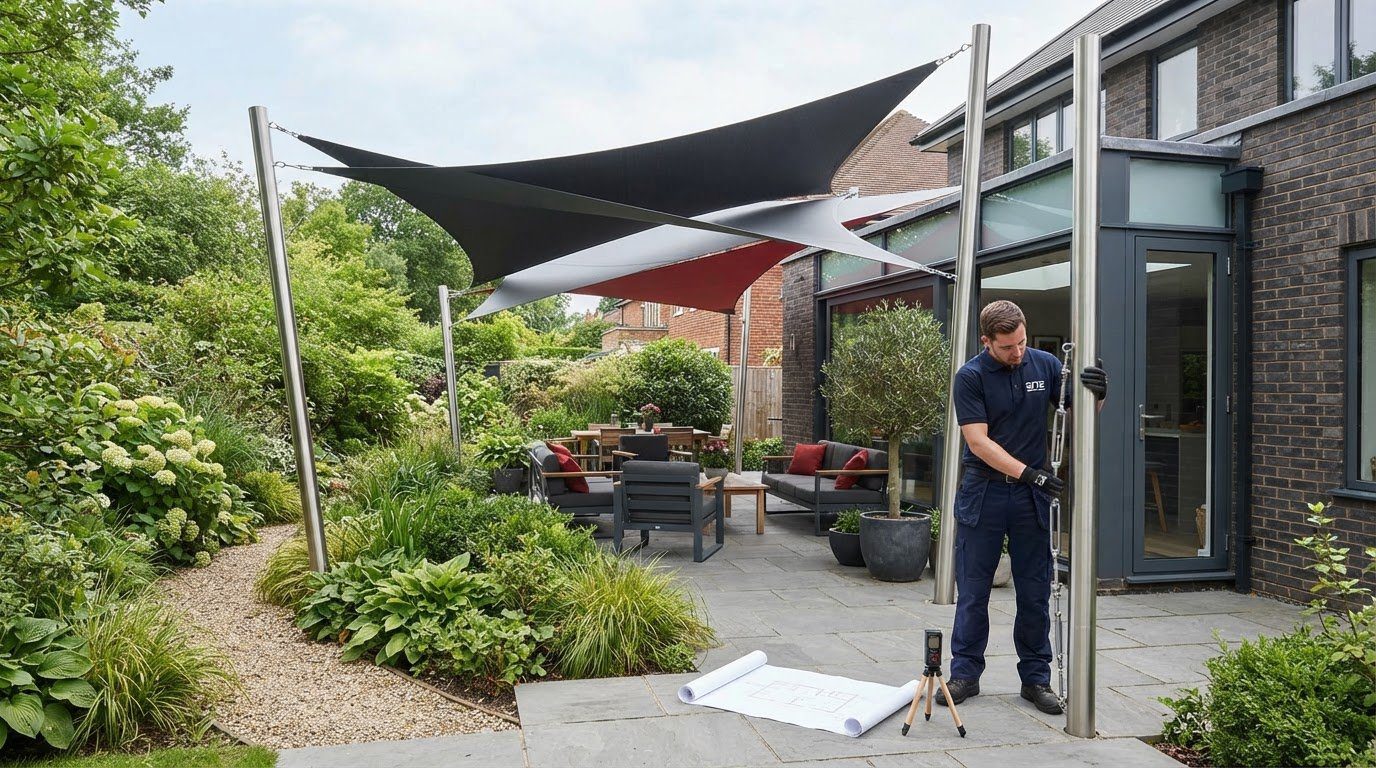
Bespoke Shade Sail Costs in the UK: A Clear Guide
What if the size of your sail shade isn’t the only factor that shapes its price? If you’re wondering “how much do custom sail shades cost UK?”, it’s natural to look for a simple figure. But the price of a ready-made shade may not reflect the design, fabrication and fitting involved in a bespoke project. Each space has its own requirements, so a useful quote reflects the project’s scope rather than a universal price list.
This guide explains the details that help shape a quote, including the setting, intended use, coverage and level of customisation. You’ll also see how ready-made shades compare with bespoke systems and when alternatives such as rolling sun sails, awnings, giant umbrellas and exterior blinds may suit your brief. Sail Shades Direct designs, manufactures and professionally fits outdoor shading solutions across the UK. By the end, you’ll know what to include in a project brief to make a discussion about a tailored quote more useful.
Key Takeaways
- There’s no universal answer to “how much do custom sail shades cost UK?” A tailored quote reflects the requirements and design of your project.
- Describe the space, how you’ll use it and the coverage you want to help identify a suitable solution.
- Ready-made shades, bespoke sails and alternatives such as awnings suit different spaces and levels of customisation.
- A useful project brief can explain whether the space is domestic or commercial, your coverage priorities and the shade type you’re considering.
- Sail Shades Direct designs, manufactures and professionally fits outdoor shading solutions across the UK.
Why custom sail shade prices vary from project to project
There’s no universal price for a bespoke sail shade because each project has a different brief. The right design depends on the space, how it will be used and the level of tailoring needed. That’s why “how much do custom sail shades cost UK?” can’t be answered with one standard figure: an online product price may describe a shade alone, rather than a designed, manufactured and professionally fitted project.
A custom sail shade is developed for a particular setting and purpose, rather than selected from a standard product listing. Covering an open area can call for a different approach from designing around a building or an unusual outdoor space. As the Shade sail overview explains, sails are tensioned fabric structures. How a shade is designed to fit its setting is part of what distinguishes a bespoke project.
Think of a quote as a reflection of project scope, not a standard rate. Scope describes what the shade needs to achieve and the work involved in designing and delivering a solution for that space.
What does a custom sail shade quote cover?
Choosing a ready-made shade is usually a product decision: you select an available option that meets your needs. A bespoke project starts with the space and the outcome you want, then develops a design around them. The two routes may involve different work, so their prices may not cover the same things.
A project discussion can cover design, fabrication and professional fitting. Sail Shades Direct provides these services and can advise on its wide fabric range, with solutions from basic ready-made shades to fully engineered bespoke systems. The work involved depends on the brief, so review the items described in your project quote rather than assuming every project includes the same scope.
Why an online price may not match your project
A product listing can help you understand the price of a particular shade option, but it may refer only to the product. It may not include the design work, fabrication choices or fitting needed for your space. Comparing that figure directly with a project quote can mean comparing different things.
For a more useful comparison, describe where the shade will go, what you want it to do and how much of the area you hope to cover. These details help frame the design conversation and define the project scope. A balcony, shop window display and outdoor event space each have a different setting and purpose. The clearer your priorities, the easier it is to discuss an appropriate solution and understand what the quote covers.
Which project details shape the cost of custom sail shades?
The cost of a custom sail shade depends on more than the area beneath it. The setting, intended use, coverage, fabric choice and design all help define the work involved. If you’re asking “how much do custom sail shades cost UK?”, these are the details to share for a useful project-specific discussion, rather than inputs to a standard price calculation.
Start with the space. Describe the area you want to shade, what happens there and which parts need cover. Explain how the shade should fit into everyday use, including any features or areas that need to remain clear. This gives the design team a practical understanding of your brief.
How the space and intended use inform the brief
A domestic garden and a commercial outdoor space can have different priorities. You might want shade over a seating area at home, while a business may be considering cover for an outdoor customer area or shop display. Explain who uses the space and what you want the shade to achieve, rather than focusing only on dimensions.
Unusual applications can also be part of the discussion. Sail Shades Direct’s work includes balcony surrounds, shop window displays and wedding tents, illustrating the variety of settings a shade may need to suit. If you can, note the area’s approximate measurements, features the design needs to work around and whether you want to cover the whole space or a particular zone. These details help make the initial conversation more focused.
How fabric and design choices affect the proposal
Fabric is another part of the brief. Sail Shades Direct offers a wide fabric range, and the team can advise on a choice for your application. You don’t need to arrive with a technical specification. Your preferences and a description of how you’ll use the space are a helpful starting point.
The design also shapes the work involved. A straightforward shade requirement may call for a simpler approach, while an unusual layout or request for a fully engineered structure may require more design and fabrication. The shape and outline of the sail are relevant alongside the area you want to cover, so share any particular design ideas or constraints you already have.
The type of shade you’re considering can help narrow the discussion. A bespoke sail, rolling sun sail, arm awning, giant umbrella or exterior blind may suit different spaces and coverage preferences. The right direction depends on what you want the shade to do and how it should fit the setting, rather than on one detail in isolation.
A clear brief makes a quote discussion more relevant: describe the space, its use, your coverage priorities and the design you have in mind. To explore a tailored sail shade, discuss your project with Sail Shades Direct.
Ready-made or bespoke sail shades: which route suits your budget?
The lowest upfront price isn’t automatically the best fit. A better choice is the option that meets your needs without adding design or project work you don’t require. If a ready-made shade suits the space and intended use, it may be a practical starting point. If your setting calls for a tailored design, a bespoke solution may be more appropriate. Comparing options by scope helps answer “how much do custom sail shades cost UK?” without relying on price bands that may not reflect your project.
Option
May suit
What to consider
Ready-made sail shade
A space where a standard product meets your coverage needs.
How well its available shape and size suit the setting and intended use.
Bespoke sail shade
A project that needs a considered design for its particular space.
The requested coverage, design and level of project tailoring.
Rolling sun sail
A project where this shade type is a better match for the brief.
How the chosen solution fits the space and your design priorities.
Arm awning, giant umbrella or exterior blind
An outdoor space where another shade category may suit your needs.
Which type best aligns with the area and the coverage you want.
When a ready-made shade may be a practical starting point
Sail Shades Direct offers basic ready-made shades as well as bespoke systems. If a standard product suits your space, use and coverage requirements, it can be a straightforward option to consider. Compare the area you want shaded with the product’s stated details. If the available fit or design does not meet your brief, discuss a tailored alternative with the team.
When a bespoke sail shade may better fit the brief
A bespoke design is worth discussing when the setting or intended use calls for a more tailored solution. Sail Shades Direct also offers fully engineered structures. Its varied applications include balcony surrounds, stair infill and shop window displays, each with its own design considerations. The aim is not to add complexity for its own sake, but to shape the work around what the space needs.
Bespoke does not automatically mean unnecessary expense. Compare the work involved in each option with what your project actually needs. To keep the discussion focused, explain what needs shading, how you’ll use the space and where a standard option may fall short. The team can advise on a suitable route, from a ready-made shade to a fully engineered bespoke system, with professional fitting available as part of the company’s outdoor shading services.
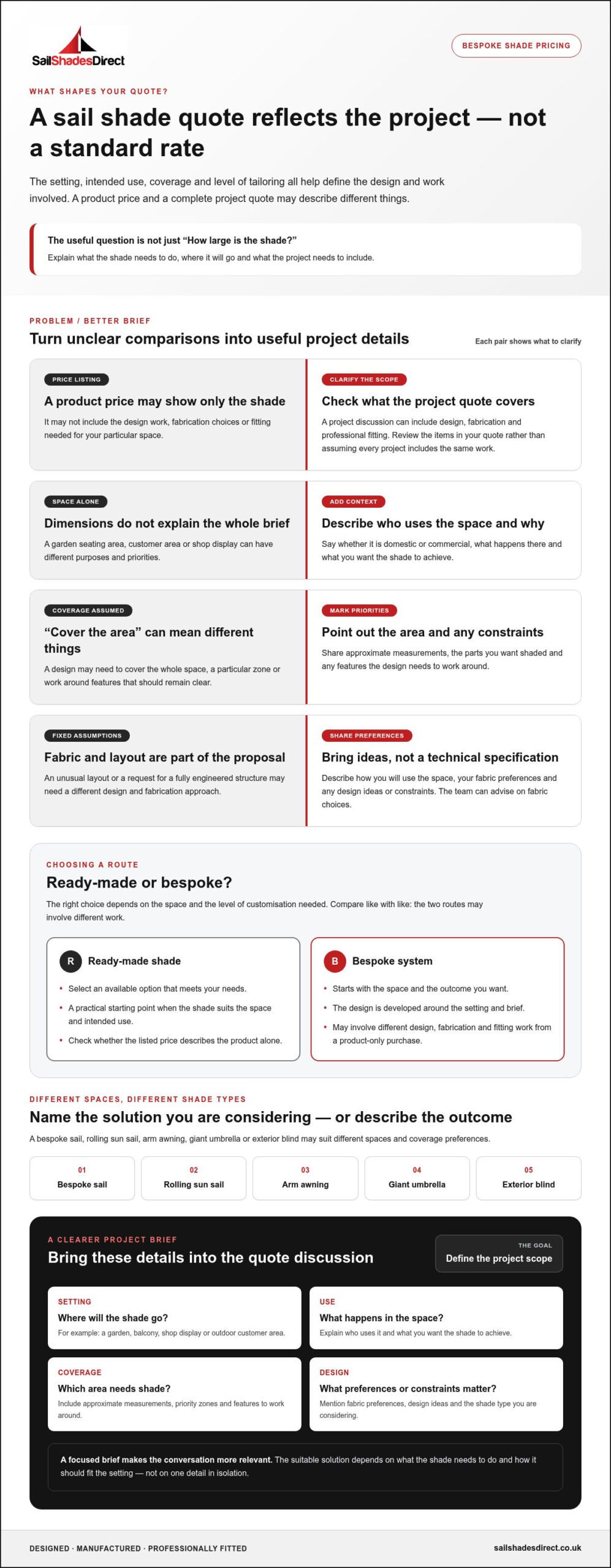
How to prepare for a custom sail shade quote
A useful enquiry doesn’t need a technical drawing or finished design. Start with what you know: where the shade is needed, how the space is used and what you want to achieve. These details give Sail Shades Direct’s expert team a practical starting point for discussing a tailored solution and the level of customisation your project needs.
What to include in your project brief
Work through these points to organise your brief. A few clear notes, photographs or a simple sketch can help explain the setting, but they are useful aids rather than requirements.
- Describe the space. Say whether it’s a garden, balcony, business premises or another setting. Include features that affect where a shade could sit, such as a wall, doorway or area you need to keep clear.
- Explain how it’s used. Is the area for relaxing at home, serving customers or hosting an event? Its purpose helps the team understand what the solution needs to do.
- Outline your preferred coverage. Note what you want shaded and whether you’re looking to cover a whole area or a specific part. Approximate measurements can help describe the scale, even if you haven’t measured everything precisely.
- Share your design preferences. Mention any initial thoughts about the look or fabric, and whether you’re interested in a sail shade, rolling sun sail, awning or exterior blind. It’s fine to be undecided.
Also say whether the project is domestic or commercial, and include any constraints or priorities you already have in mind. A shop display, for instance, has a different purpose from a garden seating area. Sharing the intended use makes the conversation more relevant from the outset.
What to expect from a design discussion
The expert team can advise on and design a solution around your project, drawing on a wide fabric range and experience with varied applications. The discussion can help establish whether a ready-made shade fits the brief or whether a more tailored design, including a fully engineered bespoke structure, is the better direction. You don’t need to settle every detail before getting in touch. Initial preferences can be developed as the project scope becomes clearer.
For a business project, explain how the outdoor area serves staff or customers and what needs to be covered. Describing the setting and intended use helps shape a discussion around the practical priorities of the space. Sail Shades Direct designs, manufactures and professionally fits outdoor shading solutions across the UK.
If you’re considering a custom sail shade and still asking “how much do custom sail shades cost UK?”, a concise brief is a useful next step. Bring together your space description, intended use, coverage preferences and initial design ideas, then discuss your shade project with the team.
Get a tailored quote for custom sail shades from Sail Shades Direct
Once you’ve outlined your space and what you want from it, the next step is a project-specific discussion. Sail Shades Direct designs, manufactures and professionally fits outdoor shading solutions across the UK, with options from basic ready-made shades to fully engineered bespoke systems. The quote reflects the brief, so the conversation can focus on a solution suited to your setting rather than a one-size-fits-all price.
From a clear brief to a shade solution
The expert team can advise on your project and design an outdoor shading solution around its intended use. That might mean exploring a straightforward shade requirement or discussing a fully engineered structure. A wide fabric range supports different applications, from residential spaces to commercial settings such as shop window displays. Sharing the purpose of your space helps the team consider the design and level of tailoring that may be appropriate.
Projects differ in scale and setting, and shade solutions can be considered for many kinds of outdoor space. If you’re exploring an engineered structure, architectural sail shades are another useful topic to consider as you refine your brief. Start with what the space needs and how you plan to use it. From there, the design discussion can help bring suitable options into focus.
Discuss your project with the team
You don’t need to have every design decision settled before starting a conversation. Bring your initial thoughts and describe the space, its intended use and the kind of shade you have in mind. If you’re still weighing up how much do custom sail shades cost UK, these details help frame a relevant discussion about the project’s scope. They also make it easier to compare the work involved in different options.
It can help to have these details to hand:
- The type of space, such as a garden, balcony or business setting.
- How the area is used and what you’d like the shade to achieve.
- Your preferred coverage and any design priorities.
- Whether you’re considering a sail shade, rolling sun sail, awning or another outdoor shading option.
From an initial idea to a tailored design, Sail Shades Direct’s team can help you explore the next steps. Share your space, intended use and preferred type of shade with the expert team to discuss a project-specific quote.
Take the next step towards a better-shaded space
A tailored quote is an opportunity to turn a general idea into a practical plan for your outdoor space. You don’t need to settle every detail in advance. Focus on the result you want and the priorities that matter most. That gives you a clear basis for reviewing the proposed approach and deciding whether it suits your project.
If you’re still wondering “how much do custom sail shades cost UK?”, the most useful next step is to discuss your requirements. A project-specific conversation can clarify your options and help you decide how to move forward, whether you’re planning a place to relax or improving an outdoor area used by customers.
Discuss your custom sail shade project with our friendly team and take the first step towards a shade solution shaped around your space.
Frequently Asked Questions
How much do custom sail shades cost per square metre?
A universal per-square-metre figure can be misleading for a bespoke project, so there isn’t one rate that applies to every shade. The scope depends on the space, requested design, fabric selection and fitting requirements. If you’re searching “how much do custom sail shades cost UK”, describe your project to Sail Shades Direct so the team can discuss a tailored solution and the work involved.
Can I get a custom sail shade for an unusual outdoor space?
Yes, bespoke design can be discussed for spaces with individual requirements. Sail Shades Direct has worked on varied applications, including stair infill and balcony surrounds, where the setting may call for a considered approach. Describe the area, features the shade needs to work around and what you hope to achieve. The team can then discuss a suitable direction for your project.
Are custom sail shades suitable for businesses as well as homes?
Yes, Sail Shades Direct provides outdoor shading solutions for domestic and commercial customers. Business applications include settings such as shop window displays and wedding tents, each with its own purpose and practical context. In your enquiry, explain what kind of business space you have and how it’s used, whether for customers, staff or an event. This helps the team advise on an appropriate approach.
Does a custom sail shade quote include professional fitting?
Sail Shades Direct provides professional fitting alongside design and fabrication services. As project scope can vary, review the work described in your quote to see how fitting is covered for your project. If you want to understand any part of the proposed work, discuss it with the team before proceeding. That way, you can see how the quote relates to your requirements.
How long does it take to design and fit a bespoke sail shade?
Timing depends on the individual brief and the work involved, so there isn’t a standard schedule for every bespoke shade. The team can discuss the requirements and the steps involved in your design. If you’re working towards an event, opening or outdoor-season plan, mention that when you get in touch so it can inform the project discussion.
Can I choose the fabric for a bespoke sail shade?
Sail Shades Direct offers a wide fabric range, and the team can advise on a choice to suit the application. Share any preferences you have, such as the look you’re hoping to achieve, along with how the shaded area will be used. You don’t need to know technical details in advance. Your priorities can guide the fabric discussion.
What information should I provide to get a custom sail shade quote?
Describe the space, its intended use, the type of shade you’re considering and the result you’d like. You can also say whether the project is for a home, business or another application, and mention relevant context, such as an outdoor area used for customer seating. A clear description helps the team understand your priorities. Precise measurements or formal drawings aren’t necessary to start the conversation.