
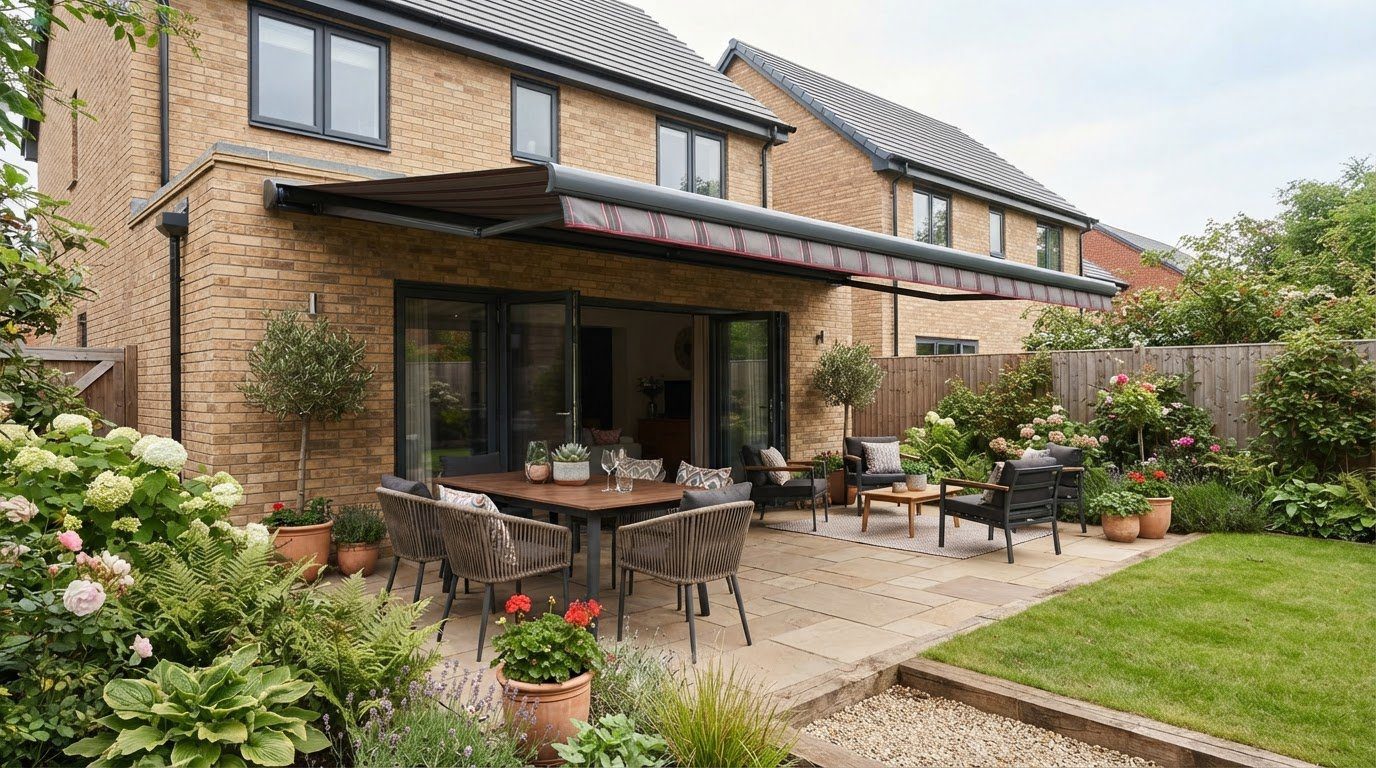
Are Garden Awnings a Good Investment? A Practical Guide
What if the best measure of an awning’s value isn’t how impressive it looks, but how often it helps you enjoy your garden? It’s sensible to weigh the cost and practical limits before making a home improvement, especially if you’re unsure how much you’ll use the space. If you’re asking, are garden awnings a good investment, the answer depends on whether the shade suits your home, outdoor layout and everyday routine.
An awning can make a sunny patio or seating area more comfortable, but it won’t make every garden work better or guarantee savings or a higher property value. The UK’s changeable weather, the care involved and the fit with your home all form part of the decision. This guide will help you assess the everyday value an awning could bring, weigh its limitations and compare it with other shading options. You’ll be better placed to decide whether an awning suits your plans or another outdoor shading solution is a better match.
Key Takeaways
- To decide whether a garden awning is a good investment, consider everyday comfort and use rather than assuming a financial return.
- Think about how shade could make your chosen patio or seating area more inviting for dining, relaxing or entertaining.
- Weigh up how often you use the garden and whether the awning suits the space, weather and intended use.
- Clarify what you want from your outdoor area, then compare shading options against your home’s layout and practical constraints.
- Tailored advice and options ranging from ready-made shades to bespoke structures can help you find a solution that fits.
Are garden awnings a good investment for your outdoor space?
An awning is a considered home improvement, not an automatic upgrade. It changes how a particular part of your garden feels and functions, so its value depends on whether that change fits your home and routine. So, are garden awnings a good investment? They may be worthwhile if shade helps you use a patio more comfortably, but the answer isn’t the same for every household.
Think of “investment” in practical terms: how useful the space becomes, the comfort it brings and how well the shading suits the area. That’s different from a promise of financial payback. Don’t base the decision on an assumed resale gain or energy saving. Start with a benefit you would notice in everyday life. For a general overview of awning types and materials, see Awning – Wikipedia.
What does “worthwhile” mean for a garden awning?
Personal value might mean enjoying lunch outside without moving chairs to follow the shade, or having a more comfortable place to sit beside the house on a bright day. Those are practical gains, even though they don’t translate neatly into a guaranteed financial return. Consider how you use the garden now, rather than imagining an ideal routine that may never happen. If outdoor meals are already part of your week, shade could support a habit you enjoy. If you rarely sit outside, the same improvement may feel less valuable.
Picture an ordinary week, not just a special occasion. Which days would you use the shaded area, and what would you do there? If the answer is uncertain, observe how sunlight falls on the patio and where you naturally choose to sit before deciding what kind of shade you need. The aim is to match the investment to a real use, not to justify it with optimistic assumptions.
Who is most likely to appreciate an awning?
An awning may suit homeowners who want a defined shaded area close to the house, particularly where a patio already provides room to relax, dine or gather. It can make that spot more inviting in sunny conditions without requiring you to rethink the whole garden. The best fit depends on the layout and the shade you want: a compact seating area has different needs from a larger space used for outdoor meals.
Households that regularly use their patio are more likely to notice the day-to-day benefit. If you use the garden only occasionally, other home priorities may matter more. Be honest about why you go outside, when you tend to use the space and whether shade would change that behaviour. A garden awning is worthwhile when its practical benefits match your routine. That principle helps you weigh the appeal against the commitment, without assuming every home needs one.
What everyday benefits can make a garden awning feel worthwhile?
The clearest benefit is often greater comfort in the part of the garden you already want to use. On a bright day, shade over a patio or seating area can make sitting outside more appealing. It can also help define that spot as an outdoor room for a meal, a quiet break or a get-together. The difference depends on where the sun falls, the garden layout and what you enjoy doing there.
That’s why the question are garden awnings a good investment is best answered by looking at the benefit you value, rather than assuming every possible advantage will apply. A useful way to put it is: An awning can offer an everyday benefit, but the result depends on how well it suits your space and routine. Global Shading Day discusses the wider role of shading in comfort and other settings in its overview of the Benefits of Shading.
Can an awning make outdoor space more usable?
Start with the activity you want the shaded area to support. If you eat outdoors, consider the position of the table and how sunlight reaches it at the times you usually sit down. For reading or relaxing, look at where your chairs are placed and whether shade would make that particular spot more comfortable. A layout that works for one household may not suit another, so intended use matters as much as available space.
An awning may help make a patio feel like a more clearly defined place to spend time, but it won’t make the whole garden equally comfortable in every condition. The usefulness of the shade depends on the setting and the system selected. Be specific about what you want to improve, rather than expecting one addition to solve every outdoor comfort issue.
Could an awning complement the home’s appearance?
Appearance is another part of the decision, but it’s personal. Consider how the awning’s colour and fabric might sit alongside the exterior of the house, garden furniture and planting. A choice that feels in keeping with the setting can help the shaded area look considered, but it shouldn’t be treated as a guaranteed property upgrade. Sail Shades Direct offers a wide fabric range and selects fabrics for different applications. Design advice can help bring the home and garden into the same picture.
Arm awnings are one option to consider for patio shading. The heavy duty arm awnings guide offers a closer look at this type of awning. Exploring the range of outdoor shading solutions can also help you think through how a chosen area might work with your home’s layout and intended use.
What drawbacks should you weigh before investing in a garden awning?
An awning can be underused if the patio or seating area it shades doesn’t fit your household’s habits. Perhaps you mainly use another part of the garden, or tend to sit outside at times when that spot isn’t comfortable. In that case, the expected benefit may not justify making it a priority. Look at how you use the garden now, rather than assuming a new feature will change your routine.
Weather is another consideration. Awnings aren’t all suited to the same conditions or uses, so don’t assume a particular system will perform as you want in every kind of weather. Suitability depends on the product and its intended use. Installation and upkeep also form part of ownership: the location, fitting requirements and care guidance all matter when deciding whether the arrangement feels manageable.
| Concern | Why it matters | What to consider |
|---|---|---|
| Infrequent use | An awning may bring little everyday value if you seldom use the area it shades. | Think about your usual outdoor routine and where you actually spend time. |
| Weather suitability | Performance varies by system and intended use. | Match the product to the conditions and purpose you have in mind. |
| Upkeep | Care is part of owning an outdoor shading product. | Read and follow the guidance for the specific product. |
| Installation and fit | The location and layout can affect whether a solution works for your space. | Consider the area, the house and how the chosen system will be fitted. |
When might an awning be the wrong fit?
If the place you want to shade isn’t where you normally relax or eat, an awning may not address the real need. An awkward garden layout can also make a different form of shading more suitable. Compare an awning with sail shades or a Giant Umbrella by considering where shade is needed and how each option would relate to the house and garden. The best comparison starts with your layout, not a general claim that one type suits every space.
How should you think about upkeep and weather?
Outdoor products face changing conditions, but their suitability varies. Consider how you expect to use the shaded area, and don’t assume an awning will handle rain, wind or other weather in the same way as another system. Care needs also depend on the product. Follow its guidance and factor that upkeep into your decision, rather than treating maintenance as an afterthought. If fitting or ongoing care feels like a poor match for your home, consider whether another shading approach would suit you better.
These trade-offs don’t automatically rule out an awning. They help clarify what you need from it. If the location, intended use, fitting and care all seem compatible with your household, the practical drawbacks may be manageable. If not, reconsidering the type or position of the shading could lead to a better fit.
How can you decide whether a garden awning suits your home?
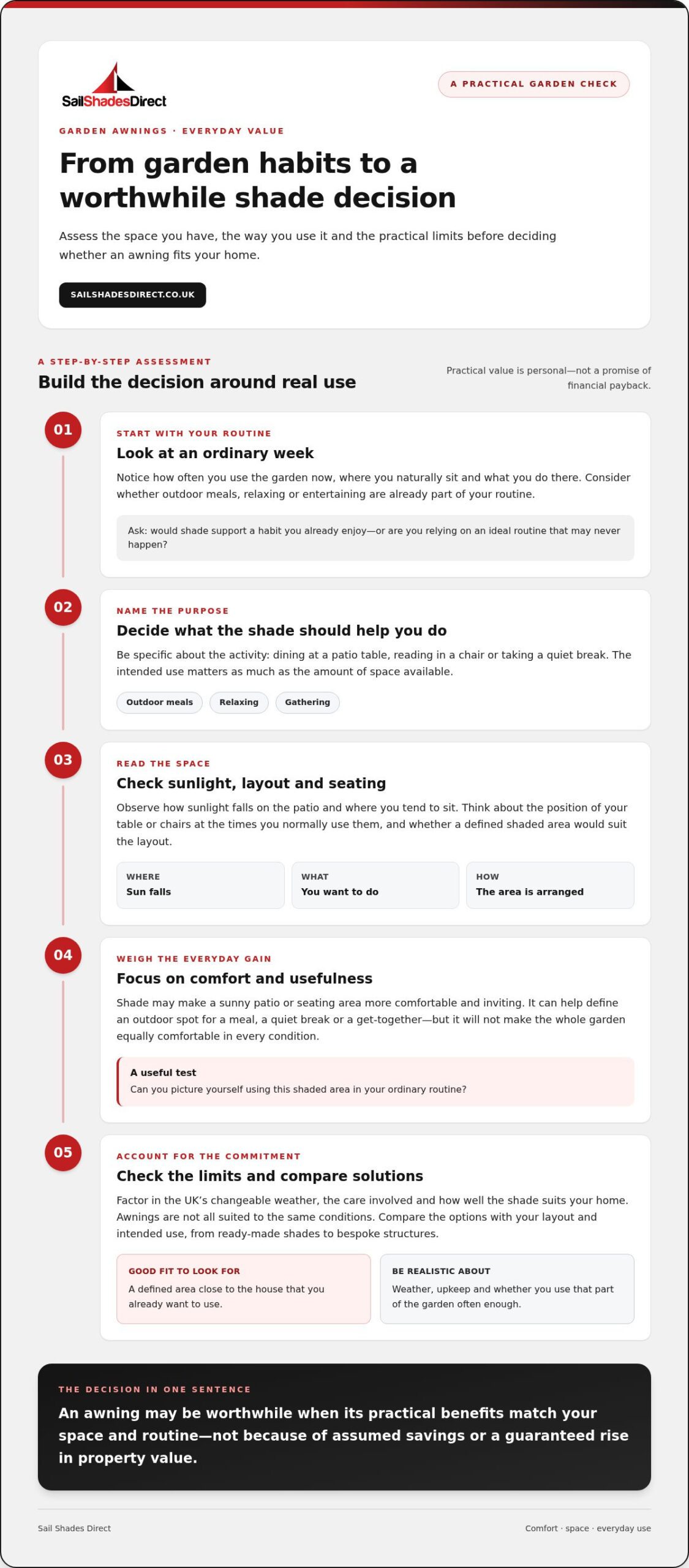
A practical choice starts with your garden, not a product category. If you’re asking, “are garden awnings a good investment?”, work through how you’d use the space, where shade would help and what the layout allows. This makes it easier to compare an awning with other options based on fit, rather than appearance or assumptions about performance.
- Define the intended use. Think about ordinary routines: do you want to sit outside with a book, eat on the patio or create a spot for family gatherings? Be realistic about how often those activities happen.
- Identify the area. Choose the seating or activity space you’d most like to shade. Notice how it relates to the house and garden, and consider when sunlight affects it.
- Consider constraints. Note the available space, the home’s exterior, your preferred appearance and any practical concerns about fitting or ongoing care. A short list of priorities can keep the decision focused.
- Compare shading options. Match each category to the area and activity you have in mind, rather than expecting one solution to suit every garden.
What should you assess in the garden first?
Start by standing where you’d normally sit or carry out the activity. Which part of that area needs shade, and is it beside the house or further into the garden? Then consider the exterior and available space together. Your answers can shape the scale and appearance you want, as well as which type of shading is worth exploring. Write down your priorities, such as where shade is needed, how you’ll use the area and what visual style feels right.
This quick assessment also helps separate essential needs from nice-to-haves. Shading a patio used for meals may call for a different design approach from creating shade over a seating spot elsewhere. A tailored option can be useful if the space or brief calls for a more considered fit. The bespoke sail shades guide can help you explore that category alongside awnings.
How do you compare awnings with other shading options?
Consider how each type of shading relates to the place you want to use. An awning may be one option to explore for a patio beside the house. A sail shade may be worth comparing when a tailored arrangement is the priority. Exterior blinds relate to the home’s openings, while a Giant Umbrella is another category to consider for a seating area. These are starting points, not universal rules; the right fit depends on your layout and intended use.
For a more tailored comparison, Sail Shades Direct’s expert team can advise on design and suitable solutions, from ready-made shades to fully engineered bespoke structures. Explore outdoor shading options for your garden and use your priorities to guide the next step.
How can Sail Shades Direct help you find a garden shading solution?
Choosing shade is easier when you start with the space and what you want to do there. Sail Shades Direct designs outdoor shading for different settings, with options ranging from basic ready-made shades to fully engineered bespoke structures. You can consider awnings alongside other categories, rather than forcing your garden into a solution that doesn’t suit its layout.
Bring a clear picture of the area you want to shade, how you use it and what matters most to you. Is the priority a patio beside the house, a seating spot elsewhere in the garden or a particular look that sits comfortably with the property? These details help shape a practical design discussion, without assuming one type of shading is right for every home.
What if a standard awning is not the right answer?
An awning is one possibility, not the only one. Bespoke Sail Shades, Exterior Blinds and Giant Umbrellas offer other categories to consider, depending on the space and your intended use. Start the design conversation with your priorities: where shade is wanted, how you use the area and how the solution should relate to the house and garden. No single category needs to be the default.
A seating area away from the house, for example, may prompt a different discussion from a patio beside it. Compare options against your actual setting, rather than choosing by name alone. Sail Shades Direct’s expert team can advise on design and suitable solutions, helping you consider which direction best matches your project.
What can you expect from a tailored design conversation?
Expect to discuss how the area is used, the shape of the space and the look you want to achieve. The team can advise on design and suitable fabric choices, drawing on a wide fabric range selected for different applications. If you’re weighing a tailored shade against an awning, the bespoke sail shades guide provides a related introduction to that category.
There’s scope to consider both straightforward and more involved projects. Ready-made shades may suit some requirements, while a fully engineered bespoke structure may be right for a project that calls for a tailored approach. The best option depends on your garden, intended use and design priorities. Clear advice can help make those choices feel more manageable.
Ultimately, the question “are garden awnings a good investment?” comes back to fit: does the solution suit your home and the way you want to use the space? If you’re ready to explore the possibilities, discover Sail Shades Direct’s outdoor shading solutions and find a starting point for your garden.
Take the next step towards a garden that works for you
The question “are garden awnings a good investment” comes down to whether the shade you choose will earn its place in everyday life. Before deciding, picture the area you want to improve and how you’d like to use it. This turns a broad idea into a clearer design brief, helping you explore options with purpose rather than guesswork.
Sail Shades Direct’s expert team can advise on design and fabric selection, with solutions ranging from basic ready-made shades to fully engineered bespoke structures. That breadth lets you explore an option that suits your home and priorities, without assuming every garden needs the same answer.
Ready to consider what could work in your outdoor space? Explore outdoor shading solutions from Sail Shades Direct and take the next step towards a more considered garden.
Frequently Asked Questions
Is a garden awning worth it if I only use my garden occasionally?
It can be, if shade would make the occasions you spend outside more comfortable. If you’re asking, “are garden awnings a good investment?”, consider whether you’d use the shaded spot for a summer lunch or when friends visit, rather than expecting it to change your routine. If those moments are rare or another part of the garden suits you better, you may prefer to focus on other outdoor priorities first.
Can a garden awning be used in the rain?
That depends on the particular awning and its intended use, so don’t assume every model is suitable for rain. Read the care and usage guidance for the system you’re considering, and follow its instructions for changing weather. If your main aim is to stay dry outdoors, make that need clear when comparing options. An awning chosen for shade shouldn’t automatically be treated as all-weather cover.
Does a garden awning add value to a house?
An awning doesn’t guarantee that a house will sell for more or attract a particular buyer. Its contribution is better considered in terms of how the outdoor space looks and works for you now. A carefully chosen shade may help the patio feel more usable, but any effect on a future sale depends on the property and buyer. Base your decision on the practical benefit you expect, not assumed resale payback.
Are garden awnings difficult to maintain?
Maintenance depends on the specific awning, its materials and the guidance supplied with it, so there isn’t one care routine for every system. Before choosing, consider whether you’re comfortable following the product’s cleaning and care instructions as part of ownership. Keep those directions to hand and use them rather than relying on generic advice that may not suit the fabric or construction of your awning.
Can a garden awning work in a small outdoor space?
It may, provided the awning suits the available space and the area you want to shade. In a compact garden, think about how it relates to doors, windows, furniture and the route you use to move around. You may only need to focus on one seating spot. If the layout is unusual, consider whether a tailored shading option could better match the shape and use of the space.
Is a garden awning better than a parasol or sail shade?
Not universally. Each option can suit different layouts and preferences, so compare them by where shade is needed and how you plan to use the area. A parasol may be one category to weigh up for a particular seating arrangement, while a sail shade offers another approach to outdoor shading. Consider the space, appearance and intended use together, then choose the option that fits your garden rather than assuming one is always best.