
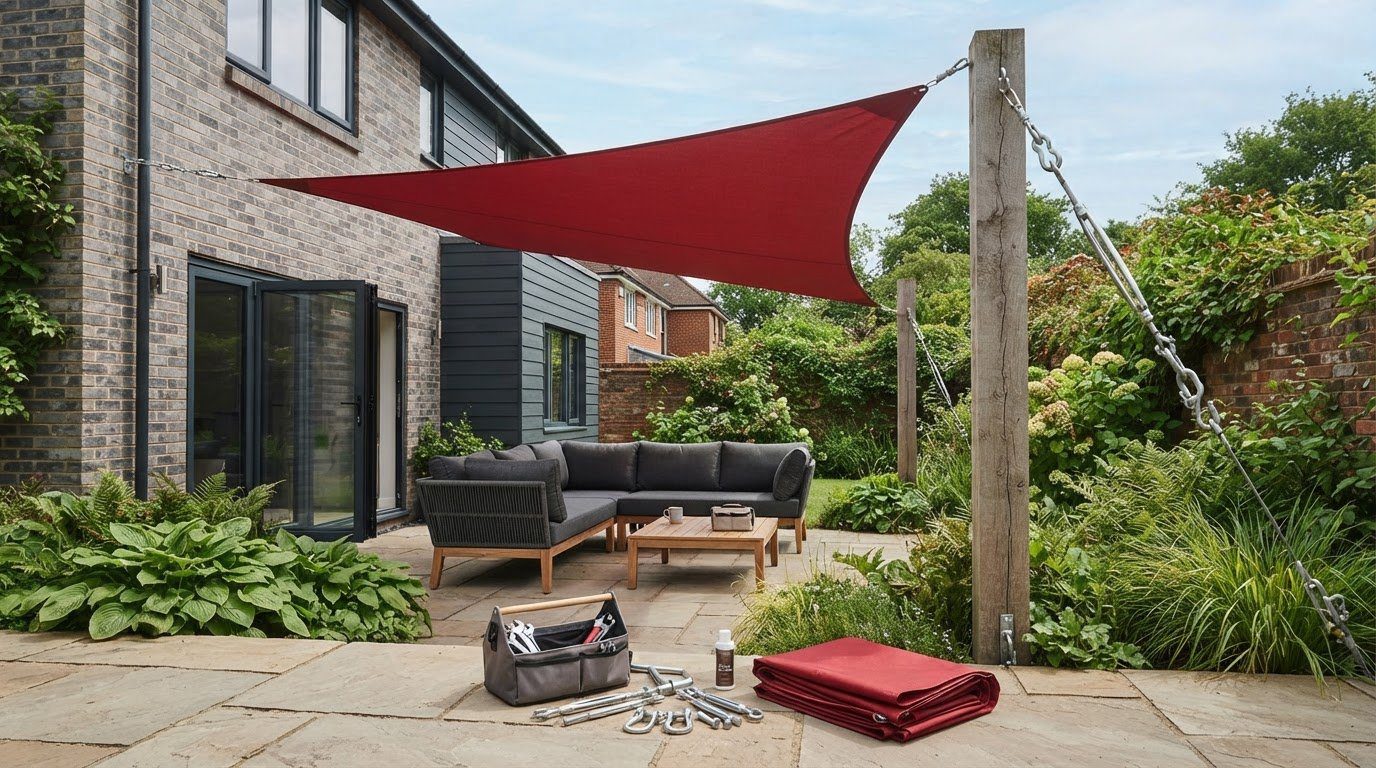
Total cost of ownership for a sun sail
The purchase price is only the starting point. The total cost of ownership for a sun sail includes the sail, installation, routine care, repairs and eventual replacement over its useful life. There is no single total for every property in the UK: dimensions, fabric, fixing points, weather exposure and maintenance all affect the overall cost.
It is easy to focus on the initial outlay, but a useful comparison considers how costs may add up over time. The purchase price depends on the design, dimensions, materials and installation requirements, and is provided in a quote.
This guide explains which costs to include, how durability and installation can affect long-term value, and what to consider when comparing options. Use it to assess likely ownership costs for your space and decide which type of shade solution best suits your needs.
Key Takeaways
- Look beyond the initial purchase: installation, upkeep, repairs and eventual replacement all contribute to lifetime cost.
- Fabric choice, weather exposure and maintenance habits affect how well a shade sail retains its usefulness over time.
- Plan the fixing points and installation carefully, as the site and the way the sail is tensioned can influence the work involved.
- Include fittings and other components in your long-term budget, not just the fabric.
- Compare options by how well they suit your space and expected use, then consider bespoke shade solutions when the layout calls for a tailored fit.
Depreciation and value retention
Depreciation describes how an asset’s value changes over time; it is not the same as the benefit you get from using it. When estimating ownership costs for a sun sail, keep these ideas separate. A sail that still shades a patio may remain useful, even if its resale value has fallen or there is no second-hand buyer.
Some online estimates put sailboat depreciation at 2-4% annually. That figure concerns boats, not fixed outdoor shade, so it shouldn’t be used to calculate a sun sail’s value loss. A boat and a fabric shade have different uses, resale markets and replacement considerations. For a home or business, assess the shade system on its condition and ongoing usefulness instead.
Start with the purchase and installation cost, then consider how long you expect to use the sail. Divide the initial outlay across your planned ownership period to make a simple annual comparison. For example, when comparing two designs for the same patio, consider each option’s expected service life, care requirements and likely component replacements. This is more useful than treating the purchase price as the full cost.
A sail retains practical value when it continues to meet the needs that led you to install it. A south-facing seating area may need consistent summer shade, while a garden table used occasionally may have different priorities. Changes to the property can also affect usefulness: an extension, a new seating layout or different opening hours could leave the original coverage poorly placed. These changes affect practical value even if the fabric is still intact.
To compare options fairly, record the following for each one:
- Initial outlay: include the sail and installation work.
- Use: note which outdoor area it shades and how often you rely on it.
- Condition: track fabric wear, fixings and any repairs over time.
- Future needs: consider whether an upgrade or replacement might suit a changed layout.
A monthly budget can help spread planned ownership costs across the year, but it should not suggest that expenses are the same every month. Installation is an early cost; care and repairs arise as needed, and replacement comes later. Keeping these categories separate makes annual spending easier to understand and prevents an upgrade from being confused with routine maintenance.
For a realistic assessment, compare useful service rather than assumed resale proceeds. If a shade still does its intended job, it may remain valuable to you even without a reliable second-hand price. If it no longer suits the space, the cost of adapting or replacing it becomes relevant to your next ownership decision.
Durability and lifespan factors
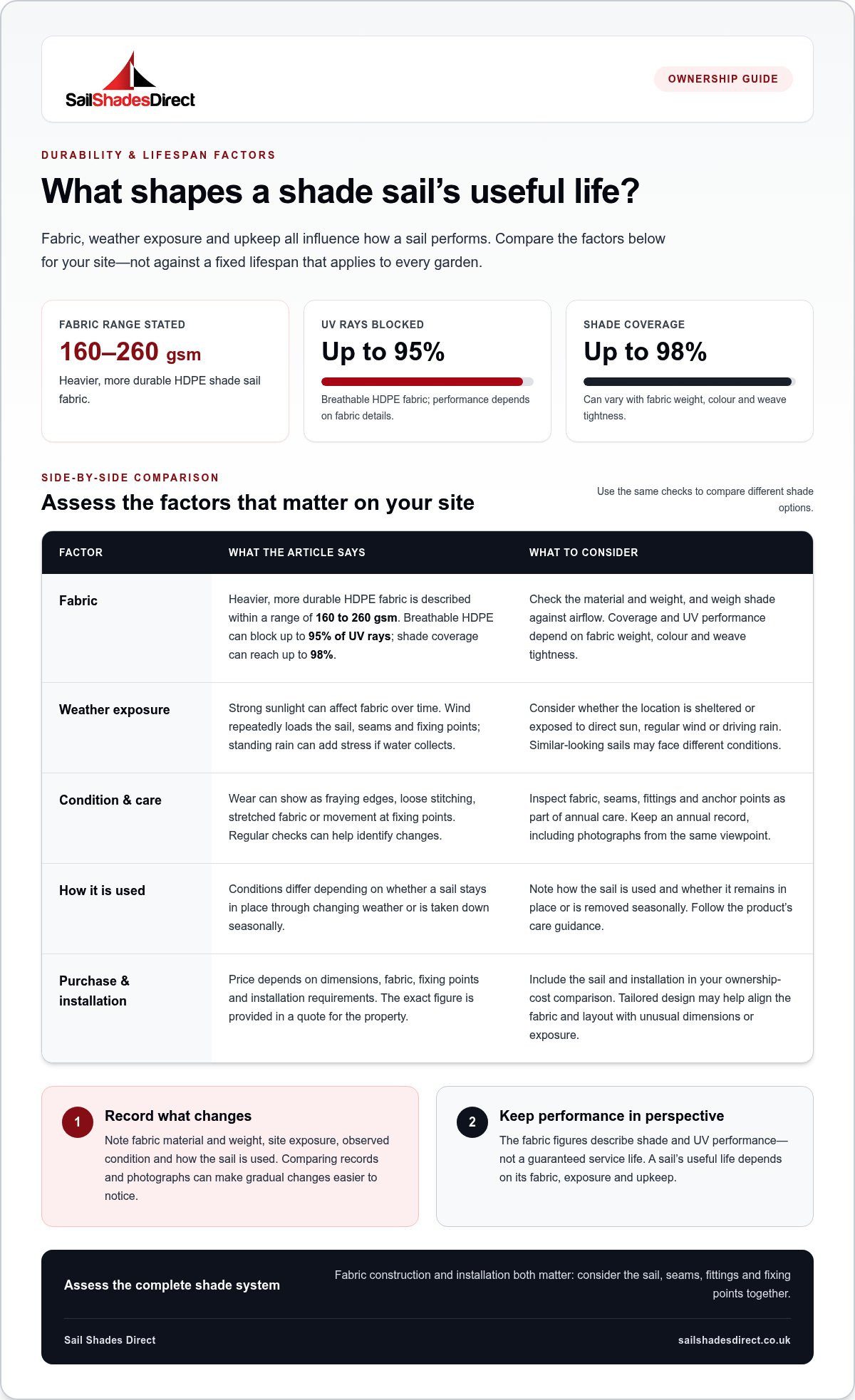
A sun sail’s useful life depends on its fabric, exposure and upkeep, not on a fixed lifespan that applies to every garden. In the UK, weather can bring strong sun, wind and persistent rain, each affecting fabric and fittings differently. A sheltered courtyard and an exposed terrace can therefore place different demands on similar-looking sails.
Fabric weight gives one useful comparison. Heavier, more durable HDPE shade sail fabric is described within a range of 160 to 260 gsm. Breathable HDPE fabric can block up to 95% of UV rays, whilst shade coverage can reach up to 98%, depending on fabric weight, colour and weave tightness. These figures describe performance, not a guaranteed service life. Consider the balance between shade, airflow and the conditions at your property.
Weather exposure influences wear. Strong sunlight can gradually affect fabric, while wind repeatedly loads the sail, seams and fixing points. Rain can add stress if water collects rather than draining away. A sail in a sheltered spot may face different conditions from one above an open, exposed patio. Both the fabric’s construction and the installation of the complete system matter.
To assess durability over time, record a few practical details:
- Fabric: note its material, weight and intended balance of shade and airflow.
- Exposure: identify whether the location faces direct sun, driving rain or regular wind.
- Condition: inspect the fabric, seams, fittings and anchor points as part of annual care.
- Use: note whether the sail remains in place throughout changing weather or is taken down seasonally.
Regular checks can help you spot wear before it affects the whole system. Look for fraying edges, loose stitching, stretched fabric or movement at the fixing points. Keep an annual record, including photographs taken from the same viewpoint. Comparing them makes gradual changes easier to notice, particularly after a season of exposed weather.
Boat ownership costs may include marina fees and vessel maintenance. These costs do not apply to a garden shade sail, so boat-related estimates are not a useful guide to its upkeep. For a property, focus on the fabric, installation, weather exposure and care the shade system actually needs.
For a shade sail, price depends on its dimensions, fabric, fixing points and installation requirements; the exact figure is provided in a quote for your property. If the space has unusual dimensions or exposure, tailored shade design can help align the fabric and layout with the site’s conditions and priorities.
Sailboat owners are advised to follow the manufacturer’s service recommendations and have a thorough check-up at least annually. That advice concerns sailboat ownership; it should not be treated as a service schedule or lifespan estimate for a garden shade sail. For a garden installation, follow the product’s care guidance and let its observed condition inform attention to the fabric, seams and fixings. Regular checks can help distinguish routine weathering from changes that may call for closer attention, without relying on assumptions drawn from unrelated marine equipment.
Installation and anchoring
Installation affects both the initial outlay and how well a sun sail performs. Fabric dimensions alone do not define the work. Anchor locations, mounting surfaces, access and the required tension all shape the installation. Include these factors when comparing options rather than judging a sail by its size alone.
Allow room beyond each fabric corner for the fixing hardware and tensioning. Guidance commonly places anchor points 1 to 3 feet further out than the corners. For example, a 13 x 13 ft sail may need minimum anchor spacing of 15 x 15 ft. A compact patio with limited fixing points may need a different layout from an open garden.
Measure the usable area and identify potential anchors before buying. A wall, post or other support must suit the position and the loads involved. The distance between corners and anchors determines whether the sail can be tensioned correctly. If a support is too close, the fabric may not fit as intended, or the planned coverage may need adjusting.
Fabric behaviour also affects the design. After installation, shade sail fabric may stretch by about 1.5% to 8%, depending on whether it is waterproof or breathable mesh. That difference matters when setting the initial dimensions and tension. A layout designed without room for movement may loosen over time or fail to maintain its intended shape.
Waterproof sails need particular attention to drainage. Guidance recommends an installation angle of about 20° so rainwater runs off. Triangular sails should have a slope of at least 15° for water runoff. A height difference of about 3 feet is also recommended for waterproof sails. These measurements influence where anchors can go, so check the proposed geometry before installation begins.
Consider how you will use the area through the season. A fixed sail may suit a space that needs regular shade, while a space used only in warmer periods may call for a different arrangement. Marina costs and boat rigging budgets do not explain the installation needs of a garden sail. Focus instead on the property, supports and coverage.
Installation planning can affect future costs, too. Accessible fittings make later inspection and adjustment more straightforward; awkward access can make routine work more involved. Record the anchor positions, sail dimensions and installation angle. These details help you assess changes if the seating area moves or a future upgrade alters the space.
Before comparing quotes, note the area to cover, nearby fixing surfaces, preferred fabric type and drainage needs. Together, these details clarify the installation work and help you compare like with like.
Long-term component replacement
A sun sail is a system, not just a piece of fabric. Its fabric, seams, corner fittings, tensioning hardware and anchor points work together. Over time, wear in one component can affect the others. A sensible ownership budget therefore separates fabric replacement from smaller repairs and hardware work.
Fabric replacement is often the most substantial renewal decision. The right timing depends on the fabric’s condition and whether it still suits the space. A tear, weakened seam or persistent loss of tension may make repair less practical than replacing the fabric. By contrast, a sound sail with a problem confined to a replaceable fitting may not need full replacement. Assess the fault before assuming every issue requires a new sail.
Give fittings and tensioning parts separate attention. A connector that no longer moves smoothly, or a fixing that has loosened, can change how the fabric sits. Record the original layout and component types. This information helps identify what needs attention and whether a replacement part will work with the existing arrangement. Changing the sail dimensions may also mean adjusting several connected parts.
Replacement planning differs from routine care. Annual notes can show when a repair took place, which component was changed and whether the same issue returned. For example, repeated seam repairs may point to a fabric problem, while a single damaged fitting may be an isolated repair. Recording the difference helps you plan future spending without treating every maintenance task as a full replacement.
For a useful long-term estimate, group possible work into three categories:
- Fabric: repair or replace it when wear affects its condition or usefulness.
- Hardware: allow for renewal of connectors, tensioning parts or fixings when they become worn or incompatible.
- Installation changes: include alterations if a new fabric size or layout needs different positioning.
Don’t transfer figures from yacht ownership directly to a garden shade system. Sailors may budget for boat sails, standing rigging and other boat maintenance. Standing rigging has an expected service life of 15 years, but that figure describes a sailboat component, not a sun sail or its fittings. The materials, loads and purpose differ, so it cannot provide a replacement timetable for outdoor shade.
Instead, build a replacement reserve around the components installed at your property. Set aside funds for likely repairs, then revise the plan when your annual records show a change in condition. This makes the total cost of ownership for a sun sail more realistic: it accounts for the fabric and connected parts without assuming they all need replacement together.
Survey and rigging expenses
A site survey helps establish what a sun sail needs before installation. It considers the shape of the outdoor area, intended coverage and possible fixing locations. Here, “rigging” means the sail’s tensioning arrangement and connected hardware, not yacht rigging. Keeping the terms distinct helps you build a relevant ownership budget instead of relying on boat survey or marina cost estimates.
Start by mapping the space. Note the area you want shaded, nearby walls or posts, doors, windows and any obstacles that could affect the sail’s position. For example, a seating area beside a house may need a different arrangement from a freestanding garden dining space. Survey details help establish whether the proposed layout suits the site and what needs resolving before installation.
Support points matter because the sail transfers tension through its fittings to those locations. A survey should consider the material and condition of each proposed support, its position and access for installation. A wall, post or other anchor may need a different approach depending on its construction. These details can change the scope of work, so record them alongside the proposed sail shape and dimensions.
Rigging choices also depend on how the sail will be used. A fixed layout and a system designed to roll away have different operating arrangements. The hardware must work with the fabric, supports and intended movement. Include the tensioning components in the design discussion rather than treating them as incidental fittings. This makes it easier to understand what installation involves and what may need future attention.
Before comparing project estimates, prepare a short survey record:
- Area: sketch the space and mark the parts needing shade.
- Supports: identify possible fixing points and describe their materials and condition.
- Obstacles: note openings, paths, trees or structures that could affect the layout.
- Use: explain whether the sail is intended to remain fixed or move during use.
- Access: describe how installers can reach the proposed fixing positions.
A complete estimate should distinguish the sail, installation work and tensioning hardware. Additional support work or a revised layout can affect the project scope. The price depends on the dimensions, fabric, fixing points and installation requirements, and is provided in a quote for your project.
For a clearer starting point, plan your shade sail layout around the space, supports and way you intend to use it. Those practical details help connect the survey to a design that suits your property.
A sailboat figure is not a survey or rigging estimate for a sun sail, so it should not be used as a project price. For this installation, base any contingency on the site-specific scope in the quote, including the confirmed supports, access needs and tensioning arrangement. Resolve any uncertainty about these details before comparing estimates; otherwise, a lower figure may simply omit work required for the site.
Sail Shades Direct: Bespoke Sail Shades
Sail Shades Direct helps homeowners and businesses turn their shade requirements into a considered outdoor solution. Bespoke Sail Shades are designed for individual spaces, making them a natural option when standard dimensions or layouts do not suit the area. Rolling Sun Sails may suit spaces where an adaptable shade arrangement is preferred.
When weighing long-term ownership, bring together your intended coverage, fixing locations, fabric preferences and installation needs. Sail Shades Direct provides design, fabrication and installation, connecting these practical details with a suitable shade system. Arm Awnings and Giant Umbrellas are also available for outdoor areas where a sail is not the right fit.
Contact Sail Shades Direct to discuss a shade solution for your space.
Plan a shade solution that fits your space
Give your outdoor space a clear purpose before choosing its shade: perhaps you want a comfortable place to dine, a cooler seating area or cover for a busy terrace. That intended use can guide the design discussion and make the total cost of ownership for a sun sail relevant to how you will actually use it.
Sail Shades Direct can help you explore a solution suited to your setting. Bespoke Sail Shades can be considered for a layout that calls for a tailored design, while Rolling Sun Sails and Arm Awnings offer different approaches to outdoor shade. The right choice depends on your space, how you plan to use it and the arrangement that works for your property.
Share your requirements and discuss the options with Sail Shades Direct. A considered design is a positive step towards making more of your outdoor space.