
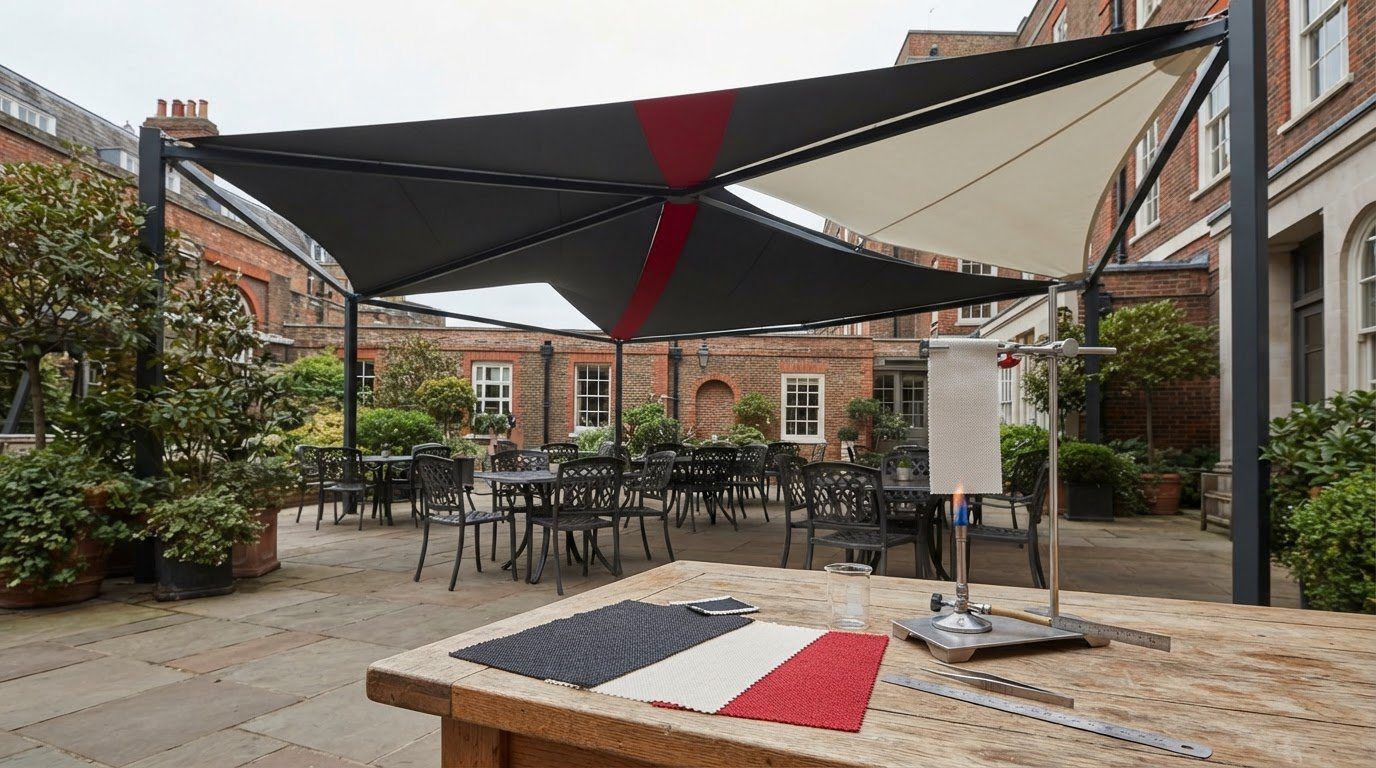
Fire Retardant Fabric for Canopies: Standards and Applications
For fire retardant fabric for commercial canopies, the key is matching the fabric’s test evidence to the canopy’s use and venue rules. CPAI-84 is a flame-retardant test method for tentage, not a guarantee that a canopy is fireproof. Fire-retardant fabric slows burning and helps limit flame spread.
It’s easy to assume “fire-resistant” and “fire-retardant” mean the same thing, but the distinction matters when choosing fabric for a public or commercial setting. The right option depends on how the fabric is treated, how it will be used and what the venue requires.
This guide explains the difference between fire-retardant and fire-resistant fabrics, what CPAI-84 tells you, and how factory-applied treatments compare with sprays. It also explores relevant UK standards, venue considerations and examples of fabric types, so you can understand what to look for before settling on a canopy design.
Key Takeaways
- Understand what CPAI-84 tests for in tent fabrics, and why a flame-retardant label doesn’t mean a canopy is fireproof.
- Learn how chemically treated fabrics differ from fabrics with fire-retardant properties built into the fibres.
- See why cleaning, weather exposure and the treatment method can affect how long a fabric’s fire-retardant performance lasts.
- Compare relevant standards and identify why event and venue requirements can influence fabric choice.
- Explore examples of fire-retardant fabrics and the different roles they can serve in canopy and event settings.
What Does CPAI-84 Fire Retardant Mean for Custom Canopy Tents?
CPAI-84 is a flame-retardant test method for tent fabrics, not a guarantee that a canopy is fireproof. For commercial use in the UK, consider the test evidence alongside the fabric’s intended setting and the venue’s requirements.
CPAI-84 and tent fabric standards
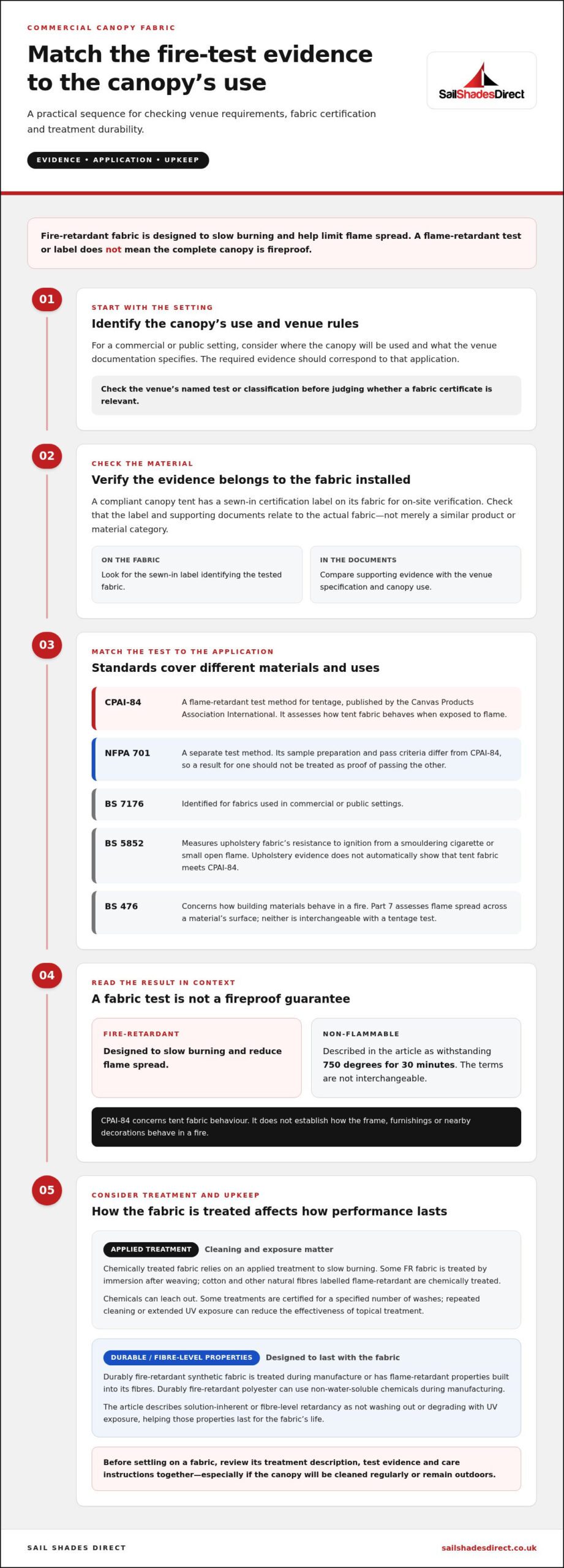
CPAI-84 is a test method for tentage published by the Canvas Products Association International. It assesses how tent fabric behaves when exposed to flame, giving buyers a defined test reference. A compliant canopy tent has a sewn-in certification label on its fabric for on-site verification. That label helps identify the tested fabric, but doesn’t make the complete canopy fireproof.
Fire-retardant material is designed to slow burning and reduce flame spread. That differs from being non-flammable, which is described as withstanding 750 degrees for 30 minutes. The terms aren’t interchangeable. A fabric test also doesn’t establish how a canopy’s frame, furnishings or nearby decorations behave in a fire, so the fabric’s test result should be read in context.
Commercial and public-use fabric standards
Commercial and public-use fabric standards address particular materials and applications. BS 7176 is a standard identified for fabrics used in commercial or public settings. BS 5852 measures upholstery fabric’s resistance to ignition from a smouldering cigarette or small open flame. These standards apply to different contexts, so upholstery evidence doesn’t automatically show that tent fabric meets CPAI-84.
BS 476 concerns how building materials behave in a fire, while BS 476 Part 7 assesses flame spread across a material’s surface. These may appear in building-related specifications, but they aren’t interchangeable with a tentage test. For a commercial canopy, match the test evidence to the actual material and intended use, rather than relying on a familiar standard name alone.
Fire-safety certifications for event fabrics
Fire-safety certifications document how a material performed under a particular test. CPAI-84 and NFPA 701 are separate test methods, with different sample preparation and pass criteria. A result for one method shouldn’t be treated as proof of passing the other. For UK event planning, this distinction helps organisers compare fabric evidence with the specific test or classification named in venue documentation.
Check that certification relates to the fabric being installed, not simply a similar product or material category. Curtains, drapes and canopy coverings have different uses, so a certificate for one application may not show suitability for another. Compare the venue’s specification with the fabric label and supporting documents to see whether the evidence matches the canopy’s use and setting.
What is the difference between fire-retardant and fire-resistant canopy fabric?
These labels describe related fire-performance qualities, but don’t explain how the fabric achieves them or how long they last. For fire retardant fabric for commercial canopies, the treatment method is central to durability, particularly when the material is exposed to weather and cleaning.
Chemical treatments and wash performance
Chemically treated fire-retardant fabric relies on an applied treatment to slow burning, and its performance can diminish over time. Some FR fabric is treated by immersion after weaving, while cotton and other natural fibres labelled flame-retardant are chemically treated. The practical question is whether the treatment remains effective after cleaning, not just what the label says.
Some treatments are certified for a specified number of washes because chemicals can leach out, and cleaning may reduce effectiveness. Topically treated fabric can also lose performance with repeated cleaning or extended UV exposure. This matters for a canopy that is cleaned regularly or left outside. Follow the fabric’s care instructions and consider whether its maintenance needs suit its intended use.
Durably fire-retardant synthetic fabrics
Durably fire-retardant synthetic fabric is treated during manufacture, or has flame-retardant properties built into its fibres. For example, durably fire-retardant polyester can be treated with non-water-soluble chemicals during manufacturing. By contrast, solution-inherent or fibre-level retardancy does not wash out or degrade with UV exposure, helping those properties last for the fabric’s life.
These distinctions explain why “fire-resistant” or “fire-retardant” wording alone can’t tell you how well fabric withstands washing. Review the treatment description and test evidence together. Choosing fire retardant fabric for commercial canopies means weighing the treatment method against how often the fabric will be cleaned and how long it will remain outdoors.
Outdoor exposure adds another consideration. Flame-retardant fabrics are used for tents, canopies and outdoor building coverings, where they’re designed to withstand harsh weather. UV exposure is one factor to consider when comparing surface-treated and fibre-level flame retardancy. Polyester’s treatment method therefore matters alongside its suitability for the canopy’s conditions.
Cleaning can also affect performance after installation. A treatment certified for a stated number of washes has a defined wash-related limit, while a topical treatment may lose effectiveness after repeated cleaning. Keep the care method and treatment details with the fabric’s certification to ensure its fire performance remains aligned with its maintenance routine.
Once fabric performance and upkeep are clear, the canopy’s layout and coverage need attention too. Explore outdoor shade design options as a related part of planning an exterior space.
Factory-applied treatment versus field-applied sprays
To tell whether treatment is permanent or needs renewal, check whether fire retardancy is built into the fibres or applied to the fabric’s surface. Surface treatments can lose effectiveness through repeated washing or extended UV exposure; solution-inherent properties are described as lasting for the fabric’s life.
Surface treatments and solution-inherent fabrics
Surface-treated fabric has fire-retardant material applied to its exterior, while solution-inherent fabric has the property within its fibres. This matters because weather and maintenance can affect each treatment differently. Some polyester fabrics have fire retardancy built into their molecular structure, rather than relying on a coating on the surface.
A field-applied spray is a surface treatment: it adds a fire-retardant coating to existing textiles. Its performance can decline after repeated washing or prolonged UV exposure, so both the fabric’s cleaning routine and outdoor exposure matter. By comparison, solution-inherent or fibre-level retardancy doesn’t wash out or degrade with UV exposure. It remains part of the material itself.
Factory-applied treatments can also involve chemicals added during manufacturing. Durably fire-retardant polyester, for example, is treated with non-water-soluble chemicals during production. That differs from a topical spray applied after the fabric is made. This helps explain why fabrics described as treated may have different maintenance needs and different resistance to cleaning or sunlight.
Treatment permanence and renewal
For a practical check, read the fabric’s technical information and care instructions for terms such as “topically treated”, “solution-inherent” or “fibre-level”. The treatment method indicates whether cleaning or UV exposure may reduce fire-retardant performance and whether renewal guidance applies.
Check whether the fire-retardant quality comes from a surface application, a manufacturing treatment or the fibre structure. A topical treatment may lose effectiveness over time, particularly with repeated cleaning; solution-inherent properties are described as lasting for the fabric’s life. These descriptions help distinguish treatments that may need renewal from lasting fibre-level performance.
Don’t assume a spray makes an older canopy equivalent to fabric manufactured with fire-retardant properties. The coating and the underlying textile are different parts of the material, and exposure may affect the treatment. For example, a canopy left outdoors and cleaned repeatedly faces the conditions identified as risks to surface-treated fabrics.
Fire-retardant performance doesn’t mean fabric can extinguish a fire. These treatments are intended to slow burning or flame spread, not make textiles fireproof. A visible coating alone doesn’t demonstrate fire performance; check the treatment description and related test evidence for the specific fabric.
Fire-retardant requirements for public events and venues
For a UK event, the venue’s specification helps determine the fire-performance evidence required for canopy fabric. The material’s intended use and the fire-risk category of its setting also inform the choice.
Event and venue compliance requirements
Event and venue compliance requirements identify the test evidence expected for materials used in a particular setting. Some European commercial canopy procurements specify EN 13501-1 reaction-to-fire classifications, such as B-s1, d0. That classification is not interchangeable with a tentage test, so the relevant document should name the required method or classification.
For a UK event, compare the venue’s written requirements with documentation for the exact canopy fabric. A general “flame retardant” description doesn’t establish compliance with a particular specification. Match the material’s test evidence to the named requirement, and check whether the fabric is intended as a canopy covering, curtain or another textile application.
Fire-retardancy requirements by risk level
UK fire-retardancy requirements distinguish environments by low, medium or high risk, which affects expected fabric performance. Prisons, detention centres and oil rigs are examples of high-risk locations; psychiatric hospitals and nursing homes are medium-risk examples. These settings show why a custom canopy’s intended location matters, even if the same fabric is used outdoors elsewhere.
Installation also affects how fire risks are managed. Keep canopy fabric away from ignition sources, preserve access routes and follow the venue’s layout requirements. Flame-retardant material is designed to slow flame spread, not prevent every ignition or extinguish a fire. Repeated exposure to heat or flames still presents a hazard, so fabric selection should sit alongside careful site planning.
BS 5867 and outdoor-event fabric requirements
BS 5867 covers flammability requirements for curtain and drape fabrics, rather than serving as a universal canopy-fabric certificate. In the UK, fire-retardant fabrics sold for use as curtains must comply with BS 5867 Part 2 B & C. BS 5438:1976 is among the testing methods referenced for BS 5867.
BS 7837 is raised in discussions of fabrics used at outdoor events, but it shouldn’t be confused with a test certificate for every canopy. For an event, distinguish between guidance concerning textile use and test evidence for the specific canopy material. The venue’s named requirement determines which documents are relevant to the installation.
Comparing canopy fabrics for fire resistance
PVC-coated polyester, acrylic and other canopy fabrics can’t be ranked for fire resistance by fibre or coating name alone. Compare the test evidence for the exact material and construction, since a coating or fibre label doesn’t establish a result. Check that the documents relate to the fabric being installed and the venue’s stated requirement.
For example, PVC-coated polyester and acrylic may have different test documentation, even if both are described as flame retardant. Consider the fabric’s treatment, outdoor exposure and cleaning needs, then compare its evidence with the event specification. This keeps material choice aligned with requirements without assuming one type is automatically safer.
Fire-retardant fabric product examples
Fire-retardant fabrics vary by fibre, finish, width and intended use. Examples include polyester marquee linings, treated cotton casement fabric and lightweight polypropylene textiles. A fibre name alone doesn’t establish suitability, so check the tested performance and intended application against the event’s requirements.
UK businesses can source certified fabric from textile suppliers or canopy-fabric manufacturers. Before completing an order, request the test documentation and match it to the exact material and use. Commercial canopy buyers can look for a third-party test certificate dated within the 12 months before delivery. A fabric sample can also help assess colour and appearance, since dye lots may differ.
- Polyester marquee lining: A coloured fire-retardant lining is described as 100% polyester and conforming to BS5867: Part 2: Type B, 2008.
- Cotton casement: Fire-retardant cotton casement fabric is treated with a fire-retardant solution for public-event use; one example is made from 100% pure cotton.
- Polypropylene fabric: A synthetic fabric used for festivals and music events is made from 100% polypropylene and weighs 70 grams per square metre.
Width and weight matter when planning a structure. Examples include polyester flame-retardant fabric available in a 3-metre width, marquee lining measuring 2.7 metres across, and fire-retardant hessian measuring 180 cm across. A wider fabric may affect how panels are arranged, while weight can influence how the material is handled and fitted. These physical details don’t replace fire-test evidence, but they help assess whether a product suits the intended construction.
Display textiles offer another example. A fire-retardant display fabric range includes 26 colours and uses fine 100% polyester thread. Some fire-retardant display fabrics can appear semi-translucent in certain lighting, so a sample helps reveal how colour and light interact before the fabric is used in a display or canopy setting.
Use the certificate to connect the product to its test result, rather than assuming a similar-looking textile has the same performance. Fire-retardant cotton, polyester lining and polypropylene products serve different purposes; regulations or venue specifications may call for different evidence. The deciding details are the fabric’s tested classification, treatment and intended use, not just its structure or colour.
Planning a commercial outdoor shade area? Discuss your outdoor shade layout as part of shaping a practical, tailored space.
Sail Shades Direct: Bespoke Sail Shades
Sail Shades Direct can help shape an outdoor area with Bespoke Sail Shades, Rolling Sun Sails, Arm Awnings or Giant Umbrellas. These options suit projects where shade and the layout of an exterior space are central to the brief.
For a commercial canopy at a public event, choose fabric and certification to meet the venue’s stated fire-safety requirements. Shade design is a separate consideration: the right form depends on the area to cover, how the space is used and the look you want. Sail Shades Direct also offers Exterior Blinds for outdoor shading.
Planning a shaded outdoor space? Contact Sail Shades Direct to discuss your project.
Plan an outdoor space that works for your business
Choosing fire retardant fabric for commercial canopies is one part of planning an outdoor space; how people use the space should shape its design too. Consider how the area needs to function during service, gatherings or everyday use, and how shade can support movement and comfort without obstructing the setting.
This gives you a useful starting point for planning the layout before choosing a shade solution. Sail Shades Direct can help design a tailored outdoor environment with options suited to different spaces and uses. Keep the venue’s fabric requirements as a separate part of your planning, so both the design and material specification receive proper attention.
Ready to plan your outdoor area? Contact Sail Shades Direct to discuss the possibilities and take the next step with confidence.
Frequently Asked Questions
Are they required for commercial buildings?
There isn’t one fire-retardant fabric rule covering every commercial building or canopy in the UK. Requirements depend on the fabric’s function and setting, so rules for upholstered furniture or curtains shouldn’t automatically be applied to a canopy. Public venues may set material certification conditions, while UK fire-risk categories distinguish low-, medium- and high-risk environments. For an outdoor canopy, check the material requirements for that building or event.
Are they weather-resistant?
Some flame-retardant fabrics are made for outdoor use in tents, canopies and building coverings, where they’re designed to withstand harsh weather. Weather resistance and fire performance are separate qualities, though. A fabric may withstand outdoor exposure while a surface-applied fire-retardant treatment loses effectiveness with extended UV exposure. For a canopy that stays outside, consider its weather suitability alongside how its fire-retardant properties are achieved and maintained.
Can a standard canopy be upgraded to fire-retardant on the field?
A fire-retardant spray can be applied to some existing textiles, creating a surface treatment, but this doesn’t automatically make a canopy equivalent to factory-treated or fibre-level-retardant fabric. Repeated washing and extended UV exposure can reduce the effectiveness of surface treatments. For a hired canopy used at a venue, check whether the treated material has test documentation matching the venue’s required standard, not simply whether a spray was applied.
Can they be used in awnings and blinds?
Fire-retardant fabrics can be used in outdoor coverings, including canopies, and fabric may also be specified for awnings or exterior blinds. Suitability depends on the particular fabric and application, not just the product type. For example, an awning over a public-facing area may be subject to different requirements from a canopy used at an informal gathering. Match the fabric’s test evidence to its intended use and the venue’s specification.
Does Fire Retardant Treatment Affect Durability or Usability?
It can affect maintenance, especially if the fire-retardant property comes from a surface-applied chemical treatment. Cleaning can reduce the effectiveness of some treatments, and UV exposure can affect topical finishes. By contrast, fire-retardant properties built into certain synthetic fibres are described as lasting for the fabric’s life. For a frequently cleaned canopy, the treatment method and care instructions matter alongside colour, weight and intended use.
How Do Flame Retardant Fabrics Improve Construction Safety?
Flame-retardant fabrics are designed to slow burning and reduce flame spread, helping limit how quickly fabric contributes to a fire. They don’t make a structure fireproof or extinguish flames. In a temporary event structure, fabric is only one part of the safety picture: the layout, nearby ignition sources and clear access routes also matter. The material’s tested performance should fit the setting, while site planning addresses risks the fabric cannot control.
Which fire-retardant fabrics are suitable for commercial canopies?
Suitable choices may include treated cotton, fire-retardant polyester and polypropylene textiles, but a fibre name alone doesn’t establish suitability. For instance, fire-retardant cotton casement fabric is used for public events, while polyester and polypropylene appear in fire-retardant fabric products. Choose according to the canopy’s use and the test evidence for that specific material. Don’t assume a certificate for curtains or display fabric covers a canopy application.
What fire safety standards apply to commercial canopy fabrics in the UK?
The relevant standard depends on the material and its use. CPAI-84 is a test method for tentage; BS 7176 relates to fabrics for commercial or public use, while BS 5867 addresses curtains and drapes. BS 476 concerns building materials, and some European canopy procurements specify EN 13501-1 classifications. These methods aren’t interchangeable, so identify the standard named in the event or building specification and match the fabric documentation to it.