
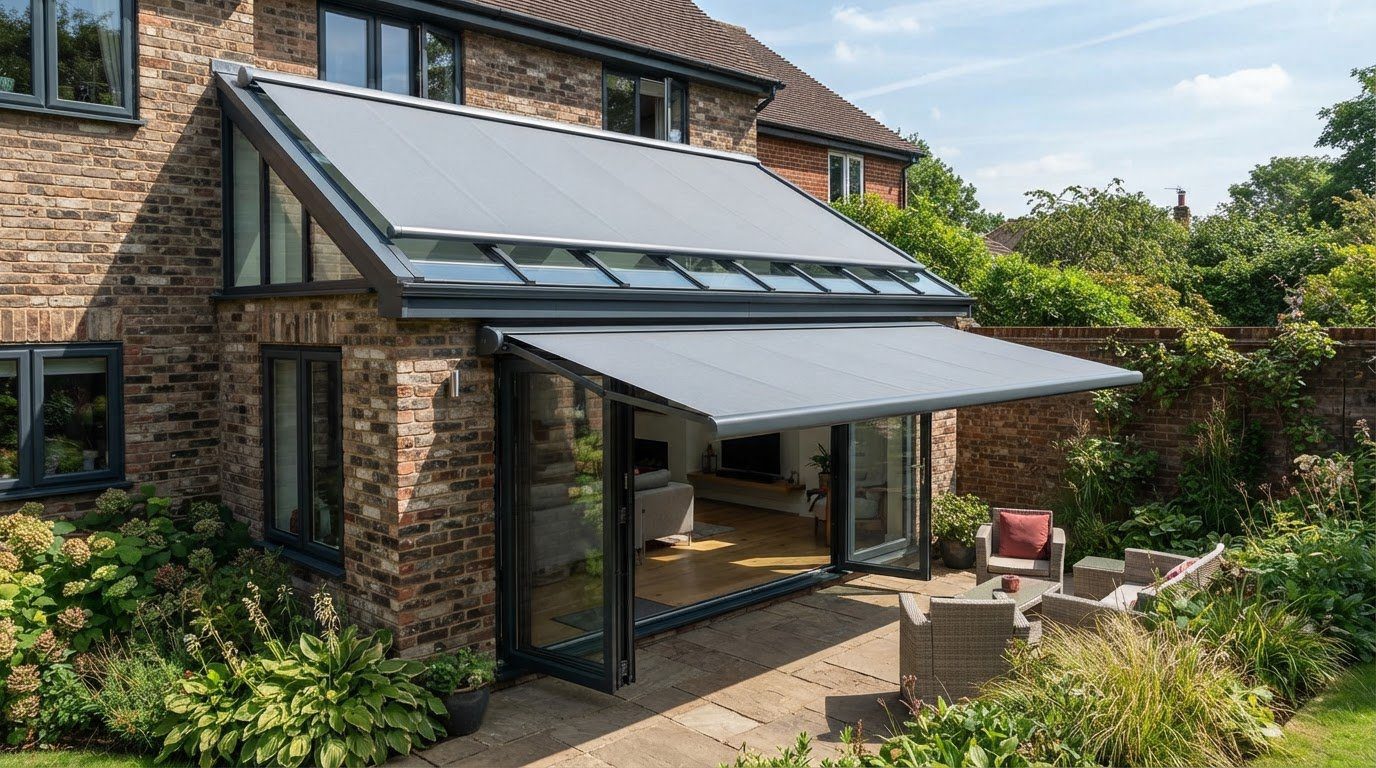
External Shading for Glass Extensions, Roofs and Bifold Doors
The most effective place to stop solar heat is outside the glass, before sunlight warms the glazing and the room beyond. For external shading for glass extensions, consider roof glazing as well as side windows and large bifold doors. Internal blinds can reduce glare, but they sit behind the glass, after sunlight has already reached it.
An internal blind may seem like the simplest answer: it is close at hand and can soften bright light. But if your extension still feels hot, consider the position and size of the glazing. Shading only the doors may leave a glazed roof exposed. This guide explains how external shading can reduce solar heat, how to match options to roof lanterns, expansive glazing and bifold doors, and how combining roof and side shading can help manage heat and glare at different times of day. You will also see what to consider when choosing a solution for your space.
Key Takeaways
- External shading stops sunlight before it reaches the glass, while internal blinds manage light after it enters.
- For a hot glass extension, consider shading the roof as well as the side windows; the right combination can address heat and glare at different times of day.
- Match the shading approach to the glazing’s position and use, especially where large bifold doors or expansive roof glass are involved.
- According to Welsh Government, Welsh Approved Document O is approved for new-build houses or flats and specified residential accommodation, including accommodation for older or disabled people, people under the age of 5, and students and children over the age of 5.
Shading solutions for glass extensions: what works best?
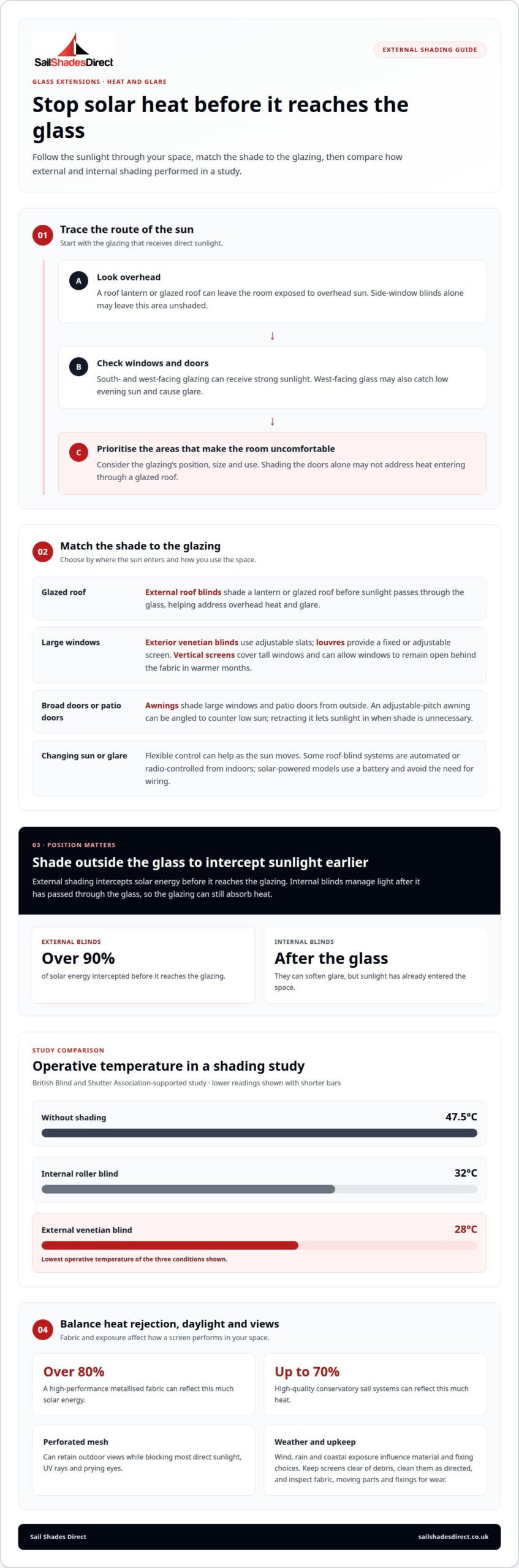
External blinds intercept over 90% of solar energy before it reaches the glazing. The best option depends on whether heat enters through a roof, side window or door.
Exterior venetian blinds use adjustable slats to manage sunlight, while louvres provide a fixed or adjustable screen. Vertical screens cover tall windows and can allow windows to remain open behind the fabric during warmer months. Orientation matters: west-facing glazing can receive low evening sun, so flexible control can help manage glare as the sun moves.
External roof blinds shade a lantern or glazed roof before sunlight passes through the glass. This can reduce solar heat gain and glare from above, where side-window blinds alone leave the roof exposed. Some systems are automated or radio-controlled from indoors; solar-powered models use a battery, avoiding the need for wiring. For property owners interested in taking clean energy further by capturing that same rooftop sunlight, SolariQ designs and installs dedicated solar power systems for homes and businesses.
External and internal blinds compared
External blinds shade glazing before the sun’s energy enters, while internal blinds control light after it has passed through the glass. This difference matters in a glass extension: an internal roller blind may soften glare, but the glazing can still absorb heat. In a British Blind and Shutter Association-supported study, operative temperature reached 47.5°C without shading, compared with 32°C with an internal roller blind and 28°C with an external venetian blind.
Regulations, weather and installation
Planning permission and building-regulation requirements vary with the property and proposed work. Welsh Government says Welsh Approved Document O is approved for new-build houses or flats and specified residential accommodation, including accommodation for older or disabled people, people under the age of 5, and students and children over the age of 5. Wind, rain and coastal exposure influence screen materials and fixing choices. Accurate measuring and installation align the system with the glazing, frame and opening doors.
Maintenance and lifespan depend on the material, exposure and care. Keep screens clear of debris, clean them as directed, and inspect the fabric, moving parts and fixings for wear.
How external shading reduces solar heat gain
Glass admits daylight, but sunlight passing through windows can also warm a room and create glare. External screens intercept sunlight before it reaches the glazing.
Solar gain, heat and glare
Solar gain is the warmth added as sunlight passes through glass and is absorbed by indoor surfaces. In an extension, a roof lantern can expose the room to overhead sun, while south- or west-facing windows receive strong sunlight at different times. The room may become hot, bright or uncomfortable to use. Shading can help manage both heat and glare; the best position depends on which glazing receives direct sun.
Solar heat rejection and fabric performance
External shading rejects solar heat by reflecting or absorbing sunlight before it reaches the glass. Fabric performance affects how much solar energy passes through the screen and how much view remains. A high-performance metallised fabric can reflect over 80% of solar energy. High-quality conservatory sail systems can reflect up to 70% of heat.
Fabric choice also affects light levels. Technical perforated mesh can retain outdoor views while blocking most direct sunlight, UV rays and prying eyes. A darker or more open finish changes the balance between visibility and shade, so consider the room’s use and the glazing’s orientation. For example, a screen facing low evening sun may need to control glare without making the extension feel closed in.
External shading can block solar gain before heat builds up behind the glass; internal blinds act later, once sunlight has entered. Weather exposure also matters: the fabric and screen must suit the position and how the system will be used. For a roof lantern, prioritise the overhead glazing; for strong sun through side windows, shade those areas too. A tailored external shading approach can balance solar rejection, daylight and outward views.
Shading options for glass extensions and expansive glazing
Options for side glazing include external blinds, vertical screens and awnings, alongside shading designed for glazed roofs. The best fit depends on where sunlight enters and how you use the extension.
Awnings for south- and west-facing glazing
Awnings shade large windows and patio doors from outside, limiting direct sunlight before it reaches the glass. They can suit south-facing glazing exposed to strong sun, while west-facing windows may need protection from lower evening rays. An adjustable-pitch awning can be angled to counter low sun. For a garden-facing extension, retracting an awning lets sunlight into the space when shade is unnecessary.
An arm awning can cover broad door glazing, while exterior blinds or vertical screens can shade windows more directly. Roof blinds address sunlight entering through a lantern or glazed roof. Internal blinds can soften brightness, but sit behind the glass and are not a substitute for external shading when overheating is the concern.
Choosing shading by orientation
Glazing orientation shows which windows receive direct sunlight and when. South- and west-facing glass are common sources of overheating in UK homes, so prioritise those areas if they make the room uncomfortable. For example, a west-facing living area may need adjustable shade for evening glare, while a roof lantern may need its own covering. Targeting the areas with the greatest need can be more practical than treating every window alike.
Glazing size and g-value also inform overheating design. G-value describes how much solar energy passes through glass; alongside orientation and window size, it helps identify where heat gain may be greatest. Low-e glazing is designed to retain heat but generally does not prevent summer overheating. Consider the whole arrangement, including roof glass, side windows and door glazing, rather than choosing a screen by appearance alone. This helps balance daylight, garden views and indoor comfort.
Shading for glass extensions and large bifold doors
Large bifold doors bring daylight and garden views into an extension, but their broad glazed surface can also admit heat and glare. Effective external shading for glass extensions treats the doors and roof as parts of the same space, rather than shading one area and leaving another exposed.
For scale, an example set of bifold doors is 5 metres wide and 2.2 metres high. Across glazing of this size, an external screen or awning needs to cover the exposed area without obstructing how the doors fold and open. Accurate measuring should account for the full opening, surrounding frame and available fixing area. With aluminium frames, the structure and fixing positions matter to integration.
Consider how you use the room, too. A kitchen or living area may need glare control during bright afternoons, while occupants may want daylight and views at other times. External shading for glass extensions can help manage light, heat and privacy. After dark, people outside may be able to see in while occupants cannot see out. A screen or awning is one part of the solution, alongside suitable indoor lighting and window coverings. Maintaining a regulated indoor climate is also an important consideration for households supporting older family members, where home care providers such as Elite Caregivers United LLC highlight how comfortable, glare-free surroundings enhance daily personal care and overall well-being.
Retractable shading lets sunlight reach the doors when shade is not needed. Wind sensors can automatically retract compatible awnings during storms, helping protect the system in changing weather. If the extension also has a glazed roof, consider shading it too: covering the doors alone may leave overhead solar gain untouched. For new builds and retrofits, planning the shading early can help integrate it with the glazing and surrounding spaces, with fewer design compromises.
The clear takeaway: size, fixing position, door movement and roof glazing all influence the right design. An excellent result starts with a complete view of the opening and how the space is used throughout the year. Plan shading for large bifold doors around the full glazed area, not just the most obvious panel.
Sail Shades Direct
Sail Shades Direct can help you explore outdoor shading options when sunlight affects the comfort of your glass extension or adjacent garden space. Bespoke Sail Shades and Rolling Sun Sails provide tailored shade outdoors, while Arm Awnings can suit areas beside expansive glazing and large bifold doors. Giant Umbrellas offer another way to create a shaded spot near the extension.
The right approach depends on where the sun falls, how you use the space and which areas need shade. If you’re weighing up options for your home or outdoor area, contact Sail Shades Direct to discuss your project.
Make your extension work better for you
Start by considering how you want the space to feel throughout the day. Think about when sunlight causes discomfort, whether you want shade to extend into the garden, and how much daylight and privacy matter to you. These priorities can help shape a solution that complements your home rather than simply covering the glass.
For external shading for glass extensions, a considered design can make bright spaces more comfortable while keeping them welcoming and usable. Sail Shades Direct can help you explore options suited to your glazing and outdoor area. Share what you’d like to improve, and take the conversation from there.
Contact Sail Shades Direct to discuss your shading project and find a way forward that feels right for your home.
Frequently Asked Questions
Inside vs Outside, Where Should the Blind Go?
Choose an outside blind when your main aim is to limit solar heat before it reaches the glass. An inside blind can still be useful for privacy, softening daylight or darkening a room, but it acts after sunlight has passed through the glazing. In a multipurpose extension, the two positions can serve different needs rather than being interchangeable.
Why Fit an External Roof Blind?
An external roof blind can help control direct light entering from above, which is useful when glare falls across a dining table, laptop screen or seating area. Roof glazing can receive sunlight even when nearby walls provide shade. Choose a system designed for the roof’s shape and opening arrangement, so the covering works with the room rather than obstructing how you use it.
How do external blinds, shutters, awnings and brise soleil compare for glass extensions?
External blinds provide a screen across glazing, while shutters use solid panels or slats. Awnings project fabric shade over windows or doors; brise soleil uses an architectural screen or louvre arrangement. For a glass extension, the key distinction is whether you need a retractable covering, an adjustable screen or a more fixed feature. The roof, opening doors and preferred view all influence the choice.
How effective is external shading at reducing heat gain and glare in a glass extension?
External shading can reduce heat gain by intercepting sunlight before it passes through the glazing, and can limit direct glare. The effect depends on the area covered, the fabric or screen, and the sun’s angle. For example, a small side screen will not shade a roof lantern. Matching the coverage to the source of direct sun is essential for useful results.
Which external shading systems work best for south-facing glass extensions?
For south-facing glazing, consider an external blind, screen or awning that covers the glass receiving direct sun. Give the roof attention too if it is glazed. A retractable option can provide shade during bright periods and open the view when direct sun is not a problem. The best arrangement depends on whether heat enters mainly through the roof, windows or doors.
Can external shading be automated with sun sensors or smart home controls?
Some external shading systems can be radio-controlled from indoors, and some use solar-powered lithium-ion batteries. These features do not automatically mean a system has sun sensors or connects to smart-home controls. If automatic adjustment matters, distinguish the control method you want from the power source: a battery-powered blind describes how it is powered, not how it responds to sunlight.