
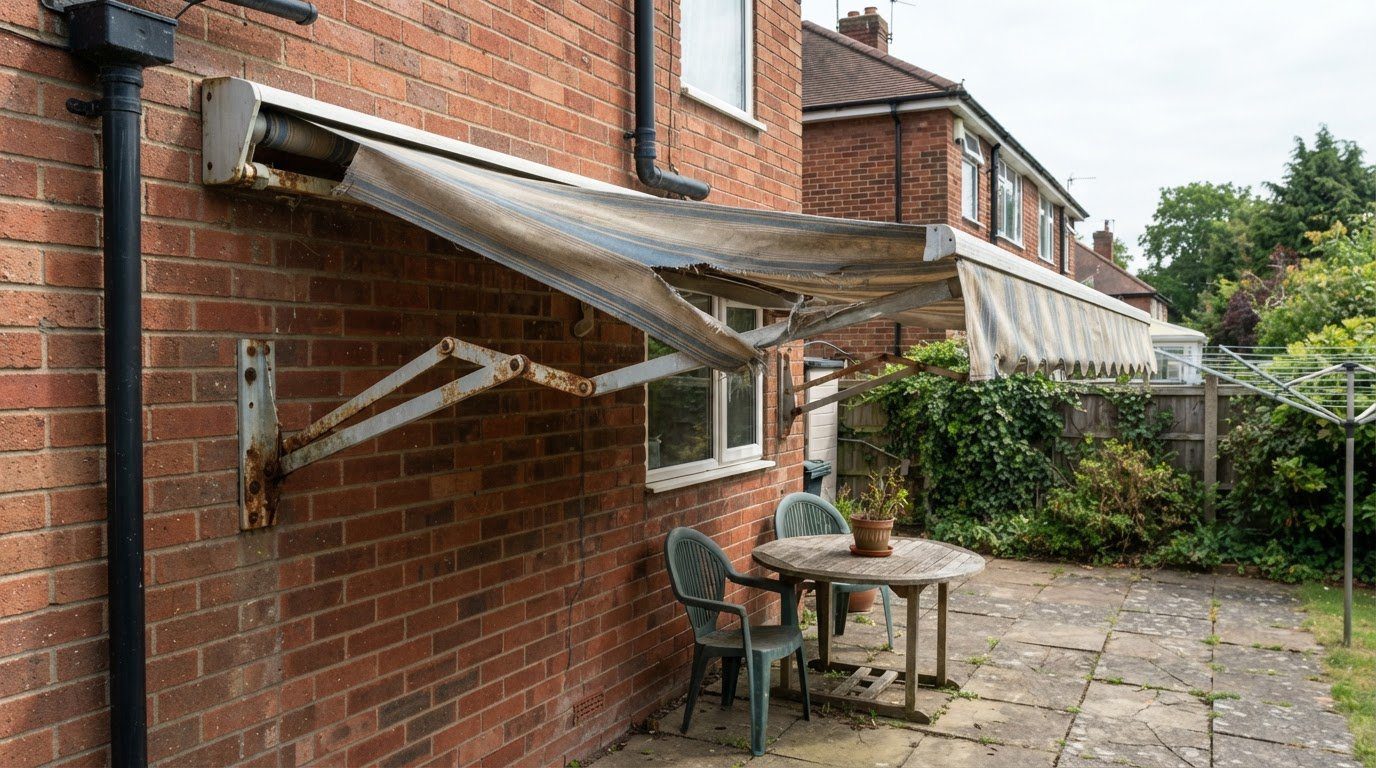
Signs a Patio Awning Needs Repair or Replacement
A damaged patio awning doesn’t always need replacing, but a large rip, failing frame or fabric that no longer keeps out sun and rain can signal it’s time for a change. A fabric rip larger than 12 inches may mean the fabric needs replacing, while a single repairable hole doesn’t automatically call for a whole new awning. The signs you need to replace your patio awning become more compelling when several parts are deteriorating at once.
It’s frustrating when an awning that once made your patio comfortable starts sagging, leaking or resisting movement. Some faults affect only the fabric or hardware and may be repairable; others indicate wider wear that makes replacement more practical.
Learn how to distinguish damage that may need repair from signs that replacement could make more sense, and identify hardware problems early. Fabric wear, frame condition, water pooling and changes in operation can each reveal what needs attention.
Key Takeaways
- A fabric recover may be a practical option when the awning’s frame and motor remain structurally sound and suit the replacement fabric.
- Compare the condition of the fabric, frame and motor: widespread damage across several major parts can make a new awning more sensible than repeated repairs.
- Sagging, shifting or corroded frame components can affect stability; pooling water may add further strain.
- Squeaking, grinding, jamming or slower movement can flag mechanical wear early, before the awning stops operating properly.
1. When Do You Need the Awning Repair or Replacement?
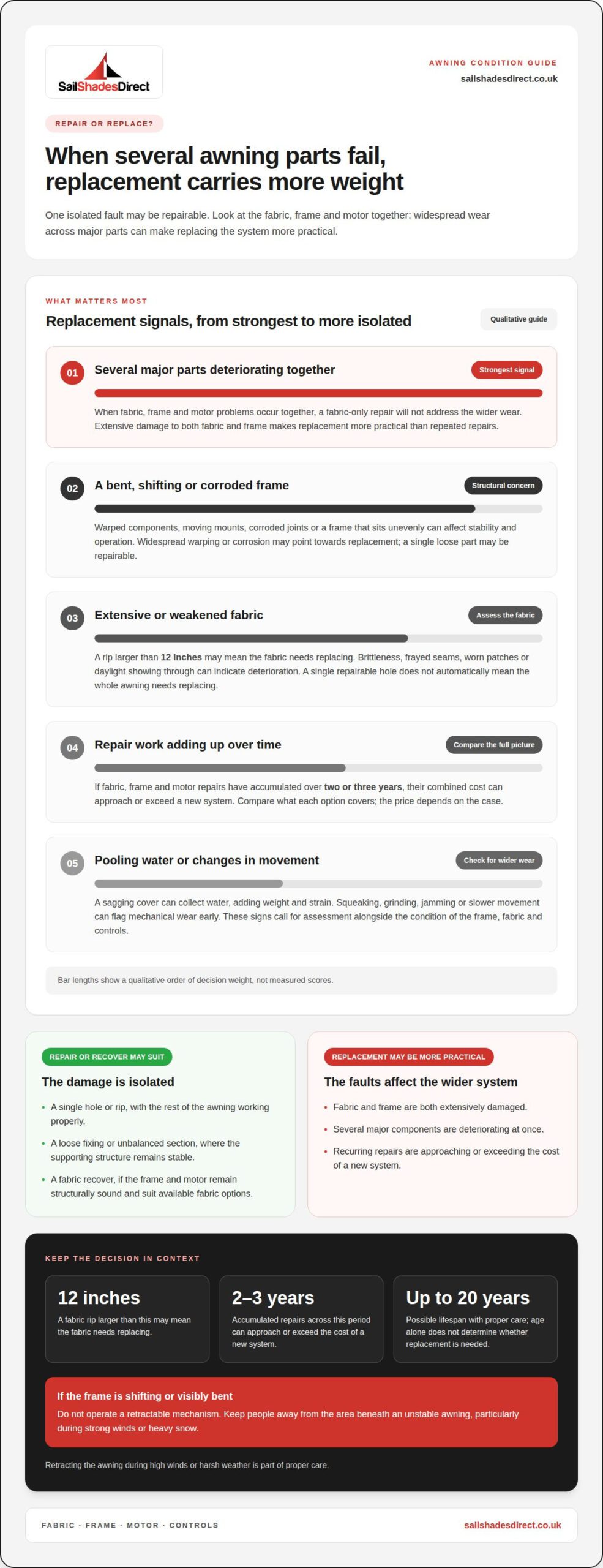
A patio awning can often be repaired; replacement is more practical when damage affects several major parts. A single hole or rip may be repairable, while a fabric rip larger than 12 inches may mean the fabric needs replacing. A professional inspection assesses the fabric, frame and controls together, rather than judging visible damage alone.
Among the signs you need to replace your patio awning, extensive fabric damage is a key one. Fading after prolonged sun exposure can indicate UV-related deterioration, especially if the material feels brittle. Tears, frayed seams and worn patches can worsen in wind or rain. Daylight showing through the fabric may also signal weakened material.
Stains or mildew may indicate that moisture has seeped into the fabric. Surface mildew on fabric with an intact water-repellent finish may rinse off with mild soap and a soft brush. Persistent damp marks or widespread growth need closer assessment. A fabric recover may be practical if the frame and motor remain structurally sound and suit available fabric options.
For UK weather, synthetic fabrics are intended to help resist mildew and fading after prolonged sun exposure. Aluminium frames can withstand strong winds, heavy rain and snow. The right choice depends on the awning’s exposure and condition, and whether its supporting structure remains sound.
Planning permission or building regulations may depend on the property and the proposed replacement work. Consider the property’s circumstances and any exterior changes before installation, as requirements can differ between projects.
With proper care, including retracting the awning during high winds or harsh weather, it can last up to 20 years. Age alone doesn’t determine whether replacement is needed.
Another sign you need to replace your patio awning is several major components deteriorating at once. A fabric recover is less suitable if the frame or motor is also failing.
2. When replacement is more practical than repair
Repair is often sensible when damage is isolated and the rest of the awning works properly. Loose or unbalanced structures may be repairable by replacing affected parts. The decision changes when fabric, frame and motor problems occur together. Extensive damage to both fabric and frame makes replacement more practical than repeated repairs.
Look beyond the latest fault. If fabric, frame and motor repairs have accumulated over two or three years, their combined cost can approach or exceed a new system. Compare the work each option covers, not just the immediate repair: a fabric fix won’t address a failing motor or deteriorating frame. The price depends on the case and is given after a quote request; fabric, frame and control work shape the comparison.
A professional repair is worth considering when one component is faulty but the supporting structure remains stable. A loose fixing or unbalanced section, for example, may be repairable, while shifting mounts combined with a bent frame suggest a wider structural problem. An inspection can assess the frame, fabric and controls together and establish whether individual parts or the whole system need attention.
Repeated exposure to wind and rain can make small faults more consequential. Water pooling on a sagging cover adds weight, while loose screws or brackets can lead to further movement. Regularly inspect the mounting points and moving parts for visible changes. Retract the awning during high winds or harsh weather to help extend its lifespan, which can reach up to 20 years with proper care.
For convenience, weigh the disruption of recurring repairs against the appeal of a complete, working system. If an aluminium frame remains sound, repairing or replacing only a worn component can preserve useful parts. If several major systems are failing together, replacement avoids treating each fault in isolation. Explore replacement awning options when recurring faults have reduced reliable shade.
3. Bent, corroded or sagging frame components
A patio awning frame should hold its shape and remain securely fixed to the building. Bent or warped components can compromise stability, increasing the risk of collapse in strong winds or heavy snow. On a retractable awning, a frame that shifts or sits unevenly can also prevent the fabric from extending and retracting properly. These are structural concerns, not just cosmetic issues.
Check the frame, brackets and other hardware. Rust streaks, corroded joints or a frame that moves when nudged can indicate deterioration. Corrosion may spread through metal connections and weaken them over time; corroded brackets can fail under stress, particularly in windy conditions. A loose screw, bolt or fixing can cause the awning to sag, tilt or detach from its mounting surface.
Take sagging seriously, even if the frame appears intact. Loose fasteners, a stretched frame or waterlogged fabric can pull the awning out of position. If water pools on sagging fabric, the added weight can accelerate deterioration. Compare its current position with how it sat when properly installed: a new tilt, uneven edge or persistent dip signals a change.
A damaged or unstable awning may detach or collapse, particularly during strong winds or heavy snow. Keep people away from the area beneath it, and don’t operate a retractable mechanism if the frame is shifting or visibly bent. Continuing to use unstable outdoor equipment can put people and nearby property at risk; where structural failures lead to accidental harm, practices such as Temecula Valley Injury Attorneys often address the premises liability issues associated with hazardous home features.
Arrange an inspection if corrosion reaches joints, brackets or mounting points, rather than treating rust as a surface blemish. A professional can assess whether a local fixing or frame component can be replaced, or whether the structure is deteriorating more broadly. If the frame is sound and only one part has loosened, targeted repairs may restore function. Widespread warping or corrosion can make the awning difficult to use and may point towards replacement.
4. How Can You Spot Awning Hardware Problems Early?
Listen and watch whenever you operate a retractable awning. Squeaking, grinding or jamming can indicate internal wear or a need for maintenance. Note whether the noise occurs during extension, retraction or both. Any change from the mechanism’s usual smooth movement can help pinpoint where the problem starts.
Pay attention to the motor’s behaviour over time. A motor that becomes progressively slower or noisier may be nearing failure. If it struggles at the same point each time, don’t force it through the movement. Repeated strain can make a small operating problem harder to resolve.
Check alignment as the awning opens and closes. A discrepancy under 2 inches is described as normal, but a visible change from its usual position deserves attention. For example, one side stopping before the other, or the fabric extending unevenly, may indicate a mechanical or alignment issue. A wobbly frame can also point to structural weakness.
Separate mechanism faults from fabric problems. Mildew, stains or fading affect the fabric, while grinding and jamming point to hardware or operating components. An awning that no longer opens fully may provide less shade and detract from your patio’s appearance. Tracking when the fault occurs, such as only during retraction, gives a clearer picture of its behaviour.
Stop operating the awning if its movement becomes jerky, the frame shifts or the mechanism makes persistent grinding noises. A professional inspection can assess the motor, moving parts, alignment and frame together, then identify whether maintenance or replacement is the practical solution. Note the symptoms and when they occur; this helps focus the inspection on the fault pattern.
If recurring mechanism problems leave your patio without dependable shade, explore replacement awning options suited to your outdoor space.
Sail Shades Direct: Arm Awnings
If your existing awning is beyond practical repair, Sail Shades Direct can help you choose a replacement suited to your outdoor space. Its arm awnings offer adjustable shade for patios, with design and installation tailored to the setting.
Replacing an awning is also an opportunity to rethink how you use your patio. Consider the area you want shaded, the position of doors and windows, and how the awning will fit the building. These details help shape a solution that works for everyday use and complements your outdoor area—a feature equally valued across modern property markets, where agencies such as Upscale Real Estate Brokerage LLC highlight that stylish, shaded outdoor living spaces add substantial appeal to villas and townhouses.
If the frame or operating components are failing alongside worn fabric, discuss whether a new arm awning would suit your needs better than further repairs. Contact Sail Shades Direct to talk through your patio and awning requirements.
Choose shade that suits your next season outdoors
The best next step is to match your outdoor space with a solution that supports how you want to use it. If the signs you need to replace your patio awning are clear, consider what you want from improved shade, not just what needs replacing. Think about the areas you use most, the shade you need and how a new system should fit alongside your home.
Sail Shades Direct offers Arm Awnings, Bespoke Sail Shades and Rolling Sun Sails. Each creates shade in a different way, so start with your patio’s layout and how you spend time outside. Sharing those priorities can help shape a considered solution for your space.
Ready to explore what could work for your patio? Contact Sail Shades Direct for advice and discuss your requirements. A well-matched shade solution can help make your outdoor space feel inviting again.
Frequently Asked Questions
When Do You Need the Awning Repair or Replacement?
Repair suits a fault confined to one part; replacement is more practical when several key parts are failing together. A local fabric tear on an awning that still extends smoothly, for example, is different from damaged fabric alongside a failing frame. Consider whether the fault is isolated, whether the awning still does its job, and whether repairs have become a recurring pattern.
Can I just replace the fabric and keep my existing frame?
Yes, a fabric recover can work if the frame and motor remain structurally sound and suit available fabric options. Compatibility matters: the new material must suit the existing awning’s construction and operation. If the arms are distorted or the mechanism struggles to move, new fabric alone won’t fix those faults. Consider the frame and controls, not just the fabric’s condition.
How Can You Spot Awning Hardware Problems Early?
Notice changes in sound, speed and movement during normal operation. Squeaking, grinding or jamming can point to wear or a need for maintenance, while a motor that grows slower or louder over time may be nearing failure. Note whether the difficulty occurs when opening, closing or throughout movement. This gives an inspector a clearer starting point than a general description of poor operation.
What are the signs a patio awning fabric needs replacing?
Fabric that has become brittle, has extensive fraying, or lets daylight through deserves close attention. Heavy fading can also indicate diminished UV protection, rather than being purely cosmetic. A rip larger than 12 inches may mean the fabric needs replacing, although one repairable hole doesn’t automatically require a complete recover. Look for several signs together, such as faded colour with weakened seams or persistent damp staining.
How can I tell if an awning frame or arms are damaged or unsafe?
Look for bent or warped arms, rust at joints, loose brackets or a frame that has shifted from its usual position. These signs can indicate weakened connections or instability. Don’t operate an awning that visibly shifts or has distorted arms, particularly in windy conditions. A professional inspection can establish whether the affected hardware is localised or the frame’s wider condition makes continued use unsuitable.