
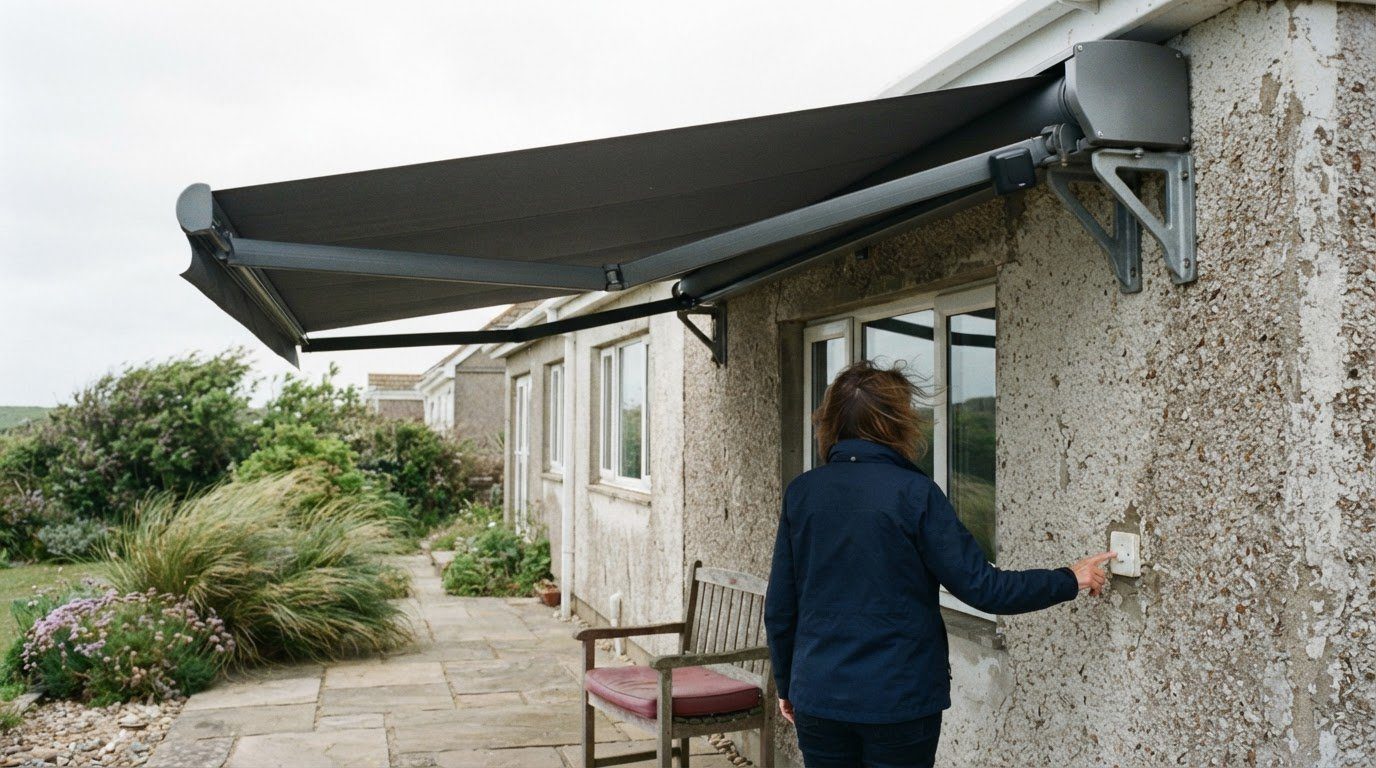
Wind Rated Patio Awnings for UK Homes
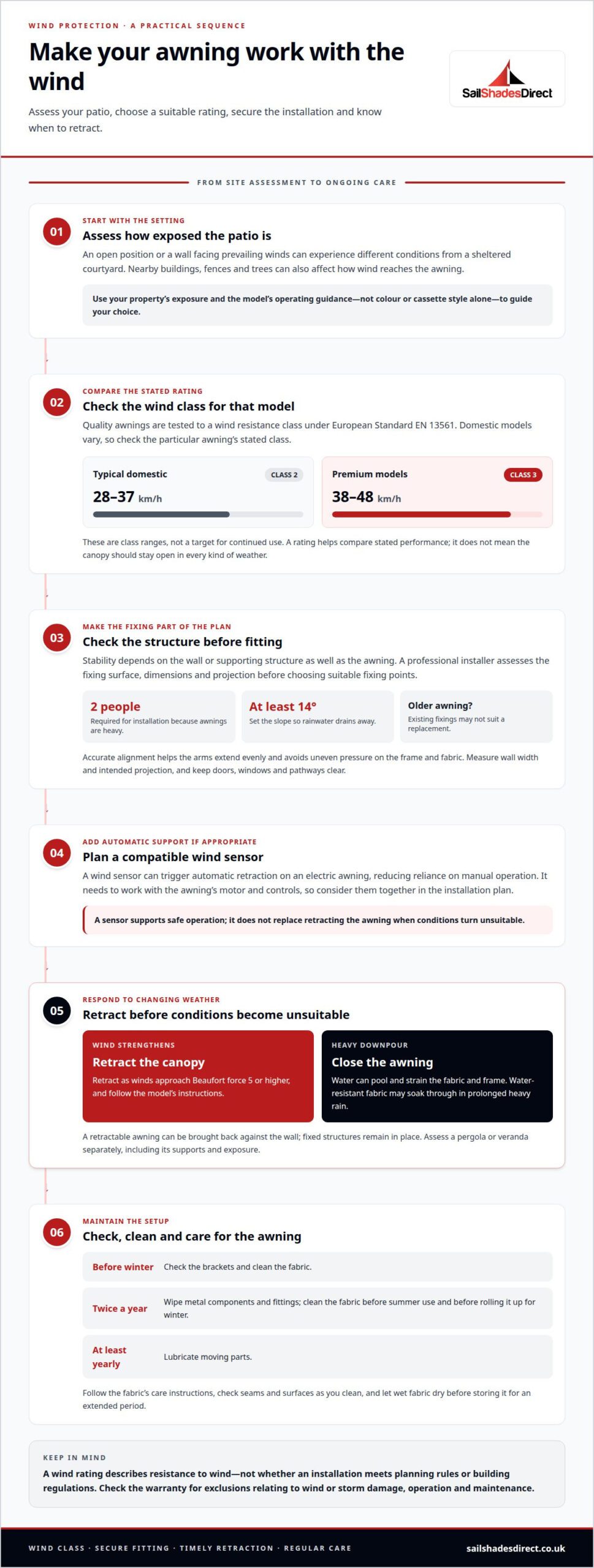
The strongest-looking awning isn’t necessarily the right one for a breezy patio. An awning is a fabric canopy that extends from a building to provide shade, and wind-rated patio awnings in the UK are classified by how much wind they’re designed to withstand: typical domestic models are Class 2, around 28-37 km/h, while premium models are Class 3, around 38-48 km/h.
Look beyond the rating alone. An awning still needs to be retracted as the wind strengthens, and the right choice also depends on its fabric, UV protection, fittings and mounting.
This guide explains wind classes, fabric and sun protection, and the materials and design details that influence durability. You’ll also learn what to consider when upgrading an existing setup, so you can choose confidently for your outdoor space.
Key Takeaways
- Match the awning’s wind rating to your patio’s exposure, and consider how its fixing points and installation affect stability.
- Choose fabric for both shade and UV protection, bearing in mind that water-resistant material can soak through in prolonged heavy rain.
- Retract the awning as wind strengthens, and consider how its frame, fittings and upkeep contribute to long-term durability.
- For a made-to-measure shading solution, explore how Sail Shades Direct’s Arm Awnings can suit your home and outdoor space.
Can I upgrade my awning or pergola with wind protection?
You can improve an existing awning’s stability with secure fixings and careful installation. A wind sensor can also retract an electric canopy as gusts strengthen.
Reinforced anchoring and professional fitting
Secure anchoring starts with the wall or supporting structure, not just the awning. During professional installation, the installer assesses the fixing surface, awning dimensions and projection before selecting suitable fixing points. Awnings are heavy, so installation requires two people. Accurate alignment helps the arms extend evenly and prevents uneven pressure on the frame and fabric. This assessment is especially important when upgrading an older awning, as its existing fixings may not suit a replacement.
Measure the wall width and intended projection before choosing an awning. Set the slope to at least 14° so rainwater drains away, and keep doors, windows and pathways clear. If you add a side awning for wind and privacy, a height of at least 2 metres is recommended. A cassette protects the retracted fabric, while a valance can help shade low sun.
A patio awning retracts against the wall, while a pergola or veranda is a fixed structure. Wind performance depends on each design, its supports and fixings, so a rating alone cannot provide a straightforward comparison. Retracting an awning removes its extended canopy from exposure; fixed structures remain in place.
UK planning rules and building regulations are separate from wind ratings. A rating describes resistance to wind, not whether a specific installation meets requirements relating to its design, attachment or property.
Wind sensors and automatic retraction
A wind sensor can trigger automatic retraction on an electric awning, reducing reliance on manual operation. The sensor needs to work with the awning’s motor and controls, so include both in the installation plan. Retract the canopy as winds approach Beaufort force 5 or higher, and close it during heavy downpours. A sensor supports safe operation but doesn’t replace retracting the awning when conditions turn unsuitable.
Before winter, check the brackets and clean the fabric. Wipe metal components and fittings twice a year, and lubricate moving parts at least once a year. These steps help keep the awning operating smoothly, but it should still be retracted as the wind strengthens.
Awning fabric and UV protection
Fabric affects shade, colour retention, rain performance and the feel of your outdoor space. Start with how you use the patio: a dining area may need reliable daytime shade, while a compact seating spot may benefit from a retractable canopy that you can adjust as the sun moves. Ask for clear information about UV protection rather than judging performance by colour or appearance. Compare the stated protection and care requirements of the fabrics you’re considering.
Colour and pattern also influence how an awning complements your home. Neutral fabric can suit brickwork and timber, while stripes can give a patio a more traditional look. For a coordinated finish, consider how the fabric works with your outdoor furniture and the view from inside. Sunlight repeatedly reaches an extended canopy, so fade resistance matters. Look for information about colourfastness and care, then choose a shade that will work with your home as your outdoor furnishings change.
Water-resistant fabric is not the same as waterproof fabric. During prolonged heavy rain, water-resistant awning material may eventually soak through, so an awning is not a substitute for permanent rain cover. Pooling water can strain the fabric and frame. Keep the canopy at the slope set during installation, and retract it during heavy downpours rather than allowing water to collect. If you retract it while wet, let it dry before storing it for an extended period to help prevent trapped moisture and damage.
Plan fabric care around the seasons: clean the awning at least twice a year, before summer use and before rolling it up for winter. Follow the fabric’s care instructions and use a suitable cleaning method, avoiding harsh treatment that could affect the finish. Check the seams and surface each time you clean it, especially after frequent use. Regular care keeps the fabric presentable and helps you spot wear early.
Wind resistance ratings of awning models
A wind class helps you compare awnings, but it doesn’t mean a canopy should stay open in every kind of weather. When choosing wind-rated patio awnings in the UK, consider the stated class alongside the operating guidance and your home’s exposure.
Awning wind resistance classes
Quality awnings are tested to a wind resistance class under European Standard EN 13561. Domestic awnings vary in their wind resistance, so check the model’s stated rating. Premium models are Class 3, around 38-48 km/h. These figures describe class ranges, not a target for continued use. Retract the awning as wind strengthens and follow the model’s instructions.
A rating helps compare stated performance, but it cannot prevent every kind of damage. Gusts can strain the canopy, arms, frame and fixings, especially when the awning is extended. Before buying, read the warranty terms for exclusions relating to wind or storm damage, operation outside the instructions and maintenance. Check how the terms cover damage to the fabric, fittings and frame.
Location and exposure when choosing an awning
Assess your patio’s exposure before choosing a model. An open position or a wall facing prevailing winds may experience different conditions from a sheltered courtyard. Nearby buildings, fences and trees can affect how wind reaches the awning. When comparing wind-rated patio awnings in the UK, match the model’s stated class and operating guidance to your property rather than choosing by colour or cassette style alone.
VertiTex II shows why product-specific information matters. A model name, remote control or full-cassette format does not establish its wind class. Look for the particular awning’s stated rating and test standard. A pergola differs from a retractable awning, so assess its supports and exposure separately rather than comparing product names alone.
Treat the class as one part of your decision, alongside the wall, fixings and patio layout. Choose a model whose tested performance and operation suit the site, and retract the canopy when conditions call for it.
Awning materials and durability
An awning’s durability depends on more than its fabric. The frame, moving arms, brackets and fixings all affect how well it handles regular use and changing weather. For a garden patio, consider how these parts work together as the canopy extends for shade and retracts after use. Choose materials suited to the installation surface and conditions around your home.
Aluminium is commonly used for awning frames because it is lightweight and naturally resistant to rust. Steel can provide a sturdy structure, but its protective finish matters in damp, rainy conditions. Consider the frame and its joints together: strong-looking arms cannot make up for weak fixings or poor installation. A full cassette can shield retracted fabric, while an open design leaves more of the canopy exposed.
Moving components also influence service life. On electric retractable awnings, the motor, controls and arm mechanism need to work smoothly together. Manual models avoid electrical components but still rely on sound joints and correct alignment. Consider how often you’ll extend and retract the awning, then choose an operating style that suits your household routine.
Durability also depends on sensible use and timely attention. After strong weather, inspect visible brackets, arm joints and the exterior finish for movement, damage or signs of corrosion. If the awning operates unevenly, stop using it until the cause is addressed. Retract the canopy in unsuitable conditions: even a durable frame cannot remove the strain wind places on an extended structure.
For a coordinated garden shading scheme, exterior blinds can complement an awning by providing another way to manage sun and exposure. Match the finish with your home’s existing features, such as dark window frames or pale brickwork, so the installation feels intentional. If you’re planning a durable shading setup, explore arm awning options for your outdoor space.
Sail Shades Direct: Arm Awnings
Sail Shades Direct designs, manufactures and installs arm awnings for homes seeking practical patio shade. If you’re planning an upgrade, the awning’s position, projection, fixing surface and exposure all help shape a suitable design. Discuss these details alongside how you use the space, so the finished solution works with your home and outdoor routine.
For other layouts, Bespoke Sail Shades and Rolling Sun Sails provide different approaches to outdoor shading, while Giant Umbrellas can suit areas where wall-mounted coverage is not the right fit. Each option has its own placement and support requirements, so the best choice depends on your space and how you want to use it.
Contact Sail Shades Direct to discuss an arm awning or another outdoor shading option for your home.
Plan a more usable outdoor space
A well-chosen awning can make your patio feel like a natural extension of your home. Start by thinking about how you want to use the space: as a calm spot for morning coffee, a shaded dining area, or a flexible space where you can draw back the cover for open sky. These priorities can guide your choices around appearance, everyday operation and protection from changing conditions.
If you’re comparing wind-rated patio awnings in the UK, a tailored conversation can turn general considerations into a design suited to your property. Sail Shades Direct can discuss your layout, intended coverage and preferred style, and help you consider the right shading approach.
Contact Sail Shades Direct to talk through your plans and take the next step towards making more of your patio.
Frequently Asked Questions
What are awnings?
Awnings are coverings fitted to a building or support to provide shade over an outdoor area. A patio awning usually projects from an exterior wall above a terrace, while a side awning creates a vertical screen. For example, you can extend a retractable canopy for shade and fold it away to reopen the patio. Its mounting and intended use depend on the design.
How Do Windproof Awnings Protect Homes?
Wind-rated awnings are designed to resist wind within their stated class, but they do not make a home windproof. A side screen may provide shelter on an exposed patio, while a canopy offers shade in suitable conditions. Retracting the canopy before gusts strengthen reduces its exposure. A rating describes product performance, not a guarantee against damage to the awning or surrounding property.
How much wind can the side awning handle?
There isn’t one wind-speed limit for every side awning. Capacity depends on the model, its mounting and installation conditions. A height of at least 2 metres is recommended when a side awning provides wind and privacy protection, but that measurement doesn’t indicate wind capacity. For a specific model, use its stated wind class and operating instructions rather than assuming all side screens perform alike.
What wind ratings are available for patio awnings in the UK?
For wind-rated patio awnings in the UK, typical domestic models are Class 2, with resistance around 28-37 km/h; premium models are Class 3, around 38-48 km/h. These ranges help distinguish stated performance, but aren’t instructions to leave an awning open at those speeds. Compare the individual model’s rating and operating guidance, and retract the canopy as wind strengthens.
What wind speeds can retractable patio awnings safely withstand?
Class 2 models are described as resisting around 28-37 km/h, while Class 3 models are described at around 38-48 km/h. Those class ranges don’t establish one safe operating limit for every installation. Guidance advises retracting an awning as wind approaches Beaufort force 5, identified as 38 km/h. Follow the model’s instructions and close it sooner if conditions become unsuitable.
How are awning wind resistance classes defined under EN 13561?
EN 13561 is the European Standard used to test quality awnings and assign wind resistance classes. The class indicates tested performance, with typical domestic models described as Class 2 and premium models as Class 3. For wind-rated patio awnings in the UK, this gives a basis for comparing stated performance, but doesn’t describe every installation or replace the model’s operating guidance.