
How to Clean a Sail Shade Canopy Without Damaging the Fabric
A sail shade canopy needs gentle cleaning, not harsh chemicals or abrasive scrubbing. To learn how to clean a sail shade canopy, brush away loose dirt, wash the fabric with lukewarm water and mild soap, rinse it thoroughly, then let it dry fully. Follow any care instructions supplied with your shade.
It’s tempting to scrub stubborn marks or use a strong cleaner, but either can be too harsh for the fabric. A careful approach helps lift everyday dirt while protecting the canopy.
This guide explains how to prepare the shade, clean it step by step and treat marks without unnecessary force. You’ll also learn what to avoid and when professional advice may help.
Key Takeaways
- Start by checking the canopy’s care instructions and clearing loose debris before washing.
- Choose gentle cleaning tools and products, and avoid forceful scrubbing that could stress the fabric.
- Pay attention to how you treat marks and dry the canopy to help keep the fabric in good condition.
- If you’re planning a new shade solution, explore how a Rolling Sun Sail could suit your outdoor space.
How to clean a sail shade canopy
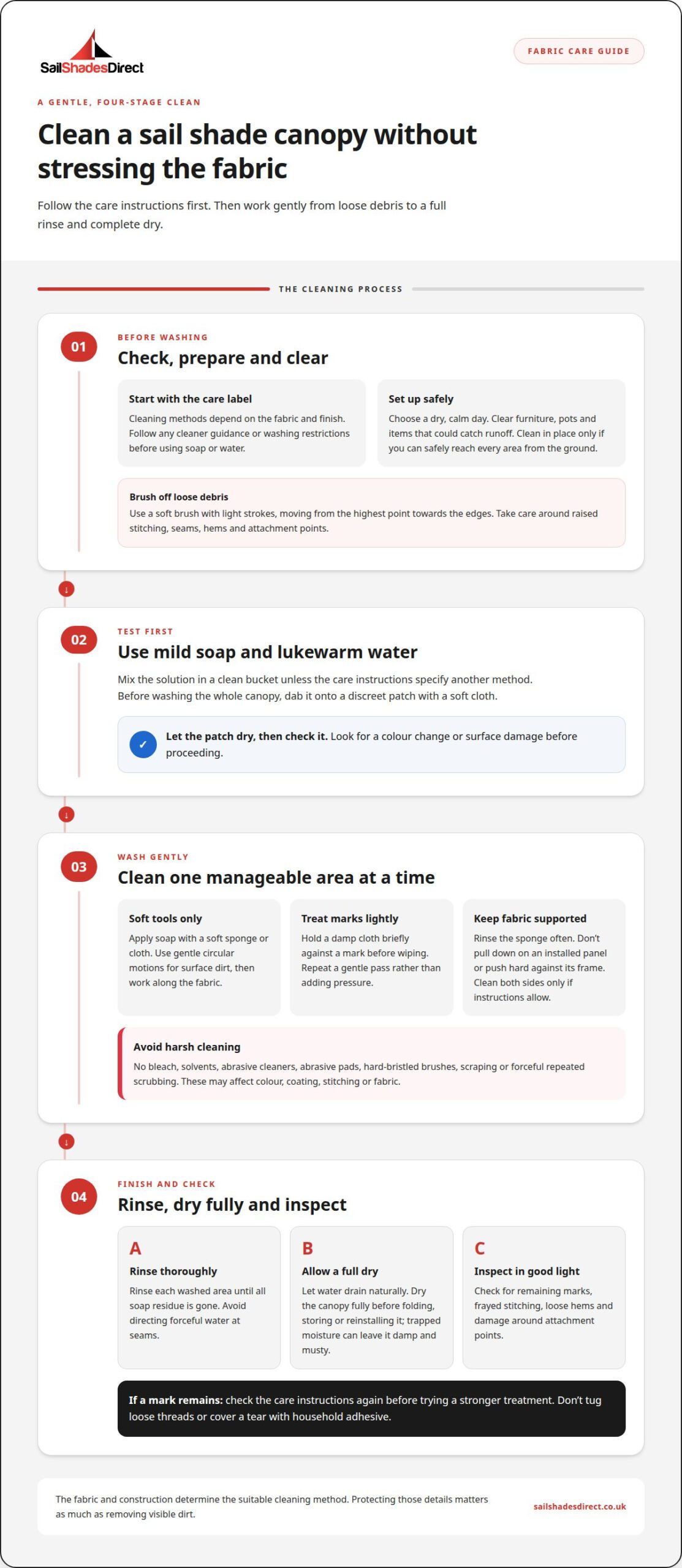
Start with the care label or maker’s instructions, as cleaning methods depend on the canopy fabric and finish. A shade designed to stay outdoors may need different care from a removable fabric panel. If the instructions name a suitable cleaner or restrict washing, follow them before using water or soap.
Choose a dry, calm day, then decide whether the canopy can be cleaned in place. Remove it only if its design allows straightforward removal and refitting. Clean a fixed shade where it sits if you can safely reach every area from the ground. Don’t climb on the fabric or lean heavily against its supports.
Prepare the canopy and cleaning area
First clear furniture and pots from underneath, then move cushions and other items that could catch runoff. Brush away loose leaves, dust and cobwebs with a soft brush. Work from the highest point towards the edges, using light strokes to avoid dragging grit across the fabric. Check seams, hems and attachment points as you go; brushing forcefully over raised stitching can snag the thread.
Mix mild soap with lukewarm water in a clean bucket, unless the care instructions specify another method. Avoid household products such as bleach, solvents or abrasive cleaners, which may affect the fabric’s colour, coating or stitching. Before cleaning the whole shade, dab the solution onto a discreet patch with a soft cloth. Let it dry, then check for colour change or surface damage.
Wash gently, one area at a time
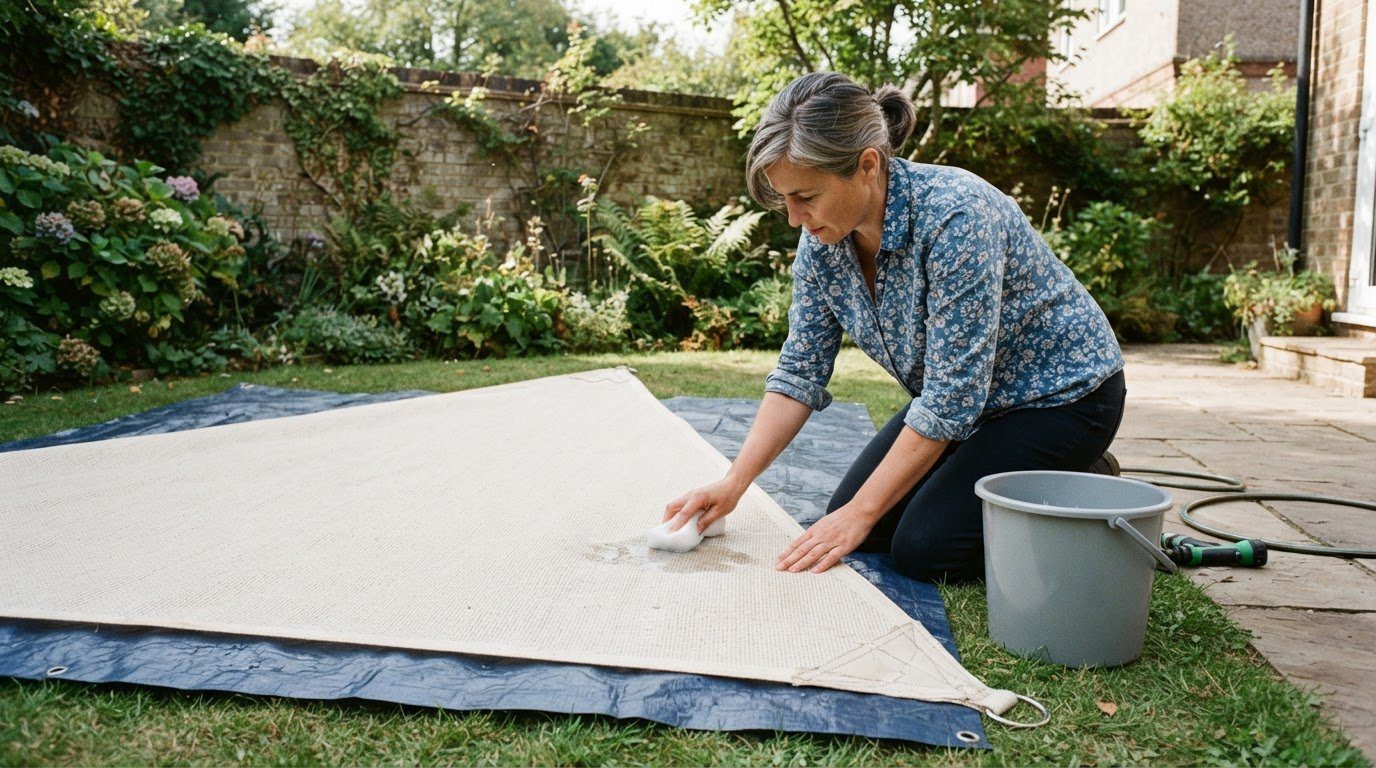
If the test patch looks unchanged, clean a manageable section with a soft sponge or cloth. Use gentle circular motions for ordinary surface dirt, then work along the fabric rather than scrubbing repeatedly in one spot. Rinse the sponge often to avoid spreading loosened grime. For a mark, briefly hold a damp cloth against it before wiping. Don’t scrape it with a fingernail or stiff brush.
Keep the fabric supported while cleaning. If the shade is installed, don’t pull down on a panel or push hard against its frame. If it’s removable, lay it across a clean surface that won’t transfer dirt or colour. Clean both sides only if the fabric’s instructions allow it, and take care around stitched edges, seams and reinforced corners.
- Use a soft brush for dry debris, not a hard-bristled scrubbing brush.
- Apply soap with a sponge or cloth, not an abrasive pad.
- Rinse away suds with clean water, without directing forceful water at seams.
- Repeat a gentle pass on a mark rather than increasing pressure.
Rinse, dry and inspect
Rinse each washed area until all soap residue is gone. Leftover suds can attract dirt or leave visible patches as the fabric dries. Let the water drain naturally, then allow the canopy to dry fully before folding, storing or reinstalling it. Moisture trapped in a folded shade can leave it damp and musty.
Once dry, inspect the fabric in good light. Look for remaining marks, frayed stitching, loose hems or damage around attachment points. Don’t tug at a loose thread or cover a tear with household adhesive. If a mark remains after careful cleaning, check the care instructions again before trying a stronger treatment. With a bespoke sail shade, the fabric and construction determine the suitable cleaning method, so protecting those details matters as much as removing visible dirt.
Sail Shades Direct: Rolling Sun Sails
Sail Shades Direct designs and installs Rolling Sun Sails for outdoor spaces that need a considered shade solution. If your existing canopy is worn, damaged or no longer suits the area, a new shade may be a better next step than repeated cleaning. The right option depends on the space and how you want to use it. Bespoke Sail Shades offer another tailored approach, whilst Arm Awnings and Giant Umbrellas provide different ways to create shade.
For a new outdoor project, Sail Shades Direct can help shape a solution around your setting and requirements, from design through to installation. Contact Sail Shades Direct to discuss your outdoor shading plans.
Plan the right shade for your space
Knowing how to clean a sail shade canopy can help you care for the fabric, but it’s also a good moment to consider whether your current shade still suits your outdoor space. A different layout or use may call for a fresh design rather than another cleaning session. Sail Shades Direct offers Bespoke Sail Shades, Rolling Sun Sails and Arm Awnings, with options to suit different settings.
Think about where you need shade and how you want the area to work day to day. That gives you a useful starting point for a conversation about a suitable solution. Contact Sail Shades Direct for advice and take the next step towards a more comfortable outdoor space.