
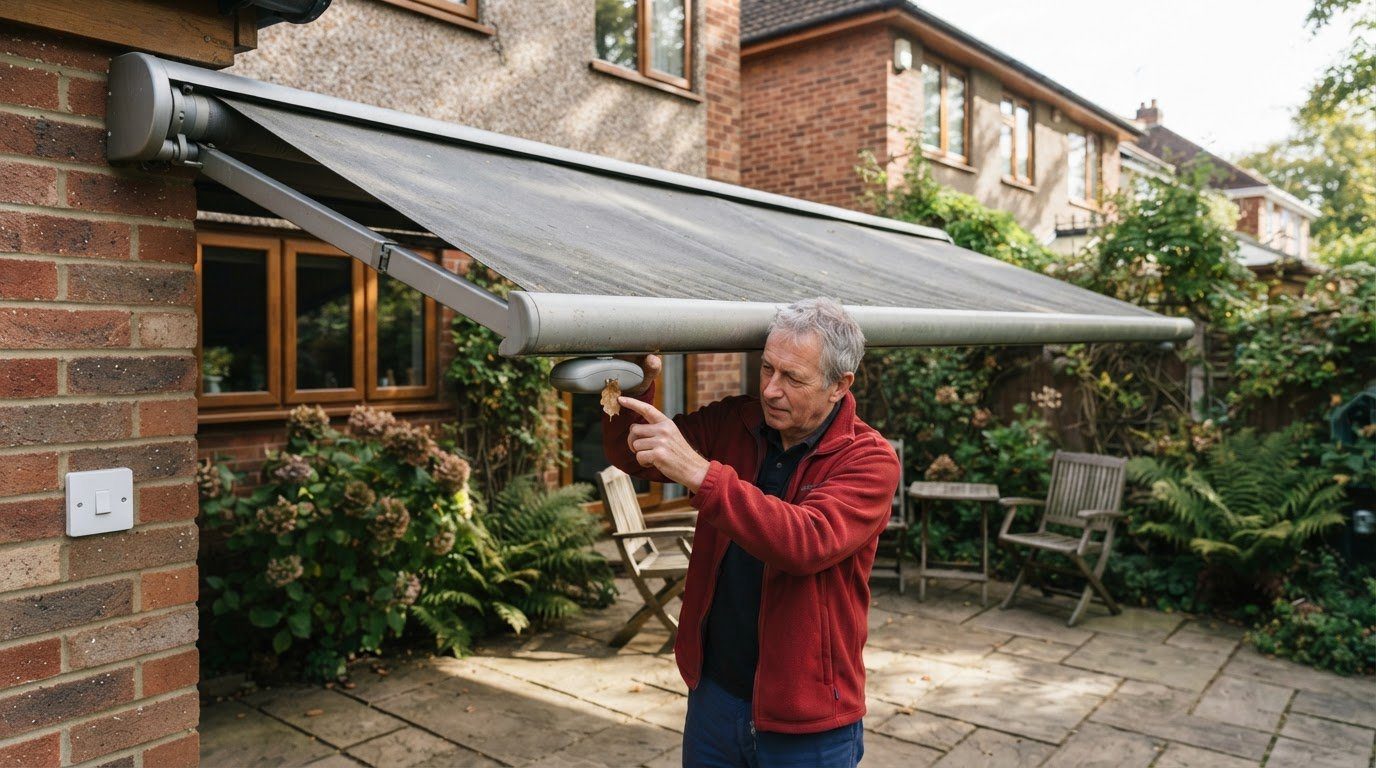
Troubleshooting a motorized awning: start with how it works
A motorised awning that stops moving may not have a failed motor. A sensor, control or blocked track could be the cause. Its switch or remote activates a motor, which moves the mechanism to extend or retract the awning. When troubleshooting a motorised awning, start by understanding how these parts work together, then look for simple signs of a fault.
It’s frustrating when an awning won’t respond, moves unevenly or stops partway, but forcing it can make the problem worse. This guide explains how to check the wind sensor, motor, tracks and operating mechanism, and why to consult the owner’s manual before trying a reset. You’ll also learn which observations can help narrow down the issue and when a technical fault needs specialist attention.
Key Takeaways
- Wind sensors can react to debris or sensitivity settings; learn what to inspect before assuming the sensor has failed.
- Unusual motor sounds, incomplete movement or a sticking track can point to different faults. Avoid forcing the awning while you assess the signs.
- Reset instructions vary by model, so use the owner’s manual to guide any troubleshooting or reset attempt.
- Understanding how the motor and operating mechanism work can help you recognise when a fault needs specialist attention.
1. How do I troubleshoot a dud electric awning wind sensor?
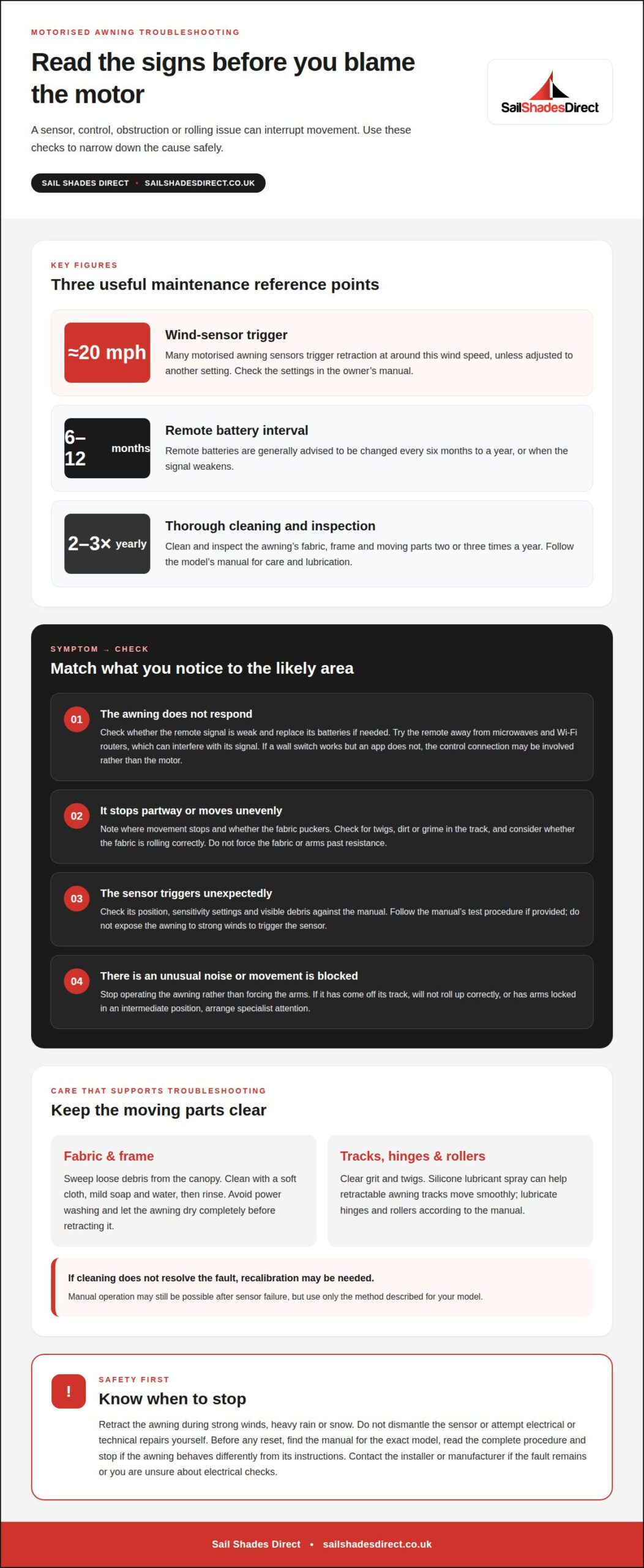
A wind sensor may seem faulty if its sensitivity is set too high, its signal is interrupted or debris is obstructing it. Many motorised awning sensors trigger retraction at around 20 miles per hour, unless adjusted to another setting. Check the sensor’s position and settings against the owner’s manual before changing its sensitivity. Leaves and twigs can interfere with its response, so remove visible debris gently and inspect the sensor for damage.
To assess the sensor, follow the test procedure in the manual, if provided, and watch whether the awning responds as described. Don’t try to trigger the sensor by exposing the awning to strong winds. Retract the awning during strong winds, heavy rain or snow to help prevent damage. If the sensor still behaves erratically, or you’re unsure about electrical checks, stop and contact the installer or manufacturer. Don’t dismantle the sensor or attempt a technical repair yourself.
Keep the fabric and frame clean so dirt doesn’t complicate inspections. Sweep loose debris from the canopy, then clean it with a soft cloth, mild soap and water. Rinse with a garden hose, or use a bucket of clean water if a hose isn’t accessible. Avoid power washing, which can damage the fabric. Let the awning dry completely before retracting it to help prevent mould and mildew.
Include the tracks, hinges and rollers in routine cleaning. Clear away grit and twigs, then apply silicone lubricant spray to retractable awning tracks to help the wheels and bearings move smoothly. Lubricate hinges and rollers according to the manual. Clean and inspect all parts thoroughly two or three times a year. Look for fabric tears, loose fixtures, rust and obstructions. During the manual’s prescribed test, note whether the sensor responds. If cleaning doesn’t resolve the fault, recalibration may be needed. Manual operation may still be possible after sensor failure, but use only the method described for your model.
2. Motor, track and sensor problems
An awning that stops halfway or moves unevenly may have a blocked motorisation system, an obstruction in the track or fabric that isn’t rolling correctly. These problems can prevent it from opening or closing fully. Note where movement stops and whether the fabric puckers. These clues can help distinguish a track issue from a rolling problem. When troubleshooting a motorised awning, first identify whether the control responds.
Start with the control. If the remote’s signal is weak, replace its batteries. They’re generally advised to be changed every six months to a year, or when the signal weakens. Microwaves and Wi-Fi routers can interfere with the remote, so try using it away from nearby appliances and see whether its response changes. If a wall switch operates the awning but an app does not, the control connection may be involved rather than the motor.
A wind sensor can retract a motorised awning automatically in harsh weather. If it triggers unexpectedly, consider whether its settings or operation could explain the movement. Don’t assume the motor has failed: note whether the awning responds to its normal control as well as to the sensor.
Next, check the track for twigs, dirt or grime. Debris can make the awning stick or come off its track, while branches may obstruct extension or retraction. Don’t force the fabric or arms past resistance. If the awning has come off its track, stop operating it and arrange specialist attention.
Unusual noises during movement are another reason to stop rather than force the arms. Electrical problems commonly prevent retraction, and a partly or fully blocked mechanism can signal a more serious malfunction. A specialist technician should handle an awning that won’t roll up correctly or has arms locked in an intermediate position. These checks make troubleshooting a motorised awning more focused. If recurring faults lead you to consider a replacement, explore arm awning options for your outdoor space.
3. Checking the owner’s manual for troubleshooting guidance
Before resetting an awning, consult its owner’s manual because the procedure varies by model. A reset intended for one motor or control may not suit another. Find the manual for the exact awning rather than relying on instructions for a similar-looking unit. If you have a printed copy, match its model identification to the label on the awning or its controls. For a digital copy, check the model details before following any steps.
Use the troubleshooting section to match the symptom with the recommended action. A control that fails to respond, for example, may require different steps from a motor that runs but stops before retracting fully. Check diagrams for the location of switches or controls, and read the full reset sequence before starting. Don’t skip steps or keep trying a reset if the awning behaves differently from the manual’s description.
- Identify the symptom. Note whether the awning won’t move, stops partway, makes an unusual sound or moves unevenly. These details help you find the closest matching entry.
- Check the model and control type. Confirm whether your setup uses a wall switch, remote or app, then follow the relevant instructions.
- Read the complete procedure. Check the stated order, control buttons and any conditions that must be met before resetting or testing.
- Stop at a technical fault. If the manual points to wiring, internal motor parts or a malfunction you can’t safely assess, don’t dismantle the unit.
The manual can also help distinguish normal operation from a fault. Its guidance may explain whether a particular sound or pause is expected during movement. Follow its care instructions for the fabric and moving parts, since cleaning or lubrication advice may depend on the model. If the instructions don’t resolve the fault, or the awning still operates incorrectly, contact the installer or manufacturer with the model details and a clear description of what happened. This provides useful information without risking damage through trial-and-error repairs.
4. Awning motor and operating mechanisms
A motorised awning uses an electric motor to drive its roller and operating arms, extending or retracting the fabric. A wall switch, remote control or app can send the command. If movement is slow or difficult, the motor may be undersized for the awning’s needs; electrical faults can also prevent it retracting. Repeated strain can add wear and tear, so stop operating it if the mechanism sounds unusual or struggles.
Limit switches control where the awning stops at its open and closed positions. Adjustment varies by model, so follow the exact instructions in the owner’s manual rather than turning a screw by guesswork. Incorrect settings can leave the fabric too loose, overextended or unable to close properly. If the manual doesn’t clearly identify the adjustment, or the awning still stops in the wrong place, leave the mechanism untouched and seek technical help.
In the UK, follow the awning’s instructions and check the specific warranty terms before attempting a repair. Cover depends on the warranty wording, so opening the motor housing or changing settings could affect it. Don’t remove electrical covers or attempt wiring repairs yourself. A fault involving the power supply or motor needs suitable technical attention.
A power cut doesn’t automatically mean you can retract the awning by hand. Manual operation is possible only on models designed with a manual override. Check the manual for its location and method. If your model doesn’t specify an override, don’t force the arms or try to turn the roller, as this can cause damage.
For sagging fabric, the recommended adjustment is to crank the awning in reverse, ensuring the fabric rolls over the top of the roller tube. Lubricating joints and drive systems can also help the mechanism move smoothly, using the product instructions to guide maintenance. Motor life depends partly on correct sizing, support structure, assembly, installation and proper use. If persistent faults make repair impractical, discuss an awning upgrade for your outdoor space.
Sail Shades Direct: Arm Awnings
Sail Shades Direct offers Arm Awnings for outdoor spaces where a retractable canopy is the right fit. If troubleshooting reveals significant wear or a mechanism that no longer operates properly, consider whether replacing the awning may suit your needs better than further fault-finding. The right choice depends on your space, how you use it and the shade you want.
For a different approach, Sail Shades Direct also offers Bespoke Sail Shades, Rolling Sun Sails and Giant Umbrellas. These provide other ways to create shade in an outdoor area without relying on an arm-operated awning.
Before choosing, think about the coverage you need and how you use the space. Contact Sail Shades Direct to discuss an Arm Awning or another shade option for your outdoor area.
Plan the next step for your outdoor space
Once you’ve identified what’s behind the fault, decide whether the awning still suits your space and how you use it. If it needs attention beyond the checks in its manual, avoid repeated trial-and-error adjustments. A clear description of the symptoms and the model details can make it easier to discuss the next steps.
If you’re considering a different shade solution, think about the area you want to cover, how much flexibility matters and the look you’d like to achieve. Sail Shades Direct offers Arm Awnings, Bespoke Sail Shades and Rolling Sun Sails for different outdoor settings. Troubleshooting a motorised awning can help you make that decision with a clearer understanding of its condition.
Contact Sail Shades Direct to discuss awning options for your space. A considered next step can help you create an outdoor area you’ll enjoy using.
Frequently Asked Questions
How does a motorised awning work?
A motor turns the roller that winds or releases the awning fabric, while the arms support and guide its movement. You operate it using the control fitted to your system, such as a wall switch, remote or connected app. Pressing the extend control, for example, starts the motor and unwinds the fabric. A wind sensor can also trigger automatic retraction in harsh weather.
How do I troubleshoot a dud electric awning wind sensor?
First, check the sensor for visible dirt, leaves or twigs, then consult the manual for its sensitivity and test procedure. A sensor may retract the awning at around 20 miles per hour unless its setting has been adjusted. If it responds inconsistently after cleaning, it may need recalibration. Don’t dismantle electrical parts; note the symptoms and ask the installer or manufacturer about the next step.
How often should I replace the batteries in my awning remote?
Replace the batteries every six months to a year, or sooner if the remote’s signal becomes weak. If the awning responds intermittently, try fresh batteries before assuming the motor has failed. Use the battery type and replacement method specified in the remote’s instructions, and check that the battery compartment closes properly. If fresh batteries make no difference, consider signal interference or a control fault.
What causes signal interference for my awning remote?
Microwaves and Wi-Fi routers can interfere with an awning remote’s signal. If the remote works inconsistently, try operating it from a different position, away from nearby appliances, and see whether the response changes. This can help distinguish interference from flat batteries or an awning fault. If moving away makes no difference, consult the manual for control troubleshooting before attempting a reset.
What should I do if a retractable awning won’t close?
Stop pressing the control if the awning sticks, makes an unusual noise or begins moving unevenly. Look for a visible obstruction near the track, but don’t force the arms or push the fabric closed. Check the manual for guidance specific to your model. If it remains stuck, has come off its track or stops with its arms partly extended, arrange specialist attention to help prevent further damage.
Why would I need a professional to fix my awning?
Seek professional help when the fault involves electrical parts, a blocked motorisation system, arms locked partway or fabric that won’t roll correctly. These problems may involve components beyond routine cleaning or owner-level checks. Repeatedly operating or dismantling the awning can worsen the damage. For broader upkeep, professional property maintenance companies such as rbz-technical.ae illustrate how trained specialists safely resolve electrical and mechanical fixtures. Share the model details, symptoms and any unusual sounds to help clarify the fault.