
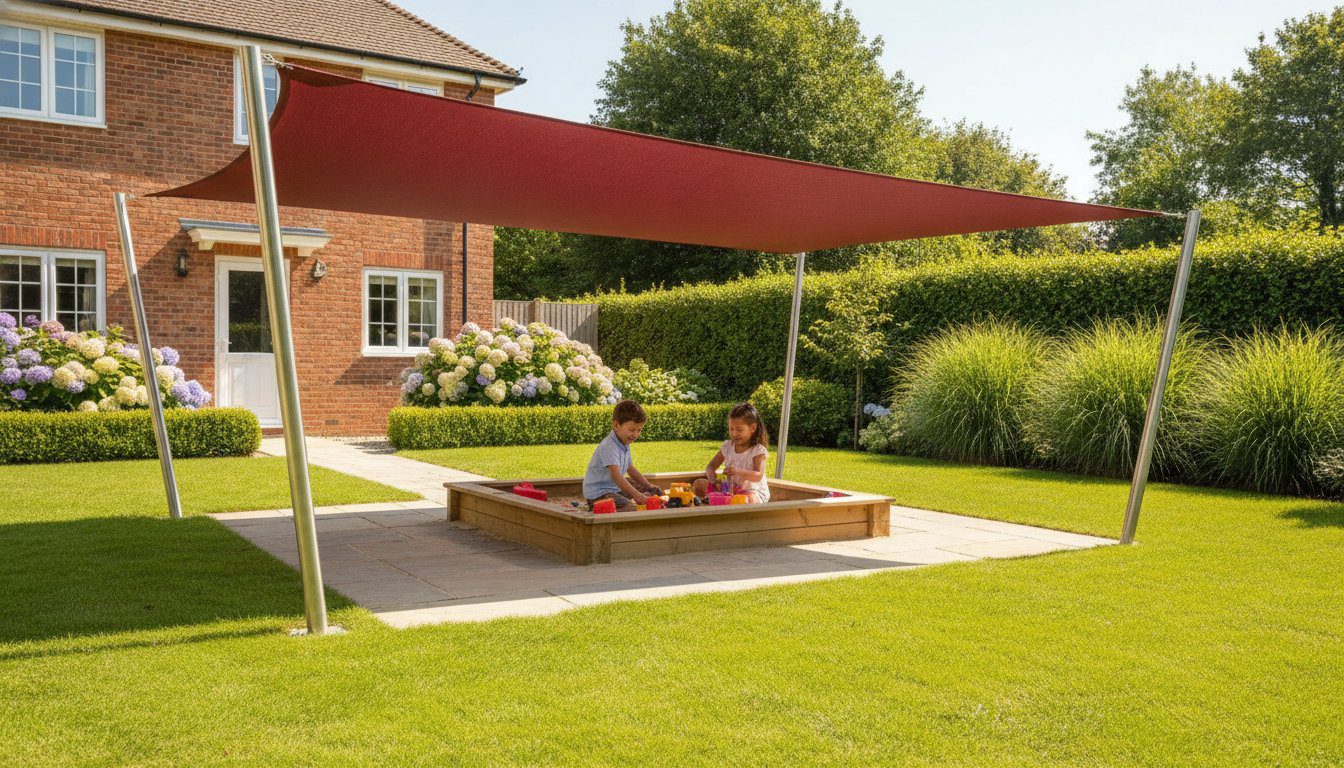
Best Sandpit Shades: A Guide to UV-Safe Play in 2026
Last Saturday, Sarah watched in frustration as her “easy-up” gazebo performed a somersault across the garden during a light breeze, leaving her children’s sandpit exposed to the midday sun once again. It’s a familiar headache for parents and nursery owners across the UK who want a safe, cool space for little ones to play without the constant worry of UV damage or flying garden furniture. You likely agree that outdoor play is vital, but the stress of managing ineffective covers often outweighs the fun. Finding the best shade for over a sandpit shouldn’t feel like a gamble against the unpredictable British weather.
Discover the most durable, high-UV protection shading solutions designed to keep children safe and cool whilst playing outdoors. This guide explores the 2026 standards for UV effectiveness and compares bespoke sail shades with professional-grade umbrellas to help you find a maintenance-free, stylish solution. From fabrics that block 98% of harmful rays to custom-fitted designs that keep leaves and debris out of the sand, we’ll show you how to transform your garden into a protected, sun-safe sanctuary.
Key Takeaways
- Learn why commercial-grade HDPE fabrics are the gold standard for UV protection, blocking up to 98% of harmful rays whilst keeping play areas cool.
- Discover why a bespoke sail is often the best shade for over a sandpit, providing custom-fitted coverage that standard retail kits simply can’t provide.
- Understand the “double exposure” risk of sand reflection and how to position your shade to ensure total protection during peak midday hours.
- Master the essentials of a safe installation, from tracking the sun’s path to choosing heavy-duty steel posts that withstand the UK’s unpredictable winds.
- Find out how high-quality shading does double duty by keeping leaves and debris out of the sand, significantly reducing your garden maintenance.
Why Proper Shading is Essential for Sandpit Play Areas
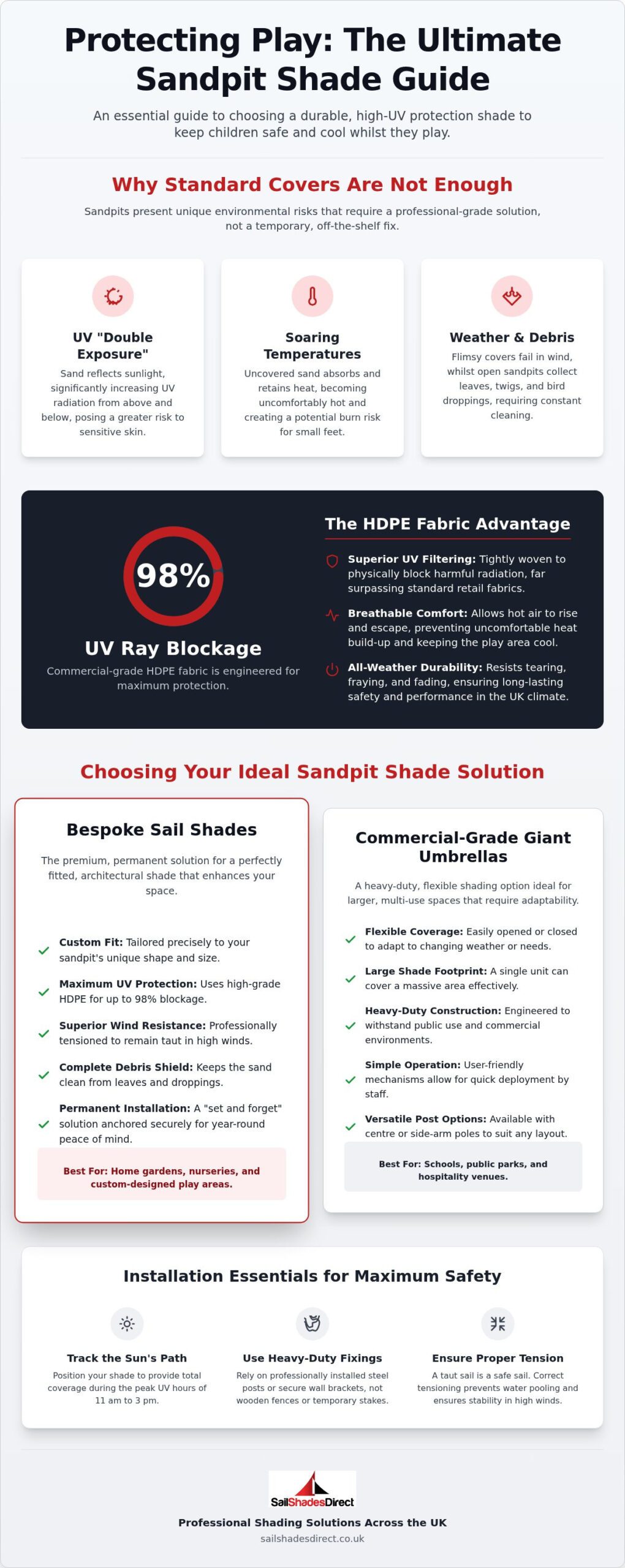
A sandpit is often the heart of a garden, but it presents unique safety challenges that go beyond typical lawn play. Because sand reflects sunlight, it can significantly increase the risk of sunburn even when children are in partial shade; this creates a “double exposure” effect where rays hit from both above and below. Finding the best shade for over a sandpit isn’t just about aesthetics. It’s a critical health decision to protect young, thin skin that burns much faster than an adult’s. Children can be deeply engrossed in sensory play for hours, making them less likely to notice the early signs of heat exhaustion until the damage is already done.
Beyond the immediate health risks, a professional shading solution offers several practical advantages for your outdoor space:
- Temperature Control: Sand absorbs heat rapidly. Without cover, it can reach temperatures high enough to cause discomfort or even mild burns on little feet during a heatwave.
- Debris Protection: A well-positioned sail acts as a canopy, catching falling leaves, twigs, and bird droppings before they contaminate the play area.
- Extended Play: By creating a cool micro-climate, you ensure the sandpit remains a comfortable retreat even during the height of a British summer afternoon.
The Science of UV Protection in Play Zones
Many parents rely on “dappled shade” from nearby trees, yet this is often a dangerous oversight. As the sun moves, these shadows shift, leaving children exposed for long periods without anyone noticing. A permanent Shade sail provides a consistent, high-UPF barrier that doesn’t rely on the wind or the angle of a branch. Standard retail fabrics often lack the density required to block UVR (Ultraviolet Radiation) effectively. In contrast, commercial-grade HDPE mesh is engineered to filter out up to 98% of harmful rays whilst allowing hot air to rise and escape, preventing that “greenhouse” feeling common under cheap plastic covers.
British Weather Challenges: More Than Just Sun
In the UK, the best shade for over a sandpit must be an all-rounder. Pop-up gazebos and flimsy parasols are notorious safety hazards; they can easily become airborne in a sudden gust of wind, risking injury to children or damage to the property. Our bespoke solutions are designed to stay put. Whether you face a sudden summer downpour or a blustery coastal breeze, a tensioned sail or a heavy-duty giant umbrella offers peace of mind that a temporary structure simply can’t match. Investing in a permanent, engineered solution means you won’t be rushing outside to dismantle your shade every time the clouds turn grey.
Comparing the Best Shade Options for Over a Sandpit
Choosing the right structure involves balancing permanent protection with the specific layout of your garden or playground. While basic mesh covers keep cats out, they don’t protect children whilst they’re actually playing. To find the best shade for over a sandpit, you need to look at solutions that offer high clearance, maximum airflow, and structural integrity. Flimsy DIY alternatives often fail because they lack the tension needed to stay safe in a breeze, but professional-grade options provide a reliable, long-term fix.
Bespoke Sail Shades: The Premium Choice
A custom approach is often necessary because sandpits come in all shapes and sizes, from small wooden boxes to large, irregular play areas. These bespoke sail shades UK are engineered to fit your specific footprint perfectly. Unlike off-the-shelf kits that sag and pool water, a tensioned sail remains taut and architectural. It’s a “set and forget” solution that offers up to 98% UV blockage whilst adding a striking visual element to your outdoor space. Because they are custom-made, they can be designed to anchor to existing walls or dedicated steel posts.
Commercial Grade Giant Umbrellas
For schools or nurseries where flexibility is key, commercial giant umbrellas offer a different kind of versatility. These aren’t your standard patio parasols; they are heavy-duty structures capable of shading massive areas with a single central or side-arm pole. They’re incredibly easy to operate, allowing staff to open them during the midday heat and close them when the sun goes down. This adaptability makes them a staple for high-traffic public play zones where the needs of the space might change throughout the day.
If you require even more control, retractable rolling sun sails provide a high-tech alternative. These allow you to manage light levels with precision. You can pull the sail out when the UV index peaks and roll it back to let the sand breathe or dry out after a light shower. This prevents the sand from becoming damp and stagnant, which is a common issue with fixed, non-breathable covers. When you view our previous installations, it’s clear that the right choice depends on your specific site conditions and how often the area is used.
When comparing these types, consider three main factors:
- Durability: Bespoke sails and giant umbrellas are built to withstand the UK climate, whereas cheap gazebos are often “single-season” items.
- UV Blockage: Professional fabrics are rated for their Ultraviolet Effectiveness, ensuring consistent protection.
- Aesthetic Impact: A well-fitted sail or umbrella transforms a play area into a professional, inviting environment that adds value to your property.
Selecting the Best Fabric for Children’s Shade Sails
Whilst the design of the structure provides the frame, the fabric does the heavy lifting when it comes to safety. Choosing the best shade for over a sandpit requires a technical look at the material’s weave and coating. You might be tempted by the cotton or light canvas options often seen on social media, but these lightweight fabrics often provide almost zero UV protection. For a play area that stays cool and safe, we focus on two primary commercial-grade materials: HDPE mesh and waterproof PVC-coated polyester.
The Benefits of Breathable Mesh Fabrics
High-Density Polyethylene (HDPE) mesh is the industry standard for a reason. Its knitted construction allows hot air to rise through the fabric and escape, which prevents a stifling “greenhouse effect” from building up over the sand. This airflow is vital for keeping children comfortable during long play sessions. From a structural perspective, mesh is also wind-permeable; it allows gusts to pass through the tiny gaps in the weave, significantly reducing the load on your fixing points. When selecting a mesh, we aim for a fabric that offers at least 94% UVR protection, ensuring your children are shielded from the most aggressive rays.
When to Choose Waterproof Shading
If you want to create an all-weather play space that stays dry during a sudden British summer shower, waterproof PVC-coated polyester is the superior choice. This material is completely solid, meaning it provides a total barrier against both sun and rain. However, this fabric requires more precise engineering. Because water cannot pass through it, the sail must be installed at a sharp angle to manage run-off and prevent dangerous “ponding” where water pools in the centre. To keep these sails looking their best, a simple seasonal wash with mild soapy water will prevent mould and keep the colours vibrant for years.
The colour you choose also plays a surprising role in safety. Whilst lighter colours might feel “summery”, darker shades like navy, forest green, or charcoal generally offer better UV protection and reduced glare. This makes it easier for children to see what they’re doing whilst they build and dig. It’s also worth noting the difference between domestic and commercial-grade fabrics. A standard retail sail might last a season or two before it starts to fray or fade, but our commercial-grade materials are designed for a lifespan of 10 years or more, even in the demanding UK climate.
Ultimately, the best shade for over a sandpit is one that balances these technical needs with your specific garden layout. Whether you prioritise the cooling breeze of a mesh sail or the year-round utility of a waterproof cover, investing in quality fabric is the only way to ensure total peace of mind for your family.
Planning and Installing Your Sandpit Shade Safely
Installing the best shade for over a sandpit requires more than just a few lengths of rope and a ladder. You’re creating a permanent safety feature, not a temporary tent. Unlike the dangerous DIY suggestions often found on social media, where users suggest tying sails to garden fences, a professional installation relies on calculated tension and structural stability. Fences aren’t designed to withstand the lateral forces of a wind-loaded sail; they can easily snap or be pulled over, creating a serious hazard for children playing nearby.
To ensure your play area remains a safe haven, follow these four essential planning steps:
- Step 1: Identify the sun’s path. The sun is highest during the summer months, but its angle changes daily. You must ensure the shadow covers the play area specifically between 11:00 and 15:00 when UV levels peak.
- Step 2: Select robust fixing points. If you aren’t anchoring into a structural brick wall, you’ll need heavy-duty, galvanised steel posts set in deep concrete footings.
- Step 3: Calculate the required “twist”. A flat sail is a failing sail. By varying the heights of your fixing points, you create a hyperbolic paraboloid (hypar) shape. This prevents sagging, stops water from pooling, and allows wind to spill safely off the surface.
- Step 4: Ensure adequate height. The lowest point of your sail must still allow an adult to stand comfortably to supervise play without ducking or hitting their head.
Shadow Casting: Why Positioning is Everything
Shadows are dynamic, three-dimensional objects. Because the sun is never directly overhead in the UK, the best shade for over a sandpit usually needs to be significantly larger than the sandpit itself. If your play area is two metres square, a three-metre sail might be required to ensure the shadow actually lands on the sand during those critical midday hours. We utilise a 3D design approach to map these angles before any installation begins, ensuring your protection doesn’t miss the mark as the sun moves across the sky.
Structural Integrity and Child Safety
Marine-grade stainless steel fittings are non-negotiable to prevent rust and mechanical failure over time. You also need to plan for the ground level. Ensure steel posts are positioned far enough away from the sandpit to avoid becoming a trip hazard for active toddlers. For more complex garden layouts where a sail might not be the right fit, a professional awning installation can provide a robust, retractable alternative. To ensure your play area meets the highest safety standards, you can contact our team for an expert design consultation today.
Bespoke Solutions from Sail Shades Direct
At Sail Shades Direct, we’ve spent over 10 years perfecting the art of high-end outdoor protection across the UK. We understand that finding the best shade for over a sandpit isn’t just a simple purchase; it’s a long-term investment in your family’s lifestyle and health. Led by Jamie, our team brings deep personal expertise to every enquiry, ensuring that your bespoke solution vastly outperforms generic retail alternatives. We don’t believe in “one size fits all” because we know that no two gardens are identical. We specialise in custom-fitted designs that accommodate even the most awkward layouts or challenging wind conditions.
Tailored for Nurseries and Schools
Schools and nurseries have a specific duty of care to provide a safe environment, often needing to meet strict Ofsted requirements for outdoor sun protection. Our commercial-grade fabrics are designed to be vandal-resistant and durable enough for high-traffic public areas. We’ve helped transform countless outdoor learning environments, turning exposed, dusty play zones into year-round classrooms that parents and inspectors love. These installations aren’t just functional; they’re engineered to withstand the rigours of a busy school day whilst maintaining the highest UVR protection standards for every child.
The Personal Touch: Expert Advice from Jamie and the Team
Every project begins with a conversation, and we pride ourselves on being a reliable partner rather than a cold, corporate supplier. We bring a versatile “can-do” attitude to every project, especially when faced with challenging residential sites where standard kits would fail. Jamie and the team are here to guide you through the technicalities, helping you decide between motorised rolling sun sails for ultimate flexibility or permanent, tensioned sails for a constant architectural statement. We handle the entire process from custom design to professional fitting, so you don’t have to worry about the engineering.
Choosing a bespoke solution is about more than just basic coverage. It’s about investing in craftsmanship that stands the test of time. Our focus on premium, commercial-grade materials ensures that your shade will remain vibrant and structurally sound for a decade or more. We take the stress out of the process, moving you quickly from initial curiosity to a fully realised, professional installation. If you’re ready to secure your play area with a stylish, engineered solution, request a bespoke consultation for your sandpit shade today and let’s start your project.
Secure Your Playground for a Sun-Safe Summer
Securing your outdoor play area against the “double exposure” of reflected sand and direct UV rays requires more than a temporary gazebo. You now know that the best shade for over a sandpit is a tensioned, commercial-grade structure engineered to withstand the unique challenges of the UK climate. By selecting high-UPF breathable fabrics and ensuring a professional installation with robust steel posts, you create a maintenance-free sanctuary that lasts for years rather than a single season.
At Sail Shades Direct, we bring over a decade of bespoke shading expertise to every project, offering UK-wide professional installation and commercial-grade UV protection fabrics. Whether you’re managing a small garden play area or a large nursery playground, our team is ready to help you design a stylish and safe solution. Don’t leave your outdoor comfort to chance. Let’s work together to create an environment where children can play safely for hours on end.
Get a Quote for Your Bespoke Sandpit Shade
Frequently Asked Questions
What is the best material for a sandpit shade sail?
High-Density Polyethylene (HDPE) mesh is generally the superior choice for UV protection and longevity. It’s breathable, allowing heat to rise and escape, which keeps the play area cool. If you need a completely dry space, waterproof PVC-coated polyester is the alternative. Both materials are commercial-grade and designed to block at least 94% of harmful UV radiation, ensuring children stay safe during peak sun hours.
Can I leave my sandpit shade sail up all year round in the UK?
You can leave a professional-grade shade sail up throughout the year, provided it’s been installed with proper tension and steel posts. Our commercial fabrics are designed for the UK’s varied climate. However, you should remove the sail if heavy snow is forecast. Significant snow accumulation creates a weight load that can stretch the fabric or damage fixing points, even on the sturdiest installations.
How high should a shade sail be over a sandpit?
The lowest point of your sail should be at least 2.1 metres high. This ensures enough clearance for adults to supervise play without ducking. When planning the best shade for over a sandpit, you must also consider the sun’s angle. Setting one corner lower than the others creates a “hypar” shape, which improves shadow casting and prevents rain from pooling in the centre of the fabric.
Do sail shades protect against rain as well as sun?
Standard HDPE mesh sails are porous and won’t protect against rain; they’re designed specifically for sun and wind. If you want an all-weather play zone, you’ll need a waterproof PVC-coated polyester sail. These require a steeper installation angle, usually at least 20 degrees, to ensure water runs off effectively. This prevents the fabric from sagging under the weight of trapped rainwater during a typical British downpour.
Are bespoke sail shades better than standard garden umbrellas for play areas?
Bespoke sail shades are often the best shade for over a sandpit because they are custom-cut to the exact dimensions of your playground. Unlike garden umbrellas, which have central poles that can obstruct play, sails use peripheral fixing points to keep the sandpit clear. They are also much more stable in high winds, whereas umbrellas can become dangerous if they’re caught by a sudden gust of wind.
How do I clean and maintain my outdoor play shade?
Maintenance is simple and requires only mild soapy water and a soft-bristled brush. You should avoid using harsh chemicals or power washers, as these can damage the UV-resistant coating and the fabric’s fibres. Most dirt will wash away during rain, but a quick scrub once a year keeps the colours looking vibrant. It’s also a good idea to check the tension of your stainless steel fittings annually.
What wind speeds can a professional sail shade withstand?
A professionally installed sail shade can typically withstand wind speeds of up to 50 or 60 miles per hour. This durability comes from the use of heavy-duty steel posts and marine-grade stainless steel tensioners. While cheap, off-the-shelf kits might tear or fly away in a light breeze, our bespoke engineered solutions are built specifically to handle the unpredictable nature of the UK’s coastal and inland weather.