

Extending the Life of Your Exterior Blinds: A Practical 2026 Guide
Could the way you clean or operate your exterior blinds be causing avoidable wear? Dirt, weather and frequent use can all take their toll, but a suitable care routine can help you keep track of their condition. Extending the life of your exterior blinds starts with knowing what to check, how to clean them without causing damage, and when to stop using a blind that is behaving unusually.
This guide covers practical checks for fabric, fittings and movement, along with weather-aware operation and gentle cleaning. You’ll learn how to distinguish loose surface dirt from signs such as fraying, persistent stains, loose-looking fixings or repeated resistance when the blind moves.
Use these checks to make informed decisions about the blinds you have, and to recognise when they may no longer suit your space or how you use it. If you need a different solution, bespoke exterior blinds can be designed around the practical needs of your opening and outdoor area.
Key Takeaways
- Understand how fabric, moving parts, fixings, exposure and everyday use affect an exterior blind’s condition.
- Clean gently, following the instructions for your blind rather than relying on harsh tools or unsuitable products.
- Operate the blind according to its guidance, especially when weather conditions change.
- Use regular visual checks to spot changes in the fabric, fittings and movement.
- Recognise when routine care is no longer enough and the blind needs closer attention.
Why extending the life of your exterior blinds starts with understanding what wears
Exterior blinds sit outside a building to shade windows or outdoor openings, so they face the elements directly. They differ from interior window coverings and from other outdoor shading, such as awnings, sail shades and umbrellas, which have different structures and uses. For an overview of types of window blinds and materials, remember that a blind’s design and materials affect how it should be cared for.
Fabric or screen, fixings, operating mechanisms and controls can all affect how a blind looks and moves over time. These components vary between systems, so there is no single cleaning or operating method that suits every blind. Exterior-blind maintenance means checking its condition, cleaning it appropriately and following its operating guidance. Good care can help you manage wear, but it cannot prevent every kind of damage.
Which parts of exterior blinds need attention?
Check the whole blind, not just the fabric. Look for visible dirt, marks or changes in the screen, and note whether accessible fixings appear secure. Operate the blind as usual and notice whether it moves smoothly and whether the controls respond as expected. A change in one component can affect how the complete system works.
Before cleaning or adjusting anything, read the care and operating guidance for your specific blind. Do not assume that a method suitable for another fabric or mechanism will work here. If a component looks loose, the blind moves unevenly or damage is visible, stop and assess the issue rather than forcing it through its full range.
What everyday conditions can contribute to wear?
Dust and airborne debris can settle on fabric, screens and fittings. Moisture may leave marks or linger where a blind dries slowly. Regular operation also puts wear on moving parts and connection points. These are possible sources of wear, not a prediction of how quickly a blind will deteriorate. Its position, materials, surroundings and pattern of use all matter.
Look at what actually gathers on your blind and whether its movement changes. A blind near trees may collect different debris from one in a more open position, so a fixed cleaning schedule may not suit both. Use the blind’s care guidance to decide when and how to clean it rather than washing it simply because a set interval has passed.
Use the blind in line with its instructions and do not force it if it resists or behaves differently. Regular observation can help you notice a change early. If the fabric or mechanism continues to deteriorate despite suitable care, cleaning alone may not address the cause. Consider whether the blind still suits the space and its intended use; a tailored exterior shading solution may be a better fit.
How to clean and inspect exterior blinds without causing avoidable wear
Start with the care instructions, not a cleaning product. Fabrics, screens and mechanisms can need different treatment, so no detergent, water pressure or technique is suitable for every exterior blind. Use the guidance supplied for your blind to choose how to clean and operate its materials and components. The Window Covering Manufacturers Association guidelines provide broader industry context, but your blind’s own care instructions should determine the method you use.
A gentle cleaning routine for exterior blind fabric
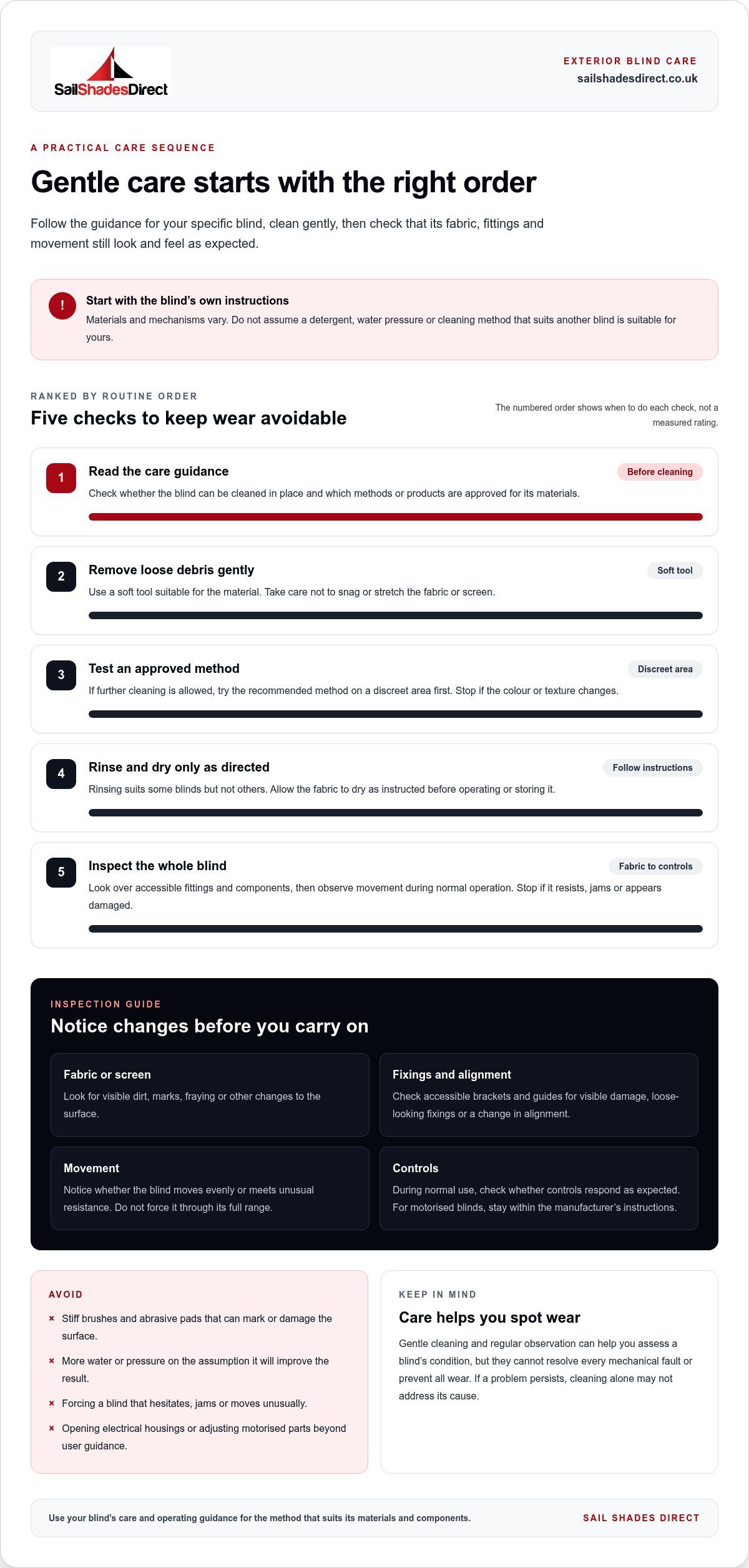
Work gently across the fabric or screen. First, check the care guidance and make sure the blind can be cleaned in place. Remove loose dust and debris with a soft tool that is suitable for the material. Avoid stiff brushes and abrasive pads, which can mark or damage the surface.
If the instructions allow further cleaning, use only the recommended method and products. Try them on a discreet area first and stop if the colour or texture changes. Rinsing may suit some blinds but not others, so do not assume that more water or pressure will improve the result. Allow the fabric to dry as directed before operating or storing it.
- Read the care guidance before applying water or cleaning products.
- Remove loose debris gently, taking care not to snag or stretch the fabric.
- Test an approved method on a discreet area and stop if you notice an adverse change.
- Rinse or dry only as directed, then allow the blind to dry as instructed before using it again.
Inspecting mechanisms, fixings and controls
After checking the fabric, look over accessible brackets, guides, cords and operating components. Note visible damage, fraying, loose-looking fixings or a change in alignment. As you operate the blind normally, notice whether it moves evenly or meets unusual resistance. If it hesitates, jams or appears damaged, stop rather than forcing it.
For a motorised blind, keep checks within the manufacturer’s instructions and what is safe for you to do. Observe how the controls respond during normal use, but do not open electrical housings or make adjustments beyond the user guidance. A visible fault or persistent operating problem needs more than routine cleaning.
Gentle cleaning and observation can help you decide what to do, but they cannot resolve every mechanical fault or prevent all wear. If your existing blind no longer suits the space or its intended use, a bespoke exterior blind can be a considered next step.
Exterior blind care myths: weather, operation and cleaning methods
Being made for exterior use does not mean a blind should stay extended in every condition. Its fabric, construction, installation and operating guidance all matter. Wind can move or pull at some designs, while rain and damp may affect how others should be operated or dried. There is no single weather threshold that applies to every blind.
Weather-aware use is part of extending the life of your exterior blinds, but it does not mean relying on a universal rule. Follow the guidance for your specific blind and observe how it behaves in the conditions around your property. For broader background, SomfyPro’s affiliations page points to organisations associated with the sector and can help readers explore industry standards for exterior blinds. It does not replace the operating instructions supplied for your product.
Should exterior blinds stay extended in poor weather?
Not necessarily. Check the manufacturer’s instructions to understand when and how to extend or retract your blind. Wind, heavy rain and other conditions can affect different systems in different ways, so do not rely on advice for another design. If the blind moves unusually or appears to be under strain, stop operating it and follow its guidance.
Why aggressive cleaning and forced operation can backfire
More cleaning is not automatically better. Abrasive tools, strong products or an unsuitable washing method can affect some fabrics and surfaces, even if they seem effective at first. Use only methods allowed by the care instructions. Do not increase pressure or scrub harder to remove a stubborn mark; repeated harsh attempts can cause avoidable wear.
Forcing a blind that jams or meets unusual resistance can add strain or worsen an existing problem. Pause, note what happened and check the product guidance before taking further action. It can help to record whether the problem occurs while raising or lowering the blind, whether it happens at the same point, and whether you can see a change in the fabric or alignment. Use this information to describe the issue, not as a reason to dismantle or adjust components without guidance.
- Use the blind as directed: Weather advice for another system may not apply to yours.
- Clean only as instructed: More frequent or forceful cleaning can cause avoidable wear.
- Stop if operation changes: Do not force a jam or attempt adjustments beyond the user guidance.
Outdoor blinds do not all share the same materials and mechanisms. Check the relevant instructions, observe any changes and act within the limits they set. This helps you tell routine care apart from a problem that needs further attention, without turning a small concern into a bigger one.
A practical exterior blind maintenance routine for every season
A useful routine does not need to follow a fixed calendar. Check the blind during normal use, then take a closer look when you notice a change or after conditions have left dirt or debris behind. Focus on its actual condition rather than cleaning simply because a particular week or month has arrived.
When assessing how a blind fits your outdoor space, think about the opening it shades, how you use the area and the conditions the blind faces. Different shading systems have different designs and care needs, so instructions for heavy duty arm awnings, for example, should not automatically be applied to exterior blinds.
A quick check before and after using the blinds
Before operating the blind, look for visible debris, new marks, obstructions or anything that seems out of place. Listen for unusual noises and notice whether the blind starts moving evenly. After use, check that it has reached its intended position and settled as expected. If you notice a new fault, pause and consult the product guidance rather than forcing it to move.
A short note can make these checks more useful. Record what changed, when you noticed it and whether it happens repeatedly. For example, note if the blind moves unevenly at the same point or if a mark remains after loose debris has been removed. This gives you a clearer picture over time than relying on memory alone.
A periodic check of fabric and fittings
As conditions change through the year, look over exposed fabric or screen for persistent dirt, fraying, staining or other visible changes. Check accessible fixings and guides visually, but do not dismantle them or alter the installation. If cleaning is needed, follow the blind’s care instructions and avoid methods that may harm its materials.
Use this checklist to decide what to do next:
- Routine owner care: Observe movement, remove loose debris using a suitable gentle method, and note changes in appearance or operation.
- Pause and consult the product guidance: Do this if you spot an obstruction, unusual resistance or a change in how the blind moves.
- Seek specialist assessment: Consider this if visible damage, fraying, persistent jamming or loose-looking fittings remain a concern. Do not attempt adjustments beyond the instructions.
A simple record helps you distinguish a one-off change from a recurring issue and gives you useful information if the blind needs closer assessment. A well-matched solution starts with understanding the space and how you use it. If you are ready to explore a tailored option, discuss bespoke exterior blinds with Sail Shades Direct.
When exterior blinds need attention: sensible next steps and a tailored solution
Routine care can keep a blind presentable, but it cannot resolve every fault. Distinguish removable surface dirt from a lasting change in the fabric, fittings or movement. If the blind repeatedly jams, looks damaged or has deteriorating fabric, pause and assess it rather than carrying on as usual. Extending the life of your exterior blinds also means recognising when cleaning is no longer the answer.
Signs that routine cleaning may no longer be enough
Loose debris or a surface mark may respond to a cleaning method allowed by the product instructions. Fraying, a tear, persistent staining, altered fabric or movement that repeatedly catches points to a different concern. Note what you have observed and whether it changes, but do not force the blind to move or dismantle unfamiliar parts. Use its instructions to guide decisions about continued operation.
If a fault persists after you have checked for an obvious obstruction, stop using the blind until you understand the appropriate next step. Cleaning will not correct a mechanical problem, and an adjustment made without the right knowledge could make matters worse. Record when the issue occurs, how the blind behaves and any visible changes. This can help you clarify whether the concern is its condition, its operation or how well it suits the space.
Choosing a bespoke exterior blind for the space
A replacement may be worth considering when the existing blind has deteriorated or no longer meets your needs. Think about what the shading needs to do, the opening’s dimensions, the exposure it faces and how you want to operate it. These practical details help shape a suitable solution, rather than making appearance the only consideration.
Sail Shades Direct designs, manufactures and professionally installs bespoke exterior blinds for residential and commercial settings across the United Kingdom. The process brings the practical requirements of the opening together with a made-to-measure shading solution. If routine care is no longer enough or your needs have changed, explore bespoke exterior blinds as a considered next step.
A simple decision path can help: clean dirt only with a suitable method, pause if movement becomes unreliable or damage is visible, and consider a tailored solution if the blind’s condition or purpose has changed. You do not have to wait for complete failure before deciding whether it still works for your space. Thoughtful care gives you a clearer view of what is happening and helps you choose what to do next.
Make your next shading choice with confidence
Looking after an existing blind is one part of creating a comfortable outdoor space. The next is deciding whether it still suits how you use that area. If its condition or purpose has changed, extending the life of your exterior blinds may mean recognising when a different, tailored solution would serve you better.
Consider the opening you want to shade, how you use the space and what you want your shading to achieve. Sail Shades Direct designs, manufactures and professionally installs bespoke exterior blinds for residential and commercial settings across the United Kingdom, bringing those practical considerations into a tailored project.
Explore bespoke exterior blinds for your space and take the next step towards shading that suits your setting.
Frequently Asked Questions
How often should you clean exterior blinds?
Clean exterior blinds when dirt or debris has built up, rather than following a fixed schedule that may not suit your setting. A blind beside trees, for example, may collect leaves or pollen more readily than one in a more sheltered position. Check its care instructions before cleaning and keep an eye on the fabric between cleans. If the surface stays clear, extra washing may do more harm than good.
Can you use a pressure washer on exterior blinds?
Do not use a pressure washer unless the care instructions for your specific blind explicitly allow it. High-pressure water may stretch, mark or damage some fabrics, affect components or force moisture into areas that should stay dry. A garden hose is not automatically suitable either. Choose only a method approved for the blind’s materials, and test it discreetly before treating a larger area.
Should exterior blinds be retracted when it is windy or raining?
Follow the operating guidance supplied for your blind, as weather advice depends on its design and installation. Wind may place strain on some systems, while other conditions can affect how a particular fabric should be handled. Do not rely on a universal wind speed or assume an outdoor blind is protected from damage. Use the manufacturer’s instructions to decide whether to retract it as conditions change.
What is the safest way to remove dirt from exterior blinds?
Begin with the least forceful method allowed by the blind’s care guidance. For loose dust or dried debris, that may mean using a soft brush or cloth suitable for the surface. Avoid scraping at stuck marks, as this can cause scuffs or pull at the fabric. If dirt remains, check which cleaning products and rinsing methods are permitted before proceeding, and let the blind dry as directed.
How can you tell when exterior blinds need attention?
Look for changes that persist or affect normal use, such as fraying fabric, a new tear, fittings that appear displaced or movement that catches at the same point. A light surface mark may be cosmetic, but repeated jamming or unusual noises deserve closer attention. Note when the issue occurs and consult the product instructions. Do not force the blind or dismantle parts to investigate an unfamiliar fault.
Can regular maintenance stop exterior blinds from fading?
No. Routine care can remove dirt that makes fabric look dull, but it cannot prevent all colour change from prolonged exposure or restore material that has already faded. Different fabrics may respond differently to their surroundings, so use the care advice provided for your blind. If fading comes with brittle, weakened or fraying fabric, consider the overall condition rather than treating it as a cleaning issue.
Is it better to repair or replace worn exterior blinds?
It depends on the fault, the blind’s overall condition and whether it still suits the space. A minor issue may be manageable if the product guidance describes a safe user-level step, but persistent jamming, visible damage or deteriorating fabric may need a fuller assessment. Avoid attempting unverified repairs. If the blind no longer meets your needs, a bespoke replacement can be tailored to the opening and its intended use.