
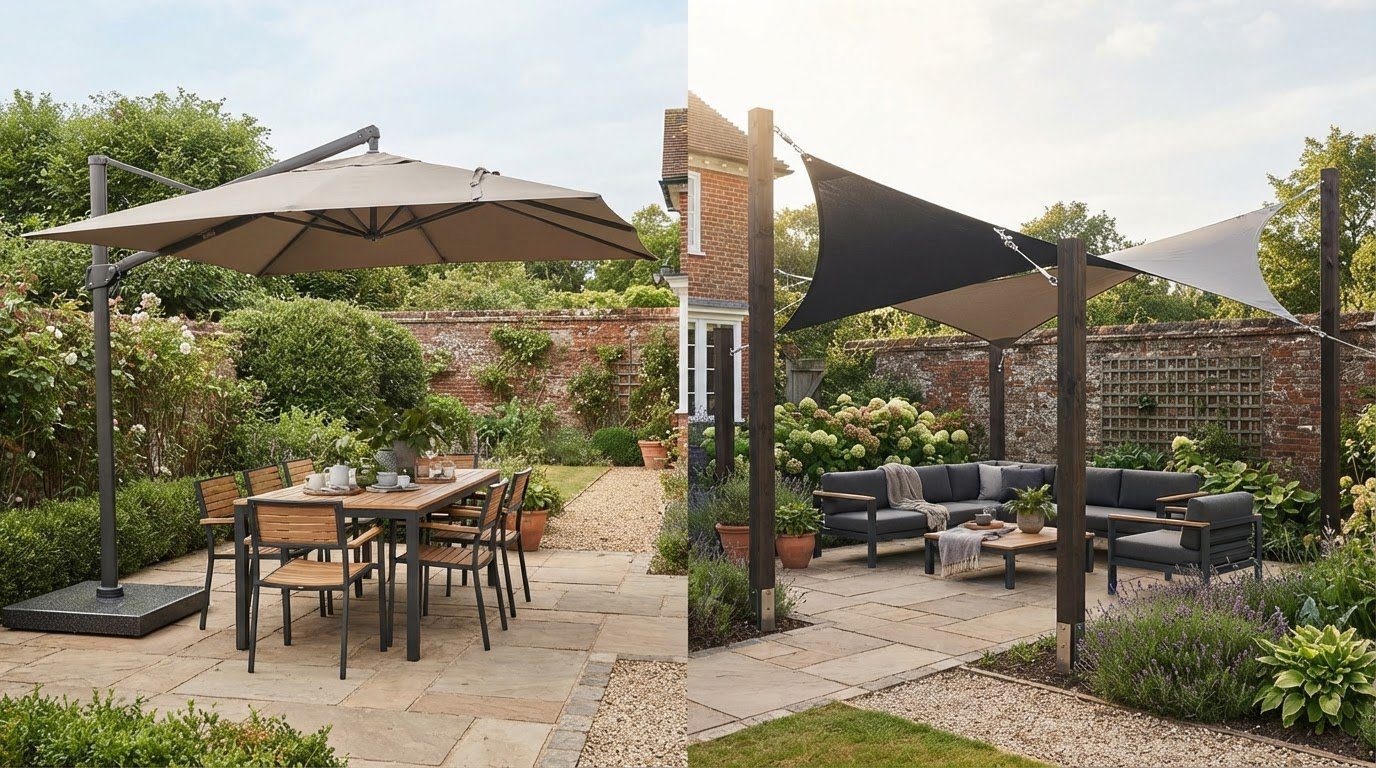
Giant Umbrella vs Sail Shade: Which Outdoor Shade Is Right for You?
The largest shade isn’t automatically the best fit. When comparing a giant umbrella vs sail shade, the shape and everyday use of your outdoor space matter just as much as the area you want to cover.
You may already know you want reliable relief from the sun, but it can be harder to judge whether a fixed shade will suit your layout or whether an umbrella will cover the right areas. The best option depends on how you use the space, where shade is needed and how much flexibility you want.
This guide compares coverage, placement, installation and day-to-day practicality, so you can match a shade solution to your outdoor layout rather than choosing by size alone. You’ll see when a bespoke sail shade may work well across a defined area, when a giant umbrella may make it easier to adjust shade placement, and what to discuss with a professional before deciding. Sail shades need suitable fixing points or supports, while large umbrellas also need a stable support, so planning matters for either choice.
Key Takeaways
- Choose shade for the shape and use of your outdoor space, not canopy size alone.
- The giant umbrella vs sail shade comparison comes down to coverage, placement flexibility and how each option fits your routine.
- Map furniture, walking routes, doors and other features before deciding where shade should sit.
- Check support requirements and product-specific guidance with a professional as you plan your installation.
- Sail Shades Direct can help with bespoke sail shade design, manufacture and professional fitting across the UK.
Giant umbrella vs sail shade: what is the practical difference?
Both options create a more comfortable outdoor area, but they suit different layouts and routines. A giant umbrella has a canopy supported at a chosen point, while a sail shade uses tensioned fabric stretched across suitable fixing points or supports to cover a planned area. That’s the central difference: an umbrella may offer more choice about where shade falls, while a sail shade is designed to cover a particular part of the space.
So, the useful question isn’t simply which canopy is bigger. Consider whether you need shade to shift as your use of the space changes, or whether you want a defined area covered as part of the layout. A Shade sail overview offers a neutral introduction to the form and its installation approach.
How does a giant umbrella create shade?
A large canopy casts shade around its support point, making it a potential fit for a particular seating or dining area. Depending on the model and installation, you may be able to reposition the umbrella or adjust the canopy as the sun moves. This can be useful if the area has more than one purpose or if furniture arrangements change.
Check the manufacturer’s operating instructions and wind guidance for the specific umbrella you’re considering. Don’t assume that all models can be moved or adjusted in the same way. The support and installation affect how you can use it.
How does a sail shade create coverage?
A sail shade spans a planned area, with tensioned fabric connected to suitable fixing points or supports. Its position and shape are considered in relation to the space, so the layout matters. The area you want covered, nearby structures and available fixing locations can all influence the design.
A bespoke sail shade may be worth considering when a standard placement won’t suit the layout. Design and professional fitting can help address the individual space, while a giant umbrella may be more relevant if changing shade placement is a priority. For either option, consider how people move through the area and where shade is needed during everyday use.
Compare giant umbrellas and sail shades by coverage, flexibility and fitting
For a useful giant umbrella vs sail shade comparison, look beyond the amount of fabric. Consider where the shade falls, whether you may want to change its position and what the site can support. Coverage alone doesn’t confirm a product’s UV protection or weather performance, so check the specifications for the exact model and fabric.
| Consideration | Giant umbrella | Sail shade |
|---|---|---|
| Coverage pattern | Provides a shaded area around its support point. Check the canopy’s stated coverage and how it aligns with your seating or activity area. | Spans a planned footprint. Its shape and position are designed around the area to be covered. |
| Placement flexibility | May suit spaces where you want to change shade placement, depending on the model and installation. | Typically designed for a set location, so plan around the activities and furniture it needs to cover. |
| Support needs | Requires appropriate support and a stable installation. Confirm the requirements for the specific umbrella. | Needs suitable fixing points or supports. A site assessment can help establish what the layout allows. |
| Design considerations | Consider the support position, usable space and the manufacturer’s operating guidance. | Consider the area’s shape, possible fixing locations and clearances around buildings and routes. |
Shade structures can shape how an outdoor space works as well as how it looks. Landscape architects discuss shade as critical public infrastructure. At home, the same design principle is useful on a smaller scale: plan the shade around people’s activities and movement.
Which option suits a changing outdoor layout?
A giant umbrella may be worth considering if you expect to move tables, seating or activity areas, or want the option to adjust where shade falls. Movement and operation vary by model, and stability depends on its specified support and installation. Ask yourself whether the layout will stay much the same or whether you may want the shaded area elsewhere. Check the manufacturer’s operating and wind guidance before deciding.
Which option suits a defined coverage area?
A sail shade can be planned around a particular outdoor footprint, which may suit a defined seating area or an awkward layout. Fixing locations, clearances and the site itself all influence what’s practical, so arrange a professional assessment before settling on a design. For more on tailored layouts, explore bespoke sail shade design and discuss how the space will be used. Follow the relevant product guidance for upkeep and operation, as requirements vary.
Neither option is right for every site. To discuss the layout and fitting requirements, speak with Sail Shades Direct about its outdoor shading solutions.
Is a giant umbrella or sail shade better for your space?
The largest canopy won’t necessarily give you the most useful shade. Its position, the area you need to cover and the way people use the space all matter. A well-placed smaller shade may suit a dining spot, while a larger coverage area could be more useful for a space with several activities. The practical choice in a giant umbrella vs sail shade decision is the option that fits the site and your priorities.
Don’t assume either type is more durable or weather-resistant than the other. Materials, support arrangements and operating requirements differ between products, so compare the specifications for the particular options you’re considering. Check the manufacturer’s guidance on wind conditions and use, and ask a professional to assess whether the proposed position and supports suit your site.
When might a giant umbrella be the more suitable choice?
A giant umbrella may suit a space where seating or activities change and you’d like the option to alter where shade falls. Before choosing one, picture its support in place. Will it obstruct a route, compete with furniture or leave enough usable room? Check the specific model’s operating instructions and support requirements, and confirm that the proposed position works for the site.
When might a sail shade be the more suitable choice?
A sail shade may suit a defined area where you want overhead coverage planned around the footprint. Consider whether suitable fixing points or supports can be incorporated, and whether doors, paths or other features affect the layout. A professional assessment can help identify design and fitting requirements before you settle on a configuration.
Home and commercial spaces bring different planning questions. At home, you might focus on a patio dining area, garden seating or keeping clear access to doors. For a business, consider how shade will fit around customer seating, staff activity and routes through the outdoor area. The right priorities depend on the site, not simply whether it’s residential or commercial. Businesses comparing options can also refer to the commercial shading solutions resource guide for further planning considerations.
Before deciding, map the area you want shaded and note how it is used throughout the day. Compare likely shade positions, support locations and the product-specific guidance. Sail Shades Direct designs and manufactures bespoke sail shades and offers giant umbrellas, with professional fitting to support projects across the UK.
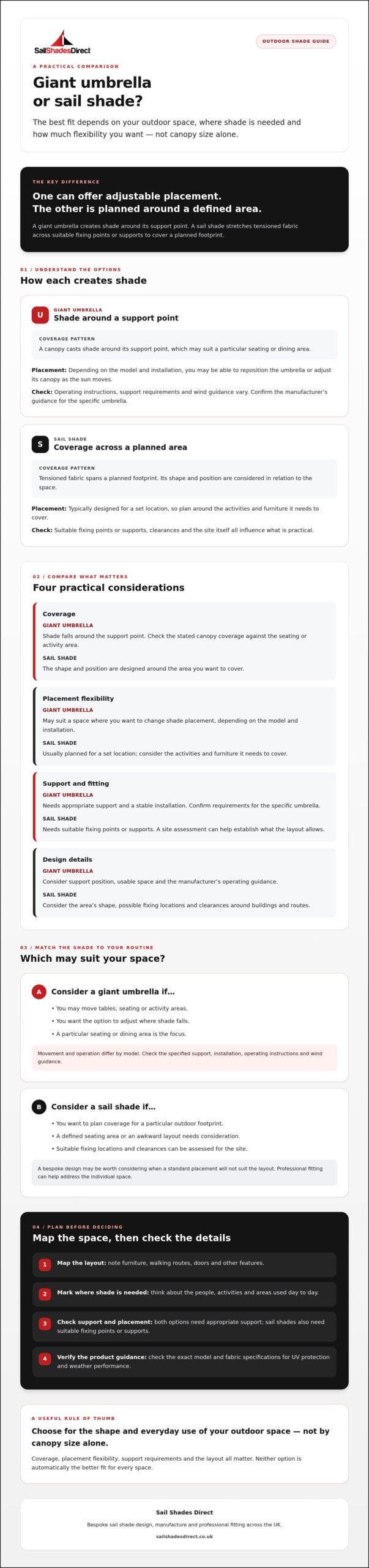
How to choose between a giant umbrella and a sail shade
Start with the space you want to shade and how you use it. A simple site plan can reveal whether a movable shade position or coverage designed around a particular footprint is more practical. Work through these steps before choosing a product.
Assess the space before choosing a shade
- 1. Measure the intended area. Note its shape, boundaries and the parts you want shaded, rather than measuring only for the largest canopy that could fit.
- 2. Map what happens there. Mark tables, chairs, play or activity areas, walking routes and doors. Leave clear access where people need to move through the space.
- 3. Note possible support locations. Record potential fixing points for a sail shade or a suitable position for a giant umbrella, but don’t assume a wall, post or other feature is structurally suitable.
This simple plan helps make hidden constraints visible. A support that appears convenient on paper may interfere with access or need further assessment. If fixing points, supports or clearances are uncertain, ask a professional to assess the site before specifying a solution.
Match the solution to how you use the space
- 4. Decide whether shade should stay put or move. If your furniture or activities change, consider whether you’ll want the shaded area to shift. If you need coverage over a defined footprint, think about how a planned sail shade could fit that area.
- 5. Consider appearance and routine. Look at how each option will sit alongside the building and garden, and whether its operating requirements suit your day-to-day use. Check the manufacturer’s instructions for the specific product, including operating and wind guidance.
- 6. Confirm the practical details. Discuss site suitability, clearances, support requirements and installation with a professional before settling on a design.
A giant umbrella vs sail shade decision isn’t made on dimensions alone. The right choice should work with your layout, the way people use the space and the support arrangements the site can accommodate. Bespoke sail shade design can be planned around an individual outdoor layout, while an umbrella may suit priorities around flexible shade placement, depending on its model and installation.
Have a plan or a few uncertainties? Discuss your outdoor shade requirements with Sail Shades Direct. The company designs and manufactures bespoke sail shades and offers giant umbrellas, with professional fitting across the UK.
Plan your outdoor shade with Sail Shades Direct
Choosing between a giant umbrella and a sail shade comes down to how the space is laid out, what you’ll use it for and whether shade needs to stay in one planned area or change position. Before deciding, check the product-specific requirements for support, operation and wind guidance. The right design should suit the site as well as your everyday routine.
Sail Shades Direct designs and manufactures bespoke sail shades, and offers giant umbrellas as another outdoor shading option. Professional fitting can support the planning process, from considering the layout to confirming practical installation requirements. The site and product specifications need to be considered together, as not every project will suit either option.
What to prepare before discussing your project
A few details can make a conversation about your space more useful. You don’t need a finished design. Start with what you know and note any questions that need a professional assessment.
- Approximate dimensions: measure the area you’d like shaded and note its shape and boundaries.
- Photographs: show the space from a few angles, including nearby walls, structures and possible support locations.
- Intended use: explain whether the area is mainly for dining, seating or another activity, and whether its layout changes.
- Preferred shade positions: mark where you’d like the shade at different times or around particular furniture.
- Access constraints: point out doors, paths and routes that need to remain clear.
These notes help describe the project, but they can’t confirm that a potential fixing point or support is suitable. Final recommendations depend on the site, the chosen product and its specifications. If you’re unsure about clearances or installation needs, raise those points before settling on a design.
Explore bespoke shading options
Expert input can help you compare options against the actual layout, rather than choosing by appearance or canopy size alone. A bespoke sail shade can be designed around an individual outdoor area, while a giant umbrella may be worth considering if you value flexibility in shade placement. The most suitable choice depends on your priorities and the practical requirements of the site.
Share your measurements, photographs and plans with Sail Shades Direct to discuss what may work for your space. Discuss your outdoor shading project.
Make a confident choice for your outdoor space
The best choice in the giant umbrella vs sail shade comparison depends on more than canopy size. Start with the shape of the area and how you use it, then weigh up whether you want flexibility in shade placement or coverage designed around a defined footprint. Check the support, fitting and product guidance for the option you’re considering, as suitability depends on both the product and the site.
Sail Shades Direct designs and manufactures bespoke sail shades, and offers giant umbrellas as another option for outdoor spaces. Professional fitting can help bring the design and practical requirements together across the United Kingdom. Sharing your approximate dimensions, preferred shade positions and any access constraints is a useful starting point for a conversation.
Ready to explore what could work for your layout? Discuss your outdoor shading project with the team. With advice and a design planned around your space, you can create a more comfortable place to enjoy outdoors.
Frequently Asked Questions
Is a giant umbrella or sail shade better for a garden?
Neither is best for every garden. The right choice depends on the layout and how you use it. A giant umbrella may suit a seating area where you’d like flexibility in shade placement, subject to the model and installation. A sail shade may suit a defined area that can be planned around suitable fixing points. Consider furniture, paths, doors and the space you want covered before choosing.
Can a sail shade cover a larger area than a giant umbrella?
It can, depending on the design and the area available, but there’s no universal size comparison. A sail shade is planned to span a chosen footprint, while a giant umbrella provides shade around its support point. Check the stated coverage for each product and compare it with the usable space you need shaded. Consider the shape of the area as well as its total size.
Can you move a giant umbrella to change where the shade falls?
Some giant umbrellas allow shade placement to be adjusted, but movement and operation depend on the specific model and its installation. Check the manufacturer’s instructions to see what adjustments are possible and how to operate the umbrella safely. Consider the support position too: moving the canopy’s shade doesn’t necessarily mean the support itself can be moved easily. Ask about these details before selecting a model.
Does a sail shade need permanent fixing points?
A sail shade needs suitable fixing points or supports to hold its fabric in the planned position. Whether those are existing features or supports added as part of the installation depends on the site and design. Don’t assume a wall, post or other structure is suitable just because it’s nearby. A professional assessment can help confirm possible fixing locations, clearances and installation requirements for your outdoor space.
Which is easier to install, a giant umbrella or a sail shade?
It depends on the product and site. A sail shade needs suitable fixing points or supports, so its installation is planned around the area and its requirements. A giant umbrella also needs appropriate support and a stable installation. Compare the manufacturer’s fitting guidance and ask what preparation each option involves at your property. A professional can assess the site and explain the practical requirements before you decide.
Can a giant umbrella or sail shade be used in windy weather?
Don’t assume either shade type is suitable for every wind condition. Limits and operating instructions vary by product, so check the manufacturer’s guidance for the exact umbrella or sail shade, including what to do when conditions change. Ask a professional to consider the site and installation as well. Avoid relying on general claims about a shade type’s performance; follow the product-specific instructions for use.
How do I choose between a giant umbrella and a sail shade for a business?
Start with how the outdoor area serves customers and staff. Map seating, walking routes, entrances and activity areas, then decide whether shade needs to shift or cover a defined footprint. Check available support locations and product-specific operating and wind guidance. Professional advice can help assess the site and compare suitable options. For Sail Shades Direct, commercial outdoor shading options include bespoke sail shades and giant umbrellas.