
How to Increase Outdoor Dining: UK Hospitality Guide
What if your terrace could generate as much revenue on a drizzly Tuesday in November as it does on a sun-drenched Saturday in July? Most UK hospitality owners know the frustration of watching potential covers vanish the moment the clouds turn grey or the wind picks up. You’ve likely experienced the disappointment of flimsy umbrellas that look unprofessional or break at the first sign of a coastal breeze. It’s a common struggle, but your external space shouldn’t be a seasonal gamble that depends entirely on the forecast.
This guide reveals how to increase outdoor dining capacity by transforming underutilised areas into high-revenue dining zones through bespoke shading and robust weather protection. We’ll show you how to move away from temporary fixes and towards a premium aesthetic that attracts high-spending guests, regardless of the British weather. From navigating the 2026 pavement licence fee caps to choosing between architectural sail shades and giant umbrellas, you’ll discover the exact steps to ensure your outdoor bookings are weather-proofed and reliable. We will explore how to turn your wasted square footage into your venue’s most profitable and stylish asset.
Key Takeaways
- Learn how to bridge the “Usability Gap” by identifying precisely how many hours of potential revenue are lost to sun glare, rain, or wind.
- Discover how to increase outdoor dining capacity by moving beyond flimsy temporary fixes and towards architectural, weather-proofed shading solutions.
- Compare the versatility of bespoke sail shades with the flexibility of rolling sun sails to find the perfect fit for your venue’s unique footprint.
- Master the art of the external floor plan, balancing high table density with a smooth service flow that keeps your staff efficient and guests relaxed.
- Understand why marine-grade stainless steel and UV-stabilised fabrics are essential for creating a premium, low-maintenance aesthetic that lasts.
The Commercial Value of Increasing Outdoor Dining Capacity
In the current UK market, where venue closures are a constant concern for the hospitality sector, every square metre of your premises must pull its weight. Viewing your terrace or garden as a seasonal “bonus” is a missed opportunity that leaves money on the table. Instead, forward-thinking operators are treating these areas as permanent, year-round revenue engines, moving away from temporary setups to create a permanent architectural dining hall. When you understand how to increase outdoor dining capacity through professional infrastructure, you transform a fair-weather asset into a reliable profit centre that contributes to your bottom line every day of the year.
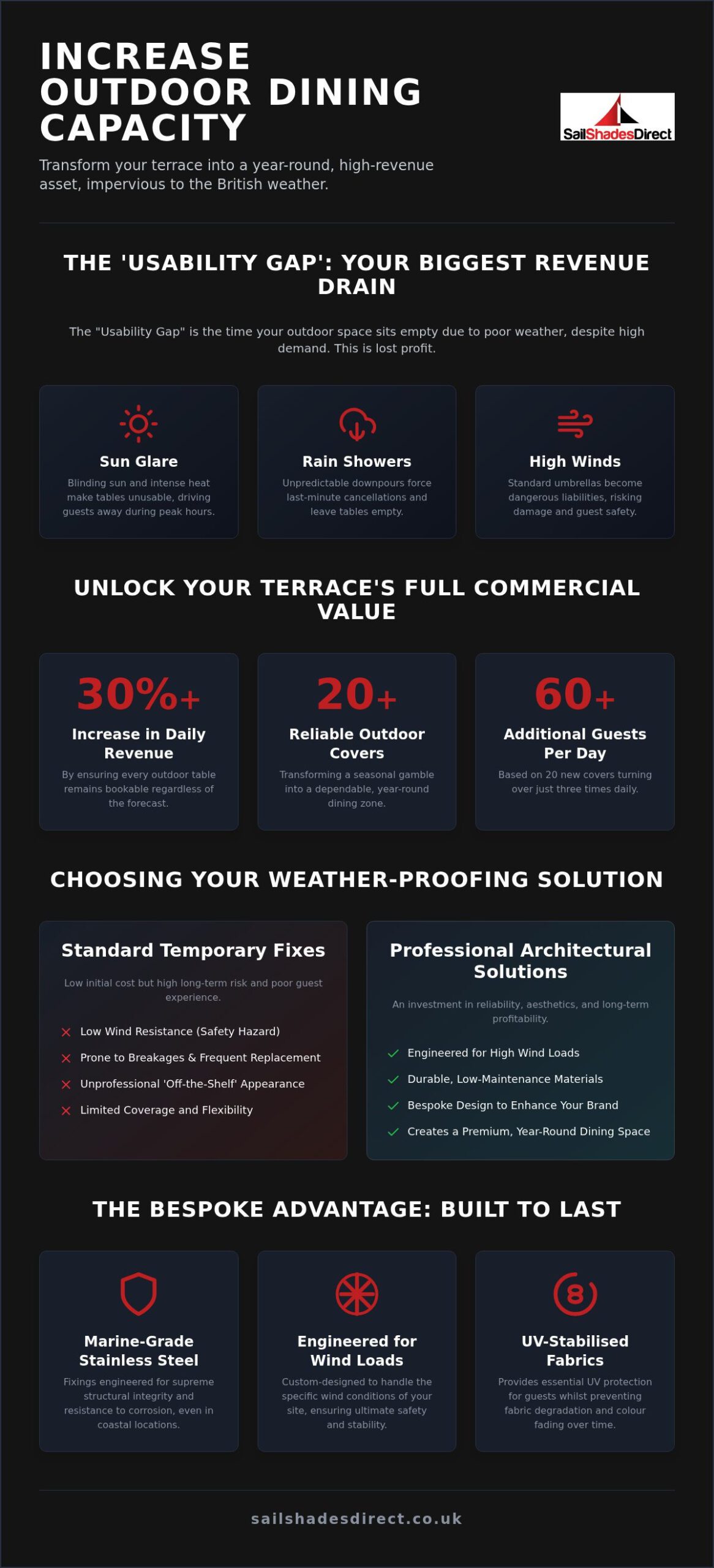
The cultural shift towards al fresco dining has only intensified throughout 2026. Diners now prioritise venues that offer high-quality outdoor environments, viewing them as a more relaxed and atmospheric way to socialise. Consider the maths. Adding just 20 reliable outdoor covers can fundamentally shift your financial outlook. If those tables turn three times a day, that’s an extra 60 guests daily who would otherwise have walked past your door because your indoor seating was full or your outdoor area was too wet to use.
Boosting Covers and Table Turnover
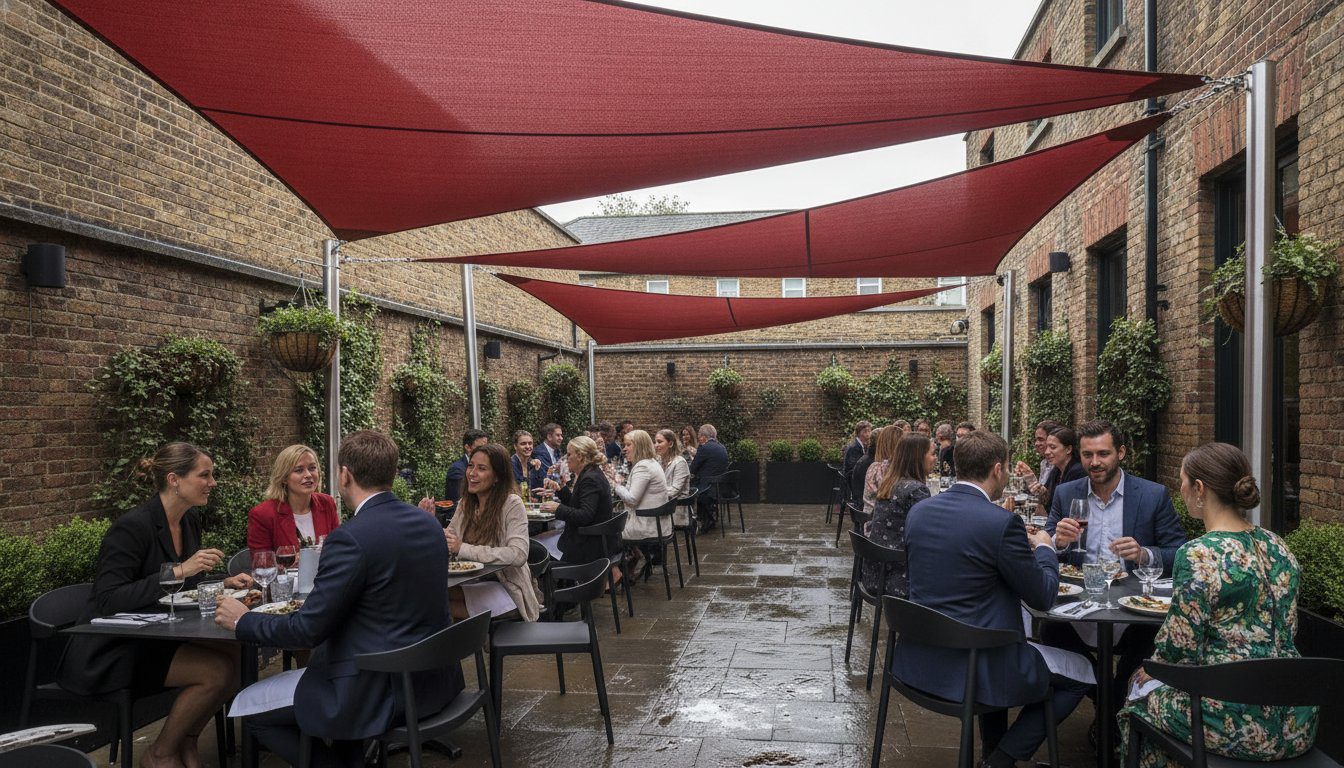
A well-designed terrace does more than just hold people; it encourages them to stay. When guests feel shielded from harsh sun glare or a sudden drizzle by bespoke shading, they’re far more likely to order that second bottle of wine or a round of desserts. You can also create “premium” zones using rolling sun sails or arm awnings, which can be marketed as exclusive spaces for private events and corporate bookings. Optimising your external footprint with fixed weather protection can increase total daily revenue by 30% or more by ensuring every table remains bookable regardless of the forecast. Learning how to increase outdoor dining capacity isn’t just about cramming in more furniture; it’s about making every seat desirable.
Future-Proofing Your Venue for 2026 Trends
Modern British hospitality design is moving away from rigid boundaries. The trend for “indoor-outdoor” flow means diners expect a seamless transition from your interior to a stylish, comfortable exterior. Whilst “off-the-shelf” kits might seem like a quick fix, they often fail in high-traffic commercial environments or look out of place against a professional facade. Bespoke sail shades provide an architectural statement that reinforces your brand identity whilst offering the durability of marine-grade materials. These custom solutions outperform generic alternatives because they’re designed for the specific wind loads and dimensions of your site, ensuring your investment stands up to the British elements whilst looking incredibly sophisticated.
Identifying Environmental Barriers to Outdoor Revenue
The biggest threat to your terrace revenue isn’t a lack of interest; it’s the unpredictability of the British elements. Many venue owners focus on the floor plan but forget to look at the sky. The “Usability Gap” refers to those specific hours when your terrace sits empty despite a full house of indoor diners. If you lose three hours of lunch service to blinding sun glare and two hours of dinner to a passing shower, you’ve lost five hours of potential profit. Understanding the environmental stressors on your site is critical when planning how to increase outdoor dining capacity effectively.
Whilst government support for outdoor dining has simplified the legalities of expanding your footprint, the physical reality of the UK climate remains a formidable barrier. Thermal comfort is a major factor. Mid-afternoon summer sun can make an unshaded terrace feel like an oven, driving guests back inside or to a competitor with better coverage. Effective light management is about balance; you need to protect diners from UV rays whilst maintaining the bright, airy atmosphere that makes al fresco dining so appealing in the first place.
Wind Loading and Structural Integrity
Standard umbrellas often act like parachutes. In typical British coastal or hilltop locations, a sudden gust can turn a cheap parasol into a safety hazard or a broken piece of equipment. Tensioned architectural sail shades are engineered to handle these specific wind loads. By using high-grade stainless steel fixings and professional installation, these systems remain stable and silent during blustery conditions. This reliability allows you to keep bookings open on days when venues with basic umbrellas would be forced to clear their decks. If you’re unsure which system suits your local micro-climate, exploring bespoke shading solutions can provide the structural peace of mind you need.
Waterproofing vs. Water Resistance
Not all fabrics are created equal. To truly weather-proof your revenue, you must choose materials that can withstand more than just a light mist. Modern technical fabrics allow for dining during heavy downpours without the risk of “pooling” on large spans. Proper design ensures that run-off is managed through strategic angles and drainage paths, preventing water from splashing onto diners or staff. This level of protection ensures that a rainy forecast doesn’t lead to a wave of cancellations, keeping your covers consistent amongst even the most unpredictable weather patterns.
Selecting the Right Shading System for Your Space
Choosing the correct hardware is the most critical decision you’ll make when planning how to increase outdoor dining capacity. It’s not just about blocking the sun; it’s about matching the architectural character of your building with the operational needs of your staff. Whilst a coastal pub might require the high-tension strength of a fixed sail, a city-centre bistro often benefits from the retractable convenience of an awning. Rolling sun sails offer a dynamic middle ground, providing a clean, contemporary look with the ability to adjust coverage as the light shifts throughout the afternoon. For venues in exposed locations, integrating exterior blinds can effectively block cross-draughts and retain heat, turning a breezy terrace into a cosy dining room.
Think about your guest’s journey. Are they looking for a sun-drenched lunch or a sheltered, intimate dinner? By selecting a system that adapts to these needs, you ensure your outdoor space remains a premium destination rather than a secondary seating option. Every venue is unique, and the right system should feel like a natural extension of your brand identity.
Bespoke Sail Shades for Architectural Impact
If you want to create a visual landmark that draws customers from across the street, custom sails are the gold standard. These systems aren’t limited by the straight lines of traditional structures; they can be designed to fit awkward, L-shaped, or narrow spaces where a standard awning simply won’t work. By utilising different mounting heights, you can create a sculptural, layered effect that provides both shade and a sense of drama. For a deeper dive into these custom solutions, explore our guide on bespoke sail shades UK to see how they can transform your exterior.
Heavy Duty Arm Awnings for Instant Coverage
For many UK venues, the ability to react quickly to a sudden change in weather is vital. Motorised arm awnings allow your team to deploy or retract coverage at the touch of a button, ensuring diners stay dry without interrupting service. In a high-traffic commercial environment, “off-the-shelf” domestic awnings often fail under the pressure of frequent daily use. Investing in heavy duty arm awnings ensures that the internal mechanisms and fabrics are built to last, providing a professional finish that stands up to the rigours of the hospitality industry.
Giant Umbrellas for Pub Gardens
Giant umbrellas are the perfect solution for expansive pub gardens where wall-mounting isn’t an option. These aren’t your typical garden centre parasols; they are engineered structures designed for permanent outdoor use. By organising multiple umbrellas together, you can create a cohesive “outdoor room” feel that maximises your central garden space. Look for features like integrated LED lighting and infrared heating to extend your service hours well into the evening. This setup allows you to maintain a flexible floor plan whilst providing the high-wind stability required for open, exposed areas.
Planning and Layout: Optimising the External Floor Plan
Maximising your covers requires more than just adding furniture; it demands a strategic approach to spatial design. When venue owners consider how to increase outdoor dining capacity, they often overlook the physical flow of the space. The transition from your main entrance to the terrace table should feel like a premium upgrade rather than a cramped afterthought. You must balance high table density with the practicalities of service flow, ensuring your team can navigate amongst diners without friction. This involves mapping out “service arteries” that remain clear even during peak hours, allowing for fast table turnovers and attentive guest care.
Safety and accessibility are equally vital. Under the Equality Act 2010, you have a duty to make reasonable adjustments for all guests, which means ensuring clear pathways and a variety of seating options. Integrating shading supports into your layout requires precision to avoid creating trip hazards. By using bespoke mounting solutions, you can often fix sails or awnings to existing walls or specific structural points, keeping the floor area unobstructed. It’s also worth noting that the pavement licensing regime was made permanent in March 2024, with local authorities encouraged to grant licences for up to two years, providing a stable foundation for your layout planning.
A 5-Step Guide to Layout Design
To create a floor plan that works as hard as your kitchen, follow this logical progression:
- Measure and Audit: Calculate the total usable square footage and mark permanent obstacles like trees, planters, or fixed walls.
- Track the Sun: Identify the primary sun path to ensure your shading provides maximum protection during the lucrative mid-afternoon and early evening slots.
- Define Service Arteries: Allocate dedicated paths for staff that are wide enough for two people to pass comfortably.
- Optimise Coverage: Choose a shading configuration that covers at least 80% of your seating area to protect against unpredictable showers.
- Safety Check: Ensure all support posts or bases are positioned outside of high-traffic zones to prevent accidents.
If you need help mapping out a complex terrace to maximise every millimetre, our team can provide a bespoke design consultation to ensure your layout is both safe and profitable.
Lighting and Heating for Evening Capacity
Your outdoor revenue shouldn’t disappear when the sun goes down. Extending the trading day into the evening is one of the fastest ways to see a return on your investment. Integrated LED lighting in arm awnings or giant umbrellas creates an inviting glow that draws in passers-by and makes the terrace a favourite destination for night-time diners. When paired with infrared heating solutions, which warm objects and people rather than just the air, you can maintain a comfortable environment even in the shoulder seasons. This approach turns your external space into a year-round asset that guests will actively request when they book.
The Bespoke Advantage: Why Sail Shades Direct is the Professional Choice
When you’re researching how to increase outdoor dining capacity, the difference between a temporary fix and a permanent revenue stream lies in the quality of the engineering. Every terrace, pub garden, and rooftop has its own set of challenges, from awkward corners to high-wind exposure. We believe in a “measure twice, cut once” approach, ensuring that every solution we provide is a perfect fit for your specific site. Our bespoke manufacturing process means we don’t force standard products into unique spaces; instead, we fabricate shading that follows the natural lines of your architecture whilst maximising every available centimetre of floor space.
The longevity of your investment depends entirely on the components used. In a high-traffic commercial environment, domestic-grade materials simply won’t suffice. That’s why we use marine-grade stainless steel fixings and UV-stabilised technical fabrics designed to withstand the rigours of the British climate. These materials won’t sag, fade, or fail when the weather turns, giving you the confidence to take bookings months in advance. By choosing a professional system, you’re not just buying a shade; you’re securing a high-durability asset that enhances your venue’s aesthetic and protects your bottom line for years to come.
Nationwide Expertise and Professional Fitting
A professional installation is about more than just aesthetic precision; it’s a critical requirement for commercial insurance and safety compliance. With over 10 years of experience led by Jamie, our team understands the structural demands of commercial shading. We provide a comprehensive nationwide fitting service, ensuring that every sail, awning, or giant umbrella is tensioned and secured to the highest engineering standards. This proactive approach to safety gives you peace of mind, knowing that your staff and guests are protected under a structure that’s built to last. We handle the technical complexities so you can focus on what you do best: delivering an exceptional dining experience.
Start Your Capacity Expansion Today
The shift towards permanent al fresco dining is a long-term trend in the UK hospitality sector. With 2026 approaching, early planning is essential to ensure your venue is ready for the peak season. High-quality, bespoke installations require time for design, fabrication, and professional fitting, so starting the conversation now ensures you’re ahead of the curve. We’re here to help you realise the full potential of your external space, turning underutilised areas into your venue’s most popular and profitable zones. Don’t let another season of lost covers pass you by. Contact Sail Shades Direct for a bespoke commercial quote and discover how our tailored shading solutions can transform your business today.
Transform Your Terrace into a Year-Round Revenue Engine
Securing the future of your venue means looking beyond the four walls of your building. By addressing environmental barriers and choosing architectural-grade materials designed specifically for the British climate, you can turn a seasonal terrace into a permanent profit centre. Discovering how to increase outdoor dining capacity is the first step towards a more resilient business model that thrives regardless of the weather forecast. We’ve explored how bespoke shading and a strategic floor plan can elevate your guest experience whilst significantly boosting your daily covers.
At Sail Shades Direct, we bring over a decade of experience to every project. Our UK-based manufacturing ensures total quality control, whilst our expert nationwide installation team handles the technical complexities on your behalf. Whether you need the sculptural impact of sail shades or the rapid deployment of heavy-duty arm awnings, we are here to help you maximise your venue’s potential for 2026 and beyond. Ready to start your transformation? Get a Bespoke Quote for Your Commercial Outdoor Space today. Let’s work together to create an outdoor environment your guests will love.
Frequently Asked Questions
Do I need planning permission to increase my outdoor dining capacity with sail shades?
Generally, retractable or semi-permanent systems like awnings or sail shades fall under permitted development, but you should always check with your local authority. This is especially true for listed buildings or conservation areas. The permanent pavement licensing regime introduced in 2024 has made the process of adding furniture and removable shading much simpler for hospitality venues across the UK, though structural fixtures may require specific approval.
How much wind can a commercial-grade bespoke sail shade withstand?
Our commercial-grade bespoke sail shades are engineered to withstand significant wind loads, often up to gale force depending on the specific fabric and mounting points used. We specialise in high-wind and coastal grade fabrics that are tensioned to remain stable and silent. Unlike standard umbrellas, these structures are designed to stay up in blustery conditions, ensuring your outdoor seating remains safe and usable throughout the year.
Can I use outdoor shading systems to protect diners from rain as well as sun?
Yes, you can choose waterproof fabrics that provide total protection from heavy downpours whilst still offering high UV resistance. When considering how to increase outdoor dining capacity, selecting a material that manages water run-off is essential. We design our systems with specific angles and drainage paths to prevent water pooling, ensuring that your diners stay dry and comfortable even during unpredictable British showers.
What is the best type of shading for a small, narrow restaurant terrace?
For small or narrow restaurant terraces, arm awnings are often the most efficient choice because they provide shade without requiring ground-mounted posts. They retract fully against the building when not in use, keeping the pavement clear. Alternatively, a bespoke sail shade can be custom-cut to fit a narrow footprint exactly, utilising wall mounts to maximise every available centimetre of floor space for your tables and chairs.
How long does the installation process typically take for a commercial venue?
The physical installation process for a commercial venue typically takes between one and two days on site, depending on the complexity of the project. This follows a period of bespoke manufacturing at our UK facility, where your shading is precision-cut to your site’s exact measurements. We work closely with venue managers to schedule fitting during quiet hours, ensuring minimal disruption to your daily service and guest experience.
Are bespoke sail shades more expensive than standard garden umbrellas?
Bespoke sail shades represent a higher initial investment than standard garden umbrellas, but they offer significantly better value over time. Whilst cheap parasols often break or look unprofessional after one season, our architectural-grade systems are built to last for a decade or more. They provide a premium aesthetic that attracts higher-spending guests and creates a reliable, weather-proofed dining area that basic umbrellas simply cannot match.
How do I maintain my outdoor awnings to ensure they last for many seasons?
Maintaining your outdoor awnings and sails is straightforward and involves regular cleaning with mild soapy water to prevent debris build-up. You should also check the tension of your sail shades periodically to ensure they remain taut and wind-resistant. Retracting arm awnings during exceptionally high winds or heavy snow will protect the internal mechanisms and extend the life of the fabric, ensuring your investment remains in top condition for many seasons.
Can heating and lighting be integrated into bespoke shading structures?
Integrated heating and lighting are popular additions that help you learn how to increase outdoor dining capacity during the evening and shoulder seasons. We can incorporate LED lighting strips and infrared heaters into giant umbrellas and arm awnings during the fabrication process. This transforms your terrace into a cosy, inviting destination after dark, allowing you to maintain high occupancy levels and increase average guest spend throughout the year.