
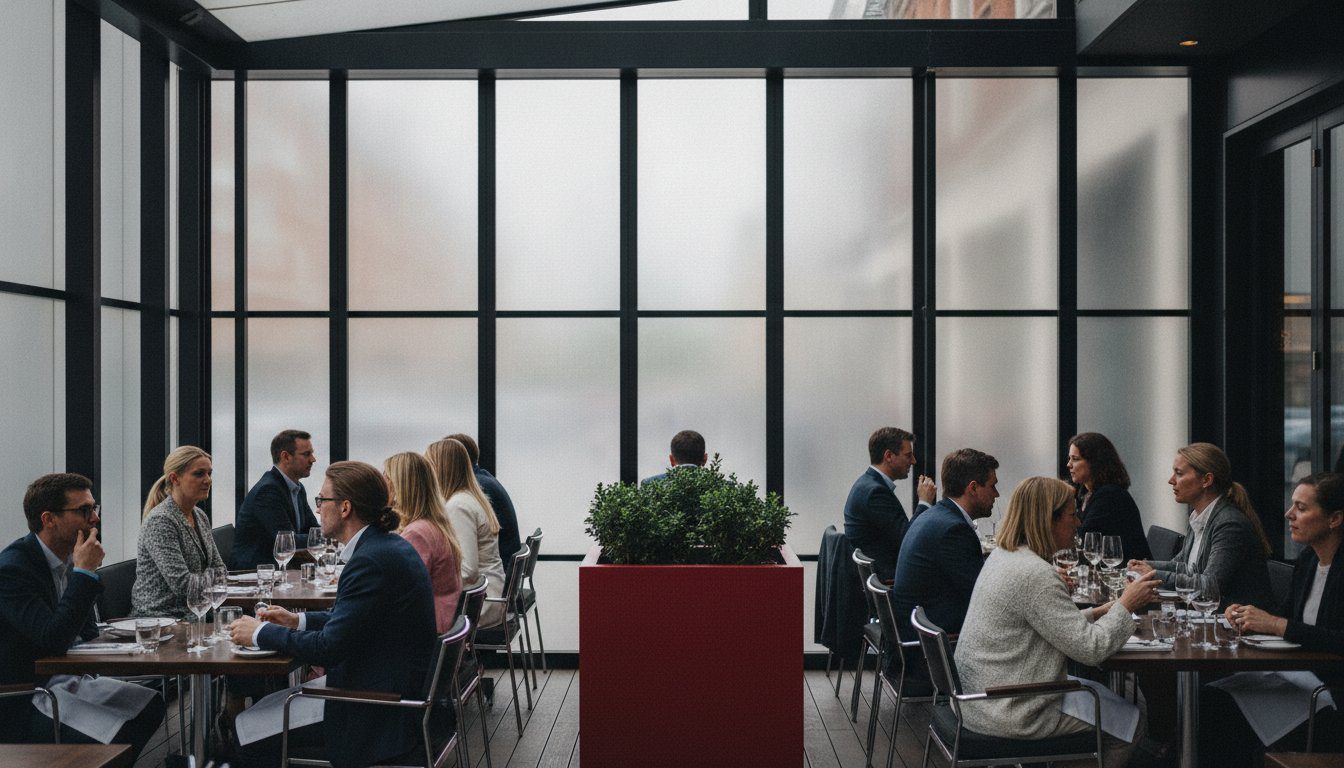
Outdoor Blinds for Restaurants: Maximising Hospitality Revenue in 2026
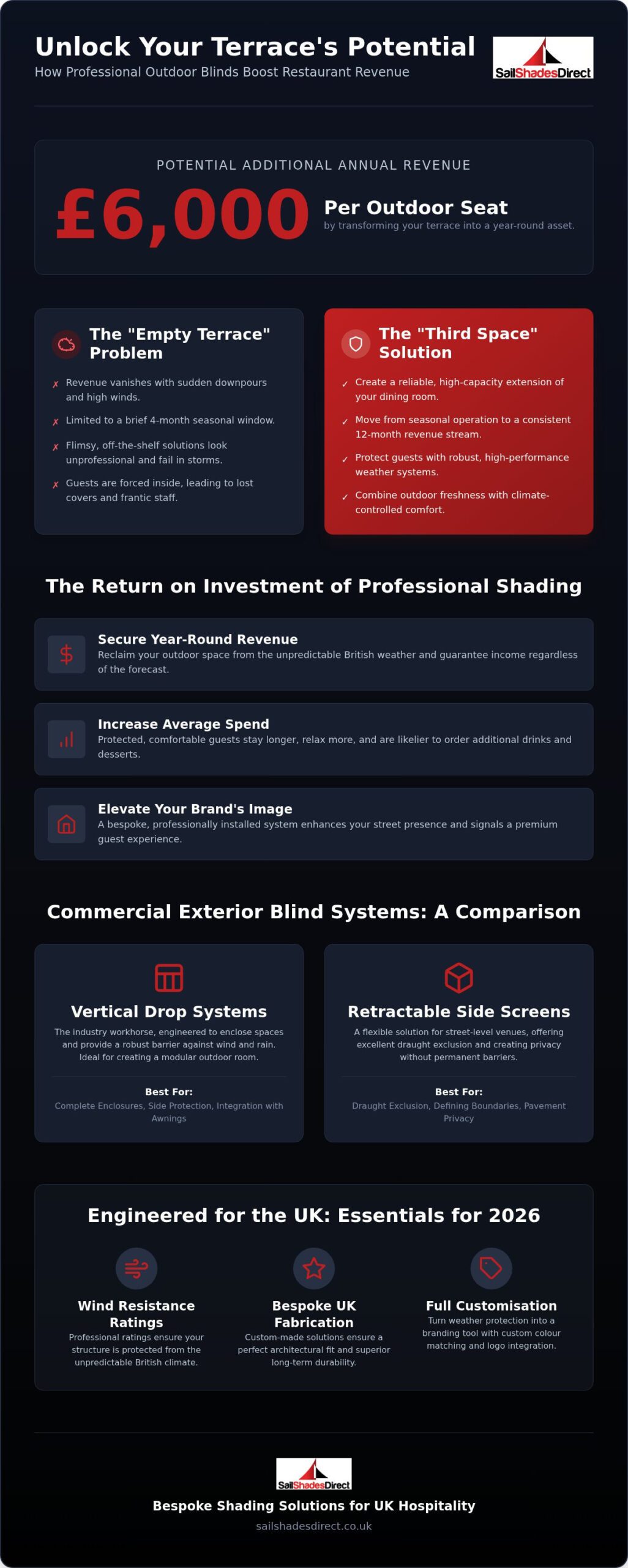
Did you know that every single seat on your restaurant terrace could be worth an additional £6,000 in annual revenue? It is a staggering figure, yet for many UK hospitality owners, that potential profit often vanishes the moment the clouds turn grey or the wind picks up. You have likely felt the frustration of watching a fully booked terrace empty in minutes due to a sudden downpour. Perhaps you are also tired of flimsy, off-the-shelf solutions that look unprofessional and leave you constantly worrying about wind damage during a storm.
Investing in high-quality outdoor blinds for restaurants is the most effective way to reclaim this lost space and turn it into a reliable, year-round asset. This guide will show you how bespoke, UK-manufactured shading solutions can protect your guests from the elements while significantly enhancing your brand’s premium aesthetic. We will explore the essential technical standards for 2026, including wind resistance and fire retardancy, to ensure your outdoor area remains a durable, low-maintenance, and high-capacity extension of your dining room regardless of the British weather.
Key Takeaways
- Understand the functional difference between basic shading and high-performance vertical systems that effectively enclose your outdoor space for maximum comfort.
- Compare vertical drop systems and retractable side screens to identify which outdoor blinds for restaurants offer the best protection for your specific terrace layout.
- Learn why professional wind resistance ratings and bespoke UK-based fabrication are essential for protecting your structure from the unpredictable British climate.
- Discover how to utilise custom colour matching and logo integration to turn your weather protection into a powerful branding tool.
- Gain insights into the architectural consultation process that ensures your shading solution is as durable as it is aesthetically pleasing.
Why Outdoor Blinds Boost Restaurant Revenue
Commercial-grade exterior blinds are far more than just fabric covers. They are high-performance, vertical weather protection systems engineered to enclose outdoor spaces, creating a robust barrier against wind, rain, and glare. For a restaurateur, these systems represent the difference between a deserted patio and a bustling, profitable dining area. Think of them as a flexible architectural skin that adapts to the environment in real time.
We’ve all seen the scenario. A sudden British downpour sends guests scurrying inside, leaving perfectly good tables vacant and staff scrambling to rearrange the dining room. This “Empty Terrace” problem costs the UK hospitality industry thousands in lost covers every year. When you can only rely on your outdoor space during a narrow four-month summer window, you’re leaving significant money on the table. By installing bespoke outdoor blinds for restaurants, you effectively reclaim that “dead” space, turning it into a reliable, high-capacity extension of your floor plan.
The goal is to create a “third space.” This is an environment that combines the airy, vibrant freshness of the outdoors with the climate-controlled comfort of your main restaurant. It allows you to move from a seasonal operation to a consistent 12-month revenue stream. Whether it’s a crisp autumn afternoon or a breezy spring evening, your guests stay protected, comfortable, and, most importantly, seated.
The ROI of Professional Shading Systems
How do we quantify the value of this protection? Industry estimates suggest each outdoor seat can be worth an additional £6,000 in annual revenue. By investing in professional commercial shading solutions UK, you’re securing that revenue regardless of the forecast. Comfort levels directly correlate with higher average spend. Protected guests feel relaxed; they stay longer, order that second bottle of wine, and say yes to the dessert menu. This increased dwell time transforms a quick bite into a full dining experience, while the premium look of a bespoke system elevates your brand’s street presence and professional appeal.
Meeting Customer Expectations in 2026
The dining landscape has shifted permanently. Since the streamlined pavement licensing regime became permanent in 2024, al fresco dining has evolved from a temporary trend into a core consumer preference. Modern diners now expect sophisticated, climate-controlled outdoor environments as standard. When exploring the history of Awning types and materials, it’s clear that the industry has moved far beyond simple umbrellas. Today’s customers want to dine “outside” without the wind whistling through their napkins or rain spotting their glassware. High-performance outdoor blinds for restaurants bridge the gap between architectural elegance and rugged functionality, ensuring your terrace remains a favourite destination throughout the year.
Commercial Exterior Blind Systems: A Comparative Review of Options
Selecting the right hardware is about matching your specific site challenges with the correct engineering. Vertical drop blinds are the workhorse of the industry, providing essential side protection against driving rain and lateral winds. These systems are particularly effective when integrated with commercial terrace awnings UK. Together, they create a modular room that can be opened or closed as the weather dictates. For street-level venues, retractable side screens offer a more flexible solution. They are perfect for draught exclusion and creating a sense of privacy amongst a busy pavement, helping to define your dining boundary without permanent barriers.
Current restaurant industry trends highlight that guests now value the safety and freshness of outdoor spaces even in colder months. To meet this demand, your choice of system must be robust enough to handle high-traffic environments. If you are unsure which system fits your architectural layout, our team is always ready to discuss a bespoke design that meets your specific needs.
Vertical Enclosures for Year-Round Use
High-performance vertical enclosures are the key to year-round dining. By using zip-track systems, where the fabric is literally locked into side channels, you create a wind-tight seal that keeps heat in and cold out. This is a significant step up from standard weighted-bottom blinds. Those entry-level versions often rattle or flap in a light breeze, which can disturb the dining atmosphere. Many of our bespoke outdoor blinds for restaurants feature high-clarity transparent window panels. These allow your guests to enjoy the street-side view whilst remaining perfectly shielded from the elements. When you combine these tight seals with infrared heaters, you transform a chilly terrace into a cosy, premium dining room that feels as permanent as your indoor space.
Manual vs Motorised: Making the Right Choice
Whilst manual blinds are a cost-effective choice for smaller, sheltered bistros, motorised systems have become the commercial standard for 2026. Efficiency is vital in a busy restaurant environment. Your staff shouldn’t be struggling with manual cranks when a sudden squall hits. Motorised blinds, often controlled via a single remote or smartphone app, allow for instant adjustments across the entire terrace with the touch of a button. Crucially, these systems can be fitted with automated wind sensors. These sensors act as a safety net, automatically retracting the blinds if wind speeds exceed safe limits. This proactive feature protects your investment from structural damage and ensures the safety of your guests without constant staff supervision.
Weatherproofing for the UK: Wind Resistance and Fabric Technology
The UK climate is famously punishing, and for a vertical structure, the wind is a far greater adversary than the rain. When you install outdoor blinds for restaurants, you are essentially adding a large sail to your building’s exterior. Without bespoke engineering, the wind loads exerted on the fabric and fixings can be immense. This is why we prioritise high-grade, non-corrosive aluminium and stainless steel components. These materials are essential for preventing rust and structural fatigue, especially in coastal towns or humid urban centres where salt and moisture are constant threats. A well-engineered system doesn’t just survive a storm; it remains a silent, stable part of your architecture for years.
Maintenance is the key to ensuring your investment lasts a decade rather than just a few seasons. Whilst the engineering handles the stress, a simple cleaning protocol prevents urban pollution from degrading the moving parts. Regularly rinsing the tracks and treating the fabric will keep the system operating smoothly and looking as sharp as the day it was installed.
High-Performance Fabrics for Hospitality
Choosing the right fabric is a balancing act between durability and atmosphere. Solution-dyed acrylics are often the preferred choice for premium dining because the colour is locked into the fibre itself, ensuring exceptional colour-fastness against UV rays. These fabrics are breathable, which prevents the “greenhouse effect” on warmer days. In contrast, PVC-coated polyester offers total waterproofing and is incredibly easy to wipe clean, making it a robust choice for high-traffic bistros. Regardless of the material, commercial shading in the UK must meet strict fire retardancy standards, such as BS 7837, to ensure public safety. Keeping these fabrics “as new” involves removing organic matter quickly to prevent mould, ensuring your terrace always reflects your brand’s high standards.
Structural Integrity and Safety
Safety isn’t just about the fabric; it’s about how the entire system interacts with your building. Professional fitting is non-negotiable to meet UK building safety regulations and to ensure the blinds are rated correctly on the Beaufort scale. Most commercial systems are tested to EN 13561 standards, with Class 2 or 3 being the benchmark for exposed hospitality environments. Off-the-shelf domestic blinds are built for occasional garden use and lack the reinforced tensioning required to withstand the constant mechanical stress of a busy commercial terrace. When considering the complexities of awning design and installation, it’s clear that a professional assessment of your site’s specific wind micro-climate is the only way to guarantee a secure, long-term solution. Our team takes pride in this technical mastery, ensuring every installation is as safe as it is beautiful.
Customisation and Integration: Aligning Shading with Restaurant Branding
Your terrace is often the first touchpoint a potential diner has with your business. If your weather protection looks like an afterthought, it sends a confusing message about the quality of your kitchen. Customisation allows you to treat outdoor blinds for restaurants as a sophisticated extension of your interior decor. By using bespoke fabrics that mirror your indoor upholstery or signature colour palette, you create a visual flow that makes the transition from the dining room to the terrace feel intentional and high-end. This is also a prime opportunity for subtle, effective marketing. High-resolution logo application on the fabric surfaces acts as a permanent billboard, catching the eye of every passer-by with professional precision.
Consistency across your entire outdoor footprint is vital for larger venues. If you have a sprawling terrace, you may need to coordinate your vertical screens with other shading elements like pub garden umbrellas commercial grade. Matching the fabric tones and hardware finishes across different systems ensures a cohesive, curated look that reinforces your brand’s authority. If you are ready to elevate your venue’s street presence, you can start your bespoke design journey with our specialist team today.
Architectural Harmony
Designing for architectural harmony means enhancing the building’s facade rather than obscuring it. We offer bespoke hardware finishes where the cassettes and side tracks are powder-coated in any RAL colour to perfectly match your existing window frames or masonry. This level of detail ensures the system feels like a built-in feature of the property. Beyond the hardware, consider the psychological impact of your colour choice. Warm, earthy tones can stimulate appetite and create a cosy ‘den’ feel for evening dining, whilst crisp, cooler shades might feel more modern and refreshing for a high-street brunch spot.
Atmosphere Control: Heat and Light
Atmosphere control is what keeps guests seated and ordering long after the sun goes down. Integrating dimmable LED lighting strips directly into the blind cassette provides a soft, inviting glow that eliminates the need for harsh, unflattering floodlights. When these outdoor blinds for restaurants are combined with infrared heaters, they help maintain a constant, comfortable temperature of approximately 21°C, even on a brisk spring evening. The “openness factor” of your fabric choice is also a critical consideration. A 5% openness allows you to manage solar glare and heat gain effectively without losing the connection to the street, ensuring your guests enjoy the view whilst remaining in a private, climate-controlled bubble.
The Bespoke Path: Planning and Installing Your Professional Shading System
Selecting the right outdoor blinds for restaurants is a journey that begins long before the first bolt is tightened. It starts with a comprehensive consultation where we assess the unique micro-climate of your venue. Is your terrace a wind tunnel between high-rise buildings? Does it face the brunt of coastal gales? We don’t just measure the space; we evaluate wind loads and usage patterns to ensure the engineering matches the environment. This bespoke approach is vital for non-standard architectural spaces where off-the-shelf solutions simply won’t fit. We thrive on those tricky corners and complex elevations that others might avoid.
Once the design is finalised, our UK-based fabrication team takes over. Manufacturing locally allows for rigorous quality control that imported systems can’t match. It also means we’re agile enough to handle complex, one-off requirements with a “can-do” attitude. When it comes to installation, we understand that your service hours are sacred. Our nationwide teams organise the fitting to minimise disruption, often working during your closed hours to ensure your new revenue stream is ready for the next lunch rush. It’s a seamless transition from a design on paper to a high-performance asset on your terrace.
Navigating Planning and Permissions
A common concern for restaurateurs is whether outdoor blinds for restaurants require formal planning permission. Whilst temporary pavement licences have been simplified across the UK, permanent vertical structures can sometimes fall under different local authority rules. This is particularly true for heritage buildings or venues located amongst conservation areas where aesthetic impact is strictly monitored. We help demystify this process. Our team can provide professional architectural drawings and technical specifications that assist in the approval process, ensuring your project meets all safety and aesthetic requirements set by your local council.
The Sail Shades Direct Difference
At Sail Shades Direct, we pride ourselves on being more than just a supplier; we’re your dedicated expert and friendly collaborator. We’ve built a deep portfolio across the UK, moving seamlessly from entry-level vertical protection to complex, high-end engineered enclosures. We value every individual inquiry, treating a small bistro terrace with the same precision and craftsmanship as a national hospitality chain. Our goal is to reduce your stress by projecting competence and delivering a solution that lasts. If you’re ready to transform your outdoor area into a year-round asset, you should contact our design team for a bespoke quote today. We’re ready to work with you to make your vision a reality.
Future-Proof Your Terrace for Year-Round Success
The shift to permanent al fresco dining is a fundamental change in how the UK hospitality industry thrives. By moving beyond seasonal thinking, you can turn your terrace into a reliable, high-capacity asset that stays profitable through every month of the year. We’ve explored how technical precision, from Beaufort scale wind ratings to fire-retardant fabrics, ensures your investment stands the test of time whilst looking spectacular.
High-performance outdoor blinds for restaurants are the key to bridging the gap between an exposed patio and a luxury dining environment. With our expert UK-based manufacturing and nationwide professional installation, we specialise in bespoke designs for complex architectural needs that others might find daunting. We’re here to help you navigate the planning process and deliver a system that matches your brand’s excellence.
Don’t let another rainy forecast cost you valuable covers. Request your bespoke commercial shading consultation today and let’s start building a more profitable future for your restaurant. We’re ready to help you transform your terrace into a space your guests will love!
Frequently Asked Questions
Do outdoor blinds for restaurants require planning permission in the UK?
Planning permission is often not required for retractable or temporary systems, but permanent fixtures or those in conservation areas usually need a formal application. Since the pavement licensing regime became permanent in March 2024, local councils have clearer guidelines for outdoor furniture and enclosures. We recommend checking with your local planning officer, especially if you operate a listed building or are situated in a heritage zone.
Can exterior blinds withstand high winds in coastal locations?
High-performance exterior blinds can certainly withstand coastal gales if they are engineered to EN 13561 Class 3 standards. These systems are tested against the Beaufort scale to ensure they remain stable in exposed locations. Utilising a zip-track system is essential in these environments, as it prevents the fabric from blowing out of the side channels during a sudden storm.
How much additional revenue can a restaurant terrace generate with blinds?
Industry data suggests that each outdoor seat can contribute an additional £6,000 in annual revenue to a hospitality venue. By installing outdoor blinds for restaurants, you protect these seats from the unpredictable British weather, effectively turning a seasonal space into a year-round profit centre. This consistent availability significantly boosts your total covers across all four seasons.
What is the difference between domestic and commercial-grade outdoor blinds?
The primary differences lie in structural integrity, wind resistance ratings, and safety certifications. Commercial systems are built with reinforced tensioning and non-corrosive components to handle daily mechanical stress in high-traffic environments. They must also comply with British Standard BS 5867 for fire retardancy, a safety requirement that domestic garden blinds rarely meet.
Are restaurant outdoor blinds waterproof or just water-resistant?
Most high-end outdoor blinds for restaurants use solution-dyed acrylics which are highly water-repellent and breathable to prevent the “greenhouse effect” underneath. This fabric sheds rain effectively whilst maintaining a comfortable atmosphere. For venues requiring total waterproofing, PVC-coated polyester is a robust alternative that provides a complete, wipe-clean barrier against heavy downpours.
How long does the installation of bespoke restaurant blinds typically take?
The on-site installation of a bespoke system typically takes between one and two days. This follows a fabrication period at our UK facility where every component is precision-engineered to your site’s specific measurements. We organise our installation teams to work around your service hours, ensuring your dining room remains operational whilst the terrace is being upgraded.
Can I add branding or logos to my commercial outdoor blinds?
Yes, bespoke blinds offer excellent branding opportunities through high-resolution logo application and custom signage. Printing your logo or signature colour palette directly onto the fabric turns your weather protection into a permanent marketing tool. It is a professional way to increase street visibility and reinforce your brand identity to every passer-by.
What maintenance is required for motorised exterior blinds?
Maintenance is straightforward and involves regular cleaning of the side tracks to remove debris and urban pollution that could hinder the motor. It is also vital to ensure that automated wind sensors remain unobstructed so they can retract the blinds safely during high winds. We recommend a quick monthly check and a more thorough professional inspection once a year to keep the system running smoothly.