
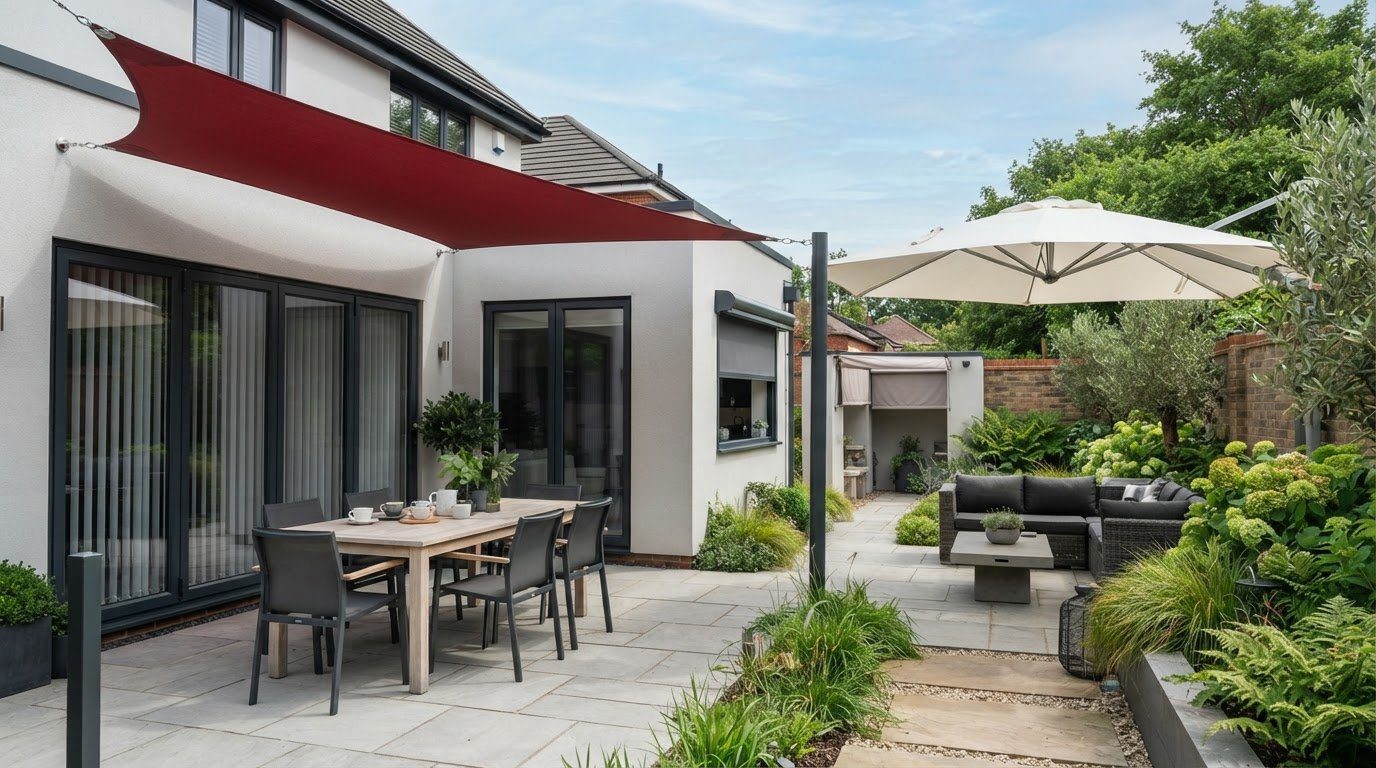
Pergola Alternatives for Shade: 6 Ways to Create a More Comfortable Outdoor Space
The best pergola alternative for shade may not be another structure at all. If you want shade without a permanent feature taking over your patio or garden, consider a solution that is flexible, movable or designed around the shape of your space.
Start by thinking about how you use the area. Some options create a defined patch of cover, while others can be adjusted or moved as the sun shifts. The position of your seating, available fixing points and the amount of shade you want will all affect what works best day to day.
This guide compares six practical pergola alternatives for shade, from bespoke sail shades and rolling sun sails to arm awnings, giant umbrellas and exterior blinds. It explains what each option suits and what to consider before choosing. Whether you’re shading a dining spot, a compact patio or a larger garden, you’ll have a clearer way to match the solution to your space and routine.
Key Takeaways
- Start with how you use your garden, patio or seating area to narrow down the pergola alternatives for shade that make practical sense.
- Compare shade sails, rolling sails, arm awnings, giant umbrellas and exterior blinds by coverage style, flexibility and setting.
- Map seating positions, sun direction, access routes and possible attachment points before settling on a shade solution.
- Consider how much adjustability and day-to-day upkeep you want, and whether you need to shade a whole area or a specific spot.
- Bespoke design can help fabric shading work with the shape and intended use of your outdoor space.
Pergola alternatives for shade: what are you trying to improve?
A pergola is only one way to add shade outdoors. While specialists like Ever Yard Co. offer dedicated pergolas and outdoor living structures, if a permanent framework feels too substantial or doesn’t suit the shape of your garden, consider fabric or movable options for a patio, terrace or seating area. These pergola alternatives for shade can provide cover without relying on the same framework.
The right fit depends on what you need the shade to do. Are you covering a dining table or a single seat? Do you want a fixed area of cover, or the option to adjust it as the sun moves? The available space, possible attachment points and how open you want the area to feel will help narrow down the choices.
Think about the experience you want, too. A well-planned shade solution can make an outdoor area more usable without dominating it. For an overview of awning types and how they work, see Awnings.
When might a pergola alternative suit your outdoor space?
A lighter or more adaptable option may suit a compact patio where posts could obstruct movement, or an irregular layout that doesn’t fit a standard structure. It can also work well if you want to keep the garden visually open or avoid fixed coverage across the whole seating area.
Notice how the sun falls on the places you use most. If your table is shaded at lunchtime but exposed later in the afternoon, adjustable coverage may be more useful than a fixed arrangement. Decide whether you need shade in one position, across a broader space or only at certain times of day.
Shade, shelter and flexibility are different requirements
Shade reduces direct sun exposure; weather shelter is designed to offer protection from conditions such as rain. One doesn’t automatically mean the other. Fabric options vary, so don’t assume a shade sail or awning is waterproof or suitable for every kind of weather. Where true, year-round shelter from the elements is required, homeowners often look towards permanent structural extensions with design-build firms such as Elite Contractor Services, whereas fabric alternatives focus primarily on manageable sun cover.
Some solutions stay in place to provide consistent coverage; others retract, roll away or can be repositioned when you want more sun or a clearer view. Consider how often you’ll adjust the shade and whether you prefer a set-and-leave arrangement or greater control. Matching coverage and flexibility to your routine is a practical first step towards a comfortable, uncluttered outdoor space.
Six pergola alternatives for shade, from sails to awnings
There’s no single best choice among pergola alternatives for shade. A fixed sail can define a seating area, while a movable umbrella may suit a spot you use at different times. Compare each option by where it provides cover, how easily you can adjust it and what your layout allows.
Fabric shade systems: sails and retractable sails
Shade sails can cover a dining or seating area without a solid roof. Their arrangement can be designed around the shape of the space and available fixing points, but fixed coverage won’t move as the sun shifts. Explore the key considerations in this bespoke sail shades guide.
Rolling sun sails are an option if you want to adjust or retract the fabric rather than leave it in one position. This flexibility can be useful as the light changes. Consider how you’ll operate the system as part of everyday use.
Awnings, umbrellas, blinds and natural shade
- Arm awnings: These extend out from a building, making them an option for patios beside a suitable wall. Their coverage is connected to the building, so they’re less suited to seating areas set away from it. For another point of comparison, Good Housekeeping’s guide to gazebos looks at freestanding shelter.
- Giant umbrellas: A movable choice for a selected dining or seating zone. You can reposition one to suit how you use the space, but its placement determines which area gets shade.
- Exterior blinds: Fitted at an opening, these can help reduce low-angle sun coming in from the side. They shade an edge or opening rather than a whole seating area from above.
- Trees: Natural shade can become part of the garden, but trees take time to grow and need space and ongoing care. Consider the eventual position and canopy in relation to the areas you want shaded.
Each option has different design possibilities and practical considerations. For a tailored fabric solution, see outdoor shade options from Sail Shades Direct.
How pergola alternatives compare for coverage, flexibility and upkeep
Compare each option with the space it needs and the way you’ll use it. The table is a starting point. Actual coverage and suitability depend on the design, installation and conditions at your property.
| Option | Coverage style | Adjustability | Suitable setting | Key consideration |
|---|---|---|---|---|
| Fixed shade sail | Overhead cover across a planned area | Stays in place | Seating or dining areas with suitable fixing points | Plan its position around the layout and sun exposure |
| Rolling sun sail | Overhead cover that can be rolled away | Can be adjusted or retracted | Areas where shade needs may change | Consider how you’ll operate and care for the moving system |
| Arm awning | Projects out from a building | Depending on the design, may be retractable | Patios beside a suitable building wall | Coverage is tied to the building rather than a separate spot |
| Giant umbrella | Localised overhead cover | Can be repositioned | A selected dining or seating zone | Placement affects the area shaded and access around it |
| Exterior blind | Vertical cover at an opening | May be raised or lowered, depending on the system | Building openings exposed to low-angle sun | It shades from the side, rather than covering a whole area from above |
| Tree | Natural shade from its canopy | Changes as the tree grows | Gardens with room for planting | Allow for growth, placement and ongoing care |
Which option suits a small patio, open garden or building-mounted space?
On a compact patio, a sail or awning may make good use of available fixing points without a freestanding frame in the middle of the space. For an open garden, consider whether an umbrella can shade the particular seating zone or whether a sail could span it using suitable fixing points. Beside a building, an arm awning or exterior blind may suit the position: an awning projects over the patio, while a blind provides cover at an opening.
What to consider for changing sun, rain and maintenance
Assess coverage and flexibility together: the right amount of shade is useful only if it suits when and how you use the space. Fixed systems provide a set arrangement; retractable or repositionable options let you alter coverage as conditions or plans change.
Rain suitability depends on the system and fabric specification, so don’t assume a shade option also provides rain shelter. Include routine care in your decision. Consider whether the fabric or structure is accessible for cleaning and how moving parts can be kept clear and looked after. These checks help you compare pergola alternatives for shade beyond appearance alone.
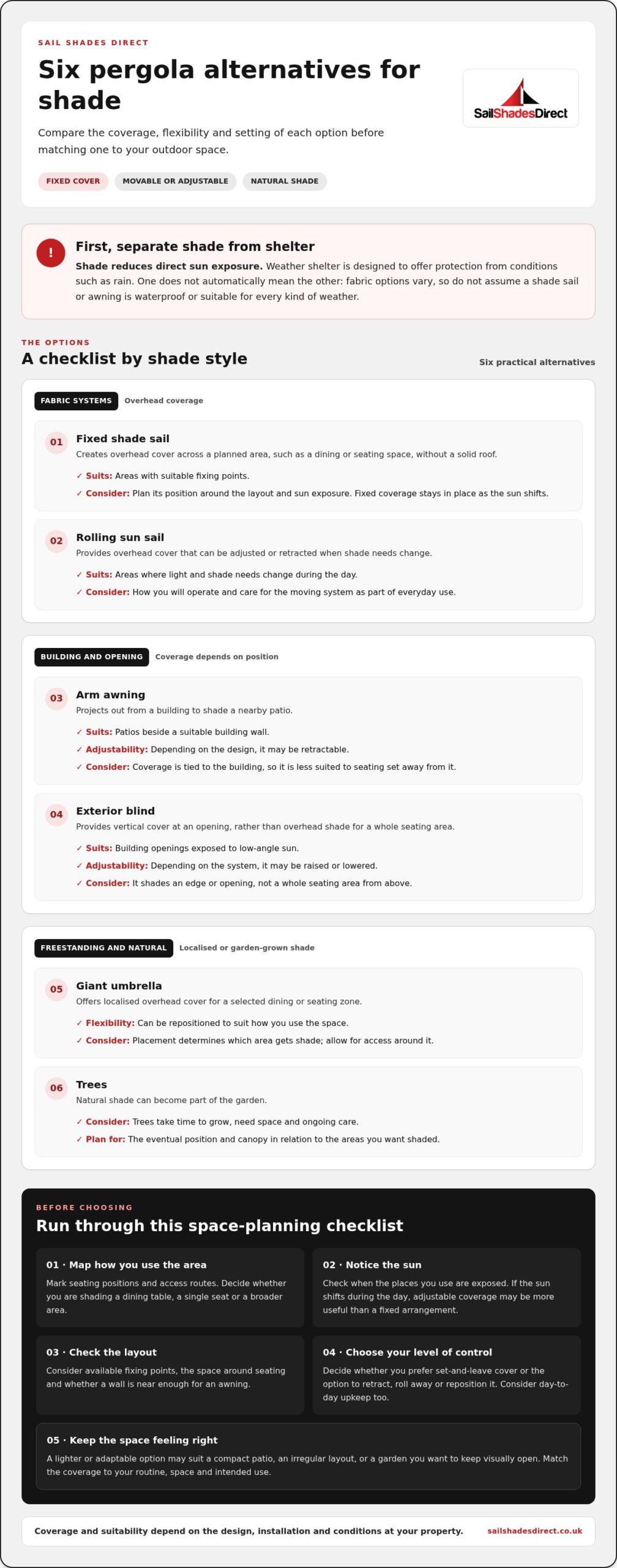
How to choose the right pergola alternative for your needs
A little planning can help you choose between pergola alternatives for shade without covering more space than you need. Work through these steps before settling on a solution.
- Map the space. Sketch the building, garden boundaries, seating and everyday routes through the area. Mark possible attachment points, such as suitable parts of the building, and note anything that needs to stay clear, including doors, paths and garden access.
- Define the coverage. Identify where direct sun causes discomfort at the times you use the space. Is it a dining table, a favourite seat or an opening to the house? Distinguish that spot from the full patio or garden footprint; you may need shade for only one section.
- Choose your level of flexibility. Decide whether you want shade to stay in position, be adjusted during the day or move with your plans. A consistent dining or seating spot may suit fixed coverage. If you want more sun at other times, consider a retractable option. A movable umbrella can suit a defined area that you’d like to reposition.
- Check practical constraints. Consider available fixing points, how a system might affect access and how you’ll reach it for routine care. If rain protection matters, look at the particular system and fabric specification rather than assuming a shade solution will also provide shelter. Also consider whether the layout needs to remain open when shade isn’t required.
Start with the space and the way you use it
Use your sketch to track the sun at the times you’re most likely to sit, eat or relax outside. A patio used mainly in the evening may need a different coverage position from one used at lunchtime. Note where direct sun falls and which routes must remain clear. These details can make a tailored layout more practical than simply covering the largest possible area.
Choose between fixed, retractable and movable shade
Fixed coverage suits a zone with a consistent purpose and position. Retractable shade lets you adjust coverage as the day changes, while a giant umbrella provides movable shade for a selected spot. If an awning is on your shortlist, explore the heavy-duty arm awnings guide for more detail.
For more information about made-to-measure options, browse bespoke outdoor shade solutions from Sail Shades Direct.
Bespoke shade sail and awning alternatives from Sail Shades Direct
Once you’ve identified where shade is needed, how much coverage you want and whether it should be adjustable, a tailored fabric system can be a practical alternative to a hard-roof pergola. Sail Shades Direct designs, manufactures and professionally fits bespoke outdoor shading across the UK. Options include bespoke sail shades, rolling sun sails, arm awnings and exterior blinds, designed around the space and how you intend to use it.
When a bespoke sail shade is a practical pergola alternative
A sail shade can create overhead cover for a seating or dining area without relying on a pergola frame. Its arrangement can be designed around the area’s shape, suitable fixing positions and the coverage you want. This can be useful where a standard structure may not suit an irregular layout or where you want to shade a specific zone rather than the whole patio.
If adjustability is a priority, rolling sun sails offer another approach: you can roll the coverage away when you want to open up the space. Read the rolling sun sails guide for more detail. Arm awnings can suit patios beside a building, while exterior blinds provide another way to shade an opening. The right direction depends on the layout, the position of the sun and whether you want fixed or changeable coverage.
From first ideas to professionally fitted shade
Start with the practical details: where people sit, which area needs cover, how they move through the space and where the system could be attached. These details help guide the design and fabrication of a suitable solution, whether that means a sail arrangement for an outdoor seating area or an awning beside the house.
Professional fitting completes the process, turning the planned design into a usable installation. It’s a considered way to go from identifying a need to creating shade that responds to the space, rather than making a permanent structure the default. As with any shade system, the intended use and product specification matter, particularly if you expect more than protection from direct sun.
To explore a tailored option for your garden, patio or commercial outdoor space, view bespoke outdoor shading from Sail Shades Direct.
Make shade work around your outdoor space
The right pergola alternative starts with how you use your garden, patio or seating area. Decide where shade matters most, how much coverage you need and whether you want it fixed, retractable or movable. Then consider practical details such as access, attachment points and the shelter you expect. Shade doesn’t automatically mean rain protection, so match the system to its intended use.
From bespoke sail shades and rolling sun sails to arm awnings, giant umbrellas and exterior blinds, there are different ways to create a more comfortable outdoor space without defaulting to a pergola. Sail Shades Direct designs and fabricates shading tailored to your space and intended use, with professional fitting across the UK.
Ready to explore pergola alternatives for shade that suit your layout and routine? Explore bespoke outdoor shading for your space and take the next step towards making more of your outdoor area.
Frequently Asked Questions
What is the best alternative to a pergola for shade?
The best option depends on your space, preferred coverage and daily routine. Among pergola alternatives for shade, a sail can cover a defined outdoor area, an arm awning can suit a patio beside a building, and a giant umbrella can provide movable cover for a particular seating spot. If you want to adjust coverage, consider a retractable system. Compare fixing points and decide whether you need shade alone or shelter from rain.
Can shade sails replace a pergola?
Yes, a shade sail can provide overhead cover without a pergola structure. It may suit a garden or patio where you want shade across a defined area, provided the layout and suitable support points work for the design. Consider the coverage you need and where the sun falls during the hours you use the space. A shade sail shouldn’t automatically be treated as rain protection; check its specification against your intended use.
Are awnings a good alternative to a pergola?
An awning can be a good option for a patio beside a building. It extends out from the wall and may be retractable, depending on the system. It may be less suitable for a seating area away from the building or where there’s no appropriate mounting position. Before choosing, consider the area to shade, the building and installation conditions, and whether you want coverage to stay in place or retract when it’s not needed.
What can I use for shade in a garden without fixing anything to the house?
A giant umbrella can provide shade over a selected dining or seating area without relying on a wall-mounted system. It needs suitable placement and may be repositioned to suit how you use the garden. A freestanding sail arrangement may also be an option if appropriate support points can be planned. Trees offer natural shade over time, but need room to grow and ongoing care. Compare each choice by footprint, coverage and flexibility.
Are pergola alternatives suitable for rain as well as sun?
Not all shade systems are designed to provide rain shelter. Suitability for rain depends on the system’s design, materials, installation and specified use. Don’t assume a shade sail, awning or umbrella will perform like a roofed structure. If protection from rain is a priority, read the product-specific information carefully and match the stated performance to the shelter you need.
How do I choose between a shade sail and an awning?
Start with the layout and available fixing points. An awning is generally suited to a patio beside a building, extending out from the wall, while a shade sail can be arranged over a defined outdoor area according to its shape and support positions. Then consider how much coverage you want and whether you’d like it to retract. The right choice depends on your space, sun exposure and how you use the area.