Retractable Awning vs Fixed Canopy: Which Is Right for Your Outdoor Space?
Do you want shade over your patio whenever you step outside, or only when the sun makes it welcome? That choice is at the heart of retractable awning vs fixed canopy, but the labels can muddy the comparison. “Fixed canopy” may describe different permanent-cover structures, so the precise design matters as much as the name.
It’s understandable to want dependable shelter without choosing something inconvenient or out of place. A retractable awning lets you control when overhead shade is in position; a fixed cover provides consistent coverage but can’t be moved out of the way as your needs change. Neither option suits every wall, patio or daily routine.
This guide clarifies what the terms mean, then compares flexibility, everyday shelter, installation considerations and upkeep. You’ll also find what to assess about your layout and exposure, and what details to prepare before discussing a tailored design. If you want controllable shade attached to a building, a bespoke arm awning may be worth exploring. Rolling sun sails offer another approach when the site or coverage calls for it.
Key Takeaways
- Check what a supplier means by “fixed canopy” before comparing designs, as the label can cover different structures.
- With retractable awning vs fixed canopy, weigh adjustable shade against consistent coverage and consider how each fits your routine.
- Compare adjustability, structure and how each option relates to your building, rather than assuming either suits every space.
- Before seeking advice, note the area’s dimensions, wall construction, access, obstructions and intended seating or dining layout.
- If you’re exploring alternatives, consider whether a bespoke arm awning or rolling sun sail better matches your site and coverage needs.
Retractable Awning vs Fixed Canopy: What Is the Difference?
Both options create shade, but they differ in how the cover is supported, whether it moves and how you use the space beneath it. The distinction can be difficult to pin down because “fixed canopy” doesn’t always refer to one specific structure. Before comparing retractable awning vs fixed canopy, check what each supplier means by the term and how the proposed cover would fit your building or outdoor area.
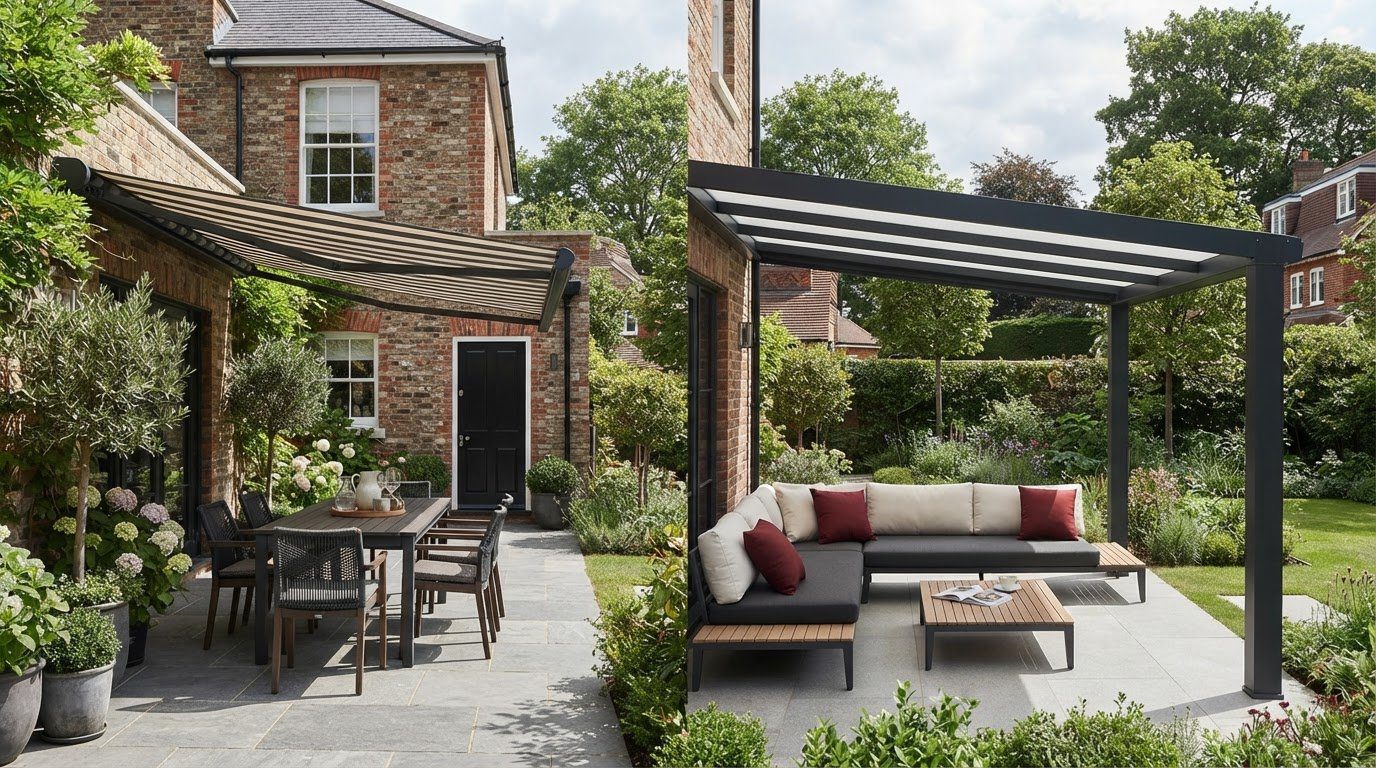
Start by checking whether the cover moves. A retractable awning extends over an outdoor area when shade is wanted and draws back when it isn’t. A fixed canopy stays in place. The right arrangement depends on the site, the coverage you need and your routine, rather than one type being best for every property. For a general introduction to awnings and their forms, see Awning.
What does retractable awning mean?
A retractable awning has a fabric cover and supporting mechanism that extend out from a building to shade the area below. Depending on the system, it may be operated manually or by a motor. When retracted, the cover is drawn back from overhead, opening up the area again; the supporting parts remain attached to the building. The exact mechanism and the way the cover gathers vary by design.
What counts as a fixed canopy?
A fixed canopy is a stationary overhead cover, but the term can describe different arrangements. Some canopies may be supported independently, whilst others connect to a building. An awning, by contrast, is generally attached to a wall and projects out from it. A hard-roof pergola is a separate structure category, not a meaning to assume whenever a listing says “canopy”.
Ask what the quoted term refers to: how the cover is supported, where it attaches and what it is designed to do. Don’t assume a particular frame, fabric, drainage arrangement or weather rating from the word “canopy” alone. Those details depend on the specific design and should be confirmed before you compare options.
In practical terms, the central difference is whether you can move the cover out of use. If you want overhead shade at some times and an open area at others, a retractable system may be worth considering. If you want a cover that remains in position, explore a fixed design and check its structure and suitability for your site rather than relying on the label.
How Retractable Awnings and Fixed Canopies Differ in Everyday Use
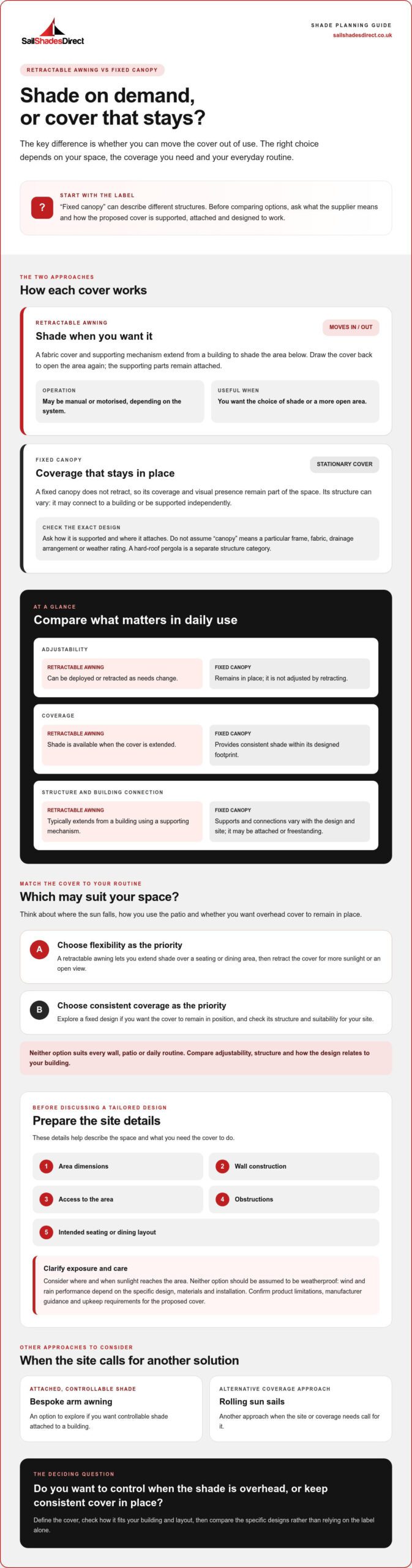
In daily use, the main difference is how much control you want over the covered area. A retractable awning lets you change the amount of shade by moving the fabric in or out. A fixed canopy stays in position, so its coverage and visual presence remain part of the space whether you’re using it or not.
| Factor | Retractable awning | Fixed canopy |
|---|---|---|
| Adjustability | Cover can be deployed or retracted as needs change. | Cover remains in place; it isn’t adjusted by retracting. |
| Coverage | Shade is available when the cover is extended. | Provides consistent shade within its designed footprint. |
| Structure | Typically extends from a building using a supporting mechanism. | Structure and supports vary; it may be attached or freestanding. |
| Relationship to the building | Usually connected to the building, projecting over the outdoor area. | Connection depends on the design and site. |
Which option gives you more control over shade?
A retractable awning offers more flexibility as sunlight shifts or your plans change. Retract it to let more sunlight into the area or restore an open view; extend it to shade a seating or dining space. This may suit a patio used at different times of day, especially if you don’t want overhead cover in place all the time.
A fixed canopy gives more consistent shade across the area it covers, which may suit a space used regularly for the same purpose. Think about where the sun falls, how your seating is arranged and whether you’d value an open area at other times. Your everyday routine is a useful guide to which arrangement may fit better.
How do exposure, upkeep and appearance compare?
Neither option should be assumed to be weatherproof. Wind and rain performance depend on the particular design, materials and installation, so confirm the product’s limitations and the manufacturer’s guidance before choosing. For background on awning design and structural considerations, consult the Professional Awning Manufacturers Association.
Upkeep also varies with the fabric, frame, installation and care instructions. Ask what checks or cleaning are recommended for the specific system, rather than relying on general claims about one type needing less attention. Consider appearance, too: a retracted awning changes how much cover is visible, while a fixed canopy remains a constant feature of the outdoor space.
If controllable, building-attached shade is what you’re looking for, explore bespoke arm awnings as one option to discuss for your space.
Retractable Awning vs Fixed Canopy: Which Suits Your Space?
The better fit depends on what you need from the area and what your site can accommodate. If you’re weighing retractable awning vs fixed canopy, picture how you use the space through the day: do you want to adjust the shade, or have a defined area covered consistently? Also check exactly what “fixed canopy” means in any quote, as it can refer to different structures and support arrangements.
When is a retractable awning likely to suit you?
A retractable awning may suit a household that wants to choose when its patio is shaded. For example, you might extend it over a seating area during sunny periods, then retract it later to bring back an open view or more sunlight. That flexibility can be useful if the patio serves several purposes. Before deciding, check how the selected system operates and follow its specific guidance for use in wind and rain.
When might a fixed canopy be the better fit?
A fixed canopy may suit a space where consistent cover over a clearly defined area matters more than changing the shade. Think of a regularly used seating or dining spot where you want the cover to remain in place. Consider whether the site can accommodate the structure and any supports, and ask for the proposed design, attachment method and suitability for the site’s exposure to be assessed. For inspiration on how permanent patio covers and custom structures can be integrated into residential spaces, contractors like acadianapatios.com offer helpful real-world project examples.
There are trade-offs on both sides:
- Retractable awning: offers control over when the cover is deployed, but has an operating mechanism and needs to be used in line with its guidance.
- Fixed canopy: keeps its designed coverage in place, but its permanent footprint and appearance are less adaptable if your needs change.
Use this decision matrix to prepare questions for a professional assessment. A “fixed canopy” isn’t one standard design, so ask about the actual structure being proposed.
- Priority: adjustable shade. Consider a retractable awning. Ask how it operates and what exposure limits apply to the selected system.
- Priority: consistent coverage. Consider a fixed canopy. Ask what area it covers and how it will be supported or attached.
- Site constraint: limited space or building features. Identify access, obstructions and the intended seating layout. Ask how these affect placement and installation.
- Site constraint: exposed position. Describe the conditions at the site and ask whether the specific design is suitable. Don’t assume either type is weatherproof.
There’s no universal winner. Match the structure to your routine, available space and site conditions to narrow the options before arranging tailored advice.
How to Choose Between a Retractable Awning and Fixed Canopy
A useful decision starts with your space, not the product label. Work through this checklist before requesting advice. It will help you explain what you need and distinguish your preference for a particular type of cover from questions about whether it can be fitted suitably at your property.
- Map the area. Measure the space you want shaded and note nearby walls, boundaries, doors and windows. Record possible fixing positions, access routes and anything that could obstruct the cover or its operation.
- Define the coverage. Mark where shade matters most, such as over a dining table or seating area. Consider whether you want a set area covered consistently or would like to move the shade as needed.
- Assess how you use the space. Note when you’re outside, how the seating or dining layout changes and whether you value sunlight or an open view at other times. This helps clarify whether adjustable cover would be useful in practice.
- Review the exposure. Describe the conditions around the proposed location. Check the selected product’s operating and care guidance, including its specific advice for wind and rain. Generic claims about weather resistance aren’t a substitute for guidance on the actual system.
- Request site-specific advice. Share your measurements and notes, then ask a specialist to assess the proposed design, attachment and installation requirements.
What should you measure and check before asking for advice?
Alongside the area’s width and projection, note the wall construction and any features that may affect placement. Include access constraints, nearby doors or windows, and potential obstructions. A simple sketch showing the intended seating or dining arrangement can make your coverage requirements easier to discuss. Mention whether you need shade at particular times or prefer to keep the area open at others.
What questions should you ask a shading specialist?
Ask how the proposed system suits your site and intended coverage, and what day-to-day operation involves. Confirm the materials specified, care instructions and product-specific weather guidance. If “fixed canopy” appears in the proposal, ask what structure it describes, how it will be supported and how its suitability for the site’s exposure will be assessed.
Keep product choice separate from installation details. Ask what site preparation and fitting work the proposal includes, and whether anything is excluded. Don’t assume access arrangements or changes to the fixing surface are included without confirmation. Clear answers help you compare like with like and understand what needs resolving before you proceed.
Have unusual dimensions or a challenging layout? Discuss a tailored outdoor shading brief to explore a solution shaped around your space and routine.
Explore Bespoke Awning Alternatives and Plan Your Next Step
A retractable awning and a fixed canopy aren’t the only ways to shade an outdoor space. Once you’ve clarified how much coverage you need and how you want to use it, other bespoke options may be worth exploring. Match the category to your building, layout and preferred operation, rather than choosing by label alone.
Could a bespoke arm awning meet your shading brief?
If you want controllable shade attached to a building, a bespoke arm awning may be relevant. Its suitability still depends on the property and project: the available fixing area, the coverage you have in mind and how you expect to use the space all matter. Explore the heavy-duty arm awnings guide to learn more about this category and the considerations that can shape a tailored design.
When should you explore other bespoke shading options?
If your site or required coverage doesn’t fit an awning brief, rolling sun sails are another category to consider. They’re an alternative shading approach, not a type of fixed canopy or a like-for-like replacement for an awning. The rolling sun sails buying guide can help you explore whether this option is worth discussing for your space.
You can also browse the bespoke sail shades guide if you’re considering custom shade beyond the retractable awning vs fixed canopy comparison. Each category has its own design and installation requirements, so assess the actual proposal against your layout and intended use.
Sail Shades Direct designs, manufactures and professionally fits bespoke outdoor shading solutions across the UK. If you’re unsure which direction suits your property, bring together the area’s dimensions, the coverage you want and how you’d prefer to operate the shade. A clear brief is a practical starting point for discussing the options, without needing to settle on a structure before the site has been assessed.
Choose Shade That Works for Your Space
The right retractable awning vs fixed canopy choice comes down to how you want to use your outdoor area. A retractable system gives you control over when shade is overhead, whilst a fixed canopy keeps coverage in place. Before deciding, confirm what a supplier means by “fixed canopy”, consider your layout and exposure, and check the specific system’s operating and care guidance.
If neither option seems quite right, broaden your search. Bespoke arm awnings may suit a brief for controllable, building-attached shade, whilst rolling sun sails offer a different category to explore for other sites and coverage needs. Start with a clear picture of your space, the shade you want and how you’d like to use it.
Sail Shades Direct provides bespoke design, manufacture and professional fitting, with options including arm awnings and rolling sun sails. Discuss your bespoke outdoor shading brief and take the next step towards a solution shaped around your property and routine.
Frequently Asked Questions
What is the difference between a retractable awning and a fixed canopy?
A retractable awning extends over an outdoor area and can be drawn back, allowing you to choose when its shade is present. A fixed canopy stays in place over its designed area. The term “canopy” can describe several kinds of structure, so the retractable awning vs fixed canopy comparison depends partly on the design being proposed. Check its support, attachment and materials before comparing it directly with an awning.
Is a retractable awning better than a fixed canopy?
Neither option is automatically better; the right choice depends on your priorities and site. A retractable awning may suit you if you want to control when an area is shaded or open to sunlight. A fixed canopy may suit a space where consistent cover is the priority. Compare the intended coverage, site conditions and product-specific operating guidance before deciding, rather than relying on a general claim that one type suits every property.
Can a retractable awning be left out in the rain or wind?
Whether it can remain extended in rain or wind depends on the particular awning, its design, installation and manufacturer’s guidance. Don’t assume every retractable system is suitable for strong winds or heavy rain. Before choosing, ask the supplier when the cover should be retracted and what conditions it’s designed for. Follow the system’s operating and care instructions, as these are more relevant than broad advice about awnings as a category.
Does a fixed canopy provide more weather protection than a retractable awning?
Not necessarily. Weather performance depends on the specific canopy or awning, its materials, installation and exposure. A fixed structure remains in place, but that alone doesn’t confirm how it will perform in particular conditions. Ask for product-specific guidance and have the proposed design assessed for your site before relying on it for shelter. Clarify what “fixed canopy” means in the proposal, as the term can refer to different structures.
Which is easier to maintain, a retractable awning or a fixed canopy?
There’s no universal answer, as maintenance depends on the fabric, frame, location and design. A retractable system may have an operating mechanism with its own care requirements, whilst a fixed cover remains exposed in place. Compare the manufacturer’s cleaning and maintenance instructions for the exact options you’re considering. Ask what routine checks are recommended, rather than assuming every retractable awning or fixed canopy needs the same level of upkeep.
Do I need planning permission for an awning or canopy in the UK?
Whether permission or other checks apply depends on the property, proposed structure and location, so don’t assume the same answer applies to every project. Check current official guidance and consult the relevant authority or a qualified professional before work begins. You can also ask the installer which project-specific checks may need to be considered. Confirm the details for your own property rather than relying on general advice about awnings or canopies.
How do I choose the right size for an awning or canopy?
Start by measuring the area you want covered and noting nearby doors, windows, possible fixing positions and obstructions. Include how you plan to use the space, such as the position of a dining table or seating. Share these details with a shading specialist, who can consider the proposed system and site constraints. Don’t choose dimensions based on coverage alone; installation requirements and the suitability of the design also need consideration.