
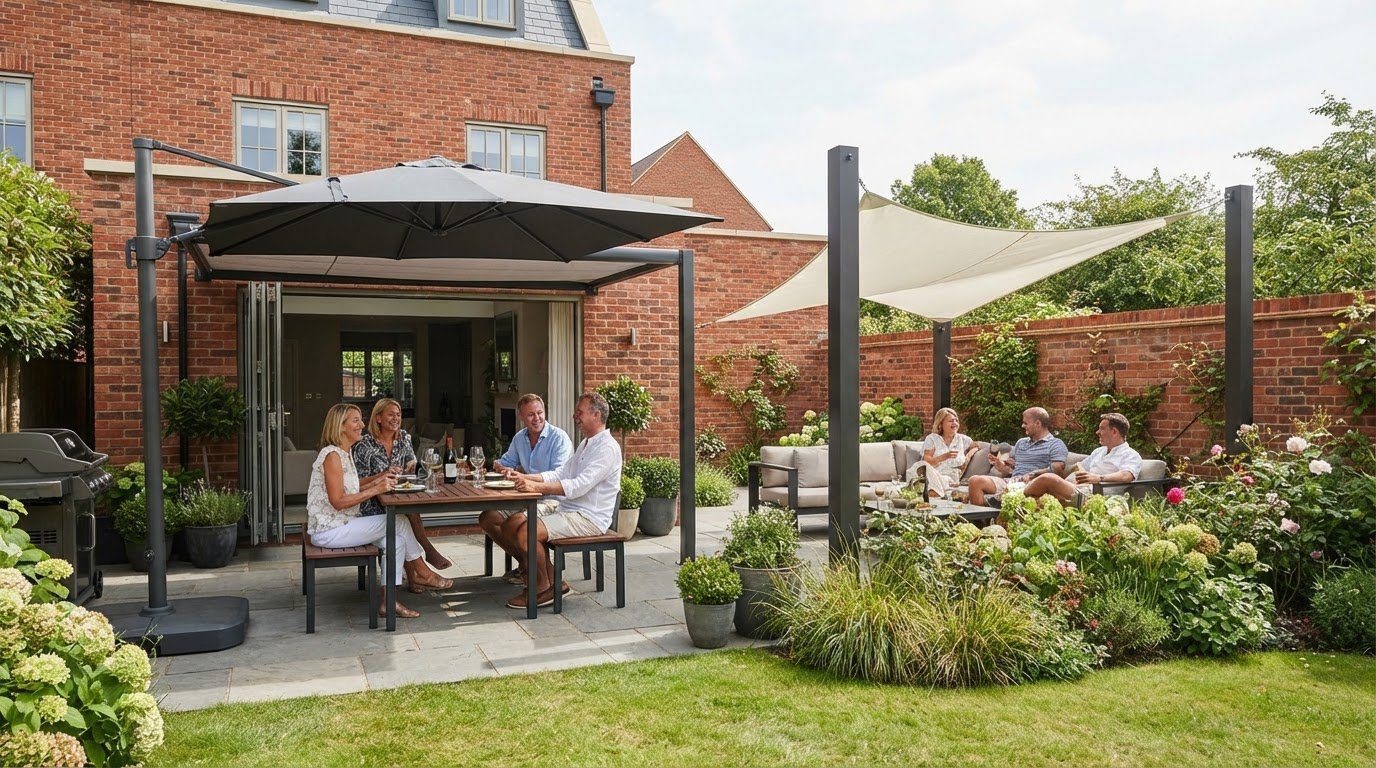
Temporary vs Permanent Garden Shade: Which Is Right for Your Space?
The most substantial-looking shade isn’t always the best fit for your garden. Choosing between temporary vs permanent garden shade is less about appearance and more about how often you use the space, where you need cover and how much flexibility you want to keep.
If you’re unsure whether a movable option will provide enough useful shade, or concerned a fixed installation could limit future garden changes, you’re asking the right questions. The best choice should support your routine now without making your outdoor space harder to adapt later.
This guide compares the practical differences between temporary and longer-term shade, including how each can suit different garden layouts and patterns of use. You’ll see what to consider beyond initial setup, from flexible options such as giant umbrellas and retractable sail shades to bespoke systems designed around a particular space. By the end, you’ll have a clearer way to match shade to your plans and understand when expert design could help bring the whole garden together.
Key Takeaways
- Compare temporary vs permanent garden shade by how regularly you use the space and how much flexibility you want to retain.
- Map where the sun falls and where you prefer to sit or dine to identify coverage that will be useful day to day.
- Weigh flexibility, setup, storage and coverage planning, not just appearance, when comparing shade options.
- Consider whether your garden layout or routine may change before choosing a longer-term shade arrangement.
- Explore whether ready-made shades or a bespoke system could suit your garden’s layout and intended use.
Temporary vs Permanent Garden Shade: What Is the Difference?
The right shade depends on how you use your garden, the routine you want it to support and the space available. A compact patio used for occasional lunches has different needs from a seating area that’s part of everyday life. In simple terms, temporary shade is designed to be moved, removed or stored; permanent shade is planned as a longer-term addition to a garden; and retractable shade is installed to let you adjust how much coverage you use.
These categories describe how shade fits into your space, rather than simply how it looks. A system can be intended for regular, lasting use without covering the same area all the time. That distinction makes temporary vs permanent garden shade a practical choice, not just a question of style.
What counts as temporary garden shade?
Parasols and pop-up canopies are familiar examples of temporary shade. Their portability can suit occasional entertaining, a garden whose layout changes, or a household that wants to move shade between seating spots. They can be positioned for the sun at the time, then removed or stored when you need the space for another purpose.
That flexibility comes with practical considerations. Think about where the shade will stand, how you’ll set it up when needed and where it can be stored afterwards. A portable option may work well for a gathering, but if you regularly need cover in the same place, repeating those steps becomes part of your routine. The best fit depends on whether the flexibility is worth that effort for you.
What makes garden shade a longer-term choice?
A longer-term shade system is planned around a defined area and the way you expect to use it. Bespoke sail shades can be designed with a particular garden layout in mind, while awnings can provide shade for a regular seating or dining area. Consider the area as a whole, including how the shade relates to the house, garden furniture and the routes you use through the space.
Long-term intent doesn’t mean the shade fabric has to stay in place all the time. A retractable sail shade can be part of a considered installation while allowing coverage to be adjusted to suit your preferences. The key difference is that the system is planned for its place in the garden, rather than brought out and put away whenever you need shade.
It’s also useful to distinguish a shaded living area from a shade garden, which refers to planting suited to a shaded environment. If you’re planning both, consider how the coverage you want for people may affect the light available to plants. This helps you make a choice that works for the garden as well as the seating area.
How Temporary and Permanent Garden Shade Fit Everyday Use
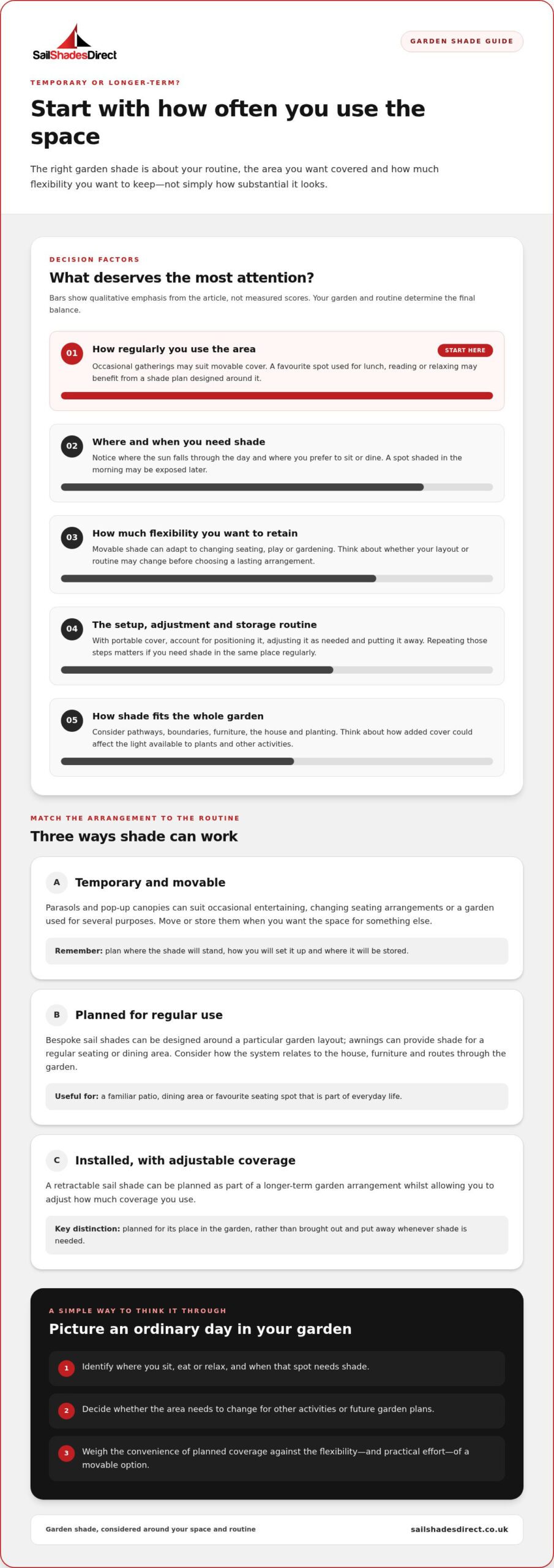
Think about the occasions when shade would make the biggest difference. If you bring out garden furniture for a summer gathering now and then, movable cover may suit the way you use the space. If lunch, reading or relaxing outdoors is part of your regular routine, shade planned around a familiar spot may feel more convenient. The choice between temporary vs permanent garden shade becomes clearer when you picture an ordinary day, not just a special occasion.
Start by noticing where you sit and how sunlight reaches that area over the day. A corner that’s shaded in the morning may be exposed later, while a favourite dining spot might need cover at a particular time. Your garden’s layout matters too: pathways, planting, boundaries and furniture all affect where shade is useful and how much room there is to position it. Property enhancement specialists like Palisades Outdoor Solutions recommend considering how lawn health, hardscaping, and sun exposure interact so that any shelter works naturally with your overall landscape.
When does flexible shade suit your garden routine?
Flexible shade can suit occasional entertaining, changing seating arrangements or a garden that serves several purposes. You might want cover near a table for a gathering, then prefer an open area for children’s play or gardening. Portable options let you adapt the shaded area to the occasion, rather than treating one part of the garden as the permanent focus.
That adaptability still involves hands-on decisions. Consider the effort of setting the shade up, positioning it as the sun moves, adjusting it when needed and putting it away afterwards. Temporary options differ in how they can be moved or stored, so think through the practical routine as well as the freedom to change the layout.
When might a lasting shade system feel more practical?
A regular patio, dining area or favourite seating spot can benefit from shade designed around its intended use. A planned system takes account of the area you want to cover and how it sits within the garden, helping you think beyond a single sunny afternoon. Fabric choice and shade performance vary by application, so consider the design in relation to the space and how you intend to use it.
The more often you use a space, the more valuable a considered shade plan can be. It can make shade part of how the area works day to day, rather than another item to position each time you want to sit outside.
Plants and trees can also shape the light in a garden. The USDA Forest Service’s overview of urban forests and shade offers a broader perspective on how vegetation contributes shade in built-up environments. In your own garden, consider existing planting alongside any added cover, especially if you want to keep particular areas light for growing or other activities.
Fabric selection is another practical consideration, not just a matter of colour or appearance. Sail Shades Direct offers a wide fabric range and selects fabric for each application. Its expert team can help relate a shade design to your garden’s layout and routine. If you’re weighing up a longer-term approach, explore bespoke garden shade options as a way to bring those priorities into the design.
Temporary vs Permanent Garden Shade: Compare the Real Trade-offs
Appearance is only one part of choosing garden shade. Compare how each option fits the way you use the space, how much effort you’re happy to spend positioning it and whether you need cover in a particular area regularly. Temporary options can work well where layouts change; a planned system can make more sense when you want shade centred on a defined seating or dining area. Neither is automatically the better choice.
| Consideration | Temporary shade | Planned, longer-term shade |
|---|---|---|
| Flexibility | May be moved or put away to suit different uses, depending on the product. | Designed around a chosen area, though retractable options can allow coverage to be adjusted. |
| Coverage planning | Positioning can change, so shade may need to be arranged for each occasion. | Coverage is considered in relation to the garden layout and intended use. |
| Setup | May need to be set up and positioned when shade is wanted. | Planned as part of the space, rather than treated as something to bring out each time. |
| Storage | Consider where it will be kept when it’s not in use. | Storage may be less central to the decision, depending on the system. |
| Regular use | Can suit occasional shade needs or a garden with changing arrangements. | Can suit a regularly used area where shade has a consistent purpose. |
Which option offers more flexibility?
Flexibility can mean changing the position of a shade, altering how much coverage you use, or putting the product away to free up the garden. Portable shade can be moved, but each product has its own practical requirements for positioning and storage. An adjustable system takes a different approach: it stays planned around its setting while allowing the shade to be drawn back or brought into use. Custom-made retractable sail shades are one option to consider for a particular space.
So “permanent” doesn’t have to mean the fabric is always extended or that coverage can never change. It can describe a longer-term installation, while retractability provides a way to adjust the shade. The useful question is whether you want to move the shade itself or adjust coverage within a planned arrangement.
How should coverage and upkeep affect the comparison?
Start with the area you want shaded and how consistently you use it. A changeable layout may make flexibility more valuable; a defined dining spot may call for coverage planned around that use. Then consider the practical care involved. Setup, storage and upkeep needs depend on the product, so follow its instructions rather than assuming every option is handled in the same way.
Shortlist by routine: lean towards temporary shade if moving or storing it suits your plans; consider planned shade if you use a particular area regularly; explore retractable shade if you want a considered installation with adjustable coverage. Let your garden’s layout and habits guide the choice, rather than looking for a universal winner.
How to Choose Garden Shade for Your Space and Future Plans
A clear choice starts with your garden, not a product category. Think about who uses the space, what they do there and whether shade needs to stay in one place or adapt as plans change. This simple sequence can turn the temporary vs permanent garden shade decision into a practical shortlist.
- Map the area. Identify the seating, dining or other outdoor space you want to shade. Note nearby doors, paths, planting and furniture, then consider where shade would be useful at the times you’re most likely to be outside.
- Describe your routine. Is the area used for everyday meals, quiet breaks or occasional gatherings? Consider the people and activities that matter most. A spot used often for dining may call for a different approach from a space that needs to remain open for several purposes.
- Weigh flexibility against planned coverage. Decide whether you’d value moving or storing shade, or prefer a solution designed around a defined area. Include the practicalities: how much setup feels comfortable and whether you have a suitable place to store a removable option.
What should you assess before choosing?
Picture a typical day in the garden, then a gathering or change of activity. Would you want shade in the same position, or would you prefer to move it? Consider how many people use the area, whether furniture is fixed or rearranged, and whether you’re comfortable setting up and putting away a portable option. These details help reveal what will feel convenient in real use.
How do future plans change the decision?
Ask yourself whether the garden layout, furniture or way you use the space is likely to change. If you’re still experimenting with where to sit or dine, a flexible option may leave more room to adapt, though that isn’t automatically the best fit for every garden. If the area and routine are well established, a tailored design may make better use of the space, especially where its shape or layout makes standard positioning difficult.
Bespoke sail shades can be designed around a particular garden and its intended use, rather than chosen by appearance alone. Sail Shades Direct’s expert team advises on shade design and offers a wide fabric range, selecting fabric for each application. Discussing the space, routine and future plans can help turn those priorities into a suitable shade concept.
If you’re ready to explore a tailored approach, discuss your garden shade requirements with Sail Shades Direct.
Find a Garden Shade Solution That Suits Your Space
Once you’ve weighed how often you use your garden and how much flexibility you want, connect those priorities to a shade concept. Sail Shades Direct designs outdoor shading for different applications, from ready-made shades to fully engineered bespoke systems. An expert design discussion can bring together your preferred seating area, garden layout and plans for the space, helping you explore options that fit your routine.
The choice between temporary vs permanent garden shade doesn’t have to mean choosing between a movable item and an unchanging installation. Some options are designed for a defined area, while custom-made retractable sail shades offer an adaptable approach to coverage. Start by deciding what you want the shade to do and where it needs to work.
How can bespoke shade respond to a specific garden?
A garden may have an unusual shape, a particular seating arrangement or more than one activity to accommodate. Bespoke outdoor shading is designed around its application, so the concept can respond to the space rather than asking you to organise the garden around a standard shape. Sail Shades Direct’s installations include garden shades, balcony surrounds and other varied applications.
Fabric is part of that considered approach. The company offers a wide fabric range and selects fabric for each application, bringing the design and intended use together. The expert team can consider the area you want to shade and the way you expect to use it, then advise on a suitable direction without relying on appearance alone.
What can you explore next?
If a seating or dining area is part of your regular routine, Bespoke Sail Shades or Awnings may be relevant options. If you value adaptability, custom-made retractable sail shades can offer a considered way to adjust coverage. You can also explore the existing guide to rolling sun sails for more information on retractable shading.
Shade needs aren’t always overhead. If you’re looking to manage sun around the sides of an outdoor space, Exterior Blinds may be worth considering alongside overhead options. Giant Umbrellas and Rolling Sun Sails provide further possibilities within the company’s range, allowing different priorities to be considered together.
Bring your questions about the layout, intended use and future plans to the conversation. Sail Shades Direct’s expert team can advise on the possibilities and design an outdoor shading solution around your application.
Make your next garden plan a little clearer
Your garden doesn’t need to be fully redesigned before you decide what shade could work. Start with one useful next step: picture the spot you’d most like to enjoy and what would make it more comfortable to use. That gives you a practical starting point for considering temporary vs permanent garden shade, whether your plans are settled or still taking shape.
Sail Shades Direct’s range spans ready-made shades through to fully engineered bespoke systems, with an expert team advising on outdoor shading design. Sharing how you use your garden, what may change and where you want coverage can help shape a concept around your space, rather than leaving you to choose on appearance alone.
Ready to explore the possibilities? Talk to our expert team about shade for your garden and take the next step towards making your outdoor space work better for you.
Frequently Asked Questions
Can I use temporary garden shade in a rented home?
Yes, a portable option may suit a rented home if you want shade without making a lasting change, but check your tenancy terms first. Before attaching anything to a wall, fence or other part of the property, get the appropriate permission. Even freestanding shade needs careful placement so it doesn’t obstruct access or create a hazard. Consider where you’ll keep it when it’s not in use, too.
Does permanent garden shade have to be a solid roof?
No, a longer-term shade solution can use fabric rather than a solid roof. Sail Shades Direct offers Sail Shades and Awnings, including bespoke options designed for outdoor spaces. The key question is whether you want shade planned for ongoing use, not whether it has a hard surface. Think about the area you want to cover, how you use it and the look you’d like before settling on an approach.
Can a permanent garden shade still be retractable?
Yes. “Permanent” describes the intended place of a shade arrangement, whilst “retractable” describes whether its coverage can be adjusted. Sail Shades Direct offers custom-made retractable sail shades, which may suit a garden where you want a regular shaded area but also value flexibility. When discussing options, explain when you’d want the shade extended and when you’d prefer to open up the space.
Can garden shade be designed for an awkward layout?
Yes, a tailored design can respond to an unusual garden layout or a specific area that needs shade. Start by noting the space’s shape, nearby features and what happens there, such as dining or relaxing. Sail Shades Direct designs bespoke outdoor shading and selects fabric from a wide range for each application. Sharing those details gives the expert team a useful foundation for discussing a suitable concept.
Do I need planning permission for a garden shade in the UK?
It depends on the property and the proposed work, so don’t assume the same answer applies to every garden. Before committing to a fixed installation, check current official planning guidance and contact your local planning authority if you need advice about your circumstances. This is particularly relevant if the work affects the building or a shared space. This general information isn’t a decision on what your property requires.
What should I do with temporary garden shade when the weather changes?
Follow the product’s instructions for use, care and storage, as requirements differ between products. If conditions change, don’t assume a portable shade is suitable to leave in place. Think through how you would take it down or store it before choosing, including whether you can do so safely. For a planned shading system, tell the design team how you expect to use the garden so your routine can inform the discussion.