What Is the Most Durable Awning Fabric? Compare Your Options
The fabric that lasts longest in one garden may not be right for another. So, what is the most durable awning fabric for your home or business? It depends on the sun, rain and regular use it will face, as well as the care you can provide.
Terms such as “weather-resistant” and “waterproof” can be difficult to compare without knowing what they mean in practice. Solution-dyed acrylic is widely regarded as a durable option for colour retention and sun exposure, while PVC-coated polyester offers a different balance of rain protection and breathability. Polyester and cotton canvas have their own trade-offs, too.
This guide compares common awning fabrics by weather resistance, colour retention, maintenance and intended use. You’ll also find questions to ask about fabric construction, coatings and care before commissioning an awning. Start with the conditions your awning will face, then compare product details rather than relying on a marketing label alone.
Key Takeaways
- To work out what is the most durable awning fabric for your project, match the material to its exposure, construction and care requirements.
- Compare acrylic, polyester and PVC-coated polyester using specific information about colour retention, water resistance, breathability and cleaning.
- Prioritise the conditions that matter in your setting, such as strong sun, frequent rain, sheltered use or regular commercial use.
- Ask suppliers for written fabric specifications and clarification of any test or performance claims before deciding.
- For a bespoke arm awning, consider the fabric alongside the design and intended use to find a practical fit for your space.
What makes an awning fabric durable in real-world use?
Durability depends on the fabric, its construction, the conditions it faces and how it’s cared for. A fabric that holds its colour well may not be the best choice for prolonged wet weather. A water-resistant material may also need specific care to avoid damage or premature wear. The aim is to match performance to the job, not to find one material that excels in every respect.
Durable awning fabric is material that keeps performing in the ways your setting needs, with suitable care and exposure. That may mean retaining colour in strong sun, resisting moisture, standing up to abrasion or being straightforward to clean. Broad categories of awning materials include woven fabrics and coated materials, but the category alone doesn’t tell you how a particular product will perform. Check its specific details.
Fabric is only part of the picture. Frame design, seams, fixings and installation quality all affect how an awning performs. A well-chosen fabric can still be vulnerable if it’s poorly tensioned, rubs against surrounding surfaces or is fitted to a structure unsuited to its intended use. For a bespoke arm awning, consider the fabric alongside the design and fitting requirements.
Which factors affect how long awning fabric performs?
Sunlight can gradually affect colour and material strength. Moisture matters too: how fabric sheds water, dries and is maintained can influence its condition. Wind can cause movement and repeated strain, particularly in exposed positions. Frequent extending and retracting adds regular handling.
Position changes the picture. An awning facing strong sun for much of the day may need different performance priorities from one on a sheltered patio. A retractable awning can be closed when it isn’t needed, reducing exposure during those periods, but the conditions it faces when open still matter. There’s no reliable lifespan figure that applies to every fabric and installation, so ask for product-specific information.
What does ‘durable’ mean for an awning?
Separate the qualities you’re comparing. Colour retention concerns fading; strength relates to resistance to tearing; moisture resistance describes how the fabric handles rain; and abrasion resistance matters where material may rub against a surface. Cleaning needs are part of practical durability, too. A fabric that needs care you can’t realistically provide may not suit your routine.
Start with the conditions and demands of your space, then compare relevant fabric specifications. Ask what a performance claim measures and whether it applies to the specific fabric on offer. Specifications are useful evidence, but suitability also depends on exposure, awning design and maintenance.
How do acrylic, polyester and PVC-coated awning fabrics differ?
These material names are a starting point, not a performance guarantee. Acrylic, polyester and PVC-coated polyester can vary by fibre, weave, coating and finish, so compare the specification for the exact fabric you’re considering. Industry guidance, including this overview of primary fabrics for awnings, can help explain material categories. For a specific product, check the manufacturer’s details.
| Fabric type | Common considerations | What to verify |
|---|---|---|
| Acrylic | Solution-dyed versions are commonly associated with good colour retention and breathability. They may repel water without being fully waterproof. | Whether the fabric is solution-dyed, its stated water resistance, colour-performance information and care instructions. |
| Polyester | Performance can differ considerably with weave and finish. Compared with solution-dyed acrylic, some polyester fabrics may be more prone to fading or wear. | Fibre and construction details, any UV or colour-retention claims, and cleaning guidance. |
| PVC-coated polyester | The coating can provide a waterproof surface, but may reduce breathability compared with an uncoated woven fabric. Flexibility and cleaning needs depend on the product. | Waterproofing claims, coating and fabric construction, flexibility guidance and approved cleaning methods. |
When might acrylic fabric suit an awning?
Acrylic may suit settings where colour retention and airflow are priorities, particularly if the specification confirms a solution-dyed construction and performance appropriate to the exposure. Water-repellent doesn’t necessarily mean waterproof, so check the manufacturer’s guidance about rain. Whether acrylic suits an awning depends on its position, design and use, not simply the word “acrylic” on a quote.
When might polyester or PVC-coated fabric be considered?
Polyester covers a range of constructions, so don’t assume every version has the same resistance to fading, moisture or abrasion. A PVC coating may be relevant where a waterproof surface is needed, but ask how it affects breathability, flexibility and cleaning. Weigh these trade-offs against your setting rather than assuming one material is always superior.
Material labels alone can’t establish real-world durability. Construction, verified performance claims, exposure and care determine whether a fabric is suitable. If you’re considering a bespoke arm awning, ask which fabrics are available and request the relevant specifications before choosing. You can discuss your awning requirements with Sail Shades Direct to connect the fabric details with your space and intended use.
Which awning fabric is most durable for your conditions?
The answer depends on what the awning needs to handle. A fabric chosen for colour retention in strong sun may not offer the rain protection you want. With frequent use, cleaning and handling may matter as much as weather resistance. If you’re asking what is the most durable awning fabric, begin with the exposure and intended use, then compare product-specific evidence rather than relying on material names alone.
These are starting points, not guarantees. Check each characteristic against the manufacturer’s specification for the exact fabric, coating and construction being offered.
- Strong sun: Solution-dyed acrylic is commonly associated with colour retention and breathability. Check the product’s UV and colourfastness information. Trade-off: water-repellent fabric may not be waterproof in prolonged rain.
- Frequent rain: PVC-coated polyester may be considered when a waterproof surface is a priority. Verify the waterproofing claim and ask about breathability, flexibility and care. Trade-off: a coated fabric may feel less breathable than a woven option.
- Sheltered patio: A wider range of fabrics may be suitable when exposure is limited. Compare colour, cleaning needs and resistance to the specific wear the awning will face, rather than choosing performance you don’t need.
- Regular commercial use: Prioritise documented performance, cleaning instructions and suitability for the frequency of operation. The right choice depends on the setting and maintenance routine, not simply whether the project is commercial.
What fabric qualities matter in sunny or exposed settings?
For a sunny position, ask for evidence of UV resistance and colourfastness for the specific fabric. Terms such as “fade-resistant” are more useful when supported by clear product details. The Fabric Architecture Specifiers Guide offers a professional reference for specifying materials, but the supplier should still explain how the proposed fabric suits your project.
Wind exposure affects the whole structure. The awning’s design, frame, fixings, installation and operating guidance all matter alongside the fabric. For a particularly exposed site, seek qualified design and installation advice before deciding.
What should you prioritise where rain or frequent use is expected?
Consider whether you need water resistance or a waterproof barrier, then balance that against breathability and cleaning requirements. Waterproof performance depends on the full fabric specification and construction, including any coating, so request written details. No fabric makes an awning suitable for every weather condition. Follow the supplier’s operating advice for the finished design.
If a sail shade may suit your space, explore Bespoke Sail Shades UK: The Ultimate Guide to Custom Outdoor Shading for more on planning a tailored shading project.
How to choose durable awning fabric: a practical checklist
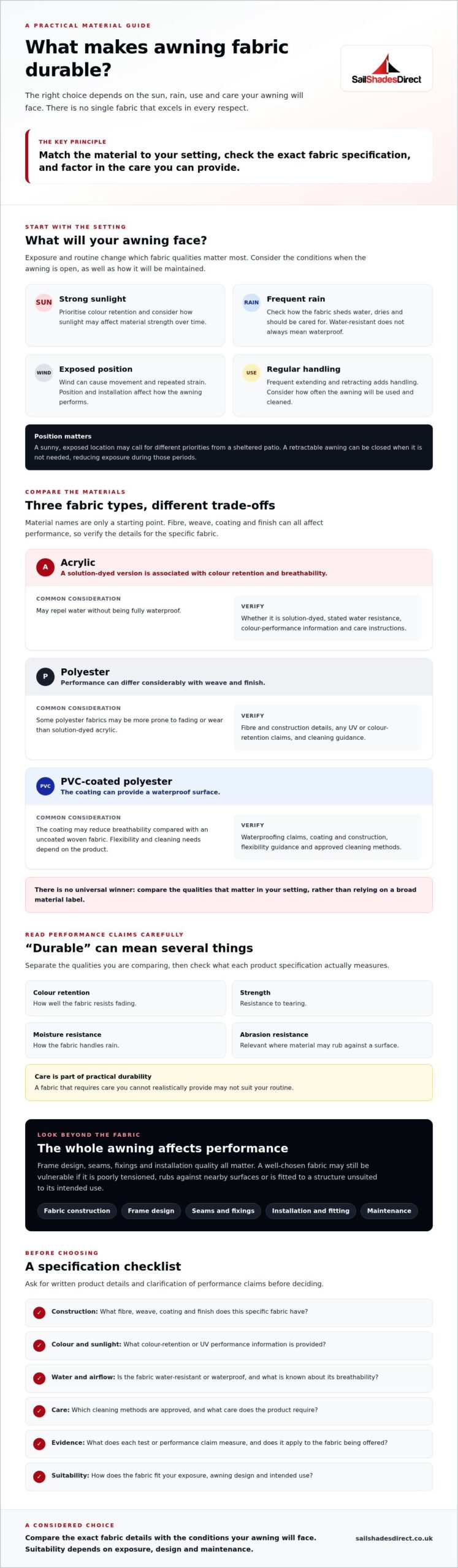
A good fabric choice starts with the project, not a broad label such as “heavy-duty”. Work through these steps with the supplier to compare relevant details and check that the fabric suits both the awning design and its intended setting.
- 1. Define the use. Note whether the awning will shade a home patio or a regularly used commercial space. Consider how often it will be extended, retracted or cleaned.
- 2. Assess the exposure. Describe how much direct sun, rain and wind the site receives, and whether the awning can be retracted when not in use. Include its position and orientation, as these affect the conditions it faces.
- 3. Compare specifications. Ask for the exact fabric composition, construction and coating details, along with its intended application. Where available, request written information about UV resistance, colourfastness, water resistance and strength. Compare like-for-like evidence, not just marketing descriptions.
- 4. Check care requirements. Ask how the fabric should be cleaned, which products or methods to avoid, and whether it needs to dry before being retracted. A material that performs well on paper may be less practical if its upkeep doesn’t suit your routine.
- 5. Confirm suitability. Check that the proposed fabric is appropriate for the awning design and planned exposure. Ask the supplier to explain any test or performance claims, and record the chosen specification alongside the project requirements.
Which fabric specifications should you compare?
Request the manufacturer’s details for the exact fabric being quoted, including fibre composition and any coating or finish. If a claim is supported by a test, ask what was tested and how the result applies to the proposed material. This helps distinguish documented performance from a general description. Keep comparisons consistent: “heavy-duty” alone doesn’t explain how a fabric handles sun, moisture or wear.
What questions should you ask before ordering?
Ask whether the material suits the awning’s construction and your planned use. Clarify cleaning instructions, care expectations and what product terms or replacement information are documented. For a bespoke arm awning, discuss the design and site exposure together to resolve questions before selecting the fabric. You may also find the awning-specific considerations in Heavy Duty Arm Awnings: The Ultimate Guide to Durable Patio Shading in 2026 useful.
To compare the requirements for your project, discuss your bespoke arm awning project and what you need the fabric to do.
Choosing awning fabric with a bespoke shading specialist
There isn’t one fabric choice that suits every project. The durable option is the one whose documented performance matches the site’s exposure, the shading you need, the awning design and the care you can provide. If you’re still asking what is the most durable awning fabric, a project-specific assessment can help turn that broad question into a practical comparison.
How can a bespoke assessment help narrow the options?
A specialist can consider the space, the direction and amount of exposure, your shading priorities and the awning configuration together. Before a discussion, note when the area gets direct sun, how exposed it is to rain and wind, how often you expect to use the awning, and what level of cleaning feels manageable. For arm-awning projects, Heavy Duty Arm Awnings: The Ultimate Guide to Durable Patio Shading in 2026 offers further design context.
That information helps make the conversation specific. Rather than choosing by a broad material label, ask which available fabric options meet your requirements and what evidence supports their stated performance. Sail Shades Direct designs, manufactures and professionally fits bespoke outdoor shading, including arm awnings. Confirm the specific fabric options available for your project.
What should happen before you confirm an awning fabric?
Before approving a specification, ask for the proposed material and its documented performance characteristics in writing. Confirm that it suits the awning’s design, the conditions it will face and your planned maintenance routine. If a claim is unclear, ask what it means for the particular fabric being proposed. Keep the agreed specification with your project details so you can refer back to the same information later.
A sound decision brings the fabric, structure and intended use into one plan. If you’re considering bespoke outdoor shading, you can discuss your bespoke outdoor shading project with Sail Shades Direct. You don’t need to settle on a material before checking which specifications suit your space.
Choose an awning fabric that fits your project
So, what is the most durable awning fabric? It’s the one that suits your exposure, required performance, awning design and maintenance routine. Material labels are only a starting point: check written specifications and clarify what any performance claims mean for the fabric being proposed.
Consider the conditions your awning will face, from strong sun to frequent rain, and weigh colour retention, water resistance and care needs against how you’ll use the space. The fabric, structure and installation all contribute to how well the finished awning performs.
Sail Shades Direct provides bespoke design and fabrication for outdoor shading, with professional fitting for residential and commercial projects across the United Kingdom. To discuss your space and a suitable bespoke awning project, talk to Sail Shades Direct about your awning. A considered choice can help you enjoy a more comfortable outdoor space with confidence.
Frequently Asked Questions
What is the most durable fabric for an awning?
Solution-dyed acrylic is widely considered a durable choice for many residential awnings, particularly where colour retention and sun exposure matter. However, what is the most durable awning fabric for your project depends on the material’s construction, site conditions and care. If prolonged rain is a priority, compare the fabric’s documented water resistance too. Ask for specifications for the exact material being proposed rather than choosing by name alone.
Is acrylic or polyester awning fabric more durable?
Solution-dyed acrylic is generally associated with stronger colour retention than standard polyester, but performance varies between fabrics. The research for this guide gives indicative lifespans of 10-15 years for solution-dyed acrylic and 5-10 years for polyester with proper care. These aren’t guarantees for an individual awning. Exposure, construction and maintenance all affect performance. Compare the specific products’ written UV, colourfastness and strength information before deciding.
Is PVC-coated fabric suitable for an outdoor awning?
It can be suitable if its documented performance matches the awning design and intended conditions. PVC-coated polyester is commonly used where a waterproof surface is wanted, though the coating may reduce breathability compared with woven fabric. Check the exact product’s water-resistance claims, flexibility, cleaning instructions and suitability for outdoor exposure. Waterproof fabric alone doesn’t establish that the complete awning is appropriate for every weather condition.
How long does awning fabric last?
There’s no single lifespan that applies to every awning fabric or installation. The research for this guide gives indicative ranges of 10-15 years for solution-dyed acrylic, 5-12 years for mid-range woven acrylic and vinyl-coated polyester, and 5-10 years for polyester, with proper care. Treat these as broad guidance, not a promise. Ask the supplier for product-specific information and consider exposure, use and maintenance.
Can awning fabric be left out in heavy rain?
That depends on the fabric specification and awning design. Water-repellent fabrics may shed light showers but allow moisture through during heavy, sustained rain; waterproof fabrics are designed to provide a stronger barrier. Check the manufacturer’s guidance for the exact material and follow the awning supplier’s operating advice. Don’t assume waterproof fabric makes the whole awning suitable for every downpour or other severe weather.
How much maintenance does awning fabric need?
Maintenance depends on the material and its finish, so follow the manufacturer’s cleaning instructions rather than using a one-size-fits-all routine. Ask which cleaning methods and products are suitable, how the fabric should be dried, and whether any conditions apply before retracting it. Following the recommended care can help protect the fabric’s appearance and performance. Choose an option whose upkeep fits the time and care you can realistically provide.
What should I check before choosing awning fabric?
Start with the site’s sun, rain and wind exposure, how often you’ll use the awning, and how much maintenance you can manage. Then request written details of the exact fabric composition, coating, water resistance, colourfastness and strength claims, where available. Confirm that the material suits the awning design and intended use. Ask the supplier to explain any test or performance claim, and keep the agreed specification with your project details.