
Sail Shade vs Awning: The Ultimate 2026 UK Comparison Guide
Did you know that 81% of UK homeowners actually avoided their gardens during the record heat of 2026 because they lacked adequate shade? It’s a frustrating irony; you’ve invested in a beautiful garden, yet it remains off-limits when the sun finally shines. When you’re looking to reclaim that space, the debate often boils down to a sail shade vs awning for patio use. Both offer a reprieve from the glare, but choosing the wrong one can lead to a structure that rattles in the wind or requires constant dismantling at the first sign of a British drizzle.
We understand that you want a solution that feels like a natural extension of your home, not a flimsy afterthought. You’re likely balancing the need for a stylish, weather-resistant finish with concerns about planning permission and structural integrity. This guide promises to cut through the confusion, helping you decide whether a bespoke sail shade or a high-end arm awning is the superior investment for your specific wind exposure and lifestyle. We’ll explore the engineering behind these systems, property value impacts, and how to achieve that “outdoor room” aesthetic without the stress of complex installations.
Key Takeaways
- Understand the architectural impact of tensioned sail shades versus the classic lines of arm awnings to choose the right structural footprint for your space.
- Compare the wind and rain performance of a sail shade vs awning for patio use to ensure your investment stands up to the unpredictable British weather.
- Identify the critical structural requirements for your home’s exterior, including how to assess brickwork for the torque of heavy-duty arm awnings.
- Explore modern versatility through rolling sun sails and motorised sensors that automatically adjust your shade as light and wind conditions change.
- Learn how bespoke shading solutions add tangible property value whilst providing a durable, high-end finish that lasts for a decade or more.
Understanding the Fundamental Differences: Structure and Aesthetics
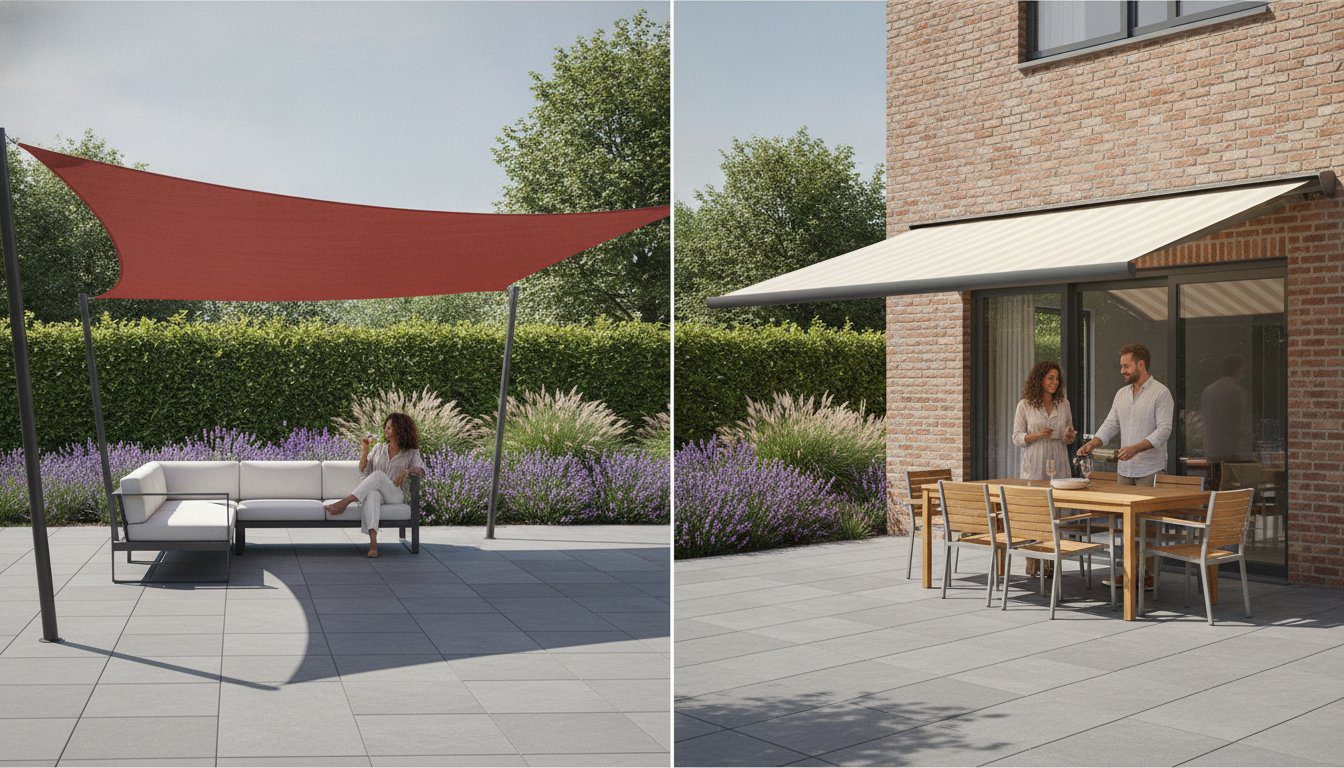
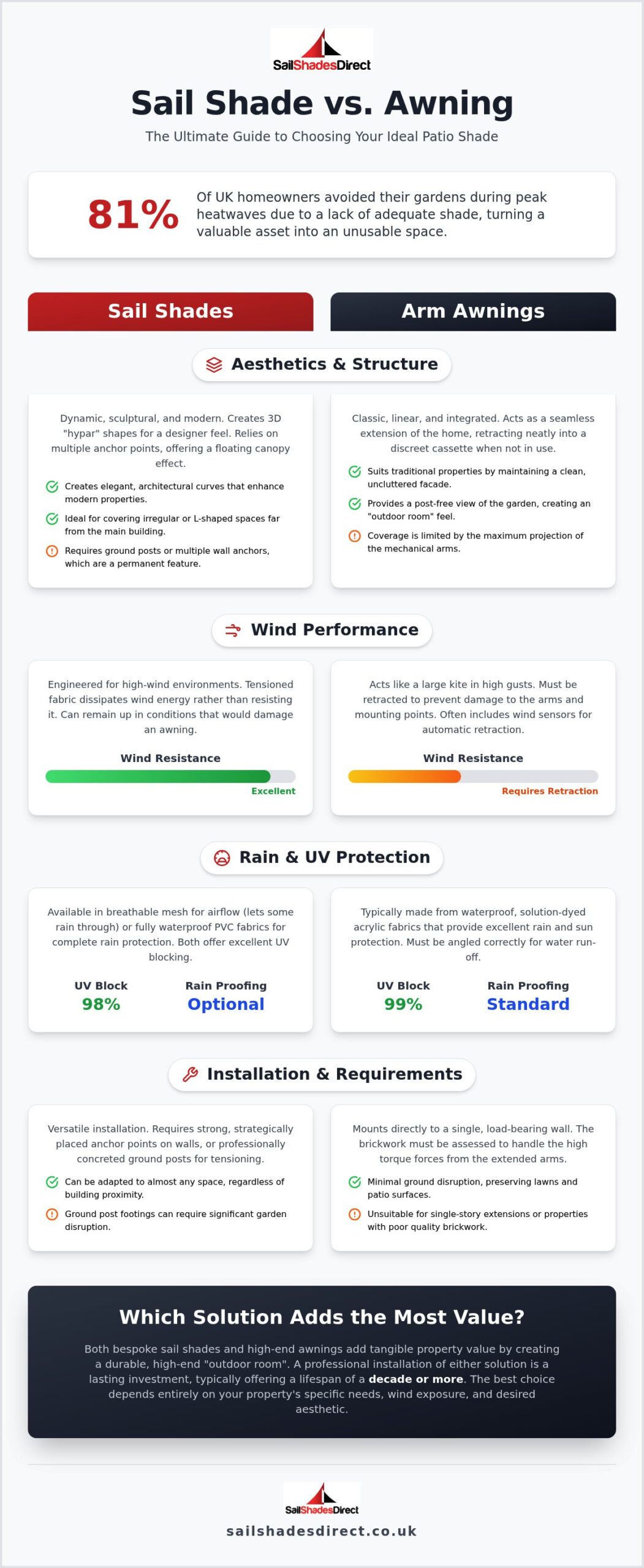
Choosing a sail shade vs awning for patio use isn’t just about picking a favourite colour; it’s an architectural decision that defines how you interact with your garden. Awnings offer a classic, linear look that feels like a permanent extension of your home’s interior. In contrast, sail shades provide a more dynamic, sculptural feel that can transform a flat space into a three-dimensional landscape. Understanding what a shade sail is helps clarify this distinction. It is a tensioned fabric structure that relies on multiple anchor points to create a floating canopy. While an awning typically mounts to a single wall, a sail shade can stretch across irregular spaces, reaching awkward corners that a standard retractable arm simply cannot cover.
This difference in structural footprint is a vital consideration for UK properties. A sleek, modern new-build might benefit from the sharp, geometric angles of a sail, whilst a traditional cottage often suits the tidy, retracted profile of an awning. If your patio has an unusual L-shape or sits at a distance from the main building, the versatility of sail anchors becomes a genuine game-changer. You aren’t limited by the reach of a mechanical arm; you can position posts exactly where they’re needed to maximise your usable space.
The Architectural Appeal of Bespoke Sail Shades
Bespoke sail shades aren’t just flat pieces of fabric. By varying the height of each anchor point, we create 3D “hypar” shapes, also known as hyperbolic paraboloids. These elegant curves aren’t just for show; they encourage constant airflow and prevent hot air from pooling underneath the canopy. It’s a designer look that makes your patio feel like a curated gallery. To avoid the unsightly, saggy appearance often seen with cheap retail kits, professional bespoke fabrication is essential. Correct tensioning ensures the fabric remains taut and vibrant amongst your garden foliage, even when the British wind picks up.
The Mechanical Precision of Modern Arm Awnings
If you value a “now you see it, now you don’t” approach, a retractable arm awning is hard to beat. These systems integrate seamlessly with your building’s facade, retracting into a discreet, weather-proof cassette when they aren’t needed. They create an “outdoor room” feeling in seconds, providing immediate overhead shelter without the need for permanent ground posts. For those with larger, more exposed patios, heavy duty arm awnings offer incredible stability. They use high-grade aluminium arms to project far out over your dining area, maintaining a clean, post-free view of your garden landscaping.
Weather Performance and Durability in the British Climate
The UK’s coastal winds and sudden downpours test even the most premium garden installations. When weighing up a sail shade vs awning for patio longevity, the decision often rests on your garden’s unique “wind-map”. Retractable arm awnings are exceptional for sun protection, but they act like a massive sail in a storm. To prevent frame damage, they must be retracted during high gusts. Bespoke sail shades are engineered differently. They use perimeter tensioning and high-grade stainless steel hardware to remain stable in winds that would buckle a standard awning. Both systems provide excellent UV protection, shielding your skin and preventing your favourite patio furniture from fading under the summer sun.
Managing Wind Loads and High-Exposure Sites
For coastal or hilltop properties where wind is a constant factor, a fixed bespoke sail is often the superior choice. These structures are designed to dissipate energy through the fabric rather than resisting it with a rigid mechanical frame. We focus heavily on the quality of anchor points, ensuring they meet professional building and safety codes for structural loads. Whilst a retractable awning offers the convenience of being tucked away in the damp winter months, a well-tensioned sail can handle significantly higher wind loads during its active season. If your patio is particularly exposed, the structural integrity of a bespoke sail offers a level of “can-do” reliability that standard retail kits simply cannot match.
Waterproofing vs Breathability: Finding the Balance
Choosing the right fabric is a trade-off between airflow and rain protection. Breathable mesh sails are brilliant for hot days; they allow heat to rise through the fabric, keeping the area underneath noticeably cooler. However, if you want to sit outside whilst it drizzles, you’ll need a different approach. For those requiring total rain management, waterproof sail shades made from high-density PVC are the ideal solution. These require a specific pitch and high tension to ensure water runoff, preventing the “pooling” effect that can stretch fabric over time.
If you’re unsure which fabric best suits your local microclimate, our expert team can assess your site’s specific exposure and help you find the perfect balance. Whether you opt for a sail shade vs awning for patio cover, ensuring the system handles the damp UK winter without mould or structural fatigue is our top priority. We believe every project should be a long-term investment that adds both function and value to your home.
Installation Complexity and Structural Requirements
Installing a professional shading system involves far more than just drilling a few holes. The primary challenge when debating a sail shade vs awning for patio use is understanding the structural load each system places on your property. While an awning focuses its weight on a specific section of wall, a sail shade distributes tension across multiple points, often requiring a combination of wall anchors and heavy-duty ground posts. It’s a choice between a single, high-torque mounting point and a multi-point tensioned network.
UK brickwork varies wildly, from modern cavity walls to solid Victorian masonry. Assessing the torque of a large arm awning is critical because the leverage exerted by the extended arms can be immense, especially during a sudden gust of wind. For older homes, we often use bespoke spreader plates to distribute this load across a wider surface area, preventing damage to the mortar or bricks. Planning permission is usually not required for either solution under “permitted development rights” in the UK, provided the installation is at the rear and remains proportionate to the house. However, it’s always wise to check with your local authority if you live in a conservation area or a listed building where stricter rules apply.
Anchor Points and Tensioning: The Sail Shade Setup
The beauty of a tensioned sail lies in its “drum-tight” finish. Achieving this requires marine-grade stainless steel turnbuckles and perimeter cables that can withstand hundreds of kilograms of force. We often install bespoke powder-coated steel posts set in deep concrete footings to act as primary anchors. This level of engineering is what distinguishes architectural sail shades UK from flimsy DIY alternatives. Unlike a fence post, which will eventually lean or snap under the constant pull of a tensioned fabric, these structural posts ensure your shade remains stable and safe for years to come.
Wall Mounting and Weight Distribution for Awnings
Awnings require a different kind of precision. Because the entire weight of the cassette and the projection of the arms rests on a single mounting line, the height and location of the brackets are non-negotiable. Proper pitch is essential to allow rainwater to run off, but it also ensures enough head clearance so the patio remains functional. Professional fitting is vital here; incorrectly mounted brackets can lead to water ingress or structural stress that compromises your home’s exterior. By using high-load anchors and ensuring the wall is structurally sound, we create a secure outdoor environment that feels like a natural extension of your living space.
Versatility and Ease of Use: Manual vs Motorised Systems
How much effort do you want to spend adjusting your shade as the sun moves across the sky? When comparing a sail shade vs awning for patio use, the level of daily interaction is a major factor. Traditional sail shades are static, providing a “set and forget” solution that remains in place throughout the season. Manual awnings, on the other hand, rely on a hand-crank system. Whilst these are reliable and cost-effective for smaller patios, they require physical effort every time the weather shifts. If you’re looking for a reprieve from the heat without the heavy lifting, modern motorised systems have completely changed the landscape of outdoor living.
Motorisation doesn’t just add convenience; it actually protects your investment. High-end systems now feature integrated sun and wind sensors. These smart components automatically deploy the shade when the temperature rises and retract it if the wind exceeds safe limits. This proactive behaviour prevents the fabric from over-stretching or the frame from suffering structural stress whilst you’re away from home. It’s a level of automated care that manual systems simply can’t match, ensuring your fabric stays taut and vibrant for years longer than a manually operated equivalent.
The Rise of Motorised Rolling Sun Sails
For a long time, homeowners had to choose between the architectural beauty of a sail and the functionality of a retractable awning. This is no longer the case. The latest innovation in the UK market is the rolling sun sail. These “hybrid” systems offer the striking, triangular or rectangular look of a sail but retract along a diagonal profile or a central mandrel. Choosing motorised rolling sun sails allows you to cover vast areas that a standard awning couldn’t reach, all with the touch of a button or a smart home command. It’s the ultimate premium choice for modern terraces where style and ease of use are equally important.
Retractable Awnings: Instant Shade at the Touch of a Button
If you prefer a traditional look, modern arm awnings have also seen a technological leap. You can choose between full-cassette models, where the fabric is completely enclosed when retracted, or open-style versions for more sheltered spots. To turn your patio into a true evening destination, many of our systems now include:
- Integrated LED lighting strips built directly into the arms.
- Dimmable infrared heaters for those chilly British evenings.
- Smartphone integration to schedule your shade based on the local forecast.
Whether you’re leaning towards a rolling sail or a classic arm awning, adding a motor ensures you’ll actually use the space you’ve created. Why struggle with a manual crank when you can enquire about our motorised installation services and start enjoying effortless patio protection today?
Making the Investment: Which Solution Adds Most Value?
When you’re deciding on a sail shade vs awning for patio enhancement, it’s easy to focus solely on the upfront cost. However, the true value lies in longevity and how the structure integrates with your lifestyle. A well-maintained garden can add an average of 13% to a UK property’s value. To achieve this, you need a solution that looks as good in five years as it does on day one. Whilst budget retail kits might seem tempting, they often lack the UV stabilisers and structural reinforcement required to survive more than a single season. In contrast, our bespoke systems are engineered to last between 10 and 15 years, providing a much lower cost-per-year than the “buy-it-twice” retail alternative.
High-quality installations do more than just provide shade; they boost kerb appeal and create a functional outdoor room that buyers covet. This is particularly true for businesses, where commercial shading solutions UK have become a standard requirement for hospitality venues looking to maximise outdoor covers. Whether it’s a domestic terrace or a commercial courtyard, a design-led approach ensures that the final result complements the existing architecture perfectly. This is where the consultative “Jamie” touch makes the difference. By understanding your specific needs from the start, we eliminate the risk of buyer’s remorse and ensure your investment delivers genuine joy every summer.
Comparing Longevity and Maintenance Cycles
Bespoke fabrics are treated to resist mould, mildew, and fading, which is essential in the damp UK climate. Maintenance for both systems is relatively straightforward but necessary. For awnings, this involves checking the mechanical arms and ensuring the cassette is free of debris. For sail shades, an annual check of the turnbuckles and perimeter tension ensures the fabric remains “drum-tight”. Taking the time for these simple checks prevents structural fatigue and keeps the system operating smoothly. By choosing quality materials from the outset, you’re investing in a system that won’t require constant repairs or premature replacement.
Bespoke Design: Tailoring the Solution to Your Patio
Every garden has its own microclimate and orientation. A professional site survey is the only way to identify hidden obstacles, such as underground services or fragile brickwork, before the installation begins. We help you choose the right fabric grade and colour to match your garden’s aesthetic, ensuring the shade feels like a deliberate architectural choice rather than a clunky addition. If you’re ready to transform your outdoor space with a durable, stylish solution, contact Sail Shades Direct for a bespoke design consultation. We’ll help you navigate the technical details to find the perfect fit for your home.
Elevate Your Garden for 2026 and Beyond
Deciding on a sail shade vs awning for patio use ultimately comes down to your garden’s unique wind profile and your personal style. Whether you’re drawn to the sculptural beauty of a tensioned sail or the classic, retractable convenience of an arm awning, the right choice will turn your garden into a year-round retreat. We’ve explored how structural integrity, fabric breathability, and smart motorisation all play a part in creating a space that adds genuine value to your home whilst protecting you from the elements.
You don’t have to navigate these technical decisions alone. With over 10 years of bespoke UK installations, Jamie and the team bring a wealth of experience to every project. We use only high-grade marine stainless steel hardware to ensure your investment stands up to the most challenging British weather. Ready to take the next step? Book your bespoke patio shading consultation with Sail Shades Direct today and let’s start designing your perfect outdoor room. We’re ready to help you reclaim your garden and make the most of every sunny day.
Frequently Asked Questions
Do I need planning permission for a sail shade or awning in the UK?
Planning permission is generally not required for residential properties in the UK as most retractable awnings and reasonably sized sail shades fall under permitted development rights. When considering the sail shade vs awning for patio debate, you’ll find that both usually avoid the need for formal applications. However, you should always consult your local authority if your home is a listed building or situated in a conservation area.
Can I leave my sail shade up all winter?
You should not leave your sail shade up throughout the winter months. Whilst bespoke materials are highly durable, the weight of accumulated snow or the expansion of ice within the fabric fibres can cause permanent stretching and structural fatigue. Retractable awnings should also remain in their protective cassettes during the winter. Storing your shade solution during the coldest months ensures it remains in peak condition for years.
Which is better for wind: a sail shade or an awning?
A bespoke, tensioned sail shade is typically more resilient in high winds than a standard retractable arm awning. Because sails are engineered with perimeter tensioning and high-grade stainless steel hardware, they can often withstand significant gusts that would require an awning to be retracted to prevent frame damage. For the best protection, motorised systems with automatic wind sensors provide active security by retracting the fabric when conditions become unsafe.
How much does a bespoke patio awning cost compared to a sail shade?
The investment required for a bespoke patio awning is generally higher than a static sail shade because of the complex mechanical components involved. When evaluating a sail shade vs awning for patio investment, consider that bespoke solutions are designed for a 10 to 15 year lifespan. Whilst an awning requires more moving parts, a sail shade requires precision engineering and structural posts to maintain its longevity.
Can a sail shade be attached to a house wall safely?
Yes, a sail shade can be attached to a house wall provided the brickwork is structurally sound and professional grade anchors are used. Because tensioned sails exert significant pull on a building, we often use bespoke spreader plates to distribute the load safely across multiple bricks. This prevents structural stress and ensures the anchor point remains secure. It is vital to avoid attaching sails to fragile garden walls.
Are sail shades and awnings fully waterproof for the UK rain?
Bespoke shading solutions offer varying levels of rain protection depending on the fabric you choose. High-density polyethylene mesh sails are water-resistant and breathable, allowing heat to escape whilst shedding light rain. For total protection, we offer fully waterproof PVC fabrics. These require a specific pitch and high tension during installation to ensure water runoff, preventing the pooling that can occur during heavy UK downpours and cause damage.
What is the difference between a rolling sun sail and a standard sail shade?
The primary difference is that a rolling sun sail can be retracted, whereas a standard sail shade remains static once installed. Rolling sails offer a hybrid solution, combining the architectural aesthetic of a tensioned sail with the functional flexibility of an awning. These premium systems allow you to deploy the fabric at the touch of a button, making them an ideal choice for modern terraces where adaptable shade is required.
How do I clean and maintain my bespoke patio shading?
Cleaning your bespoke patio shading is straightforward and should be done with a soft brush and mild, lukewarm soapy water. Avoid using pressure washers or harsh chemical cleaners, as these can strip the protective UV and mould-resistant coatings from the fabric. To maintain your system, perform an annual check of all stainless steel hardware and tensioning turnbuckles. Keeping the fabric taut prevents wind damage and ensures your patio remains comfortable.