
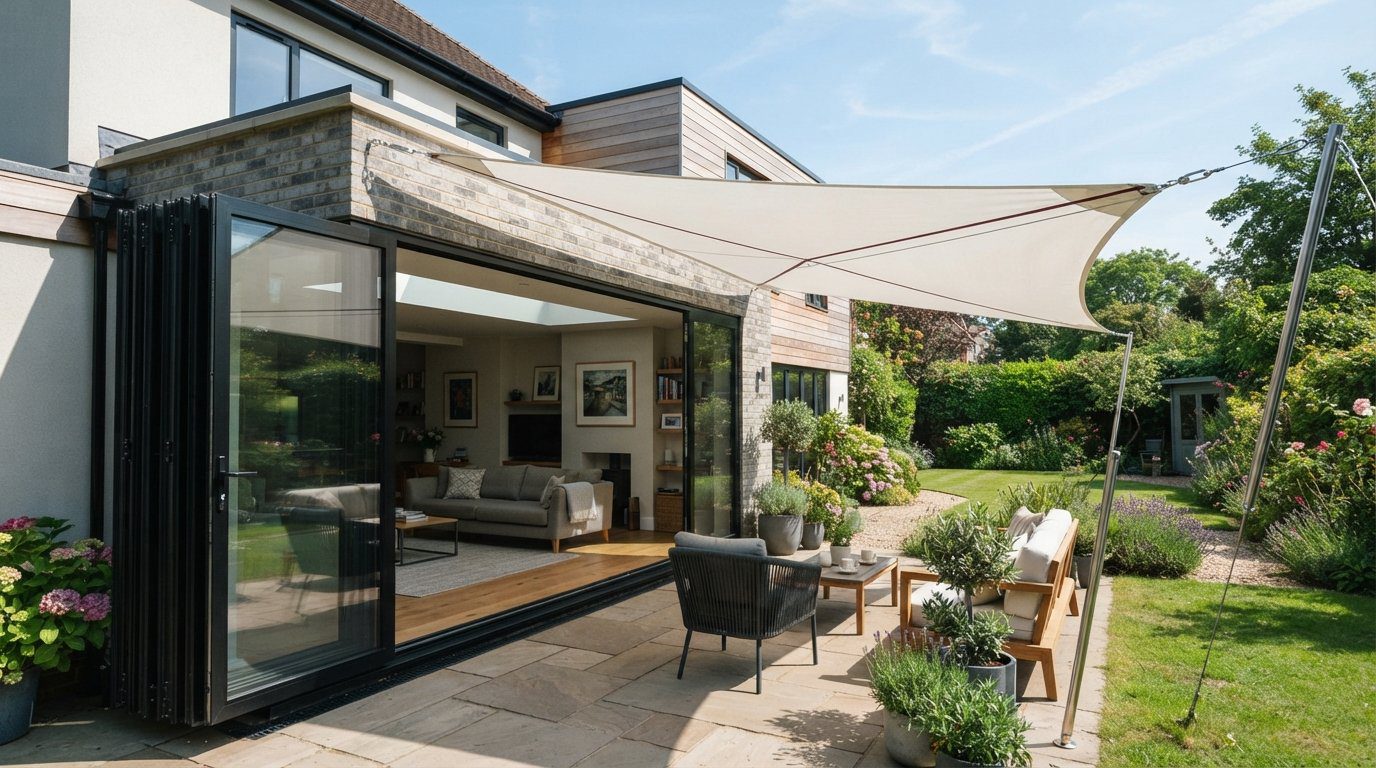
Reducing Sun Glare on Bi-fold Doors: Complete UK Guide
Drawing heavy curtains across wide glass panels completely defeats the purpose of opening your home to the garden. If you are struggling with reducing sun glare on bifold doors, you already know the frustration of watching a bright, airy living space turn into an uncomfortably hot greenhouse by mid-afternoon. You invested in architectural glazing to enjoy panoramic outdoor views, not to spend sunny days squinting at reflections on kitchen worktops or television screens while flimsy internal blinds flap noisily in the breeze.
You shouldn’t have to choose between a comfortable open-plan living room and your natural daylight. In this complete guide, you’ll discover proven exterior shading strategies that stop harsh solar rays before they ever strike the glass, eliminating blinding glare and preserving your clear line of sight to the lawn whilst enhancing your home’s architectural appeal. We’ll explore durable outdoor systems engineered to keep your extension cool, beautifully shaded, and effortlessly usable throughout the brightest British summers.
Key Takeaways
- Learn why intercepting solar rays outside the building envelope prevents harsh light and radiant heat before they ever reach the glazing.
- Discover why precision exterior shading systems outperform internal coverings when reducing sun glare on bifold doors.
- Explore bespoke outdoor installations, including tensioned sail shades, arm awnings, and exterior blinds, that preserve unbroken garden views without cluttering slimline door frames.
- Identify crucial structural factors, from structural lintel fixings to fabric weave density, required to achieve long-term durability and optimum visual comfort.
- Understand the complete journey from site assessment to bespoke engineering, ensuring your shading system perfectly complements wide architectural openings.
Understanding Sun Glare on Bifold Doors: Causes and Challenges
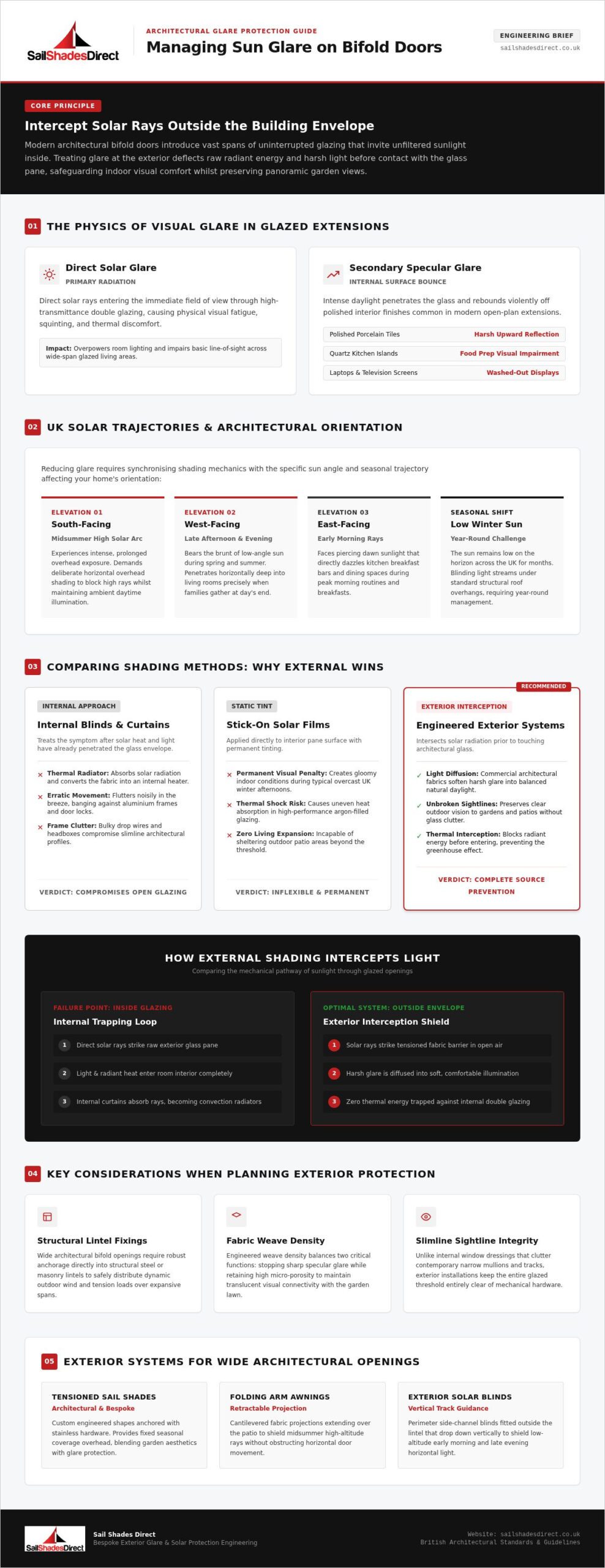
Solar glare occurs when excessive visual brightness floods an interior, causing immediate physical discomfort, squinting, and reduced visibility. Expansive glazed doors amplify this problem dramatically. Modern bifold systems introduce wide spans of uninterrupted glass that invite raw sunlight straight into your home. Once inside, that intense illumination bounces directly off polished porcelain flooring, glossy cabinetry, and quartz kitchen islands. This creates secondary reflective glare across living spaces, making everyday tasks, from preparing meals to relaxing with family, distinctly uncomfortable.
The Physics of Visual Glare Through Architectural Glass
Modern double glazing is manufactured to maximise visible light transmittance, keeping rooms feeling bright and open. However, clear architectural glass does little to soften direct visual luminance. Glare fundamentally splits into two categories: direct solar rays entering your field of view, and specular reflections that bounce off polished domestic surfaces. Specular glare proves particularly disruptive for anyone working remotely, as harsh reflections easily wash out laptop displays and television screens. While basic internal window coverings attempt to mask this problem from the inside, they often compromise the minimalist look of your frames and do nothing to prevent solar energy from penetrating the glass envelope.
Orientation and Seasonal Sun Trajectories Across the UK
Shifting solar trajectories across the British seasons dictate exactly when and how glare strikes your glazing. Effectively reducing sun glare on bifold doors depends on addressing the specific path of the sun relative to your property:
- South-facing elevations: Experience intense, prolonged overhead exposure during midsummer, requiring deliberate overhead shading to stop overhead rays whilst maintaining natural daytime light.
- West-facing extensions: Bear the brunt of low-angle evening sun during spring and summer. These horizontal rays project deep into open-plan living areas, producing intense glare precisely when families gather at the end of the day.
- East-facing rooms: Face piercing early morning sunlight that can dazzle kitchen breakfast bars and dining tables during peak morning routines.
Low-altitude winter sun presents another challenge right across the UK. Because the sun sits close to the horizon for months, blinding light streams under standard roof overhangs, proving that managing solar glare requires year-round consideration.
Exterior vs Interior Solutions: Why External Shading Wins
When searching for ways of reducing sun glare on bifold doors, many homeowners instinctively consider interior coverings or stick-on films. However, treating solar glare from inside the room addresses the symptom rather than the cause. Once raw sunlight passes through glazing, the energy has already entered your home. Exterior shading tackles the problem at the source by intercepting and deflecting solar rays before they ever strike the glass.
The Drawbacks of Conventional Interior Blinds and Curtains
Internal blinds create distinct operational headaches along wide glazed openings. During summer, when you want to slide your doors open to catch a breeze, internal fabrics flutter erratically, bang against aluminium frames, and snag on locking mechanisms. They also act as an unintended thermal radiator. Fabric blinds absorb direct sunlight and transfer that heat straight into your living space. Furthermore, bulky headboxes and intrusive drop wires clutter the minimalist sightlines that modern bifold doors were chosen to deliver.
Why Solar Window Film Often Disappoints Homeowners
Stick-on solar window films present a different set of compromises. Adding a dark, static tint creates a permanent visual penalty, leaving open-plan kitchens feeling gloomy during typical overcast UK winter afternoons. Certain films also increase the risk of thermal shock fractures in high-performance, argon-filled double glazing by causing uneven heat absorption across the pane. Crucially, a static surface film cannot provide flexible shading or create a comfortable outdoor living zone beyond the threshold.
Exterior Shading: Intercepting Light Before Contact
Exterior systems solve visual discomfort without compromising your living space. Commercial-grade architectural fabrics diffuse blinding direct light into soft, natural illumination whilst preserving a crisp, uninterrupted view of your garden. Intercepting sunlight externally also shields furnishings and occupants from prolonged exposure, helping mitigate risks outlined in research on the Health Effects of UV Radiation.
By preventing solar radiation from warming the glass, exterior shading keeps open-plan rooms naturally cooler during summer heatwaves. Investing in precision exterior shading from Sail Shades Direct not only eliminates harsh indoor glare, but also extends your living environment seamlessly onto the patio.
The Best Outdoor Shading Systems for Wide-Span Bifold Doors
Shielding wide architectural glazing demands structural systems engineered to handle continuous outdoor exposure while preserving clean sightlines. When looking at effective solutions for reducing sun glare on bifold doors, the ideal choice depends on your patio layout, door opening mechanisms, and sun exposure. Rather than relying on makeshift parasols or ill-fitting covers, investing in purpose-built exterior shade provides permanent comfort and refined curb appeal.
Bespoke Tensioned Sail Shades and Rolling Sun Sails
Custom fabric sails sculpt light across wide glazed apertures without introducing cumbersome hardware. Hyper-parabolic tensioned designs allow you to set precise angles that block blinding light while keeping your outdoor views completely open. For properties requiring dynamic control, automated rolling sun sails extend or retract along a central drive shaft at the press of a button. Exploring bespoke sail shades UK homeowners trust shows how custom fabric engineering pairs tailored sun coverage with striking architectural styling.
Heavy-Duty Retractable Arm Awnings
Retractable cassette awnings mount cleanly above exterior door lintels, projecting forward to provide broad, column-free overhead shade. Because their folding arms support the fabric without ground posts, your terrace remains open for entertaining. Choosing systems with adjustable pitch mechanisms allows you to alter the canopy angle, ensuring low-altitude afternoon light cannot sneak beneath the fabric. Reviewing the criteria for heavy duty arm awnings ensures your chosen system withstands British coastal and inland wind conditions.
Vertical Exterior Blinds for Flush Architectural Openings
Where direct, low-angle light strikes an exposed elevation, vertical exterior drop blinds offer targeted solar defence. Engineered zip-channel side guide tracks lock the fabric edges securely in place, preventing buffeting when fresh garden breezes blow through an open doorway. Selecting an appropriate openness factor balances visual glare control with crystal-clear outward views. Examining engineered exterior blinds for patios helps you match high-wind performance ratings to your property’s specific exposure level.
Whether choosing sleek drop blinds, flexible awnings, or tensioned sails, precision-tailored systems deliver consistent performance for reducing sun glare on bifold doors while expanding your usable living space.
Key Considerations When Planning Exterior Bifold Sun Protection
Planning outdoor shading requires balancing visual performance with structural engineering. Wide glass openings create substantial spans that lack the standard masonry anchor points found in older properties. To succeed in reducing sun glare on bifold doors over the long term, you need to account for your wall construction, local wind patterns, and fabric specifications before choosing a system.
Structural Integrity and Mounting Substrates
Modern extensions often feature steel goalpost frames, lightweight timber studwork, or external wall insulation beneath rendered facades. Securing heavy-duty arm awnings or tensioned sail points into these substrates requires specialist hardware:
- Cavity walls and thermal blocks: Standard expansion plugs risk cracking aerated blockwork. Chemical resin anchor bolts paired with structural spreader plates distribute lateral loads safely across multiple brick courses.
- Steel lintel integration: Where structural steel beams run directly above door heads, custom brackets must clamp or tap directly into the steel flanges without compromising structural integrity.
- Freestanding posts: If the building facade lacks sufficient mounting height or load-bearing capacity, ground-mounted structural steel or timber posts provide independent anchoring points.
Fabric Selection: Colour, Opacity, and Light Filtration
Fabric colour plays an unexpected role in visual comfort. Darker external textiles absorb more incoming visible light, delivering superior glare reduction and crisper outward visibility through micro-perforated weaves. Lighter fabrics reflect more solar energy away from the house, but they can create a slightly luminous surface when viewed from inside. Choosing commercial-grade, UV-stabilised synthetic yarns treated with anti-fungal coatings ensures your fabric resists rot and fading throughout damp UK winters.
Wind Loadings, Weather Sensors, and Automation
British weather can shift from calm sunshine to blustery showers in minutes. Intelligent vibration and anemometer sensors protect retractable systems by automatically stowing fabric awnings whenever gusts exceed safe operating thresholds. Integrating tubular motors with smart home controllers allows your shade to adjust dynamically according to the sun’s position. This ensures continuous comfort while reducing sun glare on bifold doors throughout the day.
Before proceeding, check local planning rules. Most rear-facing domestic installations fall within Permitted Development, but properties in conservation areas or listed buildings often require formal approval. To ensure your structural mounting, fabric choice, and wind ratings are properly calculated, contact the team at Sail Shades Direct for bespoke technical guidance.
Selecting and Installing Your Custom Shading System
Achieving lasting solar control requires moving beyond off-the-shelf retail products. Mass-produced retail kits rarely match wide architectural dimensions, leaving unsightly gaps where intense light bleeds through. A successful installation follows a structured journey, progressing from an initial structural assessment and dimensional survey through bespoke manufacturing to meticulous final commissioning on site.
The Advantage of Bespoke Engineering Over Standard Sizes
Every home extension features unique architectural nuances, lintel heights, and glazing proportions. Custom sizing eliminates peripheral light leaks, which is essential for successfully reducing sun glare on bifold doors across broad multi-panel openings. Tailored manufacturing also incorporates high-tensile 316 marine-grade stainless steel rigging that withstands blustery coastal conditions without stretching. Additionally, mounting brackets, cassettes, and side channels can be powder-coated to match specific RAL frame colours, seamlessly integrating the hardware with your contemporary aluminium architecture.
Professional Installation and Ongoing Fabric Care
Experienced installers ensure heavy structural brackets anchor safely into load-bearing masonry or structural steelwork without compromising building warranties or exterior thermal cladding. Once commissioned, routine maintenance remains minimal and straightforward:
- Spring cleaning: Gently rinse fabric surfaces with lukewarm water and a soft sponge to remove seasonal dust and pollen build-up.
- Debris removal: Regularly brush away fallen leaves, twigs, and organic matter from roller cassettes and side channels to prevent binding.
- Winter protocols: Retract motorized systems during extreme gale-force storms, or unclip tensioned seasonal sails to protect structural fixing points during prolonged freezing weather.
Transforming Your Living Space with Tailored Shading
Effective exterior solar defence changes how you live in your home. Instead of abandoning an overheated kitchen or drawing dark curtains at the first sign of summer sun, you retain an open, comfortable living space filled with soft, filtered daylight. You can read, cook, work on laptops, and entertain guests while enjoying an uncompromised line of sight to your garden.
Investing in a custom outdoor shading solution represents an architectural upgrade that protects your interior finishes, improves day-to-day visual comfort, and enhances outdoor living. By choosing bespoke systems engineered specifically for reducing sun glare on bifold doors, you can make the most of your wide-span glass in every season.
Take Control of Your Light and Protect Your Garden View
Living with expansive architectural glazing shouldn’t mean enduring blinding reflections or sweltering summer afternoons. Intercepting solar rays externally stops uncomfortable heat and visual brilliance before it ever touches the glass, keeping your interior calm, cool, and naturally illuminated. Precision exterior shading delivers the ideal balance between everyday indoor comfort and an open, uninterrupted line of sight across your lawn, proving that reducing sun glare on bifold doors doesn’t require living behind closed curtains.
With over a decade of British design and manufacturing expertise, Sail Shades Direct combines commercial-grade marine hardware with high-tensile architectural fabrics engineered to withstand unpredictable UK weather. Backed by our nationwide design, custom fabrication, and professional fitting service, our team tailors every detail to your home’s unique dimensions. Ready to transform your open-plan extension into a comfortable year-round retreat? Explore bespoke outdoor shading solutions with Sail Shades Direct and make the most of your living space in every season.
Frequently Asked Questions
Can I stop sun glare on bifold doors without making my room dark?
Yes, precision-engineered exterior fabrics diffuse blinding visual glare while still transmitting soft, natural daylight into your living space. Micro-perforated composite textiles filter out intense direct rays without creating a gloomy indoor environment. You maintain clear outward visibility towards your lawn and flowerbeds, achieving the ideal balance of visual comfort and natural light when reducing sun glare on bifold doors.
Will an exterior awning or sail shade damage my house wall?
Properly engineered installations will not damage your masonry or facade. Specialists use heavy-duty spreader plates and chemical resin anchoring systems to distribute structural tension and lateral wind forces across multiple brick courses. When installing above wide glazed apertures with steel lintels, custom brackets clamp safely to structural flanges, ensuring zero risk to exterior wall insulation, render, or window framing.
Do dark-coloured outdoor fabrics reduce glare better than light fabrics?
Dark fabrics provide significantly better visual glare reduction than lighter alternatives. Charcoal, slate, and anthracite yarns absorb visible light wavelengths rather than scattering them, which dramatically reduces indoor reflections on screens and worktops. They also offer crisper outward visibility through the weave. Lighter fabrics reflect more overall thermal energy, but darker tones deliver superior optical clarity from the inside.
How do exterior blinds cope with strong British winds?
Exterior blinds designed for exposed patios use heavy-duty zip channels welded directly to the fabric edges. These side tracks lock the fabric tightly into aluminium guide rails, preventing the material from flapping, blowing out, or rattling during fresh gusts. Integrated wind and vibration sensors can also monitor sudden squalls, automatically retracting the screen into its protective cassette if conditions exceed safe operating thresholds.
Do I need planning permission to install external shading over patio doors?
Most rear-facing domestic shading installations fall under UK Permitted Development rights and do not require formal planning applications. However, if your property is listed, located within a designated Conservation Area, or situated within an Area of Outstanding Natural Beauty, local restrictions often apply. Shading systems planned for the front elevation of a house typically require planning consent, so checking with your local authority beforehand is wise.
What is the difference between an arm awning and a rolling sun sail for bifold doors?
Heavy-duty arm awnings project horizontally from a wall-mounted cassette using folding spring-tensioned arms, providing self-supporting overhead patio shelter without ground posts. Rolling sun sails utilise high-tensile fabric suspended between wall brackets and dedicated upright masts, extending along a central motorised drive shaft. While awnings offer classic overhead coverage directly above lintels, rolling sails can span broader, asymmetrical architectural footprints across wider gardens.
Can external shading systems help lower indoor summer temperatures?
External shading significantly reduces indoor room temperatures by intercepting solar radiation before it hits the glass envelope. Once sunlight penetrates double glazing, heat traps inside via the greenhouse effect, raising ambient air temperatures. Blocking up to ninety percent of raw solar heat on the outside keeps glass surfaces cool, naturally preventing extensions from overheating and reducing the need for mechanical cooling.