
Exterior Blinds for Patios: The 2026 UK Guide to Bespoke Outdoor Comfort
What if your patio wasn’t just a seasonal luxury but a high-performance extension of your home that stays perfectly cool even when the British sun is at its peak? Many homeowners find that their stunning bifold doors or glass extensions quickly turn into greenhouses, whilst cheap, off-the-shelf shades often end up flapping or tearing at the first sign of a breeze. You deserve a space that offers total privacy and comfort without the stress of constant maintenance. Choosing the right exterior blinds for patios is about more than just shade; it is about engineering a thermal envelope that works for your lifestyle.
We agree that your outdoor area should be a reliable reprieve from the pressures of daily life, not a source of heat-induced headaches. This guide promises to show you how bespoke exterior blinds can transform your patio into a sophisticated, year-round living space by mastering solar control and weather protection. We will walk you through the latest 2026 design trends, explain the importance of professional fitting for long-term durability, and reveal how these stylish systems can significantly reduce solar heat gain whilst adding genuine value to your property.
Key Takeaways
- Learn why blocking heat before it reaches the glass is eight times more effective than using internal shades to maintain a comfortable temperature.
- Discover how advanced ZIP technology and tensioning systems ensure your exterior blinds for patios remain taut and secure against the wind.
- Identify the specific scenarios where vertical shading offers superior privacy and weather protection compared to traditional awnings.
- Master the science of “Openness Factors” and colour selection to achieve the perfect balance between glare reduction and your garden view.
- Explore how a bespoke, professionally fitted approach can turn even the most complex architectural layouts into a seamless outdoor living room.
Understanding Exterior Blinds for Patios: More than Just a Window Dressing
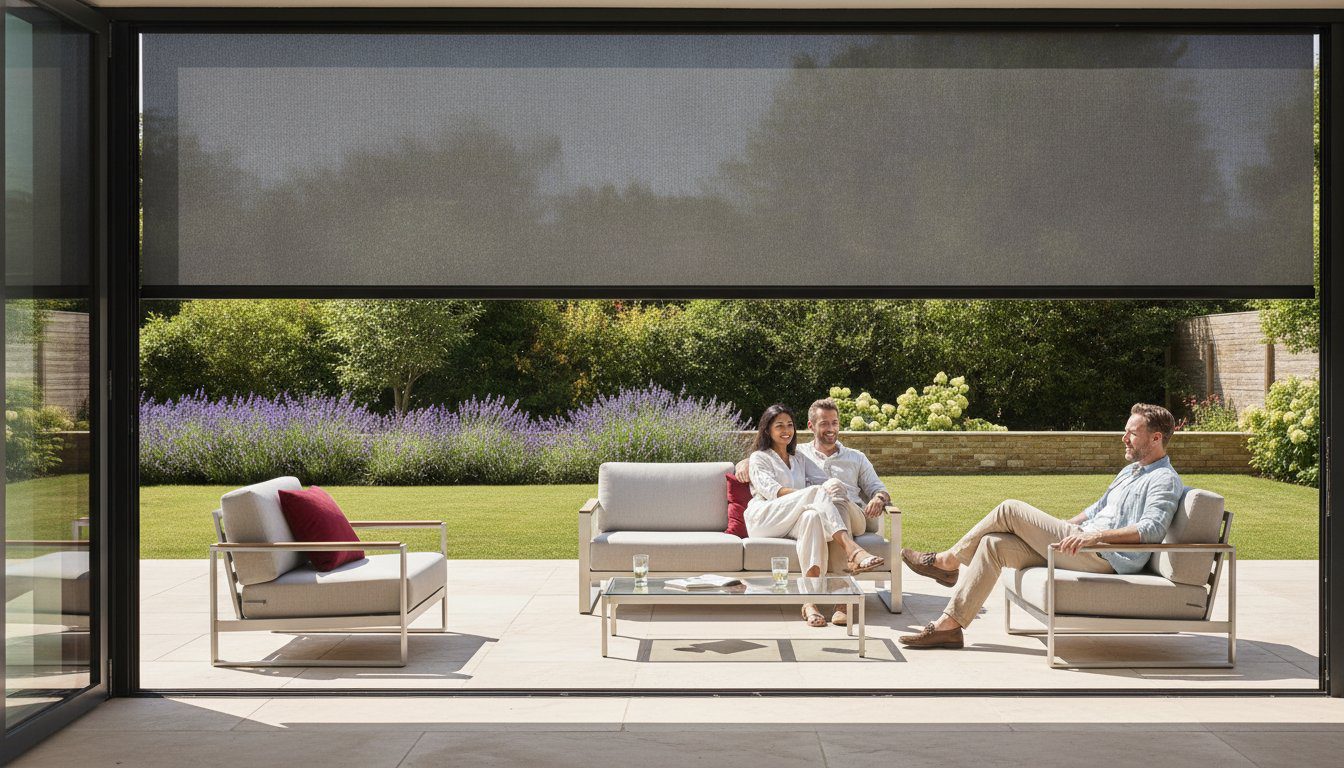
Exterior blinds for patios are precision-engineered vertical shading systems designed to be mounted directly onto your home’s facade or a dedicated patio structure. Unlike traditional curtains or internal rollers, these systems are built to withstand the elements whilst providing a sleek, architectural finish. They don’t just sit in front of the glass; they become a functional part of the building’s thermal envelope. Whilst a traditional awning or overhang provides excellent overhead cover, vertical blinds offer a unique level of control over low-lying sun and lateral winds.
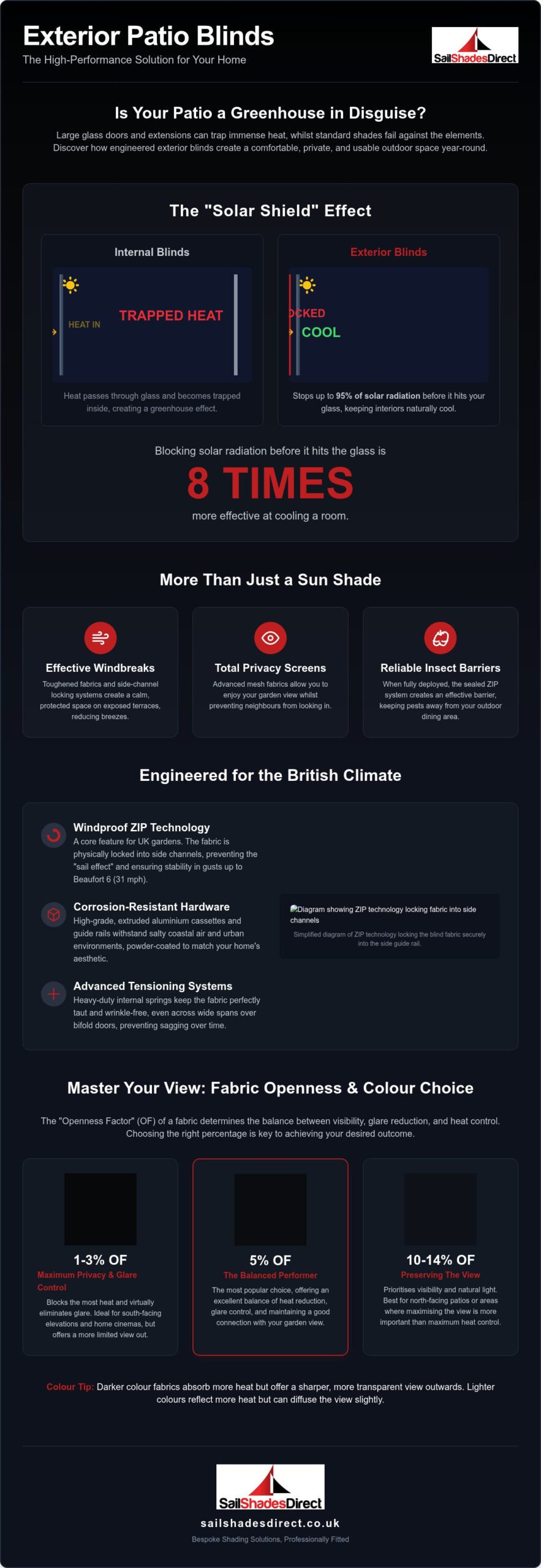
The “Solar Shield” effect is perhaps the most compelling reason to choose external over internal. Scientific data suggests that stopping solar radiation before it hits the glass is up to eight times more effective at cooling a room than using internal blinds. When sun hits an internal blind, the heat is already inside your home, trapped between the fabric and the pane. External systems dissipate this energy into the air outside, keeping your interior spaces naturally cool without the constant hum of air conditioning.
These systems are remarkably versatile. Beyond solar control, they function as:
- Windbreaks: Toughened fabrics and side-channel locking systems help calm the breeze on exposed terraces.
- Privacy Screens: High-tech mesh allows you to see out whilst preventing neighbours from looking in.
- Insect Barriers: When fully deployed, they create a sealed environment that keeps pests away from your evening meal.
Why External Shading Beats Internal Blinds
Internal blinds often lead to the greenhouse effect, where heat builds up and has nowhere to go. High-performance external fabrics are designed to absorb and reflect UV rays before they penetrate your bifold doors. This doesn’t just keep you comfortable; it also protects your favourite furniture and flooring from the fading and damage caused by long-term UV exposure. You’ll enjoy a glare-free environment for reading or watching television without having to sit in a dark, cave-like room.
While external systems excel at heat rejection, your interior spaces still benefit from high-quality finishing touches; for those looking to upgrade their indoor environment, check out Axent Shutters Blinds & Shades LLC for a wide selection of custom interior window treatments.
The Aesthetic Advantage of Integrated Design
We believe that high-end engineering should be felt, not necessarily seen. Our bespoke cassettes can be colour-matched to your existing window frames or bifold doors, ensuring a seamless look that preserves your home’s architectural lines. When retracted, the minimalist profiles virtually disappear. We’ve seen this transform south-facing terraces from sweltering, unused spaces into cool, shaded retreats. For those seeking a comprehensive solution, these blinds can even be used as integrated side panels for heavy duty arm awnings, creating a fully enclosed outdoor room that’s ready for any weather.
The Engineering Behind High-Performance Patio Blinds
High-performance exterior blinds for patios rely on sophisticated engineering to thrive in the unpredictable British climate. Unlike entry-level products that might rattle or tear, professional-grade systems utilise ZIP technology to maintain structural integrity. This windproof ziplock technology is a core feature for UK gardens, as it ensures the fabric is physically locked into the side channels along its entire length. This prevents the “sail effect” where wind gets behind the material and forces it out of the tracks, ensuring your shading stays secure even during a sudden coastal gust.
The hardware matters just as much as the fabric. We utilise high-grade, extruded aluminium for our cassettes and guide rails to ensure they remain corrosion-resistant in both salty coastal air and acidic urban environments. These protective housings can be powder-coated to match your existing window frames, ensuring the engineering looks as good as it performs. Within these cassettes, advanced tensioning systems use heavy-duty springs to keep the fabric taut and wrinkle-free. This is particularly important for wide spans, such as those found over large bifold doors, where lesser blinds might sag or dip over time.
Weather Resistance and the Beaufort Scale
Understanding wind class ratings is vital for any outdoor installation. A blind rated to Beaufort 6 can withstand wind speeds of approximately 25 to 31 mph, which is the point where large branches on trees begin to move and umbrellas become difficult to use. To maintain stability during lighter breezes, we incorporate weighted lead rails at the bottom of the fabric. This adds the necessary ballast to keep the system anchored and prevents the distracting swaying often seen with cheaper alternatives. Designers increasingly recognise that these external systems are more efficient than interior shades because they stop thermal energy before it even reaches the building’s glass.
Smart Operation: Manual vs. Motorised
Intelligence is the final piece of the engineering puzzle. Whilst manual crank handles are a reliable entry-level option, the majority of modern exterior blinds for patios are now motorised for ease of use. These can be fully integrated with your smart home setup, allowing you to control your outdoor comfort via a remote, a smartphone app, or even voice commands.
Automatic sensors offer a “set and forget” solution that protects your home even when you aren’t there. Sun sensors can trigger the blinds to deploy as soon as the solar intensity hits a specific level, keeping your interiors cool throughout the day. Conversely, wind sensors provide a critical safety feature by automatically retracting the blinds if gusts exceed safe operating limits. If you are curious about how these technical solutions would fit your specific space, our team at Sail Shades Direct is always ready to discuss a bespoke configuration that matches your home’s requirements.
Comparing Exterior Blinds with Awnings and Sail Shades
We see every patio as a unique architectural puzzle, and finding the right shading solution is often a matter of geometry rather than just personal taste. Whilst many homeowners start by looking at traditional overhead cover, the unique benefits of exterior blinds for patios often make them the superior choice for modern UK properties. If your primary goal is to block the blinding low-level sun that streams through bifold doors during breakfast or evening drinks, a vertical system is far more effective than a horizontal one. However, you don’t always have to choose just one; many of our clients opt for a hybrid approach, using vertical blinds as integrated side panels for heavy duty arm awnings to create a fully protected outdoor room that guards against both overhead rain and lateral gusts.
Space constraints often dictate the final design of your project. For narrow balconies or urban terraces where every centimetre counts, the compact footprint of a vertical blind cassette is unbeatable. These systems mount flush to the wall or within a structural opening, preserving your architectural lines and floor space. In contrast, fabric sun shades for patios serve a different purpose entirely. They act as permanent, sculptural focal points that can span vast, open garden areas where a wall-mounted blind might not be feasible, offering a more organic and artistic aesthetic to the landscape.
Blinds vs. Awnings: The Vertical vs. Horizontal Debate
The decision usually boils down to the direction of the sun and how you intend to use the space. Awnings are fantastic for “overhead” protection, shielding you from light drizzle and the high midday sun. Blinds provide “side” shelter, which is critical if your patio is overlooked or if you suffer from glare when the sun is lower in the sky. Mounting requirements also differ; blinds require a vertical surface or a frame to run along, whilst awnings need substantial wall depth to support their weight and projection. Blinds are essentially the “walls” of your outdoor room, whereas awnings are the “roof.”
When to Opt for Bespoke Sail Shades
For those with large, expansive gardens, bespoke sails offer a permanent and often more dramatic architectural statement. Unlike retractable roller blinds, which are designed to be tucked away when not in use, sails are engineered to handle more constant exposure. They are particularly effective in high-wind areas where a large retractable blind might be too vulnerable. Because they are tensioned between fixed posts or wall plates, they can cover irregular shapes that a standard roller system simply cannot reach. If you want to ensure your sail investment stands the test of time, our guide on selecting durable outdoor sun sails covers the high-density fabrics and marine-grade hardware that separate long-lasting installations from budget alternatives. For a deeper look at structural requirements and material choices for these permanent installations, you can explore our ultimate guide to bespoke sail shades UK.
Specifying Your Blinds: Fabric, Colour, and Function
Choosing the right fabric for your exterior blinds for patios is a balance of physics and personal style. One of the most critical technical specifications is the “Openness Factor,” which refers to the density of the weave. A 1% openness factor provides a tight weave that blocks almost all glare and offers high heat rejection, whilst a 5% or 10% factor allows for a clearer view of your garden whilst still filtering the sun. We often recommend high-performance PVC-coated fibreglass for these systems because it is incredibly dimensionally stable, meaning it won’t stretch or sag even after years of exposure to the shifting British humidity.
Colour science plays a surprisingly counterintuitive role in outdoor comfort. Whilst many people assume lighter colours are cooler, darker fabrics like charcoal or deep bronze actually provide superior glare control and better heat absorption at the fabric surface. Selecting a darker fabric shade ensures that solar energy is absorbed and dissipated at the blind’s surface rather than being reflected through the glass, which significantly improves the thermal comfort of your patio area. These fabrics are designed to be low-maintenance; a simple rinse with a garden hose and a soft brush is usually all that’s needed to keep them looking pristine.
Protecting Bifold Doors and Large Glass Expanses
Modern bifold doors are a beautiful architectural feature, but they are often the primary cause of domestic overheating during the summer months. Because these glass walls act as huge thermal conductors, standard interior curtains simply can’t cope with the energy transfer. Our wide-span exterior blinds can cover openings of up to 6 metres in a single, seamless run, providing a sleek barrier that stops the heat before it ever touches the pane. For those looking for more specific technical advice on glass-facing installations, you can find further details in our guide to bespoke exterior window blinds.
Privacy and Light Control
Privacy is a major concern for overlooked UK patios, and the right fabric choice can solve this without making you feel boxed in. “Daytime privacy” mesh fabrics allow you to enjoy a clear view of your landscaping whilst appearing as a solid, opaque screen to anyone looking in from the outside. This makes them an ideal choice for home office garden pods or outdoor cinema setups where light control is essential. Whether you need a total blackout for a mid-afternoon movie or a soft filter for a relaxed lunch, we can help you find the perfect match. If you’re looking for a comprehensive overview of the latest bespoke outdoor roller blinds for patio UK installations, our 2026 guide covers everything from fabric selection to smart motorisation options. If you’re ready to see how these fabrics look in person, we invite you to book a bespoke shading consultation with our design team today.
The Bespoke Journey: Designing Your Patio with Sail Shades Direct
At Sail Shades Direct, we don’t believe in “standard” sizes or off-the-shelf compromises. Every garden has its own personality and unique architectural challenges, from non-standard rooflines to particularly exposed coastal terraces. Our “can-do” philosophy means we actively enjoy tackling the complex layouts that others might avoid. We see exterior blinds for patios as more than just a product; they are a collaborative engineering project designed to improve your quality of life. Reclaiming your outdoor space should be an exciting creative journey, not a stressful administrative task.
From your first enquiry, you’ll notice the difference of working with a partner who prioritises craftsmanship and precision. We move quickly from identifying your functional needs to presenting a range of high-end engineered solutions. Precision manufacturing is at the heart of everything we do. Because we build every system to your exact specifications, we ensure a perfect fit that preserves the thermal integrity of your home. As we noted earlier, even small gaps can compromise the solar shielding effect, so we settle for nothing less than millimetre-perfect accuracy.
Professional fitting is the final step in ensuring your investment performs for years to come. Our installers don’t just “bolt things on”; they ensure the structural integrity of the mounting points and fine-tune the tensioning systems for smooth, silent operation. This expert touch reduces the stress of the installation process and guarantees that your blinds will stand up to the unpredictable British weather without rattling or failing.
A Collaborative Design Process
We love working alongside architectural plans for new builds or finding clever ways to integrate with your existing garden structures. A professional site survey is a vital part of our process, allowing us to assess wall suitability and mounting heights before a single piece of fabric is cut. During this phase, we provide personalised advice on colour-matching your cassettes to your bifold door frames or window trim. This attention to detail ensures that your new shading system feels like a natural, integrated extension of your property rather than an afterthought.
National Service, Personal Touch
Whilst we provide a specialised service across the entire United Kingdom, we pride ourselves on maintaining the personal, grounded feel of a local workshop. You get the best of both worlds: the technical mastery of a seasoned national provider and the approachable warmth of a dedicated expert who values every inquiry. We back our pride in craftsmanship with durable hardware guarantees, giving you total peace of mind in your investment. If you’re ready to transform your terrace into a year-round sanctuary, we invite you to enquire about your bespoke exterior blinds today and speak with one of our specialists.
Elevate Your Home with a Custom Shading Sanctuary
Your patio shouldn’t be a space you only enjoy when the conditions are perfect. By integrating high-performance exterior blinds for patios, you are investing in a sophisticated thermal barrier that reclaims your home from the summer heat whilst providing the ultimate private retreat. We’ve explored how advanced ZIP technology and precision-engineered fabrics can turn a sweltering glass extension into a cool, comfortable sanctuary that stands up to the British elements.
With over 10 years of British engineering expertise, our team is dedicated to delivering bespoke designs for every project, regardless of complexity. We handle everything from the initial site survey to a professional national installation service, ensuring your system is fitted to the highest standards. It’s about more than just shade; it’s about creating a durable, integrated solution that adds lasting value to your lifestyle and your property.
Book your expert design consultation for bespoke exterior blinds and discover how a tailored solution can add genuine versatility to your home. We’re ready to help you create an outdoor space you’ll love using every single day!
Frequently Asked Questions
Can exterior blinds for patios be used in the rain?
Yes, you can use these systems in light rain, but they aren’t designed to act as primary rain covers like a solid roof or a waterproof awning. High-quality PVC-coated fabrics are water-resistant and will shed drizzle effectively whilst you enjoy your outdoor space. However, it’s best to avoid rolling them into the cassette whilst they are soaking wet for extended periods. If they do get wet, we recommend extending them once the rain stops to allow the material to air dry naturally.
Are exterior roller blinds windproof?
Professional exterior blinds for patios are highly wind-resistant when equipped with ZIP technology. This system locks the fabric into the side channels along its entire length, preventing it from blowing out even in strong gusts. Many of our systems are rated to Beaufort 6, which covers wind speeds up to 31 mph. Whilst they are incredibly durable, integrated wind sensors provide an extra layer of safety by automatically retracting the blinds if conditions become too extreme for safe operation.
How much do bespoke exterior blinds cost to install?
The cost of installing bespoke systems varies significantly based on the dimensions of your patio and the level of automation required. Factors such as the choice of fabric, the complexity of the mounting surface, and the integration of smart sensors all influence the final investment. Because every project we handle is custom-made to your specific architectural requirements, we recommend a site survey. This allows us to provide an accurate, personalised quote that reflects the unique needs of your property.
Do exterior blinds provide privacy at night?
Night-time privacy depends largely on the “Openness Factor” of your chosen fabric and the balance of light between the two spaces. During the day, solar mesh provides excellent one-way privacy whilst letting you see out. However, if your interior lights are on at night and it is dark outside, the effect can reverse. If total evening privacy is your priority, we suggest choosing a blackout fabric or a very low openness percentage to ensure your patio remains secluded from view.
Can I install exterior blinds on my bifold doors?
Absolutely, bifold doors are one of the most popular and effective applications for these systems. Our bespoke manufacturing allows us to cover large glass expanses of up to 6 metres in a single run, preserving your uninterrupted view. By installing the blinds on the exterior, you stop the sun’s energy before it ever hits the glass. This is far more effective at preventing your living room from overheating than any internal curtain or blind system could ever be.
How do I clean and maintain my outdoor blinds?
Maintaining your outdoor blinds is a straightforward process that ensures they look pristine for years. You should regularly rinse the fabric with a garden hose to remove surface dust and debris. For more stubborn marks, use a soft brush and a mild, non-detergent soap solution. Avoid using pressure washers or harsh chemicals; these can damage the protective UV coating on the fabric and the powder-coated finish of the aluminium hardware. Regular cleaning prevents dirt from becoming embedded in the weave.
Are motorised exterior blinds compatible with smart home systems?
Yes, our motorised exterior blinds for patios are fully compatible with most modern smart home platforms. We use advanced motors that can be linked to hubs like Amazon Alexa, Google Home, or dedicated smartphone apps. This allows you to set automated schedules or control your shading remotely from anywhere in the world. You can also integrate sun and wind sensors that react to real-time weather changes, ensuring your home stays cool and your blinds stay safe without manual intervention.
What is the difference between a solar screen and an exterior blind?
Whilst the terms are often used interchangeably, a solar screen usually refers specifically to the technical fabric designed to filter UV rays and heat. An exterior blind refers to the complete mechanical system, including the protective cassette, motor, and side tracks. In essence, the solar screen is the high-performance material that sits within the framework of the blind. Together, they provide the thermal protection, glare control, and wind resistance your outdoor space requires to remain comfortable year-round.