
Exterior Blinds for Patio: Create a More Comfortable Outdoor Space
What if the most comfortable patio isn’t the most enclosed one? Low afternoon sun, reflected glare or a lack of privacy can make an outdoor space harder to enjoy. Exterior blinds for patio areas can help manage these issues while keeping the space open to the outdoors. The first step is to identify the conditions you want to improve, rather than treating blinds as an all-weather enclosure.
Patio layout, exposed sides, the sun’s path and how you use the space all affect which solution will work best. In this guide, you’ll learn when patio blinds can help and what to consider when planning a bespoke design. We’ll look at how exposure, screening and the arrangement of your patio shape the options, and how professional design, manufacture and fitting can take a project from an initial idea to a more comfortable outdoor space.
Key Takeaways
- Exterior blinds can help manage direct sun, glare and exposure at the sides of a patio without turning it into a fully enclosed space.
- Note which sides are exposed and when discomfort occurs to start shaping a design around how you use the patio.
- Compare exterior blinds for patio settings with awnings, sail shades and giant umbrellas by considering where you need coverage.
- Keep dimensions, seating, doors, access points and intended use in mind when planning your solution.
- Sail Shades Direct brings bespoke design, manufacture and professional fitting together to turn your patio observations into a tailored project.
How Exterior Blinds for a Patio Can Improve Everyday Comfort
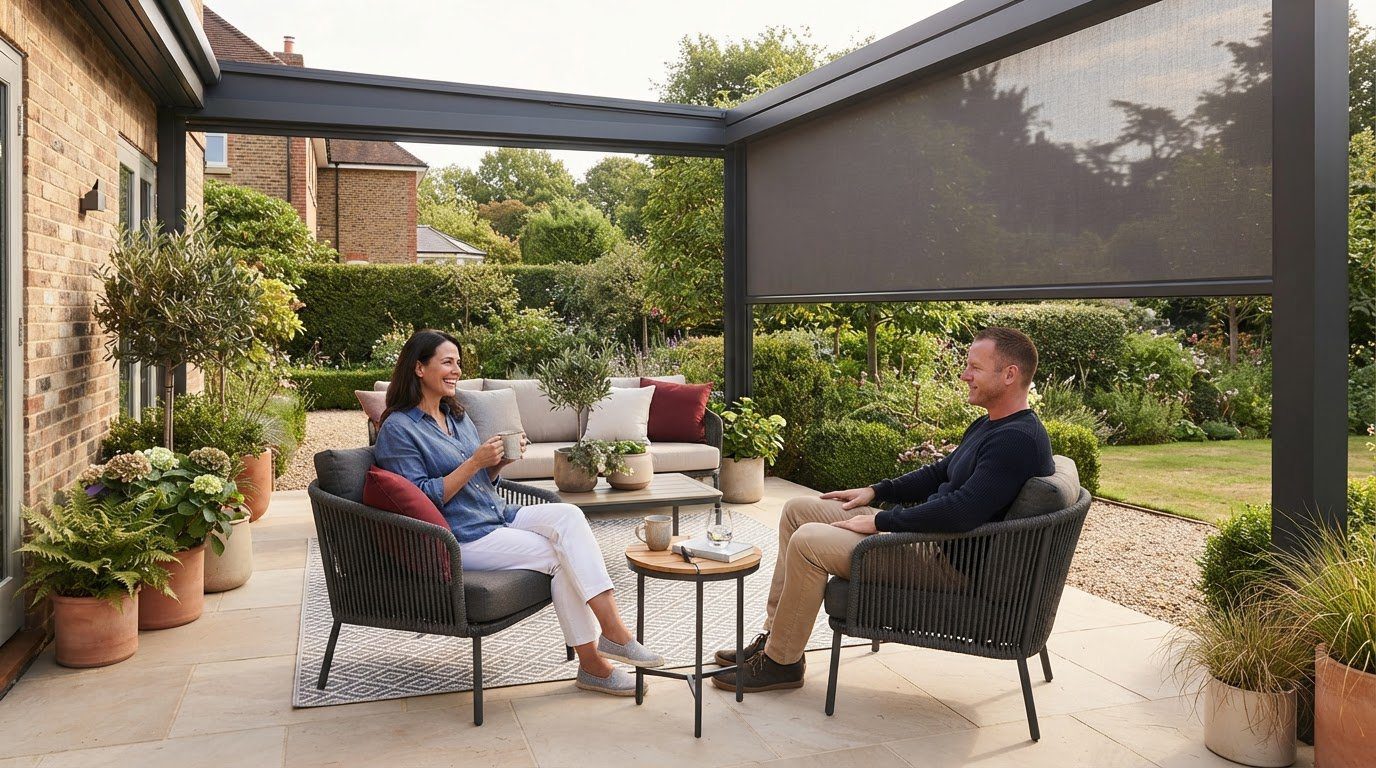
Exterior patio blinds provide shading and screening around an outdoor space. Fitted at the sides of a patio, they can help reduce direct sun, soften glare and make a seating area feel more sheltered while leaving it open to the outdoors.
Exterior blinds help manage sun and exposure around a patio, making it more comfortable for everyday use without creating an all-weather enclosure.
Which patio problems can exterior blinds help address?
The sun’s position changes throughout the day, so a patio that feels pleasant at breakfast may be uncomfortable by late afternoon. Low sunlight can shine into diners’ eyes, cause glare on a screen or make a favourite seat too bright. A blind positioned on the exposed side can help address these conditions. Think about when and where the problem occurs, whether you use the patio for eating, relaxing or working.
Screening may also give a seating area a greater sense of privacy, depending on the layout and design, but it shouldn’t be expected to block every view. These are everyday comfort benefits, not a promise of protection from severe weather. Exterior blinds can help manage exposure, but they are not a complete or all-weather patio enclosure.
What should patio owners expect from outdoor blinds?
Suitability depends on the patio’s layout and the project design. The position of walls, openings and seating helps determine where a blind could be useful and how it fits into the space. A bespoke design can take these details and the way you use your patio into account, rather than assuming one arrangement suits every home.
An exterior blind is designed for an outdoor patio setting, unlike an interior window blind fitted inside a building. For a general introduction to blind types, materials and mechanisms, see this overview of window coverings. The outdoor context matters: the aim is to manage sun and screening around the patio, not simply cover a window.
Start by identifying when the space feels least comfortable. Is direct sun the main issue, or would screening on one side make the seating area feel more settled? For broader guidance on options and bespoke design, explore our bespoke exterior blinds guide.
How Patio Layout, Sun Direction and Exposure Shape Blind Design
A useful design starts with the patio itself, not a standard coverage plan. Note how the space is used, which sides are exposed and where discomfort occurs. Then consider where coverage could help. Patio layout should guide blind placement because it determines where shade and screening can make a practical difference.
Observe the light at different times of day. Morning sun may reach one seating spot, while later sunlight could cause glare near a doorway or dining table. These observations help identify which side matters most. Light naturally changes with the time and conditions, so a blind shouldn’t be expected to produce identical results throughout the day. This approach also reflects passive cooling principles, which consider shading as part of managing sun exposure around a building.
How do you assess a patio before planning blinds?
Make a simple note of the times and places where direct sun or glare causes difficulty. Consider how people move between the patio and the home, and whether doors or other openings need to stay easy to use. This helps clarify where a blind could fit without interrupting everyday movement.
- Exposure: Which sides receive direct sun or feel most open?
- Discomfort: When does glare or strong sunlight affect the space?
- Movement: Where are the doors, openings and usual routes in and out?
- Screening: Where would a greater sense of privacy be welcome?
How can the design suit different outdoor spaces?
A compact seating area may need a focused solution for one exposed side, while a broad terrace could have several areas with different uses and sun conditions. The position of seats, tables and access points helps determine how coverage should relate to the space. The aim is to address where people sit and move, not simply to cover as much area as possible.
Residential and commercial patios have different patterns of use. At home, the design may centre on a particular seating or dining area. A business patio may need to account for how customers and staff use the space and move through it. For more on planning outdoor shade for business settings, see our commercial shading solutions guide.
These observations provide a useful starting point for a tailored design. Sail Shades Direct designs, manufactures and professionally fits bespoke exterior blinds. Explore bespoke exterior blind solutions as you consider what could work for your patio.
Exterior Patio Blinds Compared with Awnings, Sail Shades and Umbrellas
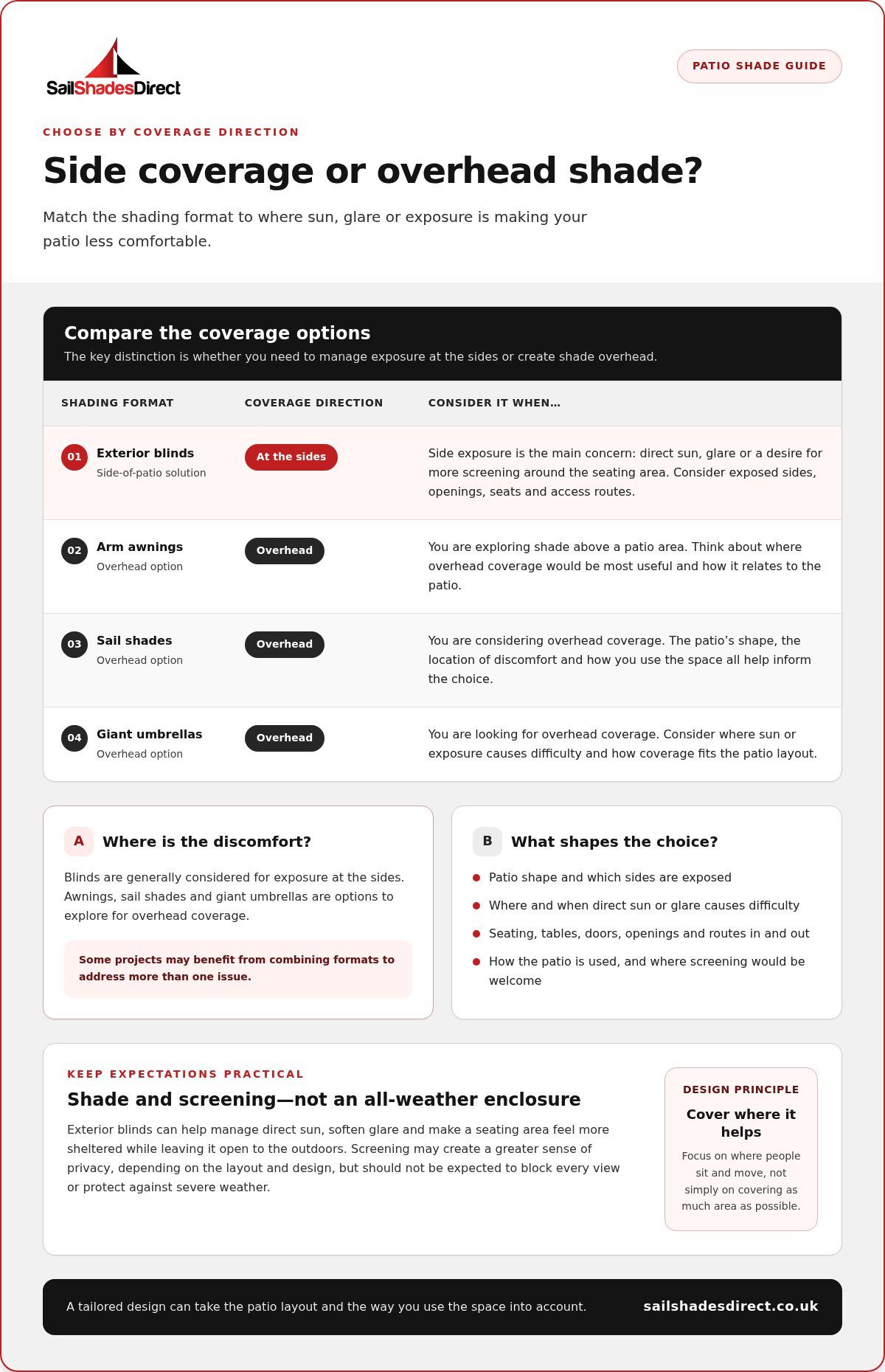
Outdoor shading options serve different purposes. Exterior blinds are generally considered when exposure at the sides of a patio is the main concern. Awnings, sail shades and giant umbrellas are options to explore for overhead coverage. The right choice depends on the patio’s shape, where sun or exposure causes difficulty, and how you want to use the space. Some projects may benefit from combining formats to address more than one issue.
| Shading format | Coverage direction | Typical use | Design considerations |
|---|---|---|---|
| Exterior blinds | At the sides of a patio | Managing side exposure, glare or a desire for screening | Consider exposed sides, openings, seating and access routes |
| Arm awnings | Overhead | Creating shade above a patio area | Think about where overhead coverage is most useful and how it relates to the building |
| Sail shades | Overhead, planned across an outdoor area | Providing coverage as part of the wider patio layout | Consider the area to be shaded and how the design fits the space |
| Giant umbrellas | Overhead, centred around the umbrella | Shading a particular seating or activity area | Consider where the shaded zone should sit and how people use the surrounding space |
When might patio blinds suit the space better?
If sunlight enters from the side, or seating feels exposed, blinds may be a useful option. Their role differs from overhead shade: they address the sides of the space rather than covering it from above. Screening can create a greater sense of privacy, but it doesn’t guarantee complete privacy or protection from wind and all weather. Blinds can also be used alongside another shading format if the patio has more than one concern to address.
When could another outdoor shading format be relevant?
If overhead shade is the priority, an arm awning is one option to explore. Sail shades provide a distinct format for planned coverage across an outdoor area, while a giant umbrella can be considered for a particular seating zone. Each option relates differently to the patio and its use. Start with the area you want shaded and the result you’re aiming for. For more detail on overhead coverage, read our heavy duty arm awnings guide.
In short, exterior blinds for patio settings may suit side exposure, while awnings, sails and umbrellas are options for overhead shade. Match the solution to the patio and the problem you want to solve, rather than expecting one format to suit every space.
Planning Exterior Blinds for a Patio: A Practical Checklist
A little preparation makes it easier to explain what you want from exterior blinds for patio spaces. You don’t need to work out the technical design yourself. Gather observations about the patio and how you use it, so a bespoke plan can respond to the space rather than assume a standard layout.
What details should you gather before the design stage?
Think about the patio at different times of day and note when it feels least comfortable. Is the main issue direct sun during a meal, glare near a favourite seat or a sense of exposure on one side? Add practical details: where people sit, which areas are used most and how they move between the patio and the home.
- Overall dimensions: Note the patio’s general size and shape.
- Exposed sides: Identify where sun, glare or a lack of screening is most noticeable.
- Access points: Mark doors, openings and the routes people regularly use.
- Seating and activity areas: Show where people dine, relax or work outdoors.
- Desired feel: Consider how you’d balance shade and screening with keeping the space open.
- Conditions and timing: Record when the patio is hardest to enjoy, including the time of day and what you’re doing.
These notes describe the outcome you’re looking for without requiring you to prescribe a blind position or technical specification. For example, you might want to soften glare around a dining area while keeping the main route to the house clear. That distinction gives the design process a practical starting point.
How does professional fitting fit into the plan?
Design, manufacture and professional fitting provide a joined-up route from an initial idea to a finished outdoor space. Each stage can be shaped around the patio’s layout, access points and intended use, rather than relying on a one-size-fits-all arrangement. Your planning notes help communicate what matters, and the bespoke design brings those priorities together for the space.
You don’t need to make assumptions about technical measurements or how the blind should be fixed. Focus on describing the patio and the comfort you want to achieve. Sail Shades Direct designs, manufactures and professionally fits bespoke exterior blinds, with each project considered around its setting.
Ready to turn your patio observations into a tailored plan? Discuss your bespoke exterior blind project with Sail Shades Direct.
From Patio Idea to Bespoke Exterior Blinds with Sail Shades Direct
A successful patio-shading project starts with how you want to use the space. Notes on exposed sides, changing sunlight, seating and access points help turn a general idea into a clear brief. If glare affects one end of the patio, for example, the design needs a different focus from a project intended to provide more screening around the whole seating area.
What does a bespoke patio-blind project involve?
With Sail Shades Direct, design, manufacture and professional fitting are part of the same project. You describe what feels uncomfortable and how you use the patio, then the design is shaped around those details rather than a standard layout. This bespoke approach connects the intended use of the space with the placement and role of the exterior blind.
Thinking about exterior blinds for patio comfort doesn’t mean blinds must address every shading need. If your observations point to a need for overhead coverage as well as side screening, other outdoor formats may be relevant. Sail Shades Direct also offers arm awnings, sail shades and giant umbrellas, so the wider shading approach can reflect the result you’re aiming for.
How can you take the next step?
Before discussing your project, gather a few simple details: the patio’s general layout, which sides feel exposed, when sunlight or glare is most troublesome, and how you’d like to use the space. You don’t need to arrive with a finished design. A clear description of the comfort issue is a helpful starting point for choosing a shading format to suit your patio.
For a closer look at another bespoke outdoor shading option, explore the complete bespoke sail shades guide. It can help you compare planned overhead coverage with side-focused blinds as you consider your space.
Ready to move from idea to a tailored design? Share your patio layout, exposure concerns and intended use with Sail Shades Direct, and take the next step towards bespoke exterior blinds with professional fitting.
Plan a Patio That Feels Better to Use
The right shading starts with the discomfort you want to solve. Note which sides feel exposed, when sun or glare affects the patio, and how you use the space. Those details help shape exterior blinds for patio settings around your layout, rather than treating them as a one-size-fits-all enclosure.
Blinds can help manage exposure at the sides, while awnings, sail shades and giant umbrellas offer other ways to plan outdoor shade. The best fit depends on the coverage you need and how you want your patio to feel. Sail Shades Direct provides bespoke design and manufacture alongside professional fitting for residential and commercial customers across the UK.
Ready to explore a tailored option? Discuss your patio shading project with Sail Shades Direct. Share your layout, exposure concerns and plans for the space to take the next step towards a more comfortable patio.
Frequently Asked Questions
Are exterior blinds suitable for every patio?
No, suitability depends on the patio’s layout, exposed sides and intended use. A blind may be worth considering where side-on sun, glare or a desire for screening affects a seating area. A compact patio with one exposed side may need a different approach from a broad terrace with several open edges. Start with the space and the comfort issue, then shape the design around those details.
Can exterior blinds provide shelter from wind and rain?
Exterior blinds can help manage exposure and make a seating area feel more sheltered, but they shouldn’t be treated as an all-weather enclosure or assumed to protect against severe wind and rain. The result depends on the blind’s design and how it relates to the patio. Think of them as a way to improve everyday comfort, and plan their role around the conditions you want to address.
How do patio blinds differ from an awning?
Patio blinds are generally considered for screening or managing exposure at the sides of a patio. An awning is an outdoor shading format to explore when overhead coverage is the priority. They address different parts of the space, so one isn’t automatically a replacement for the other. The patio layout and source of discomfort, whether side glare or overhead sun, help guide which format to consider.
Can exterior blinds be made to suit my patio?
Yes. Sail Shades Direct designs and manufactures bespoke exterior blinds for residential and commercial outdoor spaces, with each design shaped around the project. The patio’s layout, exposed sides, access points and intended use help inform the solution. Professional fitting is part of the service, bringing the process from describing your needs through to a shading system planned for your setting.
Do exterior blinds make a patio completely private?
No, exterior blinds shouldn’t be relied on to provide complete privacy. They can offer screening and may help a seating area feel less exposed, but the level of privacy depends on the patio layout, blind placement and surrounding views. Consider which direction you’d like to screen and how much openness you want to retain. That balance can help shape a design suited to the way you use the space.
How should I plan exterior blinds for my patio?
Start by noting the patio’s dimensions, exposed sides, doors and access points, then identify where seating or other frequently used areas are positioned. Record when direct sun or glare causes discomfort and what you want to change, such as adding shade or screening. These observations give a bespoke design process a practical starting point without requiring you to decide technical details or blind placement yourself.
Are exterior blinds the same as interior window blinds?
No. Exterior blinds are fitted in an outdoor patio setting to help manage sun, glare and exposure around the space. Interior window blinds are fitted inside a building and serve a different setting and purpose. If you’re planning patio shading, focus on how the outdoor area is arranged, where it feels exposed and how you intend to use it. Those details help guide a bespoke exterior-blind design.