
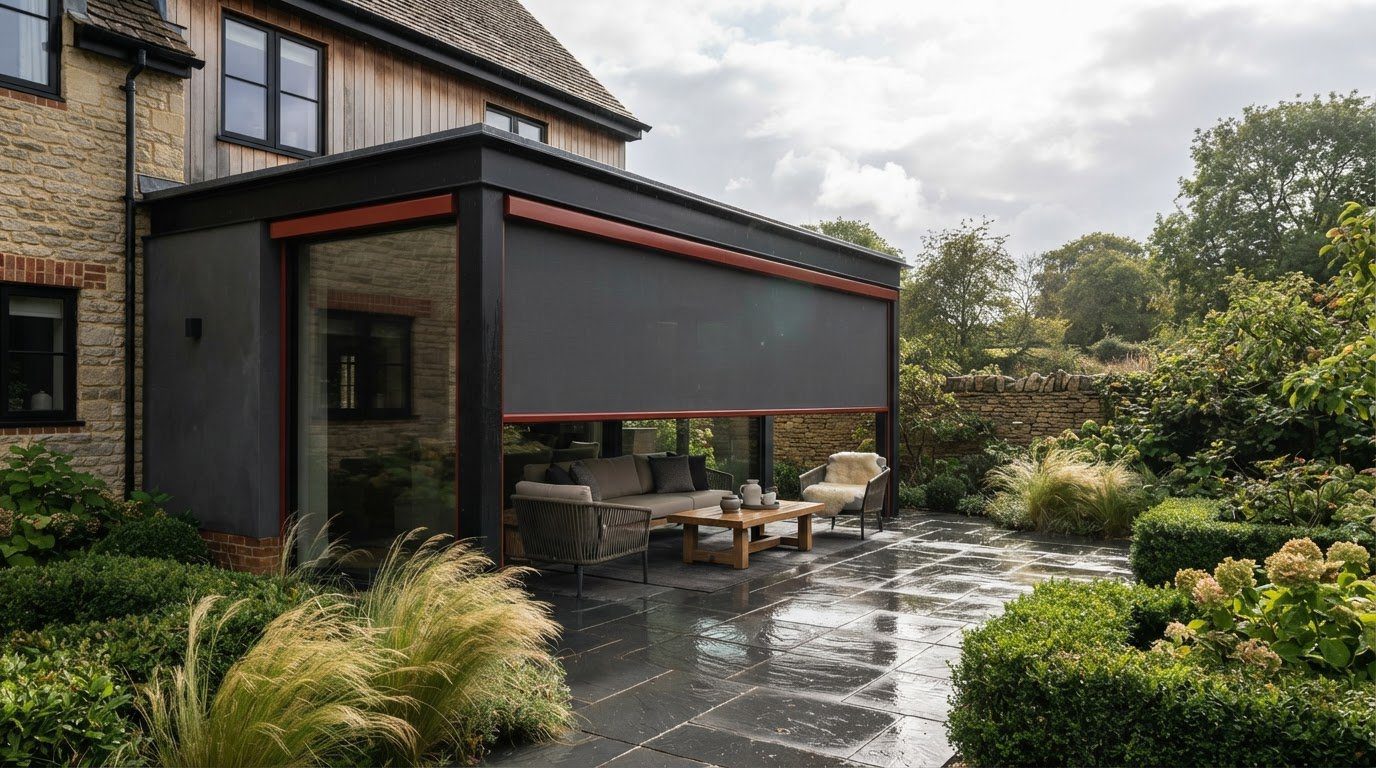
All-Weather Outdoor Blinds UK: A Practical Guide for 2026
The most useful outdoor blind isn’t one expected to defeat every forecast. When choosing all-weather outdoor blinds UK, focus instead on which design suits the space’s exposure, layout and everyday use. Sun, wind and rain affect outdoor areas differently, so comfort comes from matching the blind to the site, not from assuming it will work in every condition.
It’s understandable to want a simple answer when a patio, balcony or glazed opening feels exposed to changeable weather. An exterior blind can help manage glare, privacy or shelter, but its performance depends on its design and the conditions it faces. This guide explains what outdoor blinds can realistically do, where their limits lie and how to compare options without choosing a style that’s awkward to operate or poorly suited to the site.
You’ll explore the practical differences between exterior blinds and other outdoor shading formats, then consider positioning, fit and operation. Sail Shades Direct designs, fabricates and professionally fits bespoke shading for residential and commercial spaces across the UK, shaped around how you want to use your outdoor space.
Key Takeaways
- “All-weather” doesn’t mean protection in every condition. Set realistic expectations for outdoor blinds in the UK.
- Match coverage and position to the sun, privacy and shelter your space needs, rather than choosing by appearance alone.
- Compare exterior blinds with arm awnings, sail shades and giant umbrellas to find the format that suits your layout and intended use.
- Use a practical planning checklist to consider dimensions, fixing context, access and everyday operation before settling on a design.
- See how bespoke all-weather outdoor blinds UK projects bring design, fabrication and professional fitting together around your space.
What do UK all-weather outdoor blinds protect against?
If you want to enjoy a patio, balcony or outdoor seating area for longer, an exterior blind can help make the space more comfortable. But all-weather outdoor blinds UK shouldn’t be taken as a promise of protection in every kind of weather. Sun, glare, light rain, privacy and wind exposure are separate considerations. A blind suited to one may not address the others in the same way.
In practical terms, all-weather outdoor blinds are exterior shading designed to help manage selected outdoor conditions. The phrase doesn’t mean a blind is suitable for every exposure or safe to use in all weather. The right choice depends on the blind’s design, installation and conditions at the site. A useful starting point is the basic role of a Window blind, which can control light and visibility. Then consider what changes when the blind is fitted outdoors.
Which UK weather conditions should an outdoor blind address?
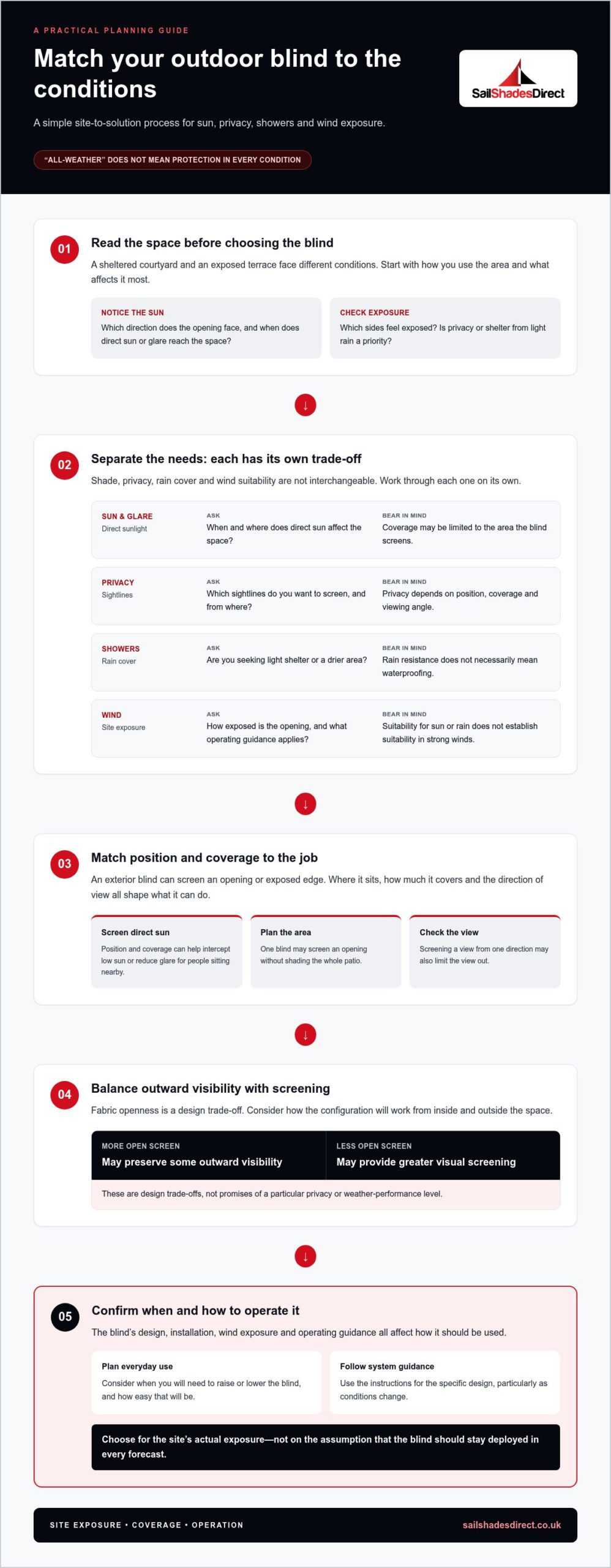
Start by identifying what affects your space most. Sunlight may cause glare at particular times of day, while light showers can make a seating area less inviting. You may also want privacy from neighbouring windows or shelter from a breeze. These needs can overlap, but they aren’t interchangeable: shade or some cover from light rain doesn’t establish that a blind is suitable for strong winds.
Consider how you use the space across the seasons. A sheltered courtyard and an exposed terrace face different conditions. To make the choice more practical, note when direct sun reaches the area, which sides feel exposed and whether privacy or rain cover matters most. Position, coverage and blind design all affect suitability, so assess them in the context of the site.
Can outdoor blinds stay out in every kind of weather?
No. Don’t assume any exterior blind is suitable for every condition. “All-weather” isn’t an all-conditions guarantee, and everyday protection from sun or light rain is different from protection during severe weather. Wind exposure, installation and the blind’s operating guidance all affect how it should be used.
Before choosing a solution, consider when you’ll need to raise or lower it and how easy that will be in everyday use. Follow the guidance for the specific design, particularly as conditions change. Planning around the site’s actual exposure helps set realistic expectations, without assuming the blind should remain deployed whatever the forecast.
How outdoor blinds manage sun, showers, wind and privacy
An exterior blind’s position and coverage shape what it can do. Fitted across an exposed opening, it may help screen low sun or reduce glare for people sitting nearby. Lowering it can also create more privacy, depending on the opening, viewing angles and how much of the space it covers. A design that blocks a view from one direction may also limit the view out.
Fabric openness is another consideration. In general, a more open screen may preserve some outward visibility, while a less open one may provide greater visual screening. These are design trade-offs, not promises of a particular level of privacy or weather performance. Consider how the chosen configuration will work in your space and follow the guidance for that system.
How do outdoor blinds help with sun and glare?
Exterior shading can intercept direct sunlight before it reaches an outdoor seating area, helping make bright spots more comfortable. The sun’s position changes through the day, so note which direction the opening faces and when glare is most troublesome. Coverage matters too: a blind may screen one opening without shading the whole patio. Plan around the area you want to use rather than assuming one blind will control light everywhere.
What should you know about rain and wind protection?
Rain resistance and waterproof performance aren’t interchangeable. Don’t assume a fabric or blind will keep an area dry without product-specific information. Wind needs separate consideration: site exposure, fixing and the system’s operating guidance affect whether it should be deployed. Follow the instructions for your fitted blind, especially as conditions change.
Use this guide to clarify your priorities:
| Weather need | Planning question | Limitation to bear in mind |
|---|---|---|
| Sun and glare | When and where does direct sun affect the space? | Coverage may be limited to the area the blind screens. |
| Privacy | Which sightlines do you want to screen, and from where? | Privacy depends on position, coverage and viewing angle. |
| Showers | Are you seeking light shelter or a drier area? | Don’t assume rain resistance means waterproofing. |
| Wind | How exposed is the opening, and what operating guidance applies? | Suitability for sun or rain doesn’t establish suitability in strong winds. |
For broader context on permitted development rights in England and Wales, see the Planning Portal’s guidance. Requirements can depend on the property and proposed work. If you’re considering a tailored exterior blind, explore bespoke outdoor shading with your space, exposure and intended use in mind.
Outdoor blinds compared with awnings and other outdoor shading
The best format depends on where you need shade or screening. A blind can address an opening or exposed edge, while an awning, sail shade or giant umbrella generally focuses on overhead coverage. Consider the shape of the space, the area you want covered and whether privacy matters as much as shade. No single option suits every home or business.
| Option | Typical use | Practical advantage | Planning consideration |
|---|---|---|---|
| Exterior blinds | Along an opening or exposed edge | Can provide adjustable screening for sun, glare or privacy | Consider the opening’s dimensions, exposure and how the blind will be operated |
| Arm awnings | Patios beside a building | Offers overhead shade over an outdoor area | Consider the area to cover and the space required for the awning’s arrangement |
| Sail shades | Open areas where overhead shade is the priority | Can provide coverage across a chosen part of the space | Consider the shape of the area and where the shade can be positioned |
| Giant umbrellas | Seating or activity areas needing focused overhead shade | Creates a defined shaded zone | Plan the umbrella’s position in relation to seating, access and surrounding space |
When are exterior blinds a practical choice?
Exterior blinds may suit glazed openings, covered seating areas or exposed edges where you want screening as well as shade. For example, a home patio beside wide doors might benefit from screening at the side. A business may want its outdoor seating area to feel more sheltered while staying connected with the surroundings. The right coverage depends on the layout and the view you want to keep. Explore the guide to exterior blinds for patios for more planning ideas.
When might an awning, sail shade or umbrella fit better?
Choose according to the coverage challenge. If shade above a patio is the priority, an arm awning may be a relevant option. A sail shade may suit an area where overhead coverage is the main aim, while a giant umbrella can focus shade over a particular seating zone. These formats don’t provide the same side screening as an exterior blind, so consider whether glare, privacy or exposed edges also need attention. For more on overhead coverage, read the guide to bespoke sail shades.
Comparing all-weather outdoor blinds UK options is about matching the format to your space, not expecting one solution to do every job. Start by identifying the area you want to use and the coverage that would make it more comfortable.
How to plan outdoor blinds for your space and exposure
A well-planned blind starts with how you want to use the space, not with a product specification. A home patio used for relaxing may call for a different balance of privacy and views than a commercial seating area, where customer comfort and clear access routes also matter. Use this checklist to organise your priorities before settling on a design.
- Define the purpose and coverage. Decide whether you want to manage glare, screen an opening, add privacy or make a seating area more comfortable. Mark the area you want covered and consider whether screening one edge or several would work best.
- Map the layout and exposure. Note where sunlight falls and when, along with exposed edges and the direction in which you want to keep views open. Consider how the space is used through the day and across the seasons.
- Measure the opening. Record the width and height of the area to be screened, as well as nearby doors, windows and other features that could affect coverage. These details help with planning but don’t replace project-specific measurement.
- Consider the fixing context. Describe the surface and surrounding structure where the blind is intended to sit. The appropriate arrangement depends on the building and installation, so don’t assume one fixing method suits every site.
- Check access and movement. Identify entrances, walkways and areas that must remain clear. Consider how people move between indoors and outdoors, and whether the blind’s position would interrupt normal use.
- Plan how it will be operated. Think about who will use the blind and how often it may need adjusting as sunlight or conditions change. Ease of operation is part of everyday suitability, not an afterthought.
Why do bespoke design and professional fitting matter?
Openings, exposure and intended coverage vary from project to project. Bespoke design can respond to those details rather than relying on a one-size-fits-all assumption. For a home, that might mean balancing screening with a valued garden view. For a business, priorities may include customer comfort, access and how the shaded area relates to the wider space.
Design, fabrication and professional fitting work as connected stages: the plan informs what is made, and the completed design is fitted to the specific project. If the layout or structural design needs more consideration, explore custom exterior shading design for further guidance.
Bring your notes together to shape a solution around the space, rather than expecting one blind to suit every exposure. Explore tailored exterior blind options for your project.
Bespoke all-weather outdoor blinds from Sail Shades Direct
Every outdoor space has its own layout, exposure and purpose. Sail Shades Direct designs, fabricates and professionally fits bespoke exterior blinds and outdoor shading systems across the UK, shaping each project around how the space is meant to be used. The aim isn’t to promise protection in every condition. It’s to create a considered solution for the coverage and comfort you want.
Exterior blinds can be part of that approach, alongside arm awnings, sail shades and giant umbrellas where they suit the site and brief. The right format depends on whether you want to screen an opening, shade a patio from above or create a focused shaded area. For anyone researching all-weather outdoor blinds UK, project-specific planning helps turn a broad search into practical choices.
How does a tailored outdoor blind project take shape?
The process starts with the space: its dimensions, exposure, layout and intended use. These details inform the design and coverage, then fabrication and professional fitting bring the solution together. A homeowner may prioritise privacy or a comfortable connection between indoors and outdoors. A commercial space may place more emphasis on customer comfort, access and how the shaded area supports its use. The brief guides the design.
What is the next step towards better outdoor comfort?
Bring together the key decisions: what you want covered, which conditions matter most, which shading format fits the layout and how the space needs to function day to day. These priorities give the project a clear starting point. Design, fabrication and fitting can then be considered as connected stages, with the solution tailored to your outdoor space rather than based on a one-size-fits-all assumption.
A well-planned blind can help make an outdoor area more comfortable for its intended use, but shouldn’t be treated as suitable for every weather condition. Share your priorities and explore a bespoke approach that brings design through to professional fitting. Discuss a bespoke outdoor shading project with Sail Shades Direct.
Plan outdoor comfort around your space
Choosing all-weather outdoor blinds UK is about matching the design to your priorities, not expecting one solution to withstand every condition. Consider what you want to screen, the coverage you need and how your space is exposed. Then compare exterior blinds with overhead options such as awnings, sail shades and giant umbrellas.
A thoughtful plan also accounts for layout, access and everyday operation. The right approach can differ between a home patio and a commercial outdoor area, so a tailored design keeps the project grounded in how the space will actually be used.
Sail Shades Direct works with residential and commercial customers across the United Kingdom, bringing design, fabrication and professional fitting together as part of its outdoor shading service. Ready to explore an option shaped around your space? Discuss a bespoke outdoor shading project with Sail Shades Direct and take the next step towards a more comfortable outdoor area.
Frequently Asked Questions
Can outdoor blinds be used in all weather?
No. Don’t assume an outdoor blind is suitable for every condition. “All-weather” is best treated as a search phrase, not a promise that a blind can stay deployed whatever the weather brings. Sun, showers and wind place different demands on a system. Suitability depends on the design, installation and site exposure. Follow the operating guidance for your fitted blind, particularly as conditions worsen or become severe.
Are outdoor blinds waterproof?
Not necessarily. Outdoor blinds vary in how much rain protection they’re designed to provide, and water resistance doesn’t automatically mean a screen is fully waterproof. Consider whether your main priority is shade, screening or shelter from rain, then match the design to that purpose. A general label alone doesn’t determine performance. Any claim that a specific blind is waterproof should be supported by information for that product.
Can outdoor blinds withstand strong winds?
It depends on the blind, its installation and how exposed the site is. An exterior blind isn’t automatically suitable for strong or gusty conditions simply because it’s made for outdoor use. Consider the opening’s exposure as part of the design and follow the operating guidance for the fitted system. A project-specific assessment helps establish realistic expectations for your space, rather than relying on a universal wind threshold.
How do I choose outdoor blinds for a UK patio?
Start by deciding what you want the blind to do: reduce glare, provide privacy, screen an opening or offer some shelter. Then consider the patio’s layout, exposure, access routes and how often you’ll adjust the blind. When comparing all-weather outdoor blinds UK options, weigh exterior blinds against awnings and other shading formats. A tailored design and fitting plan can then respond to your space and intended use.
What happens if outdoor blinds are left out in bad weather?
The effect depends on the blind, its installation and the weather, so there’s no single outcome for every system. Leaving a blind deployed outside its intended operating conditions could affect its performance or condition. Follow the instructions for your fitted blind, including guidance on when to retract or secure it. Don’t assume an outdoor blind can remain in use through severe weather or apply a universal wind limit.
Are exterior blinds better than patio awnings?
Neither is automatically better; each addresses a different coverage need. Exterior blinds can screen an opening or exposed edge, while a patio awning generally provides shade from above. Your choice depends on the layout, desired coverage, privacy and site exposure. A patio needing overhead shade may call for a different approach from one where screening at the side is important. Some spaces may suit a considered combination of shading formats.
Can bespoke outdoor blinds be fitted to homes and businesses?
Yes. Bespoke exterior blinds can be designed for residential and commercial outdoor spaces. The design should account for the opening, intended use, exposure and coverage required, rather than relying on a standard assumption. Sail Shades Direct provides design, fabrication and professional fitting across the UK. This joined-up approach shapes each project around the space, whether the priorities include privacy at home or customer comfort in a commercial setting.