
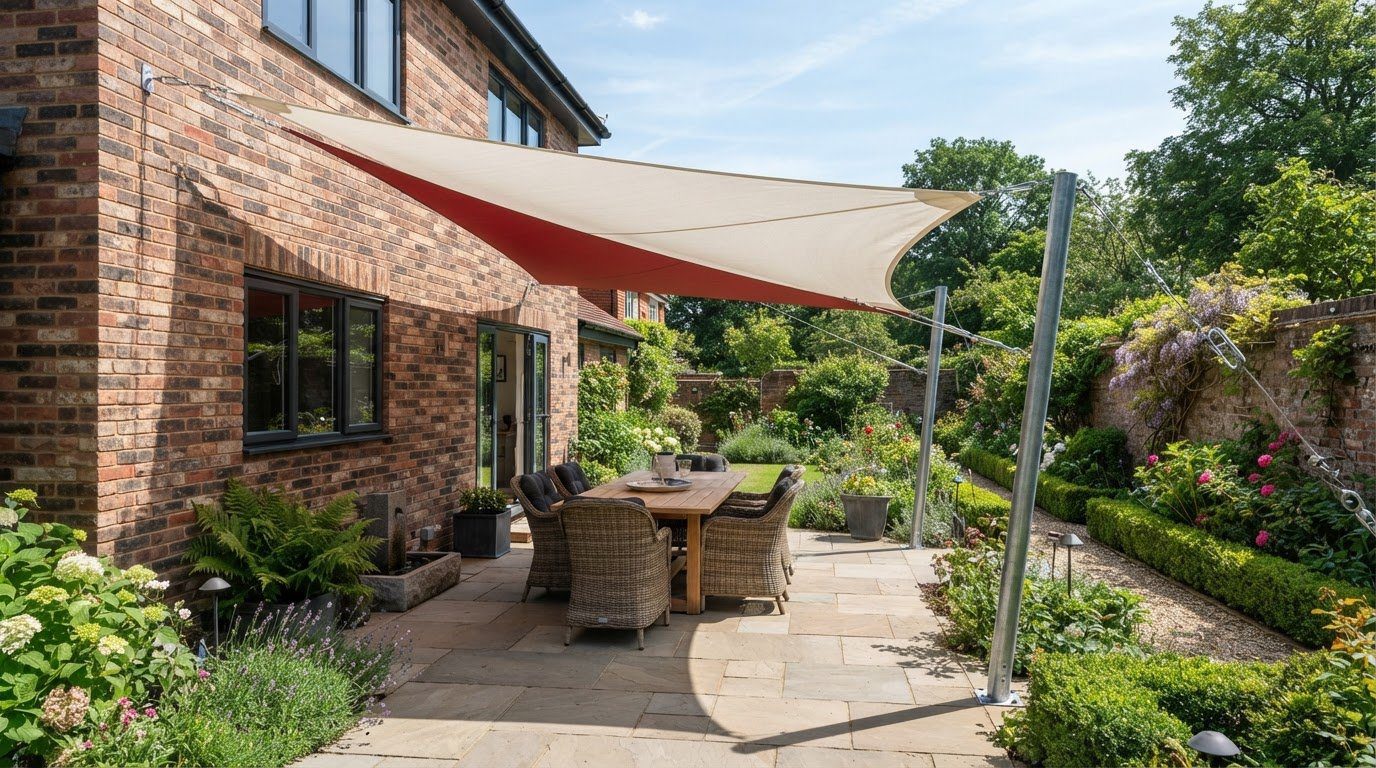
Choosing a sail shade supplier for your outdoor space
A sail shade’s appearance is only part of the decision. Knowing what to look for in a quality sail shade supplier means checking whether the fabric suits your needs, the fixing points can support the design, and the installation plan accounts for your space and sun exposure.
It’s easy to focus on colour and shape first, but practical details matter just as much. Fabric affects how much light passes through and whether rain drains away or passes through, while the shade’s position determines when it provides cover.
This guide explains how to compare fabric options, assess fixing points and installation support, and account for the sun’s direction at the times you use your outdoor space. You’ll also learn how a supplier’s design capabilities can help create a shade that fits your setting, whether it’s a compact patio or a larger outdoor area.
Key Takeaways
- Match the fabric to the balance of UV protection, airflow and rain coverage you need.
- Assess where the shade will be fixed and how installation support can help the design work safely in your space.
- Consider the sun’s direction and when you use the area to plan useful, well-positioned cover.
- Look for design capability that can adapt the shade’s shape and layout to your outdoor space.
Selecting a fabric for UV and rain protection
Choose fabric based on your priorities: UV protection, airflow, rain cover, or a balance of these. Compare product specifications and construction details, and read the warranty terms before settling on a design.
Fabric Properties and Recyclability
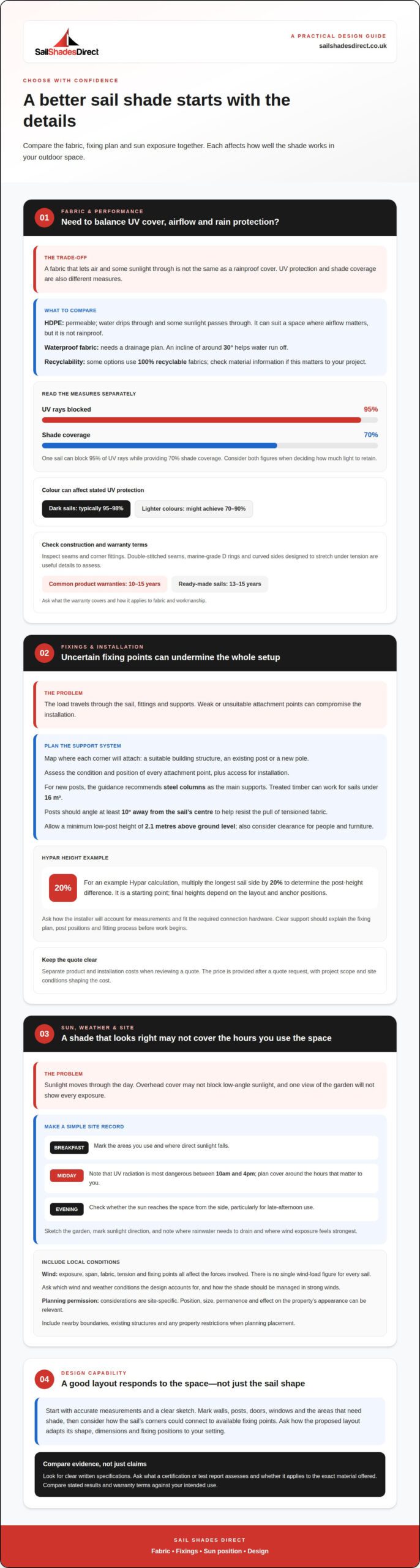
HDPE shade sails are permeable, allowing water to drip through and some sunlight to pass through. This can suit a space where airflow matters, but it won’t provide a rainproof cover. Waterproof fabric needs a drainage plan; an incline of around 30 degrees helps water run off. Some shade sail options use 100% recyclable fabrics, so review the material information if recyclability matters to your project.
Certifications and Quality Standards
For a UK project, look for clear written specifications and evidence supporting claims about UV protection and fabric performance. Ask what any certification or test report assesses and whether it applies to the exact material being offered. Compare stated results and warranty terms rather than relying on a badge or broad quality claim. This helps you judge whether the evidence is relevant to your intended use.
Compare UV protection with shade factor rather than treating them as the same measure. A sail can block 95% of UV rays while providing 70% shade coverage, so consider both figures when deciding how much light to retain. Dark-coloured sails typically achieve UV protection ratings of 95-98%, while lighter colours might achieve 70-90%.
Inspect the seams and corner fittings, too. Double-stitched seams, marine-grade D rings and curved sides designed to stretch under tension are useful construction details to assess. Ask what the warranty covers and how it applies to the fabric and workmanship. Shade sail products commonly carry warranties of 10 to 15 years; ready-made sails are offered with warranties of 13-15 years. These terms help you compare expected durability alongside fabric performance.
Checking fixing points, poles and installation help
Fabric is only one part of a secure sail shade installation. Before choosing a design, map the fixing points, support materials and clearance needed to tension the shade properly.
Start by identifying what each corner will attach to: a suitable building structure, an existing post or a new pole. The load travels through the sail, fittings and supports, so weak or unsuitable fixing points can compromise the whole setup. A site assessment should consider the condition and position of each attachment point, as well as access for installation.
For new posts, the guidance recommends steel columns as the main supports. Treated timber can work for sails under 16 square metres. Posts should angle at least 10 degrees away from the sail’s centre, helping them resist the pull of the tensioned fabric. Allow a minimum low-post height of 2.1 metres above ground level, then consider clearance for people and furniture beneath the shade.
Height affects the sail’s shape and tension, not just headroom. For an example Hypar calculation, multiply the longest sail side by 20% to determine the post-height difference. This gives a starting point for planning varied fixing heights; the final arrangement depends on the layout and anchor positions. Ask how the installer will account for those measurements and fit the required connection hardware.
Separate product and installation costs when reviewing a quote. The price is provided after a quote request, with the project scope and site conditions shaping the cost.
Clear installation support should explain the fixing plan, post positions and fitting process before work begins. For a tailored layout, explore sail shade design and installation as a next step.
Considering sun direction and times of use
A shade plan should reflect how sunlight moves across your garden and when you use it. Observe the seating area at different times, then note which parts receive direct sun and where protection matters most.
Ultraviolet radiation is most dangerous between 10am and 4pm. If lunch outdoors is a regular part of your routine, plan cover for that period rather than relying on a morning view of the garden. For late-afternoon use, note whether the sun reaches the space from the side. A shade positioned overhead may not block low-angle sunlight, so the layout and direction of the sail both matter.
UK weather also calls for practical planning. Consider how exposed the garden is to wind, whether you need rain protection, and how you’ll use the shade in changing conditions. There isn’t one wind-load figure for every sail: exposure, span, fabric, tension and fixing points all affect the forces involved. Ask the supplier to explain what wind and weather conditions the design accounts for and how the shade should be managed in strong winds.
Planning permission considerations are site-specific. The proposed structure’s position, size, permanence and effect on the property’s appearance can all be relevant. A sail attached to a house may raise different considerations from a freestanding installation in an open garden. Include nearby boundaries and existing structures in your plan, and identify any property restrictions that could affect placement before settling on a design.
Make a simple site record to guide the design conversation: sketch the garden, mark the areas you use at breakfast, midday and evening, and note the direction of direct sunlight. Add places where rainwater needs to drain and where wind exposure feels strongest. These observations connect daily use with the design, instead of basing the position on appearance alone.
Supplier design and engineering capabilities
A strong design process brings together the shade’s shape, dimensions, fixing positions and appearance. A key part of what to look for in a quality sail shade supplier is the ability to adapt the layout to your space, rather than relying on a standard shape that may not suit the setting.
Start with accurate measurements and a clear sketch. Mark walls, posts, doors, windows and the areas that need shade. Then consider how the sail’s corners could connect to the available fixing points. These details shape the design, so ask how the proposed layout accounts for the features you’ve marked.
Scale matters, too. If any sail shade dimension is over 10 metres, consider using multiple smaller sails. Dividing the design into sections can help organise coverage across different parts of an outdoor space. To judge what to look for in a quality sail shade supplier, ask how the proposed layout responds to your site’s dimensions, not just its overall span.
Colour is another practical design choice. A range of 15 colours gives you room to coordinate with brickwork, paving, planting or existing furniture. For example, a neutral shade can sit quietly beside a traditional brick wall, while a contrasting colour can become a focal point. Compare the shade with surrounding materials in daylight, as indoor lighting can alter how a colour appears.
Bespoke design help is useful when a space has awkward corners, several fixing points or changing coverage needs. Prepare measurements, photographs and notes about how you use the area. A design discussion can then bring shape, scale, colour and placement together, helping you assess each option against the actual setting.
Ready to develop a shade around your space? Discuss a tailored sail shade design and explore an arrangement suited to your outdoor layout.
Sail Shades Direct: Bespoke Sail Shades
Sail Shades Direct can help turn your measurements, shade priorities and site conditions into a considered outdoor design. Its bespoke design, fabrication and installation service is useful when standard dimensions or a simple layout don’t suit the space.
Bring together the details covered here: the areas you want shaded, how you use them, fabric preferences and possible fixing locations. This gives the design process a practical starting point. Bespoke Sail Shades can be designed around your setting, while Rolling Sun Sails offer another option for outdoor shade. The right choice depends on your layout and how you want to use the space.
Contact Sail Shades Direct to discuss a design for your outdoor area.
Take the next step towards a more usable outdoor space
Knowing what to look for in a quality sail shade supplier is a useful starting point. The next step is to shape those priorities around your space. Think about how you want the area to feel and function, whether you’re creating a comfortable place to dine, a sheltered seating spot or flexible shade for changing conditions. For homeowners and venue hosts planning outdoor gatherings or special celebrations, creative specialists like Shutterink Photography frequently note how diffused canopy shade helps manage harsh midday glare and creates flattering natural lighting for capturing outdoor cinema.
Sail Shades Direct designs and supplies Bespoke Sail Shades and Rolling Sun Sails, as well as Arm Awnings, for different outdoor settings. Share your ideas and the features that matter most, so the discussion can focus on a solution that fits your plans.
Contact Sail Shades Direct today to explore the right direction for your outdoor space. A well-considered design can help make it a place you’ll look forward to using.
Frequently Asked Questions
What fabric materials, UV protection ratings and warranties should I look for in a sail shade?
Choose fabric according to whether you prioritise airflow, rain cover or a balance of both. Ask for product-specific documentation showing how UV protection was assessed, and compare like with like rather than relying on broad claims. Check that the warranty applies to the exact fabric and colour selected. Read the terms for coverage, exclusions, care requirements and how to make a claim.
How can I check a supplier’s sail shade manufacturing quality and workmanship?
Look at close-up photographs or examples of completed work, and check whether the finish appears even and consistent. Ask how the supplier checks the finished shade against the agreed design, including its dimensions and corner positions. A clear specification should identify the material and construction chosen for your project. Workmanship is easier to assess when the supplier explains what was made and how it matches the plan.
What design and measuring services should a quality sail shade supplier provide?
Look for a design conversation that considers how you’ll use the space, not just its outline. Share a simple sketch showing doors, windows, furniture and areas you want to keep clear. The proposed design should make the shade’s position and shape clear before fabrication. For example, if you need to keep a garden path accessible, ask how that route is reflected in the layout.
What installation, fixings and structural advice should a sail shade supplier offer?
A supplier should explain how the proposed fixing method suits each attachment point and what preparation the site needs. Ask which parts are included in the installation and whether existing structures need assessing before work begins. The plan should also explain how the shade will be tensioned and maintained. This gives you a clear view of the full scope, including the fittings.
What warranties, after-sales support and replacement policies are common for UK sail shade suppliers?
Warranty terms vary, so read the written policy rather than assuming every supplier covers the same issues. Check what applies to the fabric, stitching and fittings, along with any care conditions or exclusions. Find out how to report a fault and whether the policy describes repair or replacement options. Clear terms explain what support applies after installation and what steps to take if an issue arises.
How do UK sail shade suppliers compare on lead times, customisation and customer reviews?
Compare suppliers by the clarity of their written timeline, the options they can tailor to your space and the detail in their customer feedback. Reviews are more useful when they describe a project similar to yours, such as a compact patio or commercial outdoor area. Look for comments about communication, design changes and the completed result, rather than relying on star ratings alone.