
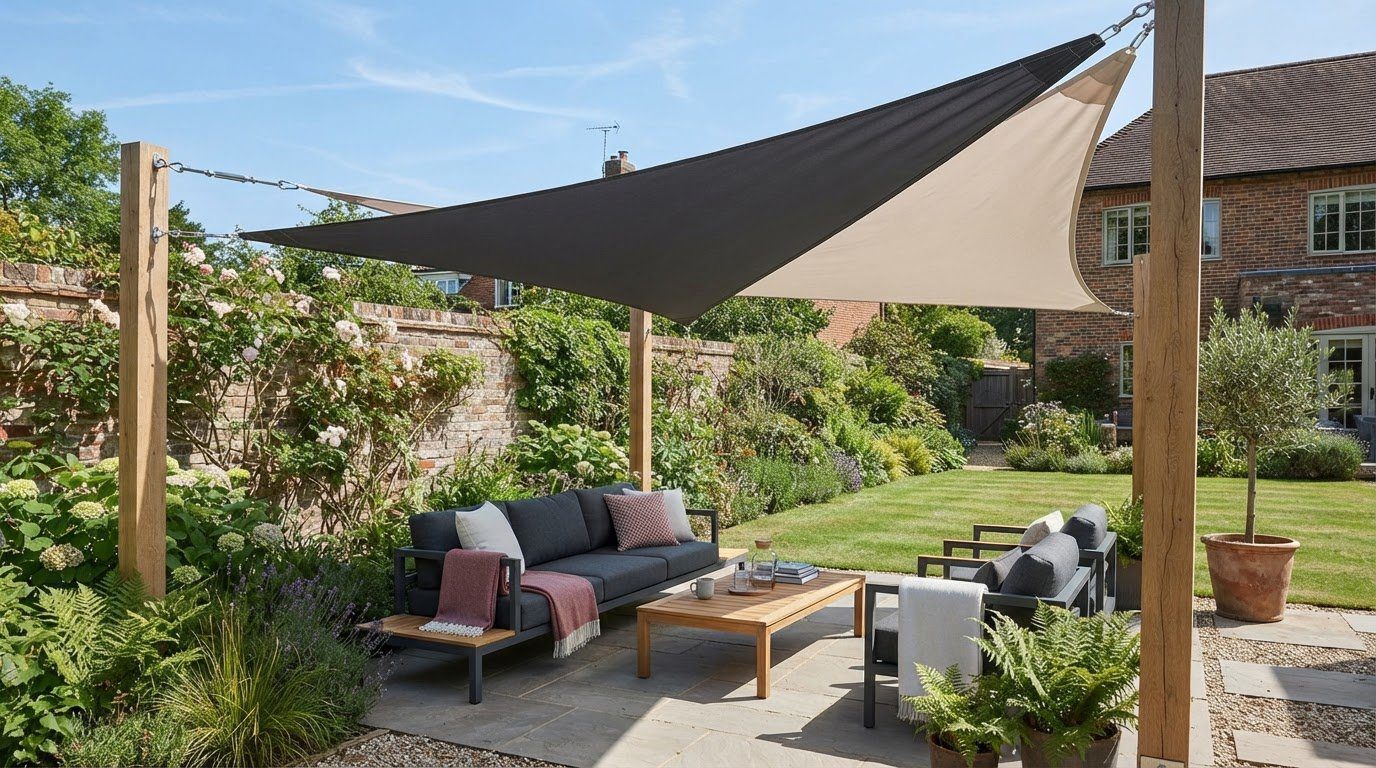
Choosing a shade sail colour for sun protection and style
The colour you love isn’t automatically the one that gives the best protection. When choosing the right colour for a shade sail, start with the fabric: its properties matter more to UV performance than colour alone. Darker shades can feel shadier and absorb more sunlight, while lighter shades reflect more light.
It’s natural to want a sail that suits your home and garden while creating a comfortable place to sit. Colour can shape the mood of an outdoor space, affect glare and influence how much light reaches the area below, so weigh appearance against everyday use.
This guide explains how colour relates to UV protection and heat, then explores shades and combinations for different outdoor spaces. You’ll also find practical ways to picture a colour in context and choose with both comfort and style in mind.
Key Takeaways
- Choose fabric based on its UV performance, rather than relying on colour alone; darker shades can feel shadier but don’t determine protection by themselves.
- Balance the look and feel of darker colours with how they absorb sunlight and how the sail will sit in your outdoor space.
- Use neutral shades for a subtle effect or select complementary colours to make multiple sails feel coordinated.
- Consider your home’s exterior, planting, glare and everyday marks when deciding which shade will work best outdoors.
1. Choosing shade-sail colour for solar and UV protection
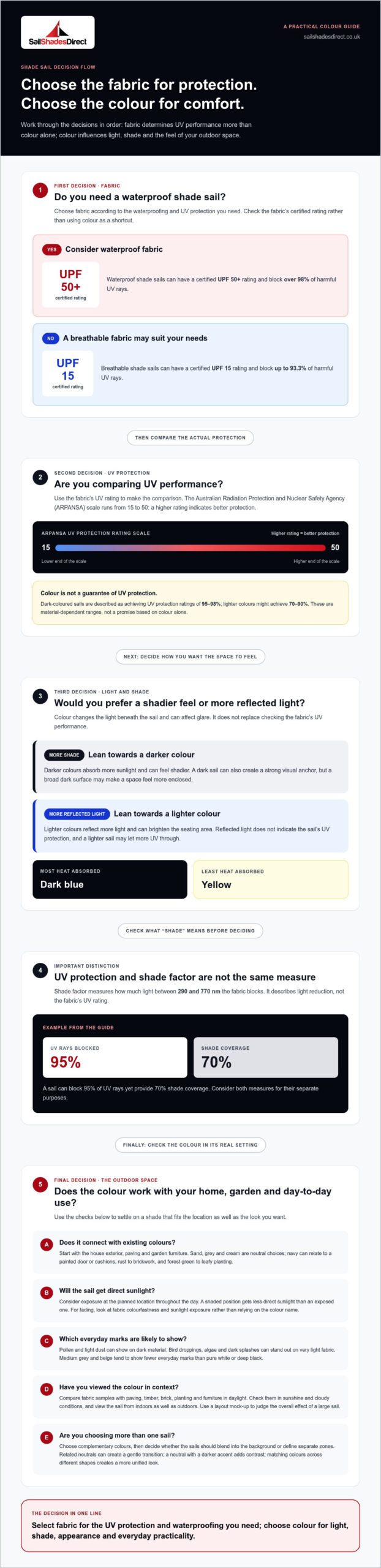
Choosing the right colour for a shade sail starts with the fabric, not the colour chart. Waterproof shade sails can have a certified UPF 50+ rating and block over 98% of harmful UV rays. Breathable shade sails can have a certified UPF 15 rating and block up to 93.3%. According to the Australian Radiation Protection and Nuclear Safety Agency (ARPANSA), the UV protection rating scale runs from 15 to 50, with higher ratings indicating better protection.
Colour still affects the light and shade beneath the sail. Dark-coloured sails are described as achieving UV protection ratings of 95-98%, while lighter colours might achieve 70-90%. Treat these as material-dependent ranges, not a guarantee based on colour alone. Shade factor measures how much light between 290 and 770 nm the fabric blocks. For example, a sail can block 95% of UV rays yet provide 70% shade coverage.
Which shade sail colours block the most heat and sunlight? Darker colours absorb more sunlight and can feel shadier, while lighter colours reflect more light. In the colour comparison, dark blue absorbs the most heat and yellow the least. Reflected light can brighten a seating area, but it doesn’t indicate the sail’s UV protection.
Which shade sail colours fade least in UK weather? Look at the fabric’s colourfastness and the amount of direct sunlight the sail receives, rather than relying on the colour name. Observe sun exposure at the planned location throughout the day: a shaded position gets less direct sunlight than an exposed one.
How do colour and fabric affect shade sail cleaning and maintenance? Fabric determines suitable cleaning, while colour affects which marks stand out. Pollen and light dust can show on dark material; bird droppings, algae and dark splashes can stand out on very light fabric. Medium grey and beige tend to show fewer everyday marks than pure white or deep black. Consider the garden’s debris alongside the fabric’s care instructions.
Choose fabric for the UV protection and waterproofing you need, then select a colour to balance shade and reflected light. A lighter sail may let more UV through, so appearance alone isn’t a reliable guide to protection.
2. Appearance and heat absorption of dark colours
Dark shade sails absorb more sunlight than lighter ones, changing how the covered area looks and feels. Black, navy blue, dark grey and dark brown are popular choices. A dark sail can create a strong visual anchor over a patio, while a lighter sail reflects more light into the seating area. Fabric matters too: dark mesh can cool quickly when air flows through it, despite absorbing sunlight.
In a modern home, charcoal or black can echo dark window frames, metal furniture or roof details. In a green garden, black may blend into the surroundings rather than compete with the planting. Navy makes a more noticeable statement, while dark brown can complement timber decking. Use existing features for inspiration, then view the colour against the house and garden.
Shape and position influence the look as much as colour. A navy triangle sail can create a crisp focal point above a dining table, while sails in different shades can define separate zones. Varying the corner heights adds visual interest, especially where sails overlap or frame a seating area. Consider the arrangement before choosing a deep colour for a large surface.
Dark colours can make a space feel more enclosed, especially beneath a broad sail. Balance this with pale furniture, warm timber or lighter planting. In a small space, compare a dark sail with a muted alternative in the same colour family. Check the view from indoors as well as outdoors, since the sail will become part of the garden outlook.
To refine your choice, compare fabric samples against exterior finishes and garden furniture in daylight. Consider how a triangle or layered layout will look from each main viewpoint, then match the colour to the mood you want: understated, coordinated or deliberately striking. For a layout tailored to your space, explore bespoke sail shade designs.
3. Choosing complementary or neutral colour combinations
Start with the largest colours already in view: the house exterior, paving and garden furniture. Sand, grey and cream are neutral choices that can complement different surroundings without dominating the space below. A cream sail, for example, can soften a pale stone patio, while grey may echo slate paving or dark window frames. Treat existing features as your palette and choose a colour that connects with at least one of them.
For a bolder scheme, choose a shade that relates to a clear accent rather than competing with every colour outdoors. Navy can pick up a painted door or outdoor cushions; rust can echo brickwork; forest green can complement leafy planting. These colours create a focal point, so use them where you want the eye to settle, such as above a dining area. Muted versions can be easier to integrate across a large sail.
Multiple sails need a shared colour plan. Choose complementary colours, then decide whether the sails should blend into the background or define separate zones. Two related neutral shades, for instance, can create a gentle transition between adjoining seating and dining spaces. Pairing a neutral sail with a darker accent adds contrast, while matching colours across different shapes creates a more unified look. A considered colour relationship makes the arrangement feel intentional.
Before committing, compare fabric swatches with the paving, timber, brick and planting at the planned location. Look at them in sunshine and cloudy conditions, because the same shade can appear different as the light changes. A small swatch won’t show the full effect of a large sail, so use a layout mock-up to judge how its shape and colour affect the whole space. This helps you balance visual style and comfort without relying on a screen image alone.
4. Choosing a colour to suit an outdoor space
Start with the space’s main purpose. In a garden with sun-loving plants or grass, a lighter sail can allow more sunlight through. Over a bright patio, extra reflected light may increase glare, so muted beige can feel gentler than white. Light fabric can also make the covered area look more open. Before choosing a shade, consider where people sit, which way they face and what lies beneath the sail.
Next, compare the colour with the house and planting. Earth tones can blend with brick, timber and natural stone, while green can relate to borders and shrubs. Black may recede against a garden backdrop, making the plants more prominent. Grey can clash with a cream-based exterior if its yellow tones don’t work together, so assess the actual combination rather than choosing by colour name alone.
Think about how visible you want the sail to be. A neutral colour creates a quieter feature, while lime or yellow adds a brighter accent. White can create a calm look, but may show pollen, algae and bird droppings easily; very light surfaces can also produce more glare in intense sunlight. Medium grey or beige can be a practical middle ground for everyday marks. Dark colours hide some dirt and stains, though light dust and pollen may stand out.
For a large outdoor space, consider the view from the house, garden and street frontage. A bold sail at the back or side of a home can add colour without dominating the first impression. Layered or contrasting sails add visual depth, but their combined effect should suit the building and landscaping. A custom layout can help the colour, shape and position work together. Explore bespoke shade sail options to shape a design around your outdoor space.
Sail Shades Direct: Bespoke Sail Shades
Sail Shades Direct can help turn your colour choice into a shade solution designed around your outdoor space. Bespoke Sail Shades bring together colour, layout and practical requirements, so the finished design can complement your home rather than feel like an afterthought.
If you’re comparing a sail with other ways to create shade, Rolling Sun Sails, Arm Awnings and Giant Umbrellas are also available. Consider where you want shade, the look you’re aiming for and how the covering should sit alongside your home and garden. These details are a useful starting point for a design conversation.
Contact Sail Shades Direct to discuss a shade solution for your space.
Make your final colour choice with confidence
Before settling on a shade, decide which view matters most: the outlook from your kitchen, the seating area below or the garden as a whole. This gives you a clear reference when comparing colours, especially if the sail looks different from each angle. Choosing the right colour for a shade sail is about making the covering feel at home in your daily routine, not simply picking a favourite from a chart.
Bring your preferred colour and the feeling you want from the space to your design conversation. A calm retreat, a lively entertaining spot and a discreet garden feature may each call for a different approach. Sail Shades Direct can help you explore a shade solution that suits the setting and how you plan to use it.
Contact Sail Shades Direct to discuss your outdoor space, and take the next step towards a setting you’ll enjoy spending time in.
Frequently Asked Questions
How does shade sail colour affect UV protection?
Colour can influence UVR protection, but fabric is a more reliable guide to the result. If two sails look similar, compare their stated fabric ratings rather than assuming they offer the same protection. A darker colour may feel shadier, but that visual effect doesn’t establish how much UV the material blocks. Treat colour as a design choice and use the fabric’s UV information to compare protection.
Do light or dark shade sails make the area underneath cooler?
A dark sail absorbs more sunlight, while a light sail reflects more of it. That doesn’t mean the air beneath a dark sail will always feel hotter: breathable mesh can release heat when air moves through it. Consider both sun exposure and airflow. In a sheltered seating nook, ventilation may affect comfort as much as the shade’s colour.
How does shade sail colour affect brightness and visibility?
Lighter fabric can brighten the covered area by reflecting diffuse light, but direct sun may make a pale surface feel glaring. In strong daylight, a light sail can also provide more visual privacy if the material is difficult to see through. Consider the view from your usual seat: a bright sail above a dining table may feel different from one shading a garden path.
What shade sail colours suit different garden styles and house colours?
Use the largest fixed features as your starting point. For example, relate the sail’s colour to brickwork, paving or a timber fence. Earthy colours can complement planting and natural materials, while a muted accent can pick up a door or outdoor cushions. Compare a physical sample outdoors, because a screen image may differ from the fabric beside your home.
Are there UK standards or UV ratings to check when choosing a shade sail?
Check the fabric’s stated UPF or UV-blocking information, rather than using colour as a measure. The Australian Radiation Protection and Nuclear Safety Agency (ARPANSA) uses a UV protection rating scale from 15 to 50, with higher ratings indicating better protection. ARPANSA is an Australian authority, so treat its scale as a rating reference, not as a UK regulation.
What colour shade sail is best for a patio, playground or outdoor dining area?
Choose a colour that suits both the activity and the surroundings. For outdoor dining, a muted light shade can keep the space feeling open while avoiding the glare a bright white surface may create. In a playground, a cheerful accent can make the covered zone easy to identify. On a patio beside a cream exterior, compare beige or other warm neutrals with the wall before choosing grey.