
Choosing Bespoke Shade Sail Fabric: The Complete 2026 Reference Guide
Have you ever wondered why some outdoor canopies look pristine for years whilst others begin to sag and fade after just one season? The secret isn’t just in the installation; it’s hidden within the technical specs of your bespoke shade sail fabric. In the unpredictable UK climate, choosing the wrong material can mean the difference between a cool, protected patio and a water-logged mess. We understand the jargon around ‘waterproof’ versus ‘water-resistant’ is genuinely confusing, and the fear of your investment failing during a sudden coastal gale is enough to make anyone hesitate.
We’re here to help you move past that uncertainty with professional assurance and a bit of expert guidance. This guide is designed to give you total confidence in your selection, ensuring your installation balances light, heat, and rain protection perfectly. You’ll master the nuances of UV ratings, fire safety standards, and the specific fabric weights required to withstand 60mph winds. We’ll also provide a clear look at maintenance requirements for different materials, helping you create a beautiful, durable environment that offers a much-needed reprieve from the pressures of daily life.
Key Takeaways
- Understand why selecting the right bespoke shade sail fabric is essential for maintaining structural tension and preventing unsightly water pooling or sagging.
- Learn the critical differences between breathable micro-ventilation mesh and waterproof membranes to ensure your outdoor area stays dry or cool exactly when needed.
- Master the technical jargon of UPF 50+ ratings and B1 fire safety classifications to guarantee your installation meets the highest safety standards.
- Discover how to match specific fabric grades to your local UK environment, from salt-resistant materials for coastal homes to high-tensile options for exposed hillsides.
- Gain the confidence to choose a durable, high-performance solution that survives the British weather whilst providing a stylish retreat for your family or guests.
Understanding the Importance of Bespoke Shade Sail Fabric Selection
The fabric you choose is the heartbeat of your installation. It’s easy to view a sail as just a piece of cloth, but it’s actually a highly engineered tensioned membrane. A high-quality shade sail relies on its material to distribute loads evenly across its fixing points. If the textile fails to hold its shape, the entire structure loses its integrity. Choosing a bespoke shade sail fabric ensures that your investment doesn’t just look good on day one, but continues to perform through every British summer gale and autumn downpour.
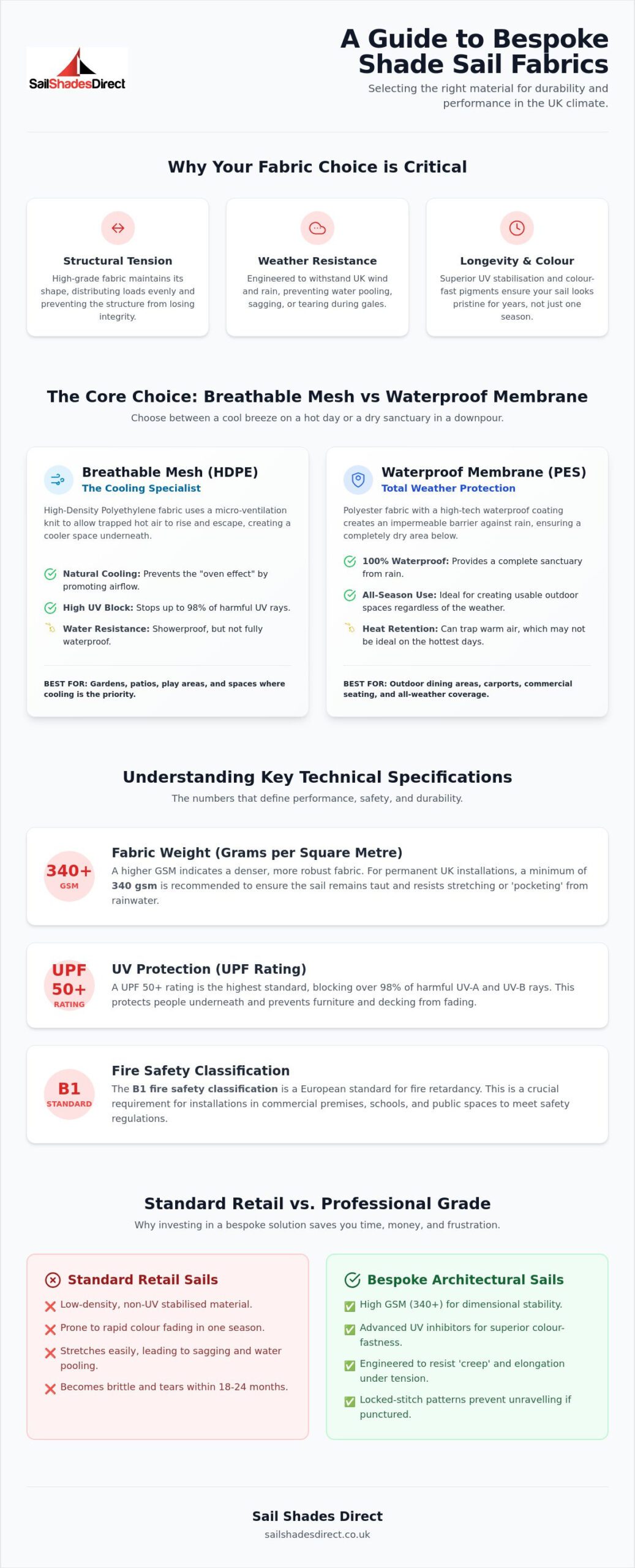
Structural tension is the primary reason why professional-grade textiles are superior. In the UK, we often deal with high winds and sudden heavy rain. If a fabric is too light or lacks dimensional stability, it will begin to “pocket.” This is where the material stretches out of shape, creating a bowl that collects rainwater. This weight can eventually pull fixings out of walls or snap stainless steel cables. By opting for a heavier weight material, typically measured in grams per square metre (gsm), you’re investing in a fabric that resists this stretching effect. For permanent UK installations, we recommend a minimum of 340 gsm to ensure the sail remains taut and effective.
This commitment to structural excellence is a hallmark of professional exterior work; similarly, Rainier Roofing LLC emphasises the importance of elite certifications when it comes to maintaining the safety and durability of a building’s roof.
The Limitations of Standard Retail Fabrics
Cheap, mass-produced sails often use low-density polyethylene (HDPE) that hasn’t been properly UV-stabilised. These materials suffer from rapid degradation, becoming brittle and prone to tearing within just 18 to 24 months. You’ll also notice significant colour fading, turning a vibrant navy into a dull grey in a single season. The hidden cost here isn’t just the replacement sail; it’s the frustration of constant re-tensioning and the eventual waste of buying the same product twice. Retail falls short because it prioritises price over performance. If you’re tired of this cycle, understanding why custom made sun sails outperform standard off-the-shelf alternatives is the first step towards a genuinely durable solution.
Why ‘Bespoke’ Means Better Engineering
When we talk about bespoke shade sail fabric, we’re referring to textiles designed for architectural longevity. These fabrics are custom-milled to ensure they don’t “creep” or elongate under constant tension. They feature locked-stitch patterns that prevent unravelling if the surface is ever punctured. More importantly, they offer tailored colour-fastness. Whether you choose a bold contemporary hue or a subtle neutral, the pigments are integrated deep within the fibres to withstand the bleaching effects of the sun, ensuring your outdoor space remains a beautiful, functional reprieve for years to come.
The Science of Performance: Breathable Mesh vs. Waterproof Fabrics
Choosing the right bespoke shade sail fabric often comes down to a choice between two distinct engineering philosophies. Do you prioritise a cool breeze on a sweltering July afternoon, or do you need a dry sanctuary during a sudden August cloudburst? The answer lies in the molecular structure and weave of the textile. Whilst both options offer excellent protection, they interact with the British elements in very different ways. Understanding these physical properties allows you to select a material that perfectly matches how you intend to use your outdoor space.
Breathable Mesh (HDPE): The Cooling Specialist
High-Density Polyethylene (HDPE) is a knitted fabric that functions much like high-performance athletic gear. It utilizes a “micro-ventilation” process where the open-knit structure allows trapped warm air to rise and pass directly through the material. This creates a natural chimney effect, drawing cooler air in from the sides and significantly reducing the temperature beneath the sail. This cooling capability is why mesh is the preferred choice for large garden sun shades. Even whilst blocking up to 98% of harmful rays, it prevents the “oven effect” often felt under solid roofs. When evaluating these materials, it is useful to reference American standards for UV-protective textiles to understand how different weave densities impact solar radiation and skin safety.
Waterproof Membranes (PES): Total Weather Protection
For those who require absolute shelter regardless of the forecast, Polyester (PES) membranes are the superior solution. Unlike the knitted structure of HDPE, PES is a solid, tightly woven material often enhanced with high-tech coatings like AustroNano. These fabrics are designed to manage hydraulic pressure, forcing rainwater to bead and run off the surface rather than penetrating the fibres. This provides 100% opacity, offering the deepest possible shade and a completely dry environment. Premium waterproof grades also boast self-cleaning properties; the nanotechnology coating ensures that dirt and organic matter are easily washed away by the rain, which is a significant advantage in the damp UK climate. For a deeper understanding of how these membranes perform across every season, our guide to waterproof sail shades and year-round outdoor protection covers the precision engineering behind staying genuinely dry.
The trade-off between these two materials is simple: mesh offers better heat dissipation and wind resistance, whilst waterproof fabrics provide total rain protection. In the UK, your choice should reflect your local micro-climate amongst the changing seasons. If your garden is a wind-prone sun trap, a breathable mesh is often more comfortable. However, if you want to protect your garden furniture from a drizzle, a waterproof membrane is essential. If you are still weighing up the benefits for your specific garden layout, you can explore our full range of textiles to see which one fits your lifestyle best.
Evaluating Technical Specifications: UV Protection, Opacity, and Fire Safety
When you’re comparing options, the technical data sheet is your most reliable ally. Understanding the specific technical specifications for shade sail fabrics is what separates a long-term architectural solution from a temporary fix. A high-quality bespoke shade sail fabric doesn’t just provide shade; it functions as a precision-engineered shield against the elements. These ratings tell you exactly how the material will behave when the sun is at its peak or if a stray spark from a barbecue drifts upwards.
The ambience of your outdoor space is heavily influenced by three solar factors: transmission, reflection, and absorption. Light-coloured fabrics typically reflect more heat, keeping the area beneath them cooler, whilst darker shades offer higher opacity and a more intimate, “closed-in” feel. If you want a bright, airy patio, you’ll look for a fabric with higher transmission. For a dedicated cinema room or a very private dining nook, a high-opacity textile is the better choice. Balancing these percentages ensures your installation delivers the exact mood you desire.
Safety Standards and Fire Retardancy
In both commercial and domestic settings, fire safety isn’t something to overlook. The B1 fire classification (under DIN 4102-1) is the gold standard for flame retardancy in the industry. This rating ensures the fabric is difficult to ignite and won’t contribute to the spread of a fire. It’s an essential requirement for sails installed near fire pits, outdoor kitchens, or in public spaces like school playgrounds. We always recommend checking that your chosen bespoke shade sail fabric complies with UK building and safety regulations to provide total peace of mind for your family or clients.
UV Resistance and Longevity
A “UPF 50+” rating is the highest possible classification for sun protection, meaning the fabric blocks at least 98% of harmful UV radiation. This isn’t just a surface coating; in premium textiles, UV inhibitors are integrated into the polymer during the extrusion process. This molecular-level protection prevents the fabric from becoming brittle or “chalking” over time. When reviewing warranties, look for brands that offer at least a 5-year guarantee against UV degradation. A longer warranty is a direct reflection of the manufacturer’s confidence in the fabric’s chemical stability amongst the varying intensity of British seasons.
- UPF 50+: Blocks 1/50th of UV radiation, providing maximum skin protection.
- B1 Classification: Certified flame retardant, crucial for safety near heat sources.
- Solar Absorption: Measures how much heat the fabric holds; lower is better for cooling.
- Dimensional Stability: Ensures the weave won’t warp or stretch under high tension.
Matching Fabric Grades to Your UK Outdoor Environment
The British landscape is incredibly diverse, meaning a sheltered inland garden faces entirely different challenges than an exposed coastal terrace. Your choice of bespoke shade sail fabric should be a direct response to your specific micro-climate. Selecting a grade that isn’t up to the task of your local conditions is a recipe for premature wear. We look at the environmental factors as the primary engineering constraints, ensuring your installation remains a reliable partner in your outdoor lifestyle for years to come.
The Coastal Challenge
If you live within five miles of the sea, salt air is your primary adversary. Salt spray is highly corrosive and can penetrate standard textile coatings, leading to a breakdown of the UV inhibitors we discussed earlier. For seaside homes, we recommend high-density mesh that allows wind to pass through whilst buffering the intensity of coastal gales. It’s also vital to pair your fabric with marine-grade 316 stainless steel hardware. This combination prevents the “tea staining” or rusting that often occurs when inferior materials are exposed to maritime conditions, keeping your sanctuary looking pristine despite the salt-heavy breeze.
Urban environments present a different set of hurdles. In bustling city environments, atmospheric pollution and particulate matter can settle on the surface of the sail. Premium fabrics with dirt-repellent “nano” coatings are essential here, as they prevent soot and grime from bonding with the fibres. Similarly, if you are planning a sail shade for hot tub areas, moisture management is critical. The constant rise of steam and chemical-laden water vapour requires a fabric that is either highly breathable to prevent mould growth or a high-performance waterproof membrane that can be easily wiped clean.
Maximising Year-Round Usability
To ensure your sail survives the fluctuating UK temperatures, dimensional stability is paramount. A fabric that expands and contracts too much between a frosty morning and a sunny afternoon will eventually lose its tension. High-tensile fabrics are designed to maintain their “memory,” returning to their original tautness even after being subjected to the weight of heavy autumn rain or light winter snow. A properly tensioned, high-grade sail can withstand constant winds of 60mph and gusts of up to 100mph, provided the fabric grade matches the exposure level of the site.
Colour choice also plays a functional role in heat management. In high-exposure sun traps, lighter shades reflect a higher percentage of solar energy, whereas darker colours absorb more heat. If your goal is to create a cool reprieve on a south-facing hillside, a silver or ivory mesh is often the most effective tool in your design kit. If you’re ready to see how these materials feel in person, you can request a custom fabric sample to find the perfect match for your home’s unique environment.
Premium Fabric Options at Sail Shades Direct
At Sail Shades Direct, we believe your outdoor space deserves more than a standard solution. We’ve spent years refining a portfolio of textiles that meet the rigorous demands of the UK climate whilst offering the aesthetic versatility you need to express your personal style. Selecting the right bespoke shade sail fabric is a journey we take together. Our range isn’t just a catalogue of colours; it’s a collection of engineered solutions designed to solve specific lifestyle problems. Whether you’re looking for the architectural precision of Soltis 92 or the heavy-duty durability of Austronet 950, we provide the technical mastery to ensure your project succeeds.
Soltis 92 is a favourite amongst designers for its unique “pre-contraint” technology. This process keeps the mesh exceptionally stable under high tension, preventing the sagging that plagues cheaper alternatives. If you require complete waterproof reliability, the AustroNano advantage is clear. This high-tech PES fabric is engineered to handle heavy runoff without compromising on style. We take immense pride in the craftsmanship of every sail we fabricate, ensuring the material is cut and sewn to the exact millimetre of your specifications.
Our Curated Fabric Portfolio
Every textile in our premium shading range comes with a 5-year UV warranty, protecting your investment against the bleaching effects of the sun. These fabrics are also treated for mould resistance, which is vital for maintaining a hygienic environment in the damp UK air. We offer a vast spectrum of shades, allowing for custom colour matching that seamlessly integrates with your existing outdoor décor and architectural features. For those looking to mirror this level of bespoke quality inside their home, Aussie Online Blinds offers a range of indoor solutions that complement high-end exterior shading. Our goal is to reduce your stress by providing a material that looks as good in year five as it did on day one.
From Concept to Installation
Our design team functions as your dedicated expert and friendly collaborator. We don’t just sell you a sail; we evaluate your site’s exposure, orientation, and functional needs to recommend the ideal fabric grade. This collaborative approach, backed by our in-house engineering and fabrication standards, ensures a result that is both safe and stunning. If you’re looking for more inspiration on how to transform your space, explore our bespoke sail shades UK guide to see the full potential of custom outdoor shading. We’re ready to help you organise the perfect bespoke shade sail fabric selection today.
Ready to Create Your Perfect Outdoor Sanctuary?
Your journey to a more comfortable and stylish environment starts with a single, well-informed choice. We’ve explored how the right bespoke shade sail fabric balances essential UV protection with the structural integrity needed to withstand the unpredictable British weather. Whether you require the cooling micro-ventilation of a high-grade mesh or the total rain protection of a waterproof membrane, the technical nuances of your material will define your installation’s longevity. By matching these fabric grades to your specific local environment, you’re not just buying a canopy; you’re investing in a durable reprieve from daily pressures.
With over 10 years of bespoke manufacturing experience and a commitment to Red Dot award-winning design principles, we’re here to be your reliable partner. Our nationwide UK installation and design service ensures that every detail, from fire safety to colour matching, is handled with professional precision. Are you ready to see the quality of our textiles for yourself? Please Request a Professional Fabric Sample and Quote today. Let’s work together to bring your vision to life and transform your garden into a space you’ll love for years to come!
Frequently Asked Questions
Is bespoke shade sail fabric completely waterproof?
Whether your bespoke shade sail fabric is waterproof depends entirely on the material classification you select. Breathable HDPE mesh is designed to be water-resistant, allowing rain to filter through to prevent heavy pooling. In contrast, our PES membranes are 100% waterproof, using high-tech coatings to shed water effectively. If you want to keep garden furniture dry, a waterproof membrane is the right choice, but it requires a steeper installation angle for runoff. To understand exactly how pitch angle and fabric specification work together, our complete guide to waterproof sail shades for year-round outdoor protection explains the engineering in full detail.
How long does premium shade sail fabric typically last in the UK?
A high-grade architectural sail typically lasts between 10 and 15 years when properly maintained in the UK. This longevity is supported by our 5-year UV warranties, which protect the material against becoming brittle or fading. Factors like local wind exposure and how often you clean the surface will influence the exact lifespan. Choosing a professional-grade textile ensures your investment remains a beautiful and functional part of your home for over a decade.
Can I leave my bespoke shade sail up during the winter months?
We generally recommend taking your sail down during the winter months to protect it from extreme weather. While the fabrics are incredibly strong, heavy snow loads can stretch the fibres or put excessive strain on your wall fixings. Storing your sail in a dry place during the coldest weeks prevents unnecessary wear and tear. It’s a simple way to extend the life of your installation and keep the material looking its best.
Does the colour of the fabric affect the level of UV protection?
Yes, colour plays a role in performance, though all our premium fabrics achieve a UPF 50+ rating. Darker colours like navy or anthracite typically provide higher opacity and slightly better UV absorption, creating a cooler-feeling shade. Lighter colours, such as ivory or silver, reflect more solar energy, which helps prevent heat build-up beneath the sail. We’ll help you balance these factors to ensure the ambience matches your skin protection needs perfectly.
What is the best way to clean and maintain my bespoke shade sail fabric?
The best way to clean your bespoke shade sail fabric is with a soft brush, mild dish soap, and lukewarm water. You should avoid using harsh chemicals, bleach, or high-pressure washers, as these can damage the protective UV coatings and weaken the fibres. Simply wet the sail, gently scrub any organic matter or bird droppings, and rinse thoroughly. Regular maintenance once or twice a season keeps the colours vibrant and prevents mould growth.
Are your fabrics fire-rated for use in commercial spaces like pubs or schools?
We offer a specific range of fabrics that carry the B1 fire classification, which is a requirement for many commercial and public spaces. These flame-retardant textiles are essential for installations in school playgrounds, pub gardens, or areas near outdoor cooking equipment. Choosing a fire-rated fabric ensures you comply with local health and safety regulations whilst providing a secure environment for your guests or students. We can provide all necessary certification for your project records.
What happens if my shade sail fabric gets a small tear or abrasion?
If your sail suffers a small abrasion, the structural integrity often remains intact because we use a lock-stitch knit pattern. Unlike cheaper retail versions, our architectural fabrics won’t unwrap or ladder if a single thread is cut. While small nicks don’t usually require immediate replacement, we recommend a professional inspection for larger tears. Keeping the sail properly tensioned is the best way to prevent the fabric from flapping and catching on nearby obstacles.
How do I know if I need a breathable mesh or a waterproof fabric?
You should choose a breathable mesh if your primary goal is heat reduction and wind resistance in a sunny garden. The micro-ventilation allows hot air to escape, keeping you significantly cooler. However, if you need to protect a hot tub or dining area from the rain, a waterproof fabric is the superior option. We’ll evaluate your site’s specific wind loads and drainage requirements to help you decide which material provides the best year-round utility.