
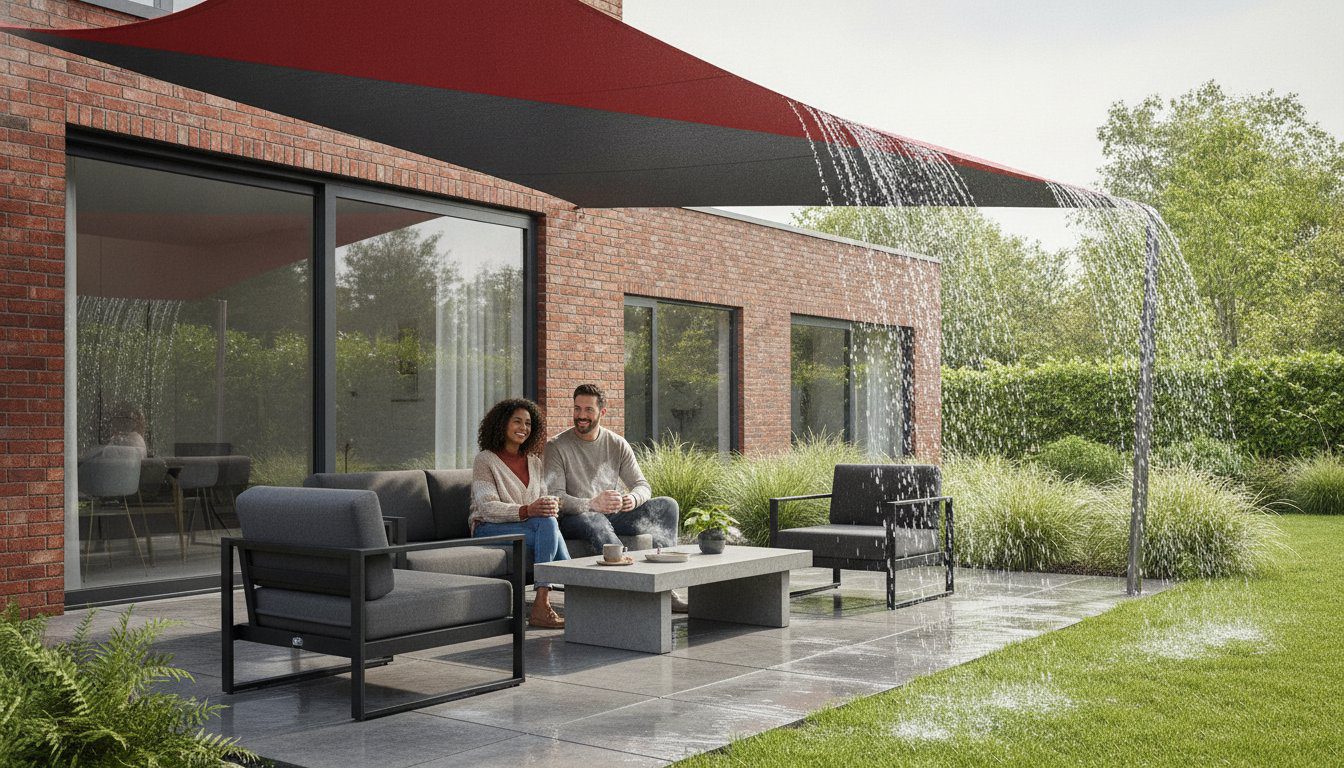
Waterproof Sail Shades: The Complete 2026 Guide to Year-Round Outdoor Protection
You might assume that staying dry under a canopy is simply a matter of picking a thick fabric, but the truth is that genuine year-round protection relies more on precision engineering than the material alone. We have all experienced that sinking feeling when a British summer garden party is cut short by a sudden downpour, only to find a cheap sun sail has become a heavy, sagging pond. It is frustrating to invest in your outdoor space only to have the weather, or poor equipment, dictate when you can actually enjoy it.
This guide will show you how to reclaim your garden and transform it into a truly all-weather sanctuary by choosing and installing the right waterproof sail shades. We understand that technical terms like Hydrostatic Head can feel overwhelming, so we are here to simplify the science of staying dry. You will learn how to achieve the perfect pitch to prevent water collection, discover the benefits of bespoke design for your specific patio dimensions, and gain the expertise needed to create a stylish, permanent rain cover that stands up to the elements. Let’s explore how professional craftsmanship can turn your outdoor area into a functional room you can use every single day.
Key Takeaways
- Learn why a high Hydrostatic Head rating is essential for the British climate and how 2026 standards guarantee your canopy remains completely dry.
- Master the 20-degree pitch rule to prevent dangerous water ponding and ensure your waterproof sail shades offer reliable protection.
- Discover how bespoke design and professional installation manage the heavy wind and water loads that can cause standard DIY kits to fail.
- Explore how to create a year-round outdoor room for dining or relaxing that adds genuine value and versatility to your home.
- Stay informed on the latest 2026 planning permission requirements for permanent garden structures to ensure your project is fully compliant.
Understanding Waterproof Sail Shades: More Than Just a Rain Cover
Most homeowners initially view a Shade sail as a simple summer accessory designed to block the glare of the July sun. However, investing in high-quality waterproof sail shades changes the entire dynamic of your property. It transforms a seasonal patio into a functional, year-round outdoor room. This shift from temporary sun-shading to permanent weather protection is a design choice that prioritises both lifestyle and property value. When you choose a bespoke waterproof structure, you aren’t just buying a piece of fabric; you’re creating a reliable reprieve from the unpredictable British weather.
The aesthetic difference is striking. Whilst standard mesh sails often have a slightly translucent, net-like appearance, waterproof versions utilise premium architectural fabrics that offer a solid, opaque finish. These materials provide a clean, modern look that complements contemporary home extensions and landscaped gardens. They feel substantial and intentional, acting as a sleek architectural feature rather than a flimsy add-on. This premium finish is exactly what helps bridge the gap between your indoor living space and the garden, making the transition feel seamless and sophisticated.
The Limitations of Standard Sun Sails
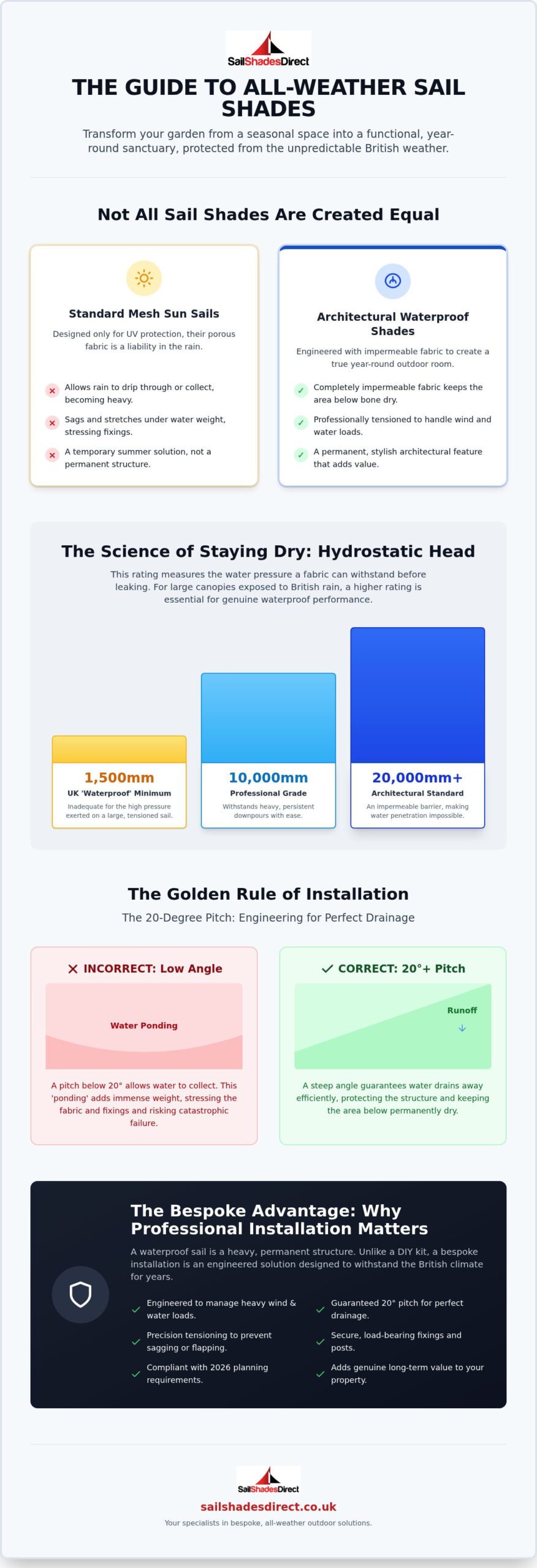
Standard mesh sails are engineered for one primary purpose: UV protection. Their porous structure allows hot air to rise through the fabric, keeping the area underneath cool. Whilst this is perfect for a heatwave, these sails fail the moment the clouds burst. Water doesn’t just drip through; it often collects in the weave, adding immense weight to the fabric. If you try to use a sun-only sail as rain protection, the result is usually a sagging, stretched-out mess that puts dangerous levels of stress on your wall fixings. Using the wrong tool for the job can lead to structural failure during a typical British downpour.
Defining the Waterproof Standard for 2026
In 2026, the standard for a truly waterproof installation has evolved beyond simple “showerproof” coatings. A professional-grade sail is built from robust materials like PVC-coated polyester. This fabric is completely impermeable, ensuring that even during persistent rain, the area beneath remains bone dry. This level of protection allows you to keep your favourite outdoor furniture and cushions outside much longer into the autumn months. It creates a dependable environment where you can host a dinner party or enjoy a morning coffee without constantly checking the weather forecast. By opting for a bespoke, professionally fitted solution, you ensure the fabric is tensioned to handle the increased weight and wind loads that come with a solid, waterproof surface.
The Technical Science: Hydrostatic Head and Fabric Selection
Understanding the science behind your canopy is the best way to ensure your investment lasts through years of British winters. It isn’t just about the thickness of the material; it’s about how the fabric handles pressure. When rain hits a large surface, it exerts a physical force that can push moisture through the weave of inferior materials. This is why professional-grade waterproof sail shades rely on rigorous technical standards to guarantee they remain bone dry regardless of the intensity of the downpour.
Most entry-level products use a Durable Water Repellency (DWR) coating. This chemical treatment makes water bead off the surface, which works well initially but inevitably degrades due to UV exposure and friction. For a permanent structure, you should look for solid membranes or PVC-coated materials. These provide a physical, impermeable barrier that doesn’t just repel water but makes it physically impossible for it to pass through. This distinction is what separates a seasonal sun shade from a true all-weather architectural feature.
What is Hydrostatic Head for Sail Shades?
Hydrostatic Head is the measurement of water pressure a fabric withstands before penetration. Whilst a 1,500mm rating is the legal minimum for a fabric to be classified as waterproof in the UK, it is rarely enough for a large-scale garden structure. A camping tent might survive with 1,500mm because it has a small surface area and steep, shedding angles. A garden sail covers a much larger span, meaning rain can exert significant pressure across the centre of the fabric. In 2026, high-quality architectural sails often feature ratings of 10,000mm or even 20,000mm to ensure they stand up to relentless, heavy rain without a single drop seeping through.
UV stability is the silent partner of waterproofing. Without high levels of UV resistance, the sun’s rays eventually break down the chemical bonds in the fabric or its waterproof coating. This leads to micro-cracks that let moisture seep through, regardless of the initial rating. High-grade PVC-coated polyester is specifically engineered to resist this degradation, ensuring the material remains flexible and watertight for over a decade. If you are unsure which material suits your garden’s specific exposure, our team can help you explore bespoke options tailored to your environment.
Choosing Bespoke Shade Sail Fabric
When choosing bespoke shade sail fabric, you must consider the balance between durability and aesthetics. PVC-coated polyester is the gold standard for permanent installations, offering a lifespan of 10 to 20 years and excellent resistance to dirt and algae. If you prefer a more traditional fabric-like texture, high-density treated polyesters provide a softer look whilst still maintaining impressive water resistance. Colour choice also plays a practical role; lighter hues like cream or light grey reflect more solar heat, keeping the area beneath cooler during a heatwave, whilst darker shades can provide a more dramatic, architectural feel to your patio.
Engineering for the British Climate: Pitch, Tension, and Drainage
Installing waterproof sail shades involves far more than simply stretching a piece of fabric between three or four points. Because the material is impermeable, it acts as a solid catchment area for every drop of rain that falls. This creates a unique set of physical challenges that standard mesh sails simply don’t face. To ensure your outdoor space remains dry and safe, you must account for the “sail effect” where the canopy captures both wind and water with immense force. Engineering for the British climate means prioritising structural integrity from the very first measurement.
The most critical factor in a successful installation is the pitch. Without a significant slope, water will inevitably find the lowest point of the fabric and begin to settle. This is why professional installers insist on the 20-degree rule. By ensuring at least one corner is significantly lower than the others, you allow gravity to do the heavy lifting. This constant drainage prevents the fabric from stretching and protects your property from the sheer weight of accumulated rainwater.
Preventing Water Pooling (Ponding)
Ponding is the primary cause of failure for poorly installed waterproof canopies. Water is deceptively heavy, weighing exactly 1kg per litre. During a typical British downpour, a small, inconspicuous dip in your sail can quickly collect 50 or 100 litres of water. This creates a dangerous, concentrated load that can exceed several hundred kilograms in minutes. This weight doesn’t just damage the fabric; it places extreme leverage on your house walls and mounting posts. To avoid this, bespoke designs often utilise “hypar” shapes (hyperbolic paraboloids), where two corners are high and two are low, creating a natural, tensioned curve that forces water to shed instantly.
Tensioning and Structural Integrity
To remain effective, a waterproof sail must be kept drum-tight. Any slackness allows the wind to get under the fabric, creating a billowing effect that can rattle fixings and weaken masonry over time. This is why we utilise heavy-duty stainless steel turnbuckles and marine-grade hardware to maintain constant, high-level tension. Standard off-the-shelf kits often lack the robust hardware needed to handle these increased loads, which is why custom made sun sails are the safer choice for permanent UK installations. By using bespoke measurements, we ensure every fixing point is perfectly aligned to the specific load-bearing capacity of your walls or timber posts, giving you peace of mind even during a stormy autumn night.
Versatile Applications: From Hot Tubs to Commercial Terraces
Once you understand the engineering behind waterproof sail shades, the possibilities for your outdoor space expand significantly. These structures do more than just provide cover; they define new functional zones that remain usable regardless of the forecast. Whether you are looking to protect a high-end outdoor kitchen or want to ensure your weekend plans aren’t at the mercy of a drizzle, a bespoke canopy offers a versatile solution. It is about creating a dependable environment where you can enjoy your favourite home recipes alfresco, even when the British clouds decide to open up. If you are still exploring the full range of options available, our guide to garden sun protection ideas for UK homes covers a broad spectrum of solutions to suit every outdoor space.
Your outdoor furniture and expensive BBQ setups are significant investments that deserve protection from the elements. Constant exposure to rain and UV rays can cause timber to rot, metal to rust, and fabrics to fade. By installing a permanent, waterproof barrier, you effectively extend the life of your garden assets. It turns a vulnerable patio into a sheltered haven, allowing you to leave cushions out and keep the grill ready for action throughout the autumn months.
Sail Shades for Hot Tub Areas
For many homeowners, the ultimate luxury is a year-round spa experience, but nothing ruins a relaxing soak like cold rain on your face. A bespoke sail shade for hot tub areas provides the perfect balance of shelter and atmosphere. Unlike a solid roof, a tensioned sail allows for excellent ventilation, which is crucial for managing steam and preventing moisture buildup. The solid, opaque nature of waterproof fabrics also offers a higher level of privacy from neighbouring windows compared to standard mesh, making your spa area feel like a truly secluded retreat.
Commercial Shading Solutions
In the business world, outdoor space is often synonymous with revenue. For restaurants, pubs, and cafes, a wet terrace usually means lost covers and a quiet afternoon. Investing in professional commercial shading solutions UK allows businesses to maximise their floor plan every day of the year. These structures are built to meet rigorous British safety standards for wind and snow loading, ensuring they remain a safe and stylish asset for the long term. A well-designed waterproof sail can transform a damp, unused corner into a premium dining spot that guests will choose even in the middle of October.
If you are ready to see how a custom installation can redefine your property, our team is here to help you request a bespoke design consultation today.
The Bespoke Advantage: Why Professional Installation Matters
Whilst a simple mesh sail might survive a slightly loose fixing, waterproof sail shades act as solid surfaces that catch every gust of wind and every litre of rain. This creates immense physical pressure that can easily compromise standard DIY hardware or poorly positioned wall plates. Many off-the-shelf kits fail during their first heavy storm because they simply aren’t designed to handle the “wing effect” of an impermeable fabric. Professional installation isn’t just about getting the fabric tight; it’s about ensuring your home’s structural integrity remains protected when the weather turns aggressive.
Our expert fitters don’t rely on guesswork. We calculate specific wind and snow loads based on your exact UK region and the exposure levels of your garden. A coastal property in Cornwall faces significantly different environmental stresses than a sheltered patio in a London suburb. By accounting for these variables during the planning stage, we provide a professionally engineered shading system that offers genuine long-term value. Just as Maritime DAO offers a stable, regulated framework for maritime asset financing, our engineering ensures your property assets are protected against the harshest environments. You gain the peace of mind that comes from knowing your canopy is anchored with marine-grade stainless steel and positioned to shed water perfectly, every single time.
The Design and Manufacture Process
Every project we undertake begins with a precision mindset. We utilise custom CAD design to create a digital twin of your space, ensuring that every angle and tension point is optimised before a single piece of fabric is cut. This bespoke approach allows us to ensure the sail complements the unique architectural style of your property, rather than looking like an afterthought. Whether you have a modern glass extension or a traditional stone terrace, our bespoke sail shades UK are manufactured to fit your specific dimensions down to the last millimetre.
Maintenance and Longevity
To keep your canopy performing at its best, a small amount of regular care goes a long way. Cleaning your waterproof sail with a soft brush and mild detergent helps to prevent the buildup of organic matter, which can eventually compromise the fabric’s water-shedding behaviour. Whilst high-grade PVC sails are designed to stay up for much of the year, we often recommend a quick inspection of the turnbuckles and fixings after a period of particularly heavy weather. Ensuring the tension remains drum-tight is the best way to prevent the fabric from flapping, which is the primary cause of wear and tear. For those in areas prone to heavy snow, we provide clear guidance on winter care to ensure your waterproof sail shades continue to provide a stylish, dry sanctuary for many years to come.
Reclaim Your Garden for Every Season
You now have the knowledge to move beyond temporary sun-shading and invest in true all-weather protection. We’ve explored how the technical science of Hydrostatic Head ratings and the precision of the 20-degree pitch rule work together to keep your patio bone dry. By choosing professionally engineered waterproof sail shades, you are opting for a permanent architectural feature that stands up to the British climate whilst adding sophisticated style to your property. It’s a shift from merely surviving the rain to thriving in your outdoor space, no matter what the forecast says.
At Sail Shades Direct, we are dedicated to helping you create that perfect sanctuary. Our professional UK-wide installation ensures structural safety, whilst our high-performance architectural grade fabrics are custom-made for every project to guarantee a flawless fit. Don’t let another rainy afternoon go to waste. Request your bespoke waterproof sail shade consultation today and start enjoying your garden on your own terms. We look forward to helping you design an outdoor room you’ll love for years to come.
Frequently Asked Questions
Are waterproof sail shades completely rainproof?
Yes, high-quality waterproof sail shades are completely rainproof if they meet the UK legal standard of a 1,500mm hydrostatic head rating or higher. Most professional-grade architectural fabrics far exceed this minimum, creating an impermeable barrier that blocks 100% of rainwater. Their performance relies on a combination of fabric quality and a tensioned installation that prevents water from sitting on the surface and eventually soaking through the weave.
How do I stop my waterproof sail shade from sagging in the middle?
You stop a sail from sagging by ensuring it is under constant, high-level tension using marine-grade stainless steel turnbuckles. Sagging is often the result of using inferior hardware that stretches or wall fixings that have moved over time. Professional installers use heavy-duty perimeter webbing and precise measurements to ensure the fabric remains drum-tight, which is essential for managing the weight of rain and wind.
Can I leave a waterproof sail shade up during the winter?
You can leave a bespoke, professionally installed sail up during the winter provided it is engineered to handle UK wind and snow loading. Whilst many residential-grade sails are best taken down to avoid damage from heavy snow, a custom-engineered structure using architectural materials can remain in place year-round. It’s essential to ensure the pitch is steep enough to shed snow and that the fixings are checked before the colder months arrive.
What is the best pitch for a waterproof sail shade to ensure drainage?
The industry standard for effective water drainage is a minimum pitch of 20 degrees, which translates to a 1 in 3 slope. This steep angle ensures that gravity pulls rainwater off the surface before it has a chance to pool or create a dangerous “pond”. In areas where a single slope isn’t possible, we design hyperbolic paraboloid shapes that use opposing high and low points to force water away from the centre.
Are waterproof sail shades noisier than mesh shades when it rains?
Waterproof sail shades can be slightly noisier than mesh versions because the rain hits a solid, tensioned membrane rather than passing through a weave. Some people find the rhythmic sound of rain on the canopy quite relaxing, whilst others describe it as a soft drumming. Because the fabric is under high tension, it doesn’t flap in the wind, which eliminates the most common source of noise associated with outdoor canopies.
Do waterproof sail shades provide UV protection as well?
Yes, waterproof sail shades offer exceptional UV protection, typically blocking over 95% of harmful rays. The solid nature of the PVC-coated or treated polyester fabric provides a total shade solution that protects your skin and prevents your outdoor furniture from fading. This makes them a versatile choice for families who want a safe, cool environment during the peak of summer whilst remaining dry during a sudden shower. For a broader look at how to protect your family outdoors, our article on inspiring garden sun protection ideas for UK homes in 2026 offers a wealth of complementary approaches.
What is the difference between water-resistant and waterproof fabrics?
The primary difference is that waterproof fabrics are completely impermeable to water, whilst water-resistant materials only repel light moisture for a limited period. Water-resistant sails often rely on a temporary chemical coating that eventually wears off due to UV exposure. In contrast, a true waterproof sail uses a physical membrane or a heavy-duty PVC coating that remains watertight even under the sustained pressure of a heavy downpour.
How much wind can a waterproof sail shade withstand?
A professionally installed sail is engineered to adhere to British Standard BS 6399 for wind and snow loading, allowing it to withstand significant gales. Because these sails act like a solid wing, they face much higher loads than mesh sails that allow air to pass through. We use heavy-duty mounting posts and reinforced masonry fixings to ensure the structure remains stable during the typical storms experienced across the UK throughout the year.