
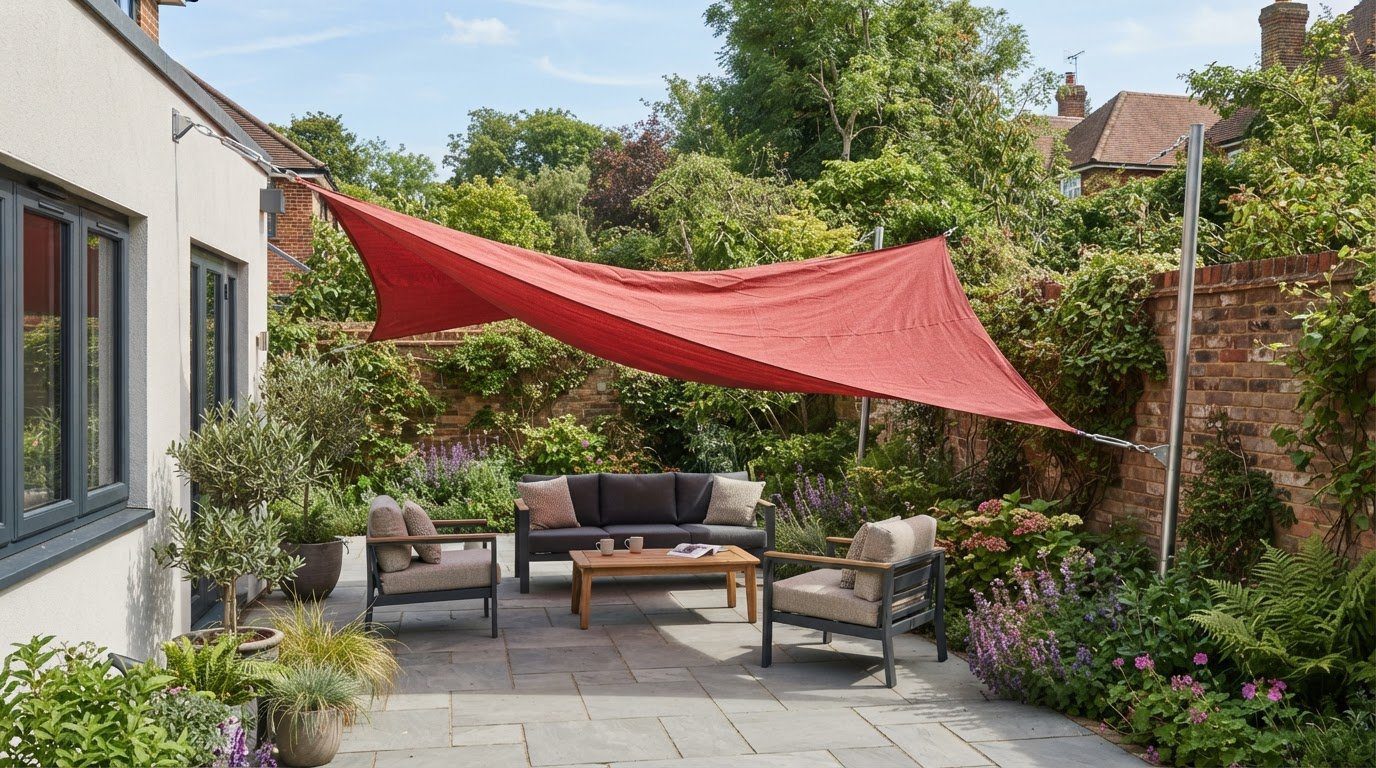
Common mistakes when buying garden shades that can cause sagging or poor fit
The biggest shade sail may still be the wrong fit for your garden. Common mistakes when buying garden shades include choosing by appearance alone, measuring the area to cover instead of the fixing points, and overlooking the shape and tension the space requires. A sail that is too large or poorly supported can sag, flap or leave awkward gaps.
It’s easy to focus on how much shade you want and miss how the garden’s layout, boundaries and sun exposure affect the fit. This guide explains how to measure your space, choose a suitable shape, provide even tension and reduce the risk of sagging. It also covers planning considerations to bear in mind before installation, helping you make a confident choice for your outdoor space.
Key Takeaways
- Before choosing a shade, consider its height, position, distance from boundaries and intended use against applicable planning restrictions.
- Material quality and exposure affect how long a sail lasts; a slight slope also helps rainwater run off instead of pooling.
- Plan for sturdy fixing points and adequate tension, and remember that fabric can stretch with wind, sun exposure and temperature changes.
- Measure between the fixing points, then choose a shape that suits the space and the area you want shaded.
1. Local regulations, permits and property boundaries
One of the common mistakes when buying garden shades is assuming permitted development automatically covers every installation. Some larger shade structures may need permission, and local rules can restrict how close supports sit to a property boundary. Requirements depend on the structure and its location, so check before choosing the sail or fixing points.
Start with your local planning authority. Describe the proposed shade, its height, position, intended use and distance from each boundary. A sail above a patio, for example, may raise different planning questions from a small cover attached to an existing wall. Provide a clear plan showing the garden, nearby buildings and proposed supports. This can help identify which rules apply to your arrangement.
Permitted development often applies to outbuildings such as garden rooms, but that does not automatically settle the rules for a shade sail. Outbuilding conditions can concern height, size, position and distance from boundaries. A garden room near a boundary, for instance, may need a different assessment from a freestanding sail covering a seating area. Treat each structure separately rather than assuming one approval or exemption covers the whole garden.
Before ordering, mark the intended anchor points on a simple site plan and note their distance from fences and neighbouring property. Check whether the supports will stand on your land, attach to your home or involve a shared boundary. If the installation is near a boundary or forms a larger structure, raise those details with the local planning authority. Keep its response with your drawings and installation plans. This can help avoid moving a support after selecting the sail, and help you choose a position that suits both the space and applicable planning conditions.
2. Why does my shade sail sag in the middle?
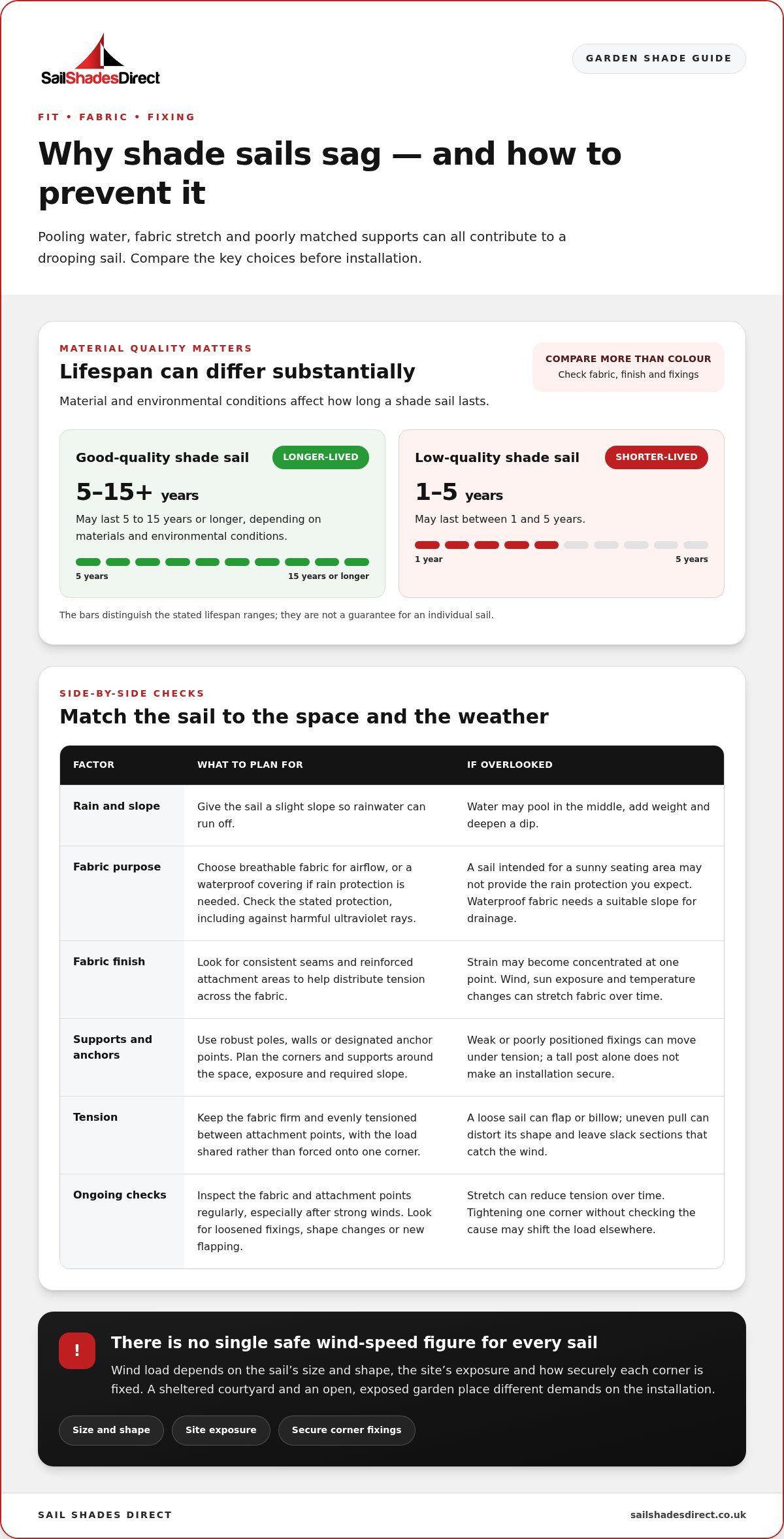
A sagging centre can point to water pooling, fabric stretching or a mismatch between the sail and its supports. A slight slope helps rainwater run off instead of collecting in the middle. Without that fall, water adds weight and can deepen the dip. Fabric quality also matters: a good-quality shade sail can last 5 to 15 years or longer, depending on its materials and environmental conditions. A low-quality sail may last between 1 and 5 years.
Look beyond appearance when comparing materials. Check whether the fabric is designed to let air through or keep rain out, then match it to how you’ll use the space. Breathable fabric allows airflow; a waterproof covering needs a suitable slope so rain can drain rather than pool. A sail designed for a sunny seating area may not suit a spot where you expect rain protection. Check that the stated purpose includes the protection you need, including protection from harmful ultraviolet rays.
Construction matters too. Inspect the edge finish and the position of the fixing points. Consistent seams and reinforced attachment areas can help distribute tension across the fabric instead of concentrating strain at one point. Compare these details alongside material quality, not just colour or the shape shown in a photograph. Wind, sun exposure and temperature changes can stretch fabric over time, so a sail that starts taut may need attention as it ages.
Foundations are a separate but relevant part of planning a garden project. If your shade installation is part of a wider project that includes a garden room, check whether its foundation is included in the quoted price and what materials it uses. The foundation type affects the preparation and support needed for that structure. Keep this separate from the sail itself: a garden-room foundation does not explain a sagging sail, but overlooking it can leave the wider project poorly planned. For the sail, prioritise suitable fabric, sound construction and a slope that sheds water.
3. Secure installation and tension adjustment
There’s no single wind-speed figure that applies safely to every shade sail. Wind load depends on the sail’s size and shape, the site’s exposure and how securely each corner is fixed. A sheltered courtyard and an open, exposed garden place different demands on an installation, so a generic wind-speed rating can’t describe every setup.
Use robust supports, such as suitable poles, walls or designated anchor points. Post height depends on the space, the fixing points and the slope needed for water to run off. Supports must suit the forces transferred through the sail; a tall post or weak fixing can move under tension. Don’t treat height as a stand-alone measurement.
Tension matters. A loose sail can flap or billow, increasing movement across the fabric and its fixings. Tension it sufficiently so the fabric sits firm between its attachment points, without forcing the load onto one corner. Check that each anchor remains secure and the fabric is evenly tensioned. Uneven pull can distort the shape and leave a slack section that catches the wind.
Allow for changes over time. Wind, sun exposure and temperature changes can stretch the fabric, reducing tension after installation. Inspect the sail and its attachment points regularly, especially after strong winds. Look for loosened fixings, changes in the fabric’s shape or new flapping, then address the cause rather than simply pulling one corner tighter. A change at one point can shift the load elsewhere.
Before choosing a sail, map its corners and supports onto the garden layout. Consider nearby walls, suitable poles, the direction of exposure and the planned slope. This makes it easier to judge whether the fixing points can create even tension and a stable shape. Strong supports, well-positioned anchors and suitable tension work together; none can compensate for a weak point elsewhere in the installation.
There is no single safe wind-speed rating for all shade sails or garden canopies. The wind they can withstand depends on their size and shape, site exposure and how securely each corner is fixed.
Use robust supports such as suitable poles, walls or designated anchor points, with fixings secure enough to handle the forces transferred through the sail. Post height should suit the space, fixing points and slope needed for water runoff. Position the anchors to allow even tension and a stable shape.
4. Measuring the outdoor area and choosing the right sail shape
Measure the fixing points, not just the patch of ground you want shaded. A patio may look rectangular, but walls, doors and planting can make its usable area uneven. Sketch the garden from above and mark each possible anchor point, noting whether it is on a wall or a separate support. Record the distances between points and the clear space beneath them.
Next, mark the area where shade matters most. A table may need cover at lunchtime, while a play area may need shade across a different part of the garden. Observe how sunlight moves across the space and changes angle through the seasons. This helps you judge whether one sail can cover the priority area or whether its position would leave an important section exposed.
Let the fixing layout guide the shape. A triangular sail can suit three available anchor points or an irregular corner, while a square or rectangular sail may better match a broad patio with four well-positioned supports. These are starting points, not rules: the distance and height of each anchor affect the finished outline. A shape that looks right in a product image may not fit your garden’s walls, boundaries or usable space.
Draw the proposed sail between the marked fixing points before choosing its dimensions. Check that its edges won’t obstruct a doorway, window or route through the garden. Consider the slope needed for water runoff too, since it changes the height at each corner and the shaded area below. A flat plan alone can hide this difference.
Use your sketch, measurements and priority shade area together. The best fit follows the available anchors and covers the place you actually use, rather than simply filling the largest possible footprint. If you’d like a shade planned around your garden’s measurements, discuss your outdoor shade design.
Sail Shades Direct: Bespoke Sail Shades
Sail Shades Direct designs and supplies Bespoke Sail Shades for outdoor spaces where standard dimensions or shapes don’t suit the fixing points. Your measurements, preferred shade area and anchor positions help shape a solution that fits the garden’s layout. It’s a useful next step if you’ve mapped the space but aren’t sure how to turn those measurements into a suitable sail.
For a different arrangement, Rolling Sun Sails offer another shading option, while Awnings and Giant Umbrellas suit other outdoor settings. The right choice depends on the space you want covered and how you plan to use it. Share your measurements and priorities with Sail Shades Direct to discuss a suitable option.
Contact Sail Shades Direct to discuss your garden shade requirements.
Make your outdoor space work for you
A shade should support the way you want to use your garden, not dictate where you sit or move. Before deciding, picture an ordinary day outdoors: where people gather, which routes need to stay clear and how the space might change when furniture is rearranged. These practical details can help make a shade a natural part of the garden’s design.
Avoiding common mistakes when buying garden shades also means considering the whole setting, rather than treating the sail as a separate purchase. If you’re ready to take the next step, share your ideas and requirements with Sail Shades Direct. The team can help you explore an approach suited to your outdoor space.
Contact Sail Shades Direct for advice and move towards a garden shade that feels considered, comfortable and truly yours.
Frequently Asked Questions
Why does my shade sail sag in the middle?
A sail often sags because water has collected, the fabric has stretched or its tension has loosened. Check whether the dip appeared after rain or whether one edge now looks slack. Then inspect each attachment point for movement before adjusting anything. Pulling one corner tighter without checking the others can distort the sail further, so assess the whole outline and support arrangement.
What are the most common mistakes when buying garden shades in the UK?
Common mistakes when buying garden shades include choosing a size before mapping the fixing points, overlooking local planning considerations and selecting fabric without matching it to its intended use. A shade that covers the patio on paper may obstruct a doorway or miss the seating area in practice. Sketch the garden, mark access routes and supports, then compare the proposed coverage with where you spend time outdoors.
How do I measure a garden correctly for a shade sail or canopy?
Measure between the intended fixing points, rather than measuring only the ground area to cover. Draw the garden from above and label each point, such as a wall corner or planned post. Note obstacles including doors, windows, trees and paths. Then compare the outline with the area where you want shade at different times of day. This gives you a more useful plan than a single patio width and length.
Which garden shade materials offer the best UV protection and weather resistance?
Choose fabric with clear information about UV protection and the conditions it is designed for; material names alone don’t establish performance. Consider whether you need filtered sunlight, rain protection or both, then assess those requirements separately. Think about how exposed the garden is and how you’ll use the shaded area. Check the product’s stated purpose and care guidance before deciding, rather than relying on appearance or colour.
How do I choose the right size and shape of shade sail for my garden?
Choose a shape that works with your actual anchor positions and covers the area you use most. An awkward garden corner, for example, may suit a different outline from a broad, open patio. Mark the sail’s proposed edges on your plan and check that they don’t cross a doorway or important walking route. Consider sunlight at the times you use the space, not just the garden’s overall footprint.
Do garden shade sails need to be waterproof or breathable in the UK climate?
Neither option suits every garden. Choose according to whether your priority is rain protection or airflow. Breathable fabric lets air pass through, while a waterproof covering needs a layout that allows rain to drain away. Consider where people sit, how exposed the spot is and whether you need shelter during showers. Decide which function matters most before comparing fabrics, so your choice suits how you’ll use the space.