
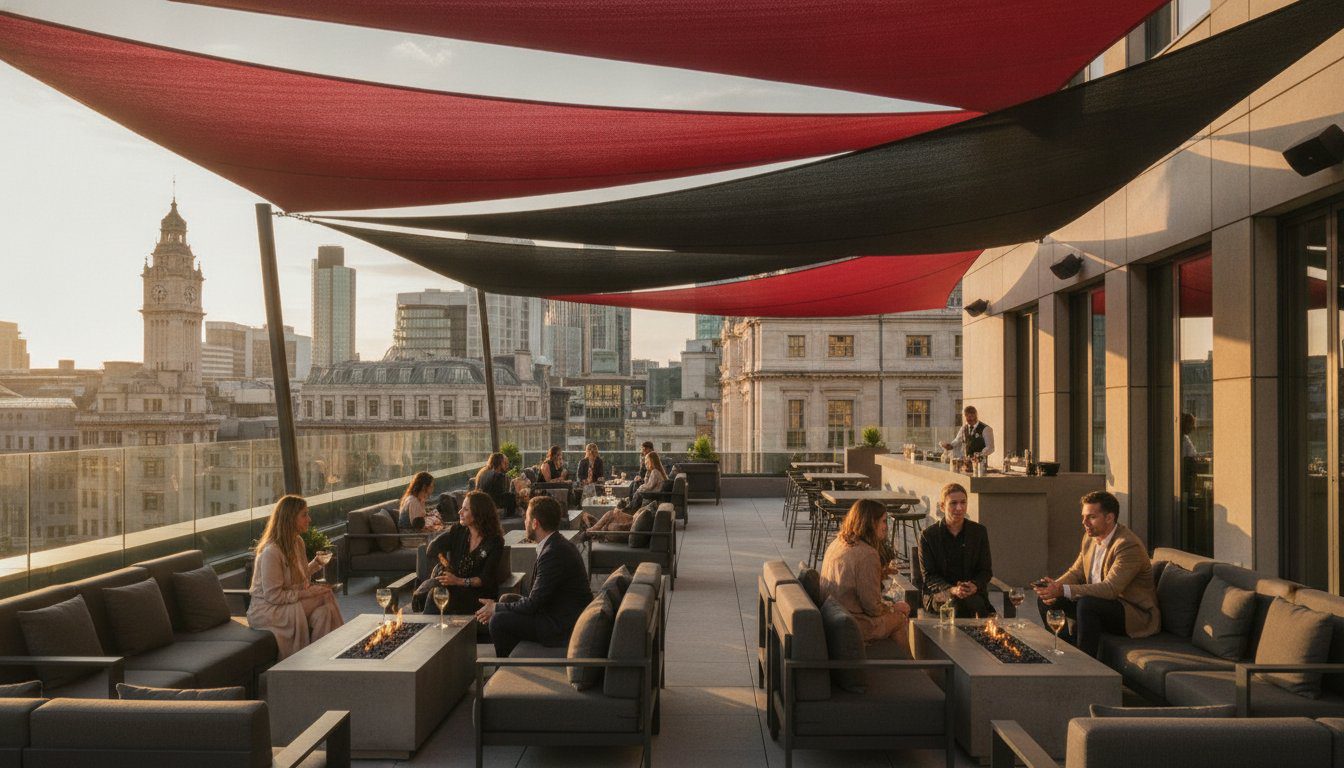
Hotel Terrace Sun Protection: Maximising Guest Comfort and Revenue in 2026
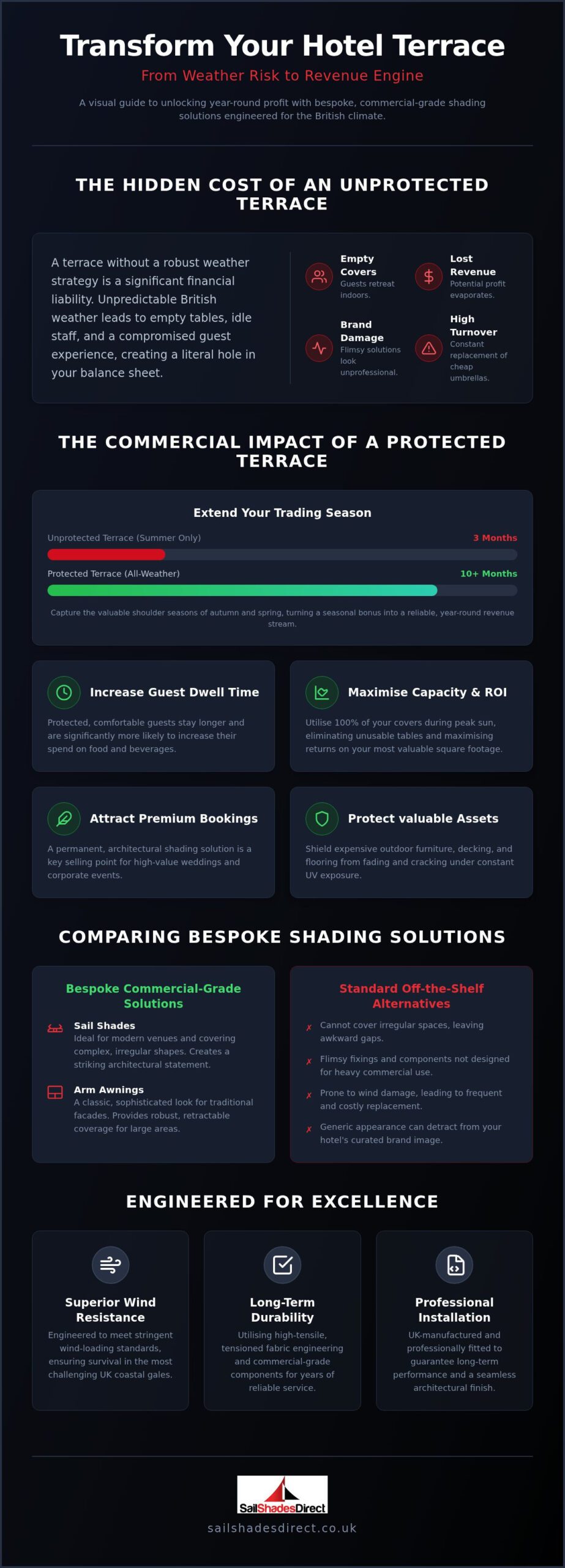
In 2026, a hotel terrace without a robust weather strategy isn’t just an underused asset; it’s a literal hole in your balance sheet where potential revenue simply evaporates. You’ve likely felt the frustration of watching a sudden coastal gust or a light afternoon drizzle clear out your most scenic tables, leaving covers empty and staff idle whilst guests retreat indoors. It’s a common struggle to maintain that premium brand image when flimsy, off-the-shelf umbrellas buckle in the wind or look out of place against your carefully designed architecture. Investing in bespoke hotel terrace sun protection is no longer just about providing shade; it’s about reclaiming every square inch of your property for year-round profit.
We understand that your outdoor space should be a sanctuary for guests and a powerhouse for your bottom line. This article explores how tailored shading solutions, from rolling sun sails to precision-engineered arm awnings, can transform your terrace into a high-yield, all-weather destination. We’ll preview the latest trends in durability and aesthetics, helping you choose systems that offer a signature look with minimal maintenance. Discover how to turn the unpredictable British climate into a competitive advantage that keeps your guests comfortable and your revenue flowing.
Key Takeaways
- Learn how high-quality shading extends guest dwell time and boosts beverage revenue by turning weather-exposed terraces into reliable trading zones.
- Discover why bespoke hotel terrace sun protection, such as rolling sun sails or arm awnings, outperforms off-the-shelf solutions in complex architectural spaces.
- Understand the importance of wind-loading standards and tensioned fabric engineering to ensure your installation survives the most challenging UK coastal gales.
- Gain insights into selecting colour palettes and configurations that enhance your hotel’s signature brand image whilst maintaining a comfortable guest flow.
- Explore the advantages of UK-manufactured shading and professional fitting to guarantee long-term durability and a seamless architectural finish.
The Commercial Value of Premium Hotel Terrace Sun Protection
In the 2026 hospitality market, commercial-grade sun protection has evolved beyond simple shade. It is now a sophisticated, engineered response to guest demand for high-quality outdoor experiences. High-end hotel terrace sun protection serves as a structural extension of your brand, designed to withstand the rigours of heavy daily use and the volatile British weather. By integrating Modern shade sails or automated arm awnings, you aren’t just buying hardware; you’re investing in a revenue engine that ensures your most valuable square footage remains operational regardless of the sun’s intensity.
When guests feel protected from harsh UV rays, their dwell time naturally increases. A comfortable guest is far more likely to order that second bottle of wine or linger for a full afternoon tea. Beyond the immediate beverage spend, these installations provide a signature architectural look that attracts premium event bookings. Wedding planners and corporate organisers look for venues where the outdoor space feels finished and intentional, rather than an afterthought. Additionally, these systems act as a shield, preventing expensive teak furniture and designer outdoor flooring from fading or cracking under constant UV exposure.
Extending the Outdoor Season in the UK
Transforming a seasonal terrace into a year-round revenue generator requires a shift in mindset. In the UK, a protected outdoor space provides a psychological sense of enclosure that makes guests feel secure even as the temperature dips. When you combine bespoke sun sails or awnings with integrated infrared heating, you effectively capture the shoulder seasons of autumn and spring. This versatility means your terrace isn’t just a summer bonus; it’s a reliable part of your capacity planning for ten months of the year.
ROI: Calculating the Value of Extra Covers
Consider the impact of peak sun on an unshaded terrace. Without protection, dozens of covers become unusable for hours during lunch service. Bespoke shading allows you to maintain full capacity through the hottest parts of the day, often supporting significantly more covers during peak periods compared to exposed sites. Whilst the initial outlay for a custom installation is higher than buying off-the-shelf umbrellas, the amortisation over five to ten years tells a different story. You avoid the constant replacement cycle of broken ribs and faded fabrics associated with cheaper alternatives. A bespoke shading installation serves as a permanent, visually striking marketing asset that provides the perfect backdrop for guest-generated social media content, effectively advertising your premium outdoor experience for free.
Comparing Bespoke Solutions: Sail Shades, Awnings, and Giant Umbrellas
Every hotel terrace has its own architectural personality, from sleek modern rooftops to ornate Victorian garden patios. This is why “one-size-fits-all” kits usually fail. Generic kits often leave awkward gaps in coverage or rely on flimsy fixings that simply aren’t up to the task of long-term commercial use. Choosing the right hotel terrace sun protection requires a strategy that respects your building’s footprint whilst providing maximum utility. Bespoke sail shades are frequently the first choice for modern venues because they create a striking architectural statement. They can be engineered to cover irregular shapes that traditional structures simply cannot reach, ensuring every guest remains shielded from the dangers of UV radiation.
For more traditional facades, heavy-duty arm awnings offer a classic, sophisticated look. These systems are designed to extend over large terrace layouts, providing a robust canopy that can be retracted into a discreet cassette at night. Unlike lightweight domestic versions, these commercial-grade systems use reinforced components to handle the frequent operation required in a busy hospitality environment. If you’re looking for a solution that balances aesthetics with extreme durability, exploring bespoke shading options is the best way to ensure a perfect fit for your specific property.
The Versatility of Rolling Sun Sails
Whilst rigid pergolas are often marketed as a permanent fix, they lack the flexibility that many hoteliers actually need. Rolling sun sails represent the premium, adaptable solution for 2026. These systems allow you to enjoy an open-air feel when the weather is mild, but provide instant, high-tension shade at the touch of a button when the heat intensifies. Because the fabric is kept under constant tension, you avoid the unsightly sagging often seen with traditional awnings. For a deeper look at the technical specifications and how these systems operate, our motorised rolling sun sails guide provides everything you need to know about integrating automation into your terrace.
Giant Umbrellas for Flexible Layouts
There are times when a fixed structure isn’t the right answer, particularly if your terrace serves multiple purposes. Giant commercial umbrellas provide the mobility needed to reconfigure your seating for weddings, private parties, or corporate mixers. The key is choosing “commercial-grade” frames. These aren’t your standard garden centre parasols; they feature heavy-duty masts and reinforced ribs designed to stay stable in high-traffic areas. By selecting the right mast placement, you can manage large-scale shading without obstructing guest views or creating obstacles for your waitstaff as they navigate the floor.
Engineered for the British Climate: Wind Resistance and Durability
The most frequent question we hear from hoteliers is a simple one: “What happens when a gale hits?” It’s a valid concern. In the UK, especially for coastal properties or rooftop bars, wind isn’t just a nuisance; it’s a structural challenge. Reliable hotel terrace sun protection must be designed to stay standing when the weather turns. Science dictates that successful shading relies on wind loading calculations and tensioned fabric engineering. High-grade systems are built to meet EN 1991-1-4 standards, ensuring the structure can handle the specific pressures of its location. Properly tensioned, commercial-grade sails can withstand constant winds of 60mph and gusts up to 100mph, providing peace of mind during the most unpredictable seasons.
Durability also depends on the quality of the materials used to fight the elements. We utilise UV-stable, marine-grade fabrics that won’t lose their structural integrity or vibrant colour after a single summer. For hotels near the sea, salt spray is a silent killer of cheap hardware. This is why 316-grade stainless steel fittings are essential. These corrosion-resistant components ensure that your investment doesn’t just look good on opening day, but continues to operate smoothly and safely for years to come. It’s about building for the long term, not just the next heatwave.
High-Wind Sail Shade Engineering
There is a vast difference between a domestic sun sail and a commercial-grade tensioned structure. Whilst a garden sail might use simple webbing, professional installations feature reinforced perimeters and heavy-duty steel posts anchored deep into the ground or structural building points. These systems are designed to distribute load evenly across the fabric, preventing the tearing or flapping that often plagues inferior products. If you want to understand more about the technical requirements of these setups, our guide on architectural sail shades UK provides a deep dive into the structural engineering behind the aesthetic.
Maintenance and Longevity in Hospitality
Maintaining a 10-year+ lifespan for your hotel terrace sun protection requires a proactive approach. In busy hospitality environments, fabrics are exposed to more than just rain; they face soot from city traffic, pollen, and bird droppings. Organising a simple annual cleaning protocol ensures the fabric remains breathable and visually appealing for your guests. High-density polyethylene (HDPE) fabrics used in commercial installations are specifically designed to remain dimensionally stable and UV-resistant for over a decade in the UK’s damp and variable climate. A quick inspection of the tensioning points each spring is usually all it takes to keep the system in peak condition for the busy season ahead.
Designing for Hospitality: Aesthetics, Planning, and Guest Flow
Aesthetics matter. Choosing a colour palette for your hotel terrace sun protection isn’t just about matching your logo; it’s about guest psychology. Cool blues and muted greys can create a relaxing, spa-like atmosphere, whilst warm terracottas or deep greens make a dining area feel more intimate and grounded. The goal is to provide maximum UV protection whilst retaining that coveted “open-air” atmosphere guests crave. We ensure every structure is planned with “service height” as a priority. Your staff need to move swiftly with trays held high, and guests shouldn’t feel claustrophobic or hemmed in. By integrating discreet LED lighting and infrared heaters directly into the framework, you transform a daytime shade solution into a warm, inviting evening hub that keeps guests comfortable long after the sun goes down.
Optimising Terrace Layout and Guest Flow
Positioning is everything. We work to place posts and fixings where they won’t become tripping hazards or service bottlenecks. You can actually use different shading heights to create distinct “zones” on your terrace. A lower, more intimate sail might define a lounge area, whilst a higher, broader awning covers the main dining space. This clever use of vertical space naturally guides guest movement and helps maintain comfortable spacing without the need for unsightly barriers. It creates a sense of “rooms” without walls, allowing your terrace to feel organised and premium even during the busiest Saturday night service. If you’re ready to see how a custom design can improve your floor plan, request a bespoke design consultation today.
Regulatory and Planning Considerations
UK hoteliers must manage specific planning and safety rules before breaking ground. Permanent structures often require planning permission, a process that typically takes around 8 weeks according to local authority standards. It’s also vital to ensure all fabrics meet stringent UK fire safety standards for commercial use. We frequently collaborate with architects during the early stages of new-build hotel designs to ensure the shading is a seamless part of the building’s envelope, rather than a bolted-on afterthought. This proactive approach saves time, ensures compliance, and guarantees the final result looks like a signature architectural feature rather than a temporary fix.
Bespoke Installation: Why Sail Shades Direct is the Professional Choice
Choosing the right partner for your hotel terrace sun protection is just as critical as the fabric itself. At Sail Shades Direct, we don’t believe in “good enough” for the hospitality sector. Jamie and our professional installation team bring over a decade of hands-on experience to every high-end project, ensuring that the final fit is as precise as your hotel’s own service standards. We understand the unique pressures of the hotel industry, where every hour of downtime represents lost revenue. This is why we tailor our installation schedules to your occupancy levels, often working during off-peak hours or in carefully managed phases to ensure your guests remain undisturbed whilst we transform the space.
Our process is built on collaboration. From the initial design consultation to the final tensioning of the fabric, we act as a supportive partner rather than a distant contractor. Because we manufacture our products right here in the UK, we maintain total control over the quality and timing of the fabrication. This local approach allows us to react quickly to the specific needs of your site, whether you’re dealing with a complex heritage facade or a modern steel and glass rooftop. We aren’t just selling hardware; we’re installing a long-term revenue asset.
Custom Design and Fabrication
Standard sizes have no place in a professional hospitality environment. Every terrace has its own unique geometry and structural quirks, which is why our bespoke sail shades UK manufacturing service is the cornerstone of what we do. We don’t just provide the fabric; we engineer every bracket and fixing to match the specific substrate of your building. Whether we’re anchoring into reinforced concrete or heritage brickwork, we ensure the structural integrity of the installation is absolute. This level of customisation guarantees a perfect, wrinkle-free fit that looks like a permanent part of your hotel’s architecture.
National Coverage and Expert Support
Whilst we take pride in our local, human touch, our reach extends across the entire United Kingdom. We’ve successfully delivered hotel terrace sun protection for a diverse range of establishments, from picturesque coastal resorts to sophisticated city-centre hotels throughout the UK. Our commitment doesn’t end when the last bolt is tightened. We provide ongoing support and advice for hotel facilities managers, ensuring your team knows exactly how to manage the system for maximum longevity. Ready to reclaim your outdoor space? Enquire about a bespoke hotel terrace shading solution today.
Securing Your Terrace’s Future for 2026 and Beyond
Investing in high-quality hotel terrace sun protection isn’t just a maintenance choice; it’s a strategic move to future-proof your revenue. By moving away from flimsy, temporary solutions and embracing bespoke, engineered structures, you transform your outdoor space into a reliable, high-yield asset that operates regardless of the British weather. We’ve explored how precision design and wind-resistant fabrics can extend your trading season whilst enhancing your brand’s architectural appeal.
With over 10 years of expertise in UK-wide hospitality shading, our team specialises in high-wind and coastal installations that others might avoid. Our bespoke UK manufacturing ensures total quality control and a perfect fit for your hotel’s specific footprint. Ready to turn your terrace into a year-round destination? Request a Professional Consultation for Your Hotel Terrace and let’s start planning a space your guests will love. We’re ready to help you maximise every square inch of your property.
Frequently Asked Questions
Do I need planning permission for a hotel terrace sail shade?
Yes, commercial hotel terrace sun protection usually requires planning permission from your local authority. This is particularly true for permanent structures or those that display branding and logos. The application process typically takes around 8 weeks. Whilst movable giant umbrellas might be exempt, we always recommend checking with your planning officer to ensure the installation complies with local building works regulations.
How much wind can a commercial-grade sail shade actually withstand?
High-grade commercial structures are engineered to withstand constant winds of 60mph and gusts up to 100mph. This level of durability is achieved by adhering to EN 1991-1-4 standards for wind loading. Unlike domestic alternatives, these sails utilise heavy-duty tensioning and reinforced perimeters to stay stable. This ensures the structure remains safe and silent even during the challenging conditions found at coastal or rooftop locations.
Can bespoke awnings be customised with our hotel logo and branding?
Yes, bespoke arm awnings and giant umbrellas can be fully customised with your hotel’s logo and specific brand colours. This is a standard requirement for hospitality venues looking to increase visibility. It’s worth noting that adding logos may trigger the need for “advertisement consent” under UK planning regulations. We can help you select high-quality fabrics that precisely match your existing corporate identity and Pantone references.
What is the best fabric for a hotel terrace located in a coastal area?
High-density polyethylene (HDPE) or waterproof PVC are the superior choices for coastal environments. HDPE is especially effective as it’s breathable and UV-stable, which prevents heat from becoming trapped underneath the sail. For any coastal hotel terrace sun protection, it’s essential to use 316-grade stainless steel fittings. These components resist corrosion from salt spray, ensuring your investment remains structurally sound and visually appealing for years.
How long does the installation of a large-scale commercial shading system take?
The physical installation on-site typically takes between one and three days depending on the complexity of the project. This includes securing structural fixings and performing final tensioning. However, you should allow for a total lead time of 6 to 8 weeks from the initial design. This period covers the bespoke manufacturing process in our UK facility, ensuring every bracket and sail is custom-made for your terrace.
Are rolling sun sails better than fixed sails for a hotel environment?
Rolling sun sails are often the preferred choice for hotels that require maximum flexibility. They allow you to retract the shade during mild weather and deploy it instantly at the touch of a button when the sun intensifies. Whilst fixed sails create a striking permanent architectural statement, rolling mechanisms provide the adaptability needed for multi-use spaces. This allows you to manage guest comfort throughout the changing afternoon light.
Can your shading systems be integrated with existing terrace heating?
Yes, our shading systems are designed to work perfectly with infrared terrace heating. Heaters are typically mounted to the supporting steel posts or the building facade beneath the canopy. This combination is highly effective at trapping warm air, creating a comfortable microclimate for your guests. It’s a proven strategy for extending your outdoor trading hours into the evening and through the colder autumn and spring months.
What maintenance is required for commercial exterior blinds?
Maintenance for exterior blinds is minimal but essential for ensuring a 10-year plus lifespan. You should regularly wipe down the side tracks and fabric to remove city soot, pollen, and bird droppings. We also recommend an annual professional service to check the motor health and verify that the fabric tension remains optimal. Keeping the tracks clear of debris ensures the blinds operate smoothly without putting strain on the mechanical components.