
How to clean, dry and inspect a patio awning
A pressure washer may seem like a quick way to clean an awning, but its high-pressure jet can damage the fabric. Use a soft brush to remove loose dirt, then rinse with a gentle hose setting. This patio awning maintenance guide also explains why the fabric should dry fully before storage.
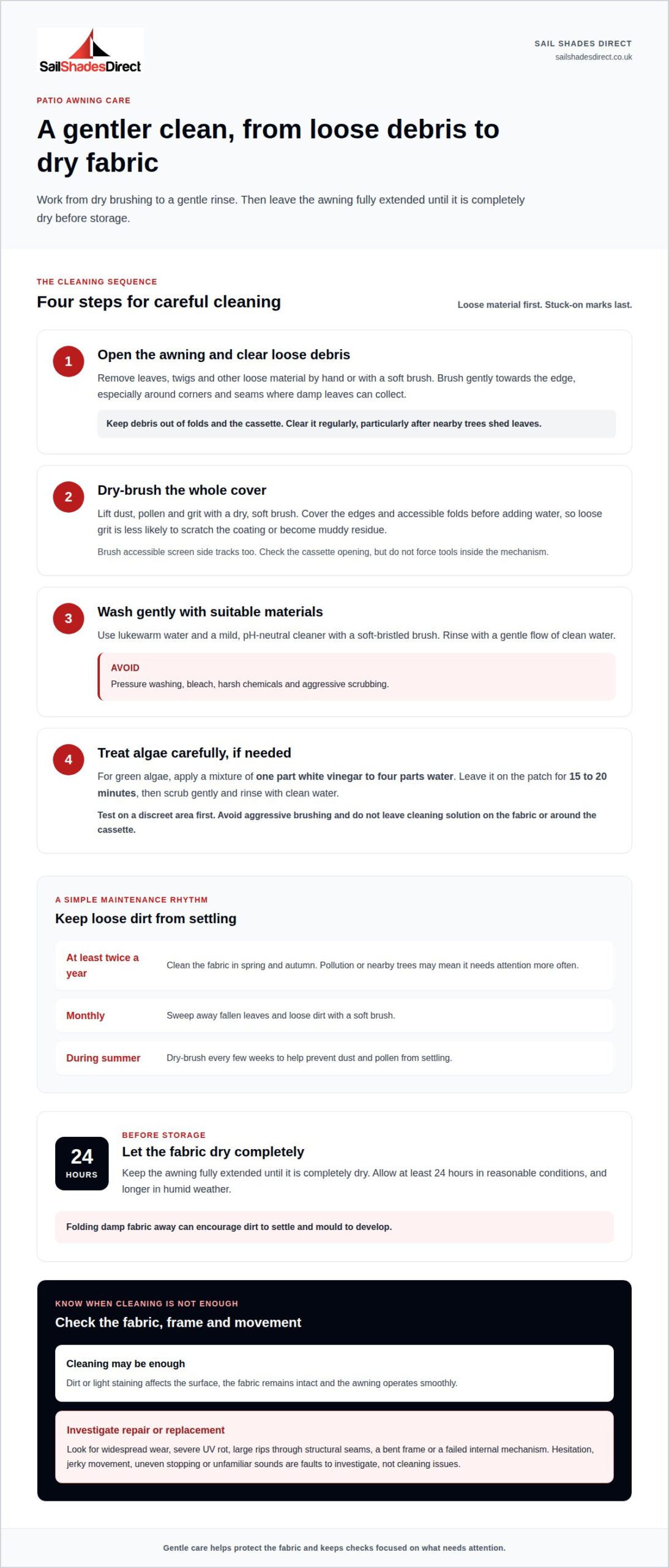
It’s easy to focus on cleaning and forget what happens afterwards. Damp fabric folded away can encourage dirt to settle and mould to develop, so leave the awning fully extended until it’s completely dry. Before storage, allow at least 24 hours to dry in reasonable conditions, and longer in humid weather.
Here, you’ll find practical steps for clearing leaves and stains, checking the motor housing for debris or pests, and spotting signs of wear. You’ll also learn how to judge whether a clean is enough or the awning may need repair or replacement.
Key Takeaways
- Judge whether cleaning is enough by looking at the fabric, frame and how smoothly the awning operates.
- Clear leaves and loose dirt before they settle, and treat marks gently to help protect the fabric.
- Look over the cassette, visible hardware and motor operation for debris, pests or changes in movement.
- Before putting an awning away, make sure it is completely dry and check for signs that repair or replacement may be needed.
Repair vs Replace: When Is It Time for a New Awning?
Use these checks to decide whether cleaning, repair or replacement is the most sensible next step.
- Compare the damage with how the awning works. Cleaning may be enough when dirt or light staining affects the surface, the fabric remains intact and the awning operates smoothly. Look for widespread wear, severe UV rot, large rips through structural seams, a bent frame or a failed internal mechanism. These signs point towards replacement rather than another clean.
- Clean according to the fabric and surroundings. Clean fabric at least two times a year, in spring and autumn; pollution or nearby trees may mean more frequent attention. Brush off loose dirt, then use lukewarm water and a mild, pH-neutral cleaner with a soft-bristled brush. Rinse gently. Avoid bleach, harsh chemicals, aggressive scrubbing and frequent pressure washing. A fabric-safe waterproofing spray may help restore resistance to moisture and dirt.
- Clear tracks and inspect the housing. Remove leaves and loose debris from outdoor screen side tracks, then check the cassette, brackets and visible hardware for wear or movement. If a motorised screen hesitates, shifts, stops unevenly or sounds different, treat that change as a fault to investigate, not a cleaning issue.
- Read the warranty terms before maintenance. There is no single warranty rule for every awning: the manufacturer’s written terms set the care requirements and cover. Follow the supplied instructions and keep records of cleaning or servicing.
- Assess UK cleaning, servicing or repair costs by scope. The cost depends on the work required, fabric condition, access and any replacement parts; it is given after a quote request. Cleaning a small stain differs from addressing damaged fabric or a faulty mechanism.
- Protect moving parts and the awning from weather. Lubricate joints and arms once each year in spring with dry silicone spray, not oil-based lubricant or WD-40. Retract the awning during heavy rain, strong winds, or forecast heavy or prolonged ice and snow. Retract when wind speeds exceed 20-25 mph; this is a precaution, not a universal safe operating rating.
Removing leaves, dirt and debris
Work from loose material to stuck-on marks, so washing doesn’t rub grit into the fabric.
-
Remove leaves and loose debris
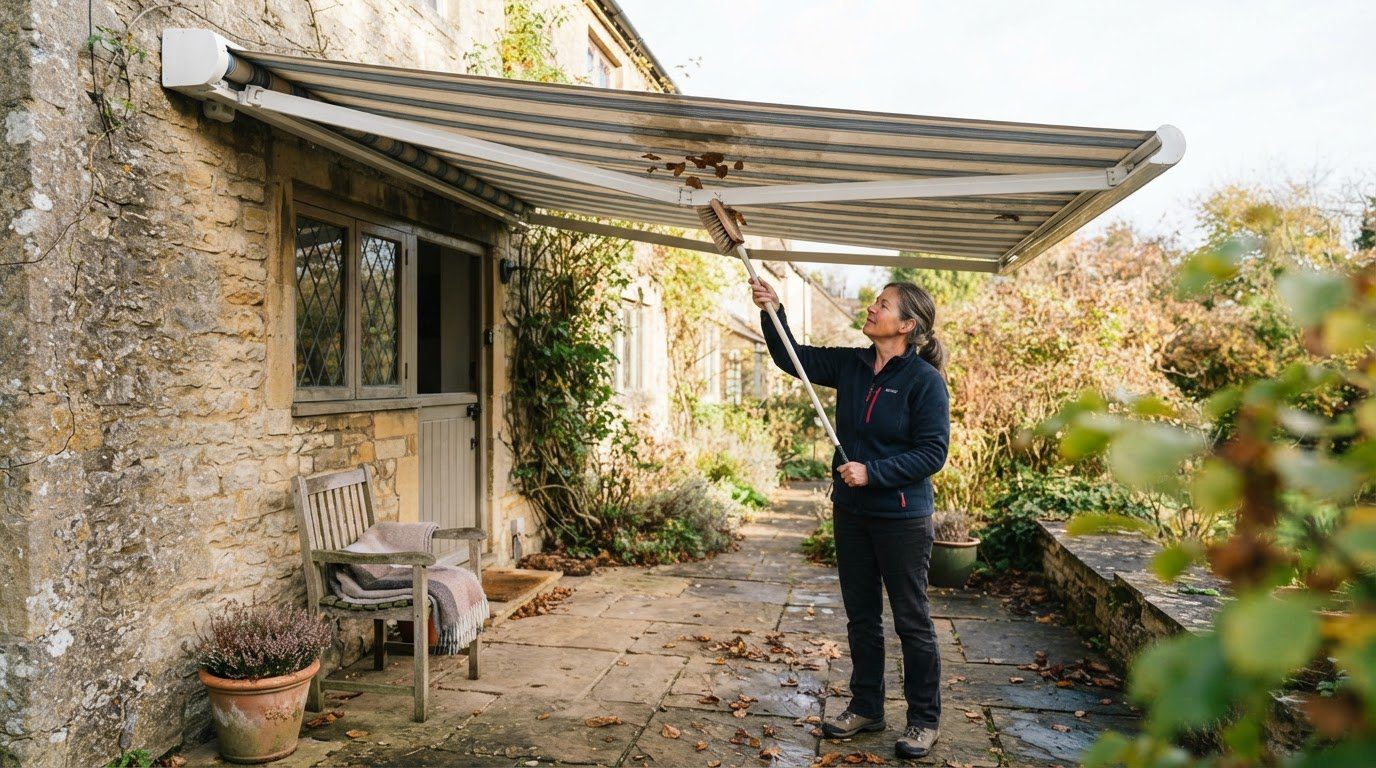
Open the retractable awning fully and use your hands or a soft brush to remove leaves, twigs and other loose debris. Brush gently towards the edge, rather than pushing material into folds or the cassette. Check corners and seams, where damp leaves can collect and leave marks. Clear debris regularly, especially after nearby trees shed leaves.
-
Clear debris before washing
Brush the whole cover before adding water, including its edges and any accessible folds. This removes grit that could scratch the coating or turn into muddy residue during cleaning. Check the cassette opening and accessible surfaces for trapped material, but don’t force tools inside the mechanism. Rinse away remaining dirt with a gentle flow of clean water.
-
Remove dust from the awning
Use a dry, soft brush to lift dust and pollen without pressing them into the fabric. A monthly sweep helps clear fallen leaves and loose dirt. During summer, dry-brush every few weeks to prevent dust and pollen from settling. Brush an outdoor screen’s side tracks too, removing loose debris before it affects how the screen feeds. Avoid harsh scrubbing, which can wear the surface.
-
Treat mould and algae gently
For green algae, apply a mixture of one part white vinegar to four parts water. Leave it on the patch for 15 to 20 minutes, then scrub gently and rinse. Test the approach on a discreet area first, and avoid aggressive brushing. Remove residue with clean water, rather than leaving cleaning solution on the fabric or around the cassette.
If persistent debris or wear has you considering a change, explore arm awning options for your outdoor space.
Checking the motor housing for debris and pests
Before operating an awning after a long inactive period, inspect the cassette and visible framework. Check for debris, moisture or movement that may need attention.
- Look over the cassette and housing. With the awning retracted, inspect accessible openings for leaves, twigs, nesting material or signs of pests. Remove loose debris from visible surfaces, but don’t push tools into the housing or spray water inside. Avoid harsh chemicals around seals and components, and note any trapped moisture or damage.
- Check the framework and fixings. Examine the arms, brackets, cassette and visible hardware for rust, wear, looseness or movement. Look for a bracket that has shifted or an arm that appears bent. Don’t operate the awning if the frame looks damaged; pressure on a compromised part could worsen the problem.
- Inspect fabric and screen movement. Look along the edges for fraying, tears, punctures, loose sections or new wrinkles. For an outdoor screen, check that it feeds evenly into its tracks and that the bottom bar has no caked dirt or residue. Clear loose track debris, then watch for rubbing or dragging during movement.
- Test the motor and controls. Operate an automated awning and listen for unfamiliar sounds. Notice hesitation, jerky movement, uneven stopping or repeated pauses. Check that it reaches its open and closed positions without shifting out of alignment. If a remote button produces no blue light, its battery may need replacing.
- Finish with a seasonal check. After winter or another long period unused, clear debris, inspect visible components and test operation. In autumn, clear garden leaves and check exposed edges and seals for minor issues. Netting or a full-cassette design can help block birds; moving the awning regularly and removing nearby attractants, such as feeders, can also discourage access.
After a long inactive period, spring maintenance should include clearing debris, cleaning visible surfaces, checking components and testing operation. In autumn, clear leaves and buildup and inspect seals and exposed edges. Address minor issues before they worsen, or consider enlisting professional help for challenging exterior jobs; companies like American Handyman illustrate how skilled local handymen can assist homeowners with routine maintenance and outdoor repairs.
Drying awnings before storage
Thorough drying helps protect clean fabric between seasons. This patio awning maintenance guide treats drying as an essential part of preparing an awning for winter storage.
- Leave the awning fully extended after washing. Let the fabric dry completely before rolling it away, so damp folds don’t trap moisture. Airflow across the whole cover helps prevent dirt settling on wet fabric and fungi developing over time. Check the underside and seams as well as the visible surface, where water can linger after rinsing.
- Allow enough drying time before storage. In reasonable conditions, leave the fabric to dry for at least 24 hours; humid weather can require longer. Don’t judge dryness from the exposed edge alone. Check thicker hems and folds, then retract only when those areas feel dry too. If rain interrupts the process, extend the awning again at the first opportunity.
- Check the fabric after cleaning. Look for remaining soapy water, damp patches and mould before putting the awning away. Mould can weaken stitching, reduce water resistance and spread through damp folds. If a deep clean involved canvas, dry it meticulously; canvas may also need a fresh application of fabric protectant afterwards.
- Prepare the mechanism for winter. Once the fabric is dry, retract the awning fully and lock it in position. Inspect visible hardware and joints, then use a breathable cover to help protect the stored awning. Follow the manufacturer’s instructions for disconnecting and storing motorised control units, rather than exposing electrical components to moisture.
- Check stored fabric before spring use. Before reopening the awning for comfort in the garden, look for condensation, pests or damp odours. If it was rolled away wet by mistake, extend it as soon as conditions allow and let it dry completely. Use this patio awning maintenance guide’s seasonal steps to help protect the fabric through winter.
Planning an outdoor space refresh after winter? Explore awning options for your patio.
Sail Shades Direct: Arm Awnings
Sail Shades Direct designs and supplies Arm Awnings for patios and other outdoor areas. If cleaning won’t resolve widespread fabric wear or a damaged mechanism, consider whether replacement would better suit your space and outdoor needs.
An arm awning provides shade over a patio, while the right option depends on the space and how you use it. For a different approach to outdoor shade, Sail Shades Direct also offers Bespoke Sail Shades, Rolling Sun Sails and Giant Umbrellas.
Contact Sail Shades Direct to discuss an Arm Awning for your outdoor space.
Plan your next step for a more comfortable patio
Let how you use your patio in each season shape what you want from it next. Note recurring problems, changing shade needs and how you use the area. These details can help turn routine maintenance into a clearer plan for future improvements.
This patio awning maintenance guide can help you make a more informed decision about your current setup. If your outdoor space would benefit from a different shading arrangement, consider the layout, how you want to use the patio and the look you’d like to create.
Contact Sail Shades Direct for awning advice and take the next step towards a patio that suits your plans. A thoughtful approach can make outdoor time feel more inviting.
Frequently Asked Questions
Can You Pressure Wash an Awning?
A pressure washer isn’t recommended because its forceful jet can damage awning fabric. Use a garden hose with a gentle spray nozzle to rinse surface dirt without forcing water into seams or folds. For stubborn marks, use a soft-bristled brush and fabric-safe cleaner. Avoid frequent pressure washing, harsh chemicals and forceful scrubbing, which can wear the material or affect its protective finish. When cleaning surrounding siding or exterior walls rather than delicate fabrics, exterior specialists like Moores Pressure Washing LLC use controlled soft-washing methods to protect outdoor property features.
How Often Should Home or Business Awnings be Washed?
Home and business awnings may need washing every two or three months, depending on their surroundings. An awning beside busy roads or trees can collect grime, pollen and leaves faster than one in a sheltered garden. Between washes, remove fresh debris and spot-clean marks before they settle. A full wash isn’t always necessary when the fabric is clean and free of noticeable buildup.
What Tools and Supplies are Needed?
Gather a soft-bristled brush, a garden hose with a gentle spray nozzle, lukewarm water and mild, biodegradable dish soap. These are suitable for routine fabric cleaning without a pressure washer or harsh chemicals. Keep a clean cloth handy for gentle spot-cleaning. Check the awning manufacturer’s care instructions first, especially if the fabric has specific finish or material requirements.
How often should a patio awning be cleaned and maintained in the UK?
Clean awning fabric at least twice a year, in spring and autumn, then adjust the schedule for local weather, nearby trees and pollution. Remove leaves and fresh marks as they appear rather than waiting for the next full clean. Include the mechanism in seasonal care: moving parts need lubrication once a year in spring. Inspect the awning after major weather to catch visible damage early.