
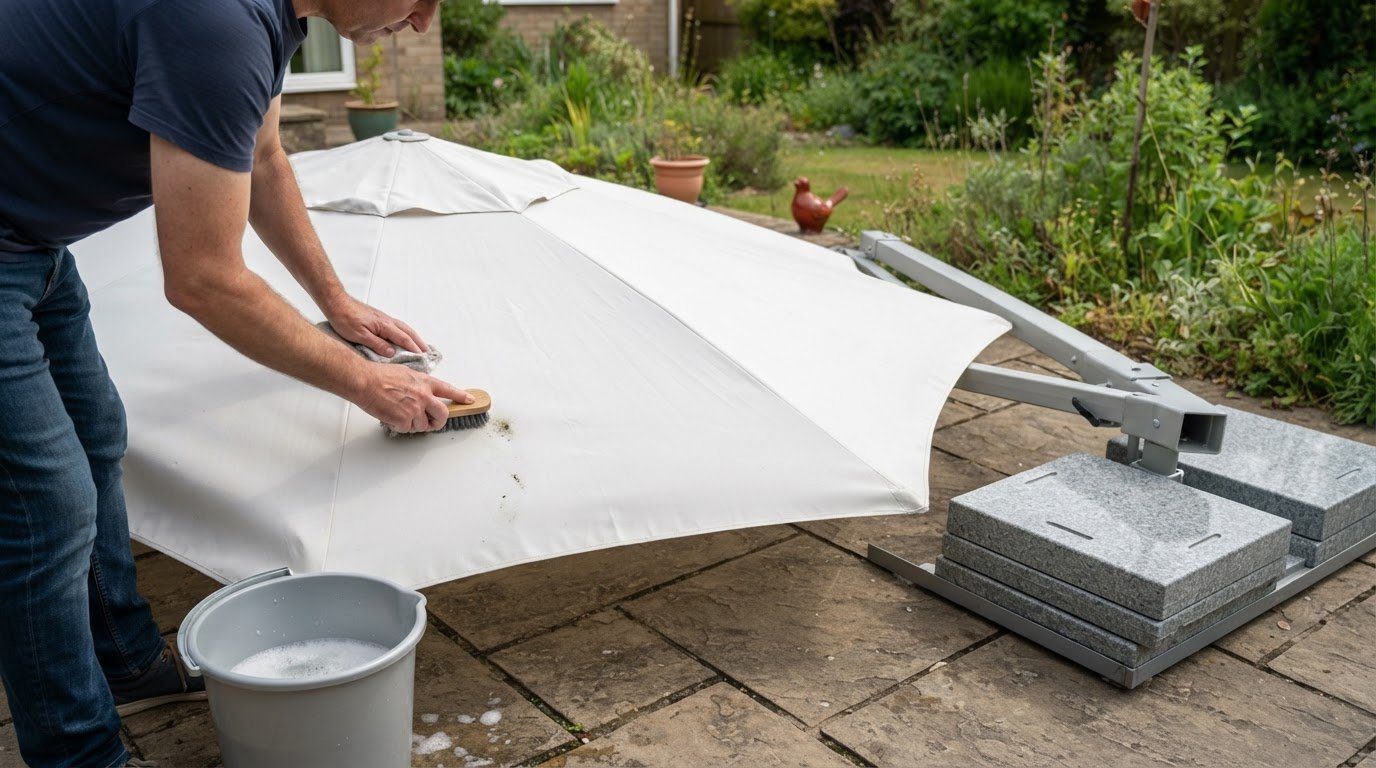
How to Clean Outdoor Umbrella Fabric and Choose a Wash Method
A lightly soiled outdoor umbrella canopy may be machine-washed on a gentle cycle if it detaches from the frame and its care label allows it. For heavier dirt, hand-cleaning is usually more suitable. Knowing how to clean outdoor umbrella fabric starts with checking the care instructions and matching the method to the material.
Putting a grubby canopy straight in the wash can damage fabric or fittings. Before deciding how to clean outdoor umbrella fabric, check the care label and the canopy’s condition. This guide covers everyday dirt, stubborn marks, when machine washing may be suitable, and how to rinse and dry the fabric. Use care with a pressure washer, which can harm fibres.
Key Takeaways
- Shake loose debris from the canopy and rinse away surface dust before tackling ingrained marks.
- Use mild soap and water for routine cleaning, and test a solution on a discreet area first.
- Reserve machine washing for lightly soiled, removable canopies, using a gentle cycle.
- If using a pressure washer, choose a gentle setting to help protect the fabric fibres.
Can you wash an outdoor umbrella in the washing machine?
Use a gentle washing-machine cycle only for a lightly soiled canopy that detaches from the frame and is labelled machine-washable. For heavier dirt, mould or stains, clean the fabric by hand instead.
Check whether the canopy is removable
Open the umbrella and inspect how the canopy attaches to its ribs and frame. Check for fastenings that release easily, and follow the care instructions before removing the fabric. If the canopy is fixed in place, don’t pull at seams or force fittings. Rinse it while attached, with the umbrella open.
- Shake off loose dust. Partially open the canopy and shake each panel from underneath. Dust can build up in the fabric and alter its original colour, so rinse the umbrella regularly with a garden hose.
- Brush off dry marks first. For bird droppings, brush or dust away the dry residue, then wipe the area with a damp sponge and warm water. Use a soft-bristle brush for stubborn stains; avoid harsh scrubbing that could damage the fibres.
- Treat sap and green algae gently. Work warm water and mild soap into tree sap or algae with a soft-bristled brush, then rinse thoroughly. For heavy dirt or mould, remove the canopy, clear away leaves and loose debris, and use an appropriate diluted cleaning solution. Wear gloves and work in a well-ventilated area when treating mould.
- Choose a cleaning interval by conditions. In the UK, rinse when dust, pollen or bird droppings become visible, and clean more thoroughly after dirt accumulates. Shaded, damp spots can encourage mould, so inspect those areas regularly.
Dry the fabric and prevent mould
Refit a washed canopy while it is damp, then leave the umbrella fully open until the fabric is completely dry. Allow the fabric to dry fully before storing it, as damp conditions can encourage mould. Before winter storage, brush away leaves, clean visible dirt and dry the fabric fully. Store the dry parasol under cover.
What cleaners work to clean an outdoor umbrella?
Start with mild soap and water, and choose any stronger treatment according to the stain and fabric. Cleaning can remove dirt, but restoring water and stain resistance requires a fabric treatment that is compatible with the material.
-
Spot clean stains
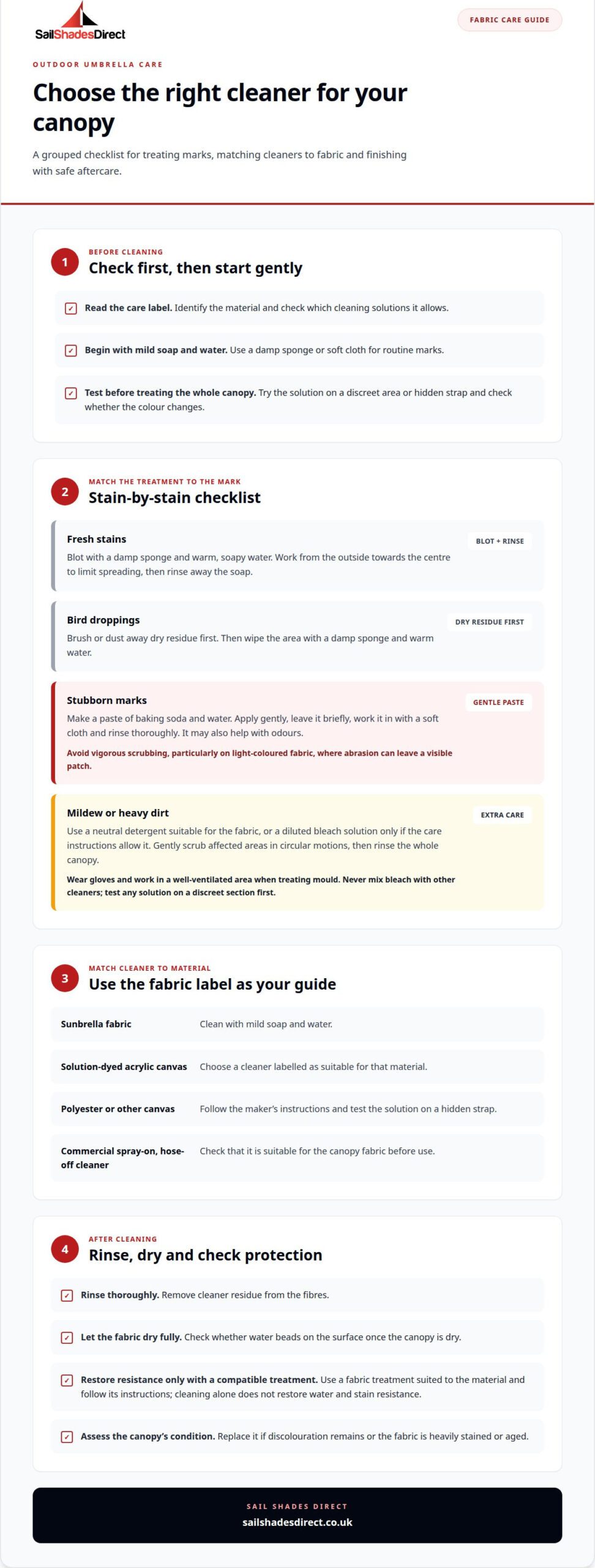
Blot a fresh stain with a damp sponge and warm, soapy water. Work from the outside towards the centre to limit spreading, then rinse away the soap. For bird droppings, remove dry residue first. Check the fabric-care instructions before using a cleaning solution, and test it on a hidden strap or area to see whether the colour changes.
-
Use baking soda on stubborn stains
For a stubborn mark, make a paste of baking soda and water and apply it gently. Leave it briefly, work it in with a soft cloth, then rinse thoroughly so residue does not remain in the fibres. Baking soda may also help with odours. Avoid vigorous scrubbing, especially on light-coloured fabric, where abrasion can leave a visible patch.
-
Clean stubborn stains and mildew
For mildew or heavy dirt, use a neutral detergent suitable for the fabric, or a diluted bleach solution if the care instructions allow it. Wear gloves and work in a well-ventilated area when treating mould. Gently scrub affected areas in circular motions, then rinse the whole canopy. Never mix bleach with other cleaners, and test the solution on a discreet section first.
-
Choose a cleaner for the fabric
Check the care label to identify the material before choosing a cleaner. Sunbrella fabric can be cleaned with mild soap and water; for solution-dyed acrylic canvas, use a cleaner labelled as suitable for that material. For polyester or other canvas, follow the maker’s instructions and test the solution on a hidden strap. Check that commercial spray-on, hose-off cleaners are suitable for the fabric too.
- After cleaning, let the canopy dry fully, then check whether water beads on the surface. To restore water and stain resistance, use a fabric treatment compatible with the material and follow its instructions. Replace the canopy if discolouration remains or the fabric is heavily stained or aged.
Machine-washing lightly soiled canopies
Machine-wash a canopy only if it is lightly soiled, detaches from its frame and the care label permits washing. Fabric type and construction determine whether a washing machine is suitable, so check the label first.
- Remove the canopy carefully. Release its fastenings without pulling the fabric or stretching seams. Keep the frame out of the machine, and check the canopy for loose stitching or damage. If the label advises against machine washing, clean the fabric by hand instead.
- Prepare the fabric. Shake off loose dust and brush away dry debris before washing. Treat visible marks separately, so they don’t spread across the canopy during the cycle. Don’t put heavily soiled or mouldy fabric straight into the machine; clean those areas using a suitable hand-washing method first.
- Select a gentle, cold-water cycle. A gentle machine cycle can clean a lightly soiled, removable canopy. Cold water is also suitable for rinsing detergent or bleach remaining after soaking. Follow the care label for any fabric-specific limits, and avoid a hotter or more vigorous setting than instructed.
- Use a mild detergent. Add a small amount of mild detergent, following the washing machine’s instructions and the canopy label. Avoid overloading the drum, which can prevent the fabric moving freely. Don’t add a stronger cleaning solution simply because the canopy has a faint mark; spot-treat that area instead.
- Inspect and dry the canopy. Remove the fabric promptly when the cycle ends and check whether dirt or detergent remains. If residue is visible, rinse it out with a gentle cold-water wash. Refit the canopy whilst damp, open the umbrella fully and let the fabric air-dry before closing or storing it.
Pressure-washing restrictions
Clean outdoor umbrella fabric in stages: remove loose debris, wash gently, rinse and dry it fully. A pressure washer can damage fibres, so use only a gentle setting when rinsing.
- Prepare the canopy. Open the umbrella and clear away leaves, dust and loose dirt. If you can remove the fabric, lay it out securely before hand washing. Keep the frame and fittings away from the cleaning solution, and check the care instructions for fabric-specific restrictions.
- Mix mild soap with water. Use a small amount of mild soap in lukewarm water for routine washing. A soft-bristled brush or sponge helps work the solution into soiled areas without harsh abrasion. Avoid using a stronger cleaner just because a mark looks stubborn.
- Wash by hand in sections. Start at the top of the canopy and work across each panel, using gentle circular strokes. Pay attention to seams and folds where dirt or organic growth can collect. Rinse the brush or sponge as it picks up grime, rather than spreading it across clean fabric.
- Rinse at low pressure. Use a garden hose for a controlled rinse. If you use a pressure washer or water blaster, select its gentle setting and keep the spray moving over the fabric. A concentrated jet can put unnecessary force on the fibres, seams and stitched edges.
- Check before repeating. Inspect the canopy after rinsing. If soap or dirt remains, repeat gentle hand washing on that area instead of increasing water pressure. This gives you control over the cleaning and reduces the risk of stressing the fabric.
- Dry it completely. Refit a removed canopy whilst damp, open the umbrella fully and allow it to air-dry. Don’t close or store it while wet; trapped moisture can encourage mould growth. For a longer-term shade plan, plan a better-shaded outdoor space.
Sail Shades Direct: Bespoke Sail Shades
Sail Shades Direct helps homeowners and businesses plan outdoor shade around their space and how they use it. If cleaning has not improved an ageing canopy, or your umbrella no longer provides the coverage you need, a different shade solution may be worth considering.
Options include Bespoke Sail Shades, Rolling Sun Sails, Arm Awnings and Giant Umbrellas. The best fit depends on the area to cover, available fixing points and whether you want fixed or adjustable shade. A bespoke design can make better use of an awkward terrace or seating area, while a Giant Umbrella offers a familiar freestanding option.
For a tailored approach to outdoor shade, contact Sail Shades Direct to discuss your space and requirements.
Make your outdoor space work for you
Knowing how to clean outdoor umbrella fabric helps you care for the shade you already have. If the canopy is worn, persistently stained or no longer suits your garden, consider what would make the space more comfortable and practical. Think about where you need shade, how much flexibility you want and how the covering will sit alongside your outdoor furniture.
Sail Shades Direct can help you explore a tailored shade solution for your home or business. Talk through your space and plans to work out an approach that suits your needs, whether you’re refreshing a seating area or planning a different outdoor layout.
Contact Sail Shades Direct to discuss your outdoor shade plans, and take the next step towards a space you’ll enjoy using.
Frequently Asked Questions
How do you get mildew out of a parasol?
Brush away loose debris, then treat mildew with white vinegar and gentle circular scrubbing. Wear gloves and work in a well-ventilated area. After treating the affected patches, clean the remaining canopy with an all-purpose cleaner. Rinse thoroughly and leave the parasol open until completely dry. Direct sunlight helps dry the fabric, and natural ultraviolet rays help kill mould bacteria.
Why is parasol cleaning important?
Regular cleaning removes dust before it settles into the fabric and alters its colour. It also clears leaves and debris that collect in folds or around seams. Use cleaning as an opportunity to inspect the canopy: look for loose stitching, small tears and persistent discolouration. These signs can help you judge whether gentle cleaning is worthwhile or the fabric is too worn to restore.
What cleaning solutions are safe for outdoor umbrella fabric?
Mild soap and lukewarm water are a suitable starting point for routine cleaning. For general Sunbrella fabric cleaning, use 2 ounces of mild soap per gallon of lukewarm water. Test any solution on a hidden strap before treating the canopy. If using a commercial spray-on, hose-off cleaner, check its instructions for suitability for solution-dyed acrylic canvas.
Can you use washing-up liquid or bleach to clean a garden parasol?
Washing-up liquid diluted in water can serve as a mild soap for routine marks; apply it gently. For heavy dirt or mould, diluted bleach may be an option, but follow the canopy’s care instructions and test a discreet area first. Not every fabric tolerates bleach, and an unsuitable cleaner can change the colour or damage the material.
How to remove mould and mildew from outdoor umbrella fabric
Clear leaves and loose debris from the canopy before treating mould. Wear gloves and work in a well-ventilated area. Use white vinegar to gently scrub the affected areas in circular motions, then clean the whole umbrella with a suitable cleaner and rinse thoroughly. Dry the canopy fully before closing it, as trapped dampness can encourage further growth.
Can outdoor umbrella fabric be machine washed or pressure washed?
A lightly soiled canopy may be machine-washed on a gentle cycle if it detaches from the frame and its care instructions allow washing. Don’t tumble-dry it; refit it while damp and leave it open to dry fully. For a reliable routine, match how you clean outdoor umbrella fabric to its condition and care label. If rinsing with a pressure washer, use only a gentle setting.