
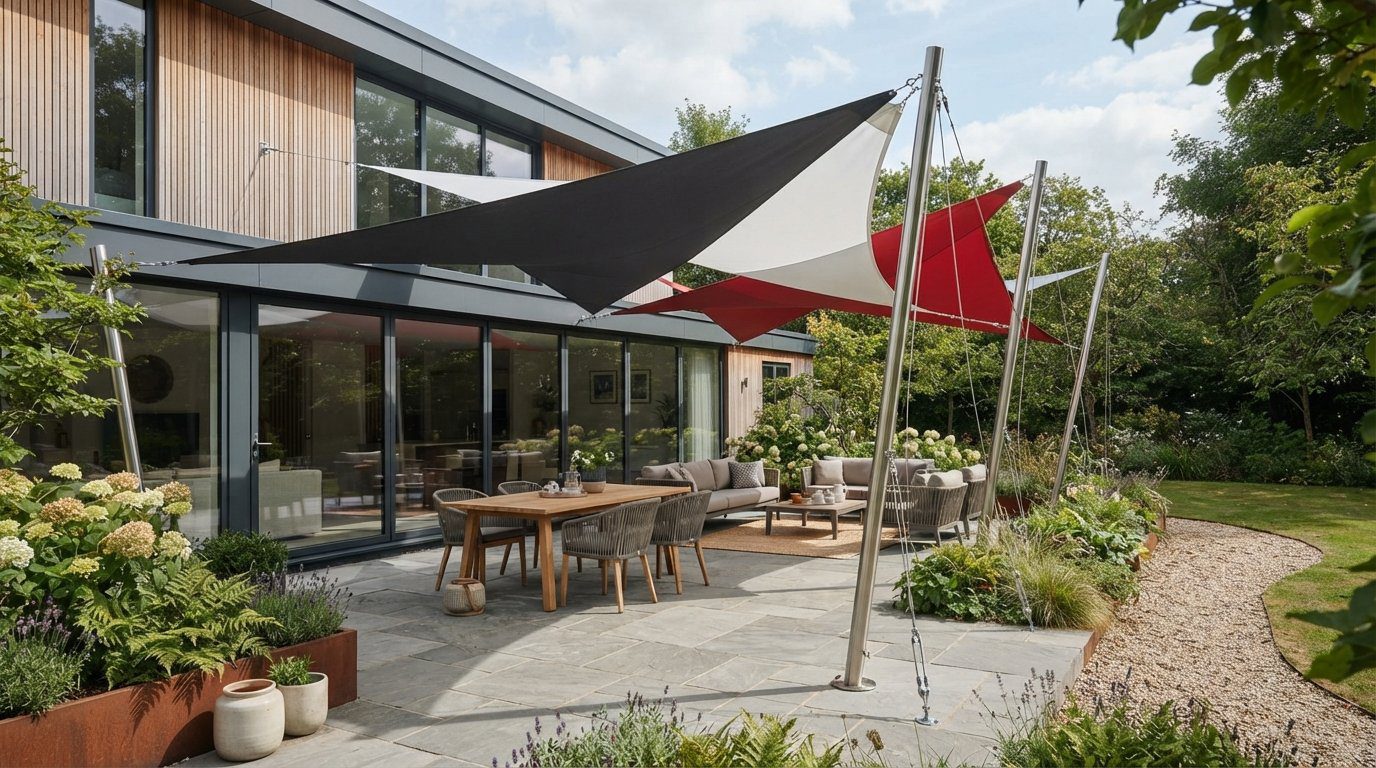
Premium Shade Solutions Without Fixing to a House: The 2026 UK Guide
What if your garden’s most striking architectural feature didn’t touch your home’s walls at all? For many UK homeowners, the dream of a shaded terrace often hits a literal wall when faced with delicate modern cladding, expansive glass bifolds, or structural limitations that make drilling a disaster. You shouldn’t have to settle for a flimsy parasol that catches the first gust of wind just because your house can’t support a traditional awning. We understand that your outdoor space is a vital reprieve from daily life, and it deserves a solution as robust and beautiful as the rest of your property.
In this 2026 guide, you’ll discover how to create sophisticated, high-performance shade solutions without fixing to a house by utilising freestanding, engineered structures. We’re moving beyond temporary gazebos to explore bespoke sail shades and rolling sun sails that act as permanent garden focal points. You’ll learn about the precision of marine-grade stainless steel masts and how professional installation ensures your new sanctuary remains safe and stable in any weather. From initial design to the final tensioning, we’ll show you how to reclaim your garden with confidence and style!
Key Takeaways
- Understand why freestanding structures are the ideal choice for homes with modern cladding or glass extensions that cannot support traditional wall fixings.
- Discover the engineering secrets of high-tension fabrics and marine-grade masts that guarantee a stable, wind-resistant environment without the noise of flapping material.
- Explore a range of premium shade solutions without fixing to a house, including bespoke sail shades and motorised rolling sun sails designed specifically for the UK climate.
- Learn how to accurately track the sun’s path and calculate wind loads to ensure your new garden feature is perfectly positioned and structurally sound.
- Gain insight into the bespoke design process, from initial 3D visualisations to professional nationwide installation for a seamless and stress-free garden transformation.
Why Choose Freestanding Shade Solutions Over House-Mounted Options?
The British garden has undergone a remarkable transformation. It’s no longer just a patch of lawn; it’s a functional extension of our homes, often referred to as the ‘outdoor room’. As we spend more time hosting and relaxing outside, the need for high-performance protection from the elements has become essential. However, many homeowners find that traditional wall-mounted awnings aren’t a viable option for their specific property. This is where shade solutions without fixing to a house come into their own, providing a sophisticated, independent alternative that stands entirely on its own merit.
Beyond the practicalities, there’s a distinct aesthetic advantage to choosing a freestanding structure. By utilising marine-grade stainless steel masts, you create a striking architectural silhouette that complements modern landscaping rather than cluttering your home’s facade. These systems follow professional shade sail design and tensioning principles to ensure the fabric remains taut and elegant. It’s a look that feels intentional and permanent, offering a sense of craftsmanship that a temporary pop-up gazebo simply cannot match.
Overcoming Building Restrictions
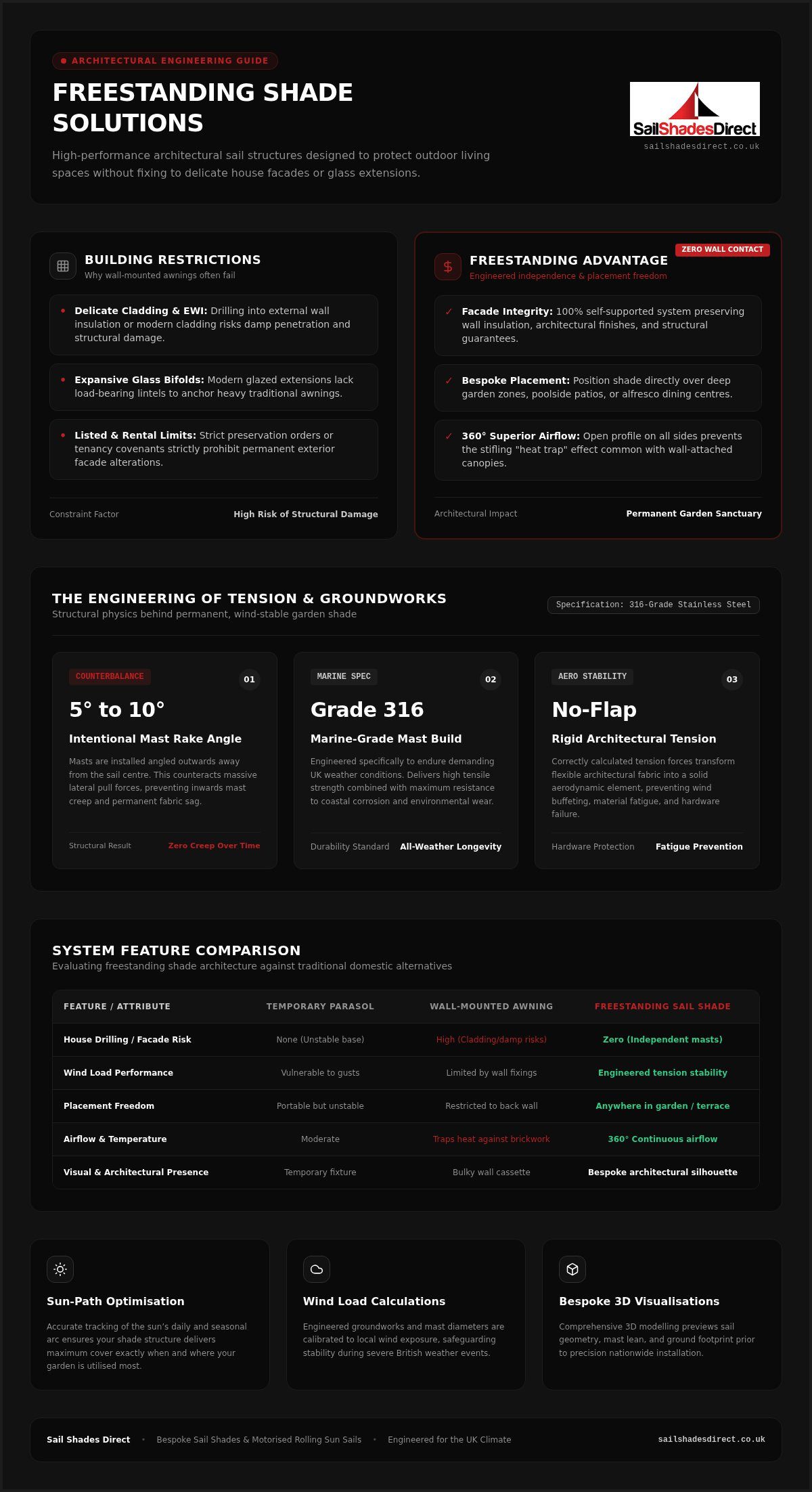
Many modern UK properties are built with materials that don’t play well with heavy, wall-mounted loads. If your home features external wall insulation (EWI), modern timber framing, or delicate cladding, drilling into the structure can lead to damp issues or structural damage. Similarly, if you’ve invested in a stunning glass extension or a conservatory, you likely don’t want to obscure the view or risk the frames by attaching a heavy awning. Freestanding shade solutions without fixing to a house bypass these technical hurdles entirely. They’re also a brilliant solution for those in listed buildings or rental properties where permanent alterations to the building’s exterior are often strictly prohibited.
The Versatility of Bespoke Placement
One of the greatest benefits of an independent structure is the freedom to place it exactly where the sun hits hardest. Why should your shade be tethered to the back door? Freestanding units allow you to reclaim the far corners of your garden or create a dedicated retreat away from the main building.
- Create a cool dining centre amongst your favourite flower beds for a true alfresco experience.
- Position your shade over a poolside lounge or a hot tub area to ensure privacy and comfort.
- Enjoy better temperature control, as freestanding sails allow for superior airflow from all sides, preventing the ‘heat trap’ effect often found under wall-attached covers.
This flexibility ensures your garden design dictates the shade, not the location of your brickwork. It’s about creating a bespoke environment that works for your specific lifestyle and layout.
The Engineering of Tension: Understanding Masts and Groundworks
Engineering is the silent backbone of any premium garden structure. Whilst a standard parasol relies on weight to stay upright, sophisticated shade solutions without fixing to a house rely on the physics of tension. Achieving a “no-flap” finish isn’t just about aesthetic crispness; it’s about durability. When a sail is correctly tensioned, it behaves like a solid architectural element rather than a piece of loose fabric. This tension prevents the material from buffeting in the wind, which is the leading cause of fabric fatigue and hardware failure in cheaper, temporary alternatives.
A crucial part of this engineering is the “lean.” You’ll notice that professionally installed masts are rarely perfectly vertical. Instead, they’re angled approximately 5 to 10 degrees away from the centre of the sail. This intentional rake acts as a counterbalance to the significant pulling forces exerted by the tensioned fabric. Without this angle, the masts would eventually “creep” inwards under the constant load, causing the sail to sag and lose its structural integrity. If you’re curious about how these forces might work in your specific space, our experts can offer bespoke design guidance to ensure your layout is perfectly balanced.
Material Matters for UK Durability
Choosing the right mast material is a balance of performance and style. For most UK homeowners, 316-grade stainless steel is the gold standard. It offers exceptional corrosion resistance, which is vital in coastal regions or humid garden environments. It provides a sleek, modern finish that requires almost zero maintenance over its long lifespan. Alternatively, structural timber masts can offer a softer, more organic aesthetic that blends beautifully with traditional landscaping. Whilst timber requires periodic treatment to maintain its appearance, it provides a substantial, grounded feel that many find appealing for woodland-style gardens.
Foundation Foundations: What Happens Below Ground
The true strength of your shade system lies hidden beneath the turf or patio. Because these structures are entirely independent, the groundworks must be substantial enough to resist the leverage of the masts. We calculate foundation depth and volume based on the total sail area and the specific soil conditions of your site, whether it’s heavy clay or sandy loam. We often utilise steel rebar cages within high-strength structural concrete to ensure the masts remain immovable. Professional groundworks are the primary defence against gale-force winds. This rigorous approach to installation ensures that your shade solutions without fixing to a house remain a safe, permanent, and stress-free addition to your home for years to come.
Top Freestanding Shade Solutions for UK Gardens and Terraces
Selecting the right system depends entirely on how you intend to use your outdoor space. Whilst the engineering principles of tension remain consistent, the way you interact with the shade varies between static and retractable designs. For many homeowners, the choice of shade solutions without fixing to a house comes down to the balance between a permanent architectural presence and the flexibility of on-demand cover.
Bespoke Sail Shades vs. Rolling Sun Sails
If you desire a permanent, high-tension feature that defines your garden’s geometry, bespoke sail shades UK are the ultimate choice. These are custom-fabricated to fit your specific landscape, creating a sculptural look that remains in place throughout the summer season. They offer unparalleled wind resistance and a sleek finish that complements modern garden design. Conversely, if you prefer to have the sky open on cooler days, motorised rolling sun sails provide the luxury of total adaptability. With a touch of a button or a manual winch, the fabric retracts neatly around a central crossbar. This versatility is ideal for the unpredictable UK weather, allowing you to deploy protection only when the sun is at its peak.
Giant Umbrellas and Freestanding Awnings
For those who host large-scale garden parties or outdoor dining events, giant commercial-grade umbrellas offer a robust, instant solution. Unlike flimsy high-street versions, these are engineered with heavy-duty ribs and telescopic masts, capable of covering areas up to 30 square metres from a single point. They provide a classic, resort-like feel whilst remaining entirely independent of your home’s structure.
Another high-performance option is the freestanding “Butterfly” awning. These systems feature two arm awnings mounted back-to-back on a central goalpost frame, providing double-sided protection. When selecting your system, consider these factors to ensure the fabric harmonises with your garden’s natural palette:
- Darker fabrics like slate or anthracite provide excellent UV protection and create a crisp, modern silhouette.
- Lighter tones like cream or silver reflect more heat, keeping the area beneath significantly cooler during heatwaves.
- Earthier shades like terracotta or sage help the structure blend seamlessly amongst established planting and timber decking.
These shade solutions without fixing to a house ensure that your comfort is never limited by the layout or structural constraints of your property. It is about creating a bespoke environment that feels like a natural extension of your lifestyle.
Planning Your Installation: Wind Loads, Positioning, and Durability
Planning is the stage where a brilliant design concept becomes a high-performance reality. Because shade solutions without fixing to a house are independent architectural elements, they require a thoughtful approach to engineering and placement. Unlike a portable parasol that you might move on a whim, these structures are designed for longevity and must be able to withstand the specific microclimate of your garden. This involves more than just picking a spot; it’s about understanding how wind and light interact with your outdoor space throughout the seasons.
Durability starts with your choice of fabric. For most UK applications, high-density polyethylene (HDPE) is the preferred material because it’s breathable, allowing hot air to rise through the knit whilst providing up to 98% UV protection. If you require a completely dry environment for outdoor furniture, waterproof PVC-coated fabrics are an option, though these require steeper angles to prevent water pooling. You should also consider local planning regulations. In many parts of the UK, freestanding structures under 2.5 metres in height often fall under permitted development, but it’s always wise to check with your local authority if you’re in a conservation area or a listed property.
Wind Resistance and Structural Safety
The British weather is notoriously fickle, making wind load calculation a vital part of the process. We use the Beaufort scale as a baseline, ensuring that our architectural sail shades UK are engineered to shed wind safely rather than acting like a giant kite. The venturi effect occurs when wind is forced through a narrow gap between your house and a fence, significantly increasing the pressure on the fabric. By identifying these high-pressure zones during the planning phase, we can adjust the height and angle of the masts to ensure the system remains stable even during a summer gale.
Positioning for Maximum Utility
The most common mistake in garden design is placing shade where the sun is at midday, only to find the terrace is scorched by 4 PM. As the sun dips lower in the late afternoon, the shadow cast by your sail will move significantly. We utilise advanced 3D modelling to track the sun’s path across your specific coordinates, ensuring your shade solutions without fixing to a house provide cover exactly where you need it during peak relaxing hours. This process also helps us ensure that masts are placed strategically to avoid obstructing favourite views or primary walkways through the garden. If you want to ensure your garden is perfectly protected, book a professional site consultation to map out your ideal shade layout.
Bespoke Excellence: Why Sail Shades Direct is Your Ideal Shading Partner
At Sail Shades Direct, we don’t believe in one-size-fits-all. Every garden has its own character, and every homeowner has a unique vision for their outdoor sanctuary. Our approach is built on a foundation of professional assurance and a genuine desire to be helpful. We’ve spent over 10 years perfecting the art of custom outdoor shading, developing a deep portfolio of projects that prove even the most difficult sites can be transformed with the right expertise. When you choose us, you aren’t just buying a product; you’re partnering with a team dedicated to precision and craftsmanship.
A Tailored Approach to Every Project
We thrive on “can-do” problem-solving. Whether you’re dealing with a steep terrace, an exposed coastal plot, or a compact urban courtyard, we find the engineering path to success. Our collaborative design process starts with your ideas. We use advanced 3D visualisation to show you exactly how your chosen shade solutions without fixing to a house will look and perform in your space before a single mast is planted. This precision extends to our manufacturing, where every sail is fabricated right here in the UK using high-tensile fabrics and marine-grade stainless steel fittings. We don’t cut corners on hardware. From heavy-duty shackles to high-performance tensioners, every component is selected to ensure your system remains a beautiful, functional garden feature for years.
The Value of Professional Installation
It’s tempting to look at a DIY kit, but the reality of a UK winter often tells a different story. Whilst off-the-shelf poles might look fine in July, they rarely have the structural integrity to survive a proper gale. Our national installation service is led by experienced professionals who understand the nuances of UK soil types and weather patterns. They ensure that every foundation is deep enough and every mast is raked correctly for maximum safety. This professional touch provides the peace of mind that your investment is secure and your family is safe. We handle the heavy lifting, the technical calculations, and the precise tensioning so you can simply enjoy the results.
Ready to reclaim your garden? Contact Jamie and the team today to start your bespoke design journey. We’re here to guide you through every choice, ensuring you get high-performance shade solutions without fixing to a house that perfectly complement your home and lifestyle. Let’s create something extraordinary together!
Ready to Elevate Your Outdoor Living Space?
Your garden should be a sanctuary that reflects your style, regardless of your home’s structural limitations. We’ve explored how freestanding structures offer the ultimate flexibility, allowing you to position high-performance protection exactly where you need it most. By prioritising engineered tension and marine-grade materials, these shade solutions without fixing to a house provide a level of durability and aesthetic appeal that temporary alternatives simply can’t match. It’s about more than just sun protection; it’s about creating a permanent, architectural feature that enhances your lifestyle for years to come.
At Sail Shades Direct, we combine expert UK manufacturing with a national professional installation service to ensure every project is a success. Our bespoke engineering for high-wind areas means you don’t have to worry when the British weather turns. Why settle for a compromise when you can have a tailored solution? Request Your Bespoke Design Consultation with Sail Shades Direct today and let Jamie and the team help you reclaim your garden with confidence. Your perfect outdoor retreat is just a conversation away!
Frequently Asked Questions
Can I install a sail shade without attaching it to my house?
Yes, you can absolutely install a sail shade using freestanding architectural masts rather than your home’s walls. This approach is ideal for properties with modern cladding, glass extensions, or structural limitations. By using independent support posts, we create a self-supporting system that provides tensioned cover anywhere in your garden. It’s a versatile way to implement shade solutions without fixing to a house whilst maintaining a clean, modern aesthetic that doesn’t compromise your building’s integrity.
How deep should the concrete foundations be for freestanding masts?
Foundation depth typically ranges from 750mm to 1200mm, depending on the sail’s surface area and your garden’s soil composition. Because these masts must resist significant tension and wind loads, we calculate the specific volume of structural concrete required for every project. Heavy clay or sandy loam requires different approaches to ensure the masts remain immovable. Our professional installation team uses steel rebar reinforcement within these foundations to guarantee long-term stability and safety in all UK weather conditions.
Are freestanding sail shades permanent or do I need to take them down in winter?
The stainless steel or timber masts are permanent architectural fixtures designed to remain in place year-round. However, we recommend removing the fabric sails during the winter months or during periods of heavy snow to prevent damage from weight loading. Our bespoke systems feature high-quality marine-grade hardware, making it simple to tension or de-tension the sails in just a few minutes. This maintenance routine ensures your investment stays in peak condition for many summer seasons.
Do I need planning permission for a freestanding sun sail in the UK?
Most freestanding shade structures fall under ‘permitted development’ and don’t require planning permission if they are below 2.5 metres in height and don’t occupy more than 50% of your garden space. However, regulations can vary if you live in a conservation area, an Area of Outstanding Natural Beauty, or a listed building. We always advise checking with your local authority for peace of mind before starting work on any permanent garden installation.
How do freestanding sails handle high winds compared to umbrellas?
Freestanding tensioned sails are significantly more robust than standard garden umbrellas because they are anchored into deep concrete foundations. Whilst an umbrella might catch the wind and topple, a correctly engineered sail sheds wind loads through its specific geometry and high-tension fabric. This structural stability makes them a superior choice for exposed UK terraces. By using 316-grade stainless steel masts and high-tensile materials, we create a system that remains silent and secure even in gusty conditions.
What is the best material for freestanding masts: timber or steel?
316-grade stainless steel is generally the best choice for longevity and a maintenance-free finish, especially in coastal environments. It offers exceptional strength-to-weight ratios for high-tension applications. However, structural timber masts are a fantastic alternative for those seeking a softer, more organic garden aesthetic. Timber provides a grounded, traditional feel that blends beautifully with established planting, though it does require periodic treatment to maintain its appearance and structural integrity over time.
Can a freestanding awning be motorised for ease of use?
Yes, many of our premium shade solutions, including rolling sun sails and freestanding arm awnings, can be fully motorised. This allows you to deploy or retract the fabric with a simple remote control or even a smartphone app. Motorisation is a popular choice for UK homeowners who want to react quickly to changing weather patterns. These systems can also be fitted with wind sensors that automatically retract the shade if wind speeds exceed safe operating limits.
How much wind can a bespoke freestanding sail shade withstand?
Our bespoke freestanding sail shades are engineered to withstand significant wind loads, often rated for Force 6 to 8 on the Beaufort scale. The secret lies in the combination of professional groundworks and the high-tension ‘no-flap’ finish of the fabric. This engineering ensures these shade solutions without fixing to a house remain safe. For areas prone to extreme gales, we provide structural calculations to ensure your system is perfectly matched to your site’s microclimate.