
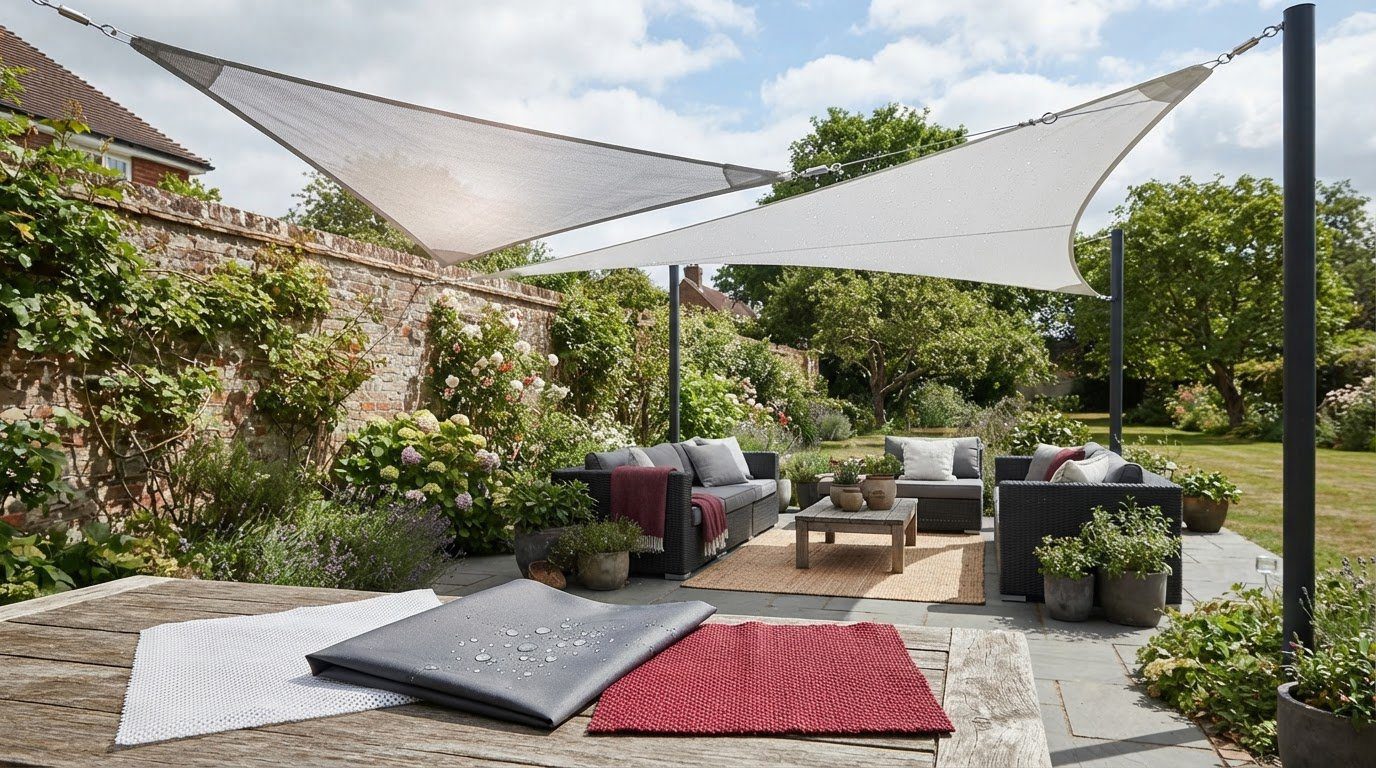
Sun sail fabric: choose a material for your outdoor needs
The best material for all-weather sun sails depends on whether you prioritise airflow or rain cover. Breathable HDPE lets heat escape, while waterproof fabrics are intended to keep rain out. UV protection varies by fabric, so check the product’s stated rating when comparing breathable and waterproof options.
It’s understandable to want one fabric that performs in every condition, but the right choice depends on how you use your outdoor space. This guide compares waterproof and breathable options for UV protection, colour retention and everyday use, helping you match the material to your needs.
You’ll also see how acrylic, canvas and PTFE compare, and what to consider for a garden seating area, a commercial space or a spot that needs shelter from rain as well as sun.
Key Takeaways
- Choose breathable mesh when airflow matters most, and consider a coated fabric where keeping rain out is the priority.
- Compare UV ratings as well as fabric weight: a heavier sail isn’t automatically better at blocking ultraviolet rays.
- For a colour that lasts, look beyond the shade itself and consider how the fabric is made and treated.
- Match the material to the setting, from everyday garden shade to an area that needs rain protection.
Waterproof or Breathable – Which Fabric Should You Choose for a Shade Sail?
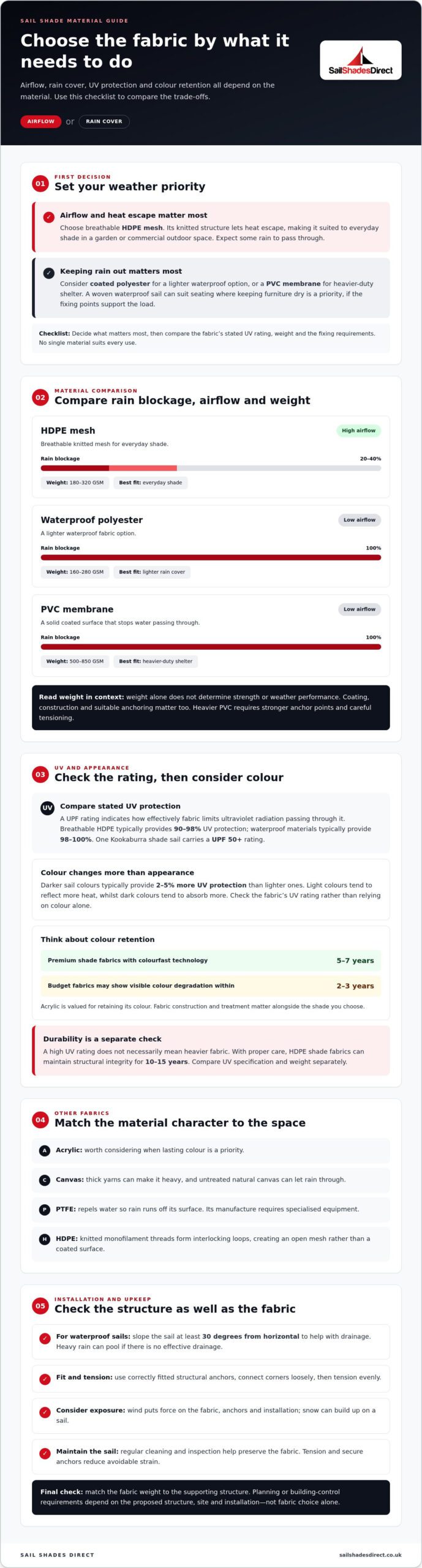
For UK gardens, choose coated polyester or PVC if rain cover is the priority; opt for breathable HDPE when airflow and heat escape matter more. No single fabric suits every use, so weigh weather protection, fabric weight and fixing requirements.
Waterproof and Water-Resistant Fabrics
PVC has a solid coated surface that stops water passing through, while coated polyester offers a lighter waterproof option. Waterproof PVC or polyester sails provide 100% rain blockage; water-resistant fabric sheds some rain but isn’t equivalent to a sealed barrier. A woven waterproof sail suits a seating area where keeping furniture dry is a priority, provided its fixing points support the load.
Breathable Sail-Shade Materials
HDPE, or high-density polyethylene, is knitted as a mesh that lets heat escape instead of trapping it beneath the shade sail. Breathable HDPE fabrics commonly weigh 180-320 GSM and block 20-40% of rain, making them better suited to everyday shade than dry shelter. Airflow can improve comfort in a sunny garden or commercial outdoor space, but expect some rain to pass through.
Polyester Fabrics and Fabric Weight
Waterproof polyester shade-sail fabrics typically weigh 160-280 GSM, while PVC membranes range from 500-850 GSM. Weight helps describe the material, but doesn’t alone determine strength or weather performance: coating, construction and suitable anchoring matter too. A woven waterproof polyester sail can balance a lighter fabric with rain protection; heavier PVC requires stronger anchor points and careful tensioning.
| Material | Rain protection | Airflow | Best fit |
|---|---|---|---|
| HDPE mesh | 20-40% blockage | High | Everyday shade |
| Waterproof polyester | 100% blockage | Low | Lighter rain cover |
| PVC membrane | 100% blockage | Low | Heavier-duty shelter |
First decide whether airflow or keeping rain out matters most, then match the fabric weight to the supporting structure.
UK planning or building-control requirements depend on the proposed structure, site and installation, so fabric choice alone doesn’t settle them. For safe installation, use correctly fitted structural anchors, slope waterproof sails at least 30 degrees from horizontal, connect corners loosely, then tension evenly.
Do sail shades provide UV protection?
Yes. Shade sails can provide strong UV protection, but the level varies by fabric and colour. Compare the UV rating alongside rain resistance and durability when choosing a sail for your outdoor space.
Snow can build up on a sail, and heavy rain can pool if a waterproof fabric has no effective drainage. Wind puts force on the fabric, anchors and installation, so consider exposure and secure fixings as well as UV protection.
UV Protection and UPF Ratings
A UPF rating indicates how effectively fabric limits ultraviolet radiation passing through it. Higher-rated fabrics provide more UV protection, but density alone doesn’t determine the result. Breathable HDPE shade sails typically provide 90-98% protection, while waterproof materials typically provide 98-100%. A Kookaburra shade sail, for example, carries a UPF 50+ rating.
Colour also affects protection: darker shade sail colours typically provide 2-5% more UV protection than lighter ones. That can help when selecting shades for a sunny patio, but colour is only one part of the decision. Compare the fabric’s stated UV rating first, then consider how the sail’s position and coverage suit the space.
UV Protection and Fabric Durability
UV protection and durability are related, but a high rating doesn’t necessarily mean heavier fabric. Fibres may be treated or engineered to withstand long-term exposure, so compare the UV specification separately from fabric weight. With proper care, HDPE shade fabrics can maintain structural integrity for 10-15 years.
Installation and upkeep affect how a sail performs over time. Regular cleaning and inspection help preserve the fabric, while tension and secure anchors reduce avoidable strain. For a garden layout exposed to strong sun, consider how the sail’s placement supports useful shade throughout the space. Explore shade planning options to consider a tailored layout.
Acrylic fabric colour retention and appearance
Acrylic shade fabric is valued for retaining its colour, making it worth considering when appearance matters through a British summer. Premium shade fabrics with colourfast technology resist fading for 5-7 years. Budget fabrics may show visible colour degradation within 2-3 years, so compare the fabric’s colour-retention properties as well as its initial appearance.
HDPE, or high-density polyethylene, is constructed differently. Its shade cloth is knitted from monofilament threads into interlocking loops, creating a mesh rather than a coated surface. This construction allows the fabric to be shaped for different areas, while acrylic is particularly associated with lasting colour. Consider the look you want alongside the conditions the sail will face.
Canvas and coated fabrics involve different trade-offs. Thick canvas yarns can make shade fabric heavy, while untreated natural canvas can let rain through. Coated fabric has a surface layer, so it behaves differently from open-knit HDPE. For a summer seating area, decide whether a woven texture, open mesh or smoother coated appearance best suits the setting.
PTFE, short for polytetrafluoroethylene, repels water, allowing rain to run off its surface. Manufacturing it is challenging because of its high melting point and shrinkage rate, and requires specialised equipment. This sets PTFE apart from knitted polyethylene and conventional canvas. Weigh its water-shedding qualities against the colour and appearance you want for your outdoor space.
Colour choice affects the overall feel as well as how the fabric looks over time. Light-coloured sails tend to reflect more heat, while dark colours tend to absorb more. Treat those factors separately from colourfastness. A darker fabric won’t automatically retain its colour longer, and a high initial tension won’t prevent fading. Review the material, colourfast treatment and finish together before choosing a shade sail.
Material suitability for different outdoor uses
Match sail fabric to the conditions and activities beneath it. The best material for all-weather sun sails depends on exposure, the shelter you need and the structure supporting the sail. HDPE can suit a garden where airflow matters, while PVC is better suited to spaces where rain protection is a priority.
For everyday outdoor shade, breathable HDPE lets heat escape and resists mould. Its lighter construction is easier to tension, making it suitable for smaller residential installations. Over garden seating, it provides shade without forming a sealed canopy. Choose a colour that complements the setting, then consider how the sail’s shape will cover the area as the sun moves. The best material for all-weather sun sails is therefore a decision about use, not appearance alone.
Where rain protection matters, PVC’s coated surface keeps water out. When fabricated correctly, it is described as resistant to cracking, shrinking and fading. Its heavier construction calls for stronger anchor points and accurate tensioning, making it suitable for a commercial outdoor area or garden dining zone where dry shelter matters. A waterproof sail also needs a slope that lets rain run off instead of collecting in the fabric.
There is no single wind-speed limit for HDPE, polyester and PVC sails. Wind resistance depends on the sail’s size and shape, fabric tension, anchor strength and exposure. A large sail in an open space places different demands on its fixings than a smaller sail in a sheltered garden. Heavy rain or snow can also load the fabric, especially if water or snow accumulates.
To identify the best material for all-weather sun sails, start with the site: decide whether airflow or rain cover matters more, then factor in exposure and fixing points. For a tailored solution, plan a bespoke sail shade around your outdoor space and its conditions.
Sail Shades Direct: Bespoke Sail Shades
Sail Shades Direct can help turn your material choice into a shading solution suited to your outdoor space. Bespoke Sail Shades are designed for individual layouts, which can help when standard shapes or fixing positions do not suit a garden or commercial setting.
For a more adjustable option, Rolling Sun Sails let you adapt the shaded area to changing needs. Arm Awnings and Giant Umbrellas offer other ways to create cover when a sail is not the best fit. The right option depends on your space, the shelter you want and how you plan to use it.
Tell Sail Shades Direct what you need and discuss a suitable shading solution for your setting.
Plan a shade solution around how you use your space
Start by picturing how your outdoor area should work day to day. Note where people sit, which areas need cover and whether you want fixed or adjustable shade. These practical details help turn material preferences into a solution that fits the space, rather than choosing fabric by appearance alone.
Choosing the best material for all-weather sun sails means matching shelter, airflow and appearance to your priorities. If you’re weighing these trade-offs, Sail Shades Direct can help you explore a suitable option for your setting.
Contact Sail Shades Direct for advice and take the next step towards making your outdoor space work better for you.
Frequently Asked Questions
Are there eco-friendly options for shade sail materials?
A fabric’s name alone does not determine its environmental impact. Consider how long the sail lasts, how it is maintained and what happens to it at the end of its life. A durable shade that stays in use can avoid frequent replacement, while simple cleaning may reduce the need for harsh treatments. Compare material sourcing and disposal options alongside shade performance, and choose a size that covers the area you actually use.
Can I leave a shade sail hanging all year round?
Some shade sails can stay in place, but year-round suitability depends on the material, installation and exposure to wind, rain and snow. A sheltered courtyard places different demands on a sail than an exposed garden. Inspect the fabric, tension and anchor points regularly, particularly after severe weather. If water or snow is accumulating, or the fixings show strain, take the sail down rather than leaving the load in place.
How does shade sail colour affect performance?
Colour changes both the feel of a shaded space and how much heat the fabric absorbs or reflects. Light colours reflect more heat, while dark colours absorb more; darker sails typically offer 2-5% more UV protection than lighter ones. For a small seating area, coordinate the colour with nearby walls and paving. In a large open garden, consider how the shade will look from indoors as well as beneath it.
How do HDPE, polyester and PVC-coated fabric compare for sun sails?
HDPE is a knitted mesh suited to airflow, while polyester and PVC-coated fabrics are options for greater rain protection. Waterproof polyester fabrics typically weigh 160-280 GSM; PVC membranes are heavier, at 500-850 GSM. That difference affects installation: heavier material needs stronger anchors and careful tensioning. For a sheltered play area, airflow may matter most; for a covered dining spot, prioritise rain protection and runoff.
Are waterproof sun sails suitable for year-round UK weather?
Waterproof fabric can provide rain cover, but it does not make a sail suitable for every season or site. Rain must run off rather than collect, and wind or snow can put extra strain on the fabric and fixings. Consider how exposed the location is, whether the sail can be taken down and how it will be inspected. A covered patio and an open, windy garden need different plans.
What UV protection ratings do sun sail fabrics provide?
Breathable HDPE shade sails typically provide 90-98% UV protection, while waterproof materials typically provide 98-100%. A Kookaburra shade sail carries a UPF 50+ rating, illustrating how a product may state protection using a separate rating system. Compare the fabric’s stated rating rather than assuming colour or weight tells the whole story. Also consider the sail’s position: gaps around its edges leave parts of the area exposed.