
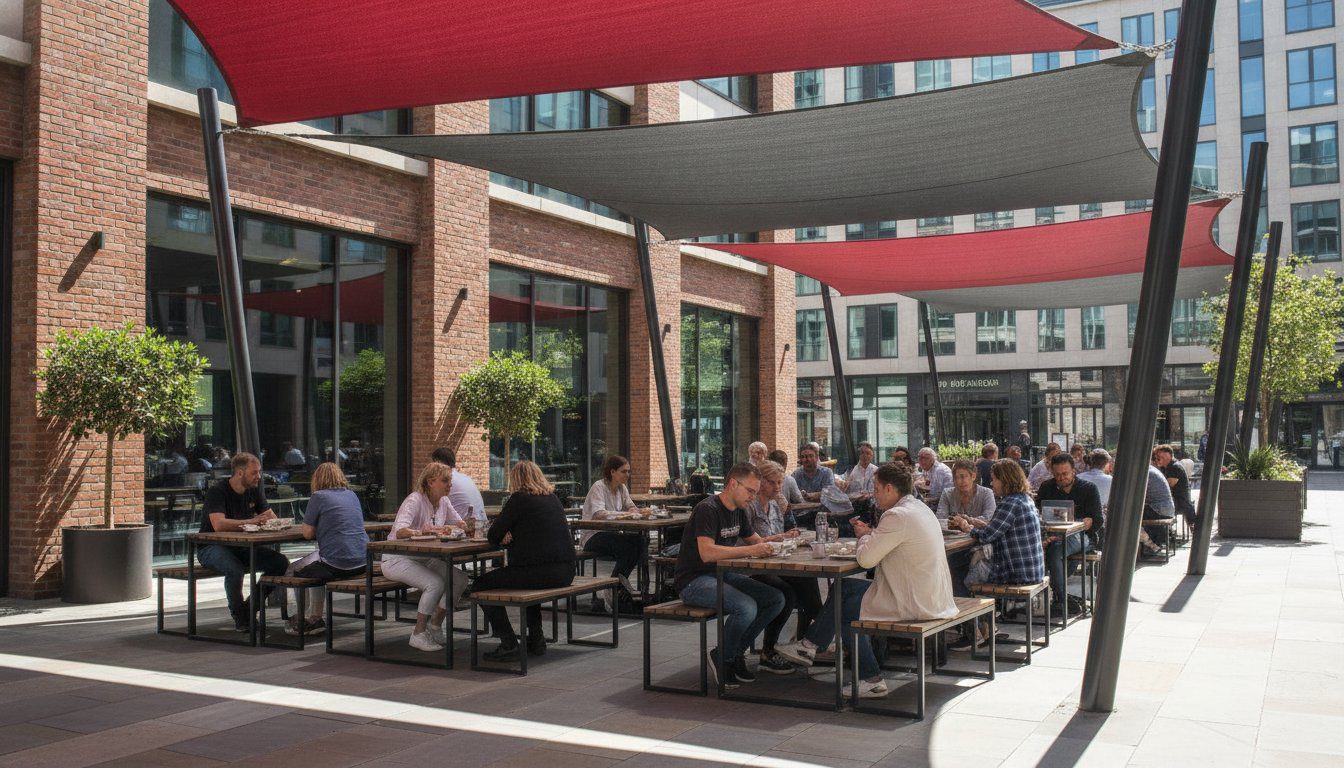
Outdoor Cafe Seating Area Design: A 2026 Guide to Maximising Covers
What if your most profitable floor space wasn’t actually inside your building? We all know the frustration of watching a sudden British downpour or a rare heatwave empty a perfectly good terrace, leaving you with idle tables and lost revenue. It’s disheartening to see flimsy umbrellas buckling in the wind while potential customers walk past your door in search of somewhere more comfortable. You want a space that looks inviting and stays busy, but the unpredictable UK climate often has other plans.
This guide shows you how to master outdoor cafe seating area design to engineer a high-revenue dining space that thrives regardless of the weather through bespoke design and strategic shading. We’ll explore how to balance maximum cover density with durable, low-maintenance solutions like rolling sun sails and giant umbrellas to transform your kerb appeal. From understanding the latest pavement licensing fee caps to choosing architectural sail shades that make a genuine statement, you’ll discover how to create a year-round destination that keeps your covers high and your customers coming back.
Key Takeaways
- Learn how to calculate the perfect balance between high cover density and customer comfort to maximise your daily revenue potential.
- Discover how professional outdoor cafe seating area design uses bespoke sail shades to create an inviting “third space” that attracts footfall in any season.
- Compare the long-term ROI of permanent architectural shading versus temporary options so your investment stands up to the British weather.
- Identify the essential technical specifications, including wind resistance ratings and UV-stable fabrics, required for a durable commercial installation.
- Navigate the practicalities of planning permission and professional site surveys to make sure your project stays on track and avoids costly errors.
The Fundamentals of Outdoor Cafe Seating Area Design
Think of your terrace as the first handshake with a potential customer. It isn’t merely a place to put tables; it’s a vital extension of your brand identity. A well-executed sidewalk cafe environment acts as a “Third Space,” a sociological term for a location that provides a social anchor between the pressures of the workplace and the routines of home life. When your outdoor cafe seating area design prioritises this sense of belonging, you don’t just sell coffee; you sell an atmosphere that customers want to inhabit for hours.
Success in the UK hospitality sector relies heavily on kerb appeal. High-quality shading and a cohesive layout can stop passers-by in their tracks, turning casual footfall into spontaneous visits. However, the primary constraint for any British venue is the weather. Without strategic protection, your revenue is at the mercy of the next rain cloud. Designing with resilience in mind means moving beyond flimsy umbrellas to engineered solutions like bespoke sail shades or rolling sun sails. These structures do more than block the rain; they define the physical boundaries of your business and create a protected micro-climate that feels secure and premium.
Establishing Your Design Concept
To create a seamless transition, your outdoor aesthetics should mirror your interior decor. If your inside space is industrial and moody, carry those textures outside with charcoal fabrics and sleek metal fixtures. Choose a colour palette that remains vibrant amongst grey urban surroundings; deep blues or warm terracotta can stay striking even on overcast days. Don’t forget the sensory details. Incorporating hardy greenery and warm LED lighting ensures the ambience remains inviting as the sun dips, encouraging customers to stay for that second round of drinks whilst the evening air cools.
Assessing Site Constraints
Before any fabrication begins, you must understand the unique physics of your specific site. We evaluate the sun’s path throughout the day to determine where glare might ruin a customer’s lunch and identify wind corridors that require high-tension shading solutions. In exposed urban pockets, wind speeds can be unpredictable, making durable bespoke sail shades a safer and more professional choice than off-the-shelf alternatives. Finally, map out your customer flow. Permanent fixtures should guide movement rather than block it, ensuring staff can navigate service lanes efficiently whilst diners enjoy a sense of privacy and enclosure.
Strategic Layout: Maximising Covers and Comfort
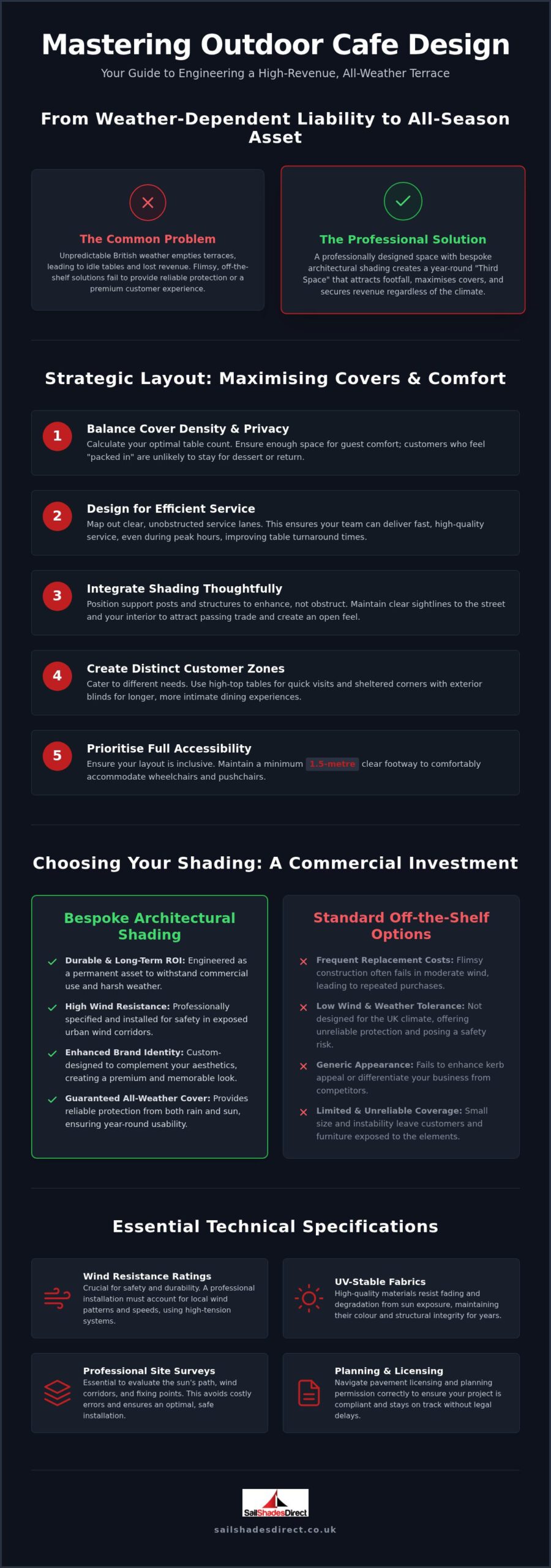
Designing the perfect floor plan is a delicate balancing act. You want to maximise your revenue per square metre without making your guests feel like they’re in a crowded waiting room. Effective outdoor cafe seating area design requires a logical, step-by-step approach to spatial planning that puts both the customer’s comfort and your team’s efficiency at the forefront.
- Step 1: Start by calculating your optimal cover count. Leave enough breathing room for privacy; diners who feel exposed or “packed in” rarely order a second course or stay for dessert.
- Step 2: Map out your service lanes. Your team needs clear, direct paths to every table to ensure fast turnarounds and high-quality service during peak hours.
- Step 3: Integrate your shading structures carefully. It’s vital that support posts or frames don’t obstruct sightlines to the street or the internal bar, as visibility is key for attracting passing trade.
- Step 4: Create distinct zones for different behaviours. High-top tables near the entrance work beautifully for quick espressos, while quieter corners are better suited for long, leisurely lunches.
- Step 5: Prioritise accessibility. You should maintain at least a 1.5-metre clear footway to accommodate wheelchairs and pushchairs comfortably, ensuring your space is inclusive for all guests.
Zoning for Diverse Customer Needs
Not every customer wants the same experience. You can use exterior blinds to create intimate, sheltered pockets for private meetings or quiet mornings. Conversely, giant commercial umbrellas often serve as central social hubs, drawing in larger groups who want to be in the heart of the atmosphere. Offering a deliberate mix of sun-drenched spots and fully shaded retreat areas ensures you can cater to everyone, from the dedicated sun-seeker to the remote worker who needs a glare-free screen to stay productive.
Optimising Service Efficiency
Efficiency is the heartbeat of a profitable terrace. Position your furniture to allow for rapid cleaning and easy floor maintenance between sittings. It’s essential to ensure that shading supports don’t create trip hazards or bottlenecks during busy periods. Many businesses now use bespoke cafe awnings to create weather-protected service hatches, allowing staff to pass orders directly to the terrace. If you’re unsure how to fit these into your current footprint, we can help you explore custom layout options that turn even the most awkward corners into high-value seating.
Selecting Commercial Shading: Bespoke vs. Off-the-Shelf
Choosing the right cover is the most critical decision in outdoor cafe seating area design. While off-the-shelf parasols might seem like a budget-friendly starting point, they often become a recurring expense that drains your maintenance budget. In the UK, a single autumn gale can destroy a standard garden umbrella, whereas a permanent architectural sail is engineered to stay put. The return on investment for bespoke solutions comes from their sheer longevity and the fact they don’t need to be dismantled every time the wind picks up. You’re investing in a structure that works for you, rather than one your staff have to constantly manage.
Giant umbrellas are a fantastic choice for large-scale outdoor cafe seating area design projects. They provide substantial coverage from a single heavy-duty post, which is perfect for pub gardens or wide, open terraces. These aren’t your typical garden parasols; they’re high-end engineered structures that signal to customers your space is a serious year-round destination. They feel robust and professional, giving diners the confidence to stay put even when the clouds look threatening.
The Case for Bespoke Sail Shades
Standard shapes rarely fit the complex footprints of British high streets. By opting for bespoke sail shades UK businesses can utilise every available inch of their licensed area. We tailor the fabric tension to meet specific wind-load requirements, ensuring the structure remains taut and silent even in exposed urban wind corridors. These sails also serve as a permanent marketing feature, turning your roofline into a recognisable landmark that draws the eye from across the street. It’s a blend of precision engineering and architectural beauty that off-the-shelf products simply can’t match.
Rolling Sun Sails and Awnings
Sometimes you need a solution that adapts as quickly as the British weather. Rolling sun sails and arm awnings give you that essential flexibility. You can choose between manual or motorised systems depending on your staff workflow and budget. While manual options are incredibly reliable, motorised rolling sun sails provide instant climate control at the touch of a button. This is particularly useful during the “shoulder seasons” of spring and autumn, when the sun is low but the air is still crisp. Being able to retract the cover when it isn’t needed preserves the life of the fabric and lets your customers enjoy the rare afternoon sun without any fuss.
Technical Considerations for Durable Outdoor Design
A beautiful outdoor cafe seating area design is only as good as its ability to withstand the rigours of commercial use. In the UK, your shading structures face a constant barrage of UV radiation, heavy rain, and fluctuating temperatures that can quickly degrade inferior materials. We prioritise high-performance, commercial-grade fabrics that are specifically treated for UV stability to prevent the colours from fading and the fibres from becoming brittle. Safety is equally paramount; every installation must comply with strict fire retardancy standards, such as BS 7837, to ensure your guests are protected and your insurance remains valid.
Effective drainage is another non-negotiable factor when planning large fabric spans. Without a calculated pitch, rainwater can pool in the centre of a sail, creating a “ponding” effect that stretches the material and puts immense strain on the fixings. We typically design with at least a 20-degree angle to ensure water run-off is immediate and controlled, keeping the area underneath dry and the structure taut. This technical foresight prevents the sagging and structural fatigue that often plagues cheaper, DIY alternatives.
Engineering for Wind and Weather
Designing for the British coast requires a different approach than an sheltered urban courtyard. We utilise marine-grade 316 stainless steel hardware as standard, providing essential resistance against salt-air corrosion and urban pollutants. It is vital to calculate the “sail effect”, which is the significant force wind exerts on your building’s facade or freestanding support posts. Because of these intense physical loads, architectural sail shades UK projects require a professional structural assessment to ensure the mounting points are safe and the foundations are deep enough to remain secure during a gale.
Fabric Selection and Maintenance
Your choice between breathable mesh and fully waterproof fabric depends entirely on your business goals. Breathable HDPE (High-Density Polyethylene) is perfect for sun-drenched terraces as it allows hot air to rise through the fabric, keeping the area below cool. However, if you want to guarantee covers during a drizzle, a PVC-coated polyester provides a total waterproof barrier. To maintain that “as-new” look, we recommend a simple cleaning protocol of warm soapy water and a soft brush once a season. For those seeking even greater versatility, exterior blinds for patios can be integrated to provide lateral wind protection, creating a fully enclosed feel when the weather turns. If you’re ready to upgrade your venue’s resilience, you can request a technical site survey to see which engineered solutions suit your space best.
Implementation: From Design to Professional Installation
Bringing a sophisticated outdoor cafe seating area design to life requires more than just a delivery van and a few spanners. It is a transition from architectural concept to structural reality that demands precision at every stage. We understand that the prospect of a major installation can feel daunting, especially when you’re trying to manage a busy venue. Our goal is to function as your friendly collaborator, handling the technical complexities so you can focus on your guests. By following a structured implementation journey, we ensure your new space is safe, compliant, and ready to generate revenue from day one.
The final stage of any high-end design involves the integration of ambient features. For a truly year-round space, we look at incorporating integrated heating and lighting directly into the shading structures. Infrared heaters and dimmable LED systems can be seamlessly mounted to our bespoke sail posts or giant umbrella frames. This creates a warm, experience-led atmosphere that encourages customers to linger long after the sun has set, effectively turning your terrace into a premium evening destination.
Planning and Compliance
Navigating the legal landscape is essential for any permanent outdoor structure. While some smaller shading solutions may fall under “permitted development,” many bespoke installations require full planning permission. Since the UK government made the temporary pavement licensing regime permanent in March 2024, there is now more certainty for businesses. Local authorities currently have a fee cap of £500 for first-time applications and £350 for renewals. We help you ensure your design meets essential accessibility requirements, such as maintaining the mandatory 1.5-metre clear footway for pedestrians. Documenting this structural safety is not just a legal hurdle; it is a vital part of your health and safety audit and insurance compliance.
The Installation Journey
A professional site survey is the bedrock of a successful project. We conduct rigorous pre-installation checks to evaluate ground conditions and wall integrity, ensuring that any mounting points can handle the calculated tension of a sail or the weight of a giant umbrella. For multi-site operators, partnering with a national installation service provides the benefit of a consistent aesthetic and quality standard across every location. We coordinate the build to minimise disruption, often working during your closed hours or shoulder periods to ensure your service remains uninterrupted. If you’re ready to transform your terrace, you can Book a professional design consultation for your cafe today to explore what’s possible for your unique site.
Transforming Your Terrace into a Year-Round Revenue Driver
Mastering your outdoor cafe seating area design isn’t just about picking the right furniture; it’s about creating a resilient, weather-protected environment that guests love to inhabit. You’ve discovered how moving from temporary parasols to engineered solutions like bespoke sail shades or rolling sun sails secures your revenue against unpredictable British weather. A strategic layout doesn’t just increase covers; it builds a vibrant “third space” that works for your business every single day of the year.
Our team is ready to help you navigate this transition, from initial site surveys to final installation. We utilise bespoke UK manufacturing and an expert national installation team to deliver the marine-grade durable hardware your venue deserves. We take immense pride in our craftsmanship and are dedicated to helping you reduce the stress of seasonal revenue fluctuations. Let’s work together to make your outdoor space your most profitable asset.
Request a bespoke design quote for your cafe terrace
Frequently Asked Questions
Do I need planning permission for a cafe sail shade in the UK?
Planning permission is typically required for any permanent structure that alters the building’s exterior or the local street scene. While some minor additions might fall under permitted development, most commercial high-street installations require formal approval. You will also need a pavement licence from your local council, which currently has a £500 cap for new applications. We always recommend checking with your local planning officer early to ensure your outdoor cafe seating area design remains fully compliant.
How much wind can a commercial giant umbrella actually withstand?
Commercial giant umbrellas are engineered to withstand significant wind speeds, often up to 50 or 60mph depending on the specific model and mounting method. These structures feature reinforced ribs and heavy-duty masts that far exceed the strength of standard garden parasols. However, for safety and longevity, we advise closing them during extreme weather warnings. Professional site surveys help us determine the best mounting solution to ensure your structure stays secure in exposed urban wind corridors.
Can I keep my outdoor cafe seating area open during the winter?
You can absolutely keep your terrace open during the winter by integrating effective heating and weather protection into your layout. Infrared heaters and exterior blinds create a cosy micro-climate that shields guests from the damp and cold. Since the average spend per visit in the UK rose to £18.35 in early 2026, keeping these tables active year-round provides a vital revenue stream. It is about making the space feel like a warm, inviting extension of your indoor brand.
What is the best fabric for a waterproof cafe sail shade?
PVC-coated polyester is the gold standard for a fully waterproof finish on a commercial sail shade. This fabric is incredibly durable and provides total protection from the rain, ensuring your covers aren’t lost during a sudden downpour. While breathable HDPE mesh is excellent for sun protection, the waterproof polyester option is often the smarter investment for UK businesses. It guarantees your space stays usable regardless of the forecast, providing a much more reliable return on investment.
How many covers can I realistically add to my outdoor space?
The number of covers you can add depends on your available square footage and the mandatory 1.5-metre clear footway required for pedestrians. A typical two-person table requires approximately 2.5 square metres of space to ensure customer comfort and efficient service flow. By using clever outdoor cafe seating area design, you can maximise your layout without making the area feel cramped. We help you map this out to find the perfect balance between revenue potential and essential accessibility.
Are bespoke sail shades more cost-effective than standard awnings?
Bespoke sail shades often prove more cost-effective over their lifespan because they are engineered for the specific wind loads and dimensions of your site. Standard awnings have fixed sizes that might leave gaps or require more frequent repairs in high-traffic urban areas. A custom sail fits your space perfectly, which reduces uneven wear and tear. You’re investing in a permanent architectural feature that requires less maintenance and offers a superior long-term return compared to off-the-shelf alternatives.
How long does a professional installation of a rolling sun sail take?
A professional installation of a rolling sun sail typically takes between one and two days to complete. This timeframe covers the secure mounting of hardware and the precise tensioning of the sail to ensure it operates perfectly. If your project requires freestanding posts or significant groundworks, the process might take slightly longer. We always coordinate with your team to find the least disruptive times, ensuring your business hours and customer service aren’t interrupted by our work.
How do I clean and maintain commercial exterior blinds?
Cleaning commercial exterior blinds is a straightforward process that involves warm soapy water and a soft-bristled brush. It’s important to avoid using harsh chemicals or power washers, as these can damage the protective coatings and UV-stable fibres. Regular checks of the tracks and tensioning systems will ensure everything operates smoothly. Taking ten minutes once a month to clear debris from the mechanisms will significantly extend the life of your investment and keep the space looking professional.