
10 Bespoke Garden Canopy Ideas for Rain Protection in 2026
Why do we invest so much in our gardens only to let a light drizzle dictate when we can enjoy them? It’s a common frustration; you’ve spent time and effort creating a beautiful patio, yet you’re forced indoors because of a “waterproof” cover that sags or a gazebo that simply wasn’t built for the British wind. When searching for garden canopy ideas for rain protection, many homeowners find that standard off-the-shelf products often fail to fit their specific layout or handle the weight of a proper downpour.
You deserve an outdoor room that remains bone-dry and usable throughout the seasons. This guide explores ten sophisticated solutions that move beyond temporary fixes and focus on bespoke engineering. From high-grade sail shades to motorised arm awnings, you’ll discover how high-performance materials can provide maintenance-free durability whilst enhancing your home’s architectural beauty. Let’s look at the premium options that will transform your garden into a year-round retreat in 2026!
Key Takeaways
- Identify the critical technical differences between water-resistant and truly waterproof fabrics to ensure your outdoor retreat remains dry during a heavy British downpour.
- Discover why the “20-degree rule” is essential for drainage and how bespoke garden canopy ideas for rain protection prevent common issues like fabric sagging and water pooling.
- Compare the benefits of motorised arm awnings for instant cover against the modern versatility of rolling sun sails for large or non-standard garden layouts.
- Understand the engineering requirements for UK gales, including the importance of high-grade tensioning and professional-grade wall fixings for long-term safety.
- Learn how a custom-designed, maintenance-free canopy provides a high “cost per use” return whilst significantly increasing your home’s year-round usable square footage.
Garden Canopy Ideas for Rain Protection: Waterproofing vs Water Resistance
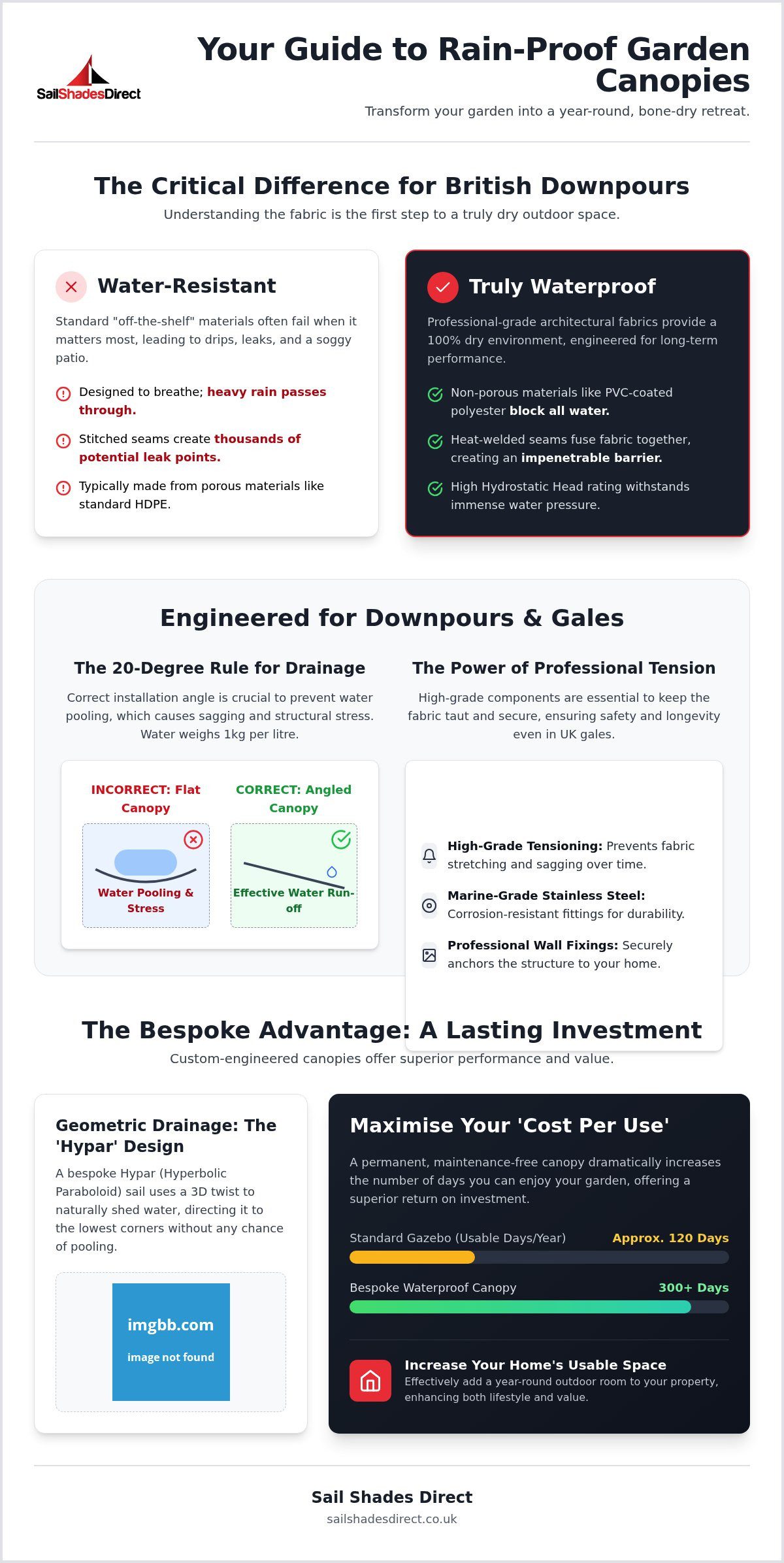
Most homeowners assume that any fabric cover labelled “outdoor” will keep them dry during a storm. This is a common misconception that often leads to soggy furniture and ruined garden parties. When exploring garden canopy ideas for rain protection, you must distinguish between water-resistant mesh and truly waterproof fabrics. Water-resistant materials, such as standard HDPE (High-Density Polyethylene), are designed to breathe and block UV rays whilst letting heavy rain pass through. For a 100% dry environment, you require a non-porous material like PVC-coated polyester.
To understand how well a fabric performs, we look at its Hydrostatic Head rating. This technical measurement determines how much water pressure a fabric can withstand before it starts to leak. Whilst a cheap gazebo might fail under the weight of a few millimetres of rain, professional-grade architectural fabrics are engineered to hold back thousands of millimetres of water pressure. We also ensure that every bespoke installation uses heat-sealed seams rather than traditional stitching. Stitched seams create thousands of tiny needle holes that eventually let moisture seep through; heat-welding fuses the fabric together, creating a permanent, impenetrable barrier.
Choosing the Right Material for UK Rain
PVC-coated polyesters have become the gold standard for permanent rain protection in the UK. Historically, these materials were often criticised for having a “plastic” look, but modern manufacturing has changed the game. You can now choose from a vast array of matte finishes and sophisticated colours that look like high-end textiles whilst providing industrial-strength protection. A UV-stabilised waterproof fabric is a material that protects against both sun and torrential downpours. These fabrics are specifically treated to prevent the “brittleness” that often affects cheaper materials after a single season of exposure.
Why Tension Matters for Rain Protection
Even the best fabric will fail if it isn’t tensioned correctly. Water is incredibly heavy, weighing one kilogram per litre, and it will find the lowest point on any surface. If your canopy is loose or lacks the correct pitch, water will pool in the centre. This “puddling” effect creates immense stress on the structure, often leading to stretched fabric or snapped fixings. Looking back at the history and types of awnings, engineers have long realised that tension is the key to longevity.
We use marine-grade stainless steel fittings to ensure our systems remain taut and safe, even during high-exposure gales. For those with particularly challenging garden layouts, bespoke sail shades UK offer a superior solution because they can be engineered into complex 3D shapes that naturally shed water. This professional approach to tensioning ensures your canopy remains a beautiful, maintenance-free addition to your home for years to come.
Bespoke Sail Shade Ideas for Year-Round Rain Protection
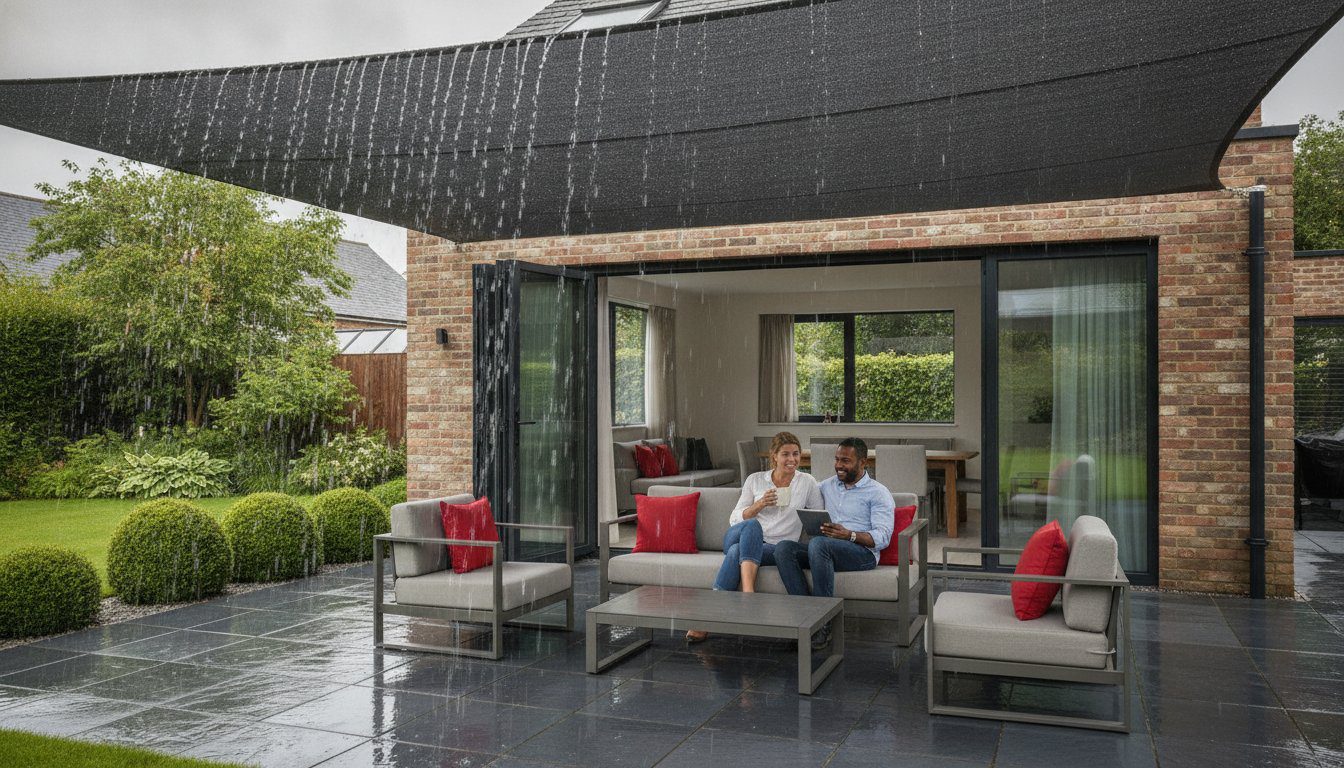
While many people associate sail shades with sunny Mediterranean holidays, they’re actually one of the most effective garden canopy ideas for rain protection when engineered correctly. The secret lies in the “Hypar” (Hyperbolic Paraboloid) design. By creating a 3D twist where two corners are high and two are low, you ensure that water cannot pool. Instead, it’s directed precisely to the lowest points, preventing the weight issues often found in flat covers. Unlike basic DIY tarps, these bespoke structures use geometry to defy the British weather.
Architectural Style Meets Practical Shelter
Bespoke systems offer a level of customisation that off-the-shelf products simply can’t match. You can choose contrasting colours to create a bold design statement or opt for neutral tones that blend seamlessly with your masonry. These architectural sail shades UK homeowners are increasingly choosing don’t just provide shelter; they elevate the entire aesthetic of a modern property. Because they are permanent fixtures, you don’t have to worry about rushing outside to dismantle a flimsy gazebo when the wind picks up. Professional designers often look to resources that explain how to design and build shade structures that respect both form and function.
The Utility of Waterproof Fabric Sails
The versatility of these sails makes them perfect for specific functional zones. Do you have an outdoor kitchen or a BBQ area that sits idle the moment clouds gather? A waterproof sail provides a safe, dry environment for cooking and entertaining, making it one of the most practical garden canopy ideas for rain protection for those who love to host. They’re also an excellent way to create a dry “corridor” between your main house and a detached garden office. In one recent project, a bespoke sail transformed a damp, north-facing terrace into a favourite evening spot for the family, proving that even the most “unusable” spaces have potential.
Whether you prefer a wall-to-post configuration that extends from your bi-fold doors or a completely freestanding structure at the end of the garden, the layout is entirely up to you. We can even integrate multiple overlapping sails to cover vast entertaining zones without leaving gaps for the rain to get through. This tailored approach ensures the canopy follows the exact line of your patio, providing a seamless transition from indoors to out. If you’re ready to see how a custom design could work for your home, you can view our range of bespoke sail shades to get started.
Comparing Retractable Awnings and Rolling Sun Sails for Rain
When you’re deciding between different garden canopy ideas for rain protection, you’ll likely find yourself choosing between a traditional awning or a contemporary rolling sail. Both offer high-performance shelter, but they serve different architectural needs. While a classic arm awning provides immediate, robust cover directly from your house wall, a rolling sun sail can bridge massive spans that would be impossible for a cantilevered structure. Both systems represent a significant step up from temporary gazebos, offering a permanent solution that you can deploy in seconds.
Heavy Duty Arm Awnings for Patios
For many UK homeowners, heavy duty arm awnings are the ultimate choice for domestic use that demands commercial-grade reliability. These systems are designed to extend at the touch of a button, providing a dry sanctuary for your patio furniture within seconds. Premium models often feature a full-cassette system; this means the fabric and the mechanical arms are completely enclosed in a protective metal housing when retracted, shielding them from the worst of the winter weather. It’s a tidy, maintenance-free way to ensure your canopy stays in peak condition for years.
Unlike the basic manual versions you might find at a local DIY store, these bespoke units often include integrated guttering. This clever design feature directs rainwater along the front profile and out through the sides, preventing that annoying “sheet of water” from falling off the front edge of the fabric. For those who want to match this level of engineering in their property’s main drainage, the Copper Gutter Supply Company provides premium materials that offer both beauty and performance. It’s these small engineering details that ensure you stay dry whilst enjoying your morning coffee during a light shower.
If you’re trying to cover a particularly large terrace or a non-standard garden layout, motorised rolling sun sails offer a level of flexibility that awnings can’t match. An awning’s projection is physically limited by the length of its arms, usually capping out at around four metres. In contrast, a rolling sail can span much greater distances, making it ideal for covering large outdoor dining areas or poolside lounges that sit further away from the house.
One of the standout features of a rolling sail is the ability to adjust the height of the individual corners. If the wind shifts or the rain becomes heavier, you can lower one side to manage the runoff more effectively. This ensures water always flows away from your seating area rather than pooling. Most modern systems also come equipped with automated wind and rain sensors. These intelligent devices will automatically retract the canopy if the weather turns too severe, protecting your investment even if you aren’t at home to do it yourself. Whether you opt for a manual version for a smaller deck or a fully automated motorised system for a large entertaining zone, the result is a dry, usable outdoor room that adds genuine value to your lifestyle.
Key Design Factors for Effective Rain Drainage and Wind Resistance
Engineering a high-performance shelter is about more than just choosing a pretty fabric. When you’re evaluating garden canopy ideas for rain protection, you must consider the physics of water and wind. A canopy that looks beautiful in a brochure can quickly become a liability if it hasn’t been designed to handle the specific microclimate of your garden. Success lies in the details of the pitch, the strength of the fixings, and a clear plan for where that rainwater will actually go once it leaves the fabric.
The Importance of Pitch and Tension
The 20-degree rule is the baseline for any professional installation. Without this minimum pitch, you run the risk of “ponding”, where water collects in the centre of the fabric. This creates a heavy, sagging bowl that can easily tear the material or pull fixings straight out of your masonry. To ensure a reliable flow, a 1:4 ratio of height difference is generally recommended for runoff. This means for every four metres of horizontal span, you should have at least one metre of vertical drop between the high and low points.
Structural integrity is equally vital because a waterproof canopy acts like a giant sail in the wind. Whilst a mesh sail lets some air through, a solid waterproof fabric takes the full force of a gale. Professional installers calculate wind load based on national safety standards to ensure that wall plates and steel posts are deep-rooted and secure. This isn’t just about durability; it’s about the safety of your family and your property during a typical UK storm.
Side Protection with Exterior Blinds
Rain rarely falls perfectly vertically in the UK. To create a truly dry sanctuary, you should consider how to block driving rain that blows in from the side. Integrating exterior blinds for patios allows you to seal off the sides of your canopy, effectively creating a fully enclosed “outdoor room”. These blinds can be fitted with transparent “window” sections, so you can still enjoy the view of your garden whilst staying completely protected from the elements.
Managing runoff is the final piece of the puzzle. You don’t want a waterfall dumping directly onto your patio or against the house foundations. We often design systems that direct water towards flower beds or existing drainage channels. To keep your system looking its best, a quick annual clean is essential. Removing organic debris prevents the growth of moss and algae, which can eventually damage the waterproof coating. If you’re ready to upgrade your garden with a professionally engineered solution, contact us for a bespoke canopy consultation today.
Why a Bespoke Garden Canopy is the Ultimate Investment for UK Homes
Investing in a high-quality outdoor structure isn’t just about avoiding a few raindrops; it’s about fundamentally changing how you live in your home. When you explore garden canopy ideas for rain protection, the shift from temporary “pop-up” solutions to a bespoke installation represents a move toward permanent value. A well-designed canopy acts as an architectural extension of your living room or kitchen, effectively increasing your property’s usable square footage. Prospective buyers increasingly look for these “outdoor rooms” that offer year-round utility, making a bespoke system a savvy addition to your home’s market appeal.
Think about the “cost per use” argument. A cheap gazebo might last one summer before the wind catches it, but a professionally installed canopy is built to endure for a decade or more. By choosing a durable system that lasts 10+ years, you’re opting for a sustainable choice that avoids the waste of annual replacements. It means you can plan a Christmas BBQ or a rainy October coffee morning with total confidence. You aren’t just buying fabric; you’re buying 365 days of garden access.
Commercial Grade Solutions for the Home
While many homeowners opt for flexible fabric systems, others may seek the total enclosure of a glass structure; for high-end architectural inspiration, Vansta Trädgård offers an exceptional range of exclusive orangeries and winter gardens that provide the ultimate in year-round garden protection.
We bring the same rigorous standards to residential projects that we apply to the commercial shading solutions UK businesses rely on for their outdoor seating. This means using high-grade, UV-stabilised fabrics and heavy-duty fixings designed for high-exposure environments. You get the peace of mind that comes with a structure engineered for safety and performance, personalised with a wide palette of fabric colours and finishes. Whether you need a giant umbrella for a terrace or a rolling sail for a large deck, the quality remains uncompromising.
Getting Started with Your Bespoke Project
Every successful installation begins with a detailed site survey. This step is crucial for identifying structural fixing points on your masonry and assessing local wind exposure. It’s how we ensure your canopy doesn’t just look good but stays secure during a gale. Our designers collaborate with you to realise your favourite garden vision, ensuring the final result fits your patio’s layout perfectly. We handle the technical complexities so you can focus on the fun part: choosing the style and colour that suits your home. Ready to reclaim your outdoor space from the British weather? Contact Sail Shades Direct for a bespoke design consultation and let’s start planning your year-round retreat.
Reclaim Your Outdoor Lifestyle Today
Transforming your patio into a year-round retreat is no longer a seasonal luxury; it’s a practical way to maximise your home’s potential. We have explored how the right engineering, from the 20-degree pitch rule to the use of non-porous PVC-coated fabrics, ensures your space remains bone-dry. By moving away from flimsy temporary covers and implementing these garden canopy ideas for rain protection, you’re investing in a durable, architectural addition that stands up to the British climate. Whether you prefer the sleek lines of a bespoke sail or the immediate cover of an arm awning, the goal is a maintenance-free sanctuary.
At Sail Shades Direct, we pride ourselves on delivering professional-grade results across the country. Our national UK installation team uses only marine-grade stainless steel fittings and provides 10-year fabric durability guarantees for your peace of mind. Every project is unique, and we’re ready to help you design a solution that fits your garden’s exact footprint perfectly. Don’t let another rainy afternoon keep you indoors. Request a Bespoke Quote from Sail Shades Direct today and start enjoying your garden on your own terms. Your dream outdoor room is just a consultation away!
Frequently Asked Questions
Are shade sails actually waterproof?
Yes, shade sails are completely waterproof if you specify a non-porous fabric like PVC-coated polyester. Whilst standard mesh sails are designed only for sun, our bespoke rain-protection systems use high-performance materials that create a dry sanctuary. These fabrics are heat-sealed rather than stitched to ensure no moisture seeps through the seams. It’s the most reliable way to implement garden canopy ideas for rain protection whilst maintaining a modern, architectural aesthetic.
Can I leave my garden canopy out in the rain all year round?
Bespoke, professionally installed fixed canopies are designed for year-round exposure to the British elements. However, for retractable systems like motorised rolling sails or arm awnings, we recommend retracting the fabric during extreme gales or heavy snow to protect the mechanical arms. Using high-grade, UV-stabilised fabrics ensures your canopy won’t become brittle or fade after a single winter, provided the structure is engineered for your specific site conditions.
How do I stop water from pooling on my garden canopy?
The only way to prevent water pooling is by ensuring a minimum 20-degree pitch during the design phase. If a canopy is installed too flat, water will inevitably collect and create a heavy bowl that stretches the fabric. We use marine-grade stainless steel fittings to maintain high tension, whilst our specialised 3D designs shed water efficiently. This professional approach ensures rain flows directly into your garden’s drainage rather than sitting on the cover.
What is the best type of garden canopy for a windy UK garden?
A professionally engineered sail shade or a full-cassette arm awning is the best choice for high-exposure environments. Unlike cheap gazebos, our structures are manufactured to BS EN 1990:2023 standards, ensuring they can handle specific UK wind loads. For particularly gusty areas, we often recommend automated wind sensors that retract the canopy when limits are reached. This proactive technology ensures your garden canopy ideas for rain protection remain safe and secure.
Do I need planning permission for a permanent waterproof sail shade?
In most cases, planning permission isn’t required under Permitted Development Rights for residential properties. To stay within these rules, the canopy should be no higher than 2.5 metres if it sits within 2 metres of your boundary. It also mustn’t cover more than 50% of the land around the original house. However, rules can differ for listed buildings or conservation areas, so we always suggest a quick check with your local authority.
How much wind can a bespoke sail shade withstand?
Bespoke sail shades are engineered to withstand significant wind loads, often up to gale force, depending on the specific site engineering. Because every installation is different, we assess your local exposure to determine the depth of the post foundations and the strength of the wall fixings. This tailored approach is what separates a professional installation from a DIY kit, which might fail at wind speeds as low as 15 miles per hour.
Can a garden canopy protect my outdoor furniture from winter rain?
A waterproof canopy provides excellent protection, but you’ll get the best results by adding exterior blinds for side shelter. Whilst a roof canopy stops vertical rain, driving winter storms can still blow moisture underneath from the sides. By enclosing your patio with weather-resistant blinds, you create a dry outdoor room that keeps furniture frames and cushions free from damp and moss. It’s a fantastic way to extend the life of your expensive outdoor sets.
How do I clean a waterproof fabric canopy?
Regular maintenance involves a gentle wash with mild soapy water and a soft brush once or twice a year. Simply use a sponge to lift away dirt and bird droppings before rinsing with lukewarm water. You should avoid using high-pressure washers or aggressive chemical cleaners, as these can strip the protective waterproof coating. Always ensure the fabric is completely dry before retracting it if you’re using a rolling or awning system to prevent mould.