
Bespoke Shading for Awkwardly Shaped Patios
What if your “difficult” patio isn’t actually the problem, but the “off-the-shelf” solutions you’ve been trying to force into it? You’ve likely found that standard umbrellas leave awkward gaps in coverage, whilst traditional square structures feel clunky against irregular house extensions. It’s a common struggle to find reliable fixing points on multi-level terraces or narrow garden corridors. We understand that your outdoor space is a vital reprieve from daily life, and it shouldn’t be limited by its geometry.
In this guide, you’ll discover how to transform L-shaped or narrow spaces into cool, stylish retreats using bespoke-engineered solutions. We’ll look at various shading options for awkward shaped patios that offer durable, weather-resistant protection tailored to your home’s unique layout. From high-end rolling sun sails to precision-fit arm awnings, you’ll learn how a versatile approach to engineering can create a seamless flow between your indoor and outdoor living areas. It’s time to stop compromising and start enjoying a garden that works perfectly for your lifestyle.
Key Takeaways
- Learn why standard, off-the-shelf products often fail in irregular spaces and how bespoke engineering provides a “square peg, square hole” solution.
- Discover the most effective shading options for awkward shaped patios, from custom-tensioned sail shades to versatile arm awnings that maximise your usable floor area.
- Understand the importance of hyperbolic paraboloid designs and how “twisting” fabric adds both structural integrity and a striking architectural finish.
- Master the essential steps for planning your layout, including how to accurately map the sun’s path and identify secure structural fixing points on your property.
- Find out why professional measurement and a tailored approach are the keys to achieving full sun protection that follows the unique contours of your terrace.
The Challenge of Awkward Shaped Patios: Why Standard Shades Fail
Many homeowners invest heavily in bespoke garden designs, only to find that “off-the-shelf” shading solutions let the final aesthetic down. It’s a common frustration. You’ve created a beautiful multi-level terrace or a sleek L-shaped extension, yet the only available covers are square, rigid, or temporary. When exploring shading options for awkward shaped patios, you’ll quickly realise that standard products are designed for standard gardens. Unfortunately, most modern UK homes are anything but standard.
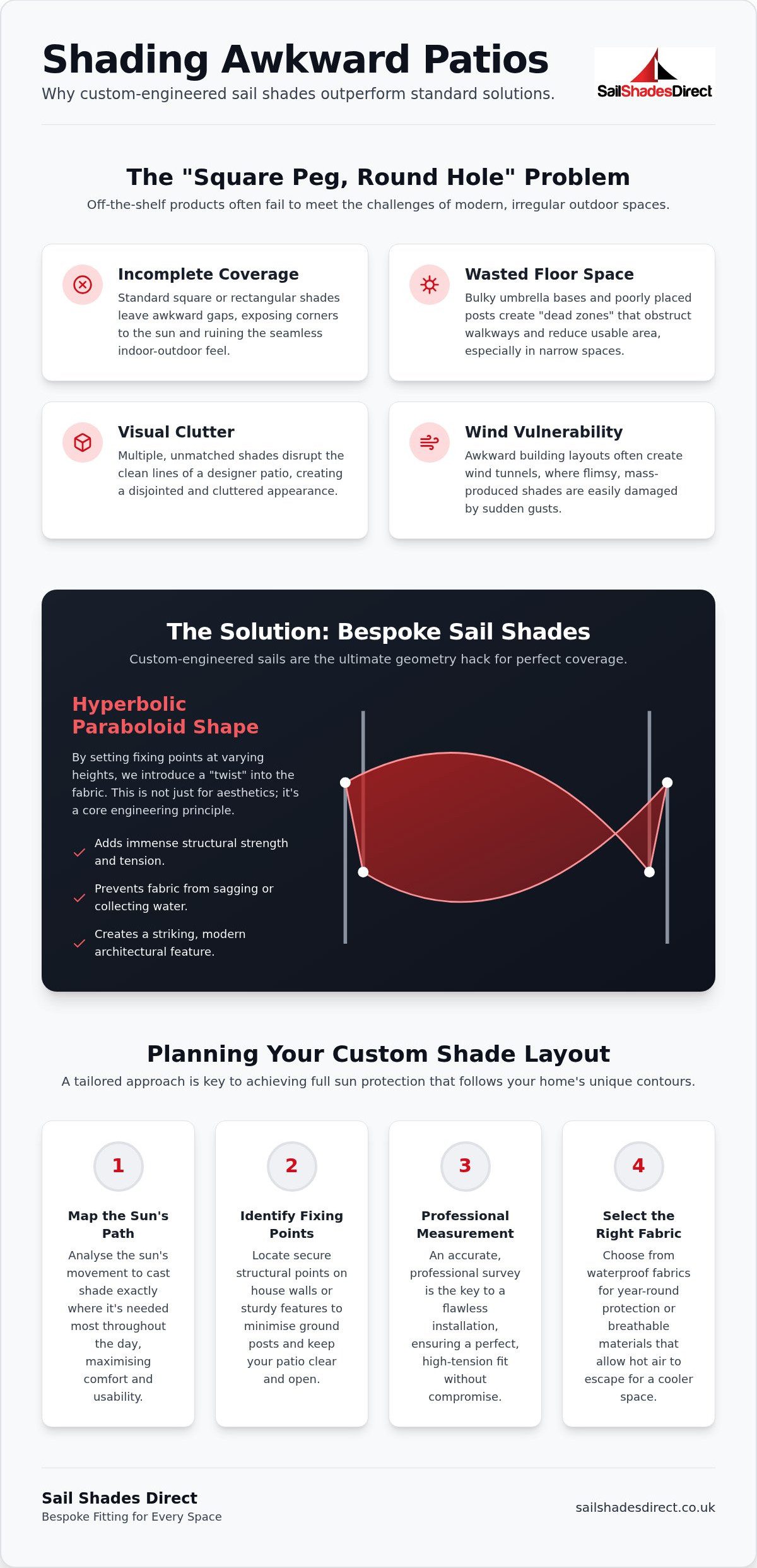
The “square peg, round hole” problem is real. A traditional rigid structure often wastes precious space by leaving odd corners exposed or overhanging boundaries. Beyond the fit, there’s the issue of visual clutter. Littering a designer patio with multiple heavy umbrella bases creates “dead zones” that disrupt your movement and ruin the flow of the space. The British climate adds another layer of difficulty too. Irregular spaces often create natural wind tunnels, where cheap, flimsy shades are easily damaged by sudden gusts. High-end fabric engineering is the only way to counter these architectural quirks effectively.
L-Shaped and Wraparound Patios
Shading a wraparound patio presents a unique challenge because you’re often dealing with two different sun orientations at the same time. Whilst one “leg” of the L might be in direct midday sun, the other could be catching the low evening glare. A single standard awning simply cannot turn a corner, which often leaves a significant gap in coverage right where you need it most. Achieving seamless indoor-outdoor living requires continuous shade that follows the building’s contour, ensuring your transition from the kitchen to the garden feels natural, protected, and consistently cool.
Narrow Side-Returns and Balconies
In narrow side-returns or urban balconies, every centimetre of floor space is precious. Heavy vertical posts from traditional structures are often a non-starter here, as they block walkways and make the area feel cramped. By understanding what are shade sails? and how they utilise high-tension wall fixings, you can reclaim that floor area. Bespoke wall-mounted solutions provide essential UV protection and privacy from overlooking neighbours without the need for intrusive supports. It’s about clever engineering that maintains a sense of light and airiness whilst keeping the space entirely functional for your daily reprieve.
Bespoke Sail Shades: The Ultimate Geometry Hack
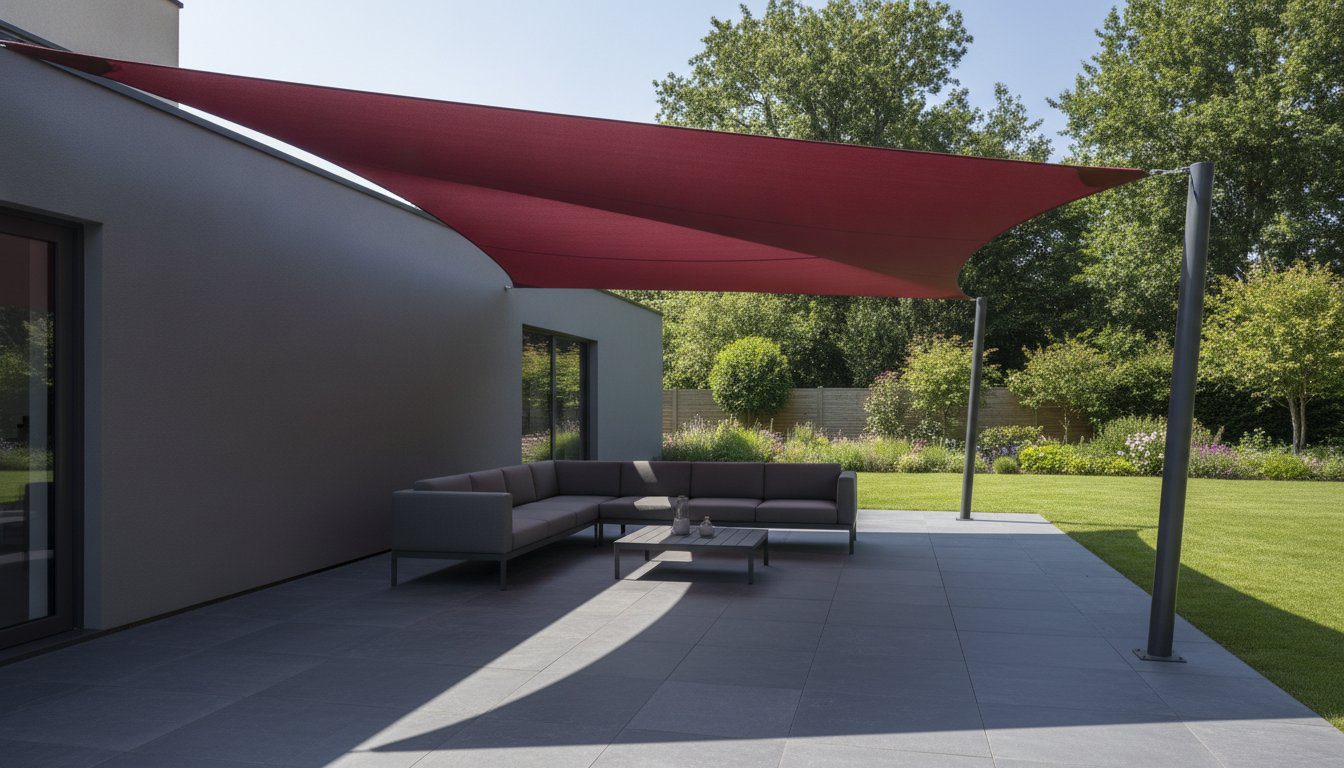
A bespoke sail shade represents the pinnacle of precision engineering for outdoor living. Unlike standard products, these are custom-cut pieces of high-performance fabric tensioned between specific points to create a shadow footprint that exactly matches your garden’s layout. Bespoke sail shades are sophisticated architectural elements engineered to provide precise, high-tension coverage rather than acting as simple temporary covers. They offer one of the most versatile shading options for awkward shaped patios because they don’t rely on rigid, pre-defined dimensions.
One of the most effective techniques we use involves hyperbolic paraboloid shapes. By setting fixing points at varying heights, we create a characteristic “twist” in the fabric. This isn’t just for a striking visual flair; it adds significant structural strength and prevents the fabric from sagging or collecting water. Depending on your needs, you can select from waterproof fabrics for year-round protection or breathable, UV-resistant materials that allow hot air to rise and escape, keeping the area beneath perfectly cool during a heatwave.
Mastering Irregular Footprints
Complex L-shaped areas or wraparound terraces often require more than a single piece of fabric. We often utilise multiple overlapping sails to navigate these footprints, allowing the shade to follow the exact contour of your patio whilst creating a beautiful layered effect. This approach ensures every corner is covered without leaving the gaps often seen with traditional umbrellas. For a deeper look at material choices and design possibilities, our guide to bespoke sail shades UK provides extensive fabric insights to help you plan your project.
Fixing Points and Structural Integrity
The secret to a long-lasting installation lies in the hardware. We specialise in identifying secure fixing points, whether that involves utilising existing house walls, sturdy trees, or installing bespoke powder-coated steel posts. Every component, from the marine-grade stainless steel tensioners to the perimeter cables, is chosen to withstand the unpredictable UK weather. This level of bespoke engineering ensures the sail remains taut and silent, even during a stiff breeze. If you’re unsure where your fixing points might be, we can help you assess your space to find the most secure and effective layout for your home.
Comparing Shading Options for Irregular Spaces
Selecting the right shading options for awkward shaped patios often comes down to balancing architectural constraints with how you actually use the space. Whilst a fixed sail is a fantastic “set and forget” solution, other engineered options provide different levels of flexibility. For instance, exterior blinds are exceptional for blocking low-level evening sun or creating privacy in narrow side-returns, but they lack the overhead coverage of a sail. Retractable awnings provide a traditional, robust feel but require a long, straight mounting surface that many modern extensions simply don’t have. It’s about finding the tool that fits the geometry of your home.
Space efficiency is where bespoke engineering truly shines. Standard garden structures often require multiple legs or posts that eat into your usable patio area. In contrast, tensioned sails and arm awnings can be wall-mounted, keeping the floor entirely clear for furniture and movement. This is particularly vital for multi-level terraces where a post might be impossible to secure safely without significant groundworks. By choosing a solution that works with your building’s existing structure, you maintain the open, airy feel of your garden.
Adaptability is another crucial factor. As the sun moves across an awkward angle, you might need to adjust your coverage to prevent glare. Whilst fixed sails are designed for a specific “peak” sun position, rolling or retractable systems allow you to deploy only as much fabric as you need. This versatility ensures your patio remains comfortable from a bright breakfast through to a late dinner. Investing in bespoke engineering pays for itself in longevity too. High-end fabrics and marine-grade fixings are designed to last for a decade or more in the UK climate, whereas cheaper alternatives often fail after a single season of wind and rain.
Motorised Rolling Sun Sails
Motorised rolling sun sails are the perfect hybrid for those who want the sleek aesthetic of a sail with the push-button convenience of an awning. They are ideal for large, irregular terraces where a standard awning simply cannot reach far enough or where you have limited mounting points. These systems roll out along a diagonal or central axis, allowing them to cover triangular or trapezoidal spaces with ease. You can explore the latest automation features and fabric choices in our motorised rolling sun sails buying guide.
Heavy-Duty Arm Awnings
If your patio includes a long, straight-edged section adjacent to the house, a bespoke awning can provide a solid, retractable roof. We often recommend combining heavy duty arm awnings with vertical exterior blinds to create a full wraparound protection zone. This setup is particularly effective for L-shaped areas, as the awning covers the main seating area whilst the blinds block wind and low sun from the side, ensuring your outdoor reprieve is always perfectly sheltered.
Planning Your Custom Shade Layout: 4 Key Considerations
Designing a layout for irregular spaces requires more than just a tape measure; it’s about understanding how your home interacts with the elements. When you evaluate various shading options for awkward shaped patios, the planning phase determines whether your installation feels like a natural extension of your house or an afterthought. Success lies in a structured approach that prioritises both function and form, ensuring your garden remains a comfortable reprieve regardless of its geometry.
Step 1: Map the sun path. Don’t just observe where the sun sits at midday. You need to track the arc from early morning through to late evening, especially for L-shaped patios where shadows move across two different planes. Step 2: Identify structural fixing points. We look for load-bearing walls or solid masonry first. If your extension has large glass spans or lightweight cladding, we’ll plan for bespoke powder-coated steel posts to carry the tension safely. Step 3: Determine height variation. This is the secret to a professional finish. By varying the heights of your mounting points, you create a dynamic shape that handles weather effectively. Step 4: Choose a colour and fabric. Your choice should complement your building’s architecture, whether that’s a modern anthracite to match window frames or a neutral stone to blend with traditional masonry.
Managing Drainage and Wind
In the UK, a “flat” sail is a recipe for disaster. Without a slope, rainwater will inevitably pool in the centre, stretching the fabric and eventually causing structural failure. We follow a strict 20-degree rule for all waterproof installations, ensuring that water runs off immediately even during a heavy downpour. Beyond drainage, bespoke engineering allows us to calculate the specific wind load for your location. We use these data points to determine the exact depth of post footings and the gauge of stainless steel fixings required to keep your shade secure during a storm.
Aesthetic Integration
A well-planned installation does more than provide shade; it serves as a sculptural garden feature. By selecting fabrics that harmonise with your home’s stonework or timber cladding, you can create a high-end, architectural finish that adds value to your property. For those looking for a truly permanent structural solution, our guide to architectural sail shades UK explores how to integrate these elements into your garden’s wider design. If you’re ready to see how these principles apply to your own garden, you can request a custom layout assessment from our expert design team today.
The Sail Shades Direct Approach: Bespoke Fitting for Every Space
Every home has its quirks, and we believe those architectural challenges shouldn’t limit your lifestyle. Whilst DIY solutions from online marketplaces might seem tempting, they often result in sagging fabric, flapping noises, and failed fixing points that can damage your masonry. When you’re exploring shading options for awkward shaped patios, the difference between a “bodge job” and a professional installation lies in the precision of the engineering. We’ve spent over 10 years mastering the art of the “can-do” approach, taking on the complex L-shapes and multi-level terraces that other companies simply turn away.
Our national UK installation team understands the specific structural requirements of British homes. Whether you’re dealing with a modern timber-framed extension or a period property with irregular brickwork, our fitters ensure every bracket is secured to engineering standards. This professional touch provides more than just aesthetic appeal; it offers the peace of mind that comes with high-end, commercial-grade materials designed to stay taut and safe for years to come. We don’t just sell covers; we provide a versatile partnership that values the emotional reprieve of a perfectly designed outdoor environment.
From Design to Installation
The journey begins with an expert consultation where we turn your irregular patio geometry into a detailed 3D plan. This allows you to visualise exactly how the shadows will fall and how the structures will interact with your house. Once the design is finalised, our precision manufacturing process begins. Every bespoke sail shade or rolling system is cut to the millimetre in our facility, ensuring a perfect fit that off-the-shelf products can never replicate. Our professional fitting team then takes over, tensioning the fabric to its optimal level to ensure maximum safety and a silent, sculptural finish.
Year-Round Outdoor Living
Your garden shouldn’t be a summer-only luxury. By integrating different solutions, we can help you create a space that remains functional even as the seasons shift. For instance, combining a bespoke sail with exterior blinds for patios allows you to enclose an awkward side-return or L-shaped corner, protecting it from winter winds and rain. This holistic approach to outdoor comfort ensures you get the most value from your investment every day of the year. Are you ready to reclaim your garden? Contact us today for a friendly consultation and let’s start your bespoke journey together.
Reclaim Your Garden with Precision Engineering
Your patio’s unique geometry should be a source of architectural pride rather than a source of frustration. We’ve explored how bespoke sail shades and motorised systems overcome the limitations of standard products, ensuring that even the most complex L-shaped or multi-level spaces receive full, stylish protection. By focusing on high-performance commercial grade fabrics and structural integrity, you can transform these difficult areas into functional retreats that stand up to the unpredictable British weather.
Navigating the various shading options for awkward shaped patios doesn’t have to be a stressful process when you have a partner who specialises in bespoke designs for impossible spaces. Our expert national UK installation team is ready to bring over 10 years of craftsmanship to your doorstep, turning your garden’s specific challenges into a durable, sculptural reality. It’s time to stop settling for gaps in your coverage and start enjoying the seamless outdoor lifestyle you deserve.
Request your bespoke shading consultation from Sail Shades Direct today and discover how we can master your garden’s geometry together. We’re excited to help you create the perfect reprieve from daily life.
Frequently Asked Questions
How do you shade an L-shaped patio effectively?
You can shade an L-shaped patio effectively by utilising multiple overlapping sail shades or combining an arm awning with a custom-tensioned sail. Standard square structures often leave the “corner” of the L exposed, but a bespoke layout follows the building’s contour perfectly. This ensures continuous coverage for your outdoor dining and lounging areas. It’s one of the most versatile shading options for awkward shaped patios because it adapts to the specific angles of your home’s extension.
Can I install a shade sail on a narrow side-return?
You can absolutely install a shade sail on a narrow side-return, and it’s often the smartest choice for these tight spaces. By using wall-to-wall tensioning with marine-grade fixings, you eliminate the need for heavy vertical posts that would otherwise block your walkway. This approach maximises your usable floor area whilst providing essential UV protection and privacy from neighbours. It turns a narrow, overlooked corridor into a functional, cool retreat that feels much more spacious.
Do I need planning permission for a bespoke sail shade in the UK?
Most bespoke sail shades in the UK don’t require planning permission because they are classified as temporary or semi-permanent structures. However, it’s always wise to check with your local planning office if you live in a conservation area or a listed building. Generally, as long as the structure doesn’t exceed certain height limits or cover a vast percentage of your garden, it’s considered a permitted development for the majority of residential properties across the country.
How do bespoke sail shades handle heavy UK rain?
Bespoke sail shades handle heavy UK rain by utilising a specific engineered pitch, typically at least 20 degrees. This steep angle ensures that water runs off the fabric immediately rather than pooling in the centre, which could cause the material to stretch or the fixings to fail. When you choose a high-quality waterproof fabric, your patio remains dry and protected. This allows you to enjoy your garden reprieve even during a typical British summer downpour without worry.
What is the best shading option for a multi-level terrace?
A bespoke sail shade is often the best shading option for a multi-level terrace because it offers unmatched vertical flexibility. You can anchor different corners of the sail at varying heights across your walls and posts, allowing the fabric to “step” down with your garden’s levels. This creates a dynamic, sculptural look that provides consistent shade across every tier. It’s an elegant solution that traditional, flat-roofed structures simply cannot achieve on irregular, sloping ground.
Are bespoke sail shades wind-resistant?
Yes, bespoke sail shades are highly wind-resistant when they are professionally engineered and tensioned. Unlike DIY kits that often flap or sag, our commercial-grade fabrics are kept under immense tension using stainless steel perimeter cables and heavy-duty turnbuckles. This prevents the “sail effect” that can pull on your home’s masonry. Our installations are designed to remain stable and silent, even when facing the gusty conditions often found in exposed or coastal UK gardens.
Can I have a motorised shade for an irregular shaped area?
You can certainly have a motorised solution for an irregular space by opting for motorised rolling sun sails. These systems are specifically designed to deploy along a central or diagonal axis, making them ideal for triangular or trapezoidal footprints where a standard rectangular awning wouldn’t fit. They provide the perfect blend of high-end fabric engineering and modern convenience, allowing you to retract or deploy your custom shade at the touch of a button whenever required.
How long does a custom sail shade installation take?
A custom sail shade installation typically takes between one and two days on-site, depending on the complexity of your patio’s layout and the number of fixing points required. This follows a detailed design and manufacturing phase where your sail is cut to the millimetre in our facility. Our national installation team works efficiently to ensure your brackets and posts are perfectly set before the final tensioning, providing you with a safe, durable, and stylish finish.