
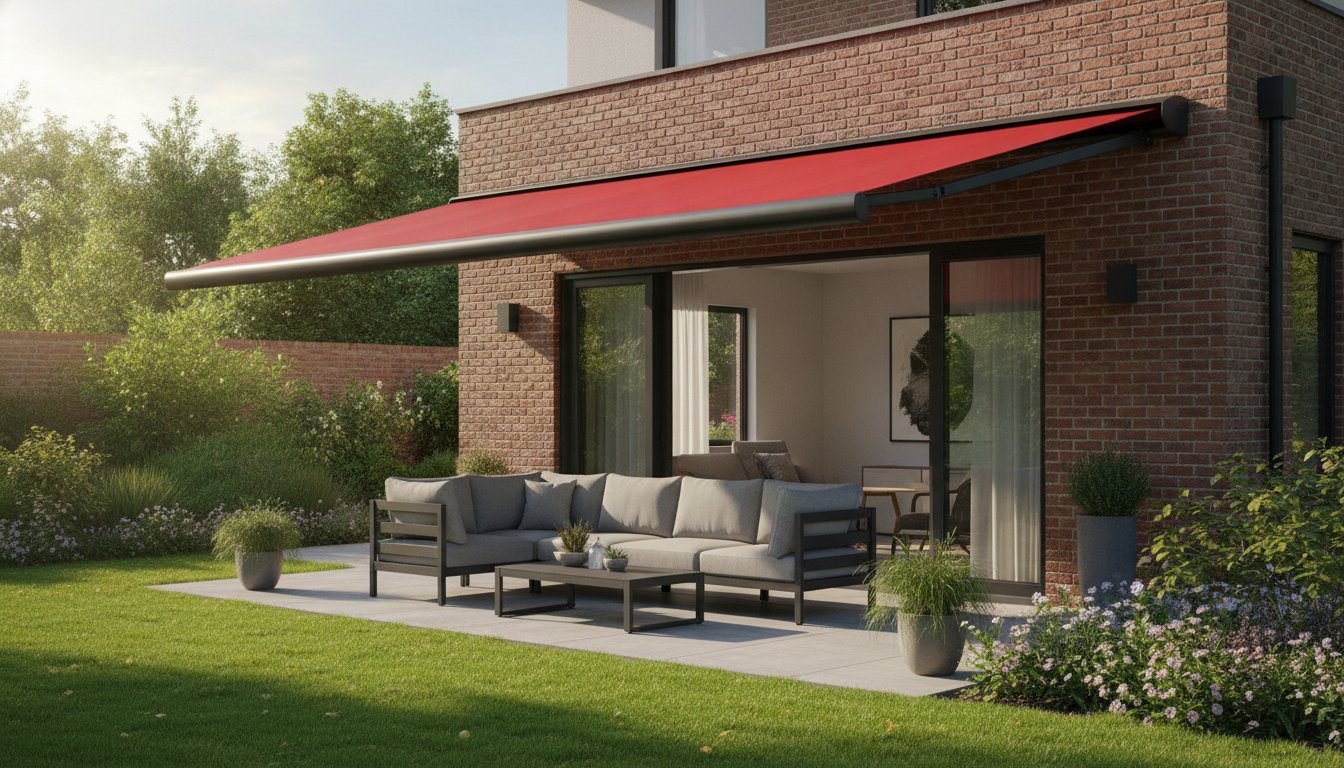
High Quality Patio Awnings: A Professional Guide to Premium Shading in 2026
That “bargain” awning kit might look great on a sunny Tuesday, but it only takes one gust of British wind to turn a budget investment into a twisted mess of metal and regret. You want your outdoor space to be a sanctuary, not a source of anxiety every time the clouds turn grey. It’s completely natural to feel confused by the choice between polyester and acrylic fabrics, or to worry that a poor installation might damage your home’s brickwork. Investing in high quality patio awnings is about more than just shade; it’s about engineering a solution that stands up to 24mph winds whilst adding genuine value to your property.
We believe that a well-designed environment provides a vital reprieve from the pressures of daily life. This guide promises to clarify the critical differences between flimsy kits and professional-grade installations, ensuring your patio remains a durable retreat for years to come. We’ll explore the technical mastery behind bespoke arm awnings, the benefits of smart wind sensors, and why professional fitting is the only way to guarantee peace of mind for the next decade.
Key Takeaways
- Learn why structural reliability and “Wind Class” ratings are the true measures of high quality patio awnings in the unpredictable British climate.
- Discover the engineering essentials, such as double-spring tensioning, that prevent fabric sagging and ensure your shading remains functional for years to come.
- Understand why professional installation is a critical safety requirement for heavy-duty arm awnings that can weigh upwards of 50kg.
- Get expert tips on assessing your patio’s orientation and mounting height to maximise shade coverage whilst maintaining comfortable headroom.
- Explore how a bespoke, custom-engineered approach transforms a standard garden into a high-value outdoor retreat through precise design and expert fitting.
What Defines High Quality Patio Awnings for the UK Climate?
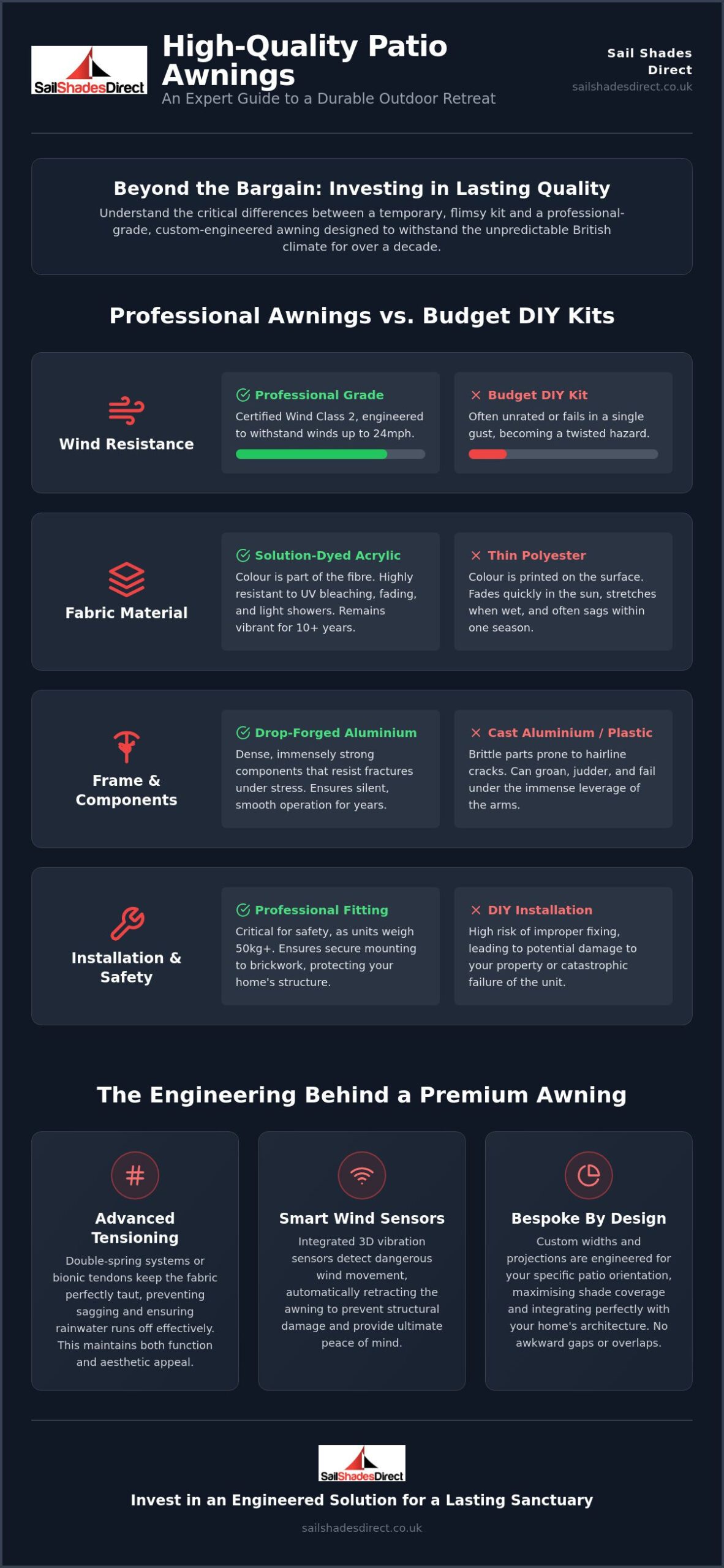
A true high quality patio awning isn’t just a piece of fabric on a frame; it’s a sophisticated piece of exterior engineering. In the UK, where weather can shift from intense UV rays to sudden drizzle in minutes, structural reliability must meet aesthetic longevity. Many entry-level kits rely on thin polyester that stretches and fades, but premium solutions are built to remain taut and vibrant for over a decade. An Awning serves as a functional extension of your living space, and its quality is reflected in the silence of its operation and the precision of its fit.
Professional-grade components are designed to reduce mechanical noise and operational friction. High-end arm awnings use forged aluminium components rather than cast parts, providing superior strength without the bulk. This engineering choice ensures that the arms don’t groan or judder as they extend, creating a seamless transition between your indoor and outdoor environments. To ensure your home’s interior matches the quality of your new patio, you can visit Appreciation Project for bespoke design packages. When the mechanics are built to last, you spend less time worrying about maintenance and more time enjoying your garden.
The Importance of Material Selection
Solution-dyed acrylic is the industry gold standard for a reason. Unlike polyester, where colour is printed onto the surface, acrylic fibres are dyed before they’re spun. This ensures the pigment runs through the entire thread, making it incredibly resistant to UV bleaching. Whilst these fabrics are highly water-resistant and can easily handle a light summer shower, they aren’t fully waterproof like a plastic sheet. They’re designed to breathe, preventing the stifling heat build-up you often find under cheaper alternatives. To support this, high-grade aluminium frames are essential; they won’t rust or seize up during damp British winters, ensuring the system remains operational year-round.
Bespoke vs. Standard: Why Measurement Matters
Standard “off-the-shelf” sizes often fail modern UK patios because they don’t account for the specific geometry of the building or the path of the sun. A south-facing garden requires a precise projection to provide effective shade during the hottest part of the day, yet standard sizes often leave gaps that allow heat to bleed into the house. Custom widths allow the unit to align perfectly with your home’s architectural lines, avoiding unsightly overlaps or awkward gaps. Ultimately, a bespoke awning is a permanent structural addition to your property’s facade rather than a temporary garden accessory.
The Engineering Behind Premium Arm Awnings
When you’re choosing between different high quality patio awnings, the most critical technical metric you’ll encounter is the ‘Wind Class’ rating. This isn’t just marketing jargon; it’s a rigorous European standard (EN 13561) that dictates exactly how much wind pressure the unit can safely withstand. In the UK, most premium installations are rated at Class 2, which means they’re engineered to remain stable in winds up to 24mph. For properties in particularly exposed coastal or hilltop locations, a Class 3 rating offers the highest level of security available for retractable systems. Understanding these design considerations helps you distinguish between a decorative cover and a true piece of outdoor architecture.
The secret to this stability lies in the manufacturing process of the joints and brackets. Whilst budget models often use cast aluminium components, which can be brittle and prone to hairline fractures under stress, premium systems utilise drop-forged aluminium. This process creates a much denser, stronger metal that can handle the immense leverage forces exerted by the awning’s arms. To add an extra layer of protection, high-end systems often include integrated vibration sensors. These “3D sensors” detect the actual movement of the front bar; if the wind starts to bounce the awning dangerously, the motor automatically retracts the fabric to prevent structural damage.
Tensioning Systems and Arm Durability
A common frustration with cheap awnings is the “sag” that develops after just a few months. Premium arm awnings solve this through sophisticated tensioning systems, often employing double-spring technology or bionic tendons made of high-tech fibres like Kevlar. These systems ensure the fabric remains drum-tight whether it’s fully extended or halfway out. This tension isn’t just for looks; it’s vital for water runoff. Correct arm geometry allows you to set a precise ‘pitch’ or angle, ensuring that light rain rolls off rather than pooling in the centre and stretching the material. If you’re unsure which configuration fits your garden’s exposure, our team can help you select the right arm awnings for your specific location.
Motorisation and Smart Integration
Modern shading is as much about electronics as it is about mechanics. Integrating high-end motor systems, such as those from Somfy, allows for whisper-quiet operation and smooth start-stop movements that reduce wear on the fabric. You can even connect your awning to sun sensors that automatically extend the shade when the patio reaches a certain temperature, effectively managing your home’s internal climate before it gets too hot. For a comprehensive look at how sensor-driven technology can protect your patio arm awnings UK gardens rely on, our complete guide to automatic smart shading covers everything from wind detection to smart home integration. A manual override feature is a non-negotiable safety essential here; it ensures that if you lose power during a summer storm, you can still retract the awning by hand to keep it safe.
High Quality Patio Awnings vs. Budget DIY Alternatives
Choosing a budget awning from a high-street retailer might save money upfront, but the hidden costs usually surface within the first two seasons. These mass-produced kits are frequently treated as disposable items, with life cycles often limited by flimsy internal components that can’t be repaired. In contrast, high quality patio awnings are engineered as ten-year investments. When a budget unit’s internal gearbox seizes or a spring snaps, finding specific spare parts is often impossible, which forces a total replacement. Premium systems are designed with modularity in mind; individual components can be serviced or replaced, ensuring the system remains functional for a decade or more.
Beyond the mechanical lifespan, there is the undeniable impact on your home’s aesthetic. A bespoke shading solution integrates with your property’s facade, enhancing its kerb appeal and adding genuine value. A sagging, faded “off-the-shelf” kit often looks like a temporary garden accessory rather than a permanent architectural feature. Investing in high quality patio awnings ensures that your outdoor retreat remains a point of pride, maintaining its crisp lines and vibrant colours despite years of exposure to the elements.
Fabric Longevity: Acrylic vs. Polyester
The majority of budget awnings utilise polyester, a material that’s highly susceptible to UV degradation. Over time, the sun breaks down the fibres, leading to a loss of tension and the inevitable “sagging” that allows rainwater to pool. Polyester is also significantly more prone to mould growth in the damp UK climate. Premium acrylic fabrics carry a much higher UV protection factor (UPF), often blocking upwards of 98% of harmful rays. These high-grade fabrics are solution-dyed (as discussed earlier regarding colour retention) and require far less maintenance due to specialised dirt-repellent coatings.
Structural Integrity and Safety
Safety is the most critical distinction between a DIY kit and a professional installation. A premium arm awning can easily weigh over 50kg, and when extended, it acts like a giant sail. Many modern UK homes are constructed with timber frames or feature external wall insulation, which simply cannot support standard expansion bolts. We use specialised chemical resin anchors to create a permanent, vibration-proof bond with the structural fabric of the building, ensuring the unit stays put even during unexpected gusts. Using standard brackets on a modern facade is a significant risk. To understand exactly what this process involves, read our comprehensive guide to professional awning installation covering structural fixings, motorised setups, and everything in between. For a deeper dive into the technical requirements of these systems, read our guide on heavy duty arm awnings.
How to Evaluate Your Site for a High-End Shading Solution
Before you commit to a design, you must understand that the performance of high quality patio awnings depends entirely on the environment they inhabit. A professional evaluation looks far beyond simple wall measurements; it considers the arc of the sun, the prevailing wind direction, and the structural capacity of your home’s facade. Identifying potential obstacles like downpipes, boiler flues, or external lighting early in the process prevents costly mid-installation adjustments. We view this stage as a collaborative design phase where we align your lifestyle needs with the technical realities of your outdoor space.
One often overlooked factor is ‘thermal gain’. By selecting the right fabric colour and density, you can significantly reduce the temperature of the rooms inside your house. Darker fabrics are excellent at absorbing heat and reducing glare on TV screens, whilst lighter tones reflect more solar energy, keeping the area beneath the awning feel airy and bright. This level of site-specific planning ensures your investment does more than just provide shade; it actively manages your home’s internal climate during the height of summer.
Orientation and Sun Path Analysis
The strategy for a south-facing garden differs greatly from a west-facing one. South-facing patios receive intense overhead sun, requiring a deeper projection to ensure the shade covers the entire seating area. Conversely, west-facing gardens suffer from low-lying evening sun that can blind guests during dinner. In these cases, we often recommend integrated ‘drop-down’ valances (or Vario-volants) that extend vertically from the front bar to block the horizontal glare. Calculating the exact width is also vital; you want to ensure the awning extends far enough past the window frames to keep the sun from “bleeding” around the edges throughout the afternoon.
Wall Suitability and Mounting Options
Not every wall is ready-made for a heavy-duty arm awning. Bungalows, single-storey extensions, and homes with low eaves often present height constraints that would result in poor headroom. To solve this, we utilise specialised spreader brackets that allow the awning to be mounted higher than the wall plate or even onto the roof rafters. These bespoke architectural supports distribute the weight safely across a larger surface area, preventing stress on individual bricks. If your site has particularly complex mounting requirements or lacks a suitable wall altogether, you might want to explore our bespoke sail shades UK for a more versatile, freestanding alternative.
Every home has its own unique set of challenges, but there is always an engineering solution that maintains both safety and style. To ensure your shading system is perfectly tailored to your property’s specific orientation and structural needs, we invite you to book a professional site survey with our expert team today.
Bespoke Shading Systems: The Sail Shades Direct Approach
At Sail Shades Direct, we don’t believe in compromise when it comes to your outdoor living space. Your home is a unique reflection of your lifestyle, and your shading solution should be no different. Our commitment to UK-manufactured, custom-engineered high quality patio awnings ensures that every unit we install meets rigorous engineering standards whilst perfectly complementing your property’s architecture. We take immense pride in our craftsmanship, viewing every project as a collaborative partnership where your comfort and satisfaction are the primary goals. From the initial design consultation to the final professional awning installation, we provide a seamless, stress-free experience that transforms your garden into a functional sanctuary. Just as a quality bed from Belfast Bed Superstore anchors your indoor rest, a bespoke awning creates the perfect foundation for outdoor relaxation.
Our process is designed to be thorough yet efficient. We start by listening to your specific needs, whether that’s protecting children from intense UV rays or creating a sophisticated space for evening entertaining. Once we’ve identified the ideal system, our technical experts handle the precision engineering required for a perfect fit. This bespoke approach means we can tackle complex mounting challenges that would leave “off-the-shelf” suppliers baffled. With our comprehensive national installation service, you gain the peace of mind that comes from knowing your investment is secured by professionals who understand the structural nuances of British homes.
Customisation Beyond Colour
True personalisation goes far beyond simply picking a fabric shade. We offer an extensive palette of hundreds of fabric patterns and RAL frame colours, allowing you to align your awning perfectly with your window frames or garden decor. For those who want to extend their patio use into the cooler months or late into the evening, we provide integrated LED lighting and heating options. Our versatility is unmatched; our range spans from sleek, compact cassettes for minimalist terraces to giant umbrellas and rolling sun sails for larger commercial or domestic applications. Whatever the scale of your project, we have the “can-do” attitude and technical mastery to deliver a stunning result!
If you are also considering other robust shading alternatives like aluminium shutters to complement your outdoor space, you can discover QLD Shade and their range of durable, high-quality products.
Ready to Transform Your Patio?
Getting started is simple and rewarding. When you request a bespoke quote, we don’t just give you a price; we provide a tailored shading strategy based on your garden’s specific dimensions and orientation. On your professional installation day, our team arrives ready to work with precision and respect for your property. We handle the heavy lifting, the technical calibration, and the electrical integration, leaving you with a system that’s ready to use immediately. Don’t settle for a temporary fix when you can have a permanent lifestyle upgrade. Contact Sail Shades Direct today for a professional consultation and let’s start designing your perfect outdoor retreat.
Secure Your Perfect Garden Retreat Today
Choosing between a temporary fix and a permanent architectural addition defines how you’ll enjoy your garden for the next decade. We’ve seen how technical details like Wind Class ratings and drop-forged aluminium components transform high quality patio awnings from simple covers into reliable climate-control systems. By prioritising a professional site survey and bespoke engineering, you eliminate the risks of structural damage and ensure your shade performs perfectly even in the face of the unpredictable British weather.
With over 10 years of expert UK installation experience, we specialise in creating bespoke designs tailored to your home’s exact measurements. Our high-performance fabrics offer the durability you need to maintain a vibrant, comfortable outdoor space year after year. Don’t leave your comfort to chance with a “one-size-fits-all” kit that might not survive the season. It’s time to invest in a solution that adds genuine value to your property and your lifestyle. Book a Bespoke Shading Consultation with our friendly team and let’s bring your vision to life!
Frequently Asked Questions
What is the difference between a full-cassette and half-cassette awning?
A full-cassette awning completely encloses the fabric, arms, and roller mechanism within a protective metal housing when it’s retracted. This provides the highest level of protection against the British weather, preventing dirt and damp from damaging the components during winter. A half-cassette only protects the fabric roll from above, leaving the arms and the underside of the mechanism partially exposed to the elements.
Can high quality patio awnings be used in the rain?
Most high quality patio awnings are designed to be water-resistant rather than fully waterproof, so they can comfortably handle light to moderate summer showers. You must ensure the unit is installed at a sufficient pitch to allow rainwater to roll off immediately. If the fabric gets wet, you should always extend it again as soon as the rain stops to let it dry completely before long-term retraction.
How long should a professional-grade awning last in the UK?
A professional-grade installation should last between 10 and 15 years, though many well-maintained frames remain functional for much longer. The longevity depends heavily on the quality of the fabric and the robustness of the arm tensioning system. Choosing solution-dyed acrylic rather than polyester ensures the colour stays vibrant and the fibres remain strong, even after a decade of exposure to UV rays and coastal winds.
Do I need planning permission for a retractable patio awning?
You generally don’t need planning permission for a retractable awning on a residential house as it’s considered “permitted development”. There are specific exceptions for listed buildings, properties in conservation areas, or homes under an Article 4 Direction where special consent is required. If you live in a flat or a leasehold property, you’ll likely need to obtain written permission from the freeholder before starting the installation.
What wind speed can a high-quality awning withstand?
Most premium retractable systems are rated to Wind Class 2, meaning they can safely withstand wind speeds of up to 24mph. We always recommend retracting your awning if the wind becomes gusty or exceeds these levels to prevent structural stress. Many of our motorised systems include 3D vibration sensors that detect excessive movement and automatically retract the fabric to protect your home’s facade from damage.
How do I clean and maintain the fabric on my bespoke awning?
You should maintain your fabric by lightly brushing off loose dust and debris with a soft-bristled brush on a dry day. For deeper cleans, use a sponge with lukewarm water and a mild, non-detergent soap to gently lift stains without stripping the water-repellent coating. Never use a pressure washer or harsh chemicals; these can tear the fibres and destroy the protective treatments that keep the fabric taut and mould-resistant.
Are motorised awnings better than manual ones for large patios?
Motorised systems are far superior for large patios because they provide smooth, consistent movement that protects the internal springs from jerky manual handling. Manually cranking a large awning can be physically demanding and often leads to uneven fabric tension over time. Electric motors also allow for smart home integration and safety sensors, ensuring your shade responds automatically to changing light levels and sudden gusts of wind. To explore the full benefits of sensor-driven automation for the patio arm awnings UK homeowners are increasingly choosing, our complete guide to automatic smart shading covers every aspect of intelligent outdoor protection.
What is the typical lead time for a custom-made awning installation?
The lead time for a bespoke installation typically ranges from four to eight weeks depending on the complexity of your design and the time of year. This window allows our craftsmen to manufacture your frame to your exact millimetre requirements and sew your chosen fabric with precision. Once your unit is ready, the actual professional fitting at your property is remarkably efficient, usually taking only one to two days to complete.