
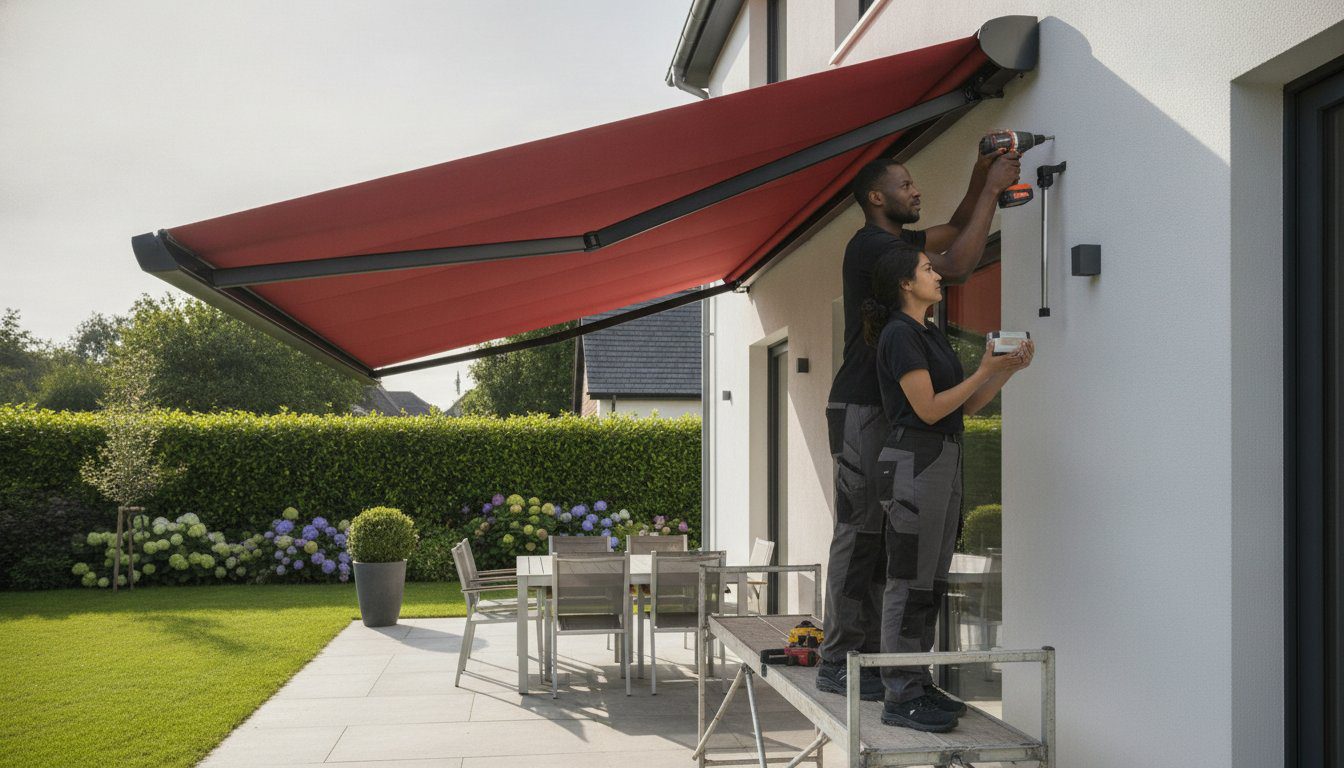
Professional Awning Installation: The Complete 2026 Guide to Expert Fitting
Imagine the frustration of investing in a stunning outdoor retreat only to watch your shading system sag or pull away from the render during a typical British gale. It’s a genuine concern for many homeowners, especially when you’re balancing the desire for a beautiful garden with the technicalities of structural fixings and motorised setups. You want a sanctuary that offers a reprieve from daily life, not a DIY project that leaves you worrying about wind damage or voided warranties. That’s where professional awning installation becomes more than just a service; it’s an engineering necessity that ensures your investment stands the test of time.
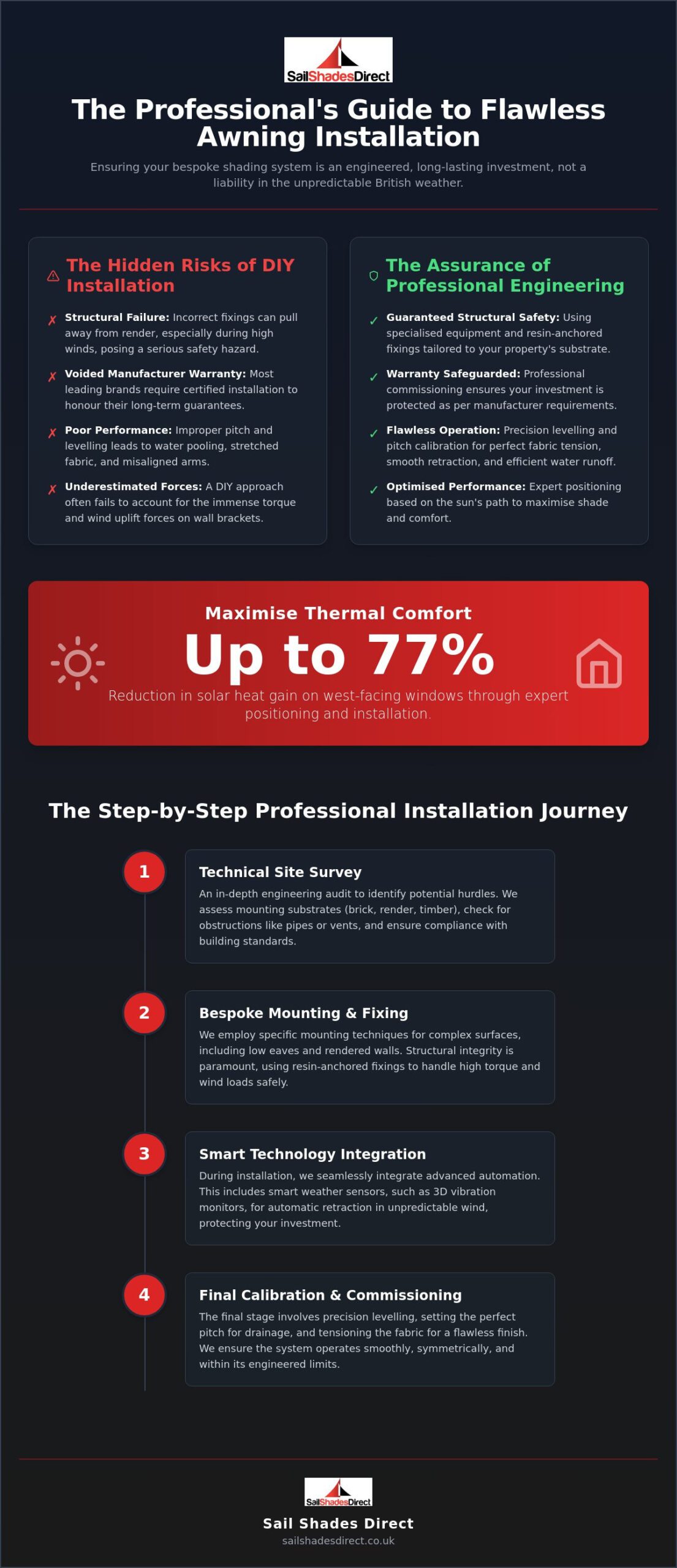
We understand that every property is unique, which is why Jamie and our dedicated team focus on precision and a “can-do” attitude for every bespoke project. In this 2026 guide, you’ll discover how expert fitting secures the longevity of your arm awnings and exterior blinds whilst adding significant value to your home. We’ll walk you through the complexities of planning permission, the benefits of smart weather sensors, and how to achieve a perfectly tensioned finish that can reduce solar heat gain by up to 77% on west-facing windows. By the end, you’ll have the clarity needed to transform your patio into a safe, sophisticated space that’s ready for any weather.
Key Takeaways
- Learn why precision engineering is the only way to safeguard your manufacturer warranty and ensure long-term structural safety.
- Discover how a comprehensive technical site survey identifies potential hurdles early, preventing installation-day delays and hidden costs.
- Understand the specific mounting techniques required for a professional awning installation on complex substrates like rendered walls or properties with low eaves.
- Explore how 2026 smart sensor technology, such as 3D vibration monitors, provides essential automatic protection against unpredictable British wind conditions.
- See how bespoke fabrication and expert fitting work together to create a seamless, high-value finish that off-the-shelf alternatives simply cannot match.
Why Professional Awning Installation is Essential for Bespoke Shading
Choosing a bespoke shading system is a significant investment in your home’s comfort and aesthetic value. However, the performance and safety of that system depend entirely on the quality of its foundation. There is a world of difference between simply fitting a product and engineering a shading solution. Whilst an awning or overhang might look like a straightforward addition, a professional awning installation involves complex calculations of weight, wind load, and structural leverage. If these factors aren’t respected, even the most expensive system will underperform or, worse, become a safety hazard.
Safety is the primary concern when dealing with high-torque retractable arms. These components house powerful internal springs designed to keep the fabric taut under tension. This tension translates into a constant “pull-out” force on the wall brackets. Without the correct resin-anchored fixings and structural assessment, the torque can cause the brackets to fail, potentially damaging your property or causing injury. Furthermore, expert fitting is often a prerequisite for your protection. Most leading manufacturers will only honour their long-term warranties if the unit has been commissioned by a qualified team. This ensures the system operates within its engineered limits from day one.
Precision levelling is another technical requirement that often eludes the casual installer. A bespoke awning must be perfectly level to ensure the fabric tracks correctly and the arms fold symmetrically. Even a few millimetres of misalignment can lead to “creeping” fabric or uneven wear. More importantly, the pitch must be set accurately to allow for rainwater drainage. If the angle is too shallow, water can pool on the fabric, creating a “belly” that stretches the material and puts immense weight on the frame. Professional installers calibrate this pitch to balance shade coverage with efficient runoff.
The Risks of DIY vs. Professional Assurance
The biggest risk in a DIY approach is underestimating the force of a sudden wind gust. In exposed UK locations, the uplift on a large awning can be hundreds of kilograms. Professional teams use specialised equipment to test the substrate and select fixings that can withstand these specific loads. Common DIY mistakes, such as using standard wall plugs in hollow bricks or failing to align the brackets with structural studs, often lead to fabric pooling and arm misalignment. Choosing a certified, insured installation team provides the peace of mind that your home’s structural integrity is never compromised.
Maximising Shading Performance Through Expert Positioning
Getting the most out of high quality patio awnings requires more than just bolting them to a wall. Our team calculates the sun’s path relative to your property to ensure optimal shadow coverage during the hottest parts of the day. We adjust the pitch and projection to maximise thermal comfort and UV protection, which can reduce solar heat gain by up to 77% on west-facing windows. By mounting the system at the perfect height for clearance whilst maintaining a steep enough angle for drainage, we ensure your outdoor space remains a functional, cool retreat regardless of the sun’s position.
The Step-by-Step Professional Installation Journey
A professional awning installation isn’t a simple “bolt-on” task. It’s a logistical sequence that transforms a bespoke design into a functional, safe reality. Our process ensures that the transition from initial enquiry to final shade is seamless, respecting both your property’s architecture and your time. Moving from a design concept to a fully commissioned system requires a structured approach where every bespoke component is tailored to the reality of your outdoor space.
Phase 1: The Technical Site Survey
The journey begins with a comprehensive engineering audit. We aren’t just measuring the width of your patio; we are identifying potential hurdles that could cause delays. Our team checks for obstructions like soil pipes, boiler vents, or decorative stonework that might interfere with the cassette. We also assess the substrate to determine if it is solid Victorian brick, stone, or a modern timber-framed extension. International building standards often dictate that these structures must be designed and constructed to withstand significant wind loads. This survey determines if you require standard wall mounts or specialised spreader plates to distribute the weight safely across your wall.
Phase 2: Precision Fitting and Commissioning
Once the technical plan is finalised, our national UK team handles the physical installation. We use high-grade chemical resin anchors to create a bond that traditional wall plugs simply cannot match. Lifting the cassette into place requires millimetre-perfect horizontal alignment; even a slight tilt can cause the arms to fold incorrectly or lead to uneven fabric wear. After the unit is secured, we move to the commissioning stage. This involves calibrating the motor limits and testing the manual override systems to ensure the awning operates smoothly and quietly every time you press the button.
Managing the logistics of large, heavy-duty components is a task that requires careful coordination. These units are often several metres long and incredibly heavy, making them difficult to manoeuvre in tight garden spaces or over existing conservatories. Our teams are trained to handle these challenges without risking damage to your landscaping or your property’s exterior. Once the installation is complete, the final handover begins. This is a vital step where we walk you through the operation of your new shading. We’ll demonstrate how the smart sensors react to the weather and provide maintenance tips to keep the fabric looking pristine. It’s this personal, human touch that ensures you feel confident using your new outdoor space. If you’re ready to start your own transformation, you can discuss your bespoke project with our experts today.
Assessing Structural Integrity and Mounting Substrates
A common misconception in the shading industry is that any solid wall can support any awning. In reality, the mounting substrate is the most critical variable in a professional awning installation. Modern UK properties often feature timber frames, aerated blocks, or decorative cladding that require a bespoke engineering approach. Using a “one size fits all” fixing kit is particularly dangerous when installing heavy duty arm awnings. These units can exert hundreds of kilograms of leverage on a wall bracket during a moderate breeze. If the fixings aren’t anchored into the structural core of the building, the risk of catastrophic failure is high.
To mitigate these risks, our team often employs spreader plates. These custom-fabricated plates increase the surface area of the mounting point, distributing the weight across several courses of brickwork rather than concentrating it on a single point. This is essential for older properties with lime mortar or coastal homes amongst high-wind environments. Whilst UK regulations are specific, looking at international standards like the California building codes for awnings highlights the global consensus on load requirements and material durability. It’s about ensuring the structure can handle the dynamic forces of wind and weight simultaneously without compromising the facade.
Fitting to Rendered Walls and Deep Insulation
Installing onto modern External Wall Insulation (EWI) or K-Rend finishes presents a unique challenge. You cannot simply bolt through the render; doing so would crush the insulation and create “thermal bridges” that lead to dampness inside your home. We use specialised stand-off spacers that bridge the gap between the decorative surface and the structural masonry. This ensures the awning is securely anchored whilst maintaining a watertight seal around the fixings to prevent moisture ingress into the cavity. It’s a precise process that preserves your home’s energy efficiency and aesthetic finish.
Bungalows and Top-Fix Installations
Bungalows and properties with low eaves often lack the vertical wall space required for standard mounting. In these scenarios, we utilise custom gutter brackets or roof-mounted “top-fix” systems. These brackets allow the awning cassette to sit securely above the gutter line, anchored into the roof rafters or floor joists. This engineering ensures structural stability even when mounting above patio doors with large spans. It’s a versatile solution that turns a “difficult” property into a perfectly shaded retreat without compromising the integrity of the roofline or the operation of your doors.
Integrating Automation and Smart Sensors During Installation
In 2026, the demand for fully automated outdoor shading systems has reached an all-time high amongst UK homeowners. It isn’t just about the convenience of a remote control; it’s about the intelligent protection of your property. A professional awning installation now frequently includes the setup of sophisticated 3D vibration sensors. These clever devices are mounted directly onto the lead rail of the awning. If they detect excessive movement caused by sudden wind gusts, they trigger the motor to retract the system automatically. This proactive safety feature is essential for preventing the structural damage we discussed in earlier sections, especially during unpredictable British weather shifts. For a deeper understanding of how these sensor-driven systems work, our guide to automatic patio awnings and smart shading for UK gardens covers the full range of intelligent protection technologies available in 2026.
Most homeowners now expect their shading to communicate seamlessly with the rest of their house. Whether you utilise Somfy, Control4, or another smart-home hub, our team ensures the motorised unit is fully integrated into your ecosystem. However, it’s vital to remember that electrical safety is paramount. Whilst our fitting teams handle the mechanical mounting and sensor calibration, a qualified electrician is always required for the final connection to the mains. This ensures your installation is fully compliant with current UK wiring regulations and remains safe for long-term use.
Sun, Wind, and Rain Sensors
Positioning an anemometer (wind sensor) requires an expert eye to ensure the most accurate weather readings. If the sensor is tucked away in a sheltered corner, it won’t detect the true force of the wind hitting the fabric. Sun sensors are equally valuable for thermoregulation; they automatically deploy the awning as temperatures rise, keeping your home’s interior cool before the heat becomes uncomfortable. Meanwhile, rain sensors provide essential protection for your fabric whilst you’re away, retracting the system at the first sign of a downpour to prevent water pooling and material stretching.
Smart Connectivity and App Control
The true power of modern automation lies in setting up ‘scenarios’ that coordinate your awning with exterior lighting or heating. You can programme your space to transform at sunset, extending the shade and dimming the lights for a perfect evening atmosphere. A critical part of the professional awning installation process is verifying that a stable Wi-Fi or radio signal reaches the external motor unit through your property’s exterior walls. This allows for reliable remote access, giving you the ability to control your shade from anywhere in the world via a smartphone app. If you’re ready to upgrade your outdoor living with intelligent technology, you can explore our range of motorised arm awnings and find the perfect automated solution for your home.
The Sail Shades Direct Bespoke Fitting Experience
When you choose Sail Shades Direct, you aren’t just buying a product; you’re partnering with a team that takes genuine pride in the craftsmanship of every professional awning installation. We believe that a well-designed outdoor environment is a necessary reprieve from the pressures of daily life. This philosophy drives us to ensure that the “Sail Shades Direct” difference is evident from the first phone call to the final handover. Whilst other providers might offer off-the-shelf products, we combine bespoke fabrication with high-level engineering to ensure your shading system is perfectly tuned to your property’s specific requirements.
Our commitment extends beyond the technicalities of brackets and motors. We understand that we’re working on your home, which is why our teams are dedicated to leaving every site tidy and every customer fully confident in their new system. We don’t just bolt a cassette to a wall and leave; we calibrate the tension, test the sensors, and refine the limits until the operation is flawless. This meticulous approach ensures that your investment adds real value to your property and provides years of reliable service.
A Nationwide Service with a Local Touch
Although we operate as a national UK installation team, we maintain the approachable warmth of a local business. Jamie and the team travel across the country to ensure that our national engineering standards are met on every project, regardless of the location. We thrive on a “can-do” attitude, especially when tackling complex architectural challenges that might deter other fitters. Whether it’s a coastal property facing high-exposure winds or a modern home with deep external insulation, our experience allows us to find a secure, elegant solution. Our customers often tell us that it’s this combination of technical mastery and friendly, collaborative service that sets us apart in the industry.
Ready to Transform Your Outdoor Space?
Transitioning from an initial enquiry to a professionally fitted awning is a straightforward, supportive process. The first step is to request your technical site survey and bespoke design consultation. To make this conversation as productive as possible, it’s helpful to have a few details ready, such as the approximate width of the area you wish to shade and the type of wall substrate we’ll be working with. We’ll then work closely with you to design a system that meets your lifestyle needs whilst respecting your home’s structural integrity. Don’t leave your outdoor comfort to chance. Book your professional awning installation consultation today and take the first step towards a perfectly shaded retreat.
Ready to Elevate Your Outdoor Living?
Securing a high-performance shading system is about far more than simple aesthetics; it’s a commitment to the safety and longevity of your home. We’ve explored how the technical demands of modern substrates and high-torque arm systems mean that a professional awning installation is the only way to ensure your investment remains secure against the unpredictable British elements. From precision resin anchoring to the seamless integration of smart 3D vibration sensors, expert fitting provides the peace of mind that off-the-shelf solutions simply cannot match.
At Sail Shades Direct, we bring bespoke engineering to every property type, backed by our 5-star rated professional service. Our expert UK-wide installation teams are ready to help you navigate the complexities of structural integrity and automation, ensuring your new space is both beautiful and resilient. Why wait to reclaim your patio from the midday heat? You can request your bespoke design and installation quote from Sail Shades Direct today. Let’s work together to create a perfectly tuned, sophisticated retreat that you and your family can enjoy for years to come.
Frequently Asked Questions
Can I install an awning on a bungalow with low eaves?
Yes, you can install an awning on a bungalow by using specialised gutter brackets or roof-mounted ‘top-fix’ systems. These brackets allow the cassette to sit securely above the gutter line, anchored into the roof rafters. This is a common solution for bungalows where vertical wall space is restricted. It ensures you get the shade you need without compromising the structural integrity of your roofline or blocking the operation of your patio doors.
How long does a professional awning installation usually take?
A standard installation typically takes between two and four hours to complete on-site. This timeframe includes the mechanical mounting, precision levelling, and the commissioning of any smart sensors or motorised systems. More complex projects, such as those requiring custom spreader plates or integration with high-end home automation, might take slightly longer. Our team prioritises a professional finish, ensuring the system is perfectly tuned and your property is left tidy.
Do I need planning permission for a retractable awning in the UK?
Retractable awnings rarely require planning permission in the UK as they don’t usually count as permanent structures. However, you should always check with your local authority if your home is a listed building or located in a conservation area. For commercial properties, permission is often necessary if the awning projects over a public highway. It’s a simple check that prevents potential legal issues and ensures your new shading is fully compliant.
Can awnings be safely fitted to rendered or timber-framed walls?
Yes, awnings can be safely fitted to rendered or timber-framed walls provided you use the correct engineering techniques. For rendered walls, we use specialised stand-off spacers to bridge the insulation and prevent crushing the facade. Timber-framed properties require brackets to be anchored directly into the structural studs rather than just the cladding. A professional awning installation involves a thorough substrate assessment to ensure the fixings are watertight and structurally sound for the long term.
What is the difference between a standard wall bracket and a spreader plate?
A standard wall bracket is a compact mounting point, whilst a spreader plate is a larger, custom-fabricated plate that distributes weight across a wider area. Spreader plates are essential for properties with weaker substrates, such as older brickwork or lime mortar. By spreading the high-torque forces of the awning arms, they provide a much more secure anchor point. This prevents the brackets from pulling away from the wall during high winds.
Are motorised awnings more difficult to install than manual ones?
Motorised systems are more technically demanding than manual ones but offer significantly better protection and convenience. The physical mounting process is similar, but the automation requires precise calibration of motor limits and the integration of weather sensors. You’ll also need a qualified electrician to complete the final mains connection. This ensures your automated shading is safe, reliable, and covered by your manufacturer’s warranty, which is a key benefit of expert fitting.
What happens if my awning is installed incorrectly by a non-professional?
Incorrect installation can lead to catastrophic structural failure, property damage, and a voided manufacturer warranty. If brackets aren’t resin-anchored or the pitch is set incorrectly, the unit might pull away from the wall or suffer from fabric pooling. A professional awning installation eliminates these risks by ensuring the system is engineered to handle dynamic wind loads. It’s the only way to guarantee the long-term safety and performance of your bespoke shading system.
Is the cost of installation included in my initial quote?
We provide transparent, all-inclusive quotes that clearly outline the cost of your bespoke product alongside the fitting service. Jamie and the team don’t believe in hidden fees or surprise additions on installation day. Your quote covers everything from the initial technical survey and custom fabrication to the final commissioning by our expert team. This honest approach ensures you feel fully supported and informed throughout the entire journey from enquiry to completion.