
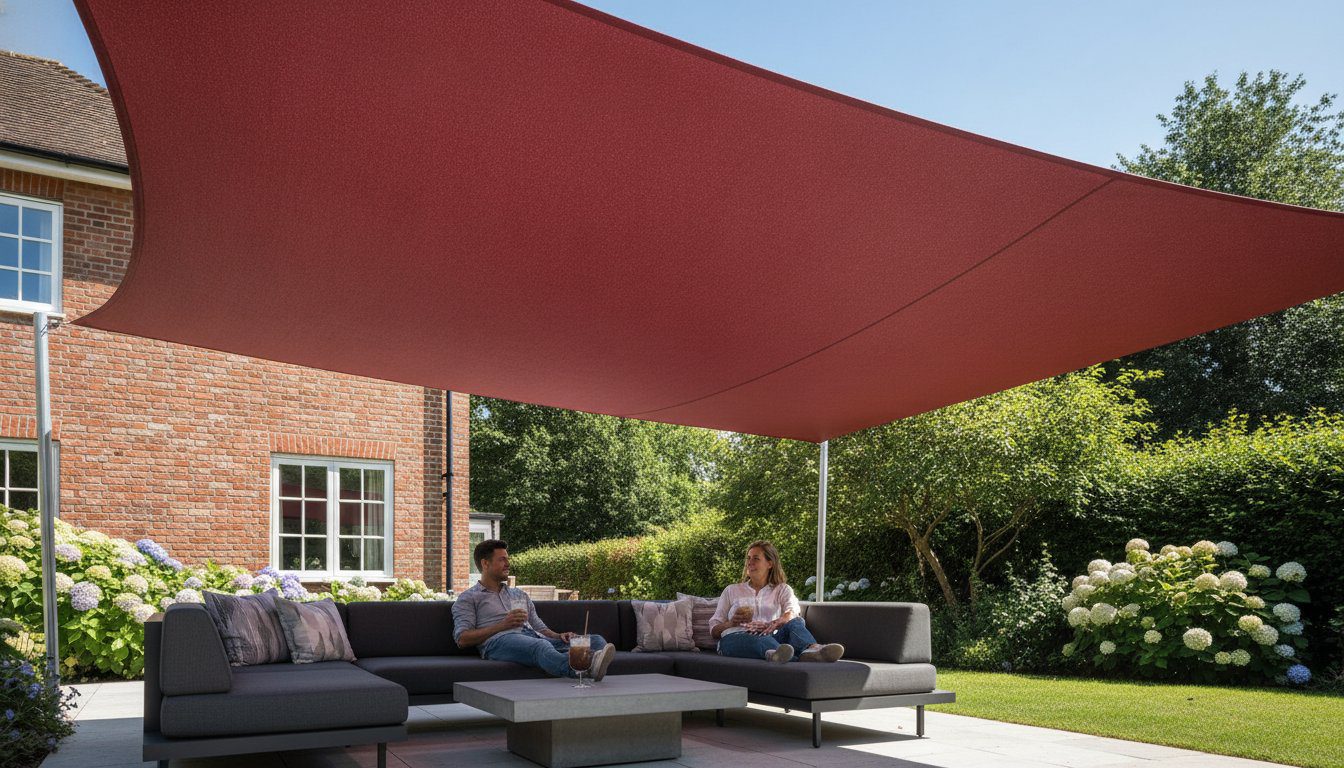
How to Cool Your Patio: Expert Guide to Summer Comfort
You’ve organised the perfect garden lunch, but by midday, the patio furniture is too hot to touch and a stifling heat is radiating off the house walls. Instead of a relaxing retreat, your outdoor space feels like an oven, forcing everyone back indoors just as the sun finally decides to shine. It’s a common frustration for homeowners who want to embrace outdoor living but find themselves defeated by trapped heat and blinding glare.
The good news is that learning how to cool down a patio area doesn’t require settling for flimsy umbrellas that topple in the British breeze. By implementing professional shading strategies, you can achieve a temperature drop of 5 to 10 degrees whilst creating a stylish, bespoke sanctuary that adds significant value to your property. This guide explores high-performance solutions, from rolling sun sails to engineered arm awnings, designed to block over 98% of UV rays. We’ll show you how to choose durable, wind-resistant protection that handles the UK climate with ease, ensuring your terrace remains a comfortable haven all summer long.
Key Takeaways
- Identify why your outdoor space acts as a ‘heat sink’ and how thermal mass in brickwork keeps your terrace sweltering well into the evening.
- Discover how to cool down a patio area using bespoke sail shades that block up to 95% of UV rays whilst managing airflow to prevent heat traps.
- Explore the science of the ‘Albedo effect’ and fabric density to understand why the right material colour and weave are critical for reflecting solar radiation.
- Compare the performance and weather-resistance of rolling sun sails, arm awnings, and giant umbrellas to find a solution that thrives in the UK climate.
- Learn why professional sun path analysis is the secret to a successful bespoke installation, ensuring your shade perfectly tracks the sun’s movement throughout the day.
Understanding the ‘Heat Trap’: Why Your Patio Gets So Hot
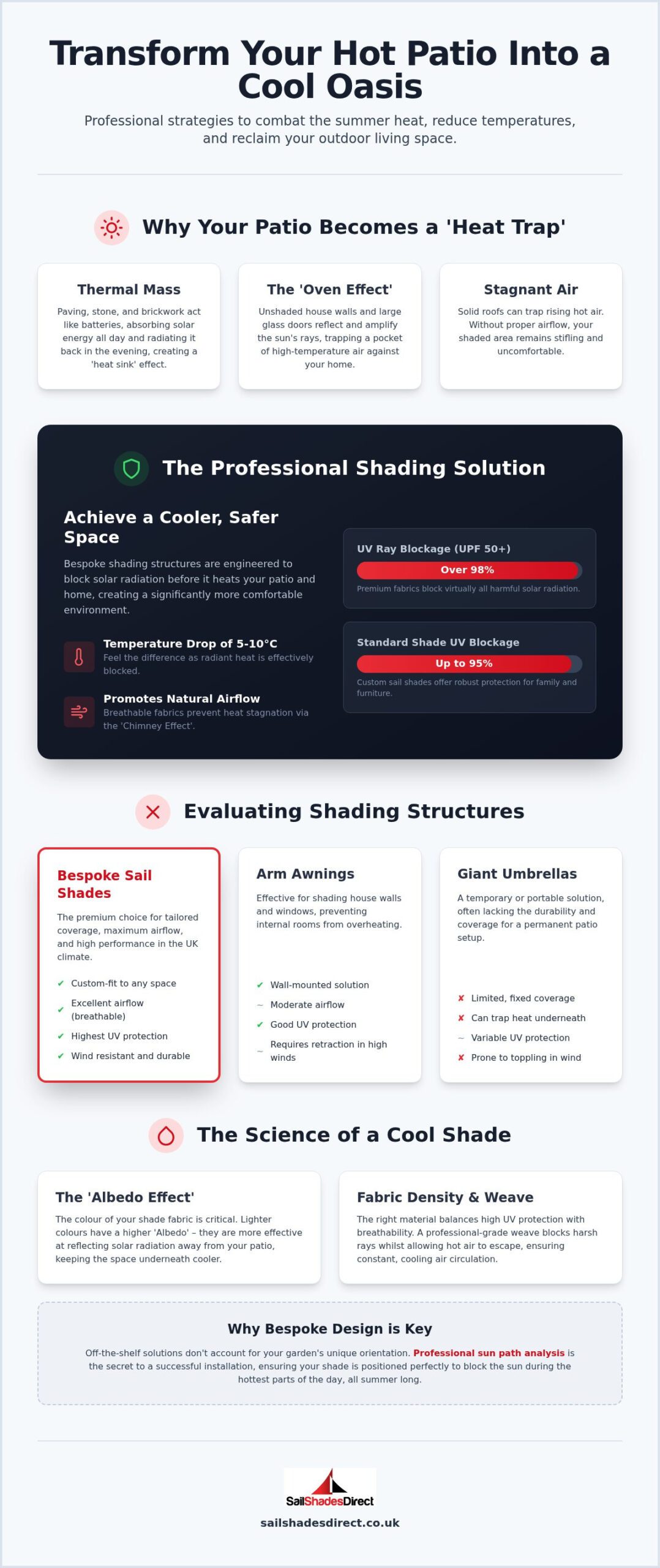
Ever wondered why your terrace feels significantly hotter than the rest of the garden? The answer lies in the science of thermal mass. Paving, stone, and brickwork are remarkably efficient at absorbing solar energy, acting like giant batteries that store warmth throughout the day. Whilst the air temperature might be a pleasant 22 degrees, your patio slabs could easily be absorbing enough energy to reach double that. This stored heat is then released slowly, creating a ‘heat sink’ effect that keeps the area sweltering long after the sun has dipped below the horizon.
When you’re researching how to cool down a patio area, it’s vital to distinguish between ambient air temperature and radiant heat. Ambient heat is the temperature of the air around you. Radiant heat, however, is the energy vibrating off solid surfaces. This is why you can feel “baked” even in a light breeze; the masonry and floor are literally radiating heat directly into your body. On a south-facing patio, this effect is magnified as the surfaces receive the most intense, direct sunlight for the longest duration of the day.
The Role of the House Wall in Patio Temperatures
Your home’s exterior serves as more than just a boundary; it’s often a major contributor to the ‘Oven Effect’. Unshaded brickwork and large glass bifold doors reflect and amplify solar radiation. This creates a pocket of trapped, high-temperature air against the building. By applying passive cooling principles, you can break this cycle. Shading the house wall and glass doesn’t just protect the patio; it prevents the internal rooms from overheating too. Wall-mounted solutions like arm awnings or bespoke sail shades are particularly effective here, as they stop the sun from reaching the masonry in the first place.
Airflow and the Stagnant Heat Problem
One common mistake is installing a solid, heavy roof in an attempt to find relief. While a hard-roof pergola provides shade, it often lacks the ability to breathe. Hot air naturally rises, but a solid structure acts as a lid, trapping that stifling air exactly where you’re trying to sit. This is why understanding how to cool down a patio area requires a focus on airflow. High-quality, breathable fabrics used in professional sail shades facilitate the ‘Chimney Effect’. They allow hot air to escape through the weave of the material whilst drawing cooler air in from the sides. This constant movement of air is essential for maintaining a refreshing environment, even during the peak of a British summer heatwave.
5 Professional Strategies for Cooling Your Patio Area
Transforming a sweltering terrace into a usable sanctuary requires more than a single quick fix. Effective cooling involves a multi-layered approach that addresses both direct sunlight and the radiant heat we discussed earlier. When considering how to cool down a patio area, you should look for solutions that offer high UV protection whilst maintaining the airflow necessary to prevent heat stagnation. From advanced fabric technology to biological cooling, these professional strategies provide a comprehensive roadmap to summer comfort.
The Power of Bespoke Sail Shades
Off-the-shelf square or triangular shades often leave awkward gaps where the sun can still bake your seating area. In contrast, bespoke sail shades UK are tailored to the exact dimensions and sun orientation of your garden. These custom structures can block up to 95% of UV rays, with premium fabrics achieving a UPF 50+ rating that blocks over 98% of solar radiation. By selecting the correct fabric density, you ensure maximum cooling performance without sacrificing that airy, open-air feel. If you are unsure which shape suits your space, our team can help you design a custom shading plan tailored to your needs.
Landscaping for a Natural Temperature Drop
Nature offers its own cooling mechanism through transpiration. As plants release moisture into the air, they naturally lower the surrounding temperature. Strategic landscaping involves more than just aesthetics. Tall trees and deciduous shrubs create “dappled shade,” which blocks the harshest rays whilst allowing breezes to filter through. Climbing plants on south-facing walls act as biological insulation, preventing masonry from becoming a heat sink. Many homeowners are now incorporating modern patio cooling solutions like living walls, which function as natural evaporative coolers for your immediate environment.
Adjustability is another critical factor in the unpredictable British climate. Rolling sun sails offer the versatility to retract the shade during overcast mornings and deploy full protection as the midday heat peaks. This prevents your patio from feeling dark on gloomy days whilst providing robust cooling when needed. Additionally, don’t overlook the impact of your furniture. Swapping dark, heat-absorbing plastics for light-coloured natural fibres can significantly reduce surface temperatures. Finally, introduce vertical shading or exterior blinds to block the low-angled afternoon sun. This prevents glare and stops the sun from creeping under your primary canopy, ensuring your cooling strategy remains effective from dawn until dusk.
Evaluating Shading Structures: Sails vs Awnings vs Umbrellas
Choosing the right hardware is just as important as selecting the fabric itself. Whilst a cheap parasol might offer a small patch of relief, it rarely solves the problem of how to cool down a patio area effectively. In the UK, we face a specific challenge: the wind. Research indicates that standard patio umbrellas often have a lifespan of only 1 to 3 years before they succumb to the elements. Conversely, retractable awnings and professionally tensioned sail shades are engineered to last between 5 and 15 years, offering a far more robust return on investment for your garden.
The difference in heat dissipation is also significant. A giant umbrella often traps a pocket of warm air directly beneath the canopy, whereas the elevated, angled nature of a sail shade encourages natural convection. This allows hot air to escape, creating a much more refreshing environment. When evaluating your options, consider whether you need a permanent architectural statement or a flexible, retractable solution that can adapt to our changing weather patterns.
Awnings and Exterior Blinds for Focused Protection
heavy duty arm awnings are the traditional choice for a reason. They provide a dense, reliable canopy that prevents the “Oven Effect” on house walls by stopping solar gain before it hits the masonry. For spaces plagued by low-angled afternoon sun, exterior blinds for paitos are invaluable. They block horizontal glare and heat before it reaches your glass bifold doors, ensuring your internal temperature stays manageable too. Motorised systems add a layer of rapid response, allowing you to react to a sudden British downpour or a shift in cloud cover with a single button press.
The Versatility of Rolling Sun Sails
For those who want architectural elegance combined with modern convenience, motorized rolling sun sails represent the pinnacle of outdoor comfort. Unlike fixed sails, these systems allow you to adjust the level of shade throughout the day. This “dynamic shading” is perfect for the UK’s unpredictable climate. You can have full coverage during the peak UV hours of 10 AM to 4 PM, when 60% of daily radiation occurs, and then retract them to enjoy the evening breeze. Tensioned architectural sails provide a striking, modern aesthetic that adds significant property value whilst ensuring the fabric remains taut and silent even in gusty conditions. This versatility ensures your outdoor space remains a bespoke sanctuary regardless of the sun’s position.
The Science of Fabric: Colour, Density, and UV Protection
When exploring how to cool down a patio area, the choice of material is often more critical than the structure itself. It isn’t just about providing shade; it’s about managing solar energy. High-quality commercial-grade fabrics are engineered to interact with radiation in specific ways, whereas budget DIY alternatives often act as heat traps. By selecting a fabric with the right density and weave, you can ensure your outdoor sanctuary stays comfortable even during the peak of a British summer.
Choosing the Right Fabric Grade for the UK
High-density polyethylene (HDPE) is the industry standard for professional cooling. This material is inherently durable and handles the UK’s unpredictable wind loads with ease. Unlike solid plastic or heavy canvas, HDPE is porous. This micro-perforation allows hot air to rise through the material whilst blocking harmful rays, preventing that stifling feeling often found under cheaper covers. The Ultraviolet Protection Factor (UPF) is the standard used to measure this protection; a UPF 50+ rating indicates that the fabric blocks over 98% of the sun’s harmful UV rays.
Colour Selection for Your Garden Aesthetic
The “Albedo effect” describes how light-coloured fabrics reflect solar radiation back into the atmosphere rather than absorbing it. This is why white, cream, and light grey sails are so popular for cooling. However, there is a trade-off. Whilst lighter colours reflect more heat, darker fabrics generally provide slightly higher UV absorption due to their density. If a light fabric is too thin, it can create a “glow” effect that feels uncomfortably bright. Professional-grade sails solve this by using high-density weaves that maintain excellent protection even in lighter shades.
Beyond the physics, there is a psychological element to consider. Cool tones like soft blues, crisp whites, and slate greys can make a space feel several degrees cooler than it actually is. To keep these light-coloured sails looking pristine amongst the UK’s rain and pollen, regular light maintenance is essential. A simple rinse with a garden hose is usually enough to prevent dirt from dulling the fabric’s reflective properties. If you’re ready to transform your terrace with high-performance materials, you can view our range of bespoke shading fabrics to find the perfect match for your home.
Why Bespoke Design is the Key to a Cool Patio
When homeowners ask how to cool down a patio area, they often focus solely on the hardware. However, the most critical factor in achieving a 5 to 10 degree temperature drop is the precision of the design. A generic, off-the-shelf shade might provide relief at high noon, but by 3 PM, the sun has usually crept beneath the canopy, leaving you exposed to glare and rising heat. True comfort requires a bespoke approach that accounts for the specific sun path across your garden and the unique architecture of your home.
Professional sun path analysis is the secret to a successful installation. We evaluate how the shadows move across your terrace throughout the day, ensuring that your seating area remains protected during the peak UV hours. This tailored strategy also addresses the radiant heat from house walls and paving that we explored earlier. By positioning the shade to intercept sunlight before it hits these “heat sinks,” we break the cycle of the Oven Effect before it begins.
The structural integrity of your cooling solution is equally vital. Unlike flimsy alternatives, architectural sail shades UK are engineered to maintain maximum tension. This tension is what allows the fabric to remain stable and silent during a gusty afternoon whilst facilitating the essential airflow needed to vent hot air upwards. It’s a sophisticated alternative to hard-roof pergolas, which often feel dark and claustrophobic in comparison.
The Sail Shades Direct Approach
Beyond the design itself, ensuring structural safety is paramount; you can explore the sales and installation of bespoke sun protection and patio covers at Lamonta Zonwering to see why professional expertise is a worthwhile investment for long-term durability.
With over 10 years of experience, our process is designed to take the stress out of your garden transformation. We move from an initial design consultation through to bespoke fabrication and a professional national installation service. Every project is engineered specifically for UK wind loads, ensuring your sail stays secure whilst others might fail. Whether you’re shading a complex split-level patio, a bespoke hot tub area, or a large commercial terrace, our “can-do” attitude ensures a solution that fits your lifestyle perfectly.
Next Steps for Your Patio Transformation
Ready to reclaim your outdoor space? The first step is to measure the area you wish to shade. Don’t worry about the technicalities yet; our experts are here to guide you through the process of finding the perfect cooling solution. We’ll help you select the right fabric density and colour to match your garden’s aesthetic whilst ensuring maximum thermal performance. You can start by consulting with our design team to explore how a bespoke installation can turn your sweltering patio into a cool, year-round outdoor room. Preparing for the next summer heatwave starts with a simple conversation about your vision for a more comfortable home.
Reclaim Your Garden Sanctuary
Creating a refreshing outdoor retreat is about more than just finding a patch of shade; it’s about mastering the science of your environment. We’ve explored how understanding thermal mass and the “Oven Effect” is the first step in learning how to cool down a patio area effectively. By combining high-performance HDPE fabrics with precise sun path analysis, you can transform a sweltering terrace into a cool, bespoke sanctuary that handles the unpredictable British weather with ease, whilst adding significant value to your home.
Every garden is unique, which is why our solutions are never one-size-fits-all. Our products are expertly engineered for UK wind loads and benefit from bespoke fabrication in our dedicated UK facility. Whether you need the versatility of rolling sun sails or the architectural elegance of a fixed sail, our national installation service ensures a professional finish every time. Don’t let another heatwave drive you back indoors! Book a bespoke design consultation with Sail Shades Direct today and start planning your ultimate summer reprieve. We’re ready to help you create an outdoor space you truly love!
Frequently Asked Questions
What is the most effective way to cool a patio in the UK?
The most effective way to cool your terrace is by intercepting sunlight before it reaches your paving or house walls. Bespoke shading structures, such as sail shades or arm awnings, provide a physical barrier that prevents solar gain from being absorbed by high-thermal-mass materials. This proactive approach stops your patio from becoming a heat sink, ensuring the area remains comfortable even during the peak of a British heatwave.
Can sail shades actually lower the temperature on my patio?
Professional sail shades can certainly lower the temperature by 5 to 10 degrees. By blocking up to 95% of UV radiation, these structures prevent the sun from “baking” your furniture and paving. When you’re looking for how to cool down a patio area, the breathability of the fabric is key. It allows warm air to rise and escape, creating a natural breeze that makes the environment feel significantly fresher.
Do dark-coloured shade sails make the patio hotter?
Dark-coloured sails don’t necessarily make the area hotter if they’re made from high-quality, breathable HDPE fabric. Whilst dark colours absorb more solar energy, they also provide superior UV protection and reduce glare. Because the material is porous, the heat absorbed by the fabric rises and dissipates into the sky rather than being trapped beneath the canopy. This ensures your seating area stays shaded and cool without the “oven effect” of solid roofs.
Are motorised awnings better than fixed sail shades for cooling?
Neither is objectively better, as they serve different functional needs for outdoor comfort. Motorised awnings offer excellent adjustability, allowing you to retract the shade instantly when the sun disappears. Fixed sail shades, however, are often engineered to handle higher wind loads and provide a more permanent architectural statement. For many UK homeowners, the decision comes down to whether they prefer a flexible, retractable system or a tensioned, year-round structural solution.
How do I stop my patio furniture from getting too hot to sit on?
Preventing furniture from overheating requires a combination of effective shading and material choice. When considering how to cool down a patio area, installing a bespoke sail shade ensures your chairs and tables aren’t exposed to direct solar radiation. Additionally, opting for light-coloured natural fibres rather than dark plastics can reduce surface temperatures. This prevents the furniture from absorbing radiant heat, making it much more comfortable to use during midday.
Will a waterproof sail shade still keep my patio cool?
A waterproof sail shade will provide relief from direct sunlight, but it won’t be quite as effective at cooling as a breathable mesh version. Solid, waterproof materials can sometimes trap a pocket of warm air underneath, similar to a traditional tent. In contrast, breathable fabrics allow for constant airflow. If your primary goal is temperature reduction, a porous HDPE mesh is usually the superior choice for the British climate.
Can I leave my bespoke cooling structure up during a UK winter?
Most bespoke shading structures are engineered to handle the UK’s wind loads, but seasonal care is still recommended. Whilst fixed sail shades are incredibly durable, many homeowners choose to take them down during the winter months to protect the fabric from heavy snow or extreme gales. Retractable systems like rolling sun sails or arm awnings should always be stowed during severe weather to ensure the longevity of the mechanical components.
Do misters work on British patios during the summer?
Misting systems are generally less effective in the UK than in drier climates like the Mediterranean or the USA, where firms such as White’s Pools help homeowners maintain pristine swimming environments that provide relief from the heat. Because our summer humidity is often relatively high, the mist doesn’t evaporate quickly enough to create a significant cooling effect. Instead, it can leave your furniture and surfaces feeling uncomfortably damp. For the British environment, focusing on high-quality shading and airflow remains the most reliable and maintenance-free way to manage outdoor temperatures.