
How to Protect Outdoor Furniture from Sun Fading: The 2026 UK Guide
Have you ever wondered why your premium garden sofa, which looked so vibrant in the showroom, seems to have aged a decade after just one British summer? It’s genuinely disheartening to invest in high-quality timber or designer fabrics only to watch them go dull, warp, or crack under the relentless glare of the sun. We understand that you want a beautiful outdoor space that stays that way, without the daily hassle of wrestling with heavy plastic covers! In this 2026 guide, you’ll discover exactly how to protect outdoor furniture from sun fading by blending professional-grade shading with smart maintenance strategies.
We’re here to help you preserve the colour and integrity of your garden investment for the long term. You’ll learn which materials are truly sun-resilient and how bespoke solutions, such as rolling sun sails or elegant arm awnings, can transform your patio into a protected, stylish retreat. We will walk you through everything from fabric UV ratings to the latest in exterior blind technology. Let’s explore how to keep your outdoor living area looking pristine whilst adding significant aesthetic value to your home!
Key Takeaways
- Learn the science of photoxidation and why solution-dyed acrylics are the gold standard for preventing fabric brittleness and colour loss.
- Discover how to protect outdoor furniture from sun fading by strategically positioning your sets within your garden’s natural afternoon shadows.
- Evaluate the benefits of architectural shading, such as rolling sun sails and exterior blinds, over the daily hassle of using plastic furniture covers.
- Understand how to preserve the structural integrity of timber sets by mitigating the combined effects of intense heat and UV radiation.
- Explore why bespoke, commercial-grade shading solutions offer a more durable and stylish alternative to off-the-shelf garden umbrellas.
The Science of Sun Damage: Why UK Gardens Need Protection
Many homeowners assume that a few passing clouds offer a reprieve for their patio sets. In reality, the UK’s shifting climate in 2026 means our gardens are facing higher cumulative light levels and more intense UV spikes than in previous decades. Understanding how to protect outdoor furniture from sun fading starts with acknowledging that the sun is an active chemical force, not just a source of warmth. This “UK Summer Shift” requires a more vigilant approach to garden care, as the damage often begins long before you notice the first signs of a dulling fabric or a silvering timber frame.
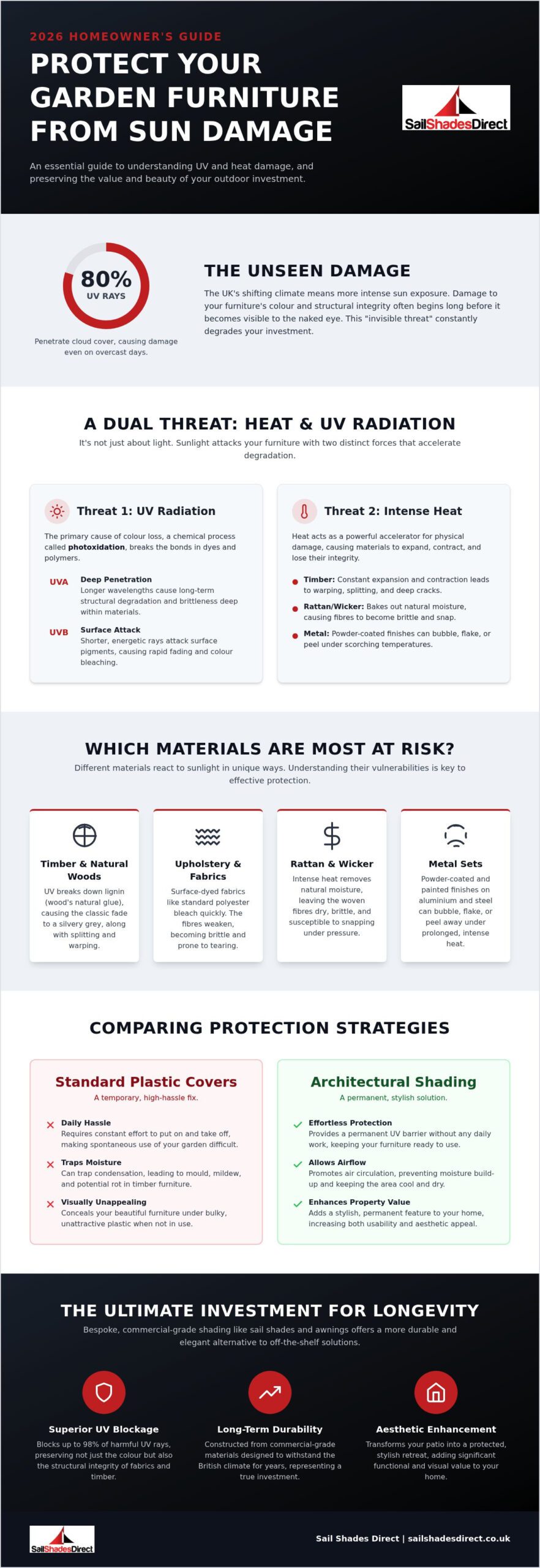
One of the most dangerous misconceptions is that furniture is safe on overcast days. This “invisible threat” is real; up to 80% of UV rays can penetrate cloud cover, meaning your investment is under constant microscopic stress even when the sky is grey. By the time the colour loss becomes visible to the naked eye, the structural integrity of the material has often already been compromised.
The Role of UV Radiation in Fading
UV radiation is split into two main types that affect your garden: UVA and UVB. UVA rays have longer wavelengths and penetrate deep into materials, leading to long-term structural degradation. UVB rays are shorter and more energetic, primarily attacking the surface pigments and causing that rapid loss of colour intensity. Photoxidation is the primary cause of material degradation, occurring when UV radiation provides enough energy to break the chemical bonds within dyes and polymers. When these bonds snap, the material can no longer reflect light correctly, resulting in the faded, “washed-out” look that plagues so many unprotected UK patios.
Heat vs. Light: A Dual Threat
Whilst UV light is responsible for the chemical bleaching of colours, heat acts as a powerful accelerator for physical damage. Thermal expansion is a significant concern for timber furniture; as the wood fibres heat up and cool down, they expand and contract at different rates. This constant movement leads to warping, splitting, and deep structural cracks.
Natural materials and metals face unique challenges in the heat:
- Rattan and Wicker: Intense heat bakes out the natural moisture in these fibres, leaving them brittle and prone to snapping under pressure.
- Metal Sets: Aluminium and steel can reach scorching surface temperatures, which may cause powder-coated finishes to bubble, flake, or peel away entirely.
- Synthetic Fabrics: High temperatures can cause standard polyester fibres to lose their flexibility, leading to a “crunchy” texture and eventual tearing.
Learning how to protect outdoor furniture from sun fading involves more than just a quick fix; it requires a combination of high-quality materials and professional shading. By installing bespoke sail shades or arm awnings, you aren’t just creating a comfortable place to sit; you’re establishing a permanent UV barrier that preserves your furniture for years to come.
Vulnerable Materials: How Sunlight Affects Different Furniture Types
Every material in your garden responds to UV radiation in its own way. Whilst some items may only suffer a slight change in hue, others can experience total structural failure within just a few seasons. Understanding these specific vulnerabilities is the first step in learning how to protect outdoor furniture from sun fading, as it allows you to prioritise which pieces require the most robust shading solutions.
Timber and Natural Woods
Hardwoods like teak and eucalyptus are beloved for their organic warmth, but they’re particularly susceptible to lignin breakdown. Lignin is the “glue” that holds wood fibres together; once UV rays penetrate the surface, this bond dissolves, leading to the familiar aesthetic shift from rich browns to a weathered, silvery grey. Whilst some enjoy this aged look, it’s often accompanied by structural risks. Eucalyptus, for instance, is prone to deep checking and splitting if the surface dries out too rapidly under direct heat. High-end cabinetry experts like Eben&Or note that while regular oiling can help maintain moisture levels, it’s important to remember that oil is a maintenance tool, not a UV shield. Without physical shade, the sun will eventually win the battle against the wood’s integrity.
The fabrics on your garden sofa are often the most expensive components to replace, yet they’re frequently the most vulnerable. Standard polyester fabrics are typically surface-dyed, meaning the colour only sits on the outside of the thread. As UV rays attack these fibres, they don’t just bleach the pigment; they weaken the thread strength itself, eventually leading to thinning and tearing. Darker colours, such as navy or charcoal, tend to absorb more thermal energy, which can accelerate this process compared to neutral palettes. For long-term durability, solution-dyed acrylic is the superior choice, as the pigment is integrated into the core of the fibre during manufacturing. If you’re looking to shield these high-end materials, investing in bespoke sail shades provides a permanent barrier against this kind of material degradation.
Rattan and Metals
The “rattan look” is ubiquitous in UK gardens, but there’s a world of difference between natural vine and synthetic weave. Natural rattan is highly porous and will become brittle and snap after prolonged sun exposure. In contrast, high-quality synthetic PE rattan is often UV-stabilised to resist this drying effect, though even these sets can suffer if the internal frame isn’t protected. Metals like cast aluminium are naturally more resilient to UV, but they rely heavily on powder-coating to prevent both fading and oxidation. If this coating begins to flake due to extreme heat expansion, the underlying metal becomes exposed to the elements, leading to a rapid decline in both appearance and strength. Learning how to protect outdoor furniture from sun fading isn’t just about aesthetics; it’s about safeguarding the structural life of your entire outdoor collection.
Comparing Protection Strategies: Covers vs. Architectural Shading
Deciding how to protect outdoor furniture from sun fading often feels like a choice between two very different lifestyles. On one hand, you have the high-effort routine of daily maintenance; on the other, the seamless integration of architectural protection. While many people start with small-scale fixes, it’s helpful to look at the long-term cost of your time and the aesthetic impact on your garden. The goal is to spend more time enjoying your outdoor space and less time managing it.
Temporary Solutions: Covers and Sprays
Furniture covers are the most common entry point for protection, with UK prices for larger sets typically ranging from £25 to £160. Whilst they offer a physical barrier, they are often unsightly and cumbersome to store. Non-breathable covers are particularly problematic, as they can trap condensation and encourage mould growth amongst your cushions during the humid UK summer. UV-protectant sprays are another popular choice, yet they require meticulous and frequent reapplication to remain effective. These chemical barriers can also interfere with the natural breathability of your fabrics, sometimes leaving a residue that changes the texture of luxury upholstery.
Architectural Shading: The Permanent Shield
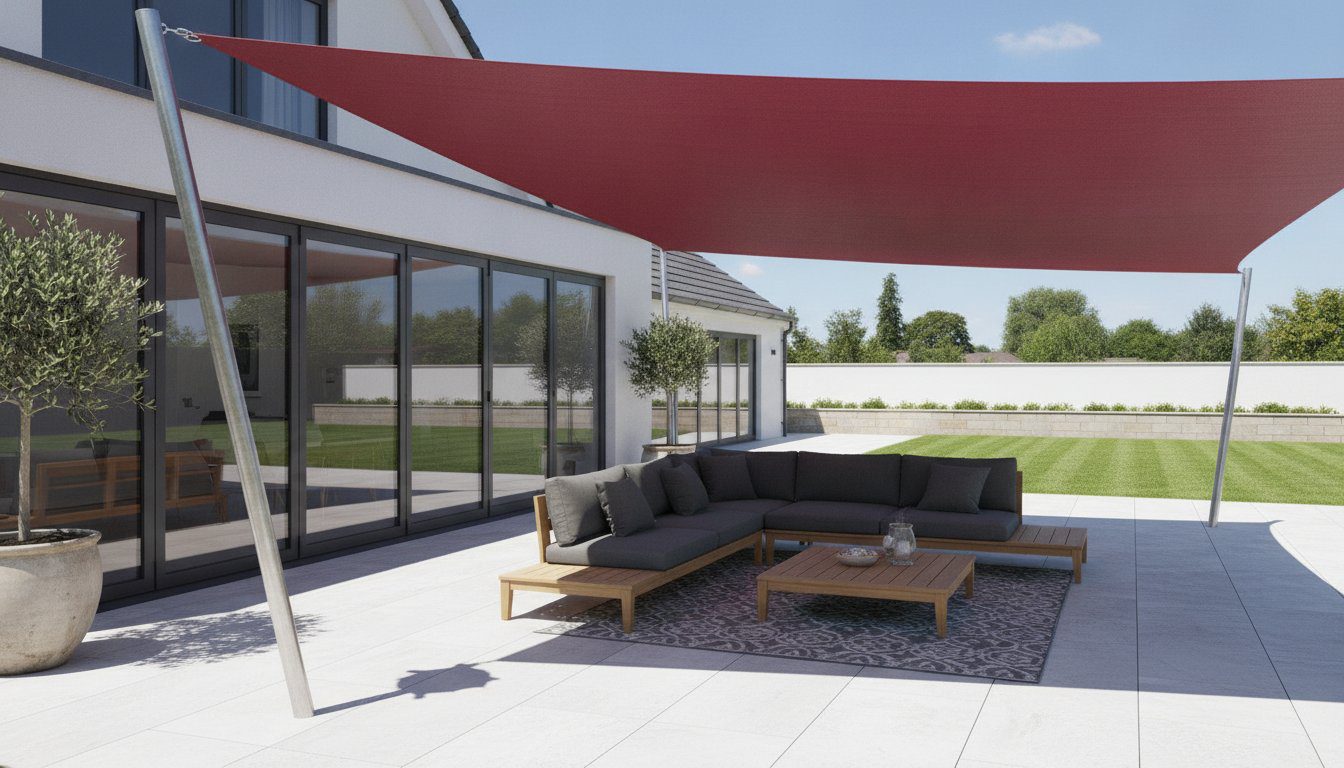
If you prefer a more elegant solution, architectural shading provides a permanent UV filter for your entire living space. High-quality bespoke sail shades UK gardens benefit from don’t just protect the furniture; they create a comfortable climate for you to enjoy. By blocking up to 98% of harmful radiation, these structures prevent the photoxidation of dyes without requiring you to lift a finger once they are installed. This “set and forget” approach ensures your investment is safe even when you aren’t at home to move it.
For those seeking a reactive approach, motorised rolling sun sails offer the ultimate in convenience, allowing you to deploy shade exactly when the UV index peaks. When you weigh the initial cost against the years of protection provided, the benefit is clear. You avoid the cycle of replacing faded cushions every few seasons and eliminate the daily chore of wrestling with heavy plastic sheets. Investing in professional shading is the most reliable way to understand how to protect outdoor furniture from sun fading whilst simultaneously elevating the visual appeal and value of your property.
Practical Steps to Organise a Fade-Resistant Outdoor Space
Creating a garden that retains its showroom finish isn’t just about what you buy; it’s about where you place it. To understand how to protect outdoor furniture from sun fading, you must first become an observer of your own environment. Every garden has a unique “solar footprint” that changes throughout the seasons. By mapping the sun’s path, you can identify precisely where the UV intensity is highest and organise your layout to shield your most valuable pieces during the peak hours of radiation.
Whilst engineered solutions provide the most robust defence, you can complement these by using natural greenery. Deciduous trees or tall shrubs can act as a soft filter for light, though they shouldn’t be relied upon as a primary UV barrier. The most effective approach combines these natural elements with professional structures to create a comprehensive safety net for your investment.
Strategic Furniture Placement
The “hot zone” in most UK gardens occurs between 12pm and 3pm, when the sun is at its zenith and UV radiation is most direct. If your patio faces south or west, your furniture is likely enduring the brunt of this exposure. A simple but effective tactic is to position your most vulnerable materials, such as dark-coloured fabrics or eucalyptus timber, in the “afternoon shadow” created by your house or a garden wall. Even a few hours of reprieve during these peak times can significantly extend the life of your upholstery. Don’t forget to rotate your cushions and modular sections regularly; this ensures that any unavoidable exposure is distributed evenly, preventing the unsightly “zebra stripe” fading that occurs when only one side of a sofa is hit by the sun.
Integrating Vertical and Horizontal Shade
Standard umbrellas often fail because they only provide horizontal cover, leaving your furniture exposed as the sun dips lower in the sky. To create a truly “cool room” effect, you need to intercept light from multiple angles. Combining heavy duty arm awnings with vertical exterior blinds for patios allows you to block the low-angle afternoon sun that often causes the most damage to fabric backrests.
For larger or more complex layouts, architectural sail shades UK homeowners favour can be tensioned at specific angles to create permanent pockets of shade. This multi-layered approach doesn’t just protect your furniture; it adds a sophisticated, bespoke aesthetic to your home. If you are ready to design a layout that stands the test of time, contact our design team today to discuss a custom shading plan for your garden.
Bespoke Shading: The Ultimate Investment for Furniture Longevity
While strategic placement and temporary covers offer some relief, a permanent structural barrier is the only way to truly master how to protect outdoor furniture from sun fading. Off-the-shelf garden umbrellas often provide a false sense of security; they are frequently made from low-grade polyester that degrades quickly and offers inconsistent UV protection. In contrast, bespoke shading solutions are engineered to function as a high-performance shield, transforming your patio into a year-round living space that remains cool and vibrant regardless of the weather.
The Advantage of Custom Fabrication
The primary benefit of a bespoke approach is the ability to tailor the shade to the exact dimensions of your luxury furniture set. Whether you have a sprawling corner sofa or a delicate timber dining arrangement, custom-made sail shades or arm awnings ensure there are no “leakage points” where the sun can sneak through. This precision is vital for comprehensive protection. You also gain the freedom to choose fabric colours that complement your garden’s aesthetic, ensuring the structure adds visual value rather than looking like an afterthought.
We use commercial-grade fabrics that are specifically designed for the UK’s variable climate. These textiles are engineered to provide maximum UV blockage, often reaching UPF 50+ standards which block up to 98% of harmful radiation. Crucially, these materials allow for optimal airflow, preventing the stifling heat build-up that often occurs under cheaper, non-breathable alternatives. It’s a sophisticated balance of protection and comfort that off-the-shelf products simply cannot match.
Long-Term Value and Durability
Professional installation is the final piece of the longevity puzzle. A bespoke sail shade or exterior blind is only as good as its tension. Our expert fitting service ensures that every component is perfectly weighted and secured, providing the wind resistance necessary for our coastal or exposed inland locations. When a shade is properly tensioned, it doesn’t flap or chafe, which significantly reduces wear and tear on the fabric fibres over time.
Investing in high-quality, engineered shading is a proactive choice that pays for itself by doubling or even tripling the lifespan of your outdoor upholstery and timber. You’ll enjoy the peace of mind that comes from knowing your environment is protected by a system designed to last for a decade or more. If you’re ready to elevate your garden with a professional solution, consult with Jamie and the team for a bespoke design that fits your lifestyle perfectly.
Secure the Future of Your Outdoor Living Space
We’ve explored how the UK’s shifting climate in 2026 demands a more proactive approach to garden maintenance. From understanding the chemical process of photoxidation to identifying the specific vulnerabilities of timber and fabrics, the secret to longevity lies in blocking UV rays before they reach the surface. Whilst temporary covers provide a useful stop-gap, they simply can’t compete with the effortless protection and aesthetic appeal of a permanent architectural structure.
Mastering how to protect outdoor furniture from sun fading is ultimately an investment in both your property’s value and your daily comfort. You deserve an outdoor room that stays vibrant and structural for years without the daily chore of wrestling with heavy plastic sheets. Ready to transform your patio into a protected sanctuary? Explore our range of bespoke sail shades and awnings to find a solution that’s custom-designed for your specific space. Our systems offer commercial-grade durability for your home and are expertly fitted nationwide. Let’s work together to create a beautiful, fade-resistant environment you’ll be proud to share with friends and family.
Frequently Asked Questions
Do UV-protectant sprays actually work on outdoor furniture?
UV-protectant sprays do provide a temporary chemical barrier that can slow down the rate of pigment loss. However, they are not a permanent solution and typically require reapplication every few months, or even after heavy rainfall, to remain effective. Whilst they are helpful for small accessories, they cannot match the consistent, high-level protection provided by physical shading structures like bespoke sail shades or professional arm awnings.
Which colour of garden furniture fades the least in the sun?
Light, neutral colours such as beige, light grey, and off-white tend to show the least amount of visible fading. These shades reflect more sunlight and contain fewer pigments that can be broken down by UV radiation. In contrast, dark or vibrant colours like navy, charcoal, and red absorb more thermal energy, which accelerates the photoxidation process and makes any loss of colour intensity much more noticeable over time.
Can I leave my sail shade up all year round in the UK?
Most bespoke sail shades are designed to be seasonal. Whilst our fabrics are specialists in high-UV and wind resistance, we generally recommend taking fixed sails down during the winter months to avoid damage from heavy snow loading. If you require year-round flexibility, rolling sun sails are an excellent alternative. These allow you to retract the fabric into a protected housing during inclement weather, ensuring the system remains in peak condition.
Is it possible to reverse sun fading on wooden furniture?
Yes, you can often restore the appearance of silvered or faded timber by sanding away the damaged top layer of wood cells. This reveals the fresh, vibrant grain underneath, which can then be treated with a high-quality UV-tinted oil. To avoid the repetitive cycle of sanding and refinishing, many homeowners look for ways on how to protect outdoor furniture from sun fading using permanent shading solutions that stop the damage before it starts.
How much UV protection do bespoke sail shades actually provide?
High-quality bespoke sail shades are manufactured using professional-grade fabrics that typically offer a UPF 50+ rating. This means they can block up to 98% of harmful UVA and UVB radiation, providing a robust safety net for both your skin and your furniture. This level of protection is significantly higher than standard garden umbrellas, making it the most effective long-term strategy for anyone wondering how to protect outdoor furniture from sun fading.
What is the best material for outdoor furniture if my garden is very sunny?
Cast aluminium is arguably the best structural material for high-exposure areas as it doesn’t warp, rot, or become brittle under intense heat. For upholstery, always look for solution-dyed acrylic fabrics rather than standard polyester. Because the colour is integrated into the core of the fibre during the manufacturing process, these textiles are far more resilient to the bleaching effects of the sun and will maintain their integrity for much longer.
Do exterior blinds help with heat as well as fading?
Exterior blinds are exceptionally effective at managing thermal gain. By intercepting solar radiation before it reaches your windows or furniture, they can reduce the temperature of your outdoor living space by several degrees. You can also explore Residential Window Tinting to see how professional services like Sun Guard Tint provide a similar level of protection for the interior side of your glass. This creates a much more comfortable microclimate and prevents the buildup of heat that causes materials like timber to warp or synthetic rattan to become brittle. They are a versatile addition to any sun-drenched patio or terrace.
For most hardwoods, we recommend applying a fresh coat of UV-resistant oil at least once a year, ideally in early spring. If your furniture is in a particularly exposed, south-facing position, a second application in late autumn can provide extra protection against the elements. Whilst oiling helps maintain the wood’s natural moisture and prevents cracking, it works best when combined with a bespoke shading solution that limits direct UV exposure throughout the day.