
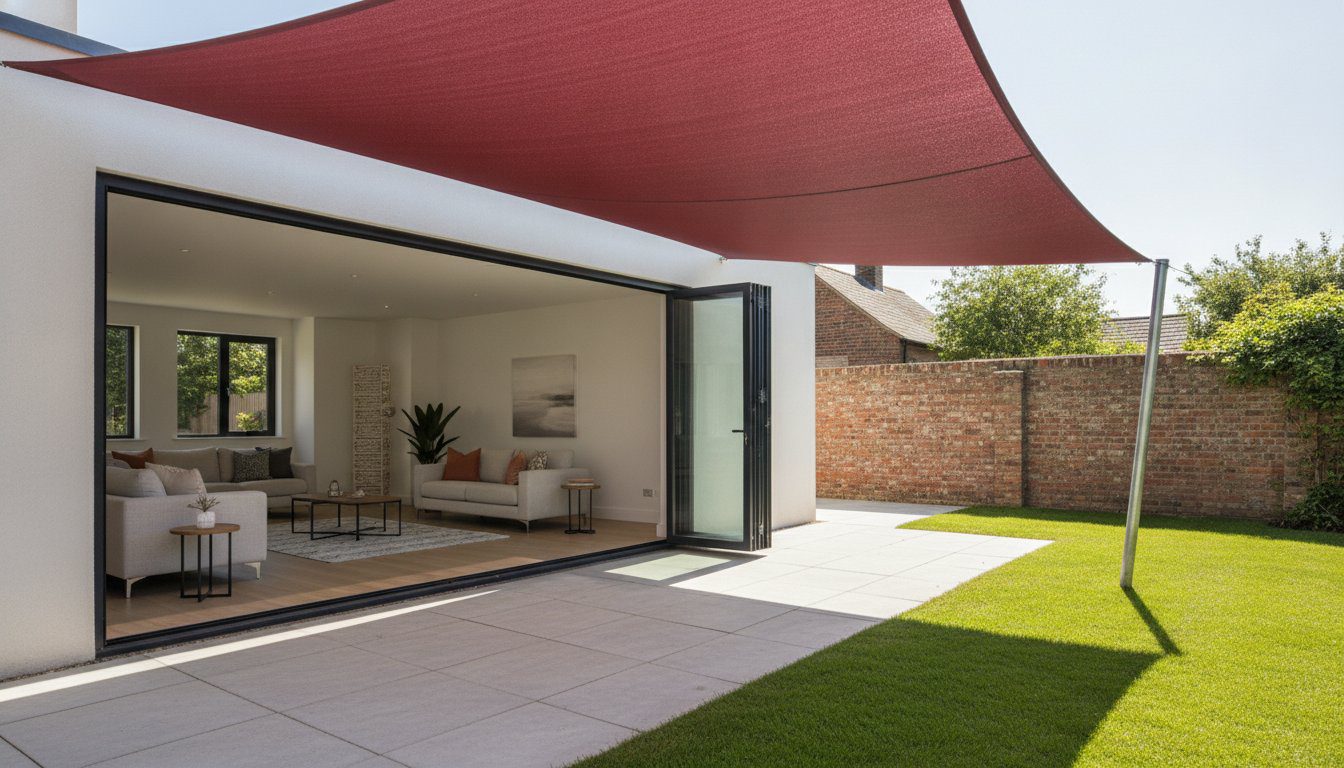
Reducing Sun Glare on Bifold Doors: The Definitive Guide to External Shading
Have you ever spent thousands on a stunning bifold door installation only to find yourself sitting in a sweltering greenhouse by midday? It’s a frustrating irony that those expansive glass walls, designed to bring the outside in, often force you to retreat behind thick curtains just to see your laptop screen or protect your flooring from sun damage. You want the light and the view, but the unbearable solar gain and blinding glare can quickly make your favourite room unusable during the summer months.
The good news is that you don’t have to sacrifice your indoor-outdoor flow to stay cool. By installing external blinds for bifold doors, you can stop the sun’s energy before it even hits the glass; this is the most effective way to manage temperature and light. In this definitive guide, we’ll show you how professional external shading solutions protect your interior whilst preserving your view. We will also look at how these bespoke systems align with the 2026 Future Homes Standard and the government’s focus on passive cooling, ensuring your home remains a comfortable, glare-free sanctuary all year round.
Key Takeaways
- Understand the physics of solar gain and why stopping heat before it reaches the glass is the only effective way to prevent your extension from becoming a greenhouse.
- Discover how professional external blinds for bifold doors provide a high-performance thermal barrier that protects your interior whilst preserving your view.
- Learn how to customise your shading strategy based on your property’s aspect, whether you’re tackling high-intensity midday sun or blinding low-level afternoon glare.
- Explore the functional differences between bespoke UK-manufactured solutions and off-the-shelf alternatives to ensure long-term durability against wind and UV exposure.
- Identify the most versatile professional shading options for large glass spans, including retractable rolling sun sails and architecturally designed bespoke sail shades.
The Greenhouse Effect: Why Bifold Doors Create Intense Glare and Heat
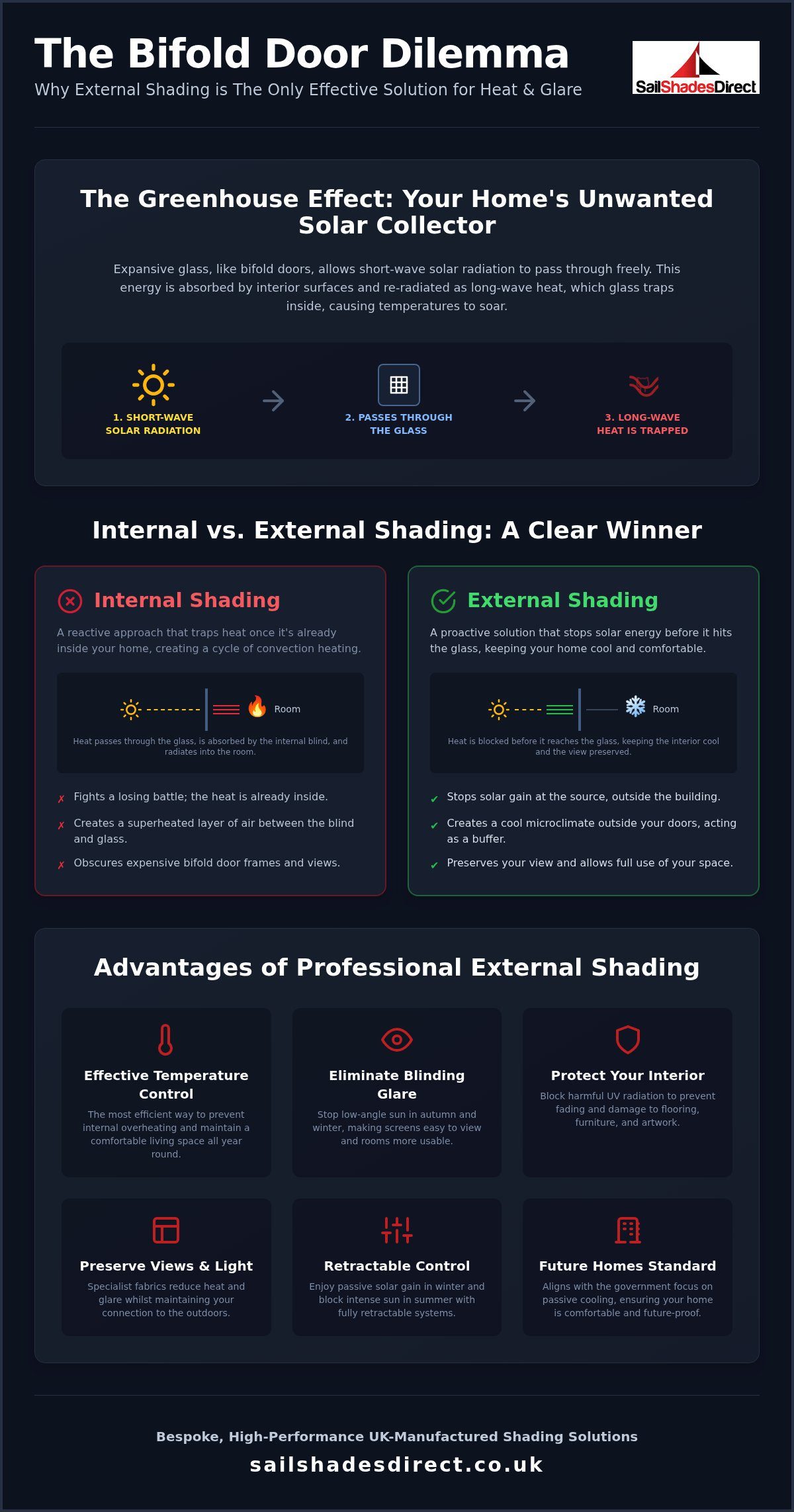
When you install bifold doors, you’re essentially adding a giant solar collector to your home. This process, known as solar gain, occurs when short-wave solar radiation passes through the glass and hits internal surfaces like your sofa or flooring. These surfaces absorb the energy and re-radiate it as long-wave infrared heat. Because glass is opaque to this long-wave radiation, the heat becomes trapped inside, creating a literal greenhouse effect. Whilst standard windows cause this on a small scale, the massive surface area of bifold doors amplifies the heat build-up significantly.
It isn’t just a summer problem. During autumn and winter, the sun sits much lower in the sky. This lower angle means light penetrates much deeper into your living space, creating a persistent, blinding glare that can make watching TV or working on a laptop nearly impossible. Without a solution like external blinds for bifold doors, this constant exposure leads to the gradual bleaching of expensive furniture and can even cause floor veneers to lift or warp as they expand under the intense, direct heat.
The Impact of Large-Format Glass on Interior Comfort
There’s a distinct difference between visual glare and thermal discomfort, though bifold doors often provide both in abundance. You might find yourself squinting at a screen whilst simultaneously feeling the air temperature rise to uncomfortable levels. Many modern doors use aluminium frames; whilst durable, these can act as thermal bridges that transfer external temperatures directly into your home. The solar heat gain coefficient (SHGC) measures the fraction of solar radiation admitted through a window, and for bifold doors, a lower SHGC is essential to prevent internal overheating.
Protecting Your Interior Investment
Your interior finishes are often the most expensive part of a home renovation. UV radiation is relentless, and standard double glazing often falls short of providing total protection for your belongings. Many homeowners don’t realise that even high-spec glass allows enough radiation through to damage sensitive materials over time. Items at risk include:
- Engineered hardwood and solid timber floors
- Bespoke upholstery and soft furnishings
- Original artwork and family photographs
- Sensitive electronic equipment
Professional retractable solar shade screens and external blinds for bifold doors offer a far better return on investment than replacing sun-damaged flooring or faded furniture. By stopping the energy before it enters the glass, you preserve the life of your interior whilst maintaining the light-filled atmosphere you love.
Internal vs. External Shading: Why Stopping the Sun Before the Glass is Essential
When you choose to shade your home from the inside, you’re essentially fighting a losing battle. Internal blinds and curtains are popular choices, yet they ignore a fundamental law of physics; once solar radiation has passed through your bifold glass, the heat is already inside your living space. Instead of reflecting energy away, internal fabrics often absorb it and then radiate that heat into the room. This creates a stagnant, superheated layer of air trapped between the blind and the window, which eventually circulates through the rest of the house.
Choosing external blinds for bifold doors changes the equation entirely. By intercepting the sun’s rays before they reach the glazing, you prevent the glass from heating up in the first place. This proactive approach creates a cool microclimate immediately outside your doors, acting as a buffer that keeps your interior temperature stable. Unlike permanent solutions like window films, retractable external systems give you total control, allowing you to enjoy the full warmth of the sun on crisp winter mornings whilst blocking the intense glare of a mid-August afternoon.
The Limitations of Internal Blinds and Films
Internal blinds often lead to what engineers call ‘convection heating’. As the air between the blind and the glass heats up, it rises, drawing cooler air in from the bottom and creating a continuous cycle of warming. Beyond the thermal issues, there’s the aesthetic cost to consider. You’ve likely invested significantly in high-quality bifold frames, such as those from Windows Outlet; covering them with bulky internal rollers or pleated fabrics can ruin the clean architectural lines of your extension. Additionally, it’s worth checking your door manufacturer’s terms, as applying certain aftermarket window films can sometimes void the warranty on high-end bifold glass units due to the increased risk of thermal stress fractures.
The Thermal Efficiency of External Solutions
The performance gap between internal and external shading is staggering. High-performance external blinds for bifold doors can reduce solar heat gain by up to 90%, whereas internal alternatives typically manage only a 20-30% reduction. This massive difference directly impacts your comfort and your wallet. By significantly lowering the internal temperature, you reduce the reliance on expensive air conditioning units or noisy floor fans during the summer months. For those looking for technical data on fabric performance and UV resistance, our guide to exterior blinds for patios provides a deeper look at the materials we use.
If you’re tired of sitting in an oven every time the sun comes out, it might be time to look at a more permanent, professional solution. You can explore our range of options and find the perfect fit for your home by requesting a bespoke shading consultation with our expert team.
The Best External Solutions for Reducing Sun Glare on Bifold Doors
Now that we’ve established the science of solar gain, it’s time to look at the engineered hardware that solves the problem. Choosing the right system depends on your door’s orientation and how you use the space. Some homeowners want a permanent architectural statement, whilst others prefer the flexibility of a retractable system. External blinds for bifold doors come in various forms, but the most effective solutions are those designed specifically for the unique challenges of large-format glass.
Every installation we undertake is bespoke because no two bifold setups are identical. Whether you’re dealing with a wide five-pane door or a corner set that meets at a glass-to-glass junction, the goal remains the same; intercept the sun’s energy before it reaches the pane. By selecting a professional-grade solution, you ensure that the materials can withstand the British wind and rain whilst maintaining their tension and aesthetic appeal for years to come.
Bespoke Sail Shades and Rolling Sails
For extensions with non-standard rooflines or awkward angles, bespoke sail shades UK offer unparalleled versatility. These aren’t just pieces of fabric; they are precision-engineered tension structures. We can design them to sit at specific heights and angles to track the sun’s path throughout the day, ensuring the glare never reaches your glass. If you prefer a cleaner look when the sun goes down, motorised rolling sun sails provide the best of both worlds. They offer the sleek, modern aesthetic of a tensioned sail with the ability to retract at the touch of a button. This instant glare relief is perfect for the unpredictable British weather, allowing you to deploy shade only when it’s needed.
Professional Arm Awnings and Vertical Blinds
When you want to extend your living room directly onto the patio, heavy duty arm awnings are the gold standard. These systems create a shaded ‘transition zone’ that makes the threshold between indoors and out feel seamless. They provide a solid canopy that keeps the glass cool whilst giving you a comfortable outdoor seating area. However, awnings alone might not block the low-level ‘blinding’ sun that West-facing doors experience in the late afternoon. This is where vertical external blinds for bifold doors excel. These blinds drop down to cover the glass surface directly, using perforated fabrics that maintain airflow and your view whilst cutting up to 90% of the heat. To protect your investment, we always recommend integrating wind-sensors; these clever devices automatically retract the system if the wind picks up, giving you peace of mind even if you’re not at home.
Planning Your Shading Strategy Based on Aspect and Usage
Every garden is different, and the way you use your extension depends heavily on which way it faces. A “one-size-fits-all” approach usually results in missing the glare when you need protection most. South-facing doors are the classic heat-traps; here, the midday sun is at its most intense, making overhead sail shades an ideal choice to cast a deep, protective shadow. West-facing doors present a different challenge. As the sun drops in the late afternoon, it shines directly into the room, creating that piercing glare that ruins your evening. Vertical external blinds for bifold doors are the best defence here, as they can be lowered to block the horizontal light. Don’t forget East-facing rooms; whilst they stay cooler in the evening, breakfast-time glare in a kitchen-diner can make your morning coffee a squinting match.
Analysing the Sun’s Path Across Your Garden
Spend a few days watching how the light travels through your extension. You’ll likely notice that glare isn’t static. A fixed shade might work perfectly in the height of summer but fail completely as the seasons change and the sun’s arc lowers. We often talk about the ‘shadow gap’, which is the distance between the shade and the glass. To ensure total coverage, your shading solution needs to extend far enough beyond the glass span to account for the sun’s angle at different times of the year. If your shade is too narrow, light will simply “leak” around the edges, leaving you with annoying bright spots on your TV or furniture.
Operational Considerations for Bifold Doors
It’s vital that your shading doesn’t hinder the very thing you love about your doors: the flow. Bifolds need clear space to stack and fold, so any installation must account for the projection of the frames. We ensure that arm awnings and sail shades are mounted with sufficient height clearance so you can fully open the doors without catching the fabric. For large-scale bifold installations, remote-controlled systems are a game-changer. They allow you to adjust your external blinds for bifold doors from the comfort of your sofa as the glare shifts, keeping your living space perfectly tempered without you having to lift a finger.
Ready to stop the squinting and reclaim your view? You can request a bespoke shading consultation to find the perfect orientation for your home.
Bespoke Shading: Combining Aesthetics with High-Performance Glare Control
Whilst off-the-shelf sails might look like a bargain, they often sag within weeks, failing to provide the consistent glare protection you need. A poorly tensioned fabric doesn’t just look untidy; it flaps in the wind and creates “light leaks” that let the sun pierce through your bifold glass. When you invest in professional external blinds for bifold doors, you’re choosing a system engineered to maintain its shape and performance. We use high-grade, UV-stable fabrics like commercial-grade HDPE or acrylic, which are designed to withstand the rigours of the British climate without fading or stretching.
Engineering for the UK requires a level of structural integrity that DIY kits simply can’t match. Our architectural sail shades UK are built with professional tensioning rigs and marine-grade stainless steel hardware. We take pride in our “can-do” attitude, ensuring every bracket and post matches your bifold frames perfectly. Whether your doors are finished in the popular Anthracite Grey or a bespoke RAL colour, we customise our hardware to ensure the shading system looks like a natural extension of your home’s architecture rather than an afterthought.
Fabric Technology and Colour Selection
The science of glare control extends to the very threads of the fabric. Many homeowners assume lighter colours are better for cooling, but darker fabrics actually provide superior visual comfort by absorbing more light and reducing the “bounce” that causes squinting. We often recommend mesh fabrics with a specific “openness factor.” This clever technology blocks the majority of the sun’s heat and glare whilst allowing your eyes to see through the material, preserving that all-important connection to your garden. Because our fabrics are designed for the UK, they also feature high resistance to mould and mildew, ensuring they stay looking crisp and clean even after a damp British autumn.
The Professional Installation Advantage
A high-performance shading system is only as good as its mounting points. Large bifold spans require significant tension to keep the fabric taut and effective, which means standard wall fixings often aren’t enough. Our professional fitting service includes the installation of bespoke wall plates and heavy-duty posts that are engineered to handle the wind loads specific to your property’s location. This structural approach ensures the longevity of your external blinds for bifold doors, giving you a solution that works perfectly on day one and year ten.
Ready to transform your living space into a cool, glare-free sanctuary? You can contact Jamie and the team for a bespoke shading consultation to discuss the best options for your home.
Reclaim Your Living Space and Enjoy the View
You’ve invested in bifold doors to open up your home and invite the outside in; don’t let heat and glare turn that dream into a sweltering reality. By choosing professional external blinds for bifold doors, you’re opting for a solution that manages solar gain effectively whilst preserving the architectural beauty of your extension. We’ve explored how stopping the sun before it reaches the glass is the only way to prevent the greenhouse effect and protect your expensive interior finishes from UV damage.
Whether you need a retractable rolling sail or a vertical blind system, our team is ready to help. At Sail Shades Direct, we pride ourselves on our UK-based manufacturing and design, ensuring every project meets our high engineering standards. With our expert installation nationwide and commercial-grade durable fabrics, you can trust that your shading will stand up to the British weather for years to come. Request your bespoke shading consultation with Sail Shades Direct today. It’s time to stop squinting and start enjoying your light-filled home in total comfort.
Frequently Asked Questions
Will an external sail shade make my room too dark on cloudy days?
Not at all. High-quality sail shades are designed to filter sunlight rather than block it entirely. Most fabrics used for bifold shading allow a significant amount of ambient light to pass through, ensuring your room feels bright even when the sun is behind clouds. If you choose a motorised rolling sun sail, you have the flexibility to retract the shade fully on duller days, giving you total control over the light levels in your home.
Can external blinds be fitted to existing bifold door frames?
We typically install external blinds for bifold doors onto the structural masonry above the door opening rather than the frames themselves. This approach ensures that the shading system doesn’t interfere with the door’s operation or void your manufacturer’s warranty. By mounting to the wall, we can also ensure the blinds are wide enough to eliminate light gaps at the edges, providing a much more effective thermal barrier for your living space.
How do sail shades perform in high winds common in the UK?
Our bespoke sail shades are engineered specifically for the UK climate, using high-tension rigs and marine-grade stainless steel fixings. Whilst fixed shades are designed to withstand significant wind loads, we recommend that retractable systems like rolling sails or arm awnings are closed during stormy weather. To make this easier, we can integrate automatic wind sensors that detect high gusts and retract the system safely without you needing to be present.
What is the best colour for reducing glare without losing the view?
Darker colours such as charcoal or slate grey are actually the most effective for maintaining a view. Whilst it seems counterintuitive, dark mesh fabrics absorb more light and reduce reflection; this makes the material much easier to see through from the inside. These shades provide excellent visual comfort by cutting out the harsh white glare whilst allowing you to clearly see your garden and outdoor space beyond the glass.
Are motorised awnings and sails worth the investment for bifold doors?
Most of our clients find that motorisation significantly increases how often they use their shading. For large bifold spans, manually operating a heavy awning or sail can be a chore. Motorised systems allow for effortless adjustment via remote or smartphone app, ensuring you actually use the shade to manage heat throughout the day. Crucially, motorisation also allows for the inclusion of safety sensors that protect your investment from unexpected weather changes.
How much maintenance do bespoke exterior shading systems require?
Maintenance is remarkably straightforward. Because we use commercial-grade, mould-resistant fabrics and stainless steel hardware, a simple wash with warm soapy water once or twice a year is usually all that’s needed to keep them looking fresh. We recommend a quick annual check of the tensioning fixings to ensure everything remains secure, but otherwise, these systems are designed to be durable, low-maintenance additions to your home that stand the test of time.
Can I still open my bifold doors fully with an exterior blind installed?
Absolutely. During the design phase, we carefully calculate the mounting height and projection to ensure your doors have ample clearance to stack and fold. Whether your doors open inwards or outwards, our bespoke approach means we can position the external blinds for bifold doors or sail shades so they never obstruct the physical movement. This ensures you can still enjoy the seamless indoor-outdoor flow that makes bifold doors so popular.
Do I need planning permission for a large sail shade or awning?
In the vast majority of cases, installing an awning or sail shade falls under permitted development and does not require formal planning permission. However, if your property is a listed building or situated within a conservation area, it is always worth a quick check with your local planning authority first. We have extensive experience in designing sympathetic solutions that meet local requirements whilst providing the high-performance glare protection your home needs.