
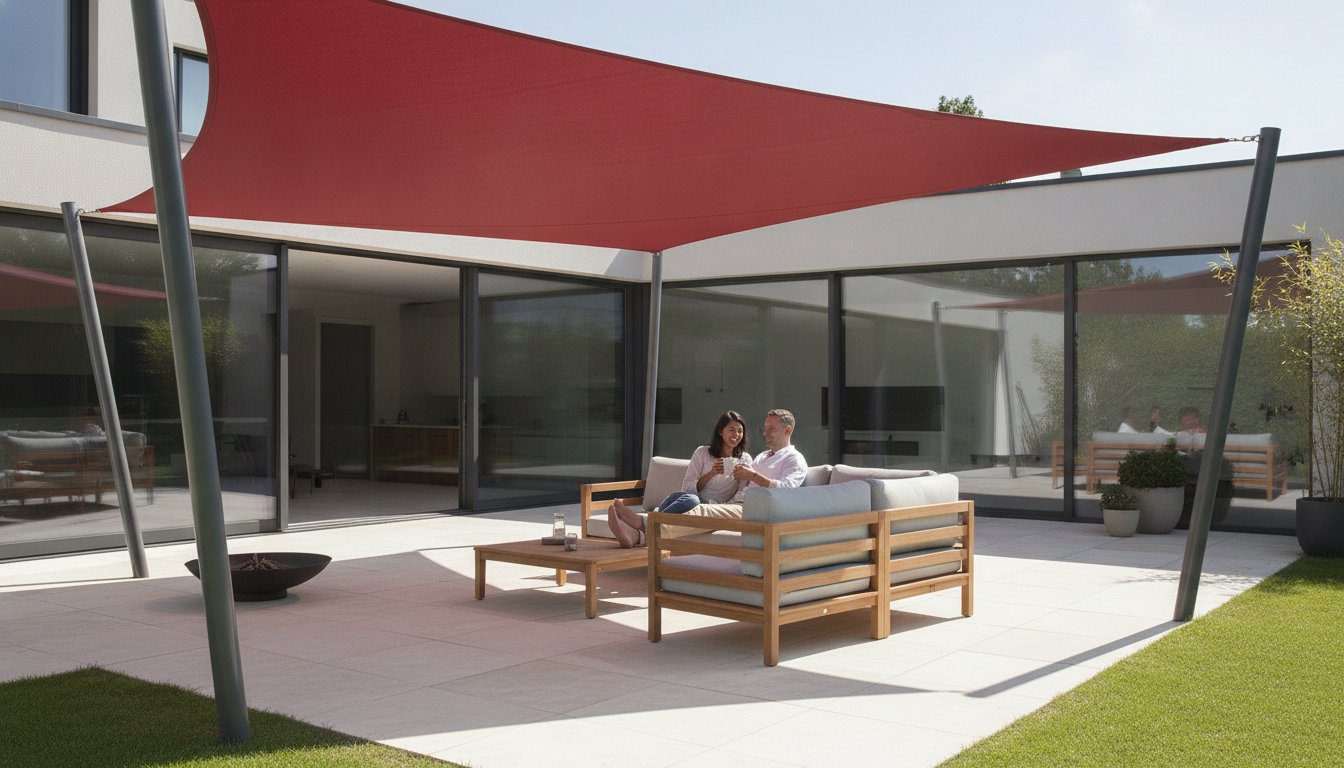
UV Protection for Outdoor Seating: The Ultimate 2026 Guide
Effective UV protection is an architectural challenge that requires bespoke fabric tensioning, not just a physical barrier. Most homeowners agree there’s nothing more disappointing than seeing expensive teak or rattan succumb to sun damage, yet finding reliable UV protection for outdoor seating areas often feels like a maze of confusing technical jargon. You deserve a garden that remains a sanctuary even during the peak of summer, without the constant worry of fading fabrics or skin health.
In this ultimate 2026 guide, you’ll discover how to safeguard your health and your furniture with high-performance, bespoke shading solutions designed for the British climate. We’ll break down everything from the latest UPF 50+ fabric standards to the engineering behind rolling sun sails, arm awnings, and giant umbrellas. By the end, you’ll know exactly how to achieve maximum UV blockage of 95% or higher, ensuring your outdoor space remains stylish and durable against the unpredictable UK weather.
Key Takeaways
- Understand how the right materials prevent both skin damage and the photodegradation of your favourite garden furniture.
- Learn to navigate technical UPF ratings to ensure your UV protection for outdoor seating areas blocks at least 98% of harmful radiation.
- Compare the benefits of HDPE mesh and commercial-grade acrylic fabrics to find the perfect match for the British climate.
- Master the “Shadow Throw” concept to ensure your bespoke shade actually covers your seating as the sun moves throughout the day.
- Discover why bespoke sail shades and arm awnings offer superior durability and aesthetic appeal compared to off-the-shelf alternatives.
Why UV Protection for Outdoor Seating Areas is Essential
UV protection for outdoor seating areas isn’t just about creating a dark spot in the garden. It’s a sophisticated balance of blocking harmful UVA and UVB rays whilst ensuring that air continues to circulate freely. In the UK, we often fall for the “hazy day” trap. We assume that because the sun isn’t piercing through a cloudless sky, the risk is low. In reality, UV levels can remain dangerously high even when the sky looks grey and overcast. This makes high-performance, active shading essential rather than a luxury.
Unlike passive protection, such as furniture covers you only use when the garden is empty, active shade creates a usable environment that protects both you and your assets simultaneously. Professional shading systems, such as arm awnings or bespoke sail shades, transform the utility of your garden. They allow you to reclaim your terrace during peak heat, turning a scorching patio into a breezy, comfortable extension of your home.
The Health Implications of Unprotected Seating
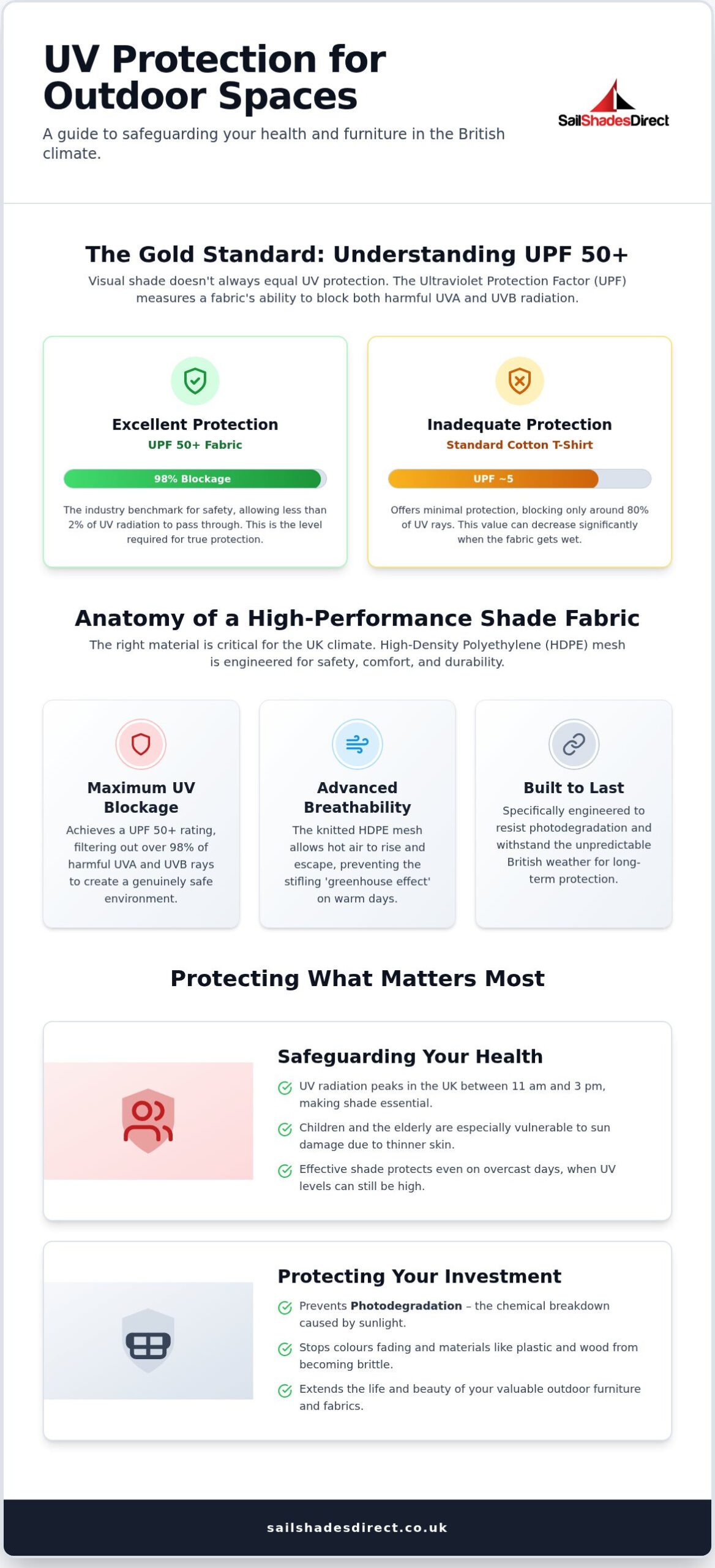
The health risks are most acute when the sun is at its highest point. In Britain, UV radiation typically peaks between 11 am and 3 pm. During these hours, consistent shade becomes vital for vulnerable groups, particularly children and the elderly, whose skin is more susceptible to damage. Children’s skin is much thinner than adults’, making them far more prone to burning in a surprisingly short window of time. Expertly designed shade ensures they can play outdoors without the constant worry of overexposure.
It’s a common mistake to assume that simply “feeling cool” means you’re safe. Temperature and UV radiation are entirely different beasts. You might feel comfortable under a thin, cheap canopy, but without a high UPF (ultraviolet protection factor), the fabric could be allowing a significant percentage of rays to reach your skin. True protection requires materials specifically engineered to absorb and reflect radiation.
Protecting Your Investment: Preventing Photodegradation
Beyond personal health, there’s the financial side of your garden design. Sunlight acts as a catalyst for a chemical breakdown known as photodegradation. UV rays relentlessly attack the polymers in plastic furniture and the natural resins that hold wooden fibres together. Over time, this leads to brittle frames, faded colours, and eventual structural failure. Whilst a standard garden umbrella might offer a small patch of relief, bespoke sail shades provide a much more robust shield.
These engineered solutions are designed to cover your entire seating layout, preventing the patchy fading often seen with smaller, mobile covers. “Photodegradation is a silent process that costs UK homeowners thousands in replaced garden furniture every year.” Investing in a permanent, high-quality shading system isn’t just about comfort; it’s a strategic move to extend the life and beauty of your outdoor living space.
The Technology of UV-Resistant Fabrics and UPF Ratings
Whilst many people assume any canopy provides relief from the sun, true UV protection for outdoor seating areas relies on advanced textile engineering rather than simple coverage. Visual shade doesn’t always equal radiation blockage. Some thin fabrics might make the area look darker whilst still allowing harmful rays to penetrate the weave. To ensure your garden remains a safe haven, it’s vital to understand the science behind the materials that make up your sail shade or awning.
Understanding the UPF 50+ Standard
The industry benchmark for safety is the UPF (Ultraviolet Protection Factor) rating. Unlike SPF for skin, which only measures UVB, the UPF system accounts for both UVA and UVB rays. A rating of UPF 50+ is the gold standard, indicating that the fabric allows less than 1/50th (or 2%) of UV radiation to pass through. High-quality bespoke shade sail fabric is specifically engineered to hit this 98% blockage mark, providing a level of security that budget polyester simply cannot match. For context, a standard white cotton t-shirt often has a UPF as low as 5, which can drop even further if it gets wet.
HDPE vs. Acrylic: Choosing the Right Shield
Choosing the right UV protection for outdoor seating areas often comes down to the choice between High-Density Polyethylene (HDPE) mesh and commercial-grade acrylic. HDPE is a knitted fabric that’s incredibly popular in the UK because it’s breathable. It allows hot air to rise and escape through the tiny gaps in the knit, preventing that stifling “greenhouse effect” on warm afternoons. If you’re looking for more guidance on fabric safety, the Skin Cancer Foundation provides extensive resources on Sun Protective Clothing and textiles that apply directly to these outdoor solutions.
Acrylic fabrics, by contrast, offer a solid weave. These are the preferred choice for arm awnings where you might want a waterproof barrier alongside your sun protection. Regardless of the material, the best bespoke solutions incorporate UV stabilisers during the manufacturing process. These chemical compounds prevent the fabric from becoming brittle or losing its colour after years of exposure to the British elements. If you’re unsure which material suits your garden layout, you can view our range of bespoke shading solutions to see how each performs in a residential setting.
Weave density and colour choice also play significant roles in performance. Tighter weaves naturally block more light, but even the pigment used in the dye can influence protection levels. Darker colours like charcoal or navy often absorb more UV radiation than lighter creams, though modern light-coloured technical fabrics are now so advanced they can still achieve 95% blockage or higher. This versatility means you don’t have to sacrifice your preferred aesthetic to keep your family safe.
Comparing Shading Systems for Maximum Protection
Choosing the right structure is as much about engineering as it is about aesthetics. When you’re looking for UV protection for outdoor seating areas, you’ll quickly find that no single solution fits every garden. A sprawling, irregular terrace requires a different approach than a compact patio tucked against the back of the house. Why settle for a one-size-fits-all solution when your garden has its own unique character? By comparing high-performance systems, you can find the perfect balance between permanent coverage and on-demand flexibility.
Bespoke Sail Shades: The Architectural Choice
If you’re dealing with large or oddly shaped areas, bespoke sail shades are often the superior choice. Unlike the flimsy, off-the-shelf triangles found in high-street shops, architectural sail shades UK are custom-designed to follow the exact contours of your seating layout. These tensioned structures provide permanent, high-coverage protection that remains stable even in brisk winds. Because they’re bespoke, we can overlap multiple sails to eliminate gaps, ensuring that every guest remains shielded from the sun’s peak intensity whilst maintaining a striking, modern look.
Retractable Awnings and Rolling Sails
For many homeowners, the ability to control when and where shade is deployed is a priority. This is where heavy duty arm awnings excel. They offer an immediate extension of your living space, providing a solid barrier against UV rays whilst keeping the area beneath significantly cooler. In winter, you simply retract them to let the natural light flood back into your home. It’s a versatile solution that respects the changing seasons.
If you prefer a more contemporary look with the same level of flexibility, motorized rolling sun sails offer dynamic UV control at the touch of a button. These systems often include automated sensors that react to the environment. If the wind picks up or the sun disappears, the sail safely retracts on its own. This level of automation is perfect for the “quick-change” British weather. Beyond structural shade, the FDA provides additional Tips to Stay Safe in the Sun, reminding us that a multi-layered approach to safety is always the most effective strategy.
Finally, don’t overlook giant umbrellas for areas that need mobile protection. They’re incredibly versatile for flexible seating arrangements, allowing you to move the shade as your garden party evolves. Whether you choose a permanent sail or a retractable awning, the goal is a solution that feels like a natural, protective part of your home.
Strategic Design: Positioning for Maximum Protection
A high-performance fabric is only as effective as its placement. You could invest in the most advanced textile on the market, but if the shadow falls on your flowerbeds instead of your chairs, the investment is wasted. Achieving true UV protection for outdoor seating areas requires a deep understanding of how light interacts with your specific garden layout. We don’t just look at where your furniture sits; we look at where the sun will be when you actually want to use it.
This brings us to the “Shadow Throw” concept. In the UK, the sun is rarely directly overhead, even in the height of summer. This means the shadow cast by a sail or awning will always be offset from the structure itself. To ensure your guests stay shielded, we often recommend varying the mounting heights of your sail shades. By dropping one corner lower, you can effectively block that harsh, low-angle afternoon sun that sneaks under traditional horizontal covers. This is particularly vital for south-facing gardens that endure relentless exposure from dawn until dusk.
Calculating Sun Angles for the UK Summer
Many homeowners confuse solar noon with the time of peak heat. Whilst the sun is at its highest point around 1 pm in the British summer, the ambient temperature often continues to rise well into the late afternoon. Our 3D design services help predict these shifting shade patterns throughout the day, ensuring your terrace remains usable during those sweltering 4 pm tea breaks. If you have a north-facing garden, you might find that the house provides midday shade, but you still require protection from the piercing evening sun. In these instances, side-shading or exterior blinds for patios are the ideal solution to close the gap.
Designing for Airflow and Comfort
Effective UV protection shouldn’t feel like sitting in a tunnel. Cheap, low-hanging gazebos often create a claustrophobic environment because they trap hot air and block the view. A bespoke design avoids this entirely by utilising the “chimney effect.” By installing sails at different pitches and heights, we encourage hot air to rise and escape through the gaps between the fabrics. This creates a natural draw of cooler air from the sides, significantly lowering the temperature beneath the shade.
When using giant umbrellas, the mounting height is equally critical. You want enough clearance to move freely without losing the protective “umbrella” of shade that keeps UV rays at bay. Every garden has its own microclimate and orientation. To get the best results for your unique space, you can request a bespoke design consultation to see exactly how the shadow will fall on your seating area.
Bespoke UV Protection with Sail Shades Direct
At Sail Shades Direct, we believe your outdoor space is an extension of your home’s personality. We don’t believe in “good enough” regarding safety or style. Our approach is built on the foundation of individual design, ensuring that every project we undertake is a unique response to the specific geometry of your garden. Providing effective UV protection for outdoor seating areas requires more than just a piece of fabric; it requires a deep commitment to precision engineering and high-end fabrication. We take pride in our “can-do” attitude, viewing every complex patio or terrace as an opportunity to showcase our craftsmanship.
Our process is designed to be as seamless as the shading we provide. It begins with a detailed consultation where we listen to your needs and assess the unique challenges of your site. We’ve spent over 10 years mastering the nuances of the British climate, so we know exactly what it takes to make a structure last. From there, we move into bespoke design and fabrication, using only commercial-grade materials that are built to withstand the rigours of UK weather. Whether you choose a rolling sun sail or a heavy-duty arm awning, you can trust that the materials are identical to those used in high-traffic commercial environments.
Why Custom-Made Beats Standard Every Time
Standard-sized sails often suffer from poor tensioning, which is a major pitfall for both aesthetics and safety. When a sail isn’t perfectly tensioned, it sags, creating unsightly wrinkles and, more importantly, gaps in UV protection. A bespoke structure is engineered for permanent, year-round use, with every corner and fixing point calculated to maintain a crisp, architectural look. We offer a vast palette of colours and styles, allowing you to choose a favourite shade that complements your home’s existing architecture whilst providing maximum security. This level of customisation ensures that your shading solution feels like an intentional part of your property rather than a temporary after-thought.
Our National Installation Service
We take the stress out of the process by offering a professional national installation service that covers the entire UK. Our expert teams are experienced in handling complex fixings on a variety of building types, from traditional brickwork and masonry to modern timber frames and steel structures. We don’t just “fit” a product; we ensure it’s structurally sound and perfectly positioned for longevity. This attention to detail is vital for the long-term performance of your UV protection for outdoor seating areas. Are you ready to transform your garden into a protected sanctuary? We invite you to contact our expert team today for a bespoke quote tailored to your seating area and lifestyle.
Ready to Elevate Your Outdoor Living Experience?
Creating a garden that balances aesthetic beauty with uncompromising safety is entirely possible with the right expertise. We’ve explored how technical UPF 50+ fabrics and strategic “shadow throw” design work together to shield your family and your furniture from the sun’s peak intensity. You now understand that bespoke engineering provides a level of durability and precision that off-the-shelf options simply can’t match.
Achieving superior UV protection for outdoor seating areas is a blend of science and craftsmanship. With over 10 years of bespoke shading expertise, our team uses commercial-grade UV-stabilised fabrics to create structures that thrive in the unpredictable British climate. Whether you need a permanent architectural sail or a retractable arm awning, our professional national UK installation service ensures a perfect result every time.
Enquire about your bespoke UV protection today and let’s work together to design a sanctuary that you’ll enjoy for years to come. Your perfect outdoor retreat is just a conversation away!
Frequently Asked Questions
Do all outdoor fabrics provide the same level of UV protection?
No, there’s a massive difference between budget textiles and technical fabrics. Standard cotton or light polyester might only provide a UPF of 5 to 7, whilst commercial-grade HDPE and acrylic fabrics are engineered to block up to 98% of harmful radiation. When choosing UV protection for outdoor seating areas, you must look for the UPF 50+ rating to ensure long-term safety and prevent the rapid fading of your furniture’s colours.
Can I leave my bespoke sail shade up all year round in the UK?
Our bespoke sail shades are designed to withstand the British climate throughout the year. Because we use high-tension hardware and UV-stabilised materials, they can handle typical UK wind and rain without losing their structural integrity. However, whilst the fabric is durable, we recommend retracting rolling sun sails or arm awnings during named storms or extreme gales to protect the mechanical components. Permanent tensioned sails are generally safe to remain in place.
How much UV radiation do waterproof sail shades block?
Most waterproof sail shades are manufactured from commercial-grade acrylic or PVC-coated polyester, which typically blocks 98% or more of UV radiation. These solid-weave materials offer a dual benefit; they keep your seating area bone-dry during a typical British summer shower whilst providing a robust shield against skin-damaging rays. This makes them an excellent choice for dining areas where you want to maintain a consistent environment regardless of the weather.
What is the difference between a shade sail and a garden awning for UV protection?
The primary difference lies in the mounting and flexibility. A garden awning is usually a retractable system fixed directly to your property’s wall, perfect for patios adjacent to the house. A bespoke sail shade is a tensioned fabric structure that can be positioned anywhere in the garden using independent posts. Both provide exceptional UV protection for outdoor seating areas, but sails offer more architectural freedom for large or irregularly shaped layouts.
How do I clean my UV-resistant outdoor fabrics without damaging the coating?
Cleaning your UV-resistant fabrics is straightforward but requires a gentle touch to preserve the material’s integrity. Use a solution of mild, pH-neutral soap and lukewarm water with a soft-bristled brush to lift surface dirt. You should never use bleach, harsh detergents, or high-pressure washers, as these can strip away the UV-stabilised coatings and weaken the fibres. A simple hose-down every few months is usually enough to keep the fabric looking its best.
Do I need planning permission for a permanent sail shade structure?
In most residential cases in the UK, bespoke sail shades don’t require formal planning permission because they’re classified as semi-permanent structures. However, rules can vary if your home is a listed building, situated in a conservation area, or if the structure is exceptionally large. We always recommend a quick call to your local planning office if you’re unsure, especially if the installation involves significant groundworks or permanent steel columns.
How does the colour of the sail shade affect the level of UV protection?
Whilst darker colours like charcoal or navy naturally absorb more UV radiation, the gap has narrowed significantly thanks to modern textile technology. High-quality light-coloured fabrics, such as ivory or light grey, are now manufactured with dense weaves and chemical stabilisers that still achieve 95% to 98% blockage. This means you can choose a favourite colour that matches your garden’s aesthetic without having to compromise on the safety of your seating area.
Is a giant umbrella as effective as a sail shade for blocking the sun?
Giant umbrellas use the same commercial-grade fabrics as our sail shades, making them equally effective at blocking UV rays within their immediate footprint. However, they lack the “coverage customisation” of a bespoke sail. Whilst an umbrella is perfect for a single dining table, a sail shade can be engineered to cover an entire lounge set, outdoor kitchen, and walkway simultaneously, providing a more comprehensive and permanent shield for complex garden layouts.