
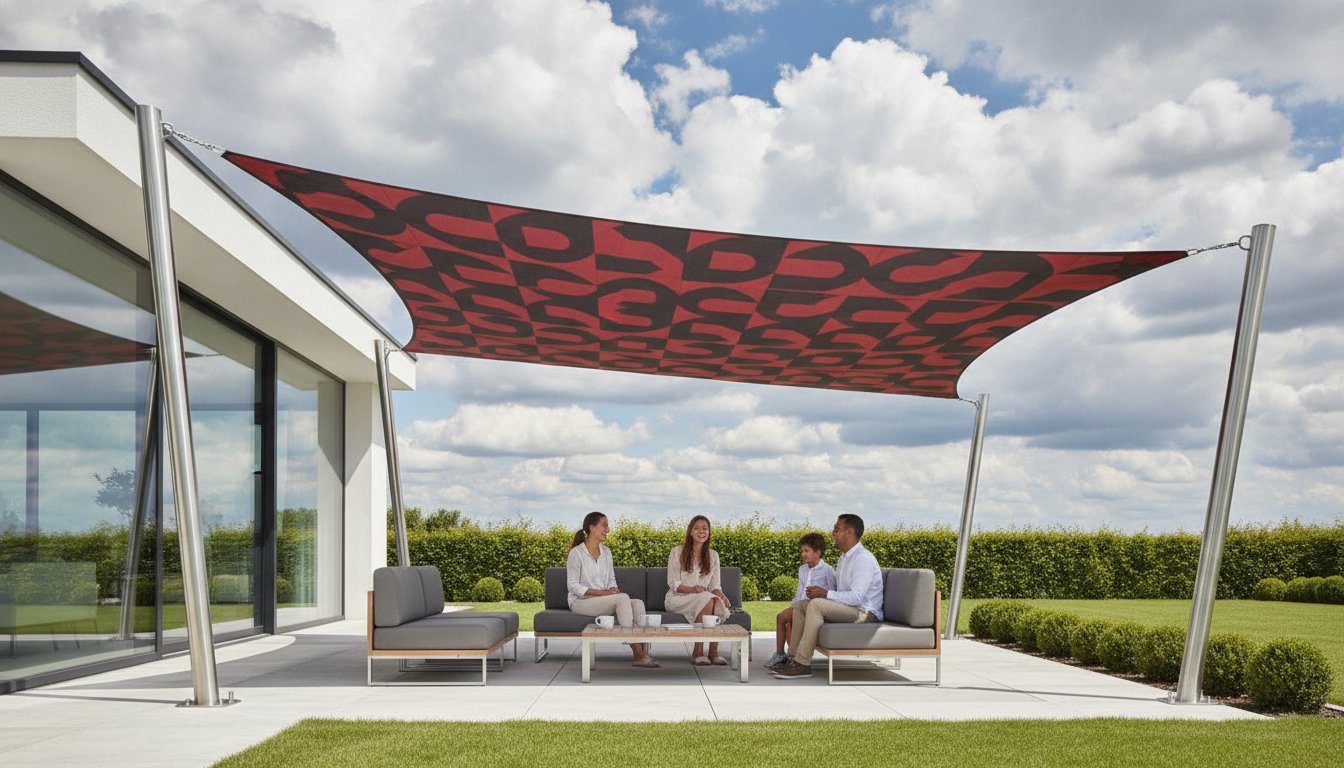
Wind Resistant Sun Sails: The Ultimate Guide to High-Tension Shading in 2026
What if you could enjoy a stylish, architectural canopy that doesn’t need to be frantically dismantled the moment a British breeze turns into a gale? We have all experienced that stressful dash to take down flimsy garden umbrellas or cheap fabric sheets as the clouds gather and the wind picks up. Investing in professional wind resistant sun sails is about more than just finding shade; it is about reclaiming your outdoor space with total confidence in its structural integrity and long-term safety!
You likely agree that a premium shade solution should be a “fit and forget” addition to your home, rather than a constant source of anxiety during a summer storm. This guide will show you how engineered wind resistant sun sails provide the safety, durability, and bespoke style required for even the most exposed coastal or hilltop gardens. We will explore the technical standards like BS EN 1991-1-4 that separate high-tension installations from flimsy alternatives, ensuring your new feature survives the unpredictable 2026 weather patterns whilst adding significant aesthetic value to your property.
Key Takeaways
- Understand the critical engineering differences between architectural-grade structures and flimsy retail alternatives that often fail during British gales.
- Discover how “Hypar” geometry and catenary curves are utilised to shed wind pressure and maintain the high tension necessary for safety.
- Learn why professional wind-load calculations and marine-grade fixings are essential to prevent structural damage to your property.
- Explore how bespoke wind resistant sun sails offer superior longevity and a custom fit that standard off-the-shelf kits cannot match.
- Gain confidence in your investment by understanding wind ratings and the maintenance protocols required for year-round durability in the UK.
What Are Wind Resistant Sun Sails and Why Do They Matter?
Professional-grade wind resistant sun sails aren’t simply large pieces of cloth tied to your fence. They’re sophisticated architectural shading systems, specifically engineered to withstand the significant wind loads that are becoming increasingly common across the UK. As we move through 2026, our weather patterns have become more erratic, with sudden gusts and prolonged gales that can easily destroy standard, budget-level canopies. Unlike those flimsy alternatives, a true wind-resistant system is designed to remain stable and secure, providing a permanent or semi-permanent solution for exposed gardens and commercial terraces alike.
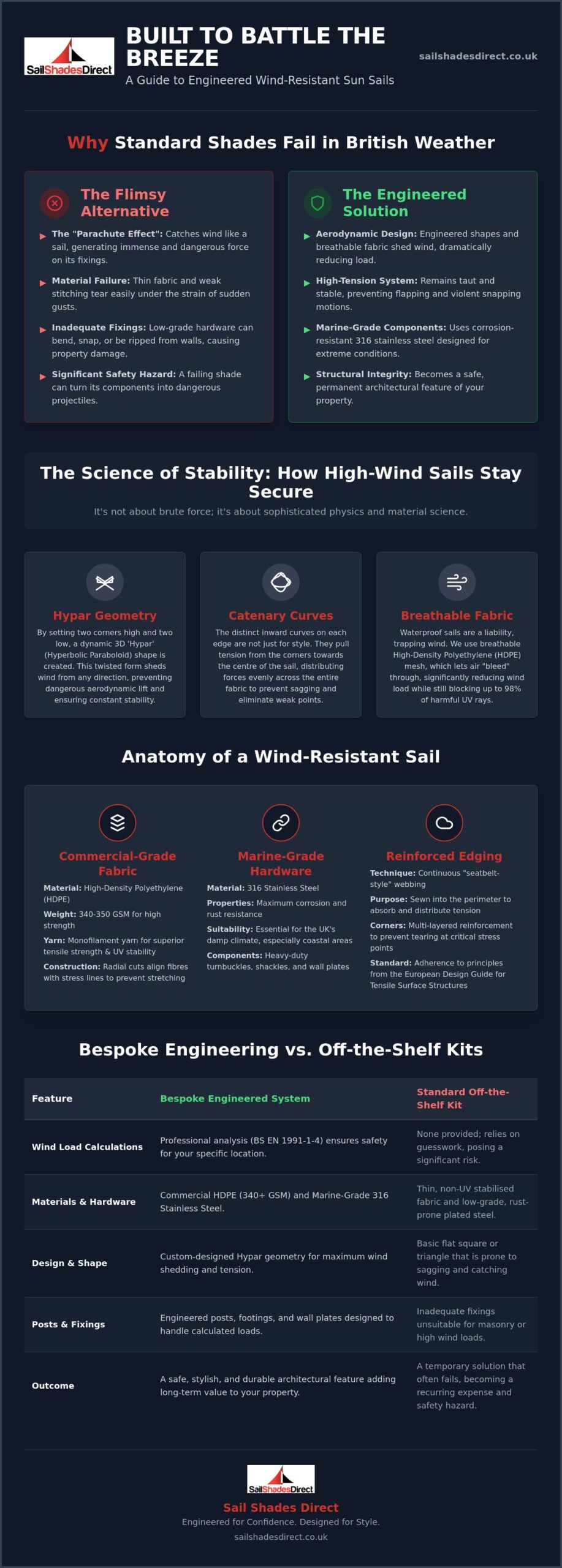
The primary issue with standard sails is the “parachute effect.” When a solid, non-breathable fabric catches a gust, it acts exactly like a sail on a ship, generating hundreds of kilograms of force. If the system isn’t designed to handle this, the energy has to go somewhere. Usually, this results in the fabric tearing, the stitching unravelling, or worse, the fixings being ripped clean out of your masonry. High-tension sails mitigate this by following fundamental tensile structure principles, which use geometry and material science to distribute loads evenly across the entire surface and into the ground.
Wind Resistant vs. Waterproof: The Crucial Trade-off
It’s a common mistake to assume that a waterproof sail is superior to a breathable one. In reality, waterproof fabrics are often the most vulnerable in high winds because they don’t allow air to pass through the material. This creates a massive pressure differential. For most British outdoor spaces, we recommend breathable High-Density Polyethylene (HDPE) mesh. This material allows air to circulate freely whilst blocking up to 98% of harmful UV rays. By letting the wind “bleed” through the fabric, the overall load on your posts and wall plates is significantly reduced, making the entire structure far safer during a summer storm.
The Consequences of Poor Wind Resistance
Choosing a low-quality shade solution isn’t just a waste of money; it’s a genuine safety hazard. When a sail “snatches” in the wind, it creates a violent jerking motion that can snap timber fence posts or cause structural cracks in house walls. This “kite effect” can turn a heavy metal turnbuckle into a dangerous projectile if a fixing fails. Bespoke engineering is the only way to ensure your shade remains a reprieve rather than a risk. By utilising reinforced webbing, marine-grade 316 stainless steel hardware, and fabrics with a weight of 340-350 GSM, you can create a stylish, high-tension environment that stands up to the elements with ease. For those in particularly exposed locations, our guide to coastal shade sails UK explains how marine-grade materials and bespoke engineering combine to withstand the unique demands of seaside environments.
The Science of Tension: How High Wind Sail Shades Stay Secure
High-performance wind resistant sun sails rely on sophisticated physics rather than brute strength alone. A flat, sagging piece of fabric is a liability in a storm. An engineered “Hypar” or Hyperbolic Paraboloid shape is an asset. By designing the sail so two corners are high and two are low, you create a dynamic three-dimensional surface that sheds wind pressure from both sides simultaneously. This geometry works in tandem with catenary curves. These are the distinct inward arcs on the edges of the sail that pull tension from the corners into the very centre of the fabric.
When we design these structures, we adhere to the technical principles outlined in the European Design Guide for Tensile Surface Structures. This ensures the prestress applied to the fabric is sufficient to counteract the live loads of a British gale. Radial cuts are another hallmark of high-end engineering. By cutting the fabric in panels that radiate from the corners, we align the strongest fibres with the primary lines of stress. This prevents the fabric from stretching or sagging over time, which is exactly how cheap sails begin their descent into failure.
Material Matters: HDPE and Mesh Technology
The choice of yarn is vital for longevity. Monofilament HDPE (High-Density Polyethylene) is far superior to tape yarn for permanent installations. It resembles a high-strength fishing line rather than a flat ribbon, offering incredible tensile strength and UV stability. Whilst lighter colours might feel airy, darker shades often provide superior UV blockage and can actually look cleaner for longer. If you are unsure which fabric suits your garden’s orientation, our team can help you explore bespoke sail shade options tailored to your specific microclimate.
Hardware: The Unsung Heroes of Wind Resistance
You cannot achieve a drum-tight finish with nylon rope or hardware store carabiners. We only use 316 marine-grade stainless steel hardware. This material is essential for resisting the corrosive, salt-heavy air found across the UK. Heavy-duty turnbuckles allow for the precise tensioning required to keep the sail stable. We also utilise load-rated perimeter webbing rather than simple hemmed edges. This webbing acts like a seatbelt, carrying the structural load from the fabric directly into the stainless steel anchor points.
Engineering for the UK Climate: Posts, Footings, and Fixings
Designing wind resistant sun sails for the British climate requires an engineering mindset that respects the sheer power of our weather. When a moderate breeze hits a large sail, it generates hundreds of kilograms of lateral force. Standard timber fence posts, whilst fine for boundaries, are simply not designed to handle these constant pulling forces. They will eventually bow, snap, or be pulled right out of the ground. To avoid these failures, every component from the ground up must be specified to resist the specific wind loads of your property’s location.
We calculate these forces by looking at the surface area of the sail and the potential gust speeds in your microclimate. We follow industry best practices, such as the Technical Guideline for Tensile Structures, to determine the exact requirements for every anchor. For freestanding masts, this often involves digging footings up to a metre deep and filling them with high-strength concrete. This creates a massive, solid anchor that keeps the system drum-tight even during the increasingly frequent gales we’ve seen throughout 2026.
Structural Steel Posts
The masts of your shading system must be up to the task. We specify heavy-duty structural steel with a wall thickness and diameter calculated precisely for the sail’s size. To prevent the British rain from causing corrosion, every post is hot-dip galvanised and can be powder-coated in a colour that complements your home. We also utilise raked posts. By angling the masts slightly away from the sail, the structure uses its own geometry to counteract the tension, providing a more stable and aesthetically pleasing finish than vertical poles could ever achieve.
The Professional Installation Advantage
Attaching a high-tension sail to a building is where professional expertise becomes vital. Whilst some retail kits suggest simple eye bolts, these can concentrate too much stress on a single brick, eventually leading to masonry failure. We prefer bespoke wall plates that distribute the load across multiple bricks or into the structural “hard points” of the property, such as floor joists or reinforced corners. If you are planning a project, it’s worth exploring the benefits of bespoke sail shades UK to see how a tailored approach ensures both beauty and safety. A comprehensive site survey is always the first step to identifying these critical attachment points and ensuring your installation remains secure for years to come.
Maintenance and Safety Protocols for Extreme Weather
Even the most robust wind resistant sun sails require a proactive approach to safety. Engineering provides the foundation, but your behaviour as a property owner ensures the system’s longevity. In the UK, we often refer to the Beaufort scale to gauge environmental stress. Whilst a professionally installed sail can comfortably handle a “Strong Breeze” (Force 6), you should be cautious when the Met Office forecasts “Gale Force” winds (Force 8) or higher. These speeds, typically exceeding 40mph, can put immense pressure on even the highest-grade architectural fabrics.
The debate between seasonal and permanent installation often comes down to fabric type. Breathable HDPE sails are frequently left up year-round, but they are not designed to carry heavy snow loads. If a significant snowfall is predicted, the weight can stretch the fabric beyond its recovery point. Regular visual checks are your best defence. Look for signs of tension loss, such as “fluttering” in light winds, or any hardware fatigue like rust staining on turnbuckles. Catching these small issues early prevents them from becoming structural failures during a storm.
Storm Readiness Checklist
Staying ahead of the weather is easier than ever with modern forecasting apps. If a wind warning is issued, you need a clear plan. For manual sails, this means having the tools ready to safely slacken the tension and remove the fabric before the gusts arrive. If you prefer a more modern approach, motorised rolling sun sails allow you to retract the entire canopy in under two minutes at the touch of a button. This rapid response is often the difference between a secure home and a damaged structure during an unpredictable 2026 summer storm.
Longevity and Fabric Care
Maintenance isn’t just about storm prep; it’s about cleanliness. In coastal regions, salt spray can crystallise amongst the fibres, acting like sandpaper and causing premature abrasion. A gentle wash with a low-pressure hose and mild detergent once or twice a year keeps the material supple. Don’t forget that new sails often require re-tensioning after the first few weeks of installation. As the fabric settles into its new shape, a quick adjustment of the turnbuckles ensures the system remains drum-tight and wind-resistant. To ensure your installation remains in peak condition, book a professional maintenance consultation with our expert team today.
Why Bespoke Wind Resistant Sails Outperform Off-the-Shelf Options
While standard retail kits might seem like a bargain, they often prove to be a false economy in the face of a British summer storm. The fundamental flaw lies in the “one size fits all” approach. A mass-produced rectangle or triangle rarely matches the unique dimensions of your garden or terrace, leading to loose fabric that catches the wind like a pocket. Our wind resistant sun sails are different. We design every system from scratch, ensuring the geometry is perfectly balanced to eliminate sag and prevent the destructive flapping that ruins cheaper alternatives.
By opting for a bespoke solution, you gain access to architectural-grade materials that simply aren’t available on the high street. These fabrics are engineered for high-tension environments, offering superior UV stability and structural memory. We combine this material science with rigorous British craftsmanship to create a “twist” in the sail, a three-dimensional form that provides maximum stability. This isn’t just about shade; it’s about creating a permanent architectural feature that adds genuine value to your property. For a deeper understanding of how precision engineering and structural design come together, our guide to architectural sail shades UK covers everything from planning permissions to the latest BS EN 1991-1-4:2026 wind resistance standards. Our approach focuses on a “fit and forget” reliability that standard off-the-shelf options can’t match.
The Design Process: From Consultation to Installation
Every project begins with a deep understanding of your specific environment. We don’t just look at where the sun falls; we assess your site’s exposure to prevailing winds and identify the best structural points for fixings. This tailored approach allows us to organise the installation to complement your home’s architecture whilst ensuring it meets the highest safety standards. The result is a professionally fitted, high-load system that gives you total peace of mind. We take the stress out of the process by handling the complex engineering, leaving you with a beautiful, functional reprieve from the pressures of daily life.
Commercial Applications
For businesses, the stakes are even higher. Public-facing spaces require much larger safety margins to protect customers and staff. We have helped numerous venues transform exposed, underutilised terraces into comfortable, year-round revenue generators by installing robust wind resistant sun sails. These bespoke structures allow commercial clients to maximise their outdoor footprint with confidence, knowing the engineering is sound. If you’re ready to secure your space with a solution built to last, contact Sail Shades Direct for a bespoke consultation and let’s bring your vision to life.
Future-Proof Your Outdoor Living Space
Investing in wind resistant sun sails is a decision to prioritise long-term safety and architectural beauty over short-term fixes. You now understand that high-tension shading isn’t a matter of luck; it’s the result of precise geometry, robust structural footings, and the use of marine-grade 316 stainless steel as standard. By choosing a bespoke solution, you eliminate the risks of sagging fabric and structural failure, ensuring your garden remains a peaceful retreat regardless of the unpredictable British weather forecast.
With over 10 years of experience in high-wind engineering, our team is ready to help you transform your exposed terrace or garden into a stylish, durable sanctuary. We offer a nationwide professional installation service to ensure every anchor point is perfectly positioned and every sail is drum-tight. Don’t let another summer gale ruin your outdoor plans! Enquire about a bespoke wind resistant sun sail for your UK property today and take the first step towards a beautiful, worry-free environment.
Frequently Asked Questions
Can I leave my wind resistant sun sail up all year round in the UK?
Yes, you can leave a professionally installed sail up throughout the year, provided it uses breathable HDPE fabric and is engineered for permanent use. The primary concern isn’t actually the wind, but snow accumulation. Heavy snow can stretch the fabric beyond its recovery point, so we recommend retracting or removing the sail if a significant snowfall is forecast. For typical British rain and gales, a high-tension system remains perfectly secure.
What wind speed can a professionally installed shade sail withstand?
High-grade, commercial wind resistant sun sails are engineered to handle constant winds of 60mph and gusts reaching up to 100mph. Achieving this level of stability requires architectural-grade fabric and structural masts with deep concrete footings. Whilst the engineering is robust, we always suggest monitoring Met Office warnings. If an extreme storm is predicted, retracting a motorised system provides an extra layer of safety for your property.
Do I need planning permission for a permanent wind resistant sun sail?
Most sun sail installations fall under permitted development rights and don’t require formal planning permission. You generally won’t need it if the structure is under 2.5 metres in height when placed within 2 metres of a boundary, and the total area of garden structures doesn’t exceed 50% of your outdoor space. However, if you live in a conservation area or a listed building, it’s wise to check with your local council first.
Is a breathable sail better than a waterproof one for windy areas?
Breathable HDPE mesh is significantly better for windy locations because it prevents the “parachute effect” that often destroys solid fabrics. The mesh allows air to bleed through the material, which reduces the physical load on your wall plates and posts during a gale. This airflow keeps the sail stable and prevents the violent “snatching” motion that can damage masonry. It’s the safest choice for exposed coastal shade sails UK installations, where salt-laden gale-force winds place the greatest demands on both fabric and fixings.
How do I know if my wall is strong enough to support a high-tension sail?
A professional site survey is essential to identify whether your masonry can safely support the hundreds of kilograms of force generated by a tensioned sail. We look for solid, double-skin brickwork and aim to fix into structural “hard points” like floor joists. You should never attach a high-load sail to a single-skin garden wall or decorative cladding. If your walls aren’t suitable, we can install structural steel masts instead.
What is the difference between a “garden sail” and an “architectural sail”?
The difference lies in the engineering standards and the weight of the materials used. A standard garden sail is a temporary product with a light 180 GSM fabric, whereas an architectural sail uses 340-350 GSM fabric and marine-grade stainless steel hardware. Architectural systems follow specific tensile structure principles to ensure they remain drum-tight and stable in high winds, offering a lifespan of 8 to 10 years compared to the single season typical of retail kits.
Can wind resistant sails be motorised for easier management?
Yes, motorised rolling systems are a popular choice for homeowners who want the benefits of wind resistant sun sails with added convenience. These systems allow you to deploy or retract the canopy in under two minutes using a remote control or smartphone app. It’s a fantastic solution for the unpredictable British weather, as it allows you to secure the sail quickly the moment a storm warning is issued without needing any tools.
How much maintenance do high-wind sail shades actually require?
Maintenance is minimal but shouldn’t be ignored if you want your system to last. We recommend a quick visual check of the tension twice a year, as you may need to tighten the turnbuckles slightly if the fabric begins to flutter. A gentle wash with a low-pressure hose and mild detergent will remove salt spray and debris that can cause abrasion over time. These simple steps ensure your hardware stays functional and your fabric remains strong.